
Food and Agriculture
Food Security: Israel to Train Benue Youth on Farming, Other Skills

By Tor Vande-Acka
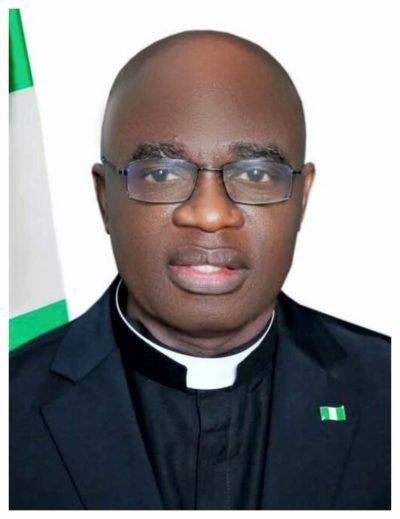
Rev. Fr. Michael Melladu, Chairman, Benue State Pilgrims’ Welfare Board, has stated that the Government of Israel has promised to grant some youths from the state scholarship into some of its schools.
The first batch of the youths that would commence apprenticeship training on Israeli farms are expected to return to Benue and replicate the modern farming techniques they acquire in the state to boost food production.
Fr Melladu, who disclosed this while playing host to members of the State Working Committee (SWC) of the Benue State Council of the Nigeria Union of Journalists (NUJ), led by the Chairman, Comrade Bemdoo Ugber, also said, the Board, plans to float a school that would serve as a revenue generating venture for the Board.
Speaking on his meeting with the Israelis during the last pilgrimage, Melladu, explained that he told the Israelis “I have gone through your profiles, you are running hotels and schools; you are also into farming in Israel. So where do we come in as a State and they asked me what do you want?
“I said you need to give us some scholarship slots in your schools. You also need to take some of our young people and train them in your farms in Israel so that when they come back, they will implement it in our state.
“So during the pilgrimage, I had an aside meeting with them and they have agreed that they will be taking five persons each time we go on pilgrimage. So we are already working on the first set of young people who will travel there and do the apprenticeship in their farms”, he said.
Similarly, on the plans by the Board to float a school, Melladu stated “I did a proposal to the governor where I suggested that it would not be right for this Board to be depending solely on government sponsorship and that we should also find a way of generating revenue so that at the end of the day, even if we are unable to get all the monies that are required for running this Board, we should have something on ground and only be looking for something to supplement what we get.
“We have a vast land that belongs to us. That is where we are supposed to build our permanent site so I told the governor that the land there is enough to build our permanent site. So let us build a modern kindergarten of international standard on our permanent site.
“Also we have many people here who have a lot of money and are looking for where to spend the money. So when we build the school, we will consider giving those who are less privileged subsidy.
“When I was in Port-Harcourt, we had such a school under my parish and I know how much we were generating annually. And if we begin that project in this place, which is in the heart of the town and if it is properly handled, this Board will be able to become independent.
“The governor has bought into the idea and we may be considering to do that. But for now things are not as it should be and as you can see even the infrastructure here (present office) is not befitting”, adding that “despite these challenges, our dreams are huge and we are looking to doing better, God willing”, the Board Chairman stated.
Earlier, the Chairman, NUJ, Benue State Council, Comrade Bemdoo Ugber, congratulated Rev Fr Melladu on his well-deserved appointment, noting that his track record of “spiritual leadership, administrative discipline, and unwavering commitment to the service of God and humanity.
“Since you assumed office, your leadership has ensured that Christians from Benue state successfully embarked on the Holy Pilgrimage to Jerusalem, the NUJ chairman observed.





By Felix Umande
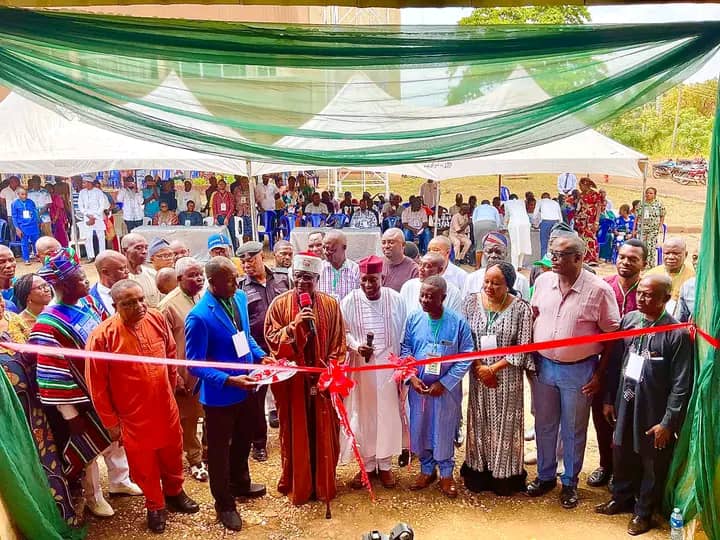
The Och’Idoma and Paramount Ruler of Idoma Kingdom, His Royal Majesty, Agabaidu John Elaigwu Odogbo, on Tuesday flagged off the office of the MATAN Food Bank Professional Association of Nigeria and its 21-Pillar Stakeholders’ initiative in Benue State.
The ceremony, which took place at the Bank of Agriculture, Makurdi on Tuesday, 3rd November 2026, was attended by government functionaries, traditional rulers, religious leaders and other stakeholders.
Speaking as both Och’Idoma and Patron of the Association, the monarch said food security must become a collective national priority, stressing that no society can attain sustainable prosperity when a significant portion of its population struggles to access adequate and nutritious food.
“Food is central to human existence, dignity, peace and national development,” he said, noting that Benue as the Food Basket of the Nation has the agricultural potential to transform its economy, but that potential must be translated into measurable productivity, income, employment and food availability.
The royal father charged the Association to move beyond meetings and ceremonial engagements to visible impact in the lives of people, measured by the number of families empowered, households supported, youths encouraged and jobs created. He also assured the leadership of his goodwill and support for initiatives that advance food security and sustainable agriculture.
He commended the Benue Chapter for adopting the 21-Pillar framework, describing it as a symbol of stability, structure and sustainability, but cautioned that the pillars must be developed into actionable programmes addressing real needs, including smallholder farmers’ empowerment, youth participation in agribusiness, women empowerment, community food banks, food processing and storage, agricultural financing, market access and skills acquisition.
The monarch further stressed the role of traditional institutions as indispensable partners in grassroots development and called for practical partnerships to encourage youths to embrace agriculture as a profitable venture.
Also speaking, the Special Adviser to the Benue State Governor on Internal Security, Chief Dr. Joseph Har, said without physical security, food security cannot be guaranteed. He noted that security challenges in the state have improved compared to the past and assured that government is determined to make the situation better.
In an interview with newsmen, the National Vice President, Contact, Mobilisation and Organisation of MATAN Food Bank Professional Association of Nigeria, Comr. Ikpe David Idah, said the event marked the official declaration of the Association’s office complex in Makurdi by its Patron, the Och’Idoma, and the kick-off of the 21 pillars in Benue as one of the pilot states in the North Central.
He listed some of the pillars to include MATAN Food Bank Foundation, MATAN Mobility, Community Food and Nutrition Resilience Initiative, Street Feeding, Pan-African and inter-regional commodity exchange, among others contained in the organisation’s profile.
According to him, the primary aim of the Association is to end hunger and ensure not just food sufficiency, but nutrition in quality, quantity and proportion, with laboratory testing and medical certification of food before distribution to the public.
–Convicted Aba businessman given ₦5m fine option
By Nick Ibe
The National Agency for Food and Drug Administration and Control (NAFDAC) has won the conviction of a businessman in Aba, Abia State, for manufacturing and selling counterfeit Goya Extra Virgin Olive Oil, sentencing him to five years’ imprisonment with an option of a ₦5 million fine.
The conviction of Mr Innocent Okoye, Managing Director of Chikason Industrial Nigeria Limited, Aba, followed months of investigation and prosecution, is a remarkable action against food counterfeiting and other substandard products before unsuspecting Nigerian consumers.
Okoye, MD of Chikason Industrial Nigeria Limited, was convicted on two charges relating to the manufacture and sale of counterfeit Goya Extra Virgin Olive Oil.
According to NAFDAC, Justice K. O. Ogundare of the Federal High Court, Umuahia, Abia State, delivered the judgment on Wednesday, October 28, 2026.
The case arose from an enforcement operation conducted by the agency’s Investigation and Enforcement Directorate in April 2026, during which officials uncovered a facility in Aba allegedly used for the production and distribution of counterfeit Goya oil.
NAFDAC arrested the suspect and forwarded samples of the recovered products to its laboratory for scientific analysis. Consequently, criminal proceedings were taken against Okoye leading to his eventual conviction.
The development comes amid growing concerns over the circulation of fake food products in Nigerian markets, with counterfeiters allegedly exploiting the popularity of established brands.
In January 2026, NAFDAC raised the alarm over counterfeit Goya oil packaged in polyethylene terephthalate (PET) plastic bottles and sold to unsuspecting consumers as genuine imported products.
At a media briefing in Lagos, the agency’s Director of Investigation and Enforcement, Dr Martins Iluyomade, disclosed that investigators had uncovered an illegal production operation at Oke-Arin Market, Idumota, Lagos.
According to the agency, operators of the facility were allegedly processing palm oil with colouring agents before repackaging the mixture as Goya oil for sale.
Iluyomade explained that genuine Goya oil authorised for sale in Nigeria was imported in original glass bottles through approved distribution channels. He warned consumers to be wary of products bearing the brand name in PET plastic bottles.
Beyond the violation of product standards and intellectual property rights, food counterfeiting raises serious public health concerns because consumers may have no reliable way of determining the quality or safety of the products they purchase.
NAFDAC has urged consumers, traders and religious organisations to verify the sources of products they purchase and exercise caution when confronted with suspicious packaging or unusually presented goods.
The agency also called for the cooperation of manufacturers, distributors, retailers, consumers and law enforcement agencies in fight against counterfeit products, illegal manufacturing facilities.
The conviction though shows NAFDAC’s commitment to intensifying market surveillance, the judgment is a slap on the wrist as it is not painful enough to serve as a deterrent.

By Felix Umande
The National Economic Council, NEC, has endorsed a 90-day economic action plan proposed by the Federal Ministry of Finance to consolidate gains from President Bola Ahmed Tinubu’s economic reforms.
The plan focuses on reducing the cost of living, improving food affordability, attracting investment and accelerating delivery of projects with direct benefits to Nigerians.
The endorsement on Thursday followed a presentation by Minister of Finance and Coordinating Minister of the Economy, Mr. Taiwo Oyedele, during the Council’s 161st meeting held virtually and chaired by Vice President Kashim Shettima.
The action plan identifies five priority areas: food affordability, tax harmonisation, completion of high-impact projects, resolution of investment bottlenecks and regulated household support.
NEC also approved establishment of a national dashboard to track ongoing projects across the federation, with emphasis on transparency, accountability and accurate reporting of how proceeds from fuel subsidy removal are being utilised.
Presenting the economic outlook, Oyedele expressed optimism about progress under the reform programme and identified reduction of headline inflation and interest rates to single digits by 2027 as key policy objectives, noting that the next phase would require coordinated implementation across federal and state institutions.
Addressing members, Vice President Shettima said while the President’s reform programme was designed to achieve broader prosperity, governments at all levels must translate its objectives into improved living conditions. In his words:
“The first dividend of prosperity should be the confidence to plan a life. Our task is to make such confidence less dependent on fortune.
“Our separate jurisdictions must serve a common public interest. Our separate mandates must not become competing excuses. Each Governor carries knowledge that no federal document can supply.”
Shettima further charged governors to ensure gains translate into affordable transportation, improved healthcare, employment and financial security.
On the National Compressed Natural Gas, CNG, Bus Initiative, he stressed that success should be measured by affordability and accessibility rather than fleet size.
“The cost of reaching
a livelihood should never consume the livelihood itself,” he said.
In other resolutions, NEC reviewed the reported Ebola outbreak in the FCT. Minister of Health and Social Welfare, Prof. Muhammad Ali Pate, assured the Council that Nigeria has capacity to contain it, while acknowledging 21 states that updated their response plans and urging the remaining 15 to expedite preparedness.
The Council also directed states to strengthen polio eradication efforts through post-campaign reviews, timely release of counterpart funds and improved coordination in insecure areas.
On livestock development, Council, after receiving report of its Ad Hoc Committee chaired by Kebbi Governor Nasir Idris, resolved to strengthen federal-state collaboration to unlock the sector’s economic potential.
Council further resolved to establish a joint financing framework between federal and state governments to accelerate deployment of CNG and electric vehicles, directing that savings from the programme be passed to commuters through lower fares and that transport unions be engaged.
A committee will be constituted to coordinate the financing arrangement and ensure benefits translate into affordable and sustainable transportation.


PERSPECTIVE: Tiv Leaders Must Hear This: While Akwa Ibom Asked For A Future, Tiv Leaders Fight Over A Man
Spread the loveBy Edward Tion I watched the presidential campaign in Akwa Ibom today with a bleeding heart. Not because...


Pursue Unity, Peace, Play Active Role in Nigerian Politics, Deputy Speaker, Kalu Urges Igbo Elites, Leaders
Spread the loveBy Saint Mugaga Deputy Speaker of the House of Representatives, Rt. Hon. Benjamin Kalu has called on Igbo...

2027: Amupitan Seeks Royal Support, Partnership to Discharge Mandate Peacefully, Effectively
Spread the loveBy Isa Abdul The National Chairman of the Independent National Electoral Commission (INEC), Professor Joash Amupitan, has said...


Place 7-Year Ban On Establishment Of New Tertiary Institutions– Edu Minister Begs NASS
Spread the loveBy Son Tertsea, Abuja The Federal government has appealed to the National Assembly to halt the passage of...

Gov Sule to Security Agencies: Fish Out Sponsors of VP Shettima’s Attackers in Lafia
Spread the loveSDP: attackers APC members against Wadada’s candidacy By Isa Abdul, Abuja Prominent personalities in the state planned and...
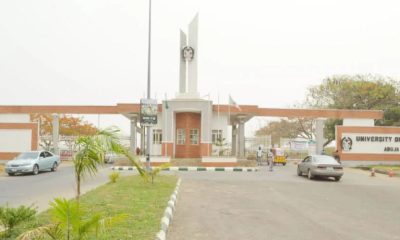

Wike’s Entry, Allocation of UniAbuja Land a Breach of Court Order– ASUU
Spread the loveBy Nick Ibe, Abuja The Federal Capital Territory Administration’s (FCTA) allocation of some hectares of land belonging to...


Alleged 4 Herbal Concoction Consumers Die in Benue
Spread the loveBy Vincent Tyosuugh After consuming a suspected poisonous herbal concoction allegedly sold to residents of Oju Local Government...

BENUE APC Split Deepens As SGF, Stakeholders Shun Alia Campaign Flag-off, Disown Campaign List
Spread the loveBy Felix Umande The crisis rocking the Benue State chapter of the All Progressives Congress (APC) deepened on...


Defence Minister Invites Cybersecurity, Drone, DefenceTech Experts for Collaboration with DICN
Spread the loveBy Nick Ibe, Abuja Minister of Defence, General Christopher Musa (rtd) has called on Nigerians with expertise in...


Wike’s Rainbow Coalition Faces Storm Over Alleged Split Voting: VP Shettima, SDP, Ondo APC Reject Coalition
Spread the loveBy Son Tertsea, Abuja Nyesom Wike’s Rainbow Coalition has been identified as a split voting device according to...