
Foreign
Iranian Australians celebrate death of supreme leader and dream with ‘quiet anticipation’ of regime change

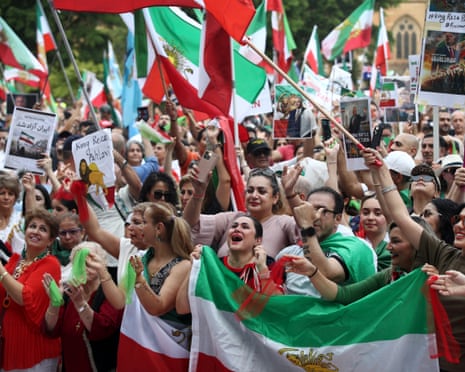
After Israel and US launch strikes against Iran, people in Australia fear for their loved ones, noting ‘missiles don’t understand who the enemy is’
The memories of all those murdered by the Iranian regime were at the forefront of Sahar Gholizadeh’s mind when she heard that the country’s supreme leader had been killed.
“I started shaking, and I started crying, remembering all of those beautiful lives that we lost, and all of those people that would be so happy to see this day,” she says on Sunday from Melbourne.
The Iranian Australian, who fled Iran’s theocratic regime almost 15 years ago, describes the news as a bittersweet but “big moment” for the country and its diaspora. “We’ve been waiting for this,” the 50-year-old says.
Those sentiments are echoed across Australia’s Iranian community following the death of Iran’s supreme leader, Ayatollah Ali Khamenei, after Israel and the US launched strikes on the country.
Iranian Australian Sahar Gholizadeh described the news of Ayatollah Ali Khamenei’s death as a bittersweet but ‘big moment’. Photograph: Sahar Gholizadeh
In Sydney and Melbourne, planned anti-regime rallies on Sunday became celebrations of the leader’s death, with thousands attending.
In Canberra, a few hundred people celebrated outside the now-closed Iranian embassy to cheer the death of the Ayatollah and praise Israeli and US leaders.
Iran state media confirms killing of Ayatollah Ali Khamenei after US-Israeli missile strikes
Champagne was sprayed over the dancing crowd, as people prayed for a liberated Iran and the safety of their families there.
In Melbourne, members of Australia’s Iranian diaspora gathered in Federation Square and on the steps of parliament to celebrate after years of violence, most recently culminating in the regime’s brutal crackdown on protests, with up to 30,000 people estimated to have been killed.
Suren Edgar, the vice president of the Australia Iranian Community Alliance (AICA), says hearing of Khamenei’s death was the “best morning of my life”. “He destroyed our country, our culture, killed our people and pushed the ideology of terror to other countries,” he says.
Edgar, who migrated to Australia in 2014, says the community is hopeful after Israel and the US launched another attack on Iran after last year’s 12-day war.
“It’s not easy to watch your country under that attack,” he says.
“Missiles don’t understand who the enemy is and who are … ordinary people. So that’s why we are worried about our people. But on the other hand, we see them, they are happy, extremely happy.”
The US-based organisation Human Rights Activists News Agency on Sunday reported at least 133 civilians had been killed, with 200 injured, in the first hours of the Israeli-US attack.
Edgar says internet disruptions mean people in Australia are awaiting news from loved ones in Iran.
“I’m still waiting to hear from some … the psychological impact of silence can be as distressing as the crisis itself,” he says. “Being unable to connect with loved ones online creates a unique kind of stress and helplessness.”
Edgar says the diaspora community is celebrating Khamenei’s death, but remains unsure if there will be desired regime change.
“As long as the Islamic Republic is in power, it’s not done,” he says on Sunday.
Courtesy: Breaking News Australia









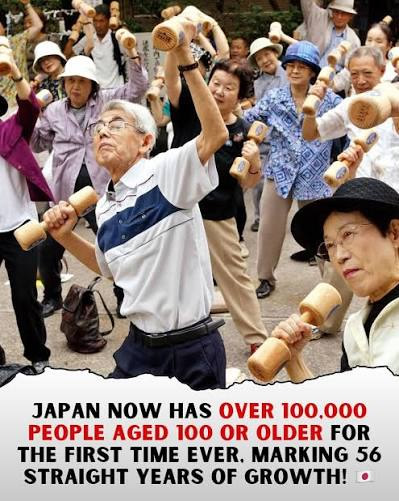
Japan is the first country to have more than 100,000 centenarians and has one of the longest life expectancies in the world.
Humans are living longer and longer. Now Japan has broken a new record for longevity: more than 100,000 people in the country are centenarians—some 107,677 of them are at least 100 years old.
Japan has one of the highest life expectancies in the world. Researchers believe this national longevity is likely linked to low rates of obesity, healthy diets, widespread health screenings and affordable health care, which lead to lower mortality rates from heart disease and cancer.
“I am very happy that so many people have been able to stay active for so long,” said Japan’s health minister Kenichiro Ueno at a news conference announcing the milestone in Tokyo on Tuesday.
Japan is “exactly where you would expect to see this first,” says Jay Olshansky, an epidemiologist at the University of Illinois Chicago. But he expects more countries to follow as large birth cohorts hit the 100-year mark and medical advances continue.
“Most people at older ages now are living on manufactured time—time that was created for us by our physicians and by the public health community,” he says.
But more people living long lives isn’t all good news. Japan also has one of the lower birth rates in the world. And its lower fertility rates and smaller working-age population are squeezing public resources and making caring for its older populations more difficult.
Additionally, a long life can be “a potentially dangerous scenario unless it’s accompanied by good health,” Olshansky says.
Japan’s oldest known person, Fuyo Kumamato, is 114 years old. (The oldest living person in the world, Ethel Caterham in the U.K., is 117 years old.) Researchers around the world are studying supercentenarians, people older than age 110, in hopes of keeping more people healthy for longer.
“What’s really critical about this is quality of life,” Olshansky adds. “Just living longer should not be the primary goal of medicine and public health anymore. It should be health extension or health span.”
Scientific American
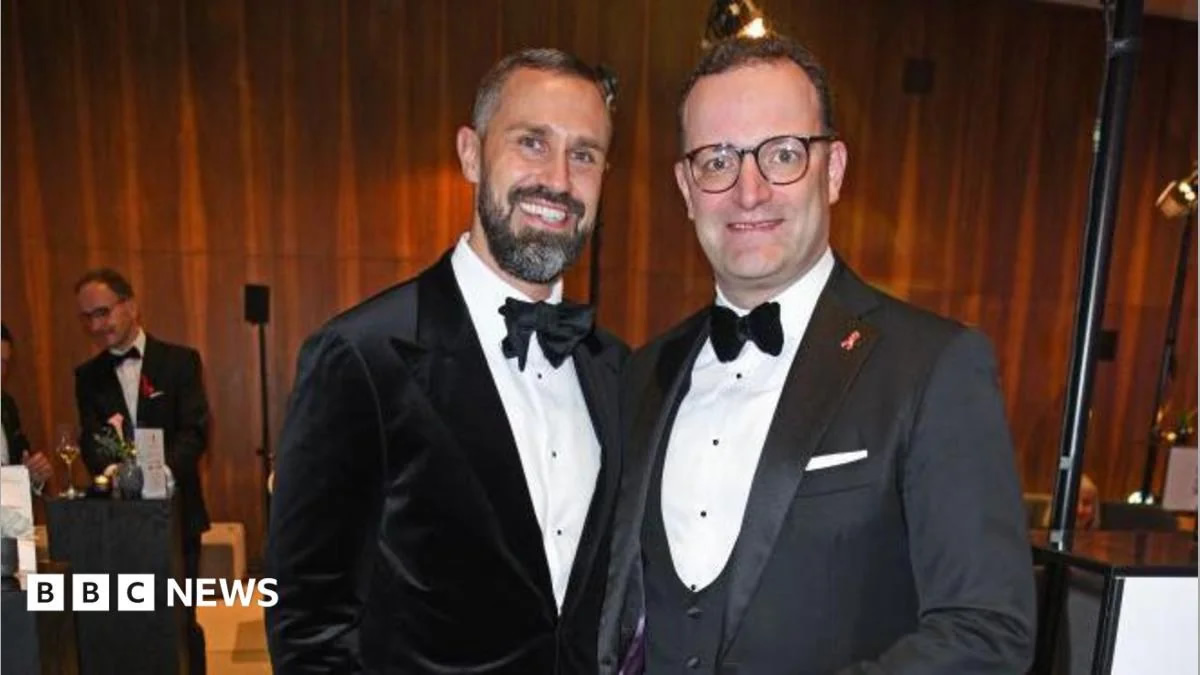
46-year-old Jens Spahn announced he and his husband had become parents earlier this week
German centre-right politician Jens Spahn has resigned as parliamentary group leader of the country’s governing coalition after being accused of hypocrisy over his use of a surrogate mother in the US to have a child.
Surrogacy is prohibited in Germany – a policy backed by his Christian Democrat party (CDU) and, several years ago, by Spahn himself – although raising a child born to a surrogate mother abroad is not.
He wrote in a statement on Saturday: “I have realised that my personal happiness – founding a family together with my husband and becoming a father – is not compatible with my political office.”
Chancellor Friedrich Merz, who leads the CDU, called his decision “right” and “inevitable”.
“Credibility is the highest asset in politics,” he wrote on social media, and said he would begin the process of appointing Spahn’s replacement.
The 46-year-old former health minister revealed earlier this week that he and his husband Daniel Funke had become parents, with their use of a surrogate abroad prompting criticism from politicians from several parties, including his own.
Announcing his resignation on Saturday, Spahn wrote: “The balancing act between my private decision to have a child through surrogacy and the understandable expectations placed on me as Chairman of our parliamentary group has become greater than I anticipated,” he added.
He also said the “increasing relentlessness in public discourse” had given him “deep pause for thought”.
“Despite all clarity and decisiveness regarding the issues, let us always remain human in our tone,” he wrote.
German media reported Alexander Hoffmann, head of the Christian Social Union parliamentary group, would take over Spahn’s duties until a successor was chosen.
Hoffmann said: “Jens Spahn’s decision deserves the utmost respect.”
The CDU signed a resolution reaffirming its support for a ban on surrogacy in February. As health minister in 2020, Spahn had rejected calls by the liberal FDP for the ban to be relaxed.
In 2015, he wrote that “as a gay man and a Christian I find it personally very hard to warm to the idea of a rented womb”.
Surrogacy in Germany is punishable with three years imprisonment or a fine, rendering surrogacy abroad an important option for many couples.
Italy bans couples from travelling abroad for surrogacy
Spahn is one of the most powerful figures in the CDU and has survived other political scandals – but this proved one too many for his party.
It came at a difficult time for the CDU, with Merz struggling in the opinion polls, the controversy risked hurting him further ahead of key regional elections this autumn.
In Saxony-Anhalt, the far-right AfD party could win an outright majority, marking the first time a far-right party has held power in a German state since World War Two.
Writing for Bavarian public broadcaster BR24, journalist Christian Wölfel remarked: “One of the most powerful elected representatives is flouting the very rights denied to childless couples in Germany.
“In doing so, Jens Spahn is, shortly before the state elections in the east, confirming precisely the narrative that fringe political groups are using to win votes.”
Others believe Merz may welcome Spahn’s departure from the political arena.
He has “made no secret of his ambitions to become chancellor”, journalist Eva Fischer reported in the newspaper Taz, and is an increasingly dangerous threat to Merz.
She wrote: “In politics, the rule is: if someone could pose a threat to you, it’s best to get rid of them. Now Merz still has the power to do that.”
Other EU countries including France, Spain and Italy also ban surrogacy, which involves a woman carrying a baby and giving birth on behalf of parents unable to have children themselves.
France’s top court, the Court of Cassation, ruled this month that babies born to a surrogate mother abroad should be legally recognised as their intended parents’ children.
Meanwhile, Italy made it illegal in 2024 for Italians to have a baby abroad through surrogacy, in a policy driven by Giorgia Meloni’s right-wing government.
BBC
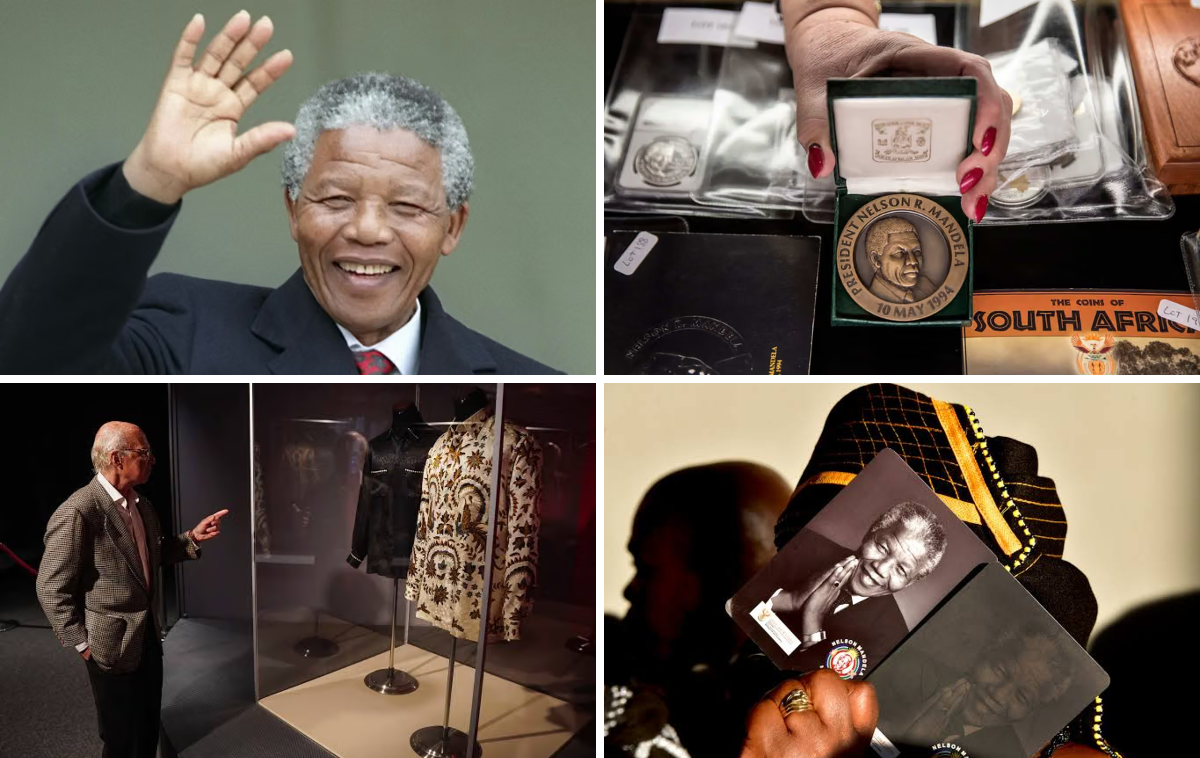
—Govt says items illegally exported to USA
South Africa has returned to its Constitutional Court in a renewed attempt to stop the auction in the United States of 29 personal items once belonging to Nelson Mandela, escalating a four-year legal battle over whether the memorabilia should be treated as private property or protected national heritage.
South Africa makes fresh bid to block $1.35 million auction of Nelson Mandela’s belongings after 4-year legal battle.
South Africa has approached its Constitutional Court to try to stop the US auction of 29 items once owned by Nelson Mandela.
The contested items include Mandela’s prison key, identity card, glasses, and shirts, spanning significant periods of his life.
Mandela’s daughter, Makaziwe Mandela, and a former prison warder own the items and have authorized the sale to fund a memorial garden.
South African authorities argue the items should be protected under national heritage laws.
The South African Heritage Resources Agency (SAHRA) and the Department of Sport, Arts and Culture argue that the objects form part of South Africa’s national heritage and were exported without the required permission.
The latest legal challenge follows earlier rulings by South African courts that cleared the way for the auction.
The collection includes Mandela’s identity card, shirts, writings, hearing aids, glasses and a key to his prison cell on Robben Island, where he spent 18 of his 27 years in prison.
The items therefore span some of the most significant periods of Mandela’s life, from his imprisonment under apartheid to his emergence as South Africa’s first democratically elected president.
The question is, are these Mandela family property or national heritage?
The objects are not all owned by the South African state.
According to the BBC, the items in the collection belong to Mandela’s eldest daughter, Makaziwe Mandela, and Christo Brand, a former Robben Island prison warder who developed a close relationship with Mandela during his incarceration.
South African authorities argue the items should be protected under national heritage laws.
Makaziwe authorised the proposed sale, with proceeds intended to finance a memorial garden near her father’s grave in Qunu, in South Africa’s Eastern Cape.
Reports confirm that the sale was authorised by Mandela’s eldest daughter to raise funds for the memorial project.
The dispute began after SAHRA discovered the potential auction in a British newspaper report in late 2021. The report said the collection could include Mandela’s prison key, which was expected to fetch more than £1 million, or about $1.35 million at the time, according to the BBC.
New York-based auction house Guernsey’s subsequently announced plans for the sale. SAHRA challenged the auction, arguing that the items could not legally be exported because of their cultural and historical significance. The auction was suspended while the legal dispute moved through South Africa’s courts.
The legal argument rests partly on South Africa’s National Heritage Resources Act, which allows objects to receive heritage protection because of their association with political processes, events, figures and leaders in the country.
The judgement
But a Pretoria High Court judgment raised questions about how broadly that definition could be applied.
The contested items include Mandela’s prison key, identity card, glasses, and shirts, spanning significant periods of his life.
Writing in The Conversation, Dr Duane Jethro, a senior lecturer in African Studies, noted that the court found SAHRA’s proposed interpretation potentially so broad that almost anything Mandela had touched or been associated with could theoretically qualify as a heritage object.
The court questioned why ordinary items associated with Mandela should automatically receive heritage protection while other objects, including the large number of Springbok rugby jerseys and political clothing Mandela signed during his public life, would not necessarily receive the same status.
It also indicated that objects would need to possess an extraordinary quality or a high degree of national significance to qualify for registration as heritage objects.
That reasoning is particularly significant because many of the disputed objects are ordinary personal possessions rather than unique state artefacts. Items such as Mandela’s reading glasses and hearing aids may have enormous symbolic value because they belonged to him, but the court was required to determine whether that association alone was enough to give them legal heritage status.
Meanwhile, Dr Nelson Mandela’s home has been abandoned and deteriorating.
The courts have consequently been asked to navigate a difficult line between the rights of private owners to dispose of inherited possessions and the state’s responsibility to preserve objects that embody South Africa’s political history.
The latest Constitutional Court application comes after the auction was first announced in 2021 and subsequent court proceedings cleared the sale. The government is now making another attempt to prevent the 29 objects from being auctioned in the United States.
For South Africa, the case is about more than the financial value of Mandela memorabilia. It raises a broader question over who controls the physical legacy of one of Africa’s most consequential political figures — his family, private collectors or the state on behalf of the public.
Mandela, who became South Africa’s first democratic president in 1994, died in 2013 at the age of 95. The Constitutional Court’s latest intervention could determine whether these personal objects remain available for private sale or become protected as part of the country’s national heritage.



Death of 37 Miners in Custody: Ajia Calls for Independent Investigation, Accountability
Spread the loveA chieftain of the All Progressives Congress (APC) and the Dan Amanan Fune Emirate of Yobe State. Alhaji...

Body Operating With Name National PTA, Unknowed to Edu Ministry
Spread the loveBy Son Tertsea, Abuja The body operating under the name National Parent-Teacher Association (PTA) of the Federal Unity...

Peter Obi Distances Self From Purported Letter to Obi of Onitsha
Spread the loveBy Nick Ibe A letter purportedly written by him to the Obi of Onitsha, Igwe Nnaemeka Achebe, against...


2027 Elections: Police Must Never Be Seen As Political Tool, Tinubu Warns
Spread the loveBy Felix Umande President Bola Ahmed Tinubu has charged the Nigeria Police Force to maintain the highest standards...
Tinubu To Return At Weekend After Extended Working Vacation In London, Paris – Presidency
Spread the loveBy Felix Umande President Bola Ahmed Tinubu will return to Nigeria at the weekend following the extension of...

Benue Govt Suspends Muslim Pilgrims Board Chairman, Secretary Over Alleged Mismanagement
Spread the loveBy Felix Umande The Benue State Executive Council has approved the suspension of the Chairman and Executive Secretary...

BUILDING A BUSINESS: He Started an eBay Side Hustle at 14 – Then Grew It Into a $92 Million
Spread the loveKey TakeawaysLior Pozin started dropshipping on eBay at 14.By age 21, he was making $6,000 per month dropshipping,...

Plateau Imposes Curfew on 3 LGAs, Bans Use Of Motorcycles
Spread the loveBy Michael Lim, Jos A dusk-to-dawn curfew on Barkin Ladi, Bokkos and Mangu Local Government Areas of Plateau...

Tinubu Praises Kaduna Gov Uba Sani’s Free CNG Mass Transit … As Benue Increases Fares for Commuters
Spread the loveBy Son Tertsea President Bola Ahmed Tinubu has praised Kaduna state government for deploying Compressed Natural Gas, CNG,...

Foreign Medical Tourism to Drop as Nigeria Records First Tele-robotic Surgery Success in West Africa
Spread the loveBy Son Tertsea Nigeria’s first tele-robotic surgery on September 20, 2026 at the Redeemer’s Health Village (RHV), in...