
Energy and Power
House blames DisCos for Nigeria’s electricity crisis

By Saint Mugaga
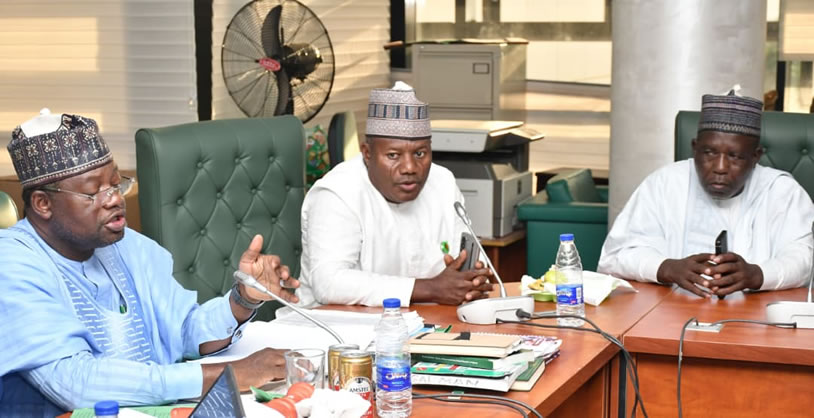
The House of Representatives Ad-hoc Committee investigating expenditure in Nigeria’s power Sector has blamed Distribution Companies (DisCos) of failing to meet their obligations and shortchanging Nigerians 13 years after privatisation of the sector.
Chairman and members of the Committee made the remark at its resumed investigative hearing when Abuja, Port Harcourt and Benin DisCos appeared before it on Wednesday.
Chairman of the Committee, Hon. Ibrahim Al-Mustapha Aliyu said that, despite privatisation of the power sector, which was aimed at providing stable power in the country, Nigerians still grapple with the challenges of power supply.
He said, “You know, the overall perception of Nigerians is that DISCOs are the major problem, the major setback to the noble initiative of privatizing the power sector. Because most of the DisCos fall in the hands of those that are not truly investors, that are not actually ready to invest, but take advantage of the sector.
“You know, nobody will agree with you that after 13 years, you could not show one particular deliberate initiative.
“I have cited an example with Abuja DISCO last time. Abuja DISCO extends up to Kontagora, but their major concentration is in Abuja, because that’s where they can make money. The larger part of Kontagora may be without electricity.
“They don’t bother. And to be honest, they find it not economically wise, as investors, to waste money extending lines, maybe of 300, 200, 250 kilometers to rural areas, to those other areas that they feel they will not be able to recoup their investment.
“This is not the intention of the privatization. And this is what is constantly taking us to the major. issue of probe, the issue of establishing the effectiveness or otherwise of the privatization generally. Look at the DisCos on 60% by the investors and 40% by the government.
“But if I ask you, how much have you returned as a dividend of the 40% back to the government? The answer is nil, because you always pose as those that are investing for charity at last. So these are the key issues.
“I have said it before we begin this meeting, maybe at the beginning of this meeting, that, you know, we have already opened talks with these investors, with the co-investors. That is the… The co-investors to their DISCOs.
“Because we have to talk as Nigerians. We have to look at avenues where we can salvage this situation. The government has demonstrated commitment. If you can get this money across… Now, if I have to go by these loans given to you by CBN, realiz)se that, yes, some have made money, as you have earlier elucidated from his submission”.


By Nick Ibe, Abuja
States have been told to look for their power solutions locally by setting up functional electricity markets under the Electricity Act 2023.
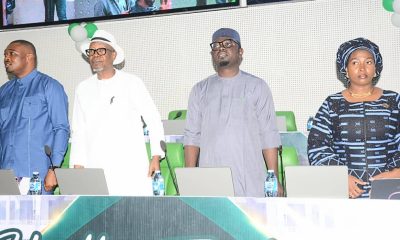
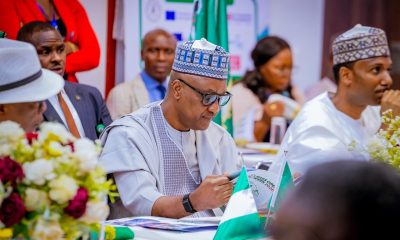
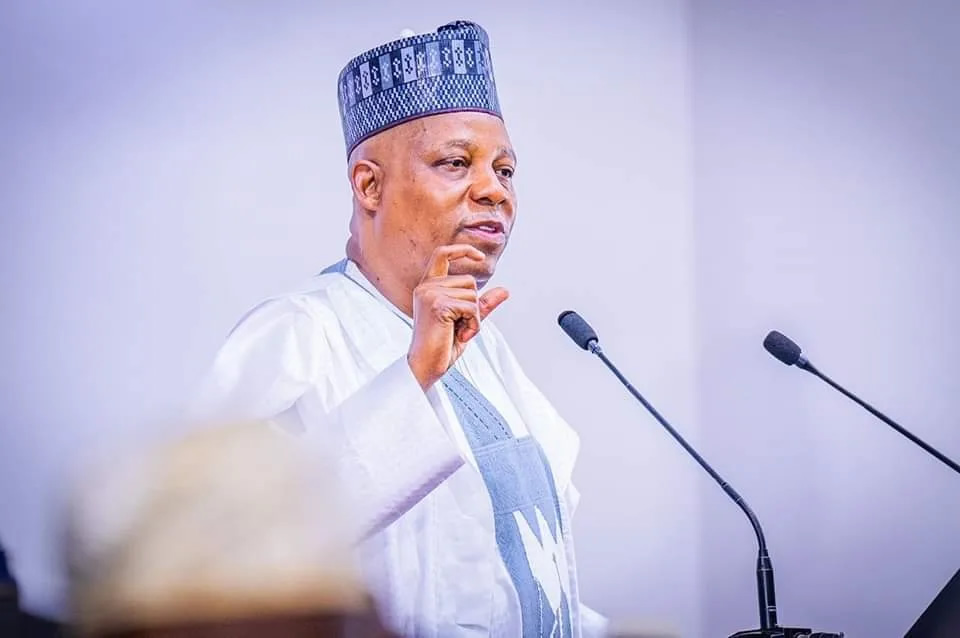
Vice President Kashim Shettima said this on Wednesday at the opening of the National Stakeholders’ Workshop on the Electricity Act 2023 at the State House Banquet Hall, Presidential Villa, Abuja.
The workshop theme, “Unlocking the Opportunities of the Electricity Act 2023 for Sustainable Energy Development and Economic Growth in Nigeria,” pulled federal and state institutions as well as regulators.
Represented by the Deputy Chief of Staff to the President, Ibrahim Hadejia, Shettima said Nigeria’s quest for building a competitive industrial economy would remain constrained unless electricity reforms produced reliable power for businesses, households and public institutions.
The Act, he said, had decentralised electricity governance to let states build power markets suited to their economies and resources. He enohasised that:
“The Act empowers states to develop and regulate intrastate electricity markets within the applicable constitutional and statutory framework.
“The size, diversity and endowments of this nation demand this decentralisation.
“Electricity supply must become a shared responsibility, pursued with innovation and accountability across the federation. Our states must shed the habit of waiting for Abuja to provide every answer.”
The Vice President pointed to solar potential in Sokoto, Borno and Katsina, gas resources in Delta, Rivers and Bayelsa, and hydroelectric opportunities in Niger and Kebbi, and urged states to turn them into investments that could power agriculture, manufacturing, healthcare and education.
He however noted that a law alone would not improve supply, urging states that had yet to set up regulators to put them in place without delay. In his words:
“Legislation cannot implement itself. States yet to act must begin their legislative and institutional preparations promptly.
“They need to establish functional electricity regulatory bodies with technical competence and capacity.”
Shettima proposed a voluntary National Electricity Reform Peer Review and Implementation Framework, involving the Nigerian Electricity Regulatory Commission, the Federal Ministry of Power, the Nigeria Governors’ Forum and state regulators.
He said states would use it to share experience, strengthen their regulators and assess progress on market development, investment readiness, consumer protection and electricity access.
According to him, “No state needs to purchase with failure the knowledge another state has already acquired.”
Shettima said annual voluntary reviews should identify implementation problems, facilitate technical assistance and promote practical solutions without undermining the constitutional powers of states.
“Private capital must arrive with technology and expertise. Transparent licensing, predictable regulation, commercially viable markets, investment safeguards and credible dispute resolution will earn investors’ confidence,” he added.
He also called for stronger consumer protection against arbitrary billing, poor service and unfair commercial practices, saying operators must be held accountable for service quality:
“The final verdict on this law will be delivered wherever a Nigerian reaches for a switch.”
The Permanent Secretary of the Federal Ministry of Power, Mahmuda Mamman, who represented the Minister of Power, Joseph Tegbe, said the Act’s success would depend on states’ ability to build credible institutions and commercially viable markets.
The Director-General of the Nigeria Governors’ Forum, Dr Abdulateef Shittu, said work was under way on a standard tariff framework for states to protect consumers while attracting investment.
He urged stakeholders to ensure that any amendment to the legal framework was built on progress already made.
The Head of Compliance at the Electricity Commission, Hauwa Yakubu, said it had issued regulatory transfers to 17 states, the latest being Akwa Ibom.
She noted that the commission was supporting new state regulators through peer-to-peer training and technical engagement.
President Bola Tinubu signed the Electricity Act 2023 in June 2023, replacing the Electricity Power Sector Reform Act of 2005.
It allows states to license generation, transmission and distribution within their borders, while the national regulator keeps oversight of interstate matters.
Lagos, Edo and Kaduna already had state electricity laws when it was signed.
The commission’s order moving Akwa Ibom’s intrastate regulation to the state regulator, AKSERC, was dated August 18, 2026.
At the time, it mandated that transfers be completed by February 17, 2027, and that the commission had reported 16 states fully transitioned in July.
Generation companies said in March that they were owed about N6.8tn at the end of February and that national output had hovered around 4,000 megawatts for years, against installed capacity of about 14,000 megawatts.
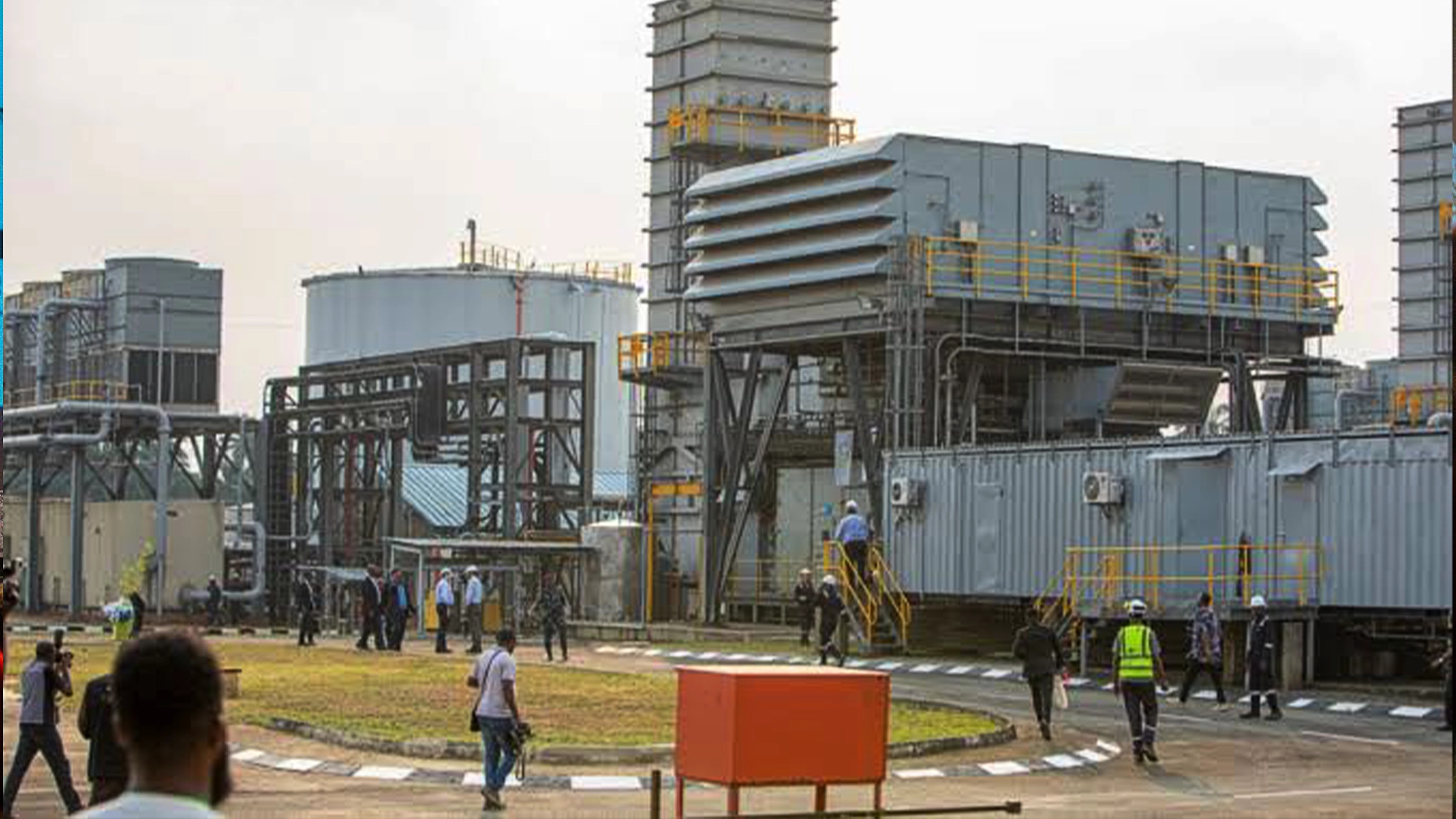
In Aba, Abia State, a new narrative evolves as the Geometric Power-owned Aba Power distribution network provides electricity to businesses, institutions and households, reducing dependence on costly petrol and diesel generators.
This is affecting business operations positively in the commercial hub, with manufacturers enjoying uninterrupted production, traders extending working hours and households enjoying improved food preservation and lower running costs.
Geometric Power Chairman, Professor Barth Nnaji, sees the Aba Integrated Power Project, an investment exceeding $900 million, as a dream come true.
He said the company was committed to providing reliable and affordable electricity to customers, irrespective of their social or economic status. In his words:
“Our services are for all people, regardless of class or status. Electricity is a fundamental right of the Nigerian people, and we are happy to provide reliable and affordable electricity to all our customers.”
He added that, unlike other legacy distribution companies, Aba Power is wholly privately owned and had not received Federal Government subsidies.
The decision of the African Export-Import Bank (Afreximbank) to provide a $50 million facility to Geometric Power Limited after a seven-year delay was what made Aba Power a reality today.
The Group Managing Director of Geometric Power, Mrs. Agatha Nnaji, said the bank provided the lifeline that enabled the project to be commissioned, saying, “Afreximbank is the bank that provided the funding that enabled us to complete and commission the project.”
“As you may know, politics got in the way, human error impacted the project, and it was delayed just as we were about to commission it. So, for seven years, we were simply maintaining the facilities that were already in place. We had staff who had to be paid to keep maintaining them.
“Eventually, when we determined the exact amount needed to complete the project—after President Jonathan intervened and his successor, the late President Muhammadu Buhari, directed his team to resolve the issues arising from the privatization—we were thrilled that Afreximbank stepped in. They shared our vision and understood the impact the project would have on the community.
“I believe that was the turning point for them. Seeing Aba’s potential as an industrial hub in Africa made them far more willing to find a way to make the project work. Although subsequent challenges prolonged completion, Afreximbank ultimately came to the rescue.
“At that crucial juncture, we needed $50 million, and they provided it. Honestly, Afreximbank’s role in all of this was remarkable. Ordinarily, a bank or financier would walk away from a project facing the kinds of hurdles we had at the time.
“We were operating in an environment where the government had breached the terms of our signed agreement. We were dealing with civil and public service officials who knew what needed to be done but refused to act.
“There was little to offer them comfort beyond the sheer determination of our lead investor. For him, it wasn’t merely a financial venture; his drive to see the project through was fueled by a desire to create a lasting, positive impact on people’s lives.”
Infrastructure built for reliability
The company says its investment in distribution infrastructure is central to its efforts to maintain stable electricity supply.
According to the Director of Commercial Operations, Engineer Victor Ngwoke, Aba Power deliberately invested in heavy-duty tubular steel poles designed to withstand extreme conditions and minimise disruptions.
“We wanted to have a very sturdy and reliable infrastructure. We, therefore, deliberately invested in heavy tubular steel poles,” he said.
Ngwoke explained that the poles have deeply buried concrete foundations and are designed to withstand substantial impact, including collisions with vehicles.
He said the company also maintained standards for conventional concrete poles and worked to restore damaged infrastructure quickly whenever faults occurred.
On metering, the director said approximately 98 per cent of Aba Power’s customers had prepaid meters, helping to reduce disputes associated with estimated billing.
With prepaid meters, customers can monitor their consumption and manage electricity expenses more effectively.
Ngwoke also disclosed that the company deployed smart meters and monitoring teams to detect and prevent electricity theft, including illegal connections and meter bypasses.
He said residents had also supported efforts to protect the network, recognising the benefits of reliable electricity to their businesses and livelihoods.
Excess capacity, wider reach
Aba Power currently takes an average of 50 to 60 megawatts from an installed generation capacity exceeding 140MW, according to the company.
The available capacity has enabled it to extend electricity supply to parts of neighbouring Rivers State, where some communities are underserved by the Port Harcourt Electricity Distribution Company.
The company says it hopes to extend its reach across Abia State, subject to the necessary infrastructure and operational requirements.
Polytechnic cuts energy costs by 80%
One of the institutions benefiting from the improved supply is Ogbonnaya Onu Polytechnic, Aba, whose Rector, Professor Christopher Okoro, said the development had transformed academic and administrative activities.
Okoro, who assumed office in 2024, said one of the first challenges he encountered was a huge outstanding diesel bill, which he considered unsustainable.
He contacted Nnaji for assistance, and the institution was connected to Aba Power within 48 hours.
Before the connection, he said, academic activities, research and other operations were constrained by unreliable electricity, with staff often leaving the campus by 2pm.
With the improved supply, students and staff now remain on campus until late in the evening, despite the institution not being residential.
“Before now, staff used to leave by 2pm. They cannot work without electricity. You cannot carry out research without electricity,” he said.
The rector said the institution’s energy costs had fallen by about 80 per cent.
Manufacturers, traders extend working hours
At Damson Industries, a manufacturer of shoe components, Chairman David Mmadueke, said reliable electricity had enabled the company to operate day and night shifts without routinely shutting down because of power outages.
“We have light here morning and night. The only time we didn’t have light was when the company had a problem with gas supply for about three days. Apart from that, this factory has never closed because there is no electricity,” he said.
Similarly, the President of Aba North Shoe Plaza, Obioma Onyebuchi, said the plaza, which houses more than 2,000 shops, switched to Aba Power on January 14 and had since enjoyed steady supply.
According to him, traders no longer depend on individual petrol or diesel generators, as the company has ensured that customers are metered.
“With the constant electricity supply from Aba Power, we can now work throughout the day. This has increased the productivity of our members,” he said.
Although some traders consider the electricity tariff high, Onyebuchi said the cost remained preferable to the substantial sums previously spent on fuel.
He expressed the plaza’s readiness to support the company to sustain reliable supply.
Steady power eases household expenses
Beyond factories and commercial centres, improved electricity supply is also changing how some households manage their finances.
Mrs Ada-Ngizi Greg-Ilobinso, a wife, mother and teacher, said reliable electricity had made household management easier, particularly in food storage and budgeting.
She explained that she could now purchase food items in bulk, preserve them in a freezer and reduce the frequency of shopping trips.
“Aba Power has really affected my life positively in so many ways. As a mother and a wife, and also as a housekeeper, a house manager, if I may say, it has really helped me because now we have steady light,” she said.
While the experiences of residents, manufacturers and institutions point to significant gains, the wider impact will depend on the consistency, affordability and reach of the electricity service.
Energy and Power
Nigeria’s $6b Mambilla Power Contract Suit Win: Tinubu Hails EFCC, other Patriotic Nigerians
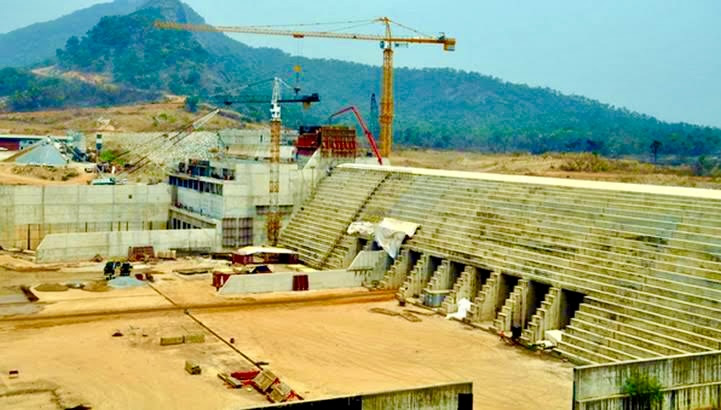
President Bola Ahmed Tinubu has expressed appreciation to the Economic and Financial Crimes Commission, EFCC, for its investigation of the alleged fraudulent contract award of $6 billion for the construction of 3,960mw Mambilla Hydroelectric Power Station to Sunrise Power and Transmission Company Limited, SPTCL.
The president noted, that the Commission’s investigations were pivotal to the September 17, 2026 victory of the federal government over the contractor company at the International Arbitration Tribunal.
The President in celebration of the federal government’s victory over SPTCL hailed the Commission for its findings in the irregular contract award.
“On behalf of the Government and People of the Federal Republic of Nigeria, I strongly commend the tremendous efforts of the Attorney-General of the Federation and Minister of Justice, Prince Lateef Fagbemi and the entire team at the Federal Ministry of Justice for their efforts in this matter.
“I also commend the FRN defence team, led by Ms Elizabeth Oger-Gross and Mr Tolu Obamuroh, both of Paul Hastings LLP, for their professional and excellent defence of the country.
“I commend the patriotism and support of former President Olusegun Obasanjo, and late President Muhammadu Buhari, who testified in the case, which dated back to an illegal 2003 contract to build a 3,050-megawatt hydroelectric plant in Taraba State under a build-operate-transfer model. The Federal Executive Council never authorised the contract.
“I thank the other witnesses in this case, including former Ministers Babatunde Raji Fashola, SAN, and Suleiman Adamu, and the experts, for their active participation in defending Nigeria’s interest in the arbitration.
“I commend the National Security Adviser for his support and the Economic and Financial Crimes Commission for its investigation into the case.
“I want to assure you that while our country remains committed to partnering with genuine investors and honouring its legal obligations, it will continue to defend all opportunistic claims instituted against our commonwealth, strongly.” President Tinuvi added:
“Today’s ICC ruling clears the single biggest legal hurdle that has paralysed the Mambilla hydro power project for years” he said.
The International Arbitration Tribunal under the auspices of the International Chamber of Commerce, ICC, Paris, while ruling in favour of the country, rejected the damages of $680 million demanded by SPTCL as a settlement sum and interest in respect of another arbitration in which it is claiming over $2.7 billion in compensation and interest, relating to disputes associated with the construction of the 3960mw Mambila Hydroelectric Power Project in the arbitration instituted by the company against the federal government.
The former minister of power, Olu Agunloye had on May 22, 2003 awarded the project on a Build, Operate and Transfer Basis” to Sunrise Power and Transmission Company Limited, SPTCL.
Investigations by the EFCC established that the former minister awarded the contract without the approval of the National Executive Council, then chaired by former President Olusegun Obasanjo, making such award inconsistent with federal government’s procedure on award of contracts.
Investigations showed that the award was suffused with favouritism as the owner of the company, Leno Adesanya and the former minister are old time pals, who also in August, 2019 caused SPTCL to transfer the sum of N3,600,000.00 (Three Million Six Hundred Thousand Naira) to the former minister’s Guaranty Trust Bank account no.0022530926.


Reps Tell Airtel, MTN, Glo CEOs: Come and Explain Why Your Poor Network Quality Persists
Spread the loveBy Isa Abdul, Abuja The House of Representatives ad hoc committee probing into poor telecom services has summoned...

Shettima Tells States: Develop, regulate, Use Your Power For Devt Needs
Spread the loveBy Nick Ibe, Abuja States have been told to look for their power solutions locally by setting up...


Why Investors Shun Nigeria : contract breaches, court delays, ex-parte orders
Spread the loveBy Nick Ibe, Abuja Legal and business leaders have revealed situations that discourage long term investments in Nigeria....


FARIDA ISIAK: Who Will Protect The Young Journalist?
Spread the loveBy Shu’aibu Leman Last Wednesday, October 21,2026, I wrote about Dele Giwa, the legendary Nigerian journalist murdered by...

An Open Letter To Prof. Isaac Nathaniel Itodo, Vice-Chancellor, Joseph Saawuan Tarkaa University Makurdi (JOSTUM)
Spread the loveSir, The persistent increment in acceptance fee, school fees and hostel fee in JOSTUM is no longer an...

US Pressure: Drug Cartels Now Using African Routes to Reach Europe, American Markets
Spread the love–Mexican cartels turning Nigeria into meth hub – US By Nick Ibe, Abuja Mexican drug cartels now under...

STATE POLICE: Benue, Ogun, Delta, Enugu, Others Approve Constitution Amendment As Draft Bill Heads To Justice Ministry
Spread the loveBy Felix Umande The push for state police in Nigeria has gained fresh momentum as Benue, Ogun, Delta,...


Ugbema Roundabout Becoming A Death Trap For Thousands.
Spread the loveBy Felix Umande The current state of Ugbema Roundabout, a major junction in Benue State connecting many neighbouring...
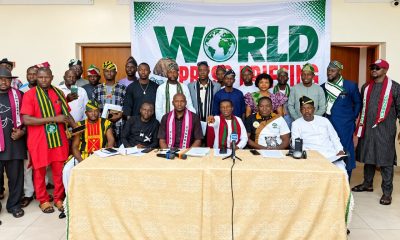

Plateau Indigenous Youths Reject Petition Against DSS, Accuse Fulani Groups of Orchestrating ‘Calumny’ to Halt Security Operations
Spread the loveBy Philip Nyam A coalition of Plateau indigenous youth organisations has defended the Department of State Services (DSS),...


Hope for Patients as Reps Pass Organ, Tissue Transplantation Authority Bill
Spread the loveBy Philip Nyam The House of Representatives at plenary on Wednesday passed through second reading a bill seeking...