
Health
WMD: US$45bn will be needed in 4 years to meet global malaria targets -WHO


By Wumi Tewogbade, Abuja
The World Health Organization (WHO) on Wednesday, said about US$45 billion would be needed in the next 4 years to meet global malaria targets.
This was contained in a message to commemorate the World Malaria Day (WMD), issued by WHO Regional Director for Africa, Dr
Mohamed Janabi, in Abuja.
The theme for 2026 WMD, is ‘ Driven to End Malaria: Now We Can. Now We Must’.
He lamented that the tiny mosquito continues to cause enormous harm. Every year, malaria kills
hundreds of thousands of people, most of them young African children.
He said, “Yet today we can also say something once unimaginable. We have the commitment, knowledge and tools to dramatically reduce malaria illness and deaths, eventually ending malaria as a public health threat”.
Speaking on the theme he said, “The theme of this year’s World Malaria Day is Driven to End Malaria: Now We Can.
Now We Must. This is both a message of hope and an urgent call to action.
Across the African Region, countries are showing stronger leadership, increasing
domestic investment and using innovation to protect those most at risk”.
He noted, “The malaria
response is entering a new phase shaped by country ownership, smarter data use, stronger community engagement and transformative new tools. Elimination is no longer
a distant aspiration. It is an achievable goal if we act decisively, now.
“Our Region still carries the world’s heaviest malaria burden. In 2024 alone, nearly 600,000 lives were lost in Africa. Three-quarters of those deaths were among young children. These preventable deaths remind us why progress cannot wait.
“There are encouraging signs of momentum. More than ten countries have increased
domestic financing for malaria programmes since January 2025. Twenty-five countries
are rolling out malaria vaccines, helping protect around 10 million children each year”.
He said the next-generation mosquito nets is designed to overcome insecticide resistance now
account for the vast majority of newly distributed nets.
“Digital technologies are improving
our ability to predict, detect and respond to outbreaks. Plus new vector control innovations are expanding our toolbox. .
“But progress is not guaranteed. Funding gaps continue to slow the response. At least US$45 billion will be needed between 2026 and 2030 to meet global malaria targets. Insecticide resistance is widespread. Drug resistance is emerging in some settings.
“Climate variability is changing transmission patterns. And humanitarian crises and displacement are increasing vulnerability”.
The WHO boss noted that, it is possible to overcome the challenges, because there are stronger political commitment, better data, more
engaged communities and more powerful tools than ever before.
“Now we must—because when investment declines and programmes weaken, malaria
returns quickly, reversing hard-won gains and costing lives. To seize this moment, five priorities are essential:
“First, countries must continue to lead the malaria response with strong national ownership. When governments prioritize malaria as a dividend of national development and mobilize domestic resources, they lay the foundation
for sustainable impact” he noted.






By Isa Abdul, Abuja
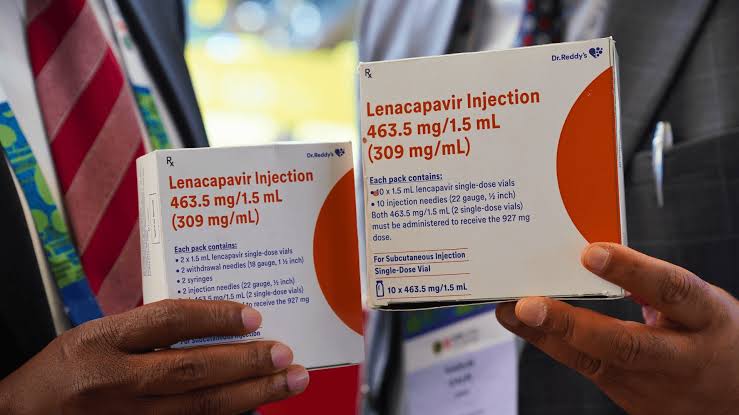
The first generic version of lenacapavir, a twice-yearly injection used to prevent HIV infection, has been given tentative approval by the U.S. Food and Drug Administration (FDA), in a major development for global HIV prevention.
The generic drug which has been developed by India’s Dr Reddy’s Laboratories, and is expected to cost about $40 per person annually, will be made available across 120 low- and middle-income countries, including Nigeria.
The injection has demonstrated near-total effectiveness in clinical trials, offering an alternative to daily HIV prevention pills. The approval is expected to accelerate access to affordable prevention options, although local regulatory processes, funding and distribution remain key to its rollout.
By Michael Lim
The Nigeria Centre for Disease Control (NCDC) has disclosed that the two suspected Ebola cases reported in Yola, Adamawa State, have tested negative following two rounds of laboratory testing.
The Agency noted in a statement that it is working with the Adamawa State Government to investigate the cases, which were isolated and tested.
The NCDC clarified that the index case previously confirmed in the Federal Capital Territory remains the only confirmed Ebola case reported in Nigeria.
It urged Nigerians to remain calm and rely on official government and public health channels for accurate information.
The Agency further advised anyone experiencing symptoms such as fever, severe weakness, headache, muscle pain, vomiting, diarrhoea or unexplained bleeding, particularly after possible exposure, to seek immediate medical attention and provide healthcare workers with relevant travel and contact history.
By Michael Lim
Two individuals have been isolated by health authorities following suspicion that they may be infected by Ebola disease in Nigeria’s North-East region as they are being subjected to investigations and lab tests.
An update on the disease situation by the Nigeria Centre for Disease Control and Prevention (NCDC), said contact identification and listing were ongoing, while samples from the suspected cases were being subjected to laboratory testing.
It clarified that the classification of the individuals as suspected cases did not mean they had tested positive for Ebola, noting that confirmation would depend on laboratory results.
The public was advised to maintain proper hand hygiene, practise enhanced sanitation and follow preventive guidance issued by public health authorities.
The update added that further information would be provided as verified details become available.


PERSPECTIVE: Tiv Leaders Must Hear This: While Akwa Ibom Asked For A Future, Tiv Leaders Fight Over A Man
Spread the loveBy Edward Tion I watched the presidential campaign in Akwa Ibom today with a bleeding heart. Not because...


Pursue Unity, Peace, Play Active Role in Nigerian Politics, Deputy Speaker, Kalu Urges Igbo Elites, Leaders
Spread the loveBy Saint Mugaga Deputy Speaker of the House of Representatives, Rt. Hon. Benjamin Kalu has called on Igbo...

2027: Amupitan Seeks Royal Support, Partnership to Discharge Mandate Peacefully, Effectively
Spread the loveBy Isa Abdul The National Chairman of the Independent National Electoral Commission (INEC), Professor Joash Amupitan, has said...


Place 7-Year Ban On Establishment Of New Tertiary Institutions– Edu Minister Begs NASS
Spread the loveBy Son Tertsea, Abuja The Federal government has appealed to the National Assembly to halt the passage of...

Gov Sule to Security Agencies: Fish Out Sponsors of VP Shettima’s Attackers in Lafia
Spread the loveSDP: attackers APC members against Wadada’s candidacy By Isa Abdul, Abuja Prominent personalities in the state planned and...


Wike’s Entry, Allocation of UniAbuja Land a Breach of Court Order– ASUU
Spread the loveBy Nick Ibe, Abuja The Federal Capital Territory Administration’s (FCTA) allocation of some hectares of land belonging to...


Alleged 4 Herbal Concoction Consumers Die in Benue
Spread the loveBy Vincent Tyosuugh After consuming a suspected poisonous herbal concoction allegedly sold to residents of Oju Local Government...


BENUE APC Split Deepens As SGF, Stakeholders Shun Alia Campaign Flag-off, Disown Campaign List
Spread the loveBy Felix Umande The crisis rocking the Benue State chapter of the All Progressives Congress (APC) deepened on...


Defence Minister Invites Cybersecurity, Drone, DefenceTech Experts for Collaboration with DICN
Spread the loveBy Nick Ibe, Abuja Minister of Defence, General Christopher Musa (rtd) has called on Nigerians with expertise in...


Wike’s Rainbow Coalition Faces Storm Over Alleged Split Voting: VP Shettima, SDP, Ondo APC Reject Coalition
Spread the loveBy Son Tertsea, Abuja Nyesom Wike’s Rainbow Coalition has been identified as a split voting device according to...