
General News
Where Do You Belong on FG Grazing Reserve, PDP Asks Gov Alia


Vincent Tyosuugh
With the fierce opposition to the Federal Government’s plan to establish a grazing reserve in the state, the Peoples Democratic Party, PDP, in Benue State on Sunday in Makurdi, called on Governor Hyacinth Alia to tell the people of the state his stand on the plan.
Since announcing the siting of a grazing reserve in Benue, opposition against it has grown, with the Nigerian Catholic Diocesan Priests, Makurdi Diocese, Mdzough U Tiv, Ochetoha K’doma and OmiNy’Igede socio-cultural groups, Benue citizens in the diaspora, the PDP and other groups have voiced out, rejecting the proposal.
However, Gov Alia’s silence has been loud.
Following the growing opposition to the grazing reserve, the Chief Press Secretary to the Governor, Kula Tersoo, issued a statement calling for caution:
“The governor is fully engaged on the matter and remains in consultation with the people and relevant authorities.
“He will, as he has always done, approach the issue with careful consideration and strategic judgment, ensuring that the interests of Benue State and its people remain his foremost priority.”
Kula argued that it was not every issue that required an immediate public pronouncement, advising the people to be patient as the government was considering the proposal and would soon determine the best course of action for the state.
However, the PDP disagreed with the statement credited to the governor’s aide, insisting that Alia ought to declare his position on the raging issue.
“Tell Benue people where you belong,” the PDP insisted in
a statement issued by Bright Antyo, its publicity secretary on Sunday.
The party noted that the continuous silence of the governor on the Federal Government’s decision to establish a grazing reserve in the state was a matter too serious for public relations language.
The party stated that Benue communities had suffered killings, displacement and loss of ancestral lands as a result of attacks on them by armed herders, noting that
any proposal involving grazing reserves, livestock settlements or the allocation of land for ranching would naturally generate anxiety.
“The fear among many Benue people is that what is being presented as a ranching programme could ultimately become a land grabbing scheme by another name.
“Whether that fear is justified or not, the responsibility of the governor is to address it openly and unequivocally, not to tell worried Benue people to keep quiet while government ‘considers’ the proposal behind closed doors.
“If there is nothing to hide, then there should be nothing difficult about telling Benue people exactly what is being proposed.”










–PVC Collection Begins Friday
By Son Tertsea, Abuja
The Independent National Electoral Commission, INEC, Chairman, Prof. Joash Amupitan, SAN, has disclosed that Nigeria’s National Register of Voters has risen to more than 103 million ahead of the 2027 general elections.
Prof Amupitan disclosed this as the INEC, in collaboration with the Development Alternatives Incorporated (DAI) and the Nigerian Guild of Editors (NGE), on Monday held a strategic workshop for media executives in Abuja.
The workshop, held at BON Hotel Octagon, Jahi District, Abuja, with the theme, “Strengthening Democracy Through Partnership Among Editors, Civil Society and Electoral Institutions,” focused on strengthening collaboration between the electoral management body, the media and civil society ahead of the 2027 elections.
INEC Chairman said the Commission’s three-phase Continuous Voter Registration (CVR) exercise had attracted more than 10.6 million new applicants, while the public display of the Preliminary Register for claims and objections had been completed.
He added that the Commission had also completed the final Automated Biometric Identification System (ABIS) cleanup of the register.
The INEC Chairman used the forum to announce that the nationwide collection of Permanent Voter Cards (PVCs) will commence on Friday, October 9, 2026, urging eligible citizens to participate in the process.
According to him, the disclosure was particularly important as the country approaches the 2027 general elections, with INEC working to ensure that the electoral process is transparent, technology-driven and credible.
He said the Commission was committed to continuously improving the Bimodal Voter Accreditation System (BVAS) and the INEC Result Viewing Portal (IReV) to ensure that every valid vote counts and is seen to count.
The Chairman also identified public trust as the ultimate determinant of electoral credibility, stressing that operational efficiency by INEC alone could not guarantee democratic stability.
“The ultimate arbiter of electoral integrity is public trust,” Amupitan said.
He called for a stronger partnership between INEC, editors, civil society organisations and other stakeholders, saying the Commission was prepared to listen to editorial concerns, address operational challenges and provide timely information to prevent misinformation from filling communication gaps.
Amupitan urged newsrooms to establish digital fact-verification desks and pledged that INEC would provide editors with direct access to verify field incidents, logistical developments and security reports in real time.
He further proposed a sustained editorial feedback mechanism between INEC and the Nigerian Guild of Editors to review operational progress and resolve emerging challenges throughout the 2027 election.
Earlier, President of the Nigerian Guild of Editors, Mr Eze Anaba, said the workshop was timely given the country’s proximity to another general election.
Anaba said elections were not merely about casting ballots but about citizens having confidence that their votes would count and that the institutions conducting elections would act fairly and professionally.
He urged editors to uphold accuracy, fairness, balance and public interest in electoral reporting, while calling for stronger access to credible and timely information from INEC.
By Seyi Balogun, Lagos
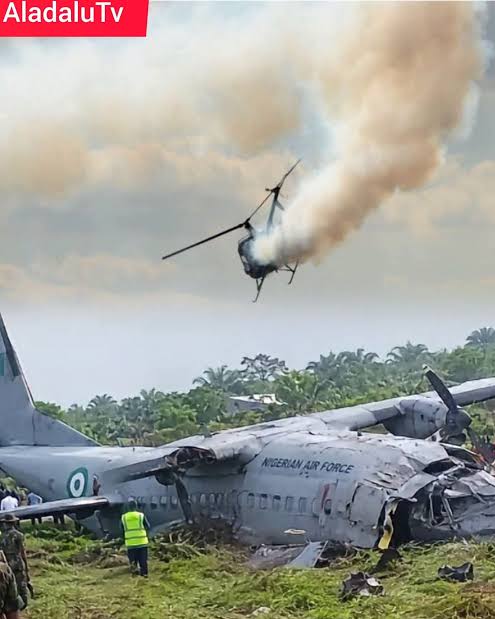
The crashed aircraft in the Igbokoda area of Ondo State on Monday belonging to the Nigerian Air Force, is believed to have 32 on board.
The Air Force confirmed the ATR-42 aircraft, as one on its fleet, had embarked on a routine mission from Benin, Edo State, to Lagos when the accident occurred on October 5, 2026.
In a statement on Monday, the Director of Public Relations and Information of the Nigerian Air Force, Ehimen Ejodame, said an immediate search and rescue operation had been activated in coordination with relevant authorities and emergency response agencies.
The confirmation came after the Minister of Aviation and Aerospace Development, Festus Keyamo, announced that a military aircraft had crashed near the Naval Base in Igbokoda after air traffic controllers lost contact with it.
“The Nigerian Air Force (NAF) has activated an immediate Search and Rescue operation following an ATR-42 aircraft accident in the Igbokoda area of Ondo State on 5 October 2026,” the statement read.
Ejodame said the aircraft was travelling from Benin to Lagos when the incident occurred, adding that efforts were underway to locate and assist those on board.
“The aircraft was on a routine mission from Benin to Lagos when the accident occurred. Search and Rescue operations, in coordination with relevant authorities and emergency response agencies, are currently ongoing.
“The NAF is committed to ensuring the success of the ongoing Search and Rescue efforts. Further details will be communicated in due course.”
The Air Force did not disclose the number of casualties or provide details about the condition of those on board in its statement.
However, Keyamo had earlier said preliminary information indicated that 25 passengers and seven crew members were on board, bringing the total number of people aboard the aircraft to 32.
In a statement issued by the ministry on Monday, the minister said air traffic controllers lost contact with the aircraft, with tail number NGR 931, at about 9:13 am.
“I regret to inform the general public that Air Traffic Controllers have informed me of the disappearance of a military aircraft with tail number NGR 931, en route enroute Lagos from Benin at 0913 hours earlier today. All efforts to raise the aircraft on radio proved abortive,” Keyamo said.
He later confirmed that the aircraft had crashed close to the Naval Base in Igbokoda, adding that the wreckage had been located and search and rescue operations were ongoing.
“Subsequently, information, however, confirmed that the military aircraft had crashed close to the Naval Base in Igbokoda, Ondo State. The wreckage has been located, and search and rescue operations are ongoing,” he said.
Keyamo noted that the Ministry of Aviation and Aerospace Development and the Nigerian Civil Aviation Authority did not have regulatory authority over military aircraft. He said he had spoken with the Chief of the Air Staff, Air Marshal Sunday Aneke, and pledged the ministry’s cooperation and assistance with the rescue efforts.
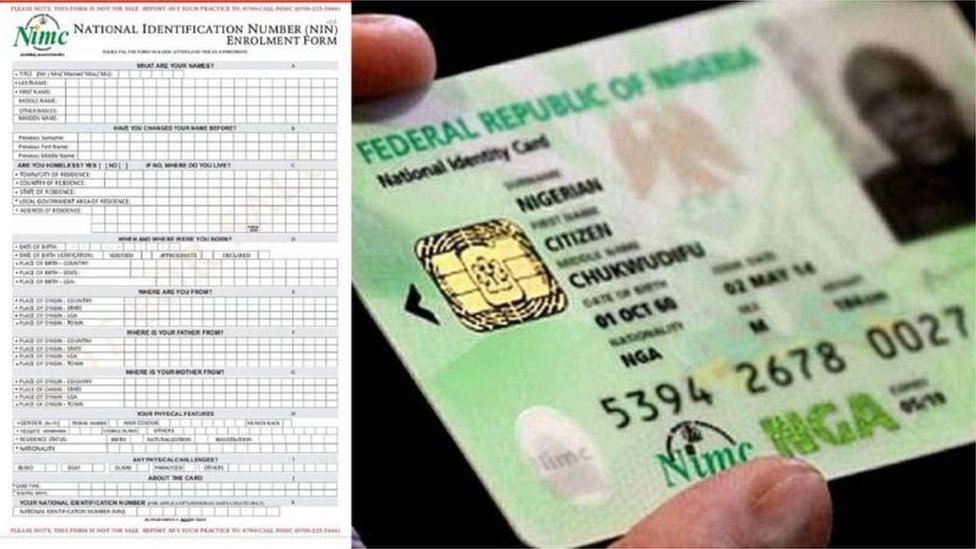
Do not share sensitive personal information, including identification numbers, bank details, photographs and medical results, on artificial intelligence platforms, the National Information Technology Development Agency has warned Nigerians.
NITDA’s advisory titled “Advisory on the Safe Use of AI Platforms”, published on its website on Monday issued the warning.
The agency said members of the public were increasingly using AI chatbots and assistants such as ChatGPT, Claude, Gemini, Copilot and Meta AI for schoolwork, business, job applications, health questions and personal matters.
According to the advisory, many users share personal information without realising that information entered or uploaded on AI platforms may be stored outside their control.
NITDA added: “Information entered into an AI platform, may be retained, logged, used to train the provider’s AI models.”
It warned that personal details shared with AI platforms could be exposed in a data breach and used for identity theft, impersonation or financial fraud.
The agency also cautioned that AI tools could produce answers that appeared confident but were inaccurate or outdated.
It said acting on such information in health, legal, financial or academic matters could cause serious harm.
Anonymise information
NITDA advised members of the public to remove, anonymise or pseudonymise personally identifiable information and sensitive information before using AI tools.
The agency also advised users to verify the privacy and data-handling terms of AI platforms before using them.
It further urged users not to upload internal documents unless specifically authorised.
NITDA said organisations should implement AI governance or AI transformation policies defining approved tools, permitted use cases, data-handling rules and accountability for AI use.
It further advised organisations and their employees to follow existing AI, information security and data protection policies.
NITDA urges users to verify AI answers.
The agency ended the advisory with the message: “Think Before You Prompt.”



INEC: Nigeria’s Registered Voters Over 103 Million Ahead of 2027
Spread the love–PVC Collection Begins Friday By Son Tertsea, Abuja The Independent National Electoral Commission, INEC, Chairman, Prof. Joash Amupitan,...


32 on Board Crashed Air Force ATR-42 Aircraft in Ondo
Spread the loveBy Seyi Balogun, Lagos The crashed aircraft in the Igbokoda area of Ondo State on Monday belonging to...

NITDA warns Nigerians against sharing NIN, BVN, others with AI platforms
Spread the loveDo not share sensitive personal information, including identification numbers, bank details, photographs and medical results, on artificial intelligence...


NNPC Retail Gives Customers ₦66 Off Every PMS Litre…As Independence Anniversary Promotion Opens at Mega Stations
Spread the loveBy Aliyu Musa NNPC Retail Limited commenced its week-long 66th Independence Anniversary fuel promotion on 1 October 2026....


Nigerian Judiciary Now Elects Presidents, Governors, Senators –Agbakoba
Spread the loveIn this interview, former Nigerian Bar Association, NBA, President, Dr Olisa Agbakoba, SAN, examines the state of Nigeria’s...


Six Missing as Boat Capsizes on River Buruku
Spread the love–Blue Economy Commissioner asks for calm By Vincent Tyosuugh Six passengers have not been accounted for as the...


2027 Poll Success: INEC Inaugurates Youth Ambassadors
Spread the loveBy Isa Abdul, Abuja As part of efforts to strengthen its engagement with young Nigerians and promote informed,...
2027 election: INEC opens portal for ad hoc staff recruitment
Spread the loveBy Nick Ibe, Abuja Activation of the online portal for the recruitment of ad hoc staff for the...


2027: Tompolo Rallies Taraba For Tinubu, Donates 25 Campaign VehiclesBy Aliyu Musa
Spread the loveAs campaigns for the January 2027 presidential election gather momentum, the PBAT Door-to-Door Movement has launched its grassroots...


29 years after:Unimaid Business management class of 97 holds reunion
Spread the love*Plans intervention or games for young entrepreneursBy Aliyu Musa THE University of Maiduguri business management class of 1997...