
General News
The Tiv Chiefdom Question: Between Resistance, Political Will And Administrative Responsibility Under Governor Aa Sule.

By King Iorshe
A CRITICAL READING OF GOVERNOR ABDULLAHI SULE’S EXPLANATION.
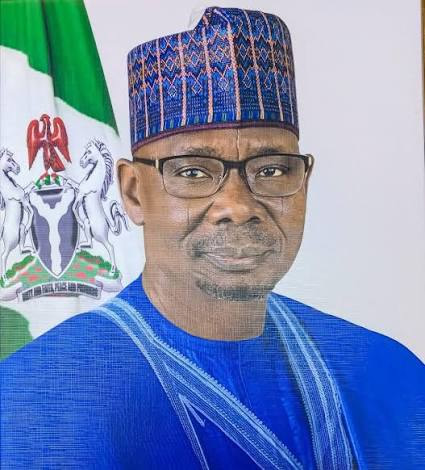
Governor Abdullahi Sule’s admission that establishing a chiefdom for the Tiv people of Nasarawa State has proven difficult owing to resistance from neighbouring Alago communities is noteworthy. It concedes that the matter remains unresolved even though the Tiv constitute a major population in several areas of the state.
However, the statement also prompts a fundamental question:
When does opposition from another community turn into a justification for government inaction—and when does it become the government’s duty to settle the disagreement through law, consultation and administrative action?
That is the core issue.
THE FIRST GAP: WHO ACTUALLY BEARS THE FINAL RESPONSIBILITY?
The Governor’s explanation seems to place substantial weight on resistance from Alago traditional authorities.
That may account for one obstacle, but it does not fully address the administrative question.
If the state government holds that a chiefdom is justified, it ought to be able to clarify:
What formal process has been pursued?
Which committee or institution reviewed the request?
What recommendations were issued?
Which traditional rulers raised objections?
What exactly were those objections?
Were the objections based on ethnicity, territory, history, or administration?
What other arrangements were taken into consideration?
What legal or administrative instrument must be in place before a chiefdom can be established? In the absent of these details, the public is given a political explanation instead of an administrative one.
“It is difficult” does not mean the same thing as “it is impossible.”
THE SECOND GAP: THE TIV SHOULD NOT BE EXPECTED TO LOBBY WITHOUT END
The Governor urged Tiv sons and daughters to draw on their ties with traditional rulers in Keana, Doma and Obi in order to lobby for the chiefdom.
There is a certain practical wisdom in promoting dialogue.
Yet there is also a serious institutional question.
Should the establishment of a traditional administrative institution rest mainly on personal lobbying?
If the matter is essentially an administrative question, it should in the end be settled through established procedures—not simply by who knows which chief or who can lobby effectively.
The risk is that government may unintentionally turn a question of rights, representation and administrative recognition into one of personal relationships.
That cannot be sustained.
THE DEEPER ISSUE: TRADITIONAL INSTITUTIONS INVOLVE MORE THAN TITLES
The Tiv demand for a chiefdom should not be boiled down to a wish for a traditional title.
Traditional institutions have consequences for:
Representation;
Local administration;
Cultural identity;
Resolution of disputes;
Ties to land and community;
Engagement with government;
Development initiatives;
Political acknowledgement;
Leadership within the community;
Safeguarding of history and institutions.
As a result, the conversation ought to shift away from:
“Can the Tiv get a chiefdom?”
and toward:
“Which administrative and traditional arrangement most reliably ensures peaceful, fair and lawful recognition of the Tiv communities in Nasarawa State?”
That question is far more productive.
THE ALAGO-TIV MATTER MUST BE APPROACHED WITH CARE
This is arguably the most delicate dimension.
The government must not let the matter turn into a rivalry between Tiv identity and Alago identity.
For generations, the two communities have coexisted side by side. Consequently, any government solution should steer clear of language or policies implying that recognizing one community inevitably entails displacing or humbling another.
The state ought to set up a process grounded in evidence that involves:
Historical documentation;
Current administrative boundaries;
Data on population;
Customary institutions;
Submissions from the community;
The history of land and settlement;
Factors related to security;
Principles of the Constitution;
The relevant Nasarawa State laws and regulations governing traditional institutions.
This would lessen the chance of the issue turning into an ethnic contest.
Peace ought not to depend on permanently denying legitimate representation, and representation ought not to depend on hostility toward another community.
THE QUESTION OF APPOINTMENTS CANNOT BE SET ASIDE
This is the point at which the Governor’s statement takes on political significance.
If the government acknowledges that the Tiv are important enough to be consulted on traditional institutions, then the question of their inclusion in government appointments follows as a matter of course.
The pertinent questions are:
How many Tiv currently hold significant political appointments in Nasarawa State?
Not simply special assistants, personal assistants or campaign roles, but meaningful positions that carry genuine institutional authority and influence?
The public ought to demand a clear and transparent account of representation in:
Commissioners;
Permanent-secretary- level roles, where they exist;
Senior government boards;
Commissions;
Development agencies;
Local government leadership;
Government-owned institutions;
Political and administrative appointments.
The question should not be:
“Give the Tiv everything.”
Rather, it should be:
“Does the makeup of government fairly reflect the diversity and demographic spread of Nasarawa State?”
That is a valid governance question.
THE GOVERNOR’S REMARK ABOUT WADADA INTRODUCES YET ANOTHER POLITICAL DIMENSION
The Governor is said to have thanked the Tiv for backing Senator Ahmed Aliyu Wadada as the APC governorship candidate and pledged not to let them down.
This establishes a significant political expectation.
If the Tiv endorsement carries enough political weight to be acknowledged by the Governor, then the people have the right to ask:
What specific governance commitments come with that political relationship?
An endorsement ought not to serve as a replacement for policy.
The Tiv community should thus pursue measurable commitments regarding:
Traditional institutions;
Political appointments;
Infrastructure in communities populated by the Tiv;
Education;
Health facilities;
Youth employment and empowerment;
Security;
Agricultural development;
Equitable representation within government institutions.
The most durable political relationship does not rest on applause or promises.
It rests on clear commitments, measurable outcomes and accountability.
THE GREATEST RISK: THE POLITICS OF ENDLESS POSTPONEMENT
The Governor’s remark that efforts become difficult, are shelved and later revisited warrants serious attention.
There is a pattern that deserves to be questioned:
When an issue is continually deferred, the deferral itself ultimately turns into a policy.
The Tiv people, therefore, must ask:
When was the chiefdom request first put forward formally?
How many committees have examined it?
What recommendations did they make?
What has stood in the way of implementation?
Which specific objections are still outstanding?
What would amount to a solution?
What timeline is the government considering?
In the absence of a timeline, “we will revisit it” can turn into an indefinite political holding pattern.
THE GOVERNMENT OUGHT TO SET UP A FORMAL DIALOGUE MECHANISM
Instead of leaving Tiv leaders to lobby individual traditional rulers, the government could set up a Tiv–Alago Traditional and Administrative Dialogue Committee.
Its membership could comprise:
Tiv traditional representatives;
Alago traditional representatives;
Relevant local government authorities;
Ministry of Local Government/Chieftaincy Affairs;
Ministry of Justice;
Historians and archivists;
Representatives of the communities;
Impartial experts in peacebuilding.
Its purpose should be to review the dispute impartially and offer solution.
THE TIV AGENDA MUST EXTEND BEYOND TRADITIONAL RECOGNITION
A more robust Tiv agenda might rest on four pillars:
RECOGNITION
Chiefdoms, districts, village areas and traditional representation.
REPRESENTATION
Equitable involvement in political and administrative appointments.
DEVELOPMENT
Roads, schools, healthcare, water, electricity, agriculture and economic opportunities.
ACCOUNTABILITY
A measurable framework for monitoring government commitments.
WHAT THE GOVERNOR SHOULD DO NEXT
If the government truly intends to settle the matter, it needs to shift from explanations to concrete action.
PUBLISH THE STATUS OF THE CHIEFDOM PROPOSAL
Inform the public precisely where the process came to a halt.
IDENTIFY THE OBJECTIONS
Who raised objections, and for what reasons?
ESTABLISH A STRUCTURED DIALOGUE
Gather the communities that have been impacted.
ORDER AN INDEPENDENT HISTORICAL AND ADMINISTRATIVE REVIEW
When historical claims are in conflict, the evidence ought to be scrutinised instead of relying on political sentiment.
ESTABLISH A TIMETABLE
Citizens deserve to know when the next stage will take place, even if the final decision proves difficult.
MAKE A REPRESENTATION DASHBOARD PUBLICLY AVAILABLE
Display how appointments are distributed among the major communities and senatorial districts.
THE QUESTION THE TIV OUGHT TO ASK
The most crucial question is not:
“Governor, why is it so difficult?”
Rather, it is:
“Governor, what particular obstacle still stands in the way, what has the government done to overcome it, and what concrete steps will be taken now to resolve it?”
That shifts the discussion from complaint to accountability.
Governor Sule’s statement matters because it recognizes the difficulty surrounding the Tiv chiefdom question. However, recognition cannot be where things end.
If resistance is present, the government should pinpoint it.
If historical disagreements exist, the government should look into them.
If legal obstacles exist, the government should clarify them.
When administrative procedures are not yet complete, the government ought to finish them.
And when an issue is essentially political in nature, political leaders must face it squarely and honestly.
As for the Tiv people, they should press their demand through peaceful, constitutional and intelligent means. They ought to refrain from transforming the matter into an ethnic conflict with their Alago neighbours.
Yet peaceful coexistence should not translate into lasting political invisibility.
The true measure of leadership is not whether a government can justify why a problem is hard.
The true measure is whether a government can transform a hard problem into a practical solution.
King Iorshe,
Analyst, Educator, Researcher and Public Affairs Commentator
Tuesday, 6th October, 2026







By DOOIOR PETER
Governor Abdullahi Sule has finally told the Tiv people why, after years of promises, a Tiv chiefdom in Nasarawa State remains a dream.
His explanation is stunning.
It is not because the Tiv are unqualified.
It is not because the law prohibits it.
It is not because the government has concluded that the Tiv do not deserve one.
According to the Governor, the problem is resistance from their Alago neighbours in areas where Tiv people reside.
This revelation deserves the question:
WHO IS GOVERNING NASARAWA STATE?
Is it the elected government of Nasarawa State with Engr Suke as the governor or an ethnic group?
If a government has the authority to create traditional institutions, how can the objection of another ethnic nationality become sufficient reason to repeatedly put the aspirations of an entire people on hold?
And if the government cannot overcome that resistance, what exactly is the Governor’s position?
Governor Sule reportedly advised Tiv people to use their closeness to traditional rulers in Keana, Doma and Obi to lobby for a chiefdom, suggesting that the traditional rulers may listen to them more than they would listen to him.
That statement deserves serious reflection.
The governor is the chief executive of the state. He has not only access but control over the machinery of government, security agencies, advisers, top civil servants and traditional institutions.
With all the powers, is the governor true to himself in telling Tiv people to go and lobby traditional rulers for what is their legitimate right to have as a people?
Also, if our request is lawful and just, why do we need to beg?
There is another part of Governor Sule’s message that Tiv people should not ignore.
He thanked the Tiv for supporting Senator Ahmed Aliyu Wadada, the APC governorship candidate, assuring that he (Wadada) would do even more for us.
But the question is:
More of what?
More promises?
More appeals for patience?
More political support without corresponding political results?
But now is time for Tiv people to demand for evidence or concrete agreements before deciding who to give their political support.
Politics is not about empty promises. It is about who meets or satisfies your interest. We have dwelled enough in the past on assumptions, now is the time for a different approach.
This is not a campaign against any particular people. Far from it.
Generally, nothing should be done to undermine peaceful coexistence between our communities, but our interests too ought to be respected and protected.
Furthermore, peaceful coexistence cannot mean that one ethnic group’s legitimate aspirations must permanently depend on another group’s approval.
The Tiv therefore must extract from every candidate seeking our votes in 2027:
Where do you stand on the Tiv chiefdom question?
Will you give it to us with courage, or not?
What exactly will you do differently?
And to Governor Sule and the APC:
If the Tiv are qualified, the law permits it, and the people genuinely desire it—and your government has refused to deliver it. Do you deserve our trust again?
Now is time to make our votes count.
Nobody should expect us to vote them merely because we have done it before.
Finally, it’s worth stressing that 2027 is about our interest and accountability. No more, no less.
General News
Benue’s Mbatan Community: Child Night Crawlers Get Cane Strokes; Hemp Dealers Fined N50k, N200k, Face Banishment
By Felix Umande
The Mbatan Traditional Council in Gboko Local Government Area of Benue State has banned children below 16 years from attending wake-keeps and night gatherings and from loitering around kiosks selling sachet drinks.
The council also banned cultivation, sale and smoking of Indian hemp and drug abuse in the community.
The resolutions were reached at an expanded council meeting held on Monday, October 5, 2026, according to a statement issued by the District Secretary, Iortyom Ezekiel. The laws will take effect from October 13, 2026.
The council ruled that any underage child caught violating the curfew will receive 12 strokes of the cane. It directed men of the Benue State Civil Protection Guards, youth organisations and hunters to enforce compliance.
On Indian hemp, the council warned that anyone caught cultivating Cannabis Sativa will be banished to his maternal home, locally known as “Igba.” Sellers in small quantities will pay N50,000 fine, while operators of bunks will pay N200,000 and one big goat.
Smokers and drug abusers, when caught, will pay N50,000 with 12 strokes of the cane.
The council advised youths to venture into rice and soybean farming instead of Indian hemp.
In his remarks, Tyoor Mbatan, Chief Orpin Jinge, called on the Tanaka Development Association, kindred heads and community leaders to intensify awareness on the new laws.
Mbatan is a council ward within Mbayion, Gboko LGA.

By Felix Umande
The Chairman of Gboko Local Government Council, Barr. Torseer Yina, has suspended the leadership of the Benue Motorcycle Hirers Association, BEMOA, Gboko branch, with immediate effect.
The chairman also imposed a dusk-to-dawn curfew in the local government from Thursday, October 8, 2026, to contain violent protests by members of the association.
The protest followed the killing of an Okada rider by unknown gunmen who reportedly shot him and made away with his motorcycle on Wednesday night.
The protest, which was hijacked by hoodlums, turned violent when an angry mob burnt down two vehicles belonging to the Benue State Civil Protection Guards.
In a statement signed by the Secretary, Gboko Local Government Security Council, Vincent Akaakohol Nev, the chairman said the curfew takes effect from 6 p.m. to 6 a.m. daily.
He warned that anyone caught flouting the order and breaching public peace would be decisively dealt with, adding that persons and vehicles on essential services are exempted.


Nasarawa Tiv Chieftaincy: Alago Says No, What Says Gov Sule?
Spread the loveBy DOOIOR PETER Governor Abdullahi Sule has finally told the Tiv people why, after years of promises, a...


Benue’s Mbatan Community: Child Night Crawlers Get Cane Strokes; Hemp Dealers Fined N50k, N200k, Face Banishment
Spread the loveBy Felix Umande The Mbatan Traditional Council in Gboko Local Government Area of Benue State has banned children...


Unrest In Gboko: Chairman Suspends Okada Union, Imposes Dusk-To-Dawn Curfew
Spread the loveBy Felix Umande The Chairman of Gboko Local Government Council, Barr. Torseer Yina, has suspended the leadership of...


Billionaire Jeff Bezos: AI Could Lead to Labor Shortages Rather than Large-scale Job Losses
Spread the loveAmazon founder Jeff Bezos said he believes artificial intelligence could generate enough productivity gains to allow Americans to...


Prof Moti Appointed Acting VC Philomath University, Abuja
Spread the loveBy Son Tertsea The Governing Council of Philomath University, Abuja, has appointed Professor Ukertor Gabriel Moti as Acting...

Bala Mohammed’s Candour: A Lesson In Statesmanship For The Sour Grapes Opposition
Spread the loveBy Okoi Obono-Obla Governor Bala Mohammed of Bauchi State deserves unreserved commendation for his rare candour and statesmanship....
The Tiv Chiefdom Question: Between Resistance, Political Will And Administrative Responsibility Under Governor Aa Sule.
Spread the loveBy King Iorshe A CRITICAL READING OF GOVERNOR ABDULLAHI SULE’S EXPLANATION.Governor Abdullahi Sule’s admission that establishing a chiefdom...


NNPC To Sell Petrol At Cost for 30 Days, FG Caps Landing Cost At N1,350 To Cushion Price Shock
Spread the loveBy Felix Umande The Nigerian National Petroleum Company, NNPC, has agreed to forgo its petrol retail profit margin...


Court Strikes Out Suit Against APC Candidates In Benue, Says Plaintiff Lacks Locus
Spread the loveBy Felix Umande The Federal High Court sitting in Abuja has struck out Suit No. FHC/ABJ/CS/1429/2026 filed by...


Don’t Bring AI Controversies to 2027 Polls: Obidient Movement, Yoruba Ronu Warn INEC
Spread the love–Publish Forms EC8A, EC8B, EC8C, EC8D and EC8E on IReV portal INEC told By Son Tertsea, Abuja Reactions...