
General News
Returning Nigerians: Why South Africa Won’t Compensate Them–South Africa’s minister

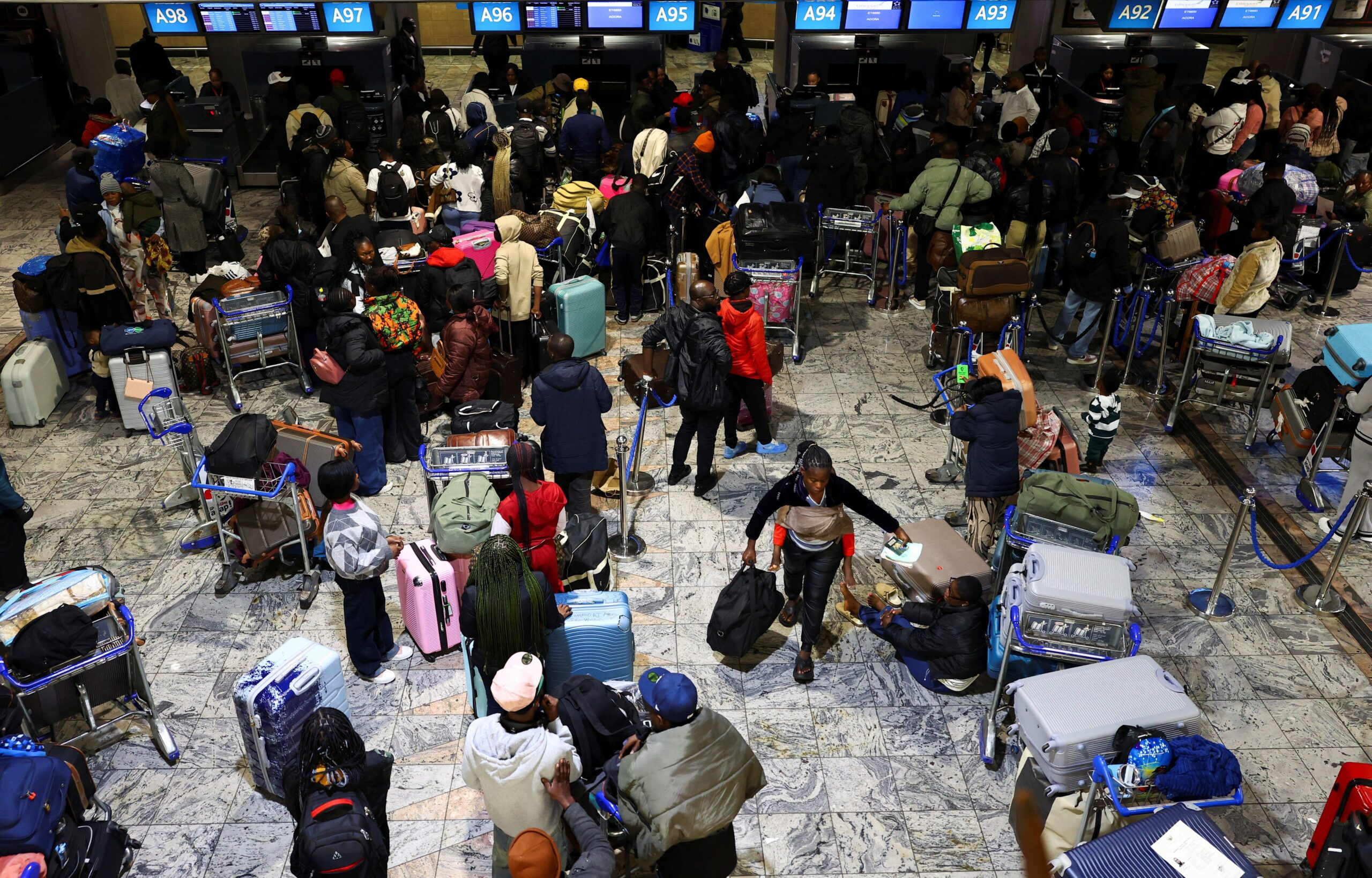
South Africa’s Minister in the Presidency, Khumbudzo Ntshavheni, has restated point-blank that the South African government won’t compensate illegal properties and businesses left behind by Nigerians while fleeing recent xenophobic attacks.
She declared that she “didn’t stutter” when she first rejected the proposal.
Ntshavheni made the remark on Saturday while responding to criticism from former Kaduna Central senator, Shehu Sani, over her earlier comments.
Earlier, the Nigerian government, through the Acting High Commissioner to South Africa, Temitope Ajayi, her raised the returnees’ hope in announcing that there were plans to document businesses and other assets left behind by evacuated Nigerians with a view to pursuing possible compensation from the South African government.
However, speaking at a press briefing on Friday, Ntshavheni insisted that there would be no compensation from her government.
According to her, all legally owned properties in South Africa are formally registered, while structures in informal settlements are illegal and therefore not eligible for compensation.
“If you own a property in South Africa, those who leave their properties, if they are properly legally registered in the country, they can dispose of the properties in the property market in South Africa, whether it’s movable or immovable property,” Ntshavheni said.
“We’ll be interested to know where the drug dens of Nigerians are so they can show us where they’ve been holding the drugs so that we can clean the drugs in South Africa quite urgently.”
Reacting to her remarks in a post on X, Shehu Sani expressed disbelief that such comments came from a senior government official. He wrote: “This is from a SENIOR Government official and NOT a thug from the streets.”
Responding directly to the former lawmaker, Ntshavheni defended her position saying:
“I didn’t stutter. Any form of property obtained illegally won’t be compensated for.”
This revelation forecloses any hope that any property left behind by the returning Nigerians will receive any form of compensation from their former hosts.
–Falana Tells NBA
By Son Tertseghs
Former Liberian President, George Weah, who addressed the NBA’s 66th Annual General Conference in Port Harcourt, Rivers State, on Sunday has been accused of capturing and undermining judicial independence in Liberia while serving as president.
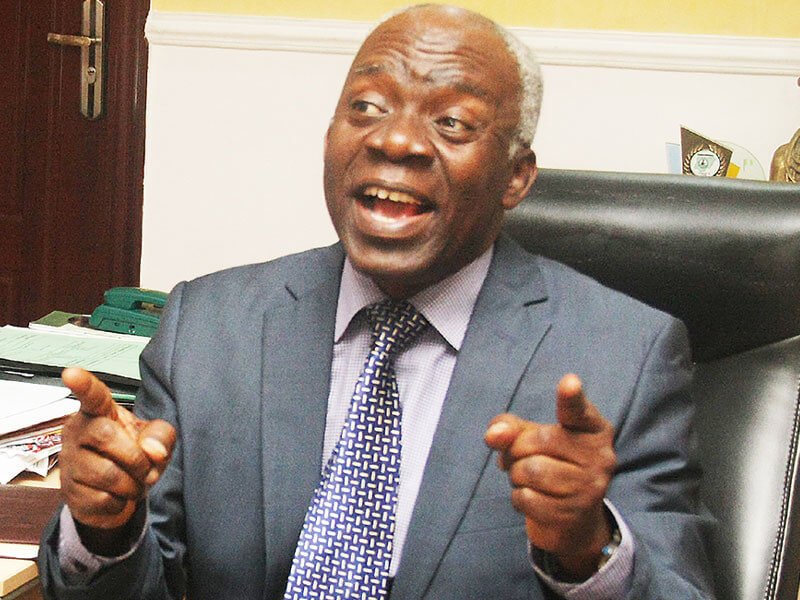
Human rights lawyer and Senior Advocate of Nigeria, Femi Falana, made the allegations, while criticising the Nigerian Bar Association leadership for inviting a man he referred to as a dictator to address NBA.
The senior lawyer made the remarks in a video posted on the NBA’s YouTube channel, following Weah’s keynote address at the Annual General Conference in Port Harcourt on Sunday. Falana declared:
“Ladies and gentlemen, I’m delighted to be here. But let me say this, because you know I have to be frank with the audience. And this goes for the leadership of the Bar. I want to appeal that the Bar Association must stop—stop inviting dictators in Africa to come and address us.”
He alleged that under Weah’s regime (2018–2024), the judiciary was captured to the point that Liberians sought legal redress outside the country at the ECOWAS Court. Falana continued:
“Mr. Weah, George Weah, who was here yesterday and was talking about the judiciary: in his country, his regime captured the judiciary to the extent that they had to contact some of us outside the country to get legal redress in the ECOWAS Court.”
He made reference to the case of Mandingo people against Liberia, whose landed properties were allegedly seized during the war.
He said the ECOWAS Court ruled in their favour but alleged that Weah refused to comply with the judgment.
“The ECOWAS Court gave them judgment. George Weah refused to comply with the judgment. The new government of Boakai has just set up a committee for the enforcement of that judgment,” he added.
Falana also cited the case of an associate justice of the Supreme Court of Liberia who, he also alleged, was dismissed without basis. He pointed another of Weah’s ill deeds saying:
“Again, we went to the ECOWAS Court. The ECOWAS Court set aside his dismissal and awarded him $200,000. He was ordered to be reinstated. Mr. George Weah refused to comply with the judgment.”
He questioned the decision to invite Weah to address lawyers on democracy and the rule of law despite the allegations.
“Now, that is the man coming here to talk to us about the rule of law and democracy,” Falana said.
The prominent lawyer did not end there. He further accused Weah’s administration of allowing drug trafficking to flourish in Liberia.
“He ruled Liberia between 2018 and 2024. During his time, drug barons took over the country. Just on the 19th of August, his Vice President, Madam Edith, was arrested… on the 19th of August. She’s currently standing trial for drug trafficking to the tune of $370 million in that poor country.
“So when you now have such a character… You know, during the last World Cup in Qatar, his son, Timothee, was playing for the United States of America, not for Liberia.
“This man left his country for nine days, took the money of that country to go and cheer his son in Qatar. So please, next time you want to invite African leaders, there are some of them that require inviting.”
Falana noted the president, vice president and speaker of Namibia, who are all female, and in Nigeria, late former premier of Western Nigeria, Obafemi Awolowo, as worthy of invitation.
Weah, while delivering the keynote address at the conference, charged lawyers to, as their duty, defend the the court because doing so is defending democracy itself.
General News
NANS Disagrees With Atiku’s Fuel Subsidy Rhetoric, says Subsidy Would Bring Economic Disaster
By Son Tertsegha
The former Vice President Atiku Abubakar’s campaign promise to restore fuel subsidy if elected President, has been opposed by National Association of Nigerian Students, NANS.
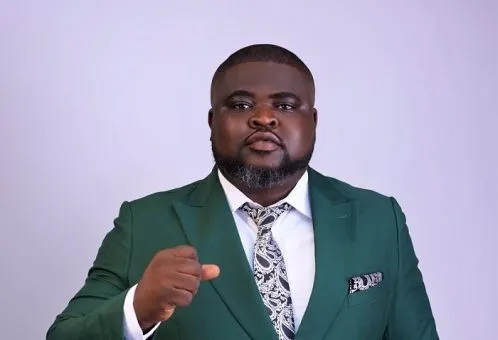
NANS President Comr. Akinteye Babatunde Afeez in a statement on Wednesday, argued that returning to the subsidy regime without addressing the structural weaknesses that made it unsustainable would amount to reversing a difficult but necessary economic reform.
Afeez said while subsidy removal had imposed severe hardship on Nigerians through increased fuel, transportation and food prices, the policy had also created fiscal space for government and eliminated what he described as a major distortion in the economy.
According to him, the critical question Nigerians should ask is whether the trillions of naira previously committed to subsidising petrol could have been better deployed to address the country’s infrastructure, healthcare, education and other pressing development needs.
He said: “Every sane and patriotic citizen who is conversant with our nation’s economy will agree with me that the removal of the fuel subsidy was a difficult but necessary economic reform aimed at ending an increasingly unsustainable system that consumed trillions of naira, benefited higher fuel consumers disproportionately, encouraged smuggling, and constrained the government’s ability to invest in critical sectors.”
The NANS president, however, acknowledged the hardship caused by the reform, stressing that the real test of subsidy removal was not merely the savings accruing to government but how effectively the freed resources were deployed to improve citizens’ welfare.
He said government must ensure that the sacrifices made by Nigerians translate into tangible improvements in education, healthcare, infrastructure, agriculture and other critical sectors.
Afeez maintained that any proposal to restore subsidy without a clear plan for resolving the structural problems that undermined the policy in the first place could only recreate the same crisis.
“This is why calls or promises for the outright return of subsidy, without a clear structural framework for addressing the fundamental weaknesses that made the policy unsustainable in the first place, amount to little more than a political response to a genuine economic challenge.”
NANS urged Nigerians not to allow the immediate pain of economic reforms to undermine the need for long-term restructuring, insisting that political aspirants must present sustainable policies capable of transforming the economy rather than offering short-term relief.
The students’ body also challenged presidential aspirants to come to national debates with concrete economic blueprints that would not merely provide temporary comfort but establish a sustainable foundation for national development.
Afeez said his opposition to Atiku’s proposal was not partisan, stressing that NANS had a responsibility to scrutinise government policies and political promises in the national interest.
He added that the country could not afford to return to a system in which huge public resources were devoted to fuel subsidy while many states struggled to meet their financial obligations and critical infrastructure remained inadequate.
He therefore urged Atiku to reconsider his position.
Whistleblowers across the world have been called to offer useful and actionable intelligence to the Economic and Financial Crimes Commission, EFCC, on monetary and non-monetary assets stashed abroad by corrupt Nigerians for incentives.
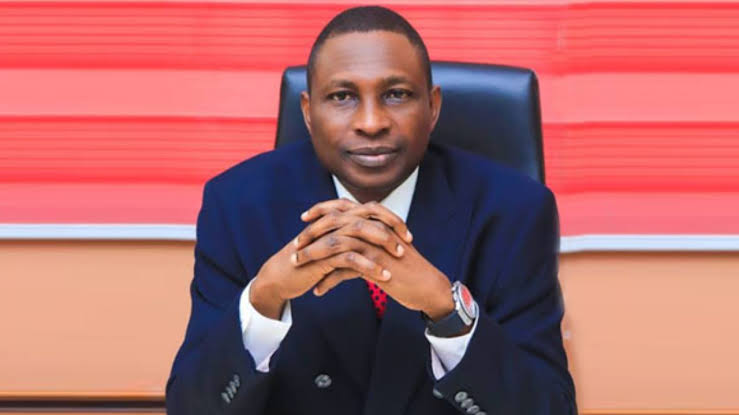
The Executive Chairman of the Economic and Financial Crimes Commission, Mr. Ola Olukoyede, made this call on Wednesday, August 26, 2026 while delivering a lecture at the Cambridge International Symposium on Economic Crime in the United Kingdom.
According to him, any whistleblower that is privy to where Nigerian assets are kept abroad could come forward to assist the country in recovering them.
This initiative, he said, would come with juicy rewards. In his words:
“I welcome all of you to the world of whistleblowing. If any one of you is privy to where Nigerian assets are stolen or taken to anywhere in the world, we have an incentive for you; between 2.5% and 5%, it’s going to go back to you upon recovery. That is an incentive we have put in place to encourage people to come forward to give information about stolen assets. You never tell if you give any information here, some of you may leave this place, multi-millionaire in your lifetime.”
The EFCC’s boss, who drew rapturous applause from the crowd, pointed out that in less than three years of assuming office as head of Nigerian foremost anti-graft agency, the Commission has recovered more than half a billion dollars for the Nigerian government.
“Within three years of my assumption of office, we’ve been able to forfeit both cash and assets worth over half a billion dollars to the government,” he said.
The recovery of the assets, he said, could be linked to the resourcefulness and professionalism of EFCC’s investigators, virile judiciary and access to credible intelligence. He linked the non-conviction-based asset forfeiture approach in Nigeria to what is obtainable in Australia and Canada. The framework, he explained, allowed the Commission to seek forfeiture of assets suspected to be proceeds of crime without waiting for a criminal conviction.
“We have similar to what is obtainable in Australia and Canada that empowers us to apply the forfeiture to proceeds of what is suspected to be proceeds of crime,” he said. Through the approach the anti-graft czar told his audience that an aircraft, a university, estates and houses suspected to be proceeds of crime had been forfeited to the government.
He particularly mentioned the 752 housing units recovered from a former governor of the Central Bank of Nigeria, CBN, Godwin Emefiele and the investigations of a former Attorney General and Minister of Justice, Abubakar Malami, SAN, which yielded the forfeiture of 48 out of the 57 houses suspected to be proceeds of corrupt practices.
“Sometimes last year, I opened investigations upon reasonable suspicion of criminal abuse of office by the immediate past attorney-general of Nigeria. We discovered that within eight years of his being in office, we were able to trace about 57 such properties to him. We’ve been able to forfeit about 48”, he said.
The 43rd International symposium on economic crime holding in Cambridge is an annual event bringing together anti-corruption experts from across the world. Olukoyede’s presentation came on the third day of the weeklong event.



Nepal, Tibet Devastating Floods: 160 dead, 647 missing
Spread the loveAt least 647 people are missing and 160 have died after a catastrophic surge of floodwater, mud and...
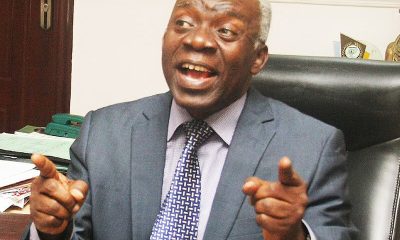

Weah is Exactly What He Came to Preach Against at NBA Conference: A Dictator
Spread the love–Falana Tells NBA By Son Tertseghs Former Liberian President, George Weah, who addressed the NBA’s 66th Annual General...

NANS Disagrees With Atiku’s Fuel Subsidy Rhetoric, says Subsidy Would Bring Economic Disaster
Spread the loveBy Son Tertsegha The former Vice President Atiku Abubakar’s campaign promise to restore fuel subsidy if elected President,...
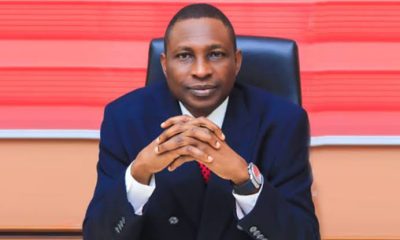

Olukoyede Promises Whistleblowers 5 % on Recovered Stolen Assets
Spread the loveWhistleblowers across the world have been called to offer useful and actionable intelligence to the Economic and Financial...

Tinubu Orders Immediate Joint Rescue Operation For Niger Abduction Victims, Says Terror Will Not Cow Nigeria
Spread the loveBy Felix Umande President Bola Ahmed Tinubu has directed the Armed Forces, the Nigeria Police Force, the Department...

MOAU Disowns Viral Post-UTME Dates, Warns Candidates Against Fake Screening Schedule
Spread the loveBy Felix Umande The Management of Rev. Fr. Moses Orshio Adasu University, Makurdi, MOAU, has disowned a viral...

N365m for Tertiary Institutions’ National Laureate Prize Awards
Spread the love-Competition Open to FG, State, Private Varsities, Polys, Monotechnics and Colleges of Edu By Nick Ibe The newly...

Blame Galore for Concessionaire of Benin-Asaba Road, Asked to Leave Work
Spread the loveBy Seyi Balogun For not adding any value to the Benin-Asaba road, the Minister of Works, David Umahi,...

SGF Inaugurates Committee on National Threat Assessment, 5-Year Dedfence Plan
Spread the loveBy Felix Umande The Secretary to the Government of the Federation, SGF, Senator George Akume, has inaugurated a...

NFIU: Terrorists Adopt Crowdfunding, Proxy Accounts, Mules, Others To Raise, Transfer Funds
Spread the loveBy Isa Abdul Crowdfunding networks, gender proxy accounts and other ways are now being exploited to raise and...