
General News
Kogi: Security forces recover 1,000 rustled livestock From Criminals

By Isa Abdul
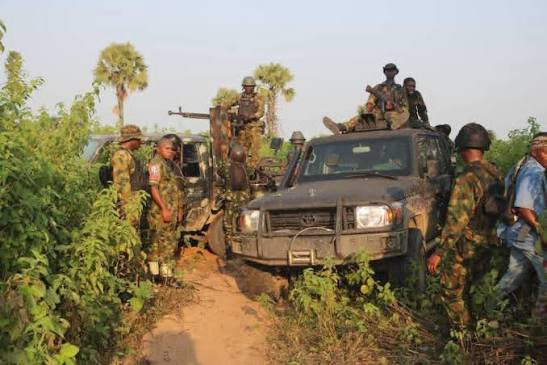
The 12 Brigade of the Nigerian Army, Hybrid Forces from the Office of the National Security Adviser, the Department of State Services, the Nigeria Police Force, local vigilantes and hunters, have worked in sync with the Kogi State government to recover about 1,000 rustled livestock across the state.
The operations targeted the remnants of the criminal network of the late bandit kingpin, Kachalla Ibrahim Battijo, as well as other cattle-rustling gangs operating within Kogi State and across the North-Central region.
The recovered livestock include over 200 traced to Battijo’s criminal network, while the remaining animals were recovered from other armed bandits engaged in cattle rustling in Kogi and neighbouring states.
The criminals had attempted to move the stolen livestock through Kogi State for sale to finance their criminal activities.
In a press statement issued on Saturday, the Kogi State Commissioner for Information and Communications, Kingsley Femi Fanwo, revealed that the successes recorded by security forces were made possible by credible and timely intelligence received and acted upon by the various security agencies involved in the operations.
He noted that the intelligence enabled operatives to track the movement of the bandits and launch coordinated offensives before the stolen livestock could be taken to their intended destinations.
According to him, the intelligence revealed that the criminal groups planned to sell the rustled livestock to raise funds for the procurement of arms, food supplies and other logistics.
“Acting swiftly on the intelligence, security operatives engaged the bandits in fierce gun battles at different locations. Several of the criminals were neutralised, while others fled with varying degrees of bullet wounds, abandoning the rustled livestock in their desperate attempt to escape the superior firepower of the security forces. Those who escaped are currently being trailed,” he said.
Fanwo said the remnants of Battijo’s gang have become increasingly desperate following the elimination of their kingpin, as sustained security operations continue to dismantle their network, deny them freedom of operation within Kogi State and cut off their access to logistics.
“I can confirm that many of the flies that chose to follow the corpse to the grave have now been buried alongside it, while those who escaped with varying degrees of bullet wounds are being actively tracked by our security forces. They will not escape justice,” he said.
He disclosed that the recovered livestock are currently being kept in a secure location in Kabba/Bunu Local Government Area while arrangements are being made to identify their rightful owners and ensure their prompt return.
The Commissioner commended the Office of the National Security Adviser, the Chief of Army Staff, the Inspector-General of Police, the Director-General of the Department of State Services, as well as the military, the police, local vigilantes and hunters for their professionalism, bravery and seamless collaboration, describing the operation as another major milestone in the state’s sustained war against criminality
General News
Nigeria Alcohol Policy 2026–2030: For Healthier People, Safer Communities, more Responsible Industry
By Nick Ibe
The aim for launching the Nigeria Alcohol Policy and its Multisectoral Implementation Plan (2026–2030), has been explained by the Federal government. Among others, it is aimed at reducing the health, social and economic consequences associated with harmful alcohol consumption in the country.
Broadly, the five-year plan has a national framework for the production, distribution, marketing and consumption of alcohol, all promoting responsible practices across the industry.
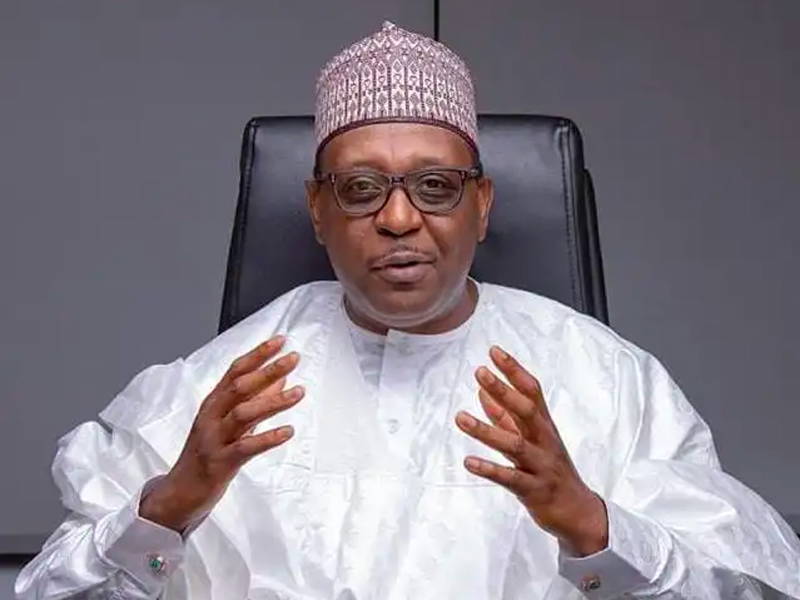
Unveiling this policy in Abuja on Thursday was the Coordinating Minister of Health and Social Welfare, Prof. Muhammad Ali Pate, who was represented at the event by the ministry’s Permanent Secretary, Daju Kachollom.
Pate said although the alcohol industry contributes to the economy through manufacturing, employment and agriculture, abuse of alcohol has consequences that go beyond the health sector.
He listed some of the consequences as reduced productivity, violence, injuries, mental health challenges and financial hardship, among others. In his words:
“Alcohol is part of that economic reality. It supports manufacturing, employment, agriculture and domestic value chains, while ethanol also has important pharmaceutical, laboratory and industrial uses.
“We must also confront the other side of that reality. Harmful alcohol use contributes to disease, injuries, violence, mental health challenges, financial hardship and loss of productivity.”
He said the policy was also aligned with Nigeria’s national, continental and global commitments to reducing the harmful use of alcohol.
He cited the African Union’s Agenda 2063, the Sustainable Development Goals, particularly Goals 3, 8, 9 and 11, as well as relevant World Health Organisation frameworks on reducing alcohol-related harm.
Pate said WHO data showed that total alcohol consumption in Nigeria stood at 3.2 litres of pure alcohol per person aged 15 years and above in 2024.
He also linked alcohol consumption to road traffic crashes, noting that the Federal Road Safety Corps recorded 9,570 crashes and 5,421 deaths nationwide in 2024, with driving under the influence of alcohol identified as one of the contributing factors.
On implementation, Pate said the government would monitor compliance across the alcohol value chain, the level of illicit and unrecorded alcohol, access to care for people affected by alcohol-related disorders, and reductions in alcohol-related illnesses, injuries and deaths.
“Our objective, therefore, is not simply to have a national alcohol policy on paper by 2030. It is to have a policy that has translated into healthier people, safer communities, more responsible industry practices and stronger institutions,” he said.
The Director-General of the National Agency for Food and Drug Administration and Control, NAFDAC, Prof. Mojisola Adeyeye, who also attended the launch, said the policy was anchored in Nigeria’s broader health and socio-economic reform agenda.
Adeyeye said the policy reinforced Nigeria’s commitment to the SDGs, particularly those relating to good health and well-being, sustainable industry, and safe and resilient communities.
She, however, stressed the government’s commitment to protecting consumers, particularly underage persons and other vulnerable groups, while promoting responsible practices across relevant industries.
The policy is expected to provide a coordinated framework for government agencies and other stakeholders to tackle harmful alcohol use.
–Falana Tells NBA
By Son Tertseghs
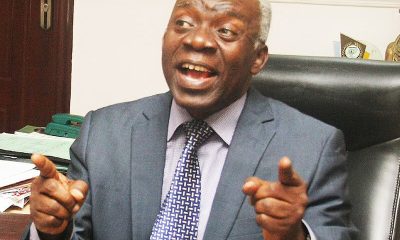
Former Liberian President, George Weah, who addressed the NBA’s 66th Annual General Conference in Port Harcourt, Rivers State, on Sunday has been accused of capturing and undermining judicial independence in Liberia while serving as president.
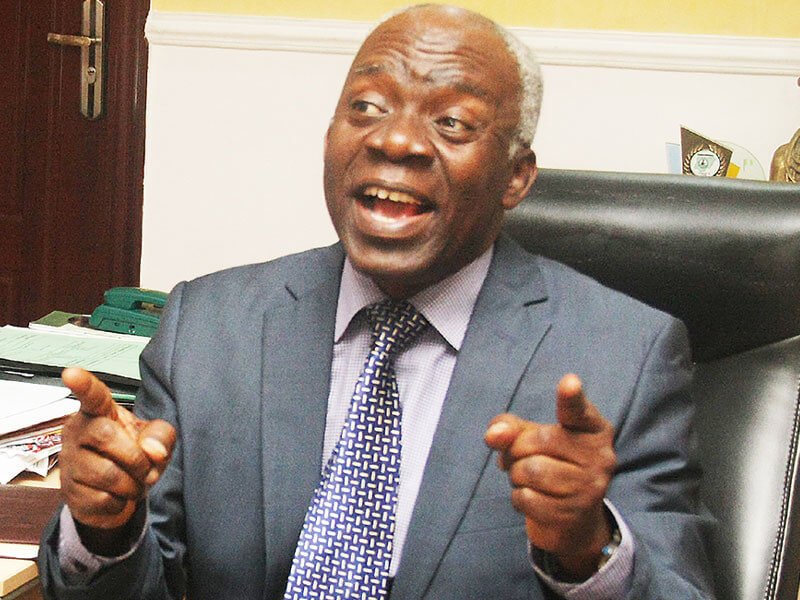
Human rights lawyer and Senior Advocate of Nigeria, Femi Falana, made the allegations, while criticising the Nigerian Bar Association leadership for inviting a man he referred to as a dictator to address NBA.
The senior lawyer made the remarks in a video posted on the NBA’s YouTube channel, following Weah’s keynote address at the Annual General Conference in Port Harcourt on Sunday. Falana declared:
“Ladies and gentlemen, I’m delighted to be here. But let me say this, because you know I have to be frank with the audience. And this goes for the leadership of the Bar. I want to appeal that the Bar Association must stop—stop inviting dictators in Africa to come and address us.”
He alleged that under Weah’s regime (2018–2024), the judiciary was captured to the point that Liberians sought legal redress outside the country at the ECOWAS Court. Falana continued:
“Mr. Weah, George Weah, who was here yesterday and was talking about the judiciary: in his country, his regime captured the judiciary to the extent that they had to contact some of us outside the country to get legal redress in the ECOWAS Court.”
He made reference to the case of Mandingo people against Liberia, whose landed properties were allegedly seized during the war.
He said the ECOWAS Court ruled in their favour but alleged that Weah refused to comply with the judgment.
“The ECOWAS Court gave them judgment. George Weah refused to comply with the judgment. The new government of Boakai has just set up a committee for the enforcement of that judgment,” he added.
Falana also cited the case of an associate justice of the Supreme Court of Liberia who, he also alleged, was dismissed without basis. He pointed another of Weah’s ill deeds saying:
“Again, we went to the ECOWAS Court. The ECOWAS Court set aside his dismissal and awarded him $200,000. He was ordered to be reinstated. Mr. George Weah refused to comply with the judgment.”
He questioned the decision to invite Weah to address lawyers on democracy and the rule of law despite the allegations.
“Now, that is the man coming here to talk to us about the rule of law and democracy,” Falana said.
The prominent lawyer did not end there. He further accused Weah’s administration of allowing drug trafficking to flourish in Liberia.
“He ruled Liberia between 2018 and 2024. During his time, drug barons took over the country. Just on the 19th of August, his Vice President, Madam Edith, was arrested… on the 19th of August. She’s currently standing trial for drug trafficking to the tune of $370 million in that poor country.
“So when you now have such a character… You know, during the last World Cup in Qatar, his son, Timothee, was playing for the United States of America, not for Liberia.
“This man left his country for nine days, took the money of that country to go and cheer his son in Qatar. So please, next time you want to invite African leaders, there are some of them that require inviting.”
Falana noted the president, vice president and speaker of Namibia, who are all female, and in Nigeria, late former premier of Western Nigeria, Obafemi Awolowo, as worthy of invitation.
Weah, while delivering the keynote address at the conference, charged lawyers to, as their duty, defend the the court because doing so is defending democracy itself.
General News
NANS Disagrees With Atiku’s Fuel Subsidy Rhetoric, says Subsidy Would Bring Economic Disaster

By Son Tertsegha
The former Vice President Atiku Abubakar’s campaign promise to restore fuel subsidy if elected President, has been opposed by National Association of Nigerian Students, NANS.
NANS President Comr. Akinteye Babatunde Afeez in a statement on Wednesday, argued that returning to the subsidy regime without addressing the structural weaknesses that made it unsustainable would amount to reversing a difficult but necessary economic reform.
Afeez said while subsidy removal had imposed severe hardship on Nigerians through increased fuel, transportation and food prices, the policy had also created fiscal space for government and eliminated what he described as a major distortion in the economy.
According to him, the critical question Nigerians should ask is whether the trillions of naira previously committed to subsidising petrol could have been better deployed to address the country’s infrastructure, healthcare, education and other pressing development needs.
He said: “Every sane and patriotic citizen who is conversant with our nation’s economy will agree with me that the removal of the fuel subsidy was a difficult but necessary economic reform aimed at ending an increasingly unsustainable system that consumed trillions of naira, benefited higher fuel consumers disproportionately, encouraged smuggling, and constrained the government’s ability to invest in critical sectors.”
The NANS president, however, acknowledged the hardship caused by the reform, stressing that the real test of subsidy removal was not merely the savings accruing to government but how effectively the freed resources were deployed to improve citizens’ welfare.
He said government must ensure that the sacrifices made by Nigerians translate into tangible improvements in education, healthcare, infrastructure, agriculture and other critical sectors.
Afeez maintained that any proposal to restore subsidy without a clear plan for resolving the structural problems that undermined the policy in the first place could only recreate the same crisis.
“This is why calls or promises for the outright return of subsidy, without a clear structural framework for addressing the fundamental weaknesses that made the policy unsustainable in the first place, amount to little more than a political response to a genuine economic challenge.”
NANS urged Nigerians not to allow the immediate pain of economic reforms to undermine the need for long-term restructuring, insisting that political aspirants must present sustainable policies capable of transforming the economy rather than offering short-term relief.
The students’ body also challenged presidential aspirants to come to national debates with concrete economic blueprints that would not merely provide temporary comfort but establish a sustainable foundation for national development.
Afeez said his opposition to Atiku’s proposal was not partisan, stressing that NANS had a responsibility to scrutinise government policies and political promises in the national interest.
He added that the country could not afford to return to a system in which huge public resources were devoted to fuel subsidy while many states struggled to meet their financial obligations and critical infrastructure remained inadequate.
He therefore urged Atiku to reconsider his position.


Nigeria Alcohol Policy 2026–2030: For Healthier People, Safer Communities, more Responsible Industry
Spread the loveBy Nick Ibe The aim for launching the Nigeria Alcohol Policy and its Multisectoral Implementation Plan (2026–2030), has...

ASUU Warns TETFund: Your Discriminatory Policy Against Some Varsities is Direct Violation of TETFund Act 2011
Spread the loveBy Son Tertsegha The Tertiary Education Trust Fund’s (TETFund) new policy of classifying public universities into “tenable” and...


Nepal, Tibet Devastating Floods: 160 dead, 647 missing
Spread the loveAt least 647 people are missing and 160 have died after a catastrophic surge of floodwater, mud and...

Weah is Exactly What He Came to Preach Against at NBA Conference: A Dictator
Spread the love–Falana Tells NBA By Son Tertseghs Former Liberian President, George Weah, who addressed the NBA’s 66th Annual General...


NANS Disagrees With Atiku’s Fuel Subsidy Rhetoric, says Subsidy Would Bring Economic Disaster
Spread the loveBy Son Tertsegha The former Vice President Atiku Abubakar’s campaign promise to restore fuel subsidy if elected President,...

Olukoyede Promises Whistleblowers 5 % on Recovered Stolen Assets
Spread the loveWhistleblowers across the world have been called to offer useful and actionable intelligence to the Economic and Financial...

Tinubu Orders Immediate Joint Rescue Operation For Niger Abduction Victims, Says Terror Will Not Cow Nigeria
Spread the loveBy Felix Umande President Bola Ahmed Tinubu has directed the Armed Forces, the Nigeria Police Force, the Department...
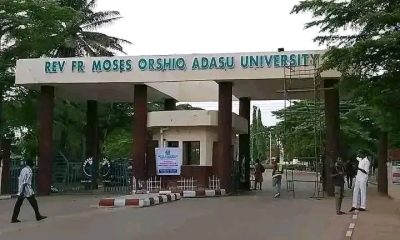

MOAU Disowns Viral Post-UTME Dates, Warns Candidates Against Fake Screening Schedule
Spread the loveBy Felix Umande The Management of Rev. Fr. Moses Orshio Adasu University, Makurdi, MOAU, has disowned a viral...


N365m for Tertiary Institutions’ National Laureate Prize Awards
Spread the love-Competition Open to FG, State, Private Varsities, Polys, Monotechnics and Colleges of Edu By Nick Ibe The newly...


Blame Galore for Concessionaire of Benin-Asaba Road, Asked to Leave Work
Spread the loveBy Seyi Balogun For not adding any value to the Benin-Asaba road, the Minister of Works, David Umahi,...