Science & Technologies
NCC to Host Digital Economy Awareness Sensitization Fora


Aliyu Musa
The Nigerian Communications Commission (NCC) will host the inaugural edition of the Digital Awareness and Sensitization Fora as a platform to strengthen policy and innovation for a digital future.
This is contained in a statement by the Head, Public Affairs of NCC, Mrs Nnenna Ukoha.
The statement said the fora are to facilitate a conducive environment to build Infrastructure for Innovation and Inclusion and to lay a solid foundation for bridging gaps between policy and infrastructure for national development.
“The maiden edition, with the theme: “Leaving No One Behind: Digital Assets, Equity, and Empowerment” which is scheduled to take place on November 13, 2025, will bring together industry experts, policymakers, and community stakeholders to brainstorm practical solutions for bridging the digital divide.”
According to Ukoha, the sessions at the inaugural forum will focus on designing inclusive digital policies, promoting accessible infrastructure deployment, developing adaptive digital literacy programmes and advocating for affordability and accessibility in digital services.
‘Africa has the world’s youngest population, with 60% of its people under the age of 25. With Nigeria’s great contribution to that figure, the NCC recognizes this for the asset that it is and is dedicated to leverage the untapped potential of this demography while including the rest of the populace”.
She said “In addition to its commitment to ensuring the safety of over 140 million Internet users, this sensitisation is designed to highlight the importance of inclusive participation in Nigeria’s digital economy and bring together key stakeholder from regulatory bodies, academia, private sector and development partners to deliberate on how digital access and innovation can be harnessed to empower underserved communities, drive equity and promote national development.
“The Digital Awareness and Sensitization Fora is a collaborative effort of the industry and stakeholders including the Universal Service Provision Fund (USPF), National Orientation Agency (NOA), and the National Council of Women Societies (NCWS). Others are the Association of Telecommunications Operators on Nigeria (ATCON) FintechNGR, Korea International Cooperation Agency (KOICA), Terra Industries, Association of Nigerian Inventors (ANI), Secondary Education Board (SEB), Nigerian University Commission (NUC), Joint National Association of Persons with Disabilities (JONWAD) Imose Technologies and the National Board for Technical Education (NBTE).
“The event will feature panel discussions, exhibitions by innovators, fintech organizations and students, creating the environment to showcase innovations that reflect the creativity and potential of Nigeria’s digital ecosystem.
“The event will be livestreamed via a dedicated portal at scf.ncc.gov.ng ensuring nationwide access and participation,” she said.








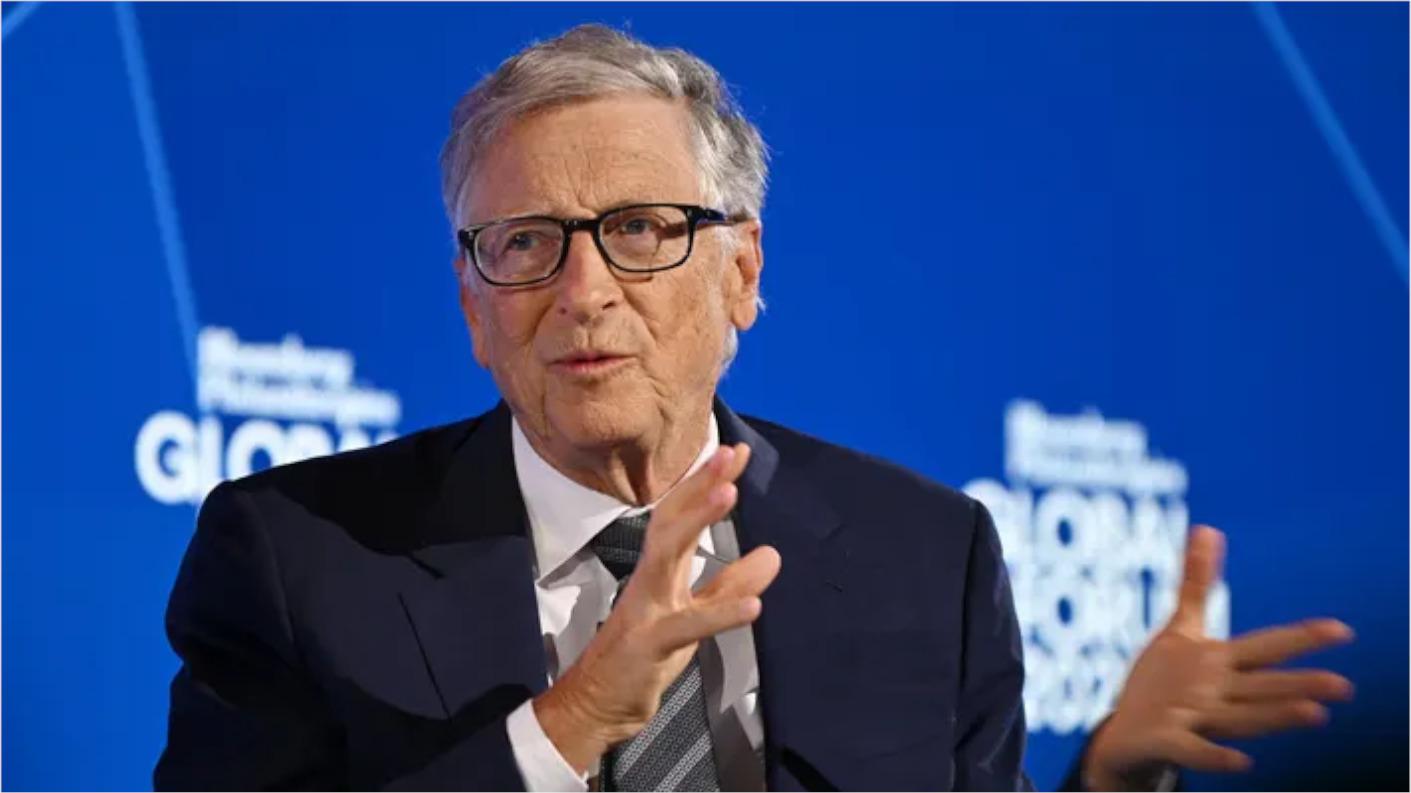
–There “absolutely” needs to be legislation regulating AI and law enforcement
By Son Tertsea, Abuja
Billionaire Bill Gates told “Meet the Press” that government regulation is needed for artificial intelligence and warned the technology is “powerful” enough to “cause a billion deaths” if used maliciously, as Washington and the AI industry consider how to move forward in light of dire warnings about AI’s potential effects.
NBC News released a clip Friday of Gates’ interview with “Meet the Press,” in which the billionaire and philanthropist was asked about warnings from AI workers if the technology could potentially wipe out humanity.
“AI is certainly powerful enough to drive events that … cause a billion deaths,” Gates said, noting “there’s never been a weapon as powerful as the combination of people with ill intent using the latest AI tools.”
Gates was also asked about Anthropic CEO Dario Amodei’s recent essay calling for a slowdown on AI, which argued frontier labs should slow down the pace of their progress and “voluntarily work together to set standards” around artificial intelligence.
“No one thinks self-regulation is enough,” he said about the prospect of AI companies leading the charge on curbing their own actions, arguing there “absolutely” needs to be legislation regulating AI and “you need law enforcement and the politicians to get into the discussion about what safeguards and monitoring look like.”
Amodei’s essay also called for government involvement in AI, though he noted, “Unfortunately, passing laws can take time, and AI is advancing very quickly.”
It still remains to be seen what the federal government will do on AI regulation, as Republican leaders in Congress have downplayed the issue after President Donald Trump came out strongly against AI guardrails and described calls for regulation as a “hoax.”
Gates’ comments come ahead of a planned meeting Tuesday between Trump, House Speaker Mike Johnson, R-La., and AI executives, according to multiple outlets, though it’s still unclear what the focus of the meeting will be. Johnson has previously said he wants Trump and AI CEOs to “go in a big room, close the door and sort this out,” and told reporters last week there should be “a deliberate discussion about the responsibility of the companies to maintain safety, and what role, if any, the government has to play in that.” It also remains to be seen which specific AI leaders could attend the meeting, which comes after major players in the industry like Elon Musk and OpenAI chief Sam Altman were at the White House for a state dinner Thursday.
Will Congress Take Action On AI?
Johnson and Senate Majority Leader John Thune, R-S.D., so far haven’t shown much urgency when it comes to passing legislation regulating AI. Johnson downplayed fears the technology could wipe out humanity as a “hoax,” and while Thune has long called for regulating AI and introduced legislation on the issue in 2023, the senator has more recently suggested he won’t be pushing for the matter to be taken up as an urgent priority. Thune told reporters in mid-September it was “probably TBD” whether the chamber could pass AI legislation by the end of the year, noting, “Getting anything done in the near term is going to be challenging given the other stuff we’re dealing with.” The Senate leader does seem to be considering the issue, however, telling Axios on Wednesday that Sen. Amy Klobuchar, D-Minn., who consponsored Thune’s previous AI bill, is working on getting more Democratic support before the bill gets reintroduced in Congress. The legislation, based on how it was introduced in 2023, would impose measures like requiring critical AI systems to be subject to certification, transparency requirements for content made with generative AI, forcing companies to perform AI risk assessments and ordering further government research into distinguishing AI-generated content and what guardrails should be implemented in the industry.
It remains to be seen whether that or any other bill would be able to make it through Congress and not get vetoed by Trump, though Thune told Axios he believes the president is more open to allowing AI guardrails than he’s publicly let on.
Key Background
The debate over AI safety and regulation has sharply escalated in recent weeks, after former Anthropic researcher Jacob Coxon publicly announced on Sept. 9 that he had resigned from the company and alleged, “The people building AI earnestly believe that it could kill us all by the end of the decade.” Evan Hubinger, Anthropic’s alignment science lead, amplified the warning, writing Coxon is “correct” and AI officials “really do earnestly believe AI could kill all humans!” Hubinger said he thought there was “10%” chance of AI wiping out humanity “within the next decade,” and warned Anthropic does “not yet have a plan to solve alignment for superintelligence and [is] not clearly on track to.” The warning ramped up the public backlash and escalated calls for regulation, and Google, Anthropic and OpenAI have banded together in the wake of the outcry and started making plans for an AI safety group. Altman and Amodei also stressed the need for global cooperation and international standards on AI at the United Nations this week, with Amodei arguing decisions on the technology “must be shaped through democratic processes and by governments accountable to the people that they serve.”
Bill Gates says AI companies self-regulating isn’t enough and governments should be involved in monitoring (NBC News)
Dire AI Doomsday Warnings Are Everywhere—But What Could One Actually Look Like? (Forbes)
Science & Technologies
Scientists test underwater solar panels that work 10 meters beneath the waves — breakthrough perovskite tech could support self-powered marine drones
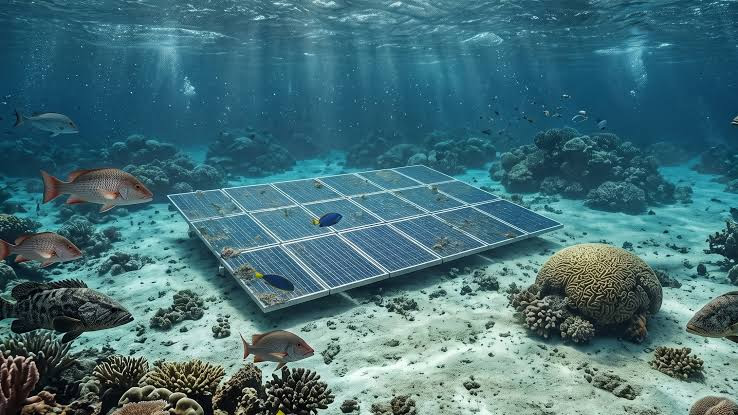
Scientists have developed solar panels that can work up to 10 meters underwater
The panels can capture up to 324 mWh of energy at that depth
Each device is expected to last up to five and a half years at a time
A lot of devices are deployed underwater for research and exploration purposes, but powering them all can prove to be difficult, especially if they’re under the waves for a considerable period of time. A new scientific paper, however, has shown that solar panels can be successfully used at depths of up to 10 meters, potentially presenting a new way to keep underwater tech powered up and ready for action.
The paper was published in the Joule periodical and accompanied by a press release explaining its advances. The research was conducted by a team of scientists from Yunnan University in China, who said that a series of solar cells placed 32 feet (10 meters) below the water’s surface in the South China Sea were able to collect enough energy to power up a set of lithium-ion batteries in two hours.
The cells were made from lead halide perovskite with a polymer called polyhexamethylene guanidine hydrochloride added into the mix. This additive helped to enhance the effectiveness of the panels.
According to Wen-Hua Zhang of Yunnan University, “Very few studies have been reported on underwater solar cells, and all of them are focused on very shallow water depths of only two meters or less, a scenario far from catering for requirements of practical application.”
An underwater solar panel being tested
“This work presents the first functional validation of submerged solar cells practically operating at a water depth of up to about 10 meters, greatly broadening their application scope,” Zhang added. The researchers stated that each cell could be deployed for around five and a half years at a time.
Balcony solar panel
New solar panel design could increase daily PV energy production by 20%
Danish startup raises funds to build underwater CCTV-like tech to track drones and more
IFA 2026 plug-in solar
The 5 best plug-in solar gadgets we saw at IFA 2026, from Anker to EcoFlow
The panels captured 1,416 milliwatt-hours (mWh) of electricity at a depth of two meters. This decreased to 752 mWh at six meters and 324 mWh at ten meters. During separate lab testing, the solar panels had a power conversion efficiency of just under 35%.
Paving the way
Underwater datacenter
Solar panels could one day be used to power ‘self-sustained marine energy systems and autonomous underwater devices,’ researchers believe.
The idea behind this research is that underwater solar panels could be used to power devices such as sensors, cameras, communications systems, and more.
Get daily insight, inspiration and deals in your inbox
Your Email Address
Contact me with news and offers from other Future brands
Receive email from us on behalf of our trusted partners or sponsors
By submitting your information you agree to the Terms & Conditions and Privacy Policy and are aged 16 or over.
Many of these objects are stationary for much of the time, so nearby solar cells could help keep them topped up and working without necessarily requiring extensive human intervention.
One question that remains unanswered is how exactly solar panels like this would interact with their environment. For example, it’s likely that they would accumulate biomatter that could hinder their operation, potentially requiring regular cleaning in order to remain fully functional. After all, the sunlight that will power these cells could also promote the growth of plants and animals — a process known as biofouling.
Still, the research seems to have potential. As the authors noted, “This work paves the way for the practical deployment of perovskite photovoltaics in underwater environments, offering a promising route toward self-sustained marine energy systems and autonomous underwater devices.”
TechRadar
Science & Technologies
2nd World Humanoid Robot Games Take Off in Beijing: Chinese Robot Breaks Usain Bolt’s World Record
By Son Tertsegha
As the second edition of World Humanoid Robot Games kicked off at the National Speed Skating Oval for the 2022 Winter Olympics, in Beijing, a Chinese robot named Lightning has run the 100m in 9.32 seconds, beating the human world record, held by the Jamaican, Usain bolt, in 2009.
The humanoid, developed by the Chinese smartphone manufacturer Honor, reached a peak speed of 14.5 metres per second during a test event for the second World Humanoid Robot Games. The performance surpassed the 9.58sec men’s 100m world record set by Usain Bolt 17 years ago at the World Athletics Championships in Berlin.
China is in the lead of promoting humanoid robots as an emerging industry, with policymakers and companies believing that these advances in AI and hardware will accelerate their deployment in manufacturing, logistics and consumer applications.
Lightning also won the Beijing half marathon in April in 50 minutes and 26 seconds, faster than the men’s world record. The robot stood 169cm tall and had 95cm-long legs at the half marathon.
Researchers have since lengthened its legs by 10cm for these Games.
More than 2,000 humanoid robots are participating in the second edition of the five-day games, with the spectacle intended to demonstrate China’s rapid progress in advanced robotics as the technology race with the US heats up.
This edition has 51 events and more than 1,000 competitions taking place including running, table tennis and football.
The games opened the same week as Beijing held the 2026 World Robot Conference, where companies showcased around 3,000 products, including humanoid robots. China makes the majority of the world’s humanoid robots.
In what’s believed to be targeting China, last month, the US Federal Communications Commission announced a ban on imports of new foreign-made humanoid robots. The Pentagon recently also added Unitree, one of China’s leading humanoid robot makers, to its list of companies that it deemed have ties with the Chinese military. Beijing has hit back at the accusations.
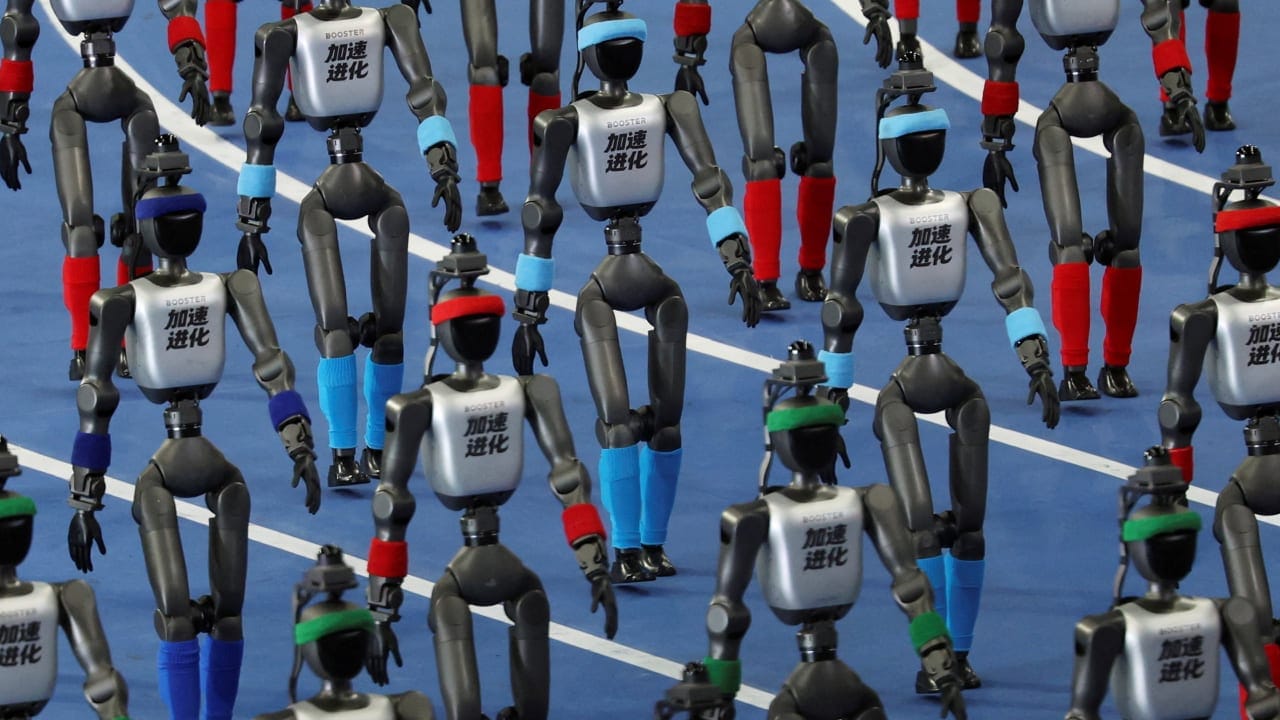
At Saturday’s opening of the robot games, the organisers and robot makers said that Chinese humanoid robots defeated human world records, as hundreds of humanoid robots marched in formation on to the field in a massive display of synchronised coordination.
In a standing high jump, a humanoid robot was able to reach 2.88m, well above the 0.95m best result by a humanoid in last year’s first edition of the games.
It equally surpassed the human high jump record of 2.45m set by Cuba’s Javier Sotomayor in 1993. Both robots were from Beijing-based X-Humanoid.
Experts say humanoid robots are still mostly used for demonstrations, performances and research – at least for now – and it will take time to achieve mass real-world deployment. Some spectators at the robot games said they were excited about the humanoid robots’ quickly improving abilities.
Press reports indicate that humanoid robots are “evolving rapidly”, said Li Yanfeng, an education worker and a Beijing resident. “At first, I wasn’t very accepting of artificial intelligence. I was even a bit resistant to it, because of the possibility that it might replace or displace humans,” she said. “But now that I see this development is unstoppable, I decided to come and take a look.”
Yang Shangzheng, another spectator, said: “These sports are perfectly normal for humans, but now robots can do them. I find it amazing.” Liu Tao, who was watching the games with his son, said he was hoping to see “the best robots China currently has to offer”.
This year’s robot games – which the organisers say has 16 countries participating, among them Germany, Japan and the US – also includes other events such as weightlifting and tug of war.


FG Gives Workers N70,000 Monthly Transport Support for Six Months
Spread the loveBy Nick Ibe, Abuja To cushion the harsh impact of rising living costs, the Federal Government has approved...

Trump and the 95-year Mother: Government That Cares for All Citizens
Spread the love“Trump… Please bring my son back to me. I am begging you for mercy.” And what Trump did...


Probe Panel Says Heat, Dehydration Killed 33 Detained Niger Miners
Spread the love–Calls for NSCDC reforms, compensation for victims By Son Tertsea, Abuja Dehydration was cause of the death of...


Tinubu Seeks Law To Bring Back Nigerians Jailed Abroad
Spread the loveBy Felix Umande President Bola Ahmed Tinubu has transmitted a bill to the Senate seeking to empower the...

Senate Says: Travel Agencies, Short-let Apartments Need Closer Scrutiny in Human Trafficking Probe
Spread the loveBy Isa Abdul, Abuja As part of efforts to dismantle trafficking networks and protect Nigerians from exploitation abroad,...

El Niño: Its Meaning, Effects and How Nigerians Should Prepare for It
Spread the loveBy Son Tertsea, Abuja Nigerians have been alerted that El Niño event would raise concerns that potentially affect...


Accusations of Data Theft: MTN Explains How Nigerians Consume Data Fast
Spread the loveBy Nick Ibe, Abuja: Engaging in high-resolution video streaming, automatic downloads, background applications, cloud backups and increased internet...


Kogi Authorities Probe Why Police Corporal Killed female Colleague, Self
Spread the loveBy Michael Lim The Kogi State Police Command has begun to probe why a police corporal, Amos Yusuf,...


WHO Declares Nigeria Ebola-Free After Evacuation of Patient to Switzerland
Spread the loveBy Nick Ibe, Abuja Dr Mohamed Janabi, the World Health Organisation’s (WHO) Regional Director for Africa, says Nigeria...


Fake Letter Lands Atiku Supporter in Court
Spread the loveBy Isa Abdul, Abuja For circulating a fake document purportedly written by President Bola Ahmed Tinubu to the...