
General News
INEC Twisting Court Order, Courting Anarchy IN ADC Leadership Crisis —Ex Attorney General, Adum


From Felix Umande, Makurdi
A Chieftain of the African Democratic Congress (ADC) and former Attorney General of Benue State, Barr. Alex Ter Adum PhD, has accused the Independent National Electoral Commission (INEC) of mischievously misinterpreting the Court of Appeal’s order on status quo ante bellum in the party’s leadership dispute, warning that the commission’s stance “threatens to legitimise disorder while undermining judicial authority.”
In an interview with Press Icon Newspaper on Wednesday, Adum said INEC’s position amounted to an “administrative fiction” that departs from settled legal doctrine and risks conferring legitimacy on actions already voided by resignation and party resolutions.
“The Court of Appeal’s directive that parties maintain the status quo ante bellum_ was neither ambiguous nor novel. In law, the phrase has a settled and precise meaning: it requires a reversion to the last uncontested and lawful state of affairs before the dispute arose in court. It is restorative, not preservative,” Adum stated.
Citing a string of Supreme Court and appellate decisions, including Akapo v. Hakeem-Habeeb (1992), Oronti v. Onigbanjo (2012) and Adewale v. Governor of Ekiti State (2006) the former Attorney General said Nigerian courts have consistently held that status quo ante bellum restores parties to their pre-dispute legal position, not the contested situation after litigation begins.
Adum argued that INEC appeared to be applying what he described as “status quo actum” freezing the current contested situation rather than restoring the lawful order that preceded the dispute.
“The absurdity of this position becomes evident when applied to the facts,” he said.
“Nafiu Bala Gombe resigned as Deputy National Chairman of the ADC on 18th May 2025. That resignation is a legally operative act that terminated whatever authority he possessed within the party. See Yesufu v. Governor of Edo State (2001).”
According to Adum, by 2nd September 2025 when hostilities were initiated through litigation, the operative status quo ante bellum was one in which the David Mark-led National Working Committee (NWC) was in place, following the resignation of former Chairman Ralph Nwosu on 29th July 2025 and the NEC’s appointment of Senator David Mark as his replacement.
“To now suggest, as INEC’s position implies, that a former office holder who had resigned months earlier can invoke a court order to destabilise an existing leadership structure is to invert both logic and law,” Adum said, relying on Governor of Ekiti State v. Ojo (2006)and Military Governor of Lagos State v. Ojukwu (1986) to stress that courts will not preserve an illegality under the guise of maintaining the status quo.
He warned that if administrative bodies such as INEC are allowed to reinterpret clear judicial directives “to suit evolving circumstances, the authority of the courts is diminished, and the rule of law reduced to administrative discretion.”
“In the final analysis, the legal position admits of no ambiguity: the relevant status quo is that which existed before the dispute crystallised in court, not one manufactured in its aftermath. Any interpretation to the contrary is not merely erroneous — it is dangerous,” Adum declared.
He concluded that INEC, as a constitutional body, “cannot substitute established legal doctrine with administrative convenience,” adding: “Where a court has ordered the maintenance of status quo ante bellum, compliance must be exact, not inventive. To depart from it is to invite chaos. To uphold it is to preserve order.”








General News
Mother Subjects Daughter to Abuse, Admits: “I made $300 from my 8-yr-old daughter’s pornographic video’

By Nick Ibe
The viral video on the social media involving an 8-year old girl whose ordeal was caused by her money loving mother has been arrested.
The arrest was facilitated by vigilante police operatives in the area, as well as bloggers and residents who provided information that assisted the investigation leading to the arrest of her 36-year-old mother, Anulika Onyeanusia, Onitsha, Anambra state.
According to the police, the Anambra State Police Command arrested her over alleged child pornography in Onitsha, by uploading a video involving her eight-year-old daughter on a pornographic platform to make money.
Onyeanusia, after the arrest, reportedly, told investigators that the highest amount she had made from uploading such content was $300.
The suspect also disclosed that the eight-year-old girl seen in the video is her second child, while preliminary investigation by the police allegedly revealed that she had also subjected her first daughter to similar acts and uploaded the content on a pornographic platform.
During interrogation, the suspect reportedly blamed the act on the devil, telling police: “It is the devil, please forgive me” while adding that her husband was unaware of what she had allegedly been doing to their two daughters.
The arrest followed the circulation of a video showing the woman allegedly using sex toys on the eight-year-old girl. The video prompted police operatives to act on what the command described as open-source intelligence and traced the suspect.
In the disturbing footage, the girl could be heard crying and pleading with her mother to stop as the alleged abuse continued. The police said the video showed the suspect allegedly engaging in the act while apparently producing the content for an online audience.
During the operation, which was carried out on Thursday evening, the command said four children, aged two, three, six and nine years, were rescued.
The Police also disclosed that sex toys and other items believed to be relevant to the investigation were recovered from the suspect.
The command said investigation was ongoing to establish the full circumstances surrounding the alleged abuse and determine whether other persons were involved.
Spokesman for the command, SP Tochukwu Ikenga, who confirmed the arrest of the suspect and rescue of the children, said, ” The suspect is currently in police custody as the Command intensifies its investigation into the circumstances surrounding the alleged offence and the possible involvement of other persons. The husband of the suspect is also undergoing interrogation to determine whether he has any connection with the alleged offence.
“The Commissioner of Police, Anambra State Command, CP Nnanna Oji, who is deeply disturbed by the alleged act, described it as unacceptable, particularly because it involves the exploitation and abuse of children who are incapable of protecting themselves. He has therefore directed a thorough and professional investigation while ensuring that the rescued children receive appropriate care and protection.
“To this end, the Command notes that beyond the investigation and prosecution, its priority is the safety, dignity and wellbeing of the rescued children.
“The Command will work with the appropriate child-protection and relevant support agencies to ensure that the victims receive the necessary care, protection, counselling and other support required for their recovery. Their identities and privacy will be protected throughout the process, and they will be treated with compassion and sensitivity.
“The Command also commends the vigilante operatives in the area, as well as bloggers and residents who provided information that assisted the investigation and led to the arrest of the suspect”, he stated.
General News
Lawyer Assaulted by Police: NBA Gboko Branch Secures N500 Million General and Exemplary Damages in Makurdi Court

By Our Reporter
In the pursuit of justice for a colleague, B. B. Iliamkondo, Esq., who was recently assaulted and battered by personnel of the Nigeria Police Force in Kwande Local Government Area of Benue State, the Nigerian Bar Association (NBA), Gboko Branch, under the leadership of Felix Uwar, Esq., on Friday, 11th September, 2026 obtained judgement in favour of its member.
The facts which impregnated the suit that delivered the sweet victory are that, sometime in May, 2026, a client retained the legal services of B. B. Iliamkondo, Esq. to secure his bail at Koti-Mbaduku, Shangev-Ya, Kwande Local Government Area of Benue State.
On arrival at the police outpost, the officer in-charge, one Inspector Terngu Ikyuur, demanded for money as a condition for the bail of the said client. Confused, the learned Iliamkondo, Esq. requested to know why he had to pay for bail when it was statutorily free of charge whereupon the police officer got infuriated and ordered him to vacate the police outpost immediately or face being implicated in his client’s cause. Mr. Iliamkondo then made to deliver his written application for the bail of his client but the officer instead seized him by the shirt, stalked him to the ground and cramped him into detention alongside his client and other inmates.
The following day, Inspector Terngu Ikyuur brought Mr. Iliamkondo out of the detention facility and forced him to carry on his head a bucket of faeces and urine passed over night by inmates. The officer compelled him to sing that he was a-charge- and-bail lawyer as he marched Mr. Iliamkondo around the community with a loaded gun pointed at his head all the while, threatening to kill him if he stopped marching.
Upon the intervention of his learned friends, Iliamkondo was later released after being brutalized and stripped half-naked by the police Inspector. Aggrieved, the NBA Gboko Chairman, Uwar, Esq., quickly empanelled a team of lawyers to secure the enforcement of fundamental rights of their learned friend. The team had: I. S. Gese, Esq. ; F. M. Z. Uwar, Esq.; Bem-Ephraim Orlunan Ayati, Esq. ; T. I. Tur, Esq.; S.L.Puusu, Esq. ; B. I. Aker,Esq.; G. M. Jimin, Esq. ; S. S. Gbileve, Esq. ; C. M. T. Uwar, Esq. ; F. Tyoyima, Esq. ; B. E. Atser, Esq. ; and M. I. Tagher, Esq.
The team instituted SUIT NO: MHC/4110M / 2026 before the Benue State High Court of Justice, sitting at Makurdi with B. B. Iliamkondo, Esq. as the Applicant against Inspector Terngu Ikyuur; CSP Banfa U. Nanzing; Commissioner of Police, Benue State; Inspector General of Police; Police Service Commission; and Nigeria Police Force as the 1st, 2nd, 3rd, 4th, 5th and 6th Respondents, respectively.
In his judgement delivered on September 11, 2026, Hon. Justice M. M. Ikwulono, upheld the application and entered judgement in favour of the Applicant, Agugu Iliamkondo Benson Bemsen, Esq.
The Court awarded general and exemplary damages in his favour and against the Respondents in the sum of Five Hundred Million Naira (₦500, 000,000.00) only for the violation of his fundamental rights by the police.
The Court also Ordered the police to author and publish an apology to the Applicant in national newspapers with nation-wide circulation, a copy of which shall be furnished to the Applicant.
But besides the court ruling, the NBA has reportedly caused a formal petition to be written against Inspector Terngu Ikyuur and his DPO, CSP Banfa U. Nanzing, for discreet disciplinary action against them.
In their response to the outcome of the matter, the legal team said: “On our part as the legal team, we salute this judgement as sound in law, compensatory to our learned friend and deterrent against the police.
“We equally thank the Chairman of the Gboko Branch of the NBA, Uwar, Esq., under whose watch he ensured that our learned colleague’s humiliation got the justice that he deserves.”
At the time of filing this report, the NPF had yet to react to the judgment.
By Felix Umande
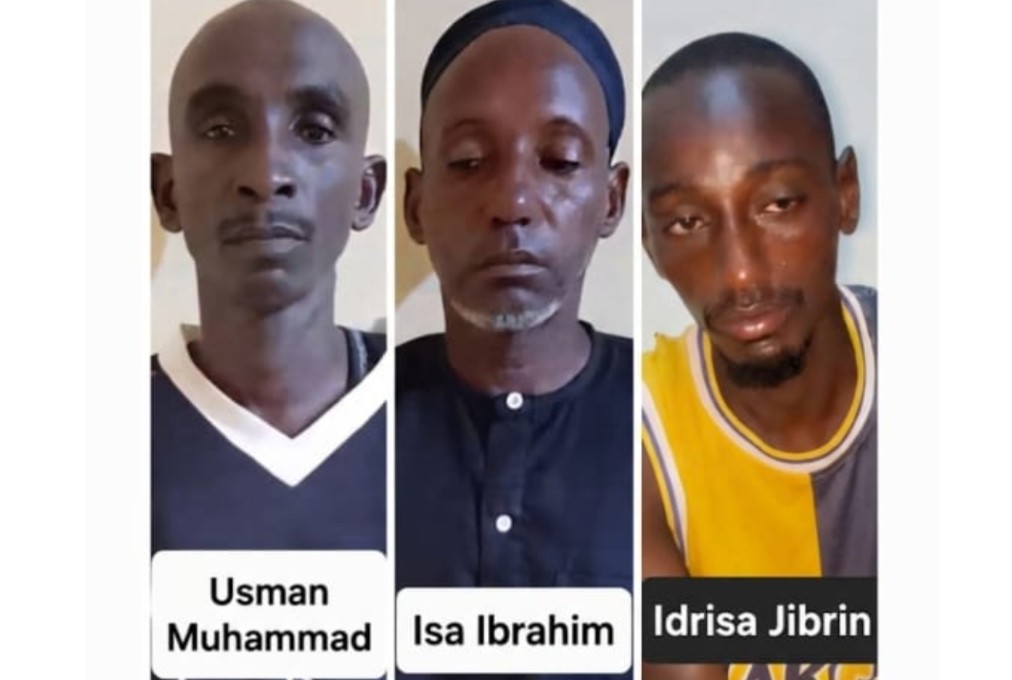
Governor Hyacinth Alia of Benue State has strongly condemned the deadly attack on Ayilamo Community in Logo Local Government Area, describing it as a “despicable act” and a grave threat to peace and security in the state.
The attack, which occurred on Wednesday night, claimed the lives of four police officers and seven civilians, while thousands were displaced.
In a statement on Thursday signed by his Chief Press Secretary, Sir Tersoo Kula, the Governor said the killing of law enforcement officers “is particularly painful and underscores the enormous sacrifices being made by security personnel in the line of duty.”
“This despicable act is an attack on the peace-loving people of Ayilamo and a grave threat to the security and stability of Benue State,” Governor Alia stated.
He described the incident as “a disturbing reminder of the persistent insecurity and repeated attacks on vulnerable communities and law-enforcement officers in the area.”
Governor Alia extended heartfelt condolences to the people of Ayilamo, the families of all victims, and the entire Logo LGA community.
He also commiserated with the Inspector-General of Police and the Benue State Commissioner of Police over the loss of the four officers.
“We honour their courage and sacrifice and pray that God grants their families, colleagues, and loved ones the strength to bear this irreparable loss,” the Governor added.
The Governor commended the Department of State Services for the “prompt and professional operation” that led to the arrest of three suspects allegedly connected to the Ayilamo attack in Benue and Nasarawa States.
He described the arrests as “a significant step towards uncovering the full circumstances of the incident and bringing those responsible to justice.”
“We urge the DSS to intensify its investigation and make the best use of the information obtained from the suspects in its custody,” Governor Alia said.
Governor Alia assured that his administration will continue to collaborate with security agencies to strengthen security in Ayilamo, Logo, and other vulnerable communities across the state.
He appealed to residents of Ayilamo and surrounding areas to “remain calm, vigilant, and law-abiding,” and to provide credible information to security agencies.
“We remain resolute in our determination to protect lives and property, uphold justice, and restore lasting peace across Benue State,” the Governor assured.



Mother Subjects Daughter to Abuse, Admits: “I made $300 from my 8-yr-old daughter’s pornographic video’
Spread the loveBy Nick Ibe The viral video on the social media involving an 8-year old girl whose ordeal was...


Lawyer Assaulted by Police: NBA Gboko Branch Secures N500 Million General and Exemplary Damages in Makurdi Court
Spread the loveBy Our Reporter In the pursuit of justice for a colleague, B. B. Iliamkondo, Esq., who was recently...


Alia Denounces Ayilamo Attack, Commiserated With Victims as DSS Arrests 3 Suspects
Spread the loveBy Felix Umande Governor Hyacinth Alia of Benue State has strongly condemned the deadly attack on Ayilamo Community...


Alia Condemns Ayilamo Attack, Commiserates With Victims, As DSS Arrests 3 Suspects
Spread the loveBy Felix Umande Governor Hyacinth Alia of Benue State has strongly condemned the deadly attack on Ayilamo Community...


FG, States, Be warned We Will Strike, Without Warning –ASUU
Spread the loveBy Nick Ibe, Abuja Without urgently resolving all the pending salary and welfare issues, by the Federal Government...

Protest Against Xenophobia: NASS Orders Boycott of South African Organised, Hosted Legislative activities
Spread the love–Calls on State Assemblies to join By Isa Abdul, Abuja In a bold move against South Africa’s xenophobic...


Why Education is Dear to Me – By Peter Obi
Spread the loveAfter returning to Abuja on 8th September 2026, following our visits to Benue and Plateau States, I travelled...


After Two Decades: FG Pays 2,700 ex-Nigeria Airways Staff N18bn
Spread the loveBy Son Tertsegha, Abuja Over two decades after the national carrier, Nigeria Airways, was liquidated, the Federal Government...


To Boost Sch Enrollment: Nasarawa Plans Mobile Courts To Arrest, Prosecute Parents Of Out Of School Children
Spread the loveBy Michael Lim, Jos As part of measures to tackle the growing number of out-of-school children in Nasarawa...

Akume to Religioud Leaders Make Peacebuilding Part OF National Security Ahead of 2027
Spread the loveBy Felix Umande The Secretary to the Government of the Federation, Senator Dr. George Akume, CON, on Wednesday...