
Sports
How FIFA’s New World Cup Tables are Changing Everything


For the first time at a World Cup, FIFA is using head-to-head records instead of group goal difference as the primary tiebreaker for teams level on points.
Until 1966, goal ratio was used to separate teams – this involved dividing a team’s goals scored by goals conceded. In 1970, Fifa moved to goal difference – until now.
It brings Fifa in line with Uefa, which has always given priority to the results between teams.
The logic is that assessing the direct performance of two teams is fairer, because it removes freak results – such as Germany’s 7-1 win over Curacao.
Others say that taking overall goal difference is better as that compares the total record in the group.
Fifa first introduced it at last year’s Club World Cup, where Flamengo won Group D ahead of eventual tournament winners Chelsea after two matches.
Here’s how it changes things at this World Cup.
Fifa alter World Cup tables – it changes everything
Why Mexico know they have won the group
The main knock-on effect is a greater chance of teams not only advancing but winning the group before matchday three.
Under the old format, a team would need to be four points clear of second to lock top spot after two games.
That was rare because it required the other two fixtures of the first two rounds in the group to both be draws.
Now it is possible to be three points clear and get first place in the bag.
It can happen a few ways.
It requires either two draws, or first place to have beaten the team(s) on three points.
We have already seen it in Group A.
Mexico won their first two games to sit on six points – three points clear of South Korea, with the Czech Republic and South Africa on one point.
As Mexico have already beaten South Korea they cannot be overtaken if both countries end on six points. So Mexico have won the group.
They know they will play a last-32 tie in Mexico City against a third-placed team.
But there’s a knock-on effect.
Mexico effectively have nothing to play for when they meet the Czech Republic next Wednesday, and could opt to rest players.
And that creates an imbalance the Czech Republic could benefit from, though they can only qualify automatically if South Korea lose to South Africa.
But in a tournament where the best third-placed teams go through, it could be important.
The system is also used at the European Championship, where the best third-placed teams advanced.
Who else could win their group on matchday two?
For top spot to be locked after round two, a few things need to be considered:
• The top team must win both their games
• The two other fixtures must have draws, OR
• First place must have beaten the team or teams on three points
Groups B and C will go to the final day.
GROUP D
The United States take top spot if Turkey do not beat Paraguay.
GROUP E
Germany win the group with a victory over Ivory Coast if Ecuador do not win against Curacao.
Ivory Coast will seal top spot with a win if Curacao do not beat Ecuador.
GROUP F
Sweden will qualify as group winners if they beat the Netherlands and Japan do not win against Tunisia.
GROUP G
No team can seal top spot on matchday two.
GROUP H
No team can seal top spot on matchday two.
GROUP I
No team can seal top spot on matchday two.
GROUP J
Argentina take top spot with a win over Austria as long as Jordan do not beat Algeria.
Austria can do so with a victory if Algeria do not win against Jordan.
GROUP K
Colombia will seal first place if they beat DR Congo and Portugal do not win against Uzbekistan.
GROUP L
England win the group with a victory over Ghana if Panama do not win against Croatia.
Ghana will be group winners with a victory if Croatia do not beat Panama.
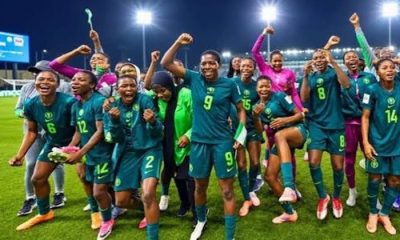

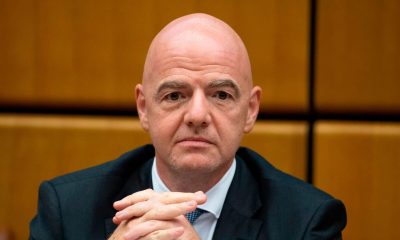




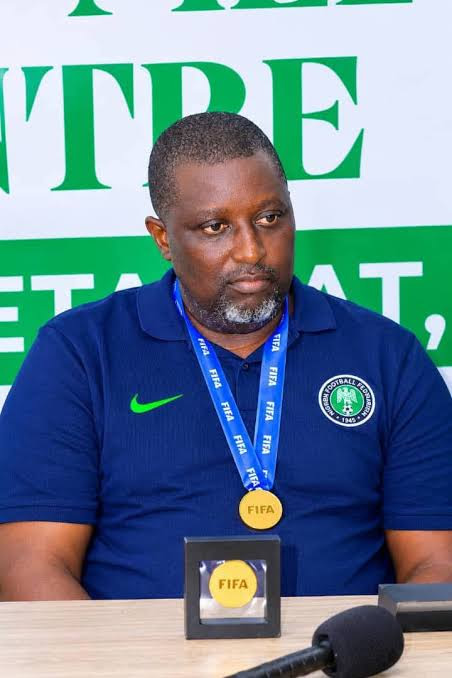
After guiding Nigeria’s Flamingos to a historic FIFA U-17 Women’s World Cup triumph, head coach Akeem Busari speaks on the journey to global glory, the experiences that shaped his coaching philosophy and how he built a world-beating team in just seven months. He shares his thoughts with ABIODUN ADEWALE
Congratulations on leading Nigeria to the FIFA U-17 Women’s World Cup title and becoming the first African team to achieve that. How does the achievement make you feel, knowing the passion Nigerians have for football?
Football is a game of emotions, and we know Nigerians to be passionate. For us, representing over 200 million Nigerians at this level, we had to do our bit to show why we were saddled with that responsibility. We are happy, elated and proud that God has used us to put smiles on the faces of Nigerians and Africa as a whole. It is a source of pride for our names, our families and the integrity of the game.
Let’s go back to the days when nobody knew the name Akeem Busari. How did you put in the work over the years to obtain your coaching certificates, build your network and identify grassroots talents to shape your career as a coach?
Some people start in football and quickly move to the sidelines. For others, it may be a rare opportunity, while injuries also push some people into coaching. But the bottom line is perseverance and determination. Whenever an opportunity has not come, you just have to keep developing the talent God has given you and continue to improve yourself through coaching education in line with modern-day demands.
I started after my playing days and obtained my Advanced Diploma, the highest diploma at the National Institute for Sports. I got those certificates between 1999 and 2005. Aside from that, I have attended different courses, both online and physically. I became a CAF-licensed coach in 2016 and have since upgraded to a CAF A Licence.
I have represented Nigerian teams in the CAF Champions League, both male and female. I was with Enyimba during the Confederation Cup in 2022, and I was also with Bayelsa Queens, winning the President Federation Cup with them and taking them to the CAF Women’s Champions League. These are things I have been doing passionately, moving from one club to another. When the opportunity to lead the women’s U-17 team came in April, I had to look inward and identify players within the age bracket who could fit into the team. When we arrived at the numbers we needed for qualification, we played all our matches and won all five games at the WAFU B tournament, scoring a high number of goals.
The World Cup was another level of the game, and we were able to see maturity. Some of our opponents from Europe had players from big clubs and had global experience compared to some of our girls, who were still in school. But we are a gifted country when it comes to talent and capacity, and we were able to apply the basic methodology, which helped us.
At the World Cup, we lost our first game, which was quite difficult but understandable. However, we knew the team we had and believed we could come back. We analysed the games and changed our methodology individually, in pairs, in groups and in terms of team cohesion. That was what fostered the winning formula that took us to the final.
Nigeria had previously won bronze under coach Bankole Olowokere at the 2022 edition in India. How closely did you follow that campaign, and what lessons did you take from that achievement into your seven-month preparation for the tournament?
Coach Bankole is a colleague, and it was good for Nigeria to have been on the podium before. We watched the games they played last year, when they were knocked out in the second round. We saw why we lost to Italy, and it wasn’t because we were bad. We used that as a point of reference. We also picked games that we won and used them to learn. From there, we adopted a mindset that, against every team we played, nobody should score before us. And if they did, how would we respond? If you look at all the games, it was only Poland that scored before us, and that was the only game we lost. So, it was all about mentality. Immediately, we locked into that mindset; it helped us mentally. Even in training, we played with a high numerical advantage against the opposing team and told the players to play. That anxiety, tension and ability to cope with one another, when transferred to our matches against other teams, coupled with our physical ability as Africans, really helped us. We played against teams that had bigger players than ours, but it was a matter of mindset and approach.
What was the biggest challenge you faced during the seven-month preparation for the World Cup?
One of the biggest challenges was the headache of selection. We had some injury challenges, and those players were good enough to make the team. When about two or three of them, who could have added more depth to the team, sustained injuries and went for medical checks, we were told they would be out. We had to look inward, and today, we are celebrating all of us.
We saw the matches on television, but not what happened behind the scenes. What were some of the moments in the dressing room and at camp that helped turn the team into champions?
The first thing was discipline. If we scheduled any activity for 4 pm, everybody would be out and ready 10 minutes before then. Whenever we wanted to do match analysis, nobody was late, and everyone had to come with their roommates. We took it as a mission because we wanted to go back home with the trophy. Everyone was locked in. If there were any issues among the players, the captains would walk up to me and say, ‘Papa, this is what is happening, but don’t say I told you.’ I knew how to manage the situation. They are young players, and we had to ensure they did not lose confidence. We managed them physically and mentally and were even mindful of what we said to them.
How important was the support of your backroom staff to the team’s success?
I had two assistants, Coach Jegede and Coach Omoidiaghe, and Coach Kola Ige as the goalkeeper trainer. There was also Dr Oyinye, the physiotherapist, Charity, Rhoda, the kit manager, the team secretary and everyone else. They were fantastic. The moment I sent a programme, they set up the cones. We made decisions together, and it was a big family.
You have repeatedly emphasised the importance of grassroots football in your career. How did you identify and select the players who eventually formed the World Cup-winning squad?
The grassroots has been my main catchment area. I started from there and was in the setup for 14 years. Even when I moved to big teams, I had one or two grassroots players to work with. I normally produce players and even go as far as writing programmes for players who want to go on trials.
You were the technical director of Pacesetter Queens before your appointment as Flamingos coach. Given the team’s position in the NWFL at the time, some people questioned your credentials for the national team job. How did you handle those doubts, and what does the World Cup triumph say to those who underestimated you?
I was the technical director of Pacesetter Queens, and I joined the team a week after the start of the league. We were a youth team with players who did not have the experience of playing in the league. But we stuck with them, and people would have seen the level of coaching in that team. We gave teams like Edo Queens and Bayelsa Queens a run for their money. One thing Nigerians should understand is that it is about knowing the technical ability of a coach. It is about who the person is and their track record. Sometimes, you have the materials and things work well, but when you don’t have the materials, you also have to ask whether the coach can still achieve something.
Which coaches have had the greatest influence on your career, and whose methods did you draw from as you prepared the Flamingos for the World Cup?
My biggest mentor was the late coach Yemi Tella. I was in camp with him before the 2007 FIFA Men’s U-17 World Cup. That was where I gained experience in managing an U-17 team. I had been with the late Yemi Tella since 1997, even before I attended any coaching course, and he was the one who took me around when I was Lagos State head coach for the National Sports Festival in 2004 and 2005. When he was in camp with his U-17 players in 2007, I was offering technical assistance, and the experience I gathered there was a plus for me when I got the women’s U-17 job almost 19 years later. I think what I sowed is what I am reaping, and I just pray for God’s guidance moving forward.
Can you take us through your journey as a footballer and how injuries influenced your decision to become a coach?
When I was at CMS Grammar School in 1982, I played football for the school and hockey for Lagos State. In 1983, I played both football and hockey for the state, and in 1985, I represented Lagos State in football. That was when I was preparing to pursue further studies after completing my O’Level. In 1986, I sustained an injury to my left knee and could no longer play football as much, so I focused on hockey. I played a couple of club games in hockey, but I did not return to football until I ventured into coaching around 1993. I started with a youth team, and people used to tell me that what I had to offer was better than what some more experienced coaches were offering. So, it is just a gift, and when people see what you have, that pushes you to do more. That was what encouraged me to go to the NIS and become a CAF A-licensed coach, as well as an instructor for CAF and the NFF.
Coaching at the grassroots level is often driven by passion, with limited resources and little financial reward. Now that you and your players are receiving millions of naira in rewards, how significant is this moment for your career and personal life?
Sometimes, you don’t expect anything, and then it comes in multiple folds. I want to thank God for the players and everyone around us. I pray that bigger things will come our way. We cannot rest; we need to redouble our efforts and talents. As I always tell them, immediately you achieve one thing, you want to achieve two. The destination is higher than this, and with discipline, we will get there.
Abiodun Adewale
Sports PUNCH,
By Isa Abdul, Abuja
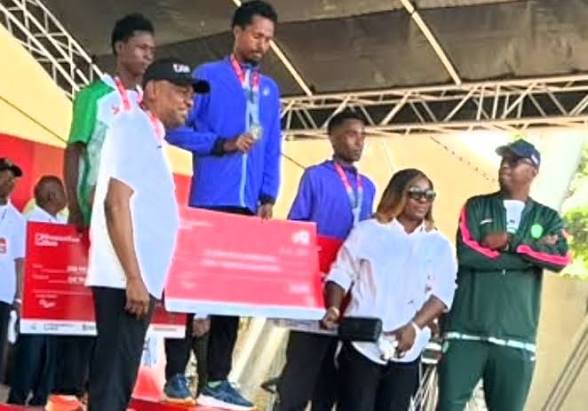
Ethiopia’s Gemechu Tolosa Daba is winner of the men’s elite race at the third PremiumTrust Bank Abuja City FL International Half Marathon, finishing ahead of Nigeria’s Gang James.
Tolosa ran 1:01:56 to claim first place in the 21km race, ash James finished second in 1:01:58, giving Nigeria a podium finish at the international competition.
Kenya’s Lampard Kingoo took third position in 1:01:59, while compatriot Enos Kipruto finished fourth in 1:02:06.
Uganda’s Julius Ochieng completed the top five with a time of 1:02:27.
The result highlighted the strong international competition at the third edition of the Abuja City International Half Marathon, which attracted elite runners from several African countries.
-Money in trust in designated banks
By Son Tertsea, Abuja
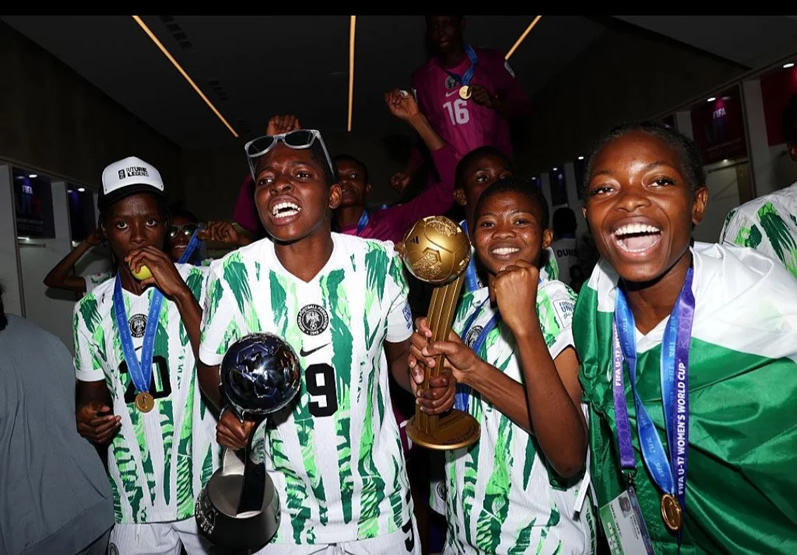
The Flamingos’ victory at the female U-17 World Cup has been handsomely rewarded as each player gets one hundred million naira from President Bola Ahmed Tinubu..
The team beat Japan 2-1 to clinch the trophy in Morocco.
At a reception for the players and coaching officials at the Presidential Villa, Abuja, on Wednesday, the First Lady, Senator Oluremi Tinubu, announced the cash gifts, remarking that Nigerians were proud of the team.
She told the teenagers that the cash reward would be kept in trust for them in designated banks.
On behalf of the President, she said, the coach of the flamingos is rewarded with N100 million, while the Technical Crew would get N50 million each. In her words:
“I am here today to represent Mr. President, because you are expecting to see Mr. President today. You know when they say, ‘If you have seen me, you have seen the Father. If you have seen me, you have seen Mr. President.
“On behalf of the President and Commander in Chief of the Armed Forces of the Federal Republic of Nigeria, His Excellency President Bola Ahmed Tinubu, I am honored to receive our flamingos, their coaches, technical officials, and the entire delegation to the State House. This is actually Mr. President’s banquet. So, I’m receiving you on his behalf.
“So, for all our players, Mr. President is awarding you all with saving certificate of a 100 million naira each. Each of you is 100 million each. You know you are still under 17. So we want it to be a saving certificate of 100 million naira each with a bank.
“So do you know what a saving certificate is? It’s money, but it’s in trust for you. You are still very young. You want to start handling 100 million now? So for the coach, a reward of 100 million cash to you, and then for the technical crew, 50 million each. That’s what Mr. President said, I should tell you.
“I want to thank you for coming to the State House, and like I said, as a mother, always remember to pray. Don’t forget the humbling moment you stood together and started worshiping that night. So don’t ever forget that. Wherever we are, God brought us there.”



ABU DSS student wins N1m prize at essay competition
Spread the loveA student of Demonstration Secondary School, Ahmadu Bello University, Adejoh Joshua Unekwu, has clinched a second position at...

Football Legend, Segun Odegbami, Attacked in Abeokuta, Escapes Death
Spread the loveBy Seyi Balogun, Lagos With no clear knowledge of the assailants or their motive, former Super Eagles captain...

FG, Chinese Firm Agree to Produce CNG Buses in Ibadan
Spread the loveBy Seyi Balogun, Lagos To introduce compressed natural gas-powered buses and establish a local assembly plant, to reduce...

JAMB UTME Free for Candidates with Disabilities, Fee Refund at Exam Centres
Spread the loveBy Isa Abdul, Abuja Special examination support has been established for candidates with disabilities, by the Joint Admissions...


Sharing Money is Digging Hole for Eco Woes, Can’t End Poverty – Fasua
Spread the loveBy Son Tertsea, Abuja A warning has been issued that distributing cash to Nigerians without addressing underlying economic...

“I conceded defeat to Buhari, a statesman that loved God, Nigeria.’ –Jonathan
Spread the loveBy Isa Abdul, Abuja The reason for conceding defeat to the late President Muhammadu Buhari in the 2015...

Secrets Behind Flamingos’ World Cup Win – Busari:
Spread the loveAfter guiding Nigeria’s Flamingos to a historic FIFA U-17 Women’s World Cup triumph, head coach Akeem Busari speaks...


Failure to Secure NNPCL GMD Job: EFCC Arraigns Woman Over N1.1 bn Fraud
Spread the loveBy Isa Abdul, Abuja One Halimat Adenike Tejuosho was Wednesday arraigned before a High Court of the Federal...

Let’s Honor All Pioneer Paramount Rulers Across Tiv and Idoma Lands.
Spread the loveBy Peters Ichull Today, the Tiv nation and the entire Benue family pause in solemn reflection to mark...

NKST Synod Says: “Alia Is A Talk-And-Do Governor”, Deserves Re-election in 2027
Spread the loveBy Felix Umande The NKST Synod has declared its support for the re-election of Benue State Governor, Rev....