
Business and Economy
Gov. Alia Presents ₦605.5bn 2026 Budget of Rural Development, Livelihood Support and Sustained Growth


By Son Tertsea
Benue State Governor, Rev. Fr. Dr Hyacinth Iormem Alia, on Monday, December 22, 2025, presented the state’s 2026 Budget estimate of ₦605,506,764,066.16 to the Benue State House of Assembly in Makurdi for consideration and approval.
Tagged “Budget of Rural Development, Livelihood Support and Sustained Growth,” the Governor said the proposal is a people-centred strategy to rejig the state’s economy amid improving the living standards of Benue people.
He told members of the House at the Assembly Complex that the budget is a practical roadmap to inclusive growth and economic progress that would translate into practical tangible benefits for ordinary households across the state.
Of the total. ₦281,086,430,485.05, or 46.4 per cent, is earmarked for recurrent expenditure which shows a 21.69 per cent increase over the 2025 recurrent estimate. He stressed that the allocation would sustain the payment of the new minimum wage and other overhead costs of government.
He said capital expenditure of ₦342,420,333,581.10 is for infrastructure development and long-term economic competitiveness.
Governor Alia emphasized that transforming the rural economy remains central to his administration’s development agenda disclosing that 30.23 per cent of the capital budget is for rural roads, feeder roads and bridges to connect farming communities to markets, health facilities and schools.
“Transforming our rural economy is not an option, it is a necessity. This budget prioritizes targeted investments that will unlock rural productivity, reduce post-harvest losses, lower transport costs and stimulate local commerce,” he stated.
The priority areas of the 2026 budget include the Sustained Growth Agenda—covering education, health, infrastructure, innovation and digital transformation, with an allocation of 55.66 per cent of the capital budget.
The Rural Development Agenda, encompassing rural electrification, water supply, environmental protection, agriculture and agro-industrial development, received 30.23 per cent, while Livelihood Support, including social protection programmes, MSME growth and cooperative development, accounts for 14.11 per cent.
He assessed the 2025 fiscal year, acknowledging prevailing economic pressures and security challenges even as significant gains were recorded across critical sectors. He revealed that security coordination had been strengthened through the deployment of 5,000 Benue State Civil Protection Guards, working alongside federal agencies and community structures to restore relative peace in crises areas.
On infrastructure, the Governor reported the near completion of underpasses in Makurdi and Gboko, completion of about 50 kilometres of roads in the state capital, and ongoing construction of over 387 kilometres of roads across the state. He noted that these efforts have positioned Benue among the top five states nationally in capital expenditure per capita.
In the area of workers’ welfare, Alia disclosed that salary arrears inherited by his administration had been reduced from ten months to three, while pension and gratuity backlogs were also significantly cleared. He said the administration deliberately prioritised workers and retirees’ payment despite the pressure on state finances.
The Governor also highlighted major agricultural interventions, including the reactivation of the fertiliser blending plant, subsidised farm inputs, distribution of 150,000 oil palm seedlings under the Benue Alia Palm Project, and the test run of a fruit juice factory to reduce post-harvest losses. He added that the near-completion of the Benue Beer project is expected to generate over 1,000 direct jobs and strengthen backward integration with local farmers.
Education, health, youth empowerment and digital skills development also featured prominently in the budget, with investments in school infrastructure, teacher recruitment, digital training for youths and civil servants,











Business and Economy
Nigeria Ports Economic Regulatory Agency (NPERA), formerly Nigerian Shippers’ Council, Takes Off

By Seyi Balogun, Lagos
A major change in the running of commercial activities at the nation’s seaports is set to begin with the Nigeria Ports Economic Regulatory Agency (NPERA) officially commencing operations.
Those to head the running of the agency have also been appointed. Chairman of NPERA Governing Board has Dr. Ibrahim Shema, while Dr Pius Akutah, is the Executive Secretary and Chief Executive Officer.
Established under the Nigeria Ports Economic Regulatory Agency Act, 2026, the new agency is to foster order, transparency and predictability to the port business while enhancing Nigeria’s competitiveness as a regional trade hub.
At a press briefing in Lagos, Chairman of the NPERA Governing Board, Dr. Ibrahim Shema, said the development is a major milestone in the evolution of Nigeria’s port system.
Shema highlighted that the new law gives permanent legal backing to economic regulation of the ports, replacing the interim arrangement under which the Nigerian Shippers’ Council operated its role since 2014.
The board chair said the history of port economic regulation dates back to the establishment of the Nigerian Shippers’ Council in 1978 and the concessioning of port terminals in 2006.
But NPERA, under the new framework, he said, will regulate port tariffs and charges, licensing, service standards, competition, commercial disputes and trade facilitation, while also protecting the interests of port users.
The chairman stressed that the agency’s emergence would not create a power struggle with the Nigerian Ports Authority (NPA), which will continue to handle port infrastructure and its landlord responsibilities. In his words:
“This is not about creating competing authorities. It is about establishing a coherent system in which institutions work together, each within its statutory responsibilities.”
He said NPERA would focus on eliminating unnecessary regulatory hurdles, reducing uncertainty for businesses and improving the speed of cargo movement through Nigerian ports.
He identified transparency, fairness, predictability, efficiency and accountability as the principles that would guide the agency’s operations.
On port charges, Shema said the new system would provide clearer information on how regulated tariffs are determined, while giving terminal operators and other service providers a better understanding of their regulatory obligations.
He also promised easier access to dispute-resolution mechanisms and greater use of digital platforms for licensing, tariff management, monitoring, compliance and engagement with stakeholders.
He assured stakeholders that the transition from the Nigerian Shippers’ Council to NPERA would be handled without unnecessary disruption, with attention to staff, assets, liabilities, existing contracts, pending disputes, regulatory records and licences.
He called for cooperation among the NPA, Nigerian Maritime Administration and Safety Agency (NIMASA), Nigeria Customs Service, terminal operators, shipping companies, freight forwarders, importers, exporters and other stakeholders.
“The establishment of NPERA is a historic achievement, but the harder work begins now,” he said, stressing that the real test would be the agency’s ability to convert the new law into better services, improved efficiency and stronger competitiveness.
The Executive Secretary and Chief Executive Officer of NPERA, Dr. Pius Akutah, equally expressed confidence that the new regulatory regime would significantly improve the business environment at the ports within the next one to two years.
Akutah said the agency would pursue fair pricing, stronger competition and improved trade facilitation.
–Possible price manipulation
–Search for alternative to cement on
By Nick Ibe
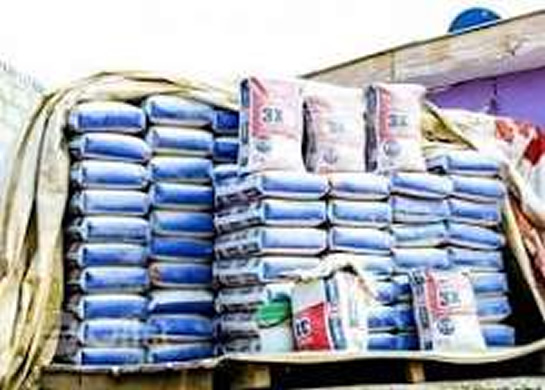
The Federal Competition and Consumer Protection Commission has said its preliminary investigation into Nigeria’s cement industry suggests likely manipulation of cement prices, following widespread complaints over the soaring cost of the commodity despite the country’s large production capacity and abundant limestone deposits.
It has also opened an investigation into possible price manipulation in Nigeria’s cement industry after a three-month inquiry raised concerns that prevailing market conditions may not fully explain the cost of the building material.
The preliminary findings followed a cross-border study conducted by the commission’s Anticompetitive Practices Department in response to widespread complaints over the rising cost of cement.
In a statement issued on Tuesday by the FCCPC Director of Corporate Affairs, Ondaje Ijagwu, the commission said its investigation compared Nigeria’s cement market with those of Kenya, Tanzania, South Africa, Egypt, Morocco, Algeria and Togo.
An analysis of findings in the FCCPC report showed that the cost of cement in Nigeria is higher than the prices of the same quantity of the commodity in neighbouring African countries.
The study examined the availability of limestone, population, production capacity, consumption and retail prices. The statement read:
“Findings from an industry-wide investigation conducted by the Federal Competition and Consumer Protection Commission suggest possible manipulation of prices of cement in the Nigerian market.
“This is the preliminary summation of the 40-page field reports collated following a three-month cross-border study by the Anticompetitive Practices Department of the Commission, undertaken in response to widespread public complaints over the high cost of cement, a common staple in the country’s construction industry.”
The commission noted that Nigeria has substantial limestone deposits and installed cement production capacity estimated at between 60 million and 65 million metric tonnes annually, against domestic consumption of about 25 million to 30 million metric tonnes.
Despite the reported excess capacity and Nigeria’s position as a net exporter to neighbouring countries, the commission said domestic prices had continued to rise.
Market intelligence reviewed by the FCCPC showed that a 50kg bag of cement, which sold for between N9,300 and N9,700 in January, rose to between N10,500 and N13,000 by mid-year. By July, prices of between N13,000 and N15,000 were reported in some parts of the country.
The commission also found that cement sold at lower prices in some African markets. In Kenya, where the population is about 58.6 million and cement demand was estimated at 9.3 million metric tonnes in 2025, a bag sold for about $5.40, or N7,344.
In Tanzania, with a population of about 66.3 million and similar cement demand, a bag sold for about $4.80, or N6,528. In Togo, which the commission said has no limestone deposits, cement retailed at about $6.75, or N9,180 per bag.
The FCCPC said the price disparity had raised questions about why Nigeria’s significant production capacity and raw material endowment had not translated into greater downward pressure on prices.
It said industry players had attributed the high prices to energy costs, naira depreciation, imported machinery and spare parts, as well as transportation and logistics expenses.
However, the commission said it was testing those explanations against verified information on production costs, pricing, capacity utilisation and other market conditions.
“Of particular concern to the commission is that this level of production capacity has not resulted in the downward pressure on domestic prices that might ordinarily be expected in a competitive market with substantial excess capacity.
“Information provided by industry participants has identified energy costs, depreciation of the Naira and its effect on imported machinery and spare parts, as well as transportation and logistics costs, among the factors contributing to cement prices.
“The commission is testing these explanations against verified information on costs, production, pricing and market conditions. However, the weight of preliminary findings provides sufficient grounds for the investigation to continue,” the statement said.
The FCCPC said the preliminary findings provided sufficient grounds to continue the investigation and determine whether cement prices were driven by legitimate costs or by anti-competitive practices.
The probe will examine possible coordinated conduct, abuse of market power, restriction of domestic supply and anti-competitive distribution practices.
Accordingly, the commission has issued Notices of Commencement of Investigation and Summons to Produce to key players in the sector, demanding records on pricing methodologies, production, capacity utilisation, exports and commercial relationships.
“Next is to determine whether prevailing cement prices can be explained by legitimate costs and market conditions, or whether there is evidence of coordinated conduct, abuse of market power, restriction of domestic supply, anti-competitive distribution practices or other conduct contrary to the provisions of the FCCPA,” it added.
Commenting, the Executive Vice Chairman and Chief Executive Officer of the FCCPC, Tunji Bello, said the investigation was necessary because of cement’s strategic importance to the economy.
“Cement occupies a strategic place in the Nigerian economy. Its price affects the cost of building a home, developing commercial property, delivering public infrastructure and, ultimately, the cost of doing business. When concerns persist about how such an important market is functioning, the Commission has a duty to look beyond assumptions and establish the facts,” Bello said.
He stressed that the investigation was not aimed at dictating how companies should conduct their businesses or limiting legitimate profits.
“Businesses are entitled to make legitimate commercial decisions and earn returns on their investments. Competition law does not prevent that. Its purpose is to protect the competitive process, so that prices, output and other market outcomes are determined by genuine competition rather than conduct that unlawfully restricts it,” Bello said.
The investigation comes amid growing pressure on the construction sector, where rising cement prices have increased the cost of housing and infrastructure projects across the country.
OPS, economists react
Building sector leaders and economists explained that the factors behind the high cement prices in Nigeria are compounded; on the one hand, it is largely structural, including transportation of limestone on impassable roads, and on the other hand, it could be influenced by monetary policy, including taxes.
They noted that there is only so much that the FCCPC could do, especially because any government intervention risks could impact free trade.
Reports indicate that, business leaders, including the Chairman of the Lagos Chamber of Commerce and Industry Construction Group, Soji Adeniji, explained that his experience in a recent project confirmed the FCCPC report.
“I was in Canada recently, and a friend of mine who is having a project in Canada was contemplating buying cement from abroad. He was of the opinion that, why can’t we buy cement from Nigeria, as in he wants to import cement from Nigeria and stuff like that.
“By the time he did his calculations, he found out that cement is not as cheap in Nigeria, and that we could arrange for the importation.
Eventually, as the report stated, he found out that Turkey is more price-friendly. He was able to establish a relationship with Turkey. Of course, the Tanzania, Kenya market too was a bit preferable, which boils down to the fact that the price of cement in Nigeria is higher. But then the question would be, what is the location of that kind of high cost?”
Adeniji also acknowledged that the cement market in Nigeria is experiencing a moment of scarcity, but noted that the given reasons may not be as satisfying.
“Why are we having scarcity? Some people are saying because it was raining and therefore limestone deposits, well, that is not, I mean, for me, for the past two weeks now, since the beginning of August, there has not been much rainfall to affect any production. But what is happening to the limestone would be another thing,” the LCCI construction group leader stated.
He noted that other business factors could play a role, adding, “If you check the production line and look at that production chain line, you look at it from limestone to the facility that is an infrastructure facility for production.
“You look at the economy, which is stable, so we cannot be saying that things are changing. The economy is stable, and has been consistent for too long a time. Then other challenges, maybe with the manufacturer.
“You’d notice that Lafarge has just changed. A company called HBM has just bought over Lafarge, meaning that maybe the management issue or something like that. So, when you look at that production, up to the level of distribution, you’ll ask again, why are we experiencing this? They will be telling you logistics, transportation for delivery, and that kind of thing.
He noted that taxation could be another factor. “Some people from the manufacturer’s side too might be talking about the issue of double taxation, and things like that. If the tax regime is not favorable, there’s nothing definite.”
These experts urged the government to invest in improving supply to meet increasing demand, which may have caused exorbitant prices. They recommended working with researchers and the private sector to develop alternatives to cement for concrete making.
On his part, Professor of Economics and Public Policy, University of Uyo, Prof Akpan Ekpo, said the housing sector, is a very crucial part of investment where the cement issue could be a supply problem.
“This could be more demand than supply. So what the government should do is that you look at that sector properly and see whether you can help that sector.”
Ekpo called on the government to help people who need access to finance in order to be in the cement business. “Otherwise,” he said, “you’d keep having this problem of high cost of cement.”
A member of the Nigerian Institute of Building and Yaba College of Technology researcher, Samuel Shonibare, said, “I urged the government to look for alternatives to the use of cement in construction. There has been a lot of research that studied other materials that can be used to replace cement partially in concrete production.
“I’m trying to look at the probability of using rice shells as partial replacements for cement in concrete production. It’s one research project I’m currently working on. Not that I’m even trying, I’m on it.”
He explained that if the country reduces the use of cement in construction, of course, there will be a drastic reduction in the price of cement that is being used in construction. “So the recommendations I would make for now is telling the stakeholders in the construction industry to focus on research that will yield an alternative material to cement. If the producers of cement have discovered that there’s a shift in the usage, I think that will lead to a reduction in the price,” Shonibare noted.
Meanwhile, the Chief Executive Officer of the Centre for Promotion of Private Enterprise, Dr Muda Yusuf, urged the government to carry out more rigorous research to ensure a detailed solution.
He said, “In order for a balanced view, it is important to hear from the FCCPC what the producers and distributors of cement have to say. Secondly, we need to know the cost structure of the cement producers and suppliers in the foreign countries. It will help us gain clear insight.”
Yusuf noted that understanding what factors impact the pricing of cement in the other countries will enrich the FCCPC inquiry.
He added, “The report needs to be more rigorous and show us the cost structure in the other countries. We need to know their cost of production, taxes, logistics and energy. Having the factors that underlie the prices will help (the probe), since it is presented as a comparative report.”
By Nick Ibe
The FAAC allocation has handed to the Federal Government, 36 states and 774 local government councils a record N3.007tn from the Federation Account in July 2026, the highest monthly FAAC allocation so far recorded.
The statutory collections rose by N658.09bn, driven by improved receipts from petroleum and non-oil taxes.
The disbursement was approved at the August 2026 meeting of the Federation Account Allocation Committee held in Owerri, Imo State.
The N3.007tn distributed in July is the highest monthly FAAC allocation recorded in 2026 and the largest allocation in the reviewed FAAC records from 2019 to July 2026.
A statement issued on Tuesday by the Director of Press and Public Relations in the Office of the Accountant-General of the Federation, Bawa Mokwa, said the gross statutory revenue rose to N4.359tn in July from N3.700tn recorded in June.
The increase represented N658.087bn, or 17.8 per cent, signaling stronger collections across several oil and non-oil revenue sources.
However, gross Value Added Tax revenue declined marginally to N793.968bn in July from N799.746bn in the preceding month, representing a decrease of N5.778bn, or 0.7 per cent.
The statement read: “In its regular monthly business, FAAC approved the disbursement of a total of N3.007tn to the Federal Government, the 36 state governments and the 774 Local Government Councils as revenue for July 2026.
“The month’s figures point to a strengthening underlying revenue base. Gross statutory revenue rose to N4.359tn in July 2026, up N658.087bn, a 17.8 per cent increase, from N3.700tn in June 2026, reflecting improved collection performance across oil and non-oil statutory sources. Gross VAT revenue held broadly steady at N793.968bn, a marginal decline of N5.778bn (0.7 per cent) from N799.746bn in June, suggesting consumption-tax receipts remain resilient month-on-month.”
The communiqué showed that Petroleum Profit Tax, Hydrocarbon Tax, Companies Income Tax, Capital Gains Tax, Stamp Duty Tax, petroleum royalties, mineral royalties, excise duty and gas flaring penalties recorded increases during the month.
The gains, however, were partly offset by declines in VAT, import duty, CET levies, rental of gas flaring fees and miscellaneous oil revenue. “The committee will continue to monitor as it works with revenue-generating agencies to close collection gaps and improve remittance discipline,” Bawa stated.
The development comes amid a sustained rise in revenues accruing to the Federation Account following major fiscal reforms, including the removal of petrol subsidy, foreign exchange reforms and efforts to widen the tax base.
Beyond the monthly allocation, the Owerri meeting also shifted attention to a broader question confronting the country’s three tiers of government:
Whether rising federation allocations would translate into stronger state economies, improved infrastructure and better social services.
The FAAC meeting, which was held on the sidelines of the National Council of Federation and Economic Development, brought together finance commissioners and accountants-general to discuss the fiscal health of the federation and ways of converting recent revenue growth into long-term economic strength.
Bawa said *government officials were urged to focus on six key areas described as vital to fiscal fitness, including improving the quality of internally generated revenue, strengthening and commercialising public assets, expanding economic activity, attracting private capital, investing in human capital and improving transparency in public finance.
States were also encouraged to use the period of stronger revenue to build comprehensive asset registers, verify payrolls and ensure the timely publication of audited accounts.
“The FAAC August 2026 meeting in Owerri, the Imo State capital, pairing the Committee’s routine monthly business with a broader push to strengthen fiscal fundamentals across Nigeria’s federating units.
“The FAAC session discussed the state of the economy, fiscal governance, and federal and subnational fiscal fitness. The session set out the scale of the recent revenue windfall and called for deliberate reform to convert it into durable fiscal strength rather than a temporary gain. The meeting noted that gross FAAC have risen significantly over the past three years, driven by subsidy removal, exchange-rate unification and tax reform,” the statement added.
The meeting further highlighted changes introduced under the Nigeria Tax Act 2025, which took effect from January 1, 2026, and altered the distribution of VAT revenue among the tiers of government.
Under the new framework, the states’ share of VAT revenue increased from 50 per cent to 55 per cent, while the Federal Government’s share declined from 15 per cent to 10 per cent.
The new arrangement also provides that 30 per cent of the states’ VAT pool should be distributed according to the place of consumption rather than the location of a company’s registered headquarters.
The change is expected to create a stronger link between economic activity within a state and the revenue it receives from the Federation Account, potentially increasing competition among subnational governments to attract businesses and expand their economies.
The committee also reaffirmed its commitment to the full and timely remittance of collectible revenues by Ministries, Departments and Agencies into the Federation Account.
The need to diversify government revenues beyond crude oil and said solid minerals and other non-oil royalty streams, was stressed, would remain areas of focus as the federation seeks to build a more resilient revenue base.
The committee noted that sustaining the strong statutory revenue recorded in July would depend on improved collection and remittance discipline by revenue-generating agencies.
It added that the challenge for governments was no longer merely to share rising revenues but to ensure that the additional funds were converted into productive investments capable of strengthening public finances and improving living standards.
The meeting therefore urged the Federal Government and the states to use the current period of revenue growth to institutionalise reforms that would make federation allocations more predictable while building stronger foundations for long-term economic development.
“The committee noted that sustaining the statutory revenue gains recorded in July 2026 will depend on continued discipline in collection and remittance across Ministries, Departments and Agencies, and reiterated its support for reforms aimed at improving the predictability and growth of allocations to all three tiers of government,” the statement concluded.
In 2026, FAAC distributed N1.96tn in January, N1.89tn in February, N2.04tn in March, N2.25tn in April, N2.30tn in May and N2.55tn in June.
The total amount distributed between January and June 2026 stood at N12.99tn.
Cumulatively, with the latest July allocation of N3.007tn, the Federal Government, 36 state governments and 774 local government councils have received N15.997tn from FAAC so far in 2026.



101-Year-Old Great-Grandmother Arrested For Selling Cannabis in Ogun, NDLEA Nabs N4.4BN ‘Loud’ in Lagos Ports
Spread the loveBy Felix Umande Operatives of the National Drug Law Enforcement Agency, NDLEA, have arrested a 101-year-old great-grandmother, Esther...


Anambra State Victim of Fake “Made-in-Nigeria Agency”
Spread the loveBy Nick Ibe As another fake government agency, National Brands Development and Made-in-Nigeria Special Project Office has been...


Scientists Make Revolutionary Discovery By Opening Jesus’ Tomb For First Time In Hundreds Of Years
Spread the loveModern-day Israel has some of the most revered Christian holy sites, but the Church of the Holy Sepulcher,...


Nigeria Ports Economic Regulatory Agency (NPERA), formerly Nigerian Shippers’ Council, Takes Off
Spread the loveBy Seyi Balogun, Lagos A major change in the running of commercial activities at the nation’s seaports is...


2nd World Humanoid Robot Games Take Off in Beijing: Chinese Robot Breaks Usain Bolt’s World Record
Spread the loveBy Son Tertsegha As the second edition of World Humanoid Robot Games kicked off at the National Speed...

Alia Swears In 7 New Commissioners, Charges Them To Deliver ‘Results, NOT Rhetoric’ For Benue
Spread the loveBy Felix Umande Benue State Governor, Rev. Fr. Hyacinth Iormem Alia, on Thursday, August 21, 2026, swore in...


As ICPC Uncovers Another Fake Govt Agency: Tinubu Orders Arrest, Suspension Of Three Perm Secs
Spread the love–New fake agency: National Brands Development and Made-in-Nigeria Special Project Office By Son Tertsegha, Abuja Another fake agency,...


$23bn Required to Fix Nigeria’s Power Sector — REA boss
Spread the loveBy Nick Ibe, Abuja The Managing Director of the Rural Electrification Agency, REA, Abba Aliyu, has warned that...


Human Rights Lawyer Ayiwulu Raises Alarm: Remove Criminal Camps in Kadarko, Kwara
Spread the love–Says pilot ranch be taken to Bauchi, Sambisa not Nasarawa State By Michael Lim Barr. Ayiwulu Baba Ayiwulu,...


Tazkiyah University: Nigeria’s First Female-Only VarsityTakes off 2026 Session
Spread the loveBy Nick Ibe, Abuja NUC-approved landmark project of National Mosque Imam, Prof. Ibrahim Maqari has commenced admissions for...