
Business and Economy
Gov. Alia Presents ₦605.5bn 2026 Budget of Rural Development, Livelihood Support and Sustained Growth


By Son Tertsea
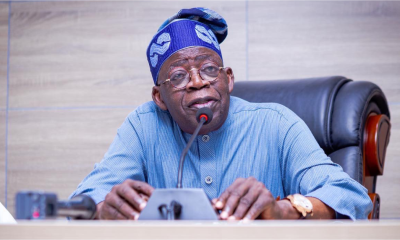
Benue State Governor, Rev. Fr. Dr Hyacinth Iormem Alia, on Monday, December 22, 2025, presented the state’s 2026 Budget estimate of ₦605,506,764,066.16 to the Benue State House of Assembly in Makurdi for consideration and approval.
Tagged “Budget of Rural Development, Livelihood Support and Sustained Growth,” the Governor said the proposal is a people-centred strategy to rejig the state’s economy amid improving the living standards of Benue people.
He told members of the House at the Assembly Complex that the budget is a practical roadmap to inclusive growth and economic progress that would translate into practical tangible benefits for ordinary households across the state.
Of the total. ₦281,086,430,485.05, or 46.4 per cent, is earmarked for recurrent expenditure which shows a 21.69 per cent increase over the 2025 recurrent estimate. He stressed that the allocation would sustain the payment of the new minimum wage and other overhead costs of government.
He said capital expenditure of ₦342,420,333,581.10 is for infrastructure development and long-term economic competitiveness.
Governor Alia emphasized that transforming the rural economy remains central to his administration’s development agenda disclosing that 30.23 per cent of the capital budget is for rural roads, feeder roads and bridges to connect farming communities to markets, health facilities and schools.
“Transforming our rural economy is not an option, it is a necessity. This budget prioritizes targeted investments that will unlock rural productivity, reduce post-harvest losses, lower transport costs and stimulate local commerce,” he stated.
The priority areas of the 2026 budget include the Sustained Growth Agenda—covering education, health, infrastructure, innovation and digital transformation, with an allocation of 55.66 per cent of the capital budget.
The Rural Development Agenda, encompassing rural electrification, water supply, environmental protection, agriculture and agro-industrial development, received 30.23 per cent, while Livelihood Support, including social protection programmes, MSME growth and cooperative development, accounts for 14.11 per cent.
He assessed the 2025 fiscal year, acknowledging prevailing economic pressures and security challenges even as significant gains were recorded across critical sectors. He revealed that security coordination had been strengthened through the deployment of 5,000 Benue State Civil Protection Guards, working alongside federal agencies and community structures to restore relative peace in crises areas.
On infrastructure, the Governor reported the near completion of underpasses in Makurdi and Gboko, completion of about 50 kilometres of roads in the state capital, and ongoing construction of over 387 kilometres of roads across the state. He noted that these efforts have positioned Benue among the top five states nationally in capital expenditure per capita.
In the area of workers’ welfare, Alia disclosed that salary arrears inherited by his administration had been reduced from ten months to three, while pension and gratuity backlogs were also significantly cleared. He said the administration deliberately prioritised workers and retirees’ payment despite the pressure on state finances.
The Governor also highlighted major agricultural interventions, including the reactivation of the fertiliser blending plant, subsidised farm inputs, distribution of 150,000 oil palm seedlings under the Benue Alia Palm Project, and the test run of a fruit juice factory to reduce post-harvest losses. He added that the near-completion of the Benue Beer project is expected to generate over 1,000 direct jobs and strengthen backward integration with local farmers.
Education, health, youth empowerment and digital skills development also featured prominently in the budget, with investments in school infrastructure, teacher recruitment, digital training for youths and civil servants,








By Son Tertsea, Abuja
The three tiers of government, federal, states and local governments, have shared the Federation Account Allocation Committee (FAAC) sum of N2.441 trillion.
The amount was from the October 2026 Federation Account Revenue, which was shared at the FAAC meeting held in Abuja on Wednesday.
The N2.441 trillion comprised distributable statutory revenue of N1.688 trillion and Value Added Tax (VAT) revenue of N752.488 billion.
A communiqué issued by the Federation Account Allocation Committee (FAAC) indicated that gross revenue of N3.811 trillion was available in the month of October 2026.
Total deduction for cost of collection was N128.797 billion while total transfers, refunds and savings stood at N1.241 trillion.
According to the communiqué sent to media houses by Bawa Mokwa, Director of Press of the Office of the Accountant-General of the Federation, Wednesday night, gross statutory revenue of N2.999 trillion was received for the month of October 2026.
This was lower than the sum of N3.096 trillion received in the preceding month by N97.323 billion.
Gross revenue of N812.446 billion was available from the Value Added Tax (VAT) in October 2026. This was lower than the N816.872 billion available in the month of September 2026 by N4.426 billion.
The communiqué stated that from the N2.441 trillion total distributable revenue, the Federal Government received a total sum of N856.065 billion and the state governments received a total sum of N809.909 billion.
The Local Government Councils received N568.701 billion, while the sum of N206.384 billion (13% of mineral revenue) was shared to the benefiting State as derivation revenue.
On the N1.688 trillion distributable statutory revenue, the Federal Government received N780.816 billion and the State Governments received N396.040 billion.
The Local Government Councils received N305.331 billion and the sum of N206.384 billion (13% of mineral revenue) was shared to the benefiting States as derivation revenue.
From the N752.488 billion distributable Value Added Tax (VAT) revenue, the Federal Government received N75.249 billion, the State Governments received N413.868 billion and the Local Government Councils received N263.371 billion.
In October 2026, Excise Duty and CET Levies increased marginally, while Petroleum Profit Tax (PPT), Hydrocarbon Tax (HT), Petroleum Royalties, Import Duty, Companies Income Tax (CIT), CGT & SDT, Value Added Tax (VTA), Mineral Royalties, and Gas Flared Penalty, Rental Gas Flared Fee and Misc. Oil Revenue all decreased.
By Seyi Balogun, Lagos
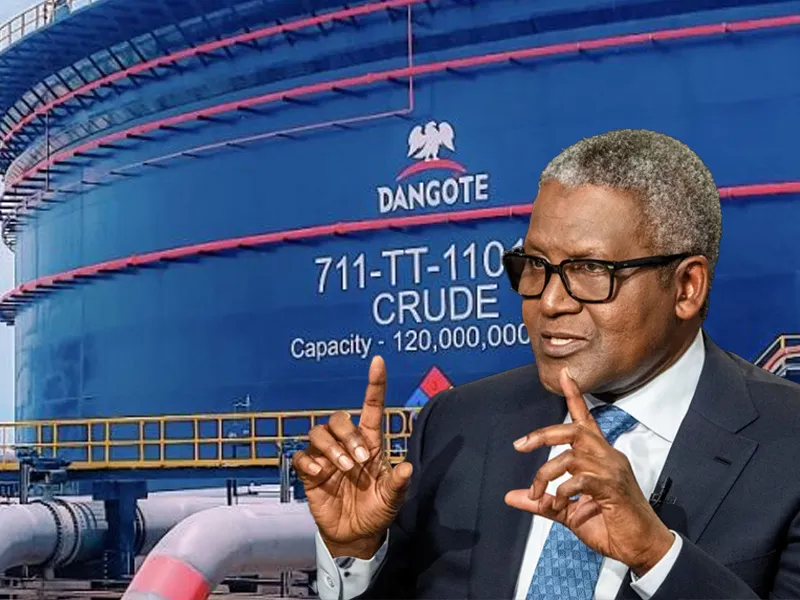
Following the overwhelming response to Dangote Petroleum Refinery’s initial public offering (IPO), attracting share applications worth approximately ₦5.85 trillion from about 3.8 million investors, Nigeria’s capital market has recorded a major investment milestone.
The subscription value is about three times the refinery’s initial fundraising target of ₦2.15 trillion, highlighting the level of interest in the country’s largest private-sector refining investment and the growing appetite for equity participation in major Nigerian businesses.
The offer opened on September 14 and closed on October 27, making 4.1 billion shares available at ₦525 each. However, applications reached approximately 11.15 billion shares, reflecting demand that significantly exceeded the number initially offered.
The figures point to a broad investor base, with retail investors accounting for the largest number of applications. Nearly 3.8 million individual subscribers represented about 84.39 per cent of the investor base, indicating considerable interest among Nigerians in acquiring ownership stakes in the refinery.
Their participation, however, tells a different story when measured by investment value. Retail applications amounted to approximately ₦32.69 billion, representing just 0.56 per cent of the total subscription value.
In contrast, three applicants accounted for approximately 46.72 per cent of the shares requested, with applications valued at about ₦2.73 trillion. The disparity highlights how a relatively small group of major investors can account for a substantial share of capital in large public offers, even when individual investors dominate participation.
International interest also contributed significantly to the subscription figures. Applications from investors outside Nigeria reportedly reached $2.1 billion, while domestic investors accounted for approximately $1.9 billion.
South Africa’s Public Investment Corporation, which manages pension assets for public-sector workers, was among the international institutions reported to have expressed interest in the offer. Nigerian pension fund managers also indicated interest in acquiring shares.
The offer reportedly attracted investors from 120 countries, including all 54 African nations, extending the refinery’s investment appeal beyond Nigeria’s borders.
The strong subscription response comes as the company advances plans for a $14.3 billion expansion programme over five years. Dangote Refinery intends to increase its refining capacity from approximately 650,000 barrels per day to 1.4 million barrels per day by 2029.
The proposed expansion is expected to strengthen its position in the global petroleum industry while increasing its ability to supply refined products across Nigeria and other African markets.
The public offer forms part of the company’s broader financing strategy for this expansion. Alongside the expected IPO proceeds, the refinery plans to leverage internally generated cash flow and additional financing to support its investment programme.
To accommodate demand beyond the original offer, the Securities and Exchange Commission has reportedly permitted an additional oversubscription of up to 30 per cent, subject to regulatory approval. This could increase the final amount raised beyond the initial target.
However, the ₦5.85 trillion recorded represents applications submitted by investors, not the actual proceeds from the offer. The final amount will depend on the shares allotted following the completion of the regulatory and allocation processes.
As attention shifts to the final allotment and subsequent listing on the Nigerian Exchange, the offering presents an important development for Nigeria’s investment landscape.
For the refinery, the scale of investor interest provides an opportunity to broaden its ownership structure and secure additional funding for its expansion ambitions. The next phase will be measured by how effectively it translates that confidence into operational growth, business performance and long-term shareholder value.
Business and Economy
Refinery IPO Didn’t Hit 10m Investors’ Target: But Shows Investment Habit Changing Fast in Africa — Dangote
By Seyi Balogun, Lagos
The initial public offering (IPO) of the Dangote Industries Limited (DIL), for the company’s refinery business did not achieve its 10 million investors target, Aliko Dangote, chairman of the group said..
Though falling short of the target, the IPO attracted “millions of investors”, according to Dangote, who revealed this at the 25th annual conference of the Women in Management, Business and Public Service (WIMBIZ) in Lagos.
The billionaire said the number of investors is yet to be officially determined, but attributed the shortfall to the limited time available for the offer and difficulties some prospective investors faced in accessing it.
“We cannot tell the figure right away because we have not reported to this, but we’ve gotten an amazing demand from various people,” Dangote said.
“If you look at it, the largest participating shareholders, like here now, was I think GTBank. When they did their own, it was 200,000. Okay, we are talking about millions of people that participated.
“Even in Kenya, Safaricom was the largest, less than 900,000. Saudi Aramco worldwide was about five million. So, and I’m sure we are not that far away.
“We didn’t hit the 10 million because of time constraint, and a lot of people, they didn’t know how to access.
“But it’s the shared trust of public enterprise that we have today in Africa, and that’s why people are now beginning to remove that money under their mattresses to go and invest.”
Tagged ‘The People’s IPO’, the Dangote refinery IPO, offered 4.1 billion shares at N525 each, with a minimum subscription of 10 shares costing N5,250.
The offer opened on September 14 and was extended to October 27.
Dangote had said the company was targeting 10 million retail investors as part of efforts to broaden ownership of the refinery beyond institutional and high-net-worth investors.
Reuters reported that more than two million investors had subscribed through digital channels before the offer closed, while the IPO attracted about N6.4 trillion in orders from Nigerian retail and institutional investors — roughly three times the targeted offer size.
Dangote said subscriptions came from 120 countries, including all 54 African countries.
Asked whether the IPO had changed his view on how Africa could mobilise capital from within the continent, Dangote said, “I think yes, it has actually changed. It has changed things dramatically. Things are really changing very fast”.



ABU DSS student wins N1m prize at essay competition
Spread the loveA student of Demonstration Secondary School, Ahmadu Bello University, Adejoh Joshua Unekwu, has clinched a second position at...


Football Legend, Segun Odegbami, Attacked in Abeokuta, Escapes Death
Spread the loveBy Seyi Balogun, Lagos With no clear knowledge of the assailants or their motive, former Super Eagles captain...

FG, Chinese Firm Agree to Produce CNG Buses in Ibadan
Spread the loveBy Seyi Balogun, Lagos To introduce compressed natural gas-powered buses and establish a local assembly plant, to reduce...


JAMB UTME Free for Candidates with Disabilities, Fee Refund at Exam Centres
Spread the loveBy Isa Abdul, Abuja Special examination support has been established for candidates with disabilities, by the Joint Admissions...


Sharing Money is Digging Hole for Eco Woes, Can’t End Poverty – Fasua
Spread the loveBy Son Tertsea, Abuja A warning has been issued that distributing cash to Nigerians without addressing underlying economic...

“I conceded defeat to Buhari, a statesman that loved God, Nigeria.’ –Jonathan
Spread the loveBy Isa Abdul, Abuja The reason for conceding defeat to the late President Muhammadu Buhari in the 2015...


Secrets Behind Flamingos’ World Cup Win – Busari:
Spread the loveAfter guiding Nigeria’s Flamingos to a historic FIFA U-17 Women’s World Cup triumph, head coach Akeem Busari speaks...


Failure to Secure NNPCL GMD Job: EFCC Arraigns Woman Over N1.1 bn Fraud
Spread the loveBy Isa Abdul, Abuja One Halimat Adenike Tejuosho was Wednesday arraigned before a High Court of the Federal...

Let’s Honor All Pioneer Paramount Rulers Across Tiv and Idoma Lands.
Spread the loveBy Peters Ichull Today, the Tiv nation and the entire Benue family pause in solemn reflection to mark...


NKST Synod Says: “Alia Is A Talk-And-Do Governor”, Deserves Re-election in 2027
Spread the loveBy Felix Umande The NKST Synod has declared its support for the re-election of Benue State Governor, Rev....