
Education
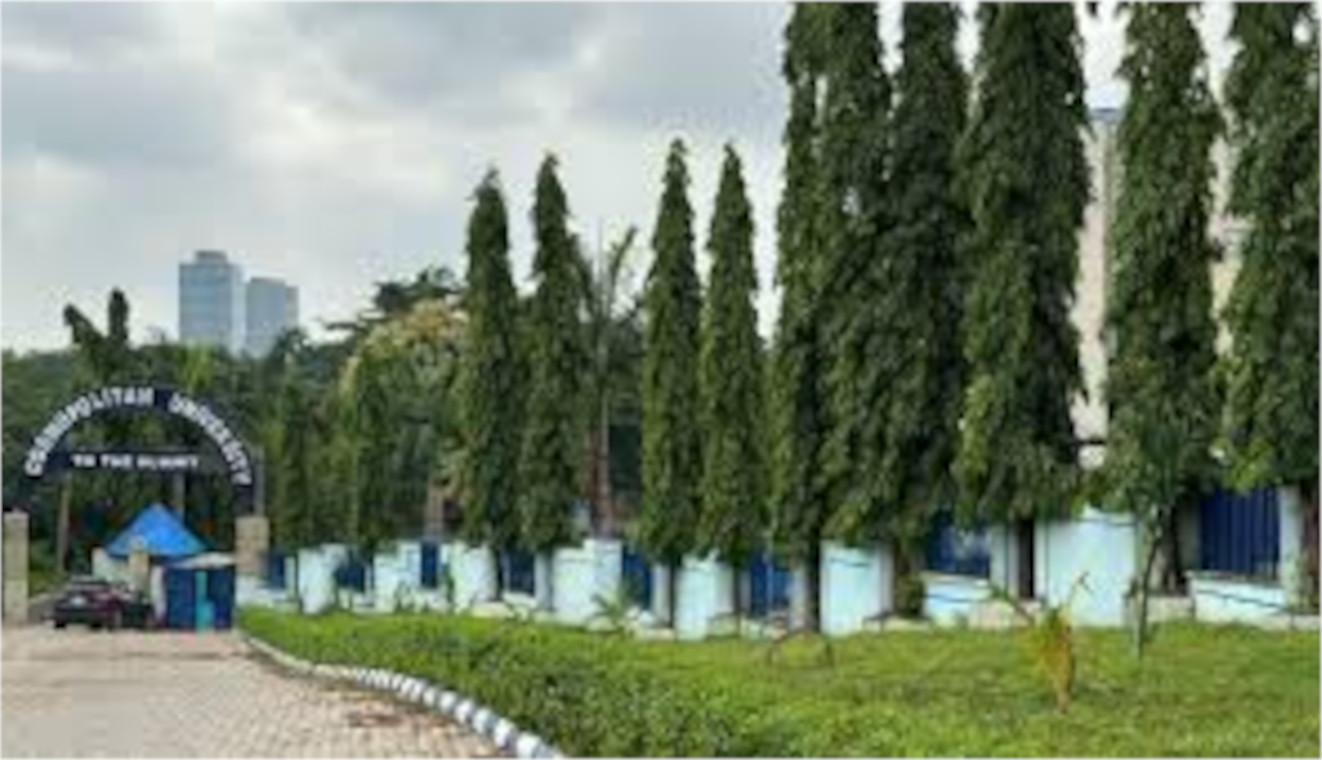
Cosmopolitan University gets NUC’s approval for 6 new progammes

By Adams Oche
The National Universities Commission (NUC) has approved six new academic programmes for Cosmopolitan University, Abuja with effect from the 2025/2026 academic session.
The approval, contained in a formal letter issued on behalf of the NUC Executive Secretary, followed a resource assessment and verification visit by NUC-appointed panels, which adjudged the university’s human and material resources satisfactory.
A statement released by the Office of Strategic Communications, Cosmopolitan University, Abuja on Saturday described the approval as a significant milestone that strengthens the institution’s academic portfolio and positions it to respond more effectively to Nigeria’s workforce and development needs, particularly in business leadership, security studies, healthcare, and agriculture.
With the development, Cosmopolitan University would commence full-time delivery of the following programmes at its main campus: Master of Business Administration (MBA); M.Sc. Intelligence and Security Studies; B.Sc. Radiography; B.Sc. Agronomy; B.Sc. Agribusiness; and B.Sc. Agricultural Extension.
Speaking on the development, the Vice-Chancellor of Cosmopolitan University, Prof Carl Adam said the NUC approval marks “a significant step forward in the university’s mission of delivering globally competitive, socially relevant, and professionally grounded education.”
Adam noted that the newly approved programmes were carefully aligned with national development priorities and emerging global trends.
The Vice-Chancellor further reaffirmed the university’s commitment to strict compliance with regulatory standards, academic excellence, and the production of highly skilled graduates equipped to compete in the global market.
The approval adds to the growing profile of Cosmopolitan University, Abuja, as it continues to expand its academic offerings and strengthen its contribution to human capital development in Nigeria.

Education
FG Cancels National Teachers’ Institute’s 2026 Degree, NCE Admissions, Affiliations Over Breaches

By Son Tertsea, Abuja
Due to regulatory breaches involving admissions, accreditation and university affiliations, the Federal Government has cancelled all admissions into the National Certificate in Education (NCE) and degree programmes of the National Teachers’ Institute (NTI), Kaduna, for the 2026 academic session.
Flowing from the above, the institute has also been directed by the Federal Ministry of Education to discontinue all university affiliations and degree-awarding arrangements, stressing that it is not authorised to award NCE or university degrees.
This was disclosed on Saturday, by the Director of Press and Public Relations of the Ministry, Boriowo Folasade, who warned prospective students, parents and the general public against seeking admission into unauthorised programmes at the institute.
She stated that no further admissions into the affected programmes, whether full-time, part-time or through Distance Learning Studies (DLS), would be permitted. The statement read:
“Consequently, all admissions into NTI’s NCE and degree programmes for the 2026 academic session have been cancelled, while the Institute has been directed to discontinue all university affiliations and degree-awarding arrangements, as it is not authorised to award NCE and University degrees.”
The Ministry also advised members of the public not to apply, accept admission offers or make payments for such programmes, adding that the directive followed violations of the Ministerial Operational Guidelines issued on September 12, 2025.
It further said NCE admissions must comply with the applicable requirements of the Joint Admissions and Matriculation Board (JAMB) and the accreditation standards of the National Commission for Colleges of Education (NCCE).
The Ministry further directed the National Universities Commission (NUC) to notify affected universities and ensure compliance with the decision to discontinue NTI’s degree-awarding arrangements.
“Ministerial Operational Guidelines issued on 12 September 2025.
The Ministry clarifies that NCE admissions must comply with applicable Joint Admissions and Matriculation Board (JAMB) requirements and accreditation standards of the National Commission for Colleges of Education (NCCE).
“The National Universities Commission (NUC) is also to notify affected universities and ensure compliance with the directive on NTI’s discontinued degree-awarding arrangements,” it stated.
However, to protect students already enrolled in the affected programmes, the NCCE will conduct a comprehensive accreditation exercise covering existing NCE II–IV Distance Learning programmes and study centres across the six geopolitical zones.
The Ministry said eligible students would be allowed to complete their programmes, subject to accreditation outcomes and other regulatory requirements.
It reaffirmed that NTI’s statutory mandate remained teacher training, retraining, in-service development and continuous professional development.
By Son Tertsea, Abuja
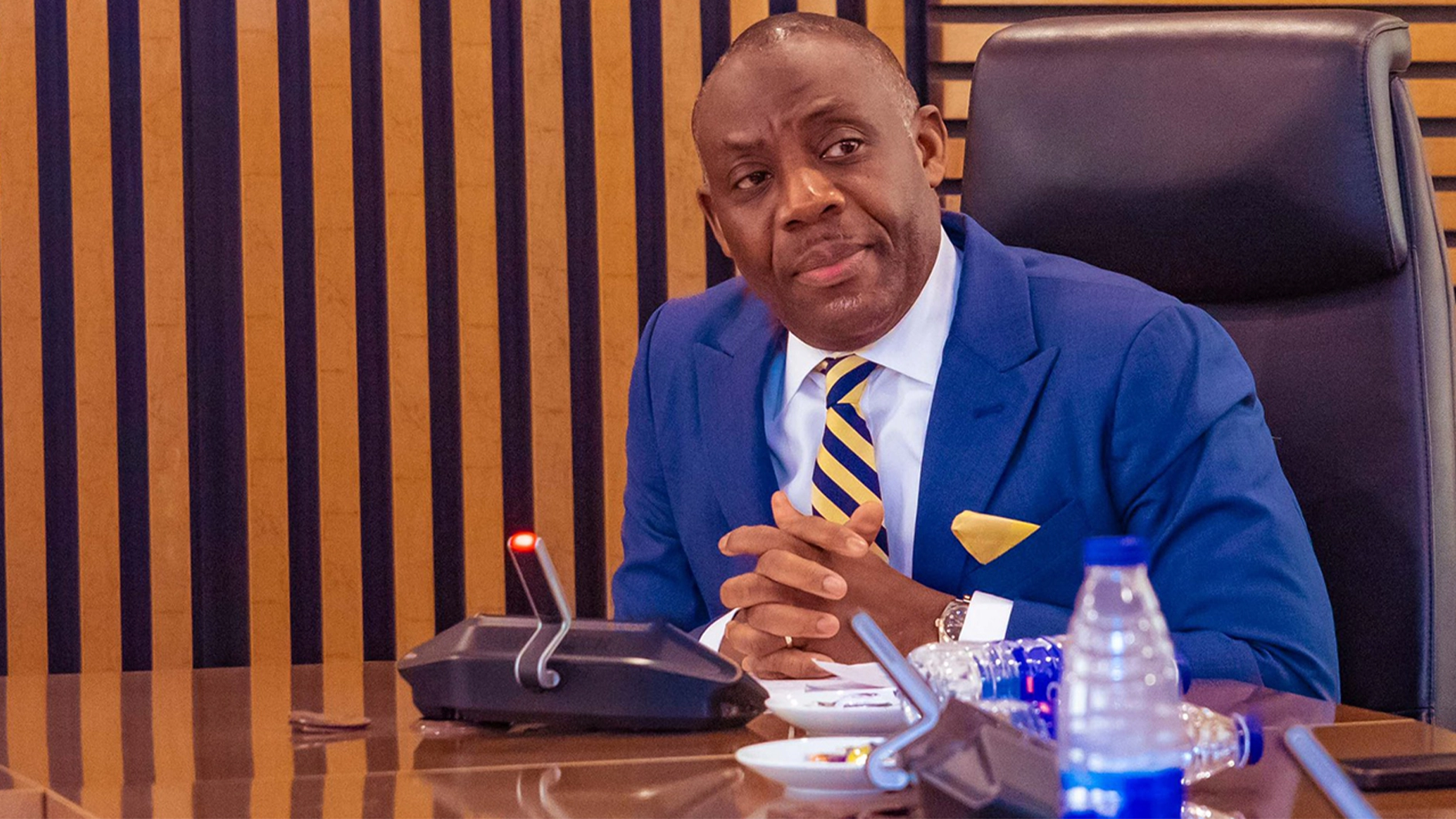
The Federal government has appealed to the National Assembly to halt the passage of bills establishing new federal universities, polytechnics and colleges of education for seven years.
The appeal was contained in a communication to the President of the Senate Godswill Akpabio by the Minister of Education, Dr Tunji Alausa saying the Federal Executive Council approved the moratorium in August 2025 to address the proliferation of tertiary institutions, duplication of programmes and inadequate funding.
Alausa noted that existing federal tertiary institutions are grappling with inadequate lecture halls, overcrowded classrooms, insufficient laboratories, shortage of qualified personnel and deteriorating infrastructure.
He warned that establishing more institutions without addressing these challenges could further weaken academic standards and the quality of education.
He gave reference to the decision of Ekiti and Imo States, which undertook consolidation and restructuring of some tertiary institutions due to financial and administrative challenges.
He further clarified that the moratorium was not intended to permanently restrict access to tertiary education but to allow government consolidate existing investments, improve infrastructure and academic standards, and ensure sustainable funding.

By Son Tertsea, Abuja
The Federal Government has planned spending up to N80 billion of financial support on 40 tertiary institutions to establish commercial farms, in order to boost food production.
The strategic intention is to further create employment opportunities, reduce dependence on government funding by universities and other higher institutions to become self sustaining..
Dr Tunji Alausa, Minister of Education, unveiled this at a meeting with heads of some selected institutions and the management of the Bank of Agriculture. The meeting’s aim was to discuss the implementation of the Renewed Hope Tertiary Agricultural and Entrepreneurship Programme.
According to a statement issued on Tuesday by the Special Adviser on Media and Communications to the minister, Ikharo Attah, “The programme is designed to mobilise more than 500,000 hectares of underutilised land across tertiary institutions for commercial agricultural production, research and enterprise development.”
Alausa said participating universities, polytechnics and colleges of education would be expected to provide approximately 1,000 hectares each, although institutions with smaller landholdings could also qualify based on the viability of their business proposals.
The understanding is for every participating institution to establish a limited liability company, partner with the Bank of Agriculture “which would provide between N1bn and N2bn in financing for agricultural production and related inputs.
“The minister explained that the initiative was aimed at addressing the longstanding under utilisation of agricultural land in tertiary institutions by providing access to financing, machinery, technical expertise and institutional support.”
He said the Federal Government had also made provisions for the initiative through previous interventions by the Tertiary Education Trust Fund, which approved N1bn for some institutions and N2bn for others.
Alausa added that the Federal Ministry of Education had provided N20bn in its capital budget to support 20 tertiary institutions under the agricultural development initiative.
Oarticipating institutions are to receive 10 tractors each at significantly reduced costs through the government’s agricultural mechanisation initiative.
In addition, modern seedlings, farm implements, irrigation equipment, water pumps, fertilisers and technical expertise would be offered to improve productivity.
To guarantee markets for the expected harvests, the minister said arrangements would be made with produce aggregators to purchase crops, while measures would be introduced to minimise post-harvest losses.
He added that the programme would extend beyond primary agricultural production to processing and other agro-allied businesses, creating a sustainable value chain around participating institutions.
Alausa said students, unemployed graduates, alumni, academic and non-academic staff, as well as members of host communities, would be encouraged to participate in the commercial farming activities under the supervision of lecturers and agricultural experts.
Prof. Adamu Ahmed, Vice-Chancellor of Ahmadu Bello University, Zaria, welcomed the programme saying it would help the institution translate its extensive agricultural research capacity into commercial production.
The Rector, Federal Polytechnic Oko, Dr Chioma Awuzie, expressed hope that the initiative would enable the institution to maximise its available land through mechanised farming and improve agricultural production.
The Managing Director of BOA, Ayo Sotinrin, meanwhile has promised the bank’s provision of financing and market linkages to help institutions commercialise agricultural research, improve productivity and generate revenue.



Amaechi Warns ADC Judgment Could Trigger Civil War, Urges Calm As Party Appeals
Spread the loveBy Felix Umande The vice-presidential candidate of the African Democratic Congress (ADC), Rotimi Amaechi, has warned that the...


Stolen Govt Funds Donated to RCCG: Adeboye Ordered Refund of Billions – EFCC
Spread the loveBy Nick Ibe, Abuja The General Overseer of the Redeemed Christian Church of God, Pastor Enoch Adeboye, once...


Nigerians are Irked by Yahaya Bello’s Prolonging Fraud Case. But it’s not Our Fault– EFCC
Spread the loveBy Nick Ibe, Abuja Non conclusion of high profile court cases has earned the Economic and Financial Crimes...


FG Cancels National Teachers’ Institute’s 2026 Degree, NCE Admissions, Affiliations Over Breaches
Spread the loveBy Son Tertsea, Abuja Due to regulatory breaches involving admissions, accreditation and university affiliations, the Federal Government has...


Nigeria’s Flamingos Win Historic First U-17 Women’s World Cup Title: Beat Japan 2-1
Spread the loveBy Nick Ibe, Abuja Nigeria’s Flamingos have put themselves in a class beyond the rest as they won...


Protesting Dakwa Residents Say: We Belong to Niger State Not Abuja
Spread the loveBy Son Tertsea, Abuja As tensions grow over a possible boundary dispute between the Federal Capital Territory (FCT)...


PERSPECTIVE: Tiv Leaders Must Hear This: While Akwa Ibom Asked For A Future, Tiv Leaders Fight Over A Man
Spread the loveBy Edward Tion I watched the presidential campaign in Akwa Ibom today with a bleeding heart. Not because...


Pursue Unity, Peace, Play Active Role in Nigerian Politics, Deputy Speaker, Kalu Urges Igbo Elites, Leaders
Spread the loveBy Saint Mugaga Deputy Speaker of the House of Representatives, Rt. Hon. Benjamin Kalu has called on Igbo...


2027: Amupitan Seeks Royal Support, Partnership to Discharge Mandate Peacefully, Effectively
Spread the loveBy Isa Abdul The National Chairman of the Independent National Electoral Commission (INEC), Professor Joash Amupitan, has said...


Place 7-Year Ban On Establishment Of New Tertiary Institutions– Edu Minister Begs NASS
Spread the loveBy Son Tertsea, Abuja The Federal government has appealed to the National Assembly to halt the passage of...