
Health
NHI coverage : FG to achieve 20% by 2027


By Wumi Tewogbade, Abuja
The Minister of State for Health and Social Welfare, Dr. Iziaq Adekunle Salako, on Thursday said the Federal Government, (FG) is on course to achieve 20 percent national health insurance coverage by 2027.
Salako stated this at the 2nd day of the 2025 Joint Annual Review Meeting (JAR) in Abuja
Dr. Salako said the government has implemented far-reaching reforms under the Nigerian Health Sector Renewal Investment Initiative (NHSRII) anchored on a Sector-Wide Approach (SWAp) to ensure efficiency, synergy, and accountability across all tiers of the health system.
He said, “We are determined to deliver a health system that is prepared for, responds to, and recovers from shocks a truly resilient Nigerian health system,” he declared.
The minister noted that while maternal and child health indicators have shown improvement, Nigeria must intensify its efforts to meet national and global health targets. According to the 2023 Nigeria Demographic and Health Survey (NDHS), the country’s Maternal Mortality Ratio stands at 512 deaths per 100,000 live births down from 576 in 2018 while Under-5 Mortality dropped to 110 per 1,000 live births, from 132 in 2018.
Salako emphasized that despite progress, the country still faces daunting challenges:
“Government health expenditure is only 5.2 percent of GDP, far below the Abuja Declaration target of 15 percent. Out-of-pocket spending remains high at 71 percent, while insurance coverage hovers around 10 to 12 percent of the population.”
He added that President Tinubu’s executive order on mandatory health insurance for all Ministries, Departments, and Agencies (MDAs) and public service entities will drive the enforcement of universal health coverage across the country.
Salako listed a series of interventions already transforming Nigeria’s health landscape:
The Basic Health Care Provision Fund (BHCPF) has improved funding absorption from 45% in 2019 to 78% in 2023.
The National Health Insurance Authority (NHIA) Act 2024 has expanded enrolment to over 20 million Nigerians through various schemes.
Over 500 high-impact infrastructure projects have been completed under the Power for Health Initiative, designed to guarantee reliable power supply to health facilities.
The Nigeria Digital in Health Initiative (NDHI) has produced a unified National Digital Health Architecture, ending years of fragmentation in data and service coordination.
More than 37,000 new health workers have been recruited since 2023, with ongoing training for over 70,000 personnel across multiple cadres.
On disease control, Salako revealed that Nigeria has reached key milestones: HIV/AIDS treatment coverage now reaches 1.78 million people, with 80% national ART coverage and 96% PMTCT coverage.
Tuberculosis control has achieved 80% notification of estimated cases and an 85% treatment success rate.
The Malaria Control Programme has distributed 63 million insecticide-treated nets and averted about 18 million cases annually.
Immunization coverage has risen to 57% Penta-3 as of 2023, while Nigeria has maintained zero wild poliovirus cases since 2020.
Dr. Salako said over 30,000 Primary Health Centres (PHCs) are being upgraded through renovation, equipment supply, and staff deployment. PHC quality scores, he noted, have risen from 42% to 67%.
“We are tackling workforce shortages through the Health Workforce Registry, diaspora engagement for brain gain, and rural retention incentives. The goal is to turn the so-called ‘Japa syndrome’ into ‘Japa-da’ where trained professionals return to strengthen the system,” he added.
The minister reaffirmed the administration’s commitment to health financing reform, increased capital expenditure releases, and infrastructure bonds to fund critical projects.
“Our focus remains clear to build a health system where every Nigerian, regardless of location or income, can access quality healthcare without financial hardship,” Salako said.
He called on all stakeholders government agencies, states, partners, and communities to renew their commitment to strengthening the system.
“Only healthy people can produce a prosperous, secure, and great nation. Let us join hands to deliver health to our people and make Nigeria great again,” he concluded to resounding applause.









Health
Pig kidneys Successfully Transplanted into Humans:Trial in US offers hope for solving organ shortage
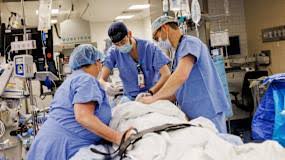
Organs grown in animals for use in humans are beginning to build up a record of clinical success after decades of unfulfilled promise, offering hope for the future of transplants.
Five patients at Massachusetts General Hospital in the US have undergone successful transplants with animal organs — a process known as xenotransplantation — since March 2024 after the pig kidneys they received were genetically engineered to avoid rejection, US biotech company eGenesis said. In three of them, the porcine organs worked for more than eight months without rejection or the need for dialysis.
“The organ shortage is the greatest crisis we have right now in transplantation,” said Leonardo Riella, director of kidney transplantation at Mass General, who led the eGenesis clinical trials.
“It’s amazing to see the progress,” said Mike Curtis, chief executive of eGenesis. “Our goal is to make transplantation available to patients when they need it, without being constrained by the limited supply of human donor organs.”
Surgeon Alban Longchamp prepares a pig kidney with the surgical team before transplantation at Massachusetts General Hospital © Kate Flock/Massachusetts General Hospital
The animal organs would initially be used “as a bridge to get patients off dialysis while they wait for a human donor kidney,” said Riella, adding that it could eventually be used “as a destination therapy in its own right” if the trials “establish long-term safety and durability”.
The kidneys were grown in Yucatan miniature pigs whose organs are similar in size to their human counterparts. They were genetically engineered to remove three pig proteins that are most likely to lead to immune rejection and add seven human genes to improve compatibility with the patient. In addition, the porcine DNA was manipulated to inactivate viruses that might infect the recipient.
One patient, Tim Andrews, whose case was described in The Lancet journal on Thursday, lived with a pig kidney, which he received aged 66, for almost nine months without needing dialysis until the transplanted organ began to fail, though there were no signs of immune rejection. He then received a kidney from a deceased human donor.
Subsequent tests showed that living with the pig kidney had not made it harder for the human transplant to work successfully.
Tim Andrews leaves Massachusetts General Hospital a week after his xenotransplant operation © Kate Flock/Massachusetts General Hospital.
Curtis said the US Food and Drug Administration had authorised an expanded clinical trial of eGenesis pig kidneys in 33 patients with renal failure to start early next year in up to 10 US transplant centres, with the aim of achieving marketing approval by the end of 2029. The company is also collaborating with a Japanese partner, PorMedTec, to start kidney xenografts in Japan in 2028, he added.
David Crosby, chief research officer at the renal charity Kidney Research UK, said the breakthrough was “an exciting prospect” but he warned that further research was needed to determine whether the approach was “safer and better” for patients than spending years on dialysis while they waited for a transplant.
Xenotransplantation has been through cycles of hope and disappointment since serious research on the area started in the 1980s. But recent progress in animal cloning, genetic manipulation and immunology now promises to transform the field.
Public squeamishness and ethical objections to breeding animals for organ transplants had also diminished, said Curtis, who argued that the moral arguments against xenotransplants were “hard to sustain . . . when you look at the outcomes for our patients”.
For a long time, xeno research focused on heart transplants, but now kidneys are leading the way to clinical approval. “A big advantage of the kidney is that if the transplant fails we can safely return the patient to dialysis,” said Curtis. “If the transplanted heart fails, there’s not much you can do.”
However, eGenesis and another leading US xenotransplant company, United Therapeutics, are working with hearts as well as kidneys. The FDA has approved a small xenoheart trial led by United Therapeutics.
The Financial Times Limited 2026.

By Michael Lim, Jos
All public and private primary and secondary schools across Plateau state have been ordered closed, by the Plateau State governor as a precautionary measure against the spread of diphtheria in the state.
The government gave the order on Saturday in a statement issued by the Commissioner for Information, Joyce Ramnap.
According to the statement, the closure takes effect from Monday, September 7, 2026, and will remain in force “until further notice.”
The directive ordered by Governor Caleb Manasseh Mutfwang is part of efforts to curb the spread of the infection.
The directive is a preventive measure against the Diphtheria Infection as suspected cases are reported in some parts of the State, notably Jos North, Wase, Jos South & Bassa Local Government Areas.
The government said the closure applies to all schools, including those that have already resumed for the new term.
“Accordingly, schools that have already resumed academic activities are also directed to close from Monday, September 7, 2026, and remain closed until further notice,” it added.
Parents, teachers and school owners have been urged to comply fully with the directive.
“Furthermore, school proprietors, administrators, teachers, parents and guardians are to comply fully with the directive and ensure that students and pupils remain safely at home throughout the period as part of measures to ensure the safety and wellbeing of pupils, students, teaching and non-teaching staff during the period under review,” the statement stressed.
Health authorities in Plateau confirmed that suspected cases have been reported in Jos North, Wase, Jos South and Bassa Local Government Areas in recent weeks, prompting the Ministry of Health to activate surveillance and response teams in the affected communities.
Diphtheria spreads through direct contact or respiratory droplets and is common in crowded settings such as schools. The Nigeria Centre for Disease Control has, in the past, advised states to intensify vaccination, public sensitisation and early case detection to prevent wider transmission.
In response, the Mutfwang administration said the school closure was intended to limit exposure among children while health workers conduct contact tracing, vaccination mop-up and decontamination in the identified areas.
“The Government appreciates the understanding and full cooperation of all stakeholders as it continues to take appropriate measures in the best interest of the people of Plateau State,” the statement said.
The commissioner added that updates would follow.
“Further information on the resumption of academic activities will be communicated to the public in due course,” it concluded.
Meanwhile, health officials are urging parents in plateau state to ensure that children complete their routine immunisations, practise hand hygiene and report symptoms such as fever, sore throat and difficulty breathing to the nearest health facility immediately.

By Isa Abdul
To counter the rising trend of Nigerian-trained health personnel migrating for greener pastures abroad, the Federal Government is expanding the country’s healthcare workforce and strengthening practical training for medical and other health professional students.
Consequently, it has disclosed plans to increase the annual medical school admissions to 20,000 within the next three years. Along with this is the targeted establishment of world-class medical simulation centres across Nigeria’s six geopolitical zones.
The Minister of Education, Dr. Tunji Alausa, disclosed this while receiving the report of the Tertiary Education Trust Fund Medical Simulation Committee.
This was part of a statement issued on Sunday and signed by Ikharo Attah, the Special Adviser on Media and Communications to the Minister of Education.
Alausa said the proposed centres would provide world-class practical training for medical, dental, nursing, pharmacy and other allied healthcare students. The said:
“I would like to thank the members of the committee that has worked so hard and assiduously to get us to this point in which we are now talking about building several simulation centres across the country to provide world-class training for our medical students, dental students, nursing students, pharmacy students and other allied healthcare professionals.”
Alausa said the expansion had become necessary to meet the country’s health needs.
He disclosed that nursing enrolment, which stood at about 38,000 three years ago, had risen to more than 120,000 students across nursing schools in the country.
The minister added that annual admission into medical schools had increased from about 5,000 students when Tinubu assumed office to almost 12,000 currently.
“Today, I’m happy to report that we’re admitting almost 12,000 students. Our goal in the next three years will be to increase the number of annual medical student enrolment in medical schools to about 20,000.”
He added that the number of students admitted into pharmacy and dental schools had also increased.
The minister commended the Chairman of the Medical Simulation Committee, Dr Wale Suleiman, and other members for their work in preparing the report and advancing plans for the centres.
He said the initiative would help ensure that the increasing number of students entering healthcare professions received adequate practical training.
The planned expansion comes against the backdrop of persistent concerns over the migration, popularly known as “Japa,” of Nigerian doctors, nurses and other healthcare professionals seeking better remuneration, working conditions and career opportunities abroad.
The migration of health workers has raised concerns among professional bodies and health-sector stakeholders about its impact on Nigeria’s already strained healthcare system, particularly shortages of skilled personnel in public hospitals.
With the proposed simulation centres, the government is seeking to expand training capacity while improving the quality of practical education for a growing pool of health professional students.



Mother Subjects Daughter to Abuse, Admits: “I made $300 from my 8-yr-old daughter’s pornographic video’
Spread the loveBy Nick Ibe The viral video on the social media involving an 8-year old girl whose ordeal was...


Lawyer Assaulted by Police: NBA Gboko Branch Secures N500 Million General and Exemplary Damages in Makurdi Court
Spread the loveBy Our Reporter In the pursuit of justice for a colleague, B. B. Iliamkondo, Esq., who was recently...


Alia Denounces Ayilamo Attack, Commiserated With Victims as DSS Arrests 3 Suspects
Spread the loveBy Felix Umande Governor Hyacinth Alia of Benue State has strongly condemned the deadly attack on Ayilamo Community...


Nigerians Lose Savings to Another Ponzi Scheme: PXES
Spread the loveBy Our Reporter Nigerians who invested millions of naira in an online investment platform known as PXES are...


PDP Accuses Alia Of Diversionary Tactics, Questions Benue’s Use OF FAAC Funds
Spread the love–Ortom’s Media Aid Says Gov’t Silent on Revenue, IDPs as Focus Shifts to 2027 Campaigns By Felix Umande...


Alia Condemns Ayilamo Attack, Commiserates With Victims, As DSS Arrests 3 Suspects
Spread the loveBy Felix Umande Governor Hyacinth Alia of Benue State has strongly condemned the deadly attack on Ayilamo Community...


FG, States, Be warned We Will Strike, Without Warning –ASUU
Spread the loveBy Nick Ibe, Abuja Without urgently resolving all the pending salary and welfare issues, by the Federal Government...

Protest Against Xenophobia: NASS Orders Boycott of South African Organised, Hosted Legislative activities
Spread the love–Calls on State Assemblies to join By Isa Abdul, Abuja In a bold move against South Africa’s xenophobic...


Why Education is Dear to Me – By Peter Obi
Spread the loveAfter returning to Abuja on 8th September 2026, following our visits to Benue and Plateau States, I travelled...


After Two Decades: FG Pays 2,700 ex-Nigeria Airways Staff N18bn
Spread the loveBy Son Tertsegha, Abuja Over two decades after the national carrier, Nigeria Airways, was liquidated, the Federal Government...