
Food and Agriculture
The Best Vegetables for Heart Health, According to Cardiologists

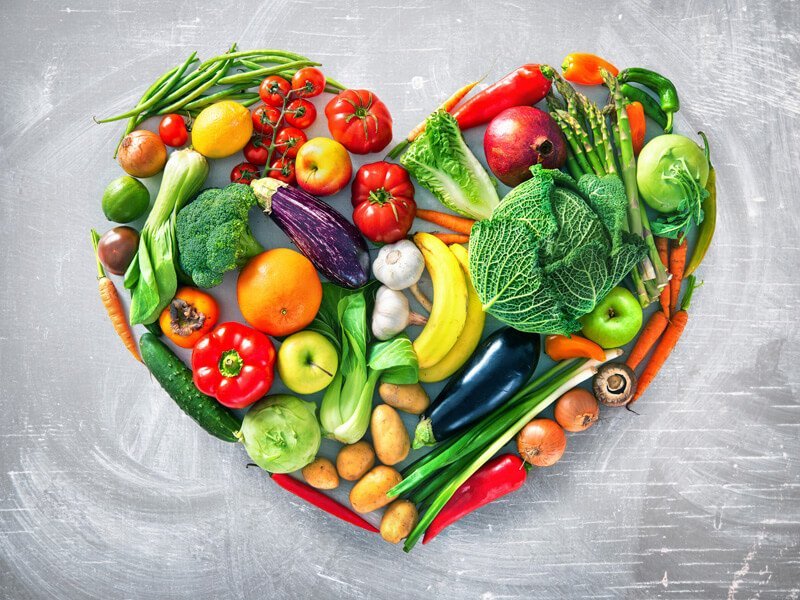
By Lynn Andriani
When cardiologists talk about heart-healthy eating, vegetables are almost always at the center of the conversation. But some vegetables come up more often than others—and that’s because certain nutrients have been especially linked to better blood pressure, lower inflammation, healthier cholesterol levels, and improved circulation. Here are the vegetables cardiologists recommend most often, along with the reasons these picks stand out.
9 of the Best Vegetables to Eat for Protein, According to Nutritionists
The Best Vegetables for Heart Health
Experts stress that variety matters more than obsessing over a single food. “All vegetables are excellent for heart health, and consuming vegetables regularly is more important than focusing on any specific one,” says Dariush Mozaffarian, MD, DrPH.
Here are the vegetables that cardiologists recommend for heart health.
Leafy Greens
bunches of leafy greens, including spinach, kale, and Swiss chard
Bryan Gardner
Spinach, kale, collard greens, and other leafy greens consistently top cardiologists’ lists for heart health. They “are rich in vitamin K, nitrates and electrolytes such as magnesium and potassium,” says Deepak Vivek, MD. He notes that these nutrients have been associated with reduced arterial stiffness and improved circulation.
One reason is their high nitrate content. According to Dr. Vivek, nitrates from vegetables are converted into nitric oxide in the body, which helps dilate blood vessels. “Nitric oxide can also reduce inflammation and enhance delivery of oxygen to muscles,” he explains.
Dr. Mozaffarian adds that nitric oxide helps blood vessels “relax and function better,” which can help lower blood pressure and improve circulation.
Leafy greens also deliver fiber, magnesium, potassium, and antioxidants—all nutrients tied to cardiovascular health. Dr. Vivek notes that spinach is especially high in soluble fiber, which can help lower cholesterol.
Beets
Bunch of beets
Justin Walker
Beets are another favorite with cardiologists because they’re especially rich in dietary nitrates and antioxidants.
“These lead to direct vasodilation, reducing blood pressure,” says Dr. Vivek. Research has increasingly linked beet consumption with improved blood flow and lower blood pressure, largely because of how efficiently the body converts their nitrates into nitric oxide.
Tomatoes
Tomatoes stand out for their lycopene content, a powerful antioxidant associated with reduced oxidative stress. Cooking tomatoes may actually boost some of their benefits, helping to increase absorption of lycopene.
Dr. Mozaffarian also highlights tomatoes as one of several technically fruit-based vegetables that support cardiovascular and metabolic health because they’re packed with “bioactive phytochemicals, healthy fats, fiber, and antioxidants.”
Cruciferous Vegetables
broccoli on blue background
Yuki Sugiura
Broccoli and Brussels sprouts offer a combination of fiber, antioxidants, and plant compounds that may support healthier cholesterol levels.
According to Dr. Vivek, Brussels sprouts contain plant sterols that can help reduce cholesterol absorption from the gut. Broccoli is another vegetable he frequently recommends for overall cardiovascular support.
These vegetables are also rich in compounds linked to reduced inflammation and oxidative stress—two major contributors to heart disease over time.
Peppers, Eggplant, Squash, and Other Colorful Vegetables
bell peppers
John Kernick
Dr. Mozaffarian emphasizes that many of the healthiest “vegetables” are technically fruits containing seeds, including peppers, cucumbers, eggplant, squash, olives, and avocados.
These foods contain a wide range of beneficial plant compounds that support both cardiovascular and metabolic health. They’re also rich in fiber and antioxidants that help combat inflammation and damage to blood vessels.
Why Cardiologists Prioritize Some Vegetables Over Others
Cardiologists tend to recommend vegetables repeatedly when they contain nutrients strongly linked to major heart-health markers like blood pressure, cholesterol, inflammation, and circulation.
According to both experts, the biggest standout nutrients include:
Nitrates, which help produce nitric oxide and support healthy blood vessels
Fiber, which can improve cholesterol levels
Potassium and magnesium, which help regulate blood pressure
Antioxidants and polyphenols, which reduce inflammation and oxidative stress
Dr. Mozaffarian also notes that vegetables benefit the gut microbiome, nourishing beneficial bacteria that produce compounds linked to lower inflammation and reduced cardiovascular risk.
Raw or Cooked: Which Is Better?
The good news: both count.
Raw vegetables may preserve nutrients that are sensitive to heat, while cooked vegetables can make others easier to absorb. Dr. Vivek notes that cooking can break down plant cell walls, making important nutrients easier for the body to absorb. It can also release more antioxidants and improve absorption of nutrients like iron, zinc, and magnesium, he says.
The bottom line, according to both experts, is consistency. Eating vegetables regularly matters far more than whether they are raw or cooked.
Easy Ways to Eat More Vegetables
For people who struggle to eat enough vegetables, both cardiologists recommend starting small and building them into foods you already enjoy.
Dr. Vivek suggests blending pureed vegetables into soups and pasta sauces, grating broccoli or carrots into meat patties, or roasting vegetables to make them crispier and more snackable.
Dr. Mozaffarian recommends simple additions like:
Spinach, mushrooms, or tomatoes in eggs
Lettuce and peppers in sandwiches
More vegetables in pasta, rice dishes, and soups
Roasted vegetables with olive oil as an easy side dish
And if fresh produce regularly goes bad in your fridge? Frozen vegetables are a smart option, too. As Dr. Mozaffarian notes, they’re affordable, convenient, and help reduce food waste.


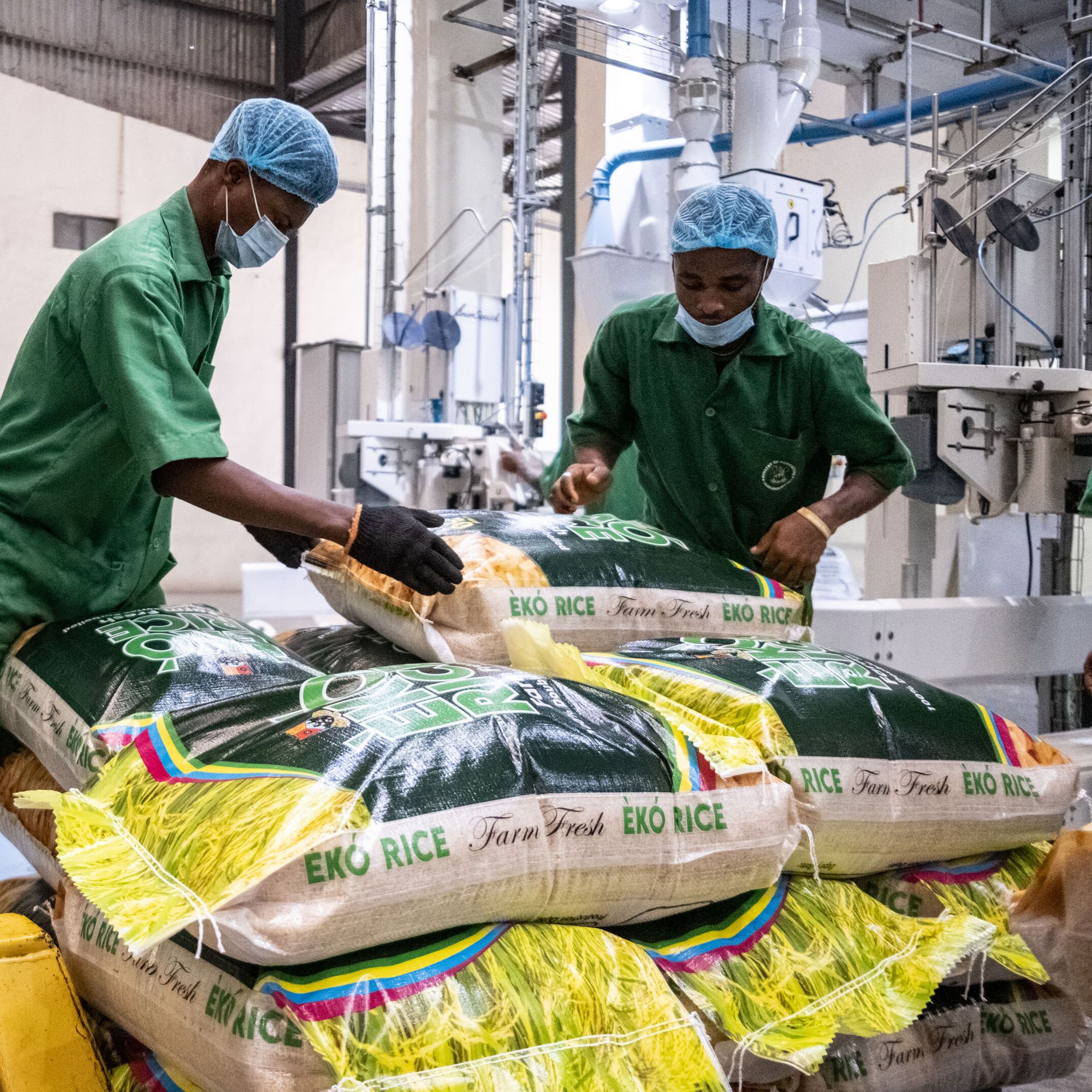
Nigeria’s much-celebrated rice revolution is facing a major reversal, with more than 90 out of the country’s 260 integrated rice mills shutting down completely over acute paddy scarcity, rising production costs and the influx of cheaper imported rice.
This comes as the National Rice Development Strategy II, launched in 2021 to accelerate investments and self sufficiency in rice production expires next month.
The programme was part of the Buhari administration’s agricultural transformation agenda, which sought to reduce dependence on food imports and conserve foreign exchange.
Nigeria had announced 75 per cent self-sufficiency in rice production in February 2023 and projected to become a net exporter of the commodity by 2026.
The progress was showcased in January 2023 when the Federal Government, the Central Bank of Nigeria, CBN, and Rice Farmers Association of Nigeria, RIFAN, unveiled what they described as the world’s largest rice pyramids in Abuja.
The pyramids, comprising one million bags of paddy, were presented as evidence of Nigeria’s growing capacity to produce enough rice for domestic consumption and eventually export the commodity.
Nigeria’s annual rice import bill, estimated at about $1 billion in 2015, was said to have fallen to approximately $18.5 million by 2021.
But the year 2025 marked the beginning of the reversal of fortune with Paddy production, which had risen to 8.5 million tonnes in 2021, recording a sharp decline to about 4.8 million tonnes, while mill capacity utilisation dropped below 30 per cent.
Industry operators told Financial Vanguard that leading integrated mills, including Umza in Kano and Stallion in Lagos, are operating below 50 per cent of their installed capacity.
Speaking to the unfolding crisis the National Chairman of the Rice Millers Association of Nigeria, RIMAN, and Chairman, Board of Trustees of the Competitive African Rice Forum for Sustainable Development, CARF-FSD, Nigeria Chapter, Mr. Peter Dama, noted the rice policy inconsistency especially the suspension of the Anchor Borrowers’ Programme (ABP), which drove the country’s rice production surge between 2015 and 2023.
The industry operators listed inadequate agricultural financing, insecurity, escalating input costs and weak supply chains as key in the derailing of the growth over the past three years.
More recently they said that 2026 has witnessed a deliberate opening of the country’s borders allowing massive importation of cheaper foreign rice especially through Seme border with Benin Republic.
They lamented that Nigerians have invested heavily in building rice mills but the government has failed to sustain the agricultural production policy needed to keep them running.
Paradox of idle capacity, imports
Perhaps the most disturbing aspect of the current crisis is the contradiction between Nigeria’s enormous milling capacity and the shortage of locally produced paddy.
According to Dama, the country has installed rice milling capacity of approximately 7.5 million tonnes annually but currently produces only 4.1 million tonnes of paddy.
This leaves a huge gap between the capacity of the industry and the raw materials available to sustain its operations.
The operators noted cost over-run as the main factor stoking the crises as a tonne of paddy that sold for about N180,000 in 2021 now costs between N600,000 and N650,000.
Fertiliser prices, according to them, have increased from about N8,000 to N45,000, while petrol has risen from N250 to N1,400 per litre.
The input cost, according to them, has made the local rice now uncompetitive against the imported brands.
Dama said, ‘‘locally milled rice at current paddy prices costs higher than imported finished rice through Lagos ports.
‘‘This is a fundamental competitiveness problem that cannot be resolved merely by announcing restrictions on rice imports’’.
Consequently, some farmers are abandoning rice for alternative crops such as sesame and sorghum, further worsening the shortage of paddy.
The crises, according to the operators, goes beyond the fortunes of rice mill owners to include farmers, transporters, distributors, workers and millions of households that depend on rice as a staple food.
Why rice value chain now struggling — FG
A top official of the Federal Ministry of Agriculture, who spoke on condition of anonymity, said that the main challenge facing the rice value chain is policy inconsistency.
He said three other factors combined to create the current gap in rice production and the consumption needs of the Nigerian society.
According to him the growing population, rural-urban migration and the changing eating pattern of Nigerians combined to put pressure on rice, which is a staple food in almost every part of the country.
He said Nigeria remains the largest producer but also the largest importer of rice due to the inability of production to meet demand.
He revealed that the nation’s current self-sufficiency in rice production has dropped to 69 percent.
He however lamented that the cost of inputs such as fertilisers, seeds and agro-chemicals have challenged farmers lately, especially since the end of the Presidential Fertiliser Initiative (PFI) initiative when Urea was imported from Morocco and sold to fertilizer blenders at subsidized rate, who in turn sold fertilisers to farmers at subsidised rates.
According to him, fertiliser blenders now buy urea at market prices and that combined with the geopolitical crisis in the Middle East, especially the blockade of the Strait of Homuz, where 30 percent of fertiliser raw material pass, the fertiliser market has become more challenged, making the products more expensive and out of reach for many small-holder farmers.
He added that with very expensive inputs, paddy produced is sold to millers at high prices.
He confessed that millers who also face high operational costs due largely to dependence on diesel, rather than electricity come up with milled rice that cannot compete with the imported rice.
According to him, governments of the countries of origin of imported rice subsidise rice production for export and that as such, locally milled rice is struggling to compete with the imported rice.
He suggested that if rice production is to significantly increase in the country, the government must consider a way of subsidizing agricultural inputs, as is the case with other countries of the world.
Collapse of ABP
At the heart of the crisis, according to the operators, is the collapse of the Anchor Borrowers’ Programme, ABP, introduced by the Central Bank of Nigeria under former Governor Godwin Emefiele.
The programme was one of the most ambitious attempts to address Nigeria’s food import dependence by linking smallholder farmers with processors and providing them with affordable agricultural financing.
Between 2015 and 2021, it reportedly helped increase paddy production from 2.5 million tonnes to 8.5 million tonnes.
Official rice imports, according to figures supplied by industry stakeholders, fell from 2.4 million tonnes to less than 400,000 tonnes during the period.
The programme’s strength was its integrated approach to agricultural production.
Rather than simply giving farmers cash, it provided seeds, fertiliser and herbicides on credit, with repayment made in paddy after harvest.
It also linked farmers to rice millers who guaranteed markets for their produce.
Interest rates were pegged at nine per cent, significantly below the commercial lending rates of about 28 per cent cited by industry stakeholders.
This arrangement addressed two major constraints confronting farmers: access to inputs and guaranteed markets.
It also provided millers with a more predictable supply of paddy.
However, the programme became controversial over allegations of politicisation, poor loan recovery and the inclusion of beneficiaries who were not genuine farmers.
Although more than N1.1 trillion was reportedly disbursed, loan recovery was said to have fallen below 30 per cent.
Consequently, a new CBN leadership discontinued the programme in 2023 without an effective replacement arrangement.
That decision created a financing vacuum in the rice value chain.
Dama estimates that more than 40 per cent of smallholder farmers who participated in the programme have since moved into other crops.
The Ministry of Agriculture’s dry-season wheat and rice initiatives, according to him, have not been sufficient to reach the majority of genuine farmers, while the Bank of Agriculture lacks the resources to provide financing on the scale required.
Dama further argued that ‘‘it is not necessarily that the ABP should be restored in its original form. Its weaknesses, particularly poor loan recovery and political interference, must be addressed.
‘‘But dismantling a programme without putting a functional alternative in place has exposed the industry to precisely the production challenges it was designed to overcome’’.
Cotonou smuggling challenge
Commenting on the influx of cheaper imported rice, which local millers say is undermining their ability to compete, Dama described the situation as an open secret, alleging that more than 2.5 million tonnes of foreign rice entered Nigeria through the Benin Republic’s Cotonou port and porous land borders so far in 2026.
He claimed that imported rice sells for between N52,000 and N60,000 per 50kg bag, compared with N75,000 to N80,000 for locally produced rice.
The price difference makes foreign rice attractive to consumers, particularly households struggling with the rising cost of living.
More troubling, according to him, is his allegation that some lower quality imported rice is repackaged and sold as Nigerian rice in major markets across Lagos, Abuja, Kano and Ibadan.
If the allegation is established, it points to a serious enforcement failure, with implications for consumer confidence, local investment and government revenue.
The tariff differential between Nigeria and Benin Republic is also contributing to the problem.
According to Dama, Nigeria imposes a 70 per cent duty, compared with 35 per cent in Benin, creating an incentive for traders to route rice imports through the neighbouring country.
He therefore called for the implementation of the ECOWAS Rice Roadmap 2025-2035, which provides for a common external tariff of 35 per cent for paddy and 50 per cent for milled rice across the 15 member states.
‘‘A harmonised regional tariff, combined with technology-driven border surveillance, could reduce the incentive for smuggling’’, Dama said.
Lagos Lake Rice disappears
The disappearance of Lake Rice from Lagos markets offers another illustration of the difficulty of sustaining agricultural partnerships beyond their initial political appeal.
In 2016, Lagos and Kebbi states entered into a Memorandum of Understanding to promote rice production in Kebbi and processing and distribution in Lagos.
The arrangement was designed to transport paddy from Kebbi to Lagos, where it would be milled, packaged and sold to consumers.
The initiative was intended to connect farmers in the North with a major consumer market in the South. But the arrangement eventually collapsed.
Investigations by Vanguard indicated that personal interests undermined the original agreement.
Lagos State Governor Babajide Sanwo-Olu’s Special Adviser on Agriculture and Food Systems, Dr Oluwarotimi Fashola, said the initiative was discontinued because the original understanding between the two states was not followed. According to him, the agreement was for Kebbi to supply paddy to Lagos for milling and packaging, rather than for finished rice supplied by a private consulting firm to be repackaged and distributed as Lake Rice.
The industry stakeholders said the collapse of the arrangement underscores the importance of transparency, accountability and strict adherence to agreed terms in public-private agricultural partnerships.
They also said it illustrates how potentially beneficial agricultural arrangements can fail when institutional interests and implementation shortcomings undermine their original objectives.
Women farmers and the financing gap
The consequences of the collapse of agricultural financing are also being felt by women farmers, particularly in Kebbi State.
The Chairperson of Kebbi State Female Farmers Associations, Hajia Hadiza Kola, identified inadequate funding as a major obstacle to expanding agricultural production following the end of the Anchor Borrowers’ Programme.
She said women faced additional social challenges because farming was traditionally regarded in parts of the state as an occupation largely reserved for men.
Some women also struggle to obtain the support of their husbands to participate in commercial farming.
Nevertheless, advocacy activities across towns and villages have encouraged hundreds of women to register with female farmers’ associations and take up farming, including through home gardening.
Their experience highlights the importance of making agricultural financing accessible to women and other groups that may be excluded from conventional farming arrangements.
Without affordable credit, the potential contribution of women to Nigeria’s food production drive will remain constrained.
Other failed rice project
Amidst the failures recorded in rice projects across Northern parts there are other fortune reversals of the Nigerian rice value-chain in other regions that grow the commodity.
The government of Chief Martin Elechi in Ebonyi State established modern rice cluster mills in three senatorial districts, located at Izzi, Ikwo and Oso Edda around 2013.
The mills started with very big expectation to complement the existing Abakaliki rice mill with morden machines. The mill started simultaneously churning out foreign-like polished rice and with good packaging with the brand name EbonyRice. But the mills have turned to ghosts of themselves as at 2025.
A former worker at the mill Mr. Onyeka Ndukwe Nkama, told Vanguard that Governor Elechi’s administration handed over the mills to Chief David Umahi who handed over a dying project to the present administration.
The modern mills started closing down one after the other starting from the mill at Oso Edda to Ikwo and now the Izzi mill has finally shutdown.
Nkama stated: “The managers had complained of lack of enough Paddy to feed the mills, they said that Ebonyi Rice farmers could not produce enough rice to run three mills. At some time, they were sourcing rice Paddy from the northern part of the country to feed the mills but to no avail.
“So, after some time some parts of the machines started rusting and could not perform effectively. So, gradually the mills started packing up. I learnt that the mill at Izzi that worked last but I’m not sure whether it still processing rice. For some time now all the workers at the mills had left to look for other jobs.” Chief Charles Ugwu established a private rice mill at Ikwo which produced high quality rice branded as Ebony Gold and Ebony Silver. The mill has also shut down due to similar Paddy problems.
Vanguard
Food and Agriculture
Tinubu Commits ₦450bn To Farmers, Approves ₦1.5trn Bank Of Agriculture Recapitalisation

By Felix Umande
President Bola Tinubu’s administration has committed ₦450 billion to agricultural financing programmes to strengthen food security, expand domestic production and improve the productivity of smallholder farmers across the country, especially in Northern Nigeria.
Through the Bank of Agriculture (BOA), the administration has reached over 500,000 smallholder farmers, while the President has also approved a ₦1.5 trillion recapitalisation to expand agricultural financing and support the cultivation of 500,000 hectares under the Renewed Hope Agenda.
The Federal Government said the intervention goes beyond loans, addressing access to quality seeds, fertiliser, mechanisation, irrigation, storage facilities, commodity markets and other essential components of the agricultural value chain.
Through the Renewed Hope Smallholder Support and Value Chain Fund, valued at ₦250 billion, the BOA is financing farmers through Farmer Aggregation Companies that coordinate registration, input distribution, extension services and market linkages.
The programme has already reached more than 500,000 smallholder farmers across 16 states, including over 70,000 women. It has also supported the distribution of about 2.5 million bags of fertiliser and 300,000 bags of certified seeds.
According to the statement signed by Dele Alake, Spokesperson, APC Presidential Campaign Council, the initiative aims to reach two million farmers and distribute more than 10 million bags of fertiliser.
States including Kaduna, Kano, Katsina, Niger, Borno, Gombe, Taraba, Adamawa, Yobe and Bauchi are among the areas receiving attention.
To protect farmers from market uncertainties, the BOA is implementing the ₦200 billion Guaranteed Minimum Price Programme. Under the initiative, the Bank has procured about 170,000 metric tonnes of maize, rice, sorghum and cassava to strengthen commodity markets and protect farmers against distress sales.
To increase production and improve market access, the BOA created the Onion Financing Programme in partnership with the National Onion Producers, Processors and Marketers Association of Nigeria (NOPPMAN), which represents over 11,800 onion farmers.
The scheme provides onion farmers with improved seeds and fertiliser, supports processors with commodity purchase funds and helps develop storage and solar-powered cooling facilities to reduce post-harvest losses.
Under the arrangement, cooperatives will contribute 30 per cent of their input costs, while BOA will finance the remaining 70 per cent.
President Tinubu has approved a ₦1.5 trillion recapitalisation for the Bank of Agriculture to strengthen the country’s agricultural financing architecture and enhance its capacity to provide more affordable and accessible funding to farmers, cooperatives, processors and aggregators.
The recapitalisation was a major campaign promise of the President in 2023.
Other initiatives include dry-season farming financing, mechanisation, ginger recovery, women’s cooperative financing, youth participation and commercial poultry production.
Under the dry-season programme, the Bank is working with the All-Farmers Association of Nigeria to target 400,000 farmers for the 2026 farming cycle, including financing for 120,000 hectares of wheat and another 300,000 hectares for rice, maize, sorghum, millet, cassava and soybeans.
The Nigeria Ginger Recovery Programme has supported 3,200 farmers in Kachia, Kaduna State, with blight-free seeds, recovered over 9,000 bags for multiplication and is planning expansion across 20,000 hectares in 16 states.
The Bank is also targeting at least 50,000 women nationwide through insured cooperative production financing at nine per cent, in partnership with the Federal Ministries of Women Affairs and Agriculture.
Under the Renewed Hope National Agricultural Mechanisation Programme, 1,571 tractors have been deployed to 23 states to mechanise 1.2 million hectares of farmland.
Other interventions include a ₦385 billion productive-use-of-electricity programme, providing 44,000 electric cargo tricycles and 100,000 solar irrigation pumps, targeting 500,000 farming families.
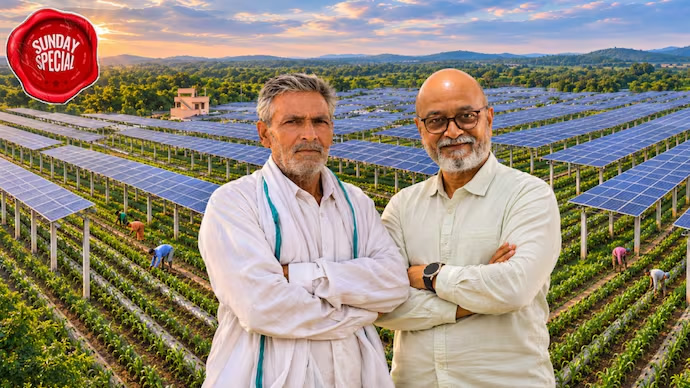
In India, a small but growing number of farmers are cultivating crops on their land while selling electricity generated by solar panels above.
The technological innovation, called agrivoltaics, is turning the same piece of land into two sources of income, with a Rajasthan farmer earning 10 times more than earlier.
Indian farmers are making this possible with crops beneath solar panels, and agrivoltaic plants on his farmland. is experimenting with crops beneath solar panels, and Anand Jain is exploring to add more agrivoltaic plants on his farmland.
A couple of years back, Kajod Mal Jat, a farmer from rural Jaipur in Rajasthan, having become an urjadata (energy provider), missed being an annadata (food provider). The solar panels he had put up on his field were generating electricity and money. But the land beneath them could no longer grow crops. Similarly, hundreds of kilometres away, in Madhya Pradesh’s Sagar district, innovator-farmer Anand Jain was determined not to let solar panels take away his joy of farming.
Today, both farmers are growing cash crops on their farms beneath and generating electricity from solar panels above, which they are selling to the government and earning big. Jat and Jain are annadatas and urjadatas at the same time. And, this has been made possible by a technology called agriphotovoltaics, or Agri-PV, or agrivoltaics, which combines farming and solar power generation on the same piece of land.
The technology, now taking its first steps on the ground in India, promises to revolutionise agriculture by boosting farmers’ incomes severalfold.
It’s already doing so.


The Best Vegetables for Heart Health, According to Cardiologists
Spread the loveBy Lynn Andriani When cardiologists talk about heart-healthy eating, vegetables are almost always at the center of the...


Court Sacks Francis Agbo, Declares Nelson Alapa APC Senatorial Candidate For Benue South
Spread the loveBy Felix Umande The Federal High Court in Abuja on Tuesday nullified the emergence of Francis Agbo as...


Alia Sets Up 17-member Panel To Review 2023 Manifesto For 2027 Re-election Bid
Spread the loveBy Felix Umande Benue State Governor and All Progressives Congress (APC) governorship candidate for 2027, Rev. Fr. Hyacinth...


Tinubu Seeks Fresh Approval For Slimmer ₦65.17trn 2026 Budget, Sends Revised Fiscal Plan To Reps
Spread the loveBy Felix Umande President Bola Tinubu has asked the House of Representatives to repeal and re-enact the 2026...


Gov. Alia Condoles Plateau State Governor Over Brother’s Death
Spread the loveBy Son Tertsea, Abuja Governor Hyacinth Iormem Alia has expressed deep sadness over the death of Arch. Morris...


Gov Alia Mourns Loss of APC Faithful in Tragic Accident
Spread the loveBy Vincent Tyosuugh The Governor of Benue State, Rev. Fr. Hyacinth Alia, has received with shock and heavy...


Why Nigeria Can’t Host World Cup – Infantino, FIFA President
Spread the loveBy Nick Ibe, Abuja Nigeria is currently assessed as lacking the necessary infrastructure required to host the FIFA...

States Charged to Support Small Businesses in Nigeria With N1 bn Monthly
Spread the loveBy Nick Ibe, Abuja Support for small businesses, despite increased federal allocations, has been rated by the House...
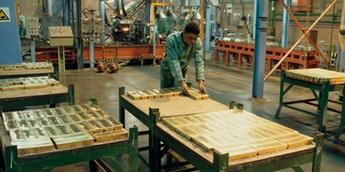

Angola Opens First Gold Refinery to Keep More of the Metal’s Value Home
Spread the loveAngola has opened its first gold refinery, a $20.7 million investment by state diamond company Endiama that will...


The Imperative of Multiple Media Revenue Sources – Elazeh
Spread the loveThe Group Managing Director of Leadership Newspapers, Muazu Elazeh, has urged Media organisations across Africa to diversify their...