
General News
An Open Letter To Prof. Isaac Nathaniel Itodo, Vice-Chancellor, Joseph Saawuan Tarkaa University Makurdi (JOSTUM)

Sir,
The persistent increment in acceptance fee, school fees and hostel fee in JOSTUM is no longer an issue we can leave for the current Students’ Union leaders alone. As past students Union leaders and concerned stakeholders, we cannot keep quiet and watch it happen.
With all due respect, VC Sir, records are clear. You met school fees at a maximum of N53,000, but today it is N82,000 and you are pushing it to N150,000. You met acceptance fee at N13,000, moved it to N23,000, and now it is being moved to N50,000. And you are doing this knowing fully well that you have less than a year to complete your tenure as Vice-Chancellor Sir.
Prof Sir, we must ask: What kind of development is this? Is this a sign of a leader who cares about humanity and the poor? To many of us, this looks heartless, exploitative, and a deliberate attempt to kill the dreams of the common man in JOSTUM.
JOSTUM is not like other universities. While other universities may pay N150k as fees, JOSTUM students spend double at Home (off Campus). In JOSTUM, a student buys drinking water , cooking, washing and bathing water daily, pays transport from North Core or South Core to lecture halls daily, off-campus house rent in Ujam community is now like Lagos. How can our students cope with this daily increment?
Sir, since you assumed office, have you discussed how to reduce students’ stress? Have you provided additional students’ buses? Solar lights that used to shine all the times in previous administrations are now on economy under you.
VC Sir, We are not ungrateful. We appreciate your efforts in your own way and we commend your academics transformation and infrastructural strides. But on this fee increment sir, we are no longer appealing or begging we are demanding a total reversal.
We say NO to this increment. WE NO GO GREE
Respectfully,
Comr. Sam AY.
A Concerned Past students Union leader.

General News
Reps Tell Airtel, MTN, Glo CEOs: Come and Explain Why Your Poor Network Quality Persists

By Isa Abdul, Abuja
The House of Representatives ad hoc committee probing into poor telecom services has summoned the chief executive officers (CEOs) of major telecommunications companies operating in Nigeria.
The committee issued summons to the companies on Wednesday, requesting the heads of MTN Nigeria, Airtel Nigeria, Globacom (Glo), Mafab Communications Limited, and other service providers to appear before it on Wednesday, October 28, 2026
The panel passed the resolution after lawmakers expressed dissatisfaction with the alleged failure of the chief executives to honour earlier invitations.
Consequently, the committee directed the Nigerian Communications Commission (NCC) to ensure that the CEOs comply with the summons.
Among others, the lawmakers want answers from the service providers why there is persistent decline in service quality that disrupts communication and commercial activities for millions of subscribers and businesses nationwide.
The committee has threatened to issue arrest warrants for any chief executive who fails to voluntarily appear before it.
The committee chairman, Olumide Osoba, pointed out that telecommunications plays a significant role in Nigeria’s economy, noting that the sector has evolved beyond voice calls and internet connectivity to becoming integral to essential commercial transactions, including point-of-sale (POS) payments.
He said businesses, financial services, and other critical economic activities rely heavily on stable telecommunications networks, adding that deteriorating service delivery is a national concern.
Osoba explained further that the committee was set up to probe the barrage of subscriber complaints and uncover the underlying causes of the substandard services.
Ibe Osonwa, an Abia lawmaker, said the CEOs’ failure to appear before the committee shows disregard for parliament.
Osonwa said companies that benefit significantly from the Nigerian market could not reasonably ignore invitations from the legislature, especially when the inquiry concerns the quality of services they provide to customers and the broader economy.
By Shu’aibu Leman
Last Wednesday, October 21,2026, I wrote about Dele Giwa, the legendary Nigerian journalist murdered by a parcel bomb in October 1986. I had hoped that, nearly four decades later, Nigeria had moved beyond the era when journalists were threatened for daring to speak truth to power. Sadly, the reported ordeal of a young journalist in Kaduna suggests that the struggle for freedom of expression remains far from over.
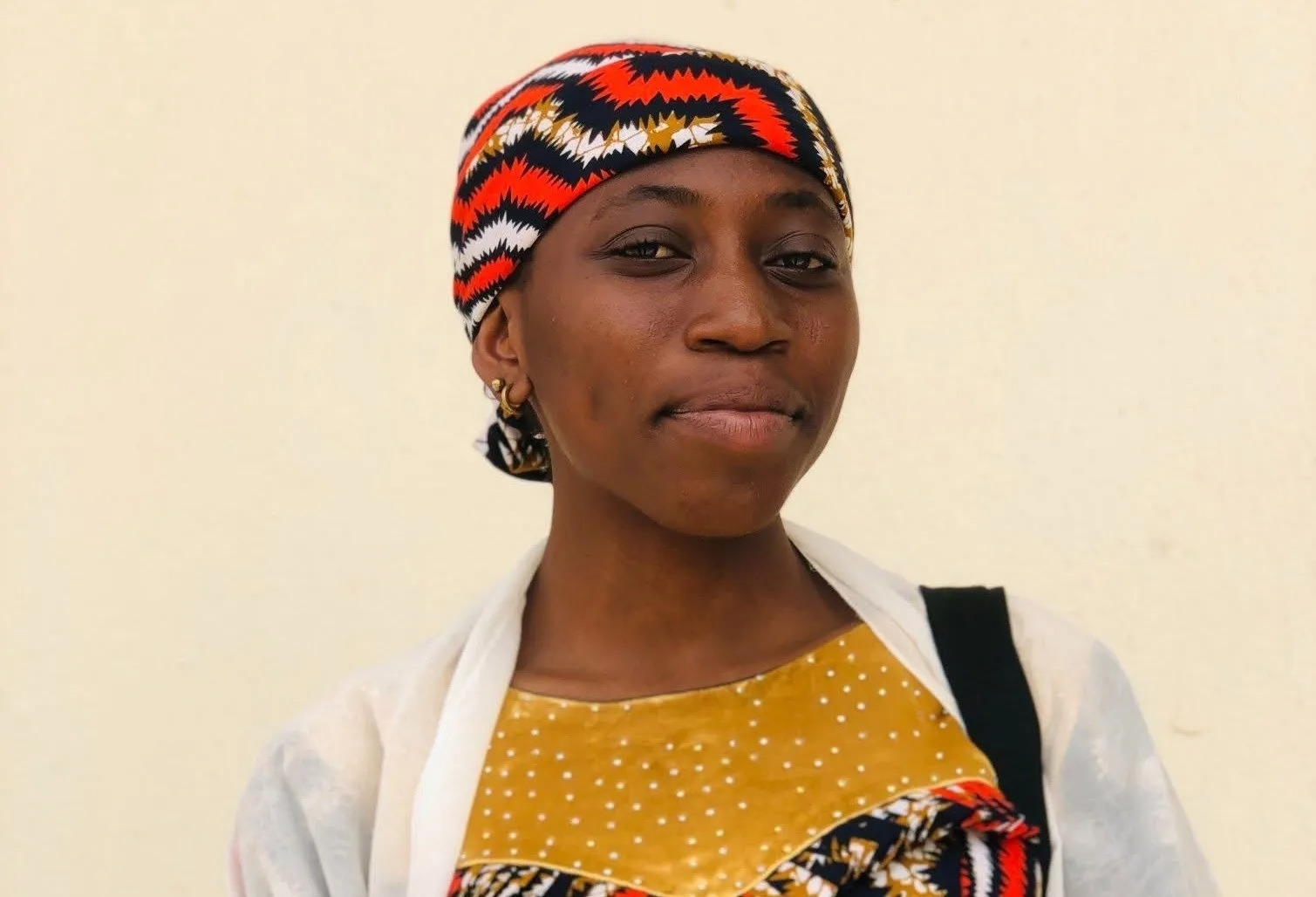
On Tuesday, October 20, 2026, the reported ordeal of 23-year-old Farida Isiak, a reporter with Nagarta Radio in Kaduna, brought this concern into sharp focus.
According to reports, the matter began with a dispute involving ₦100 change from a charcoal sale between her mother and a neighbour. Her mother was reportedly arrested, and when her father went to secure her bail, he too was detained. Their reported detention allegedly compelled Farida to present herself at the police station.
She was subsequently accused of defaming the police in a Facebook post criticising the reported treatment of her parents. Although she reportedly deleted the post and apologised, she remained in detention. She was later taken before a court in Kawo and reportedly sentenced to four years’ imprisonment or a fine of ₦1.75 million for defamation.
The development raised troubling questions about the circumstances surrounding her arrest, the handling of the complaint and the fairness of the judicial process.
Fortunately, the intervention of some lawyers following the summary trial prevented Farida from being taken to a correctional centre to begin serving the reported sentence. She was subsequently granted bail, and the case is scheduled for retrial on November 3.
Her release on bail is a welcome development. However, it does not bring the matter to a close. The forthcoming retrial presents an opportunity for the issues surrounding the initial proceedings to receive proper judicial scrutiny, including the court’s jurisdiction, the fairness of the process and the legal basis for the reported sentence.
The intervention of the lawyers deserves recognition. Yet, we must ask ourselves why a young journalist should have to depend on such intervention to avoid being taken to a correctional centre following a summary trial.
Access to justice should never depend on the availability of a last-minute intervention.
If the reports surrounding Farida’s ordeal are accurate, they raise serious questions about the protection of fundamental rights and the proper exercise of public authority.
Section 39 of the Constitution of the Federal Republic of Nigeria 1999, as amended, guarantees freedom of expression, including the freedom to hold opinions and receive and impart ideas and information without interference, subject to the Constitution.
Section 35 protects personal liberty, while Section 36 guarantees the right to a fair hearing. These protections are fundamental to the administration of justice and the relationship between citizens and public institutions.
The Nigeria Police Act 2020 also contains provisions restricting the arrest of one person in place of another. The precise statutory provision should be considered alongside the facts established in Farida’s case.
These constitutional and legal safeguards are not privileges reserved for journalists, influential individuals or those who can afford expensive legal representation. They exist to protect every Nigerian.
The concerns reportedly raised by Amnesty International about Farida’s case also deserve serious attention.
The late American broadcaster Larry King once observed: “The First Amendment is not for the press; it is for the people.”
That statement captures an important democratic principle. Freedom of expression is not the exclusive privilege of journalists. It belongs to every citizen, the market trader who complains about misconduct, the student who questions wrongdoing, the worker who challenges an injustice and the mother who demands justice for her child.
Journalists do not own this freedom. They help defend it and amplify the voices of those who might otherwise go unheard.
If a young journalist can reportedly face imprisonment after criticising the treatment of her parents, what protection does an ordinary citizen have when confronted with similar circumstances?
This is the question that makes Farida’s case a matter of wider public interest.
Journalists are not above the law. Freedom of expression does not confer immunity from lawful consequences, and allegations of defamation must be addressed through appropriate legal procedures.
However, there is a fundamental distinction between holding someone accountable under the law and using the machinery of law enforcement in a manner that could intimidate citizens or discourage legitimate criticism.
Public institutions must be open to scrutiny. Police officers, like other public officials, exercise authority on behalf of the people and must be prepared to answer legitimate questions about their conduct.
Criticism of public institutions should not automatically be treated as an attack that warrants punitive action. Equally, any allegation of wrongdoing must be investigated fairly, with due regard for the rights of everyone involved.
The authorities must therefore ensure that the circumstances surrounding Farida’s arrest and the reported detention of her parents receive an impartial examination.
I appeal to the Kaduna State Commissioner of Police to ensure that any outstanding questions about the police’s conduct in this matter are investigated fairly and transparently.
I also urge the Chief Judge of Kaduna State to ensure that the judicial process receives appropriate scrutiny within the law, particularly regarding the court’s jurisdiction, the fairness of the initial proceedings and the legal basis for the reported sentence.
The retrial scheduled for November 3 must be approached with the seriousness it deserves. Farida must have a fair opportunity to present her defence, and the proceedings must be conducted impartially, without intimidation or prejudice.
The Nigeria Union of Journalists (NUJ), both at the national level and in Kaduna State, must equally provide Farida with the legal assistance and institutional support she needs throughout the proceedings.
As a former National Secretary of the NUJ, I believe strongly that no young journalist should be left to face such a challenge alone.
The union’s responsibility extends beyond issuing statements whenever journalists are threatened or detained. It must also help ensure that affected members have access to legal representation, institutional support and appropriate professional solidarity.
The legal community, civil society organisations and human rights advocates also have an important role to play. Their intervention in cases such as Farida’s can help ensure that questions of fundamental rights receive the attention they deserve.
Nevertheless, the responsibility to defend freedom of expression does not rest with journalists and lawyers alone. Every Nigerian who believes in justice and accountability has a stake in protecting this fundamental freedom.
Dele Giwa paid the ultimate price in 1986. His murder remains a painful reminder of the dangers journalists can face when their work challenges powerful interests.
Farida’s circumstances are different, and the two cases should not be equated. Yet, both compel us to reflect on the conditions under which journalists can perform their duties without fear and on society’s responsibility to protect the freedom to speak.
Nearly four decades after Giwa’s death, we must ask ourselves: have we learnt enough to protect those who dare to speak out?
We cannot rewrite history, but we can determine what lessons we draw from it.
We must build a society where public institutions welcome accountability, the courts uphold justice, and citizens can express their concerns without fear of unlawful punishment.
Farida’s release on bail is encouraging, but it must not mark the end of public attention to her case. The forthcoming retrial deserves careful scrutiny, and she must be allowed to pursue her defence in accordance with the law.
Protecting Farida is about more than protecting one journalist. It is about defending every Nigerian’s right to question authority, demand accountability and seek justice without fear.
History will judge us not only by the injustices we condemn, but also by the people we choose to defend when their rights are threatened.
If we fail to protect the young journalist today, who will be left to speak for us tomorrow?
Leman is a former National Secretary of Nigeria Union of Journalists- NUJ
–Mexican cartels turning Nigeria into meth hub – US
By Nick Ibe, Abuja
Mexican drug cartels now under pressure from the United States in the Western Hemisphere are turning to Africa for alternative routes for trafficking synthetic drugs, the American government has warned.
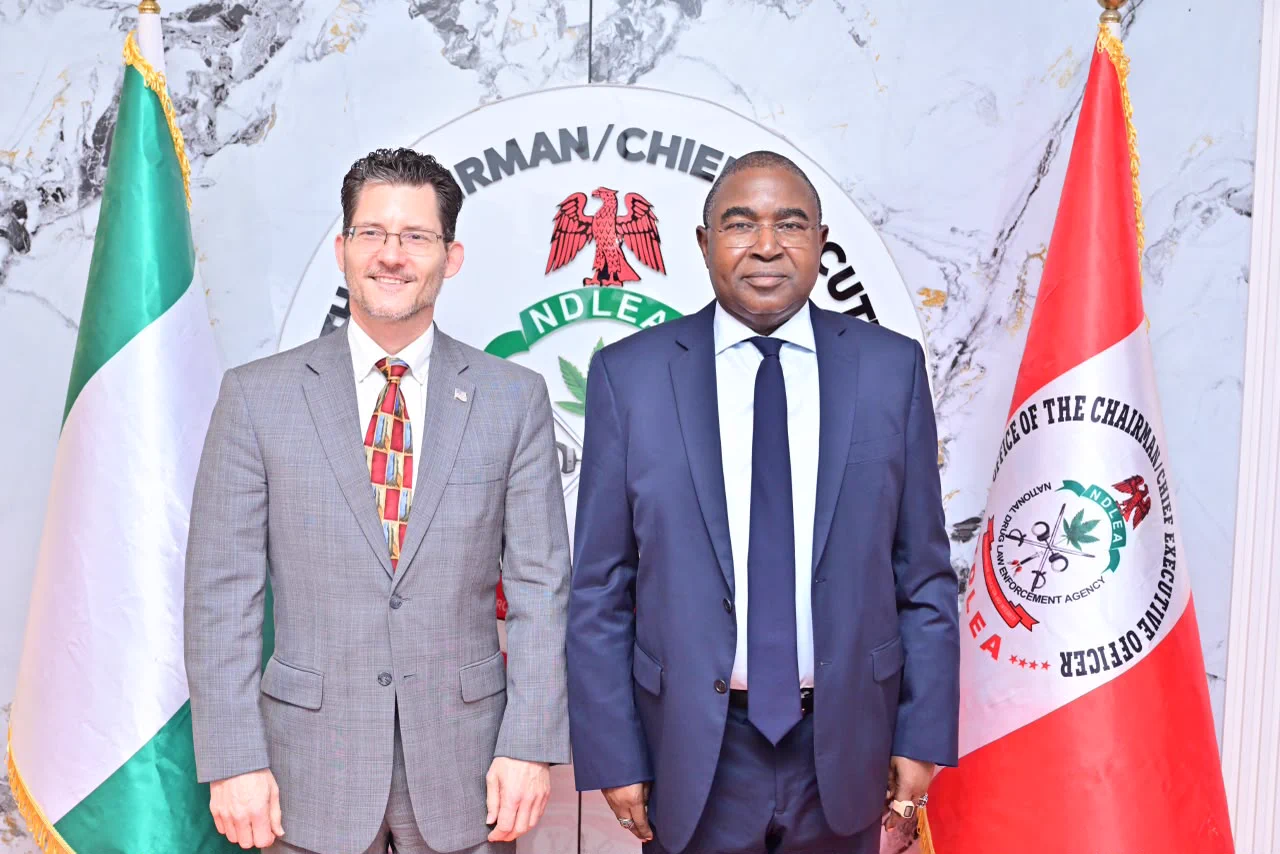
Michael Gonzales, the US Deputy Assistant Secretary of State for International Narcotics and Law Enforcement Affairs for Africa and the Middle East, has said the National Drug Law Enforcement Agency’s, NDLEA, operations with four meth labs dismantled in Nigeria this year, demonstrated the importance of Nigeria’s counter-narcotics campaign. He said this is important to both countries, as Washington intensifies pressure on cartels operating in the Western Hemisphere.
Gonzales spoke on Tuesday during a visit to the NDLEA headquarters in Abuja, where he commended the agency for its operational successes, saying he chose Nigeria as his first visit after assuming office because of the country’s strategic importance and the NDLEA’s record. In his words:
“I became the Deputy Assistant Secretary of State for International Narcotics and Law Enforcement just four months ago, covering all countries of Africa and the Middle East. And when I was thinking where it makes the most sense to visit first, Nigeria was a clear answer.
“Because as a leader, as an economic powerhouse on the continent, but also particularly NDLEA for the leadership and the impressive wins that you and your team and your interagency counterparts have delivered time and again.
“In addition to the very robust partnership between INL and NDLEA, I wanted to see firsthand where the magic happens, as we say in the United States.”
Gonzales specifically cited the four methamphetamine laboratory busts recorded by the NDLEA this year as evidence of the agency’s use of intelligence-led investigations, inter-agency cooperation, operational coordination and prosecution.
“The four meth lab busts just this year alone are a testament to the deployment of some of the best practices in our tradecraft, the intelligence-based knowledge collection, the coordination across national lines and agency lines, the operational excellence that goes into the actual bust, and then the interrogations, the investigations and prosecutions.
“They’re all so critical because ultimately counter-narcotics work, the work that each of us does day in and day out, truly delivers for the people,” he said.
The US official said the significance of the operations extended beyond Nigeria, arguing that the international nature of the narcotics trade meant that successful interdiction in Nigeria could have consequences for drug markets in other parts of the world.
“When I am talking to American audiences in the United States, I tell them there’s virtually no other issue of foreign policy that so tangibly affects the lives of every community, virtually every family across our country, than narcotics.
“And the reality of the narcotics trade is international. It knows no boundaries, very few constraints. And so, the work that INL does in the United States and globally and the work that NDLEA does fundamentally delivers for the Nigerian people, for the American people,” Gonzales said.
He added that the United States had more than four decades of experience supporting counter-narcotics operations around the world, including through training and equipment, and warned that changes in trafficking patterns required countries to work together against criminal networks.
He said intense US pressure on cartels in the Western Hemisphere was effectively “squeezing a balloon,” forcing traffickers to seek alternative routes through Africa to reach markets in Europe and beyond.
The official also pointed to the growing shift from plant-based narcotics to synthetic drugs, which he described as harder to detect and potentially deadlier, saying the response must target criminal organisations as interconnected networks, including their financial flows.
Marwa, in his response, said the NDLEA’s recent operations had uncovered what he described as a deliberate attempt by Mexican cartels to establish Nigeria as a manufacturing base for methamphetamine.
“Crime has no borders, and neither does the threat. The drugs we seize, the arms we intercept and the terrorist financing we trace are not separate problems.
“When we seize narcotics and illicit weapons in the same operations and along the same routes, we are looking at the convergence of crime. Drug money buys guns, guns sustain armed groups, and armed groups sustain terrorism.
“Terrorism has no borders. What festers in the Sahel and the Lake Chad Basin does not stay there, and what is trafficked through West Africa does not stop at our coastline,” the NDLEA chairman said.
Marwa then detailed the operations against the laboratories, beginning with the largest clandestine methamphetamine laboratory ever discovered by the agency in Nigeria.
“The Mexican cartel threat is real, and we are confronting it.
“In recent months, NDLEA operatives dismantled the largest clandestine methamphetamine laboratory ever discovered in Nigeria, in a forest in Ijebu East, Ogun State, where we arrested three Mexican meth experts and their Nigerian collaborators right in the forest where illicit substances worth over $360 million US dollars were recovered.
“Barely four weeks later, we raided another industrial-scale laboratory at Tapa Village in neighbouring Oyo State and arrested a Mexican methamphetamine expert, brought in for large-scale synthesis, together with four Nigerian collaborators.
“We have since dismantled a similar facility in Enugu State and another in Ebonyi State, South-East Nigeria, all linked to the Mexican cartels. These were not isolated incidents. They show a deliberate attempt to turn Nigeria into a manufacturing hub,” he said.
Marwa said the implications of the laboratories went beyond the Nigerian market, arguing that the cartels were seeking routes through West Africa to move methamphetamine to international markets.
“Let me be plain about why this matters to Washington. These cartels are not setting up in our forests to supply Nigerian consumers alone. They want a West African corridor to ship industrial quantities of methamphetamine to Europe, to Asia, and to American cities.
“Especially taking into consideration the President Trump hammer that is smashing cartel traffic en route to America. These cartels are now seeking alternative routes to get to the same America,” he said, adding that:
“Every meth-producing laboratory that we shut down is a supply line that never reaches an American street, and every cartel operative we arrest is one fewer in the pipeline.
“Our forensic chemists, our investigators and our tactical teams are, in effect, forward defence for communities in the United States.”
Marwa said the US partnership had strengthened the NDLEA’s capabilities in forensic and chemical analysis, professional training, investigations, financial-crime detection and equipment maintenance.
He said the support had contributed to the agency’s recent operational results, including the arrest of 96,157 drug offenders, among them 250 drug barons, and the seizure of more than 15.8 million kilogrammes of assorted illicit drugs in the last five years.
He added that 16,691 drug traffickers, including kingpins, had been convicted during the period.
Marwa, however, warned that withdrawing US support could create a gap that criminal and terrorist networks would exploit, and appealed to Gonzales to convey to Washington the need to sustain or increase its assistance.
“This great partnership has fueled our offensives that yielded the arrest of 96,157 drug offenders including 250 drug barons, the seizure of over 15.8 million kilograms of assorted illicit drugs and conviction of 16,691 drug traffickers including the kingpins, in the last five years,” he said.
He urged the US to maintain its support “as it is, if not increased,” arguing that criminal networks already operated across national boundaries.
“Traffickers, arms dealers and terrorists cooperate across borders every day, and governments confronting them must do the same,” Marwa said.


Reps Tell Airtel, MTN, Glo CEOs: Come and Explain Why Your Poor Network Quality Persists
Spread the loveBy Isa Abdul, Abuja The House of Representatives ad hoc committee probing into poor telecom services has summoned...

Shettima Tells States: Develop, regulate, Use Your Power For Devt Needs
Spread the loveBy Nick Ibe, Abuja States have been told to look for their power solutions locally by setting up...


Why Investors Shun Nigeria : contract breaches, court delays, ex-parte orders
Spread the loveBy Nick Ibe, Abuja Legal and business leaders have revealed situations that discourage long term investments in Nigeria....

FARIDA ISIAK: Who Will Protect The Young Journalist?
Spread the loveBy Shu’aibu Leman Last Wednesday, October 21,2026, I wrote about Dele Giwa, the legendary Nigerian journalist murdered by...

An Open Letter To Prof. Isaac Nathaniel Itodo, Vice-Chancellor, Joseph Saawuan Tarkaa University Makurdi (JOSTUM)
Spread the loveSir, The persistent increment in acceptance fee, school fees and hostel fee in JOSTUM is no longer an...
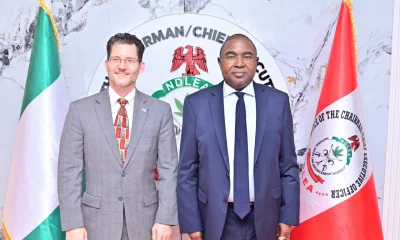

US Pressure: Drug Cartels Now Using African Routes to Reach Europe, American Markets
Spread the love–Mexican cartels turning Nigeria into meth hub – US By Nick Ibe, Abuja Mexican drug cartels now under...
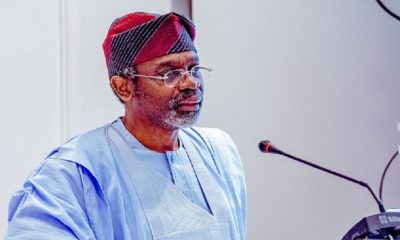

STATE POLICE: Benue, Ogun, Delta, Enugu, Others Approve Constitution Amendment As Draft Bill Heads To Justice Ministry
Spread the loveBy Felix Umande The push for state police in Nigeria has gained fresh momentum as Benue, Ogun, Delta,...
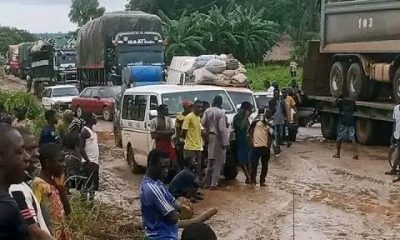

Ugbema Roundabout Becoming A Death Trap For Thousands.
Spread the loveBy Felix Umande The current state of Ugbema Roundabout, a major junction in Benue State connecting many neighbouring...
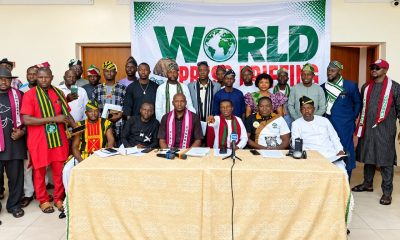

Plateau Indigenous Youths Reject Petition Against DSS, Accuse Fulani Groups of Orchestrating ‘Calumny’ to Halt Security Operations
Spread the loveBy Philip Nyam A coalition of Plateau indigenous youth organisations has defended the Department of State Services (DSS),...


Hope for Patients as Reps Pass Organ, Tissue Transplantation Authority Bill
Spread the loveBy Philip Nyam The House of Representatives at plenary on Wednesday passed through second reading a bill seeking...