
General News
Nasarawa State Government Urged to Clarify Requirements for Establishing Chiefdom

By Isa Abdul
The Nasarawa State government has been called to make public the legal requirements for the creation of a Tiv chiefdom in Imoon, Obi Local Government Area.
This request was contained in a release dated 14 October 2026, by a public analyst, King Iorshe, who in the release examined the arguments presented by the Alago Ikweyi Gbayi Development Union (AIGDU), against the proposal for a Tiv chieftaincy institution at Imoon based on its claim to historical occupation and Imoon’s administrative status.
He argued that competing historical claims must be assessed alongside applicable laws, official gazettes, territorial boundaries and other instruments establishing traditional institutions.
The release, in addition, urged the government to examine the relevant legal provisions, consult affected communities and publish an evidence-based decision on the proposal.
In his view, neither the duration of a community’s occupation nor the description of another group as settlers should, on its own, determine eligibility for chiefdom status.
The analysis further referenced the Nasarawa State committee inaugurated in 2022 to review applications for additional districts and villages and investigate chieftaincy and territorial disputes.
Iorshe stressed that the central issue is whether the proposed chiefdom meets the applicable legal requirements and whether the historical and administrative claims are supported by verifiable evidence.





By Michael Lim
The claim that the Taraba State University is Nigeria’s highest-paying state university, has been dismissed by the university’s Academic Staff Union of Universities (ASUU), branch, which compared its salary with other state-owned universities.
In a response to the claim, the branch chairman, Dr Joshua Garba Mbave, urged the public to disregard the claims being circulated on social media by some appointees of the Taraba state Governor, Agbu Kefas.
According to ASUU, a Taraba State Government fact-finding report presented to the union on September 24, 2026, showed that staff of some universities in the North-East earned more than their counterparts at TSU.
The union further cited salary figures from Rivers State University, Benue State University and Delta State University, arguing that their salary structures contradicted the claim.
ASUU said a professor at TSU earned about ₦1 million monthly, compared with ₦3.35 million at Rivers State University and ₦1.67 million at Delta State University, based on the figures provided in its statement.
The union further alleged that TSU had yet to implement some earlier wage adjustments fully, including the 30 per cent national minimum wage adjustment and the 25/35 per cent wage award, while outstanding arrears remained unpaid.
“By contrast, the 30% National Minimum Wage and the 25%/35% wage award for Nigerian universities were never implemented at Taraba State University, and no arrears were paid. The 70% National Minimum Wage, which was built on those two earlier adjustments, was later implemented. Staff of the University sacrificed the arrears accrued from all salary adjustments in the interest of industrial harmony.
“Other states in the North, including Bauchi State, were the first to implement the 30% National Minimum Wage, the 25%/35% wage award for Nigerian universities, and the 70% National Minimum Wage, as well as CATA. They did so without waiting for any other state to act, and without constituting committees or fact-finding mission to verify implementation,” the statement partly read.
It called on the public and media to verify salary-related claims against official records and demanded the full implementation of the 2025 Federal Government-ASUU agreement, including payment of outstanding arrears.
ASUU reaffirmed its commitment to engaging the state government but said it would continue to challenge claims it considered misleading.
By Son Tertsea, Abuja
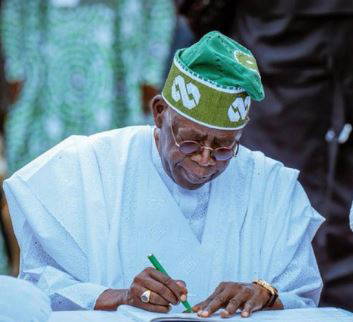
The Senate has received a bill from President Bola Tinubu asking it to approve the establishment of the National School of Government and to repeal the Administrative Staff College of Nigeria (ASCON) Act.
The National School of Government, is a national institution for leadership development, policy delivery and executive capacity building.
Senate President Godswill Akpabio read the president’s letter transmitting the National School of Government Bill 2026 to the upper chamber during plenary on Wednesday.
Tinubu urged the Senate to give the proposed legislation expeditious consideration, stressing the need to establish a dedicated institution to strengthen leadership development and improve the capacity of public officials to deliver government policies, the letter said.
The president invoked Section 58(2) of the 1999 Constitution, as amended, for the request to the Senate for legislative action:
“Pursuant to Section 58 (2) of the 1999 Constitution of the Federal Republic of Nigeria, as amended, I forward herewith the National School of Government Bill 2026 for the kind consideration of the Senate.”
He expressed the hope that the lawmakers would give the bill the necessary attention and facilitate its consideration.
According to the president, the proposed institution would serve as a national centre for leadership development, policy delivery and executive capacity building.
The bill’s transmission marks the beginning of the legislative process required to determine its provisions, institutional framework and other matters necessary for the establishment of the proposed school.
After reading the president’s letter, Akpabio informed senators that the clauses and provisions of the bill had been attached to the communication for their consideration.
He subsequently referred the bill to the Senate Committee on Rules and Business for further legislative action.
The presidential letter, however, did not provide further details on the proposed institution’s governance structure, funding arrangements, location or the specific relationship it would have with existing public service training institutions.
General News
Nigeria’s 1996 Olympic Gold: Jo Bonfrere Claims He’s Still Waiting for Gold Medal, Other Rewards
By Nick Ibe, Abuja
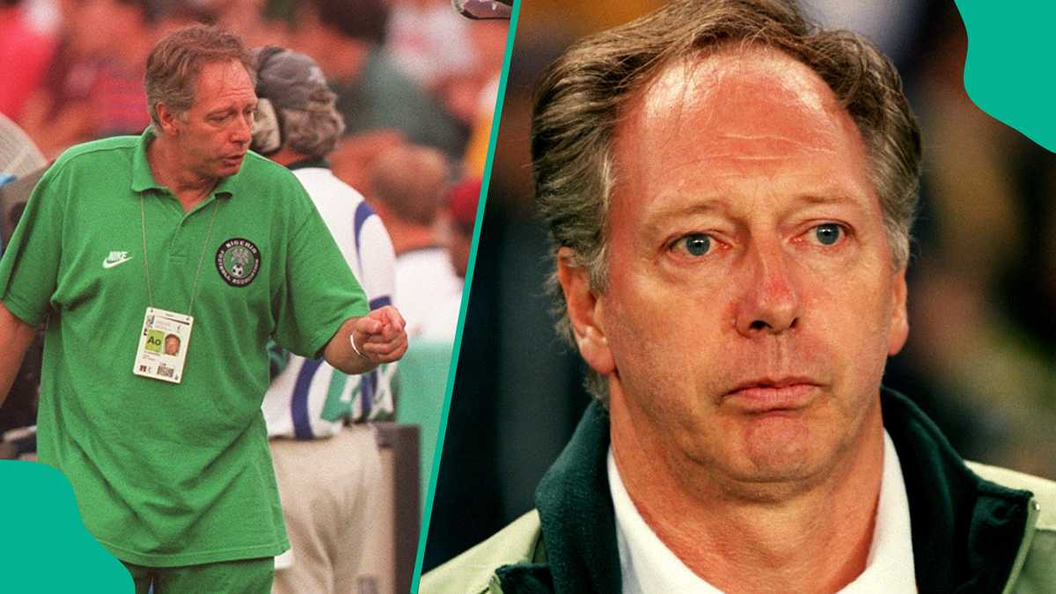
30 years after guiding Nigeria to victory in the men’s football event at the 1996 Atlanta Olympic Games, former Super Eagles coach, Jo Bonfrere, insists he is yet to receive his Olympic gold medal or other rewards, .
The Dutch tactician made the disclosure during an interview with CreativeLordTV in Ebonyi State, where he attended the opening of Chief Agueze’s country home recently.
Asked whether the promises made to him following Nigeria’s historic triumph had been fulfilled, the 80-year-old coach, speaking through an interpreter, said he had never received the medal and had no idea what it looked like.
“I have never seen the gold. That’s the problem, so I don’t know how it looks. I don’t know how the gold medal looks because I have never received it.”
Bonfrere’s account, as relayed by the interpreter, suggested that while members of the victorious team and other officials had received their rewards, he was yet to be compensated for his contribution to the achievement.
“Every player has received, even the reward, every player and official. So after 30 years, I have never received my reward,” the interpreter said while conveying the coach’s account.
The claim raises questions about whether the promises made to the coach after Nigeria’s historic Olympic football victory were fulfilled.
Bonfrere was at the helm when Nigeria’s Under-23 team made history at the Atlanta Games, defeating Argentina 3-2 in the final to become the first African nation to win the Olympic gold medal in men’s football.
The Olympic win remains one of the Nigeria’s most celebrated football achievements, with the team overcoming strong opposition to secure the title against a star-studded Argentine squad.
Beyond the outstanding performance on the pitch, Bonfrere also recalled the challenges he faced in selecting the team that eventually won the tournament.
According to the interpreter, the coach faced repeated pressure from a minister to include certain players in the squad. However, Bonfrere reportedly insisted on making his own selection, maintaining that he needed to choose the players he believed could deliver victory for Nigeria.
The interpreter said the minister repeatedly urged the coach to field particular players, but Bonfrere stood by his judgment and the team he considered capable of winning the competition.
Despite the reported disagreements surrounding team selection, Nigeria went on to defeat Argentina 3-2 in the final, securing a landmark victory that elevated the country’s standing in international football.
Thirty years later, Bonfrere’s assertion that he has neither received his Olympic gold medal nor his promised reward has brought renewed attention to his personal account of the historic achievement.
The claim remains unverified.


Nasarawa State Government Urged to Clarify Requirements for Establishing Chiefdom
Spread the loveBy Isa Abdul The Nasarawa State government has been called to make public the legal requirements for the...

ASUU Tells Taraba Govt: TSU Not Nigeria’s Highest-paying Varsity
Spread the loveBy Michael Lim The claim that the Taraba State University is Nigeria’s highest-paying state university, has been dismissed...


Tinubu Sends Bill: Asks Senate to Approve National School of Government, Repeal ASCON
Spread the loveBy Son Tertsea, Abuja The Senate has received a bill from President Bola Tinubu asking it to approve...
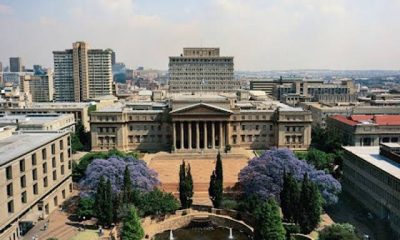

Africa’s Second-best University Signs Deal with World’s Largest Aircraft Manufacturer for Aerospace Students in South Africa
Spread the loveAirbus Southern Africa, the University of the Witwatersrand (Wits), one of Africa’s top universities, and the Institut Supérieur...


Nigeria’s 1996 Olympic Gold: Jo Bonfrere Claims He’s Still Waiting for Gold Medal, Other Rewards
Spread the loveBy Nick Ibe, Abuja 30 years after guiding Nigeria to victory in the men’s football event at the...

Unprecedented Political Consensus Behind Tinubu’s Re-election Bid, Says Governor Soludo
Spread the loveABUJA, October 15, 2026 — Anambra State Governor, Professor Chukwuma Charles Soludo, has described the broad political support...

Don’t Be Blind to the Good Works of the Ruling Party, Wike Tells Opposition
Spread the loveABUJA, October 15, 2026 — Minister of the Federal Capital Territory (FCT), Nyesom Wike, has challenged opposition political...

Kenyan Billionaire Mary-Ann Musangi Takes her Father’s Company to 30 African Countries
Spread the loveKenyan billionaire Mary-Ann Musangi, plans to expand Haco Industries, the consumer goods maker founded by her late father...


Pope Leo XIV Undergoes Lung Surgery At 71 As Vatican Confirms Early Cancer
Spread the loveBy Felix Umande Pope Leo XIV has had part of his lung removed after doctors found early-stage cancer,...

INEC Chairman Assures: “Algorithms Will Not Decide the 2027 Vote”
Spread the loveBy Son Tertsea, Abuja The outcome of the 2027 General Elections, will be decided by the sovereign will...