
General News
The Tiv Chiefdom Question: Between Resistance, Political Will And Administrative Responsibility Under Governor Aa Sule.

By King Iorshe
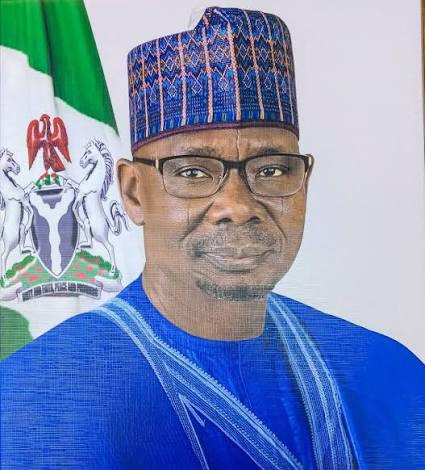
A CRITICAL READING OF GOVERNOR ABDULLAHI SULE’S EXPLANATION.
Governor Abdullahi Sule’s admission that establishing a chiefdom for the Tiv people of Nasarawa State has proven difficult owing to resistance from neighbouring Alago communities is noteworthy. It concedes that the matter remains unresolved even though the Tiv constitute a major population in several areas of the state.
However, the statement also prompts a fundamental question:
When does opposition from another community turn into a justification for government inaction—and when does it become the government’s duty to settle the disagreement through law, consultation and administrative action?
That is the core issue.
THE FIRST GAP: WHO ACTUALLY BEARS THE FINAL RESPONSIBILITY?
The Governor’s explanation seems to place substantial weight on resistance from Alago traditional authorities.
That may account for one obstacle, but it does not fully address the administrative question.
If the state government holds that a chiefdom is justified, it ought to be able to clarify:
What formal process has been pursued?
Which committee or institution reviewed the request?
What recommendations were issued?
Which traditional rulers raised objections?
What exactly were those objections?
Were the objections based on ethnicity, territory, history, or administration?
What other arrangements were taken into consideration?
What legal or administrative instrument must be in place before a chiefdom can be established? In the absent of these details, the public is given a political explanation instead of an administrative one.
“It is difficult” does not mean the same thing as “it is impossible.”
THE SECOND GAP: THE TIV SHOULD NOT BE EXPECTED TO LOBBY WITHOUT END
The Governor urged Tiv sons and daughters to draw on their ties with traditional rulers in Keana, Doma and Obi in order to lobby for the chiefdom.
There is a certain practical wisdom in promoting dialogue.
Yet there is also a serious institutional question.
Should the establishment of a traditional administrative institution rest mainly on personal lobbying?
If the matter is essentially an administrative question, it should in the end be settled through established procedures—not simply by who knows which chief or who can lobby effectively.
The risk is that government may unintentionally turn a question of rights, representation and administrative recognition into one of personal relationships.
That cannot be sustained.
THE DEEPER ISSUE: TRADITIONAL INSTITUTIONS INVOLVE MORE THAN TITLES
The Tiv demand for a chiefdom should not be boiled down to a wish for a traditional title.
Traditional institutions have consequences for:
Representation;
Local administration;
Cultural identity;
Resolution of disputes;
Ties to land and community;
Engagement with government;
Development initiatives;
Political acknowledgement;
Leadership within the community;
Safeguarding of history and institutions.
As a result, the conversation ought to shift away from:
“Can the Tiv get a chiefdom?”
and toward:
“Which administrative and traditional arrangement most reliably ensures peaceful, fair and lawful recognition of the Tiv communities in Nasarawa State?”
That question is far more productive.
THE ALAGO-TIV MATTER MUST BE APPROACHED WITH CARE
This is arguably the most delicate dimension.
The government must not let the matter turn into a rivalry between Tiv identity and Alago identity.
For generations, the two communities have coexisted side by side. Consequently, any government solution should steer clear of language or policies implying that recognizing one community inevitably entails displacing or humbling another.
The state ought to set up a process grounded in evidence that involves:
Historical documentation;
Current administrative boundaries;
Data on population;
Customary institutions;
Submissions from the community;
The history of land and settlement;
Factors related to security;
Principles of the Constitution;
The relevant Nasarawa State laws and regulations governing traditional institutions.
This would lessen the chance of the issue turning into an ethnic contest.
Peace ought not to depend on permanently denying legitimate representation, and representation ought not to depend on hostility toward another community.
THE QUESTION OF APPOINTMENTS CANNOT BE SET ASIDE
This is the point at which the Governor’s statement takes on political significance.
If the government acknowledges that the Tiv are important enough to be consulted on traditional institutions, then the question of their inclusion in government appointments follows as a matter of course.
The pertinent questions are:
How many Tiv currently hold significant political appointments in Nasarawa State?
Not simply special assistants, personal assistants or campaign roles, but meaningful positions that carry genuine institutional authority and influence?
The public ought to demand a clear and transparent account of representation in:
Commissioners;
Permanent-secretary- level roles, where they exist;
Senior government boards;
Commissions;
Development agencies;
Local government leadership;
Government-owned institutions;
Political and administrative appointments.
The question should not be:
“Give the Tiv everything.”
Rather, it should be:
“Does the makeup of government fairly reflect the diversity and demographic spread of Nasarawa State?”
That is a valid governance question.
THE GOVERNOR’S REMARK ABOUT WADADA INTRODUCES YET ANOTHER POLITICAL DIMENSION
The Governor is said to have thanked the Tiv for backing Senator Ahmed Aliyu Wadada as the APC governorship candidate and pledged not to let them down.
This establishes a significant political expectation.
If the Tiv endorsement carries enough political weight to be acknowledged by the Governor, then the people have the right to ask:
What specific governance commitments come with that political relationship?
An endorsement ought not to serve as a replacement for policy.
The Tiv community should thus pursue measurable commitments regarding:
Traditional institutions;
Political appointments;
Infrastructure in communities populated by the Tiv;
Education;
Health facilities;
Youth employment and empowerment;
Security;
Agricultural development;
Equitable representation within government institutions.
The most durable political relationship does not rest on applause or promises.
It rests on clear commitments, measurable outcomes and accountability.
THE GREATEST RISK: THE POLITICS OF ENDLESS POSTPONEMENT
The Governor’s remark that efforts become difficult, are shelved and later revisited warrants serious attention.
There is a pattern that deserves to be questioned:
When an issue is continually deferred, the deferral itself ultimately turns into a policy.
The Tiv people, therefore, must ask:
When was the chiefdom request first put forward formally?
How many committees have examined it?
What recommendations did they make?
What has stood in the way of implementation?
Which specific objections are still outstanding?
What would amount to a solution?
What timeline is the government considering?
In the absence of a timeline, “we will revisit it” can turn into an indefinite political holding pattern.
THE GOVERNMENT OUGHT TO SET UP A FORMAL DIALOGUE MECHANISM
Instead of leaving Tiv leaders to lobby individual traditional rulers, the government could set up a Tiv–Alago Traditional and Administrative Dialogue Committee.
Its membership could comprise:
Tiv traditional representatives;
Alago traditional representatives;
Relevant local government authorities;
Ministry of Local Government/Chieftaincy Affairs;
Ministry of Justice;
Historians and archivists;
Representatives of the communities;
Impartial experts in peacebuilding.
Its purpose should be to review the dispute impartially and offer solution.
THE TIV AGENDA MUST EXTEND BEYOND TRADITIONAL RECOGNITION
A more robust Tiv agenda might rest on four pillars:
RECOGNITION
Chiefdoms, districts, village areas and traditional representation.
REPRESENTATION
Equitable involvement in political and administrative appointments.
DEVELOPMENT
Roads, schools, healthcare, water, electricity, agriculture and economic opportunities.
ACCOUNTABILITY
A measurable framework for monitoring government commitments.
WHAT THE GOVERNOR SHOULD DO NEXT
If the government truly intends to settle the matter, it needs to shift from explanations to concrete action.
PUBLISH THE STATUS OF THE CHIEFDOM PROPOSAL
Inform the public precisely where the process came to a halt.
IDENTIFY THE OBJECTIONS
Who raised objections, and for what reasons?
ESTABLISH A STRUCTURED DIALOGUE
Gather the communities that have been impacted.
ORDER AN INDEPENDENT HISTORICAL AND ADMINISTRATIVE REVIEW
When historical claims are in conflict, the evidence ought to be scrutinised instead of relying on political sentiment.
ESTABLISH A TIMETABLE
Citizens deserve to know when the next stage will take place, even if the final decision proves difficult.
MAKE A REPRESENTATION DASHBOARD PUBLICLY AVAILABLE
Display how appointments are distributed among the major communities and senatorial districts.
THE QUESTION THE TIV OUGHT TO ASK
The most crucial question is not:
“Governor, why is it so difficult?”
Rather, it is:
“Governor, what particular obstacle still stands in the way, what has the government done to overcome it, and what concrete steps will be taken now to resolve it?”
That shifts the discussion from complaint to accountability.
Governor Sule’s statement matters because it recognizes the difficulty surrounding the Tiv chiefdom question. However, recognition cannot be where things end.
If resistance is present, the government should pinpoint it.
If historical disagreements exist, the government should look into them.
If legal obstacles exist, the government should clarify them.
When administrative procedures are not yet complete, the government ought to finish them.
And when an issue is essentially political in nature, political leaders must face it squarely and honestly.
As for the Tiv people, they should press their demand through peaceful, constitutional and intelligent means. They ought to refrain from transforming the matter into an ethnic conflict with their Alago neighbours.
Yet peaceful coexistence should not translate into lasting political invisibility.
The true measure of leadership is not whether a government can justify why a problem is hard.
The true measure is whether a government can transform a hard problem into a practical solution.
King Iorshe,
Analyst, Educator, Researcher and Public Affairs Commentator
Tuesday, 6th October, 2026







General News
Court Sacks Francis Agbo, Declares Nelson Alapa APC Senatorial Candidate For Benue South

By Felix Umande
The Federal High Court in Abuja on Tuesday nullified the emergence of Francis Agbo as the candidate of the All Progressives Congress (APC) for the 2027 Benue South Senatorial District election.
Justice Salim Ibrahim, in his judgment, ordered the APC to immediately recognise and forward the name of Mr Nelson Alapa, a former lawmaker, to the Independent National Electoral Commission (INEC) as its validly elected candidate, having scored the highest lawful votes cast in the poll.
Justice Ibrahim held that the suit filed by Alapa succeeded on merit.
Alapa had filed the writ of summons, marked FHC/ABJ/CS/1092/2026, through his lawyer, Adetunji Oso, SAN, on May 30, naming APC, Agbo and INEC as 1st to 3rd defendants respectively.
He prayed the court to declare that having scored a total of 24,788 votes, being the highest number of lawful votes cast, he is the lawful winner of the APC Benue South Senatorial District Primary Election held on May 18.
He therefore sought an order setting aside the purported senatorial result collation form recording a total of 82,402 votes cast, and setting aside the purported declaration and return of Agbo as winner of the primary.
He also sought an order compelling the party to recognise him as winner and to forward his name to INEC as its candidate for Benue South.
Alapa equally sought perpetual injunctions restraining APC from submitting, forwarding, recognising or substituting Agbo’s name or any person other than him to INEC, and restraining INEC from accepting, recognising, publishing or acting upon the name of Agbo or any other person other than him as the party’s candidate.
Delivering judgment, Justice Ibrahim dismissed the preliminary objection filed by Agbo and held that the court had jurisdiction to entertain the suit.
He disagreed with Agbo’s submission that there was no substantial dispute of facts to warrant oral evidence, and that the case did not fall within the limited exception of pre-election matters that could be commenced by writ of summons.
The judge also disagreed with other objections, including the argument that Alapa failed to exhaust the party’s internal dispute resolution mechanism before filing the suit.
He held that the plaintiff had established the reliefs sought, hence all the issues ought to be resolved in his favour.
Justice Ibrahim ordered APC to immediately forward Alapa’s name as its candidate and directed INEC to publish Alapa’s name as the APC candidate for the 2027 Benue South Senatorial District election.
The judge, however, made no order as to cost.
Agbo represented the Ado/Ogbadibo/Okpokwu Federal Constituency of Benue between 2019 and 2023, while Alapa represented the Otukpo/Ohimini Federal Constituency between 2007 and 2011.
By Isa Abdul, Abuja
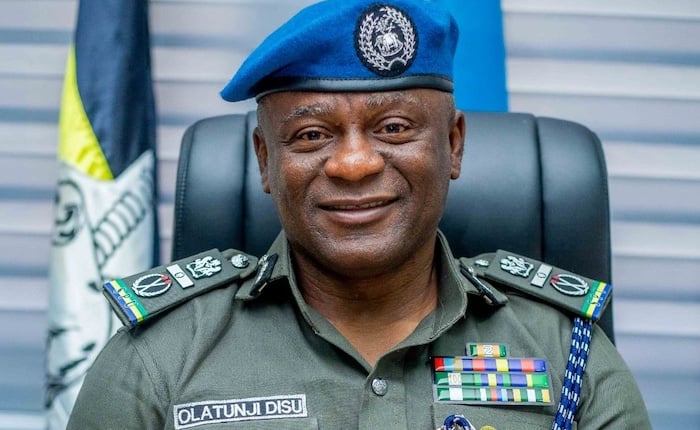
Nigeria should not directly adopt the state policing models of other countries, Inspector-General of Police (IGP), Olatunji Disu, has said.
Disu spoke against direct adoption of the state policing models of countries such as the United States (U.S.), India and Pakistan, arguing that the country must develop a system that reflects its distinct security and administrative realities.
Disu made the remarks Tuesday at the ongoing Media and Development Conference 2026 in Abuja, while contributing to the debate on the proposed establishment of state police in Nigeria.
The police boss said state policing was a futuristic development that requires careful consideration by the Nigeria Police Force (NPF), the National Assembly and other stakeholders to ensure it strengthens security across the country.
He said the police had carried out comparative assessments of countries operating decentralised policing systems but discovered that their circumstances differed from Nigeria’s. In his words:
“On the issue of state police, just like the issue of cybercrime, actually, it is a new thing. It’s futuristic.
“It’s something that the police, the National Assembly, and even the nation in general are still working on to get involved in the kind of state police that will improve our nation.”
In his view, the police examined the state policing arrangements in India, Pakistan and the U.S. with the conclusion that Nigeria needed a different framework to fit its own peculiarities.
In Plateau State, the government has proposed the recruitment of between 5,000 and 7,000 personnel for the proposed Plateau State Police Service as part of efforts to strengthen security and tackle rising insecurity across the state.
The proposal from Plateau was disclosed by the Chairman of the 14-member Plateau State Advisory Committee on State Police, Deputy Inspector-General of Police, Habila Joshak (rtd) during the presentation of the committee’s interim report to the state government in Jos.
“We propose an implementation roadmap for recruiting between 5,000 and 7,000 personnel, with pilot deployments in flashpoint areas before statewide coverage.
“The proposed recruitment and phased deployment are part of measures to ensure that the service is properly structured and positioned to respond to security challenges across the state,” Joshak said.
According to him, consultations with stakeholders in the Northern and Central zones recorded overwhelming support for the establishment of state police, provided adequate safeguards are put in place against political intimidation, ethnic and religious bias, and human rights abuses.
He said the committee recommended seven major pillars, including a legal framework, zonal and divisional command structures, 24-hour operations, an independent Police Service Commission with a civilian majority, inter-agency collaboration and phased implementation.
Earlier, Secretary of the committee, Julie Sanda, had said, “The committee has spent seven months undertaking research, reviewing security structures and consulting stakeholders across the three senatorial districts and the 17 local government areas of the state.
“We established seven subcommittees to examine different aspects of the proposed state police service and engaged the Plateau State House of Assembly, the Association of Local Governments of Nigeria (ALGON), traditional and religious leaders, women and youth groups, civil society organisations, professional associations and transport unions.”
In another development, the Minister of Information and National Orientation, Mohammed Idris, while declaring open the Defence Headquarters Strategic Communication Workshop 2026 in Abuja, emphasised the importance of responsible journalism, effective communication and the protection of sensitive military information.
The workshop had the theme: ‘Enhancing Strategic Collaboration Between Spokespersons of Security Agencies and Media Stakeholders for Accurate and Responsible Reportage Towards Improved National Security’.
Represented by the Director-General of Voice of Nigeria, Jibrin Baba-Ndace, the minister said national security was determined not only by operational capacity but also by the quality, accuracy and effectiveness of information communicated to the public.
He noted that although the military and the media had different professional responsibilities, their roles were not incompatible, stressing the need for mutual respect, professionalism and regular communication.
According to him, while the military is responsible for protecting the country and conducting security operations, the media has a duty to inform the public, express diverse perspectives and report matters of public interest.
He urged security agencies to provide timely and credible information, while highlighting that journalists should ensure accurate reporting, provide context and avoid publishing information capable of endangering lives or compromising ongoing military operations.
The minister further called for stronger collaboration between the media and security agencies to address the country’s security challenges and safeguard national security.
By Nick Ibe, Abuja
For the N135.5 billion paid into some bank accounts allegedly linked to the Nigerian Governors’ Forum (NGF) for Paris Club refunds over issues pertaining to consultancy and legal fees, a High Court of the Federal Capital Territory (FCT) has ordered the freezing of the affected bank accounts.
The interim order was granted by Justice Charles Agbaza due to an ex parte application filed by Ted Iseghohi-Edwards, a lawyer, against the Incorporated Trustees of the NGF, the first respondent in the case.
The order restrained the Incorporated Trustees of the NGF from withdrawing, transferring, dissipating or otherwise dealing with the funds.
The order further restrained 29 commercial banks from releasing, transferring, converting or otherwise dealing with funds belonging to the NGF in their custody.
The judge, in addition, directed the banks to disclose, within 48 hours of the service of the court order on them, whether the NGF maintains accounts containing the said funds.
According to the judge, the banks are required to identify such accounts, their currencies, available balances and amounts preserved under the court’s order.
The amount represents 100 million dollars, equivalent to N135.55 billion, calculated at the exchange rate of N1,355.80 to the dollar.
Justice Agbaza made the orders on Nov. 19, following the ex parte application and submissions by the claimant’s counsel, Emonye Adekwu, SAN, alongside Damilola Odesola, of the law firm of Ade Okeaya-Inneh & Co.
A Certified True Copy of the enrolled order by the court was obtained by the press on Tuesday in Abuja.
Iseghohi-Edwards, who carries on business under the name and style of Edwards and Partners, is seeking the recovery of the money pursuant to an indemnity issued by the NGF.
The claimant’s case is that the money belongs to him under an indemnity dated Dec. 20, 2018, issued by the NGF.
The indemnity reportedly arose from an arrangement under which the Federal Government paid 100 million dollars to the NGF as stakeholder.
The money was to be held pending the determination of the Federal Government’s liability to Iseghohi-Edwards over legal and consultancy fees.
The fees arose from legal and consultancy services Iseghohi-Edwards claimed to have rendered in connection with the London and Paris Club loan transaction.
Iseghohi-Edwards claimed he was retained by the Incorporated Trustees of the Association of Local Governments of Nigeria (ALGON) to represent the 774 local government councils in the London and Paris Clubs refunds matters.
He had instituted suit No. FHC/ABJ/CS/856/2016 against the Federal Government over the outstanding professional fees.
According to his court filings, the Federal High Court, on Feb. 16, 2018, delivered judgment establishing the government’s indebtedness of 318 million dollar.
The claimant said the government subsequently made a part-payment of 159 million dollars through Promissory Notes.
He contended that the judgment fulfilled the condition contained in the NGF’s indemnity, thereby making the 100 million dollar payable directly to him.
Under the indemnity, the NGF had undertaken to pay the claimant the money if the Federal Government was found liable.
Iseghohi-Edwards said he formally demanded payment from the NGF through a letter dated Oct. 8, 2026, but the forum allegedly failed to honour the undertaking.
Consequently, he approached the FCT High Court, seeking to preserve the money pending the determination of his substantive claim.
Justice Agbaza adjourned the matter until Dec.1, for hearing of the Motion on Notice and directed the claimant to serve the order on all respondents.



The Best Vegetables for Heart Health, According to Cardiologists
Spread the loveBy Lynn Andriani When cardiologists talk about heart-healthy eating, vegetables are almost always at the center of the...


Court Sacks Francis Agbo, Declares Nelson Alapa APC Senatorial Candidate For Benue South
Spread the loveBy Felix Umande The Federal High Court in Abuja on Tuesday nullified the emergence of Francis Agbo as...


Alia Sets Up 17-member Panel To Review 2023 Manifesto For 2027 Re-election Bid
Spread the loveBy Felix Umande Benue State Governor and All Progressives Congress (APC) governorship candidate for 2027, Rev. Fr. Hyacinth...

IGP: Nigeria Should Create Distinct State Police Model, Not Copy Others
Spread the loveBy Isa Abdul, Abuja Nigeria should not directly adopt the state policing models of other countries, Inspector-General of...
Nigerian Governors Forum’s 29 Bank Accounts Frozen –Court Orders
Spread the loveBy Nick Ibe, Abuja For the N135.5 billion paid into some bank accounts allegedly linked to the Nigerian...


Police: Nduka Obaigbena, 8 others wanted
Spread the loveThe police have declared Prince Nduka Obaigbena, Chairman of Arise News Television, and eight other persons wanted over...


STAY AWAY FROM VIOLENCE OR FACE THE LAW: BENUE POLICE WARN POLITICAL THUGS AFTER PISTOL SEIZURE AT GBOKO RALLY
Spread the loveBy Felix Umande The Benue State Police Command has reaffirmed its commitment to maintaining peace and security throughout...
Avoid Violence Or Face The Law: Benue Police Warn Political Thugs After Pistol Seizure At Gboko Rally
Spread the loveBy Felix Umande The Benue State Police Command has reaffirmed its commitment to maintaining peace and security throughout...
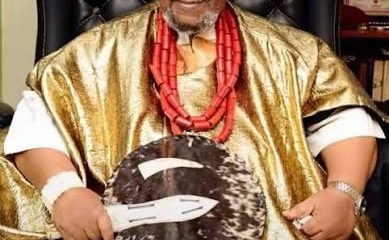

Veteran actor Pete Edochie Joins Ancestors at 79
Spread the loveBy Lazarus Oko Veteran Nigerian actor and broadcaster, Chief Pete Edochie, has passed on at the age of...


Tinubu Seeks Fresh Approval For Slimmer ₦65.17trn 2026 Budget, Sends Revised Fiscal Plan To Reps
Spread the loveBy Felix Umande President Bola Tinubu has asked the House of Representatives to repeal and re-enact the 2026...