
Foreign
Tennessee Governor Declines to Halt Execution of Woman on Death Row


If the execution proceeds, Christa Pike would be the first woman to be executed in Tennessee in more than 200 years.
Tennessee Governor Bill Lee has denied a clemency request from death row inmate Christa Pike, who is scheduled to be executed by lethal injection on Wednesday.
Pike, now 50, was 18 when she and her then-boyfriend beat, tortured and murdered Colleen Slemmer, a 19-year-old they met at a job training camp for troubled teens.
She may have one last chance at halting her execution as her attorneys have filed a petition with the US Supreme Court hoping for a last-minute reprieve.
If it proceeds, Pike would be the first woman to be executed in Tennessee in more than 200 years. Only 18 women have been executed in the US since the 1970s, compared to 1,663 men.
Killer Christa Pike to be executed within days – but her defence say she’s a victim too
“After deliberate consideration of Christa Gail Pike’s request for clemency, and after a thorough review of the case, I am upholding the sentence of the State of Tennessee and do not plan to intervene,” Governor Lee said in a statement.
Pike’s legal team had filed the clemency petition earlier this month, requesting that her death sentence be commuted to life in prison.
Moving ahead with Pike’s execution puts Tennessee “on singular footing”, her attorneys said, as she would be the first person the state “executes in the modern death penalty era who was a teenager at the time of the offence”.
Attorneys Stephen Ferrell, Kelly Gleason and Randy Spivey said the governor’s decision “leaves unanswered vital questions about Tennessee’s execution protocol”.
“With this decision, the State of Tennessee is ignoring what both science and our legal system have decided: an 18-year-old brain is not an adult brain, and 18 is too young to face execution,” they said in a statement on Monday.
The murder of Colleen Slemmer created a media frenzy in Knoxville, Tennessee in 1995, when the 19-year-old was found with a pentagram – a symbol of Satanic ritual – carved into her chest.
Pike had accused Colleen of insulting her and trying to steal her boyfriend. Two other residents at the camp later testified that Pike had bragged about the murder before and after, and showed them a piece of Colleen’s skull.
A year later, she was convicted of first-degree murder and sentenced to death, while then-boyfriend Tadaryl Shipp- who was 17 at the time – was given a life sentence with the possibility of parole.
At the time of her incarceration, the 21-year-old was the youngest person on death row, according to the Tennessee Department of Corrections.
Pike is scheduled to be executed on 30 September after years of failed appeals.
Colleen’s mother has insisted she wants Pike’s execution to move forward so that her daughter “finally can be resting”.
Family handout Student Colleen Slemmer was tortured and brutally killed in the 1995.
Murder Family handout
Colleen Slemmer
Pike has a documented history of childhood sexual abuse, abandonment and neglect. Her lawyers believe that if she was found guilty of the same crime today as a teenager she would not receive a death sentence.
“The 18-year-old girl suffering from severe mental illness and near-debilitating trauma no longer exists,” her attorneys said. “Christa is a 50-year-old remorseful woman who understands her actions, receives proper treatment for her mental illness, and provides for and guides fellow incarcerated women.”
In the years since her sentencing, her defence team have uncovered details about her childhood that they say the jury never had the chance to consider.
Source: BBC





Foreign
For Rural Character, Limit Artificial Light Pollution: South African Towns Ban Streetlights, Perimeter Fences
By Malcolm Libera
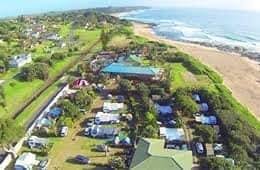
A handful of small coastal towns in the Western Cape have restrictions on streetlights, security fences and other perimeter barriers.
Betty’s Bay, Pringle Bay, and Rooi-Els, situated along the Hangklip coast, fall under the jurisdiction of the Overstrand Municipality.
However, they also form part of the Kogelberg Biosphere Reserve, a UNESCO-designated area known for its biodiversity.
The villages have planning restrictions intended to preserve their rural character, limit artificial light pollution, and allow wildlife to move freely between the mountains, fynbos, and coastline.
The restrictions are set out in the Hangklip Villages Conservation Overlay Zone (HCOZ), the Overstrand Municipality Land Use Scheme, and the municipality’s Fences and Fencing By-law.
One of these provisions concerns conventional streetlights, which are not permitted in the villages unless a specific threshold of property owners supports their installation.
Under the conservation overlay provisions, streetlights may not be erected unless documented votes in favour have been obtained from 66% of registered property owners in the respective village.
The restriction is intended to preserve the area’s dark-sky environment and limit the impact of artificial lighting on nocturnal wildlife.
Animals such as caracals, owls, bats, and Cape grysbok rely on natural darkness for their behaviour, feeding and movement. Artificial lighting can interfere with these activities and affect insects, coastal birds, and marine life.
The municipality also regulates outdoor lighting on individual properties to prevent excessive light from spilling into neighbouring properties and public spaces.
Property owners are encouraged to direct external lighting downward rather than allowing it to spill over property lines.
Sensor-operated lights are also recommended as an alternative to permanent lighting because they remain off when not in use.
The regulations also specify what constitutes a public nuisance. This includes lighting with a source intensity exceeding 500 candela, illumination exceeding three lux, or an upward light ratio greater than 2.5%, measured from a street, public place or property boundary.
Electric fence restrictions
Durban, South Africa – 6 December 2020: A yellow warning placed on an electric fence to signify to others the danger of touching the fence as crime increases in the country
Security infrastructure is also subject to restrictions, especially where it could obstruct wildlife movement or create hazards for animals.
The municipality’s Fences and Fencing By-law requires prior written consent from the municipality for certain perimeter barriers.
These include electrified fences and barriers fitted with barbed wire, spikes, or other sharp protrusions.
Electrified fencing is generally only permitted above a wall at least 1.8 metres high, subject to compliance with the relevant electrical safety regulations.
Without municipal consent, fences along lateral and rear property boundaries may not exceed 1.8 metres, while fences within 4.5 metres of a street boundary may not exceed 1.2 metres.
The Overstrand Land Use Scheme also outlines parameters for boundary walls and fences, including a general maximum height of 2.1 metres, with electric fencing permitted above that height.
These restrictions are relevant in Betty’s Bay and the surrounding villages, where residential properties are situated within an environmentally sensitive landscape.
Wildlife, including tortoises, porcupines, small antelope and baboons, regularly moves through the area.
Solid walls and poorly designed security barriers can obstruct these routes, while electrified or sharp ground-level barriers can injure or kill smaller animals.
The regulations are intended to balance property security with environmental protection and ensure that residential development does not unnecessarily fragment natural habitats.
For homeowners in these areas, this means that installing conventional streetlights, building high boundary walls or adding certain security features is prohibited without municipal approval.
Businesstech

By Isa Abdul, Abuja
In Saudi Arabia, a kiss in the mosque would earn you death, as two Bangladeshi nationals, identified as Nazrul Islam Abdul Basir and Siri Akhtar, have reportedly been executed in Saudi Arabia following their conviction over the alleged immoral act inside a Mecca mosque.
Reports circulating on social media indicate that the couple had travelled to Mecca for their honeymoon. But what was to be memorable event is their lives became a suicide mission.
The gesture was wrong in a wrong place, not an expression of gratitude to Allah for their marriage, as far as the Saudis are concerned.
Reports claim the couple’s bodies had been returned to Bangladesh in two coffins for burial.
Some online reports claim the couple were newlyweds executed over a kiss (such as a forehead kiss or a kiss inside the mosque).
However, the Saudi government’s official statement did not detail the exact nature of the act, and conflicting reports—including statements from family members and media checks—disputed whether they were newlyweds or what specific physical contact occurred.
But reports indicate the Bangladesh Consulate General in Jeddah stated they received no advance notice or prior notification from Saudi authorities regarding the executions and have formally requested clarification and acknowledgement.

By Son Tertsea, Abuja
A Catholic priest was crushed to death by a wooden crucifix that pressed him against the pulpit as it fell from the wall while celebrating Mass in the Ecuadorian city of Guayaquil on Saturday.
According to reports, shouts of “Father, Father! Call an ambulance!” people at Our Lady of Perpetual Help church could be heard shouting just before a livestreamed broadcast cuts out.
The graphic footage of the accident went viral Sunday on social media and was widely carried by news outlets.
The Archdiocese of Guayaquil mourned the death of the priest, Patricio Sanchez, in a statement and expressed its “solidarity, affection and love” for his family and friends.


Failure to Secure NNPCL GMD Job: EFCC Arraigns Woman Over N1.1 bn Fraud
Spread the loveBy Isa Abdul, Abuja One Halimat Adenike Tejuosho was Wednesday arraigned before a High Court of the Federal...


Let’s Honor All Pioneer Paramount Rulers Across Tiv and Idoma Lands.
Spread the loveBy Peters Ichull Today, the Tiv nation and the entire Benue family pause in solemn reflection to mark...


NKST Synod Says: “Alia Is A Talk-And-Do Governor”, Deserves Re-election in 2027
Spread the loveBy Felix Umande The NKST Synod has declared its support for the re-election of Benue State Governor, Rev....


SGF Akume Charges FRSC: “Nigerians Must Be Assured Of Safe, Crash-free Season”
Spread the loveBy Felix Umande The Secretary to the Government of the Federation, Senator George Akume (CON), has charged the...


Court Blocks Atiku’s Fresh Evidence Bid Against Tinubu Ahead Of 2027
Spread the loveBy Felix Umande The Federal High Court, Abuja Division, has dismissed former Vice President Atiku Abubakar’s bid to...


All 36 States Aporove State Police, Senate Transmits Bill to Tinubu For Assent
Spread the loveBy Felix Umande The Senate has resolved to transmit the Constitution of the Federal Republic of Nigeria (Sixth...


Death of Four Students: UNN to Introduce Routine Drug Tests
Spread the loveBy Lazarus Oko The University of Nigeria, Nsukka (UNN), following the tragic death of four students during a...


FAAC: FG, States, LGs Share N2.4trn in October
Spread the loveBy Son Tertsea, Abuja The three tiers of government, federal, states and local governments, have shared the Federation...


Gun can Kill Terrorists, only Education can Kill Terrorism – Buratai
Spread the loveThe former Chief of Army Staff, retired Lt.-Gen. Tukur Buratai has called for inclusive education and wider access...


Tinubu Approves University Of Public Relations And Leadership In Nasarawa
Spread the loveBy Felix Umande President Bola Ahmed Tinubu has formally approved the establishment of the University of Public Relations...