
General News
FG Debarment: To Protect Government from Bad and Non-performing Contractors

By Isa Abdul, Abuja
Guidelines for the debarment of contractors, consultants and service providers, have been released outlining six grounds that could lead to exclusion from Federal Government procurement. The approved new debarment is between three and five years.
The grounds include offering bribes or other benefits to influence procurement decisions, conviction for fraud, wilful failure to perform contractual obligations, a history of unsatisfactory performance, falsification of documents and debarment by a multilateral organisation.
The directive was contained in a circular titled “Implementation of the National Guideline on Debarment of Contractors,” signed by the Secretary to the Government of the Federation, George Akume.
The circular was addressed to the Chief of Staff to the President, Deputy Chief of Staff to the President, Head of the Civil Service of the Federation, Principal Secretary to the President, ministers and ministers of state, National Security Adviser, Economic Adviser to the President, special advisers and senior special assistants.
Others addressed included service chiefs and the Inspector-General of Police; the Governor of the Central Bank of Nigeria; chairmen of the Federal Civil Service Commission, Police Service Commission, Code of Conduct Bureau, Code of Conduct Tribunal, Federal Character Commission, Revenue Mobilisation Allocation and Fiscal Commission, Federal Inland Revenue Service and Independent National Electoral Commission.
The circular was also sent to the chairmen of the National Population Commission, Independent Corrupt Practices and Other Related Offences Commission, Economic and Financial Crimes Commission and National Drug Law Enforcement Agency; all permanent secretaries and heads of extra-ministerial departments; Clerk of the National Assembly; Chief Registrar of the Supreme Court; Accountant-General of the Federation; Auditor-General for the Federation; and directors-general and chief executives of parastatals, agencies and government-owned companies.
Akume said the guideline was introduced “in order to promote integrity, transparency, accountability in public procurement and to ensure value for money in public expenditure and to protect government from bad and non-performing contractors.”
The circular stated that the guideline establishes “the grounds and procedures for excluding contractors, suppliers and service providers from participating in Federal Government procurement” where they are found to have violated the Public Procurement Act, 2007, or engaged in wrongdoing relating to contract delivery.
Under the guideline, a contractor, consultant, or service provider may face debarment where there is evidence that the firm or individual gave or promised money, gifts, or any tangible item to a current or former employee of a procuring entity or the Bureau of Public Procurement in an attempt to influence a procurement action or decision.
The government also listed offering or giving employment or another benefit that can be quantified in monetary terms to a current or former employee of a procuring entity or the BPP as a ground where it is intended to influence a procurement activity.
Another ground is conviction for fraud or any other offence connected with obtaining, attempting to obtain or performing a public contract or subcontract.
The guideline further targets contractors that breach government contracts through “willful failure to perform in accordance with the terms of a contract


–Niger State, Cross River and 31 others ranked low
By Son Tertsea, Abuja
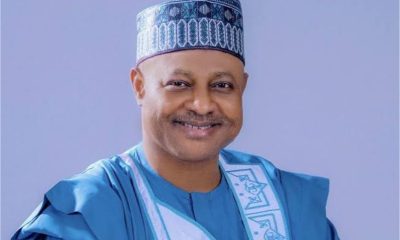
Kaduna state has been judged as Nigeria’s highest-ranked state in the 2026 Transparency and Integrity Index, scoring 54.68 per cent, according to a report by the Centre for Fiscal Transparency and Public Integrity (CeFTPI).
Osun State ranked second with 50.54 per cent, followed by Kwara State with 48.19 per cent.
Rivers State came fourth with 37.97 per cent, while Enugu and Kebbi states occupied fifth and sixth positions, respectively, with 36.63 per cent each.
On the other hand, Niger State, Cross River and 31 others ranked low.
The report, unveiled on Monday, September 28, assessed state governments on the disclosure of public financial information, procurement practices, human resources and inclusion, anti-corruption measures, and citizens’ engagement.
The findings showed a wide gap between the highest- and lowest-ranked states, with a difference of 43.82 percentage points between Kaduna and Niger.
Furthermore, the report showed that only three of Nigeria’s 36 states scored at least 45 per cent, while 15 states, representing 40.5 per cent, recorded scores below 25 per cent.
Bayelsa and Yobe jointly ranked 34th with 14.86 per cent each, ahead of Niger, which occupied the bottom position.
The findings, according to the organisation, highlight wide differences in how state governments disclose information about public finances, government contracts, recruitment, anti-corruption measures and opportunities for citizens to engage with public institutions.
Presenting the report, Executive Director at CEPTI, Dr. Umar Yakubu said the report assessment covers five areas including fiscal transparency, open procurement, human resources and inclusion, control of corruption, and citizens’ engagement.
“Each category accounts for 20 per cent of the overall score. Fiscal transparency examines whether state governments publish budget documents, revenue and expenditure figures, allocations and audit reports.
“Open procurement assesses the availability of information about government contracts, including tender notices, contract details and implementation reports.
“The human resources and inclusion category examines the publication of information on recruitment, promotion, staffing and inclusion in the public service.
“This includes whether governments disclose recruitment procedures and relevant information about their workforce.
“The control of corruption category assesses the disclosure of anti-corruption measures, including relevant policies and whistleblowing frameworks. It considers whether information is available on the safeguards governments have put in place to address corruption.
“Citizens’ engagement examines the channels through which members of the public can communicate with government institutions, raise concerns and participate in relevant public processes.
“The report’s methodology assigns equal weight to the five categories, meaning each contributes one-fifth of a state’s final score.
A low score therefore indicates that a state performed poorly against the index’s transparency and disclosure criteria,” he explained
He said the report assessment is guided by Nigerian laws and policies, including the Freedom of Information Act, 2011, and the Fiscal Responsibility Act, as well as relevant international commitments.
How other states performed
Consequently, Gombe scored 36.55 per cent, while Anambra and Abia recorded 36.19 per cent each. Oyo followed with 36.08 per cent, and Ekiti scored 35.21 per cent.
Bauchi recorded 34.67 per cent, Ondo 31.75 per cent, Kogi 31.11 per cent, Kano 30.86 per cent, Plateau 30.41 per cent and Delta 30.22 per cent.
Akwa Ibom scored 29.97 per cent, Katsina 29.78 per cent, while Lagos and Borno jointly recorded 28.19 per cent.
Adamawa scored 26.86 per cent, Nasarawa 26.67 per cent and Sokoto 26.22 per cent.
Also, Zamfara scored 24 per cent, Jigawa 23.75 per cent, Edo 22.86 per cent, Benue 20.63 per cent, and Taraba 19.75 per cent.
Ogun recorded 18.86 per cent, Imo 18.67 per cent, Ebonyi 18.41 per cent, and Cross River 17.97 per cent.
The difference between Kaduna, the highest-ranked state, and Niger, the lowest-ranked, was 43.82 percentage points.
By Nick Ibe, Abuja
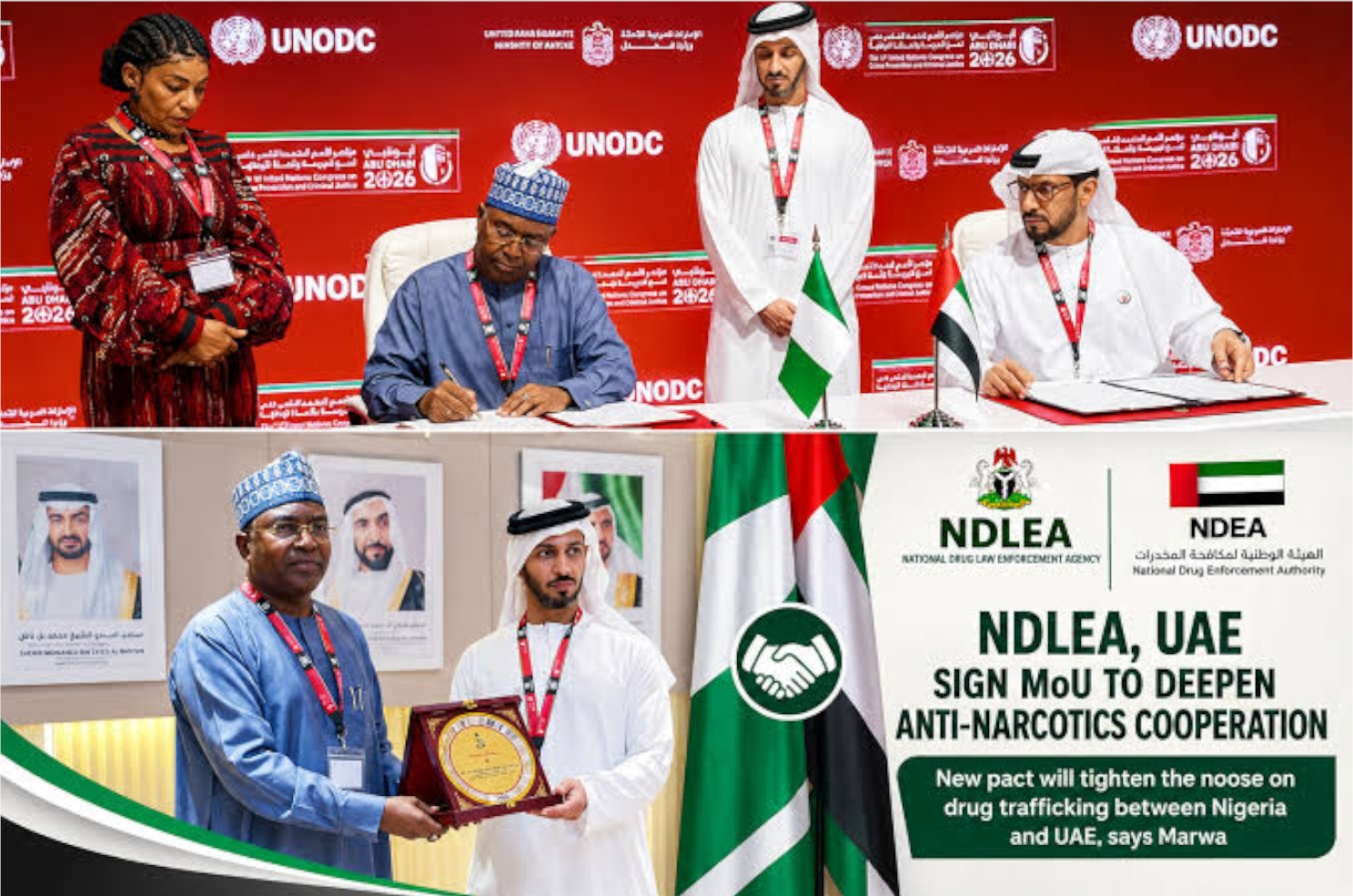
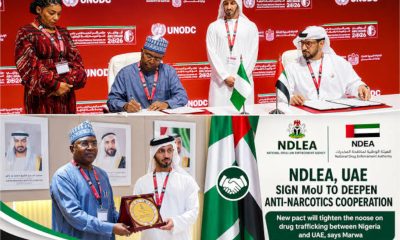
The National Drug Law Enforcement Agency (NDLEA) has signed a Memorandum of Understanding (MoU) with the National Drug Enforcement Authority (NDEA) of the United Arab Emirates, marking a new chapter in the fight against drug trafficking between both countries.
The MoU was signed on Saturday, 26th September 2026, on the sidelines of the ongoing 15th United Nations Congress on Crime Prevention and Criminal Justice holding in Abu Dhabi, UAE.
According to Femi Babafemi,
Director, Media and Advocacy, in a release on Saturday, 26th September 2026, while speaking at the signing ceremony, Chairman/Chief Executive Officer of NDLEA, Brig. Gen. Mohamed Buba Marwa (Rtd), said:
“The agreement was the culmination of years of steady engagement between the two agencies, noting that it would deepen intelligence-sharing and joint enforcement action along the Nigeria-UAE corridor.”
NDLEA, in addition, noted the need for the cooperation agreement because of the volume of traffic in the illicit trade between Nigeria and the UAE:
“Marwa disclosed that between 2021 and 2026, NDLEA intercepted about 354.7kg of illicit drugs including cocaine, cannabis, tramadol, rohypnol, ecstasy and khat, concealed in consignments going to the UAE, resulting in the arrest and prosecution of 47 suspects. He said this underscored the urgency of the new partnership.”
He further highlighted NDLEA’s nationwide record between January 2021 and July 2026, which includes over 91,000 arrests (among them 243 drug barons), the seizure of more than 15.5 million kilograms of illicit drugs and precursor chemicals, 16,469 convictions, and the counselling, treatment and rehabilitation of over 53,000 drug users.
He added that the Agency’s War Against Drug Abuse (WADA) advocacy campaign had reached nearly 5.9 million Nigerians through community and school engagements.
The NDLEA boss said: ” The new partnership with NDEA would build on the exchange of liaison personnel, sharing of operational information, and technical cooperation already established between both agencies, including plans for the UAE to provide Nigerian travellers a comprehensive list of prohibited items to guard against inadvertent violations.”
In his remarks, the Chairman of NDEA, His Excellency Sheikh Zayed bin Hamad Al Nahyan, reaffirmed the UAE’s commitment to working closely with Nigeria to disrupt trafficking networks exploiting the strong trade, travel and people-to-people ties between both nations, describing the MoU as a natural evolution of an already productive relationship.
Both agencies expressed confidence that the agreement would translate into stronger intelligence-sharing, more successful joint operations and the dismantling of trafficking networks operating along the Nigeria-UAE axis, in line with the shared global responsibility championed by the United Nations Office on Drugs and Crime (UNODC).
By Nick Ibe, Abuja
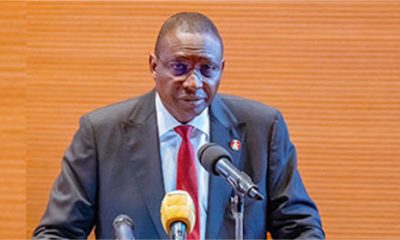
About 75 per cent of funds released by the Federal Government for Christian and Muslim pilgrimages were stolen by leaders of the agencies responsible for the programmes, the Chairman of the Economic and Financial Crimes Commission, Ola Olukoyede, has alleged.
Addressing the Nigeria Inter-Religious Council meeting and the public presentation of the EFCC’s Anti-Corruption Interfaith Manual for religious bodies, Olukoyede made the disclosure in Abuja.
The EFCC chairman added the alleged diversion was uncovered during investigations conducted by the commission into the activities of the Christian and Muslim pilgrimage bodies.
He described some of the discoveries as “mind-boggling”, alleging that officials entrusted with managing public funds for pilgrimage programmes diverted a substantial portion of the money.
According to him, some officials allegedly went as far as registering private companies in countries where Nigerian pilgrims travelled, creating what he described as serious conflicts of interest.
Olukoyede said the issue underscored the need for religious leaders and institutions to demonstrate integrity before demanding the same from their followers.
He warned religious leaders against mixing funds belonging to churches, mosques and other faith-based organisations with their personal resources or businesses. In his words:
“Whatever they give you, offerings, zakat and all of that, you keep it in that religious organisation. You are not supposed to mingle it.”
The EFCC boss added, religious leaders were free to engage in legitimate businesses but must keep such businesses separate from funds entrusted to them by their religious organisations.
He warned that diverting money belonging to a religious organisation into a personal business amounted to a criminal act.
Olukoyede also challenged pastors and imams to question the sources of unusually large donations, particularly when such money comes from public officials whose legitimate earnings could not reasonably explain their wealth.
He gave an example of a public servant giving a huge donation at a place of worship and urged religious leaders not to simply accept such funds without asking questions about their source.
He said accepting unexplained wealth and publicly blessing its donor could amount to giving moral cover to proceeds of crime.
The EFCC chairman urged religious leaders to develop internal compliance mechanisms that would clearly define the boundaries between institutional and personal finances.
He said money held by religious leaders on behalf of their organisations was held in trust for members and for the propagation of the faith.
The meeting was attended by the Sultan of Sokoto, Muhammad Sa’ad Abubakar; President of the Christian Association of Nigeria, Rev. Daniel Okoh; Secretary to the Government of the Federation, Sen. George Akume; and other religious and traditional leaders.
Akume urged religious leaders to use their platforms to condemn kidnapping, banditry, communal clashes and terrorism, describing violence as contrary to the values of faith.


Kaduna State Nigeria’s Highest-ranked in the 2026 Transparency and Integrity Index
Spread the love–Niger State, Cross River and 31 others ranked low By Son Tertsea, Abuja Kaduna state has been judged...

NDLEA, UAE’s NDEA sign MoU to deepen Anti-narcotics Cooperation
Spread the loveBy Nick Ibe, Abuja The National Drug Law Enforcement Agency (NDLEA) has signed a Memorandum of Understanding (MoU)...


Rainbow Coalition Rejected As APC Chairmen Call for Wike’s Defection
Spread the loveThe Rainbow Coalition, FCT minister Nyesom Wike’s, political movement for the reelection of President BolaTinubu is facing rejection...


FG Debarment: To Protect Government from Bad and Non-performing Contractors
Spread the loveBy Isa Abdul, Abuja Guidelines for the debarment of contractors, consultants and service providers, have been released outlining...

2026 NECO: Kano Overall Best Followed By Lagos, Oyo
Spread the loveBy Son Tertsea The results of the 2026 Senior School Certificate Examination conducted by the National Examinations Council,...

75% of Pilgrimage Funds Stolen, EFCC Boss Alleges
Spread the loveBy Nick Ibe, Abuja About 75 per cent of funds released by the Federal Government for Christian and...


Plateau Women Protest, Block Highway over Killing of Three Vigilantes
Spread the loveBy Michael Lim, Jos The killing Friday of three vigilantes, including the community youth leader, during a night...


NNPC Ltd Welcomes $800m Ima Gas Final Investment Decision
Spread the loveBy Philip Nyam The Nigerian National Petroleum Company Limited (NNPC Ltd) has welcomed the $800 million Final Investment...

The UN Hypocritic, Irresponsible Walkout Of Shame: And Nigeria’s Terrorism at Home
Spread the loveBy H. E. Mejeh Yesterday in New York, Nigerian delegates staged a well-rehearsed walkout from the United Nations...

Shehu Sani: El-Rufai Never Did Enough to Stop Southern Kaduna Killings
Spread the love–He is paying price for misgovernance, irresponsibility By Isa Abdul, Abuja El-Rufai had no real commitment to stopping...