
Business and Economy
Dangote IPO Not a Magic Wand to wealth


By Son Tertsea, Abuja
The high expectation for immediate profit as being expressed especially by new investors who participated in the Dangote IPO from their investment may land them in disappointment, after all.
This much has been highlighted by BusinessDay’s analysis of Ifeoluwa Balogun, as a case study, whether real or an imaginary figure, captures the excitement around Dangote Refinery’s public offer. For instance, Balogun optimistically says:
“I bought Dangote shares that are worth N42,000. I am expecting to cash out big time to buy something valuable, at least a piece of land in Imowe-Ibafo, Ogun State.”
To have hope is good. But to be definite about what you are not in control of may trigger unpleasant consequences. For example, the Baloguns may not know that Dangote’s: “N2.15 trillion IPO is creating access to ownership, not a shortcut to wealth. With 4.1 billion shares offered at N525 each and a minimum subscription of just 10 shares, the offer is bringing equity ownership within reach of ordinary Nigerians. What happens to their money after the subscription, however, will depend on the refinery’s future earnings, cash generation and share-price performance,” it has pointed out.
This case study goes further with the analysis: “For Balogun, N42,000 buys 80 shares before applicable charges. If the shares eventually reach N1,050, his holding would be worth N84,000. If they reach N5,250, it would be worth N420,000. Neither outcome has a timetable, and neither price is guaranteed.”
That distinction is becoming important as the Dangote IPO draws first-time investors into Nigeria’s stock market.
The offer is scheduled to close on October 13, having been opened to the public on September with the minimum subscription set at N5,250.
Sure, investors are buying a stake in a business that has recently demonstrated substantial earning power. Dangote Refinery reported $13.91 billion in revenue in the first half of 2026, alongside $2.60 billion in EBITDA and $1.82 billion in net profit, according to BusinessDay. The result marked a sharp turnaround from the loss recorded in 2025.
“Those numbers explain the enthusiasm around the offer. But an equity investor is buying future earnings, not simply the latest six months of profit.” In addition, it’s important to note that:
“The refinery operates in a volatile global business. Its earnings are exposed to crude-oil costs, refined-product prices, refining margins, foreign exchange, demand and international energy-market conditions. A strong first half does not guarantee that future periods will produce the same results.”
The company’s future expansion also matters. Dangote says the refinery has crude-distillation capacity of 700,000 barrels per day and plans to expand that to 1.4 million barrels per day. Basically, ” The wider complex includes petrochemicals, storage, marine infrastructure and logistics.
“For shareholders, therefore, the investment case extends well beyond the IPO. The value of their shares will depend on whether the company can sustain production, expand profitably, manage its financial obligations, generate cash and return value to shareholders. That makes the distance between owning shares and becoming wealthy important.”
If Balogun’s 80 shares rise from N525 to N1,000, his holding would be worth N80,000. But that increase remains a market gain until he sells. If the market price falls below N525, the value of his investment falls instead. The investor therefore has to live with the market’s timing.
Someone who expects the shares to finance a land purchase within a particular period could be forced to sell earlier than planned, potentially at a price below expectation. The market does not adjust its timing to an investor’s financial needs.
It’s in view of these fluctuating realities that the regulator, “The Securities and Exchange Commission has urged prospective investors to read the approved prospectus and understand the terms and risks before subscribing. It has also warned against people or platforms promising guaranteed allocations or returns.”
The significance of the IPO is therefore broader than whether Dangote shares rise after listing. It is introducing more Nigerians to ownership of productive assets at a time when household incomes remain under pressure. But ownership comes with uncertainty: the investor participates in both the gains and the risks of the business.
The punchy end of the discourse is even more important: “For Balogun, the more useful question is not how quickly N42,000 can become enough to buy land. It is whether he can afford to hold the investment long enough for the underlying business to create value. The Dangote IPO can put ownership within reach of ordinary Nigerians. It cannot put a guaranteed fortune within reach overnight.”




Business and Economy
Refinery IPO Didn’t Hit 10m Investors’ Target: But Shows Investment Habit Changing Fast in Africa — Dangote
By Seyi Balogun, Lagos
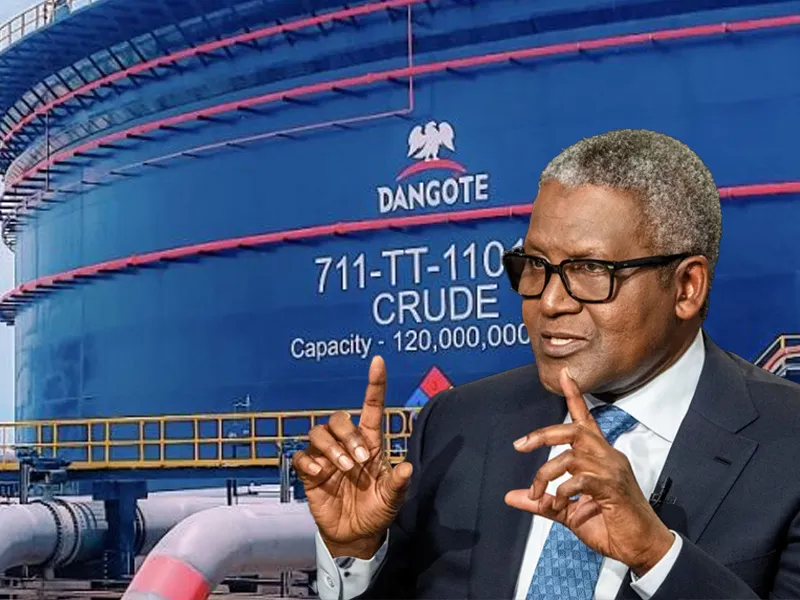
The initial public offering (IPO) of the Dangote Industries Limited (DIL), for the company’s refinery business did not achieve its 10 million investors target, Aliko Dangote, chairman of the group said..
Though falling short of the target, the IPO attracted “millions of investors”, according to Dangote, who revealed this at the 25th annual conference of the Women in Management, Business and Public Service (WIMBIZ) in Lagos.
The billionaire said the number of investors is yet to be officially determined, but attributed the shortfall to the limited time available for the offer and difficulties some prospective investors faced in accessing it.
“We cannot tell the figure right away because we have not reported to this, but we’ve gotten an amazing demand from various people,” Dangote said.
“If you look at it, the largest participating shareholders, like here now, was I think GTBank. When they did their own, it was 200,000. Okay, we are talking about millions of people that participated.
“Even in Kenya, Safaricom was the largest, less than 900,000. Saudi Aramco worldwide was about five million. So, and I’m sure we are not that far away.
“We didn’t hit the 10 million because of time constraint, and a lot of people, they didn’t know how to access.
“But it’s the shared trust of public enterprise that we have today in Africa, and that’s why people are now beginning to remove that money under their mattresses to go and invest.”
Tagged ‘The People’s IPO’, the Dangote refinery IPO, offered 4.1 billion shares at N525 each, with a minimum subscription of 10 shares costing N5,250.
The offer opened on September 14 and was extended to October 27.
Dangote had said the company was targeting 10 million retail investors as part of efforts to broaden ownership of the refinery beyond institutional and high-net-worth investors.
Reuters reported that more than two million investors had subscribed through digital channels before the offer closed, while the IPO attracted about N6.4 trillion in orders from Nigerian retail and institutional investors — roughly three times the targeted offer size.
Dangote said subscriptions came from 120 countries, including all 54 African countries.
Asked whether the IPO had changed his view on how Africa could mobilise capital from within the continent, Dangote said, “I think yes, it has actually changed. It has changed things dramatically. Things are really changing very fast”.
By Nick Ibe, Abuja
To access consumer loans using basic mobile phones is all that is needed without requiring internet connectivity or smartphones with the introduction of the Federal Government’s USSD-based credit service designed for Nigerians .
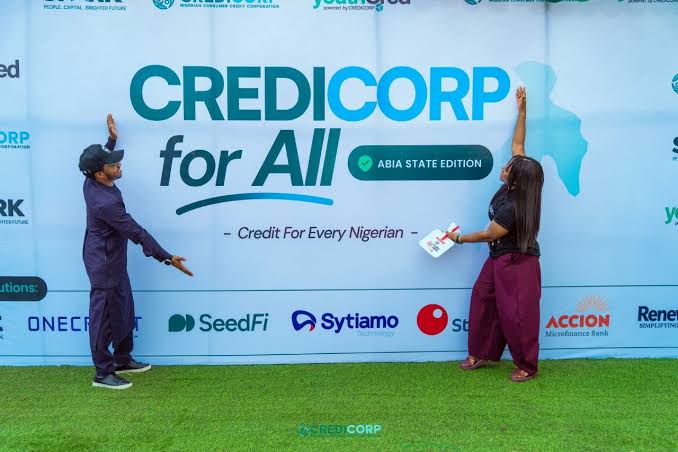
Known as SPARK, the service was unveiled by the Nigerian Consumer Credit Corporation (CREDICORP), to expand access to credit, particularly for first-time borrowers with limited or no formal credit history.
Interested Nigerians have been advised to watch for the service’s wider rollout with 347333# unveiled as the USSD code for accessing SPARK. But the service may not yet be fully operational nationwide.
However, CREDICORP said the product was expected to be widely available before the end of 2026.
The initiative is designed to help borrowers establish repayment records that could improve their credit profiles and create opportunities to access further financial services.
CREDICORP’s broader consumer credit programmes cover five thematic areas aimed at improving access to essential goods, household equipment and productive assets.
They include, Mobility: Compressed natural gas (CNG) and electric vehicles, Digital devices: Laptops, smartphones and tablets, Energy solutions: Generators and solar panels, Home improvement: Furniture, household appliances and building materials, and Life essentials: Healthcare, apparel, food and beverages.
These categories outline CREDICORP’s broader consumer credit priorities. However, not all the listed goods and services can currently be financed through SPARK specifically.
The FG introduced SPARK in Aba, Abia State, where the corporation highlighted consumer credit opportunities for more than 1,000 residents.
The event brought together beneficiaries, participating financial institutions, local vendors and government representatives to demonstrate how consumer credit could support livelihoods and economic activities.
Activities included credit-access demonstrations for market women and traders, presentations on the YouthCred initiative for young Nigerians, and the showcasing of credit-backed tricycles for transport operators.
The event also featured locally assembled tricycles made available through CREDICORP’s Securing Consumer Access for Local Enterprises initiative, known as S.C.A.L.E.
CREDICORP Managing Director and Chief Executive Officer, Uzoma Nwagba, said the initiative was intended to extend consumer credit beyond traditional financial institutions. In his words:
”Consumer credit should not be a privilege reserved for a few. It should be an opportunity available to every working Nigerian
“Today in Aba, Abia State, in Nigeria’s South East, we are demonstrating what that means in practical terms: credit for market women, a financial head start for young people, productive assets for transport operators, and with SPARK, a simple way for Nigerians to begin building their credit histories. This is how we make credit work for the people.”
Chinenye Mba-Uzoukwu, chief principal to Abia State Governor Alex Otti, said the state government was creating an environment in which businesses could grow and responsible consumer credit could reach more residents. Mba-Uzoukwu said, while representing the governor at the event:
“Under Governor Alex Otti’s leadership, Abia State is putting the conditions in place for businesses to grow, investments to flourish and responsible credit to reach more of our people.
“By strengthening the enabling environment for enterprise, we are making it easier for initiatives such as CREDICORP to support traders, young people and hardworking families across the state.”
Similarly, Armstrong Ume Takang, Managing Director of the Ministry of Finance Incorporated and a CREDICORP board member, said the showcase demonstrated how government policies could translate into economic opportunities.
“Through CREDICORP, we are seeing how well-structured public investment can stimulate enterprise, support local manufacturers and deliver measurable economic impact directly to citizens,” Takang said.
CREDICORP said it had facilitated more than ₦53.5bn in consumer credit for over 351,000 Nigerians since commencing operations, with women accounting for approximately 59 per cent of beneficiaries.
What Nigerians should know
SPARK is a credit service, not a grant. Borrowers who obtain loans will be expected to repay them according to the agreed terms.
The corporation has not provided comprehensive public details of SPARK’s loan limits, interest rates, repayment periods or full eligibility requirements in the reports announcing the product.
Prospective SPARK beneficiaries should also avoid unofficial websites, agents or individuals demanding upfront payments in exchange for guaranteed loan approval.
Business and Economy
JPMorgan Alters Banking in Nigeria, Gets CBN Approval, As Esther Alade Joins Merchant Bank
By Seyi Balogun, Lagos
The Central Bank of Nigeria (CBN) has approved plans by global financial services giant JPMorgan to establish a merchant bank in Nigeria, opening a new chapter in the lender’s presence in the country’s financial sector.
The proposed institution, to be known as JPMorgan Merchant Bank Nigeria Limited, has received, according to Legit.ng, approval-in-principle from the apex bank.
The American banking giant JPMorgan Chase has taken another step by appointing former Central Bank of Nigeria (CBN) acting governor, Sarah Omotunde Alade, as an independent non-executive director of JPMorgan Merchant Bank Nigeria Limited. The appointment brings one of Nigeria’s most experienced monetary policy expert’s into the governance structure of the proposed bank as the US financial institution seeks to strengthen its presence in Africa’s largest economy.
Alade, who spent 24 years at the CBN, brings extensive experience in economic management, banking operations, financial markets and public finance.
Her appointment comes amid expectations that JPMorgan’s expansion could create fresh opportunities for Nigerian businesses seeking international financing, investment advisory services and access to global capital.
Alade served as acting governor of the CBN in 2014 following the suspension of then governor Sanusi Lamido Sanusi. She assumed the position on February 20, 2014, overseeing the apex bank during a sensitive period for Nigeria’s monetary policy and financial markets. Before that appointment, she had served as deputy governor in charge of Economic Policy since March 26, 2007. Her responsibilities included monetary policy, economic research, statistics, trade and exchange, and financial markets.
As an independent non-executive director at JPMorgan Merchant Bank Nigeria, Alade will provide strategic guidance and board-level oversight rather than manage daily banking operations.
From university lecturer to CBN leadership Alade began her professional career in 1977 at the Ministry of Finance and Economic Development in Ilorin, Kwara State. She subsequently joined the University of Ilorin as a lecturer before moving to the CBN in 1993 as an assistant director in the Research Department. At the apex bank, she headed several departments responsible for government finance and fiscal analysis. In 2004, she became director of Banking Operations, later chairing the board of the Nigeria Inter-Bank Settlement System (NIBSS).
She also served as secretary of the National Payments System Committee, contributing to the development of Nigeria’s financial infrastructure.
Alade retired from the CBN in March 2017 after more than two decades of service. Buhari appoints Alade economic adviser Her retirement did not mark the end of her involvement in national economic policymaking. In November 2019, former President Muhammadu Buhari appointed her Special Adviser on Finance and the Economy.
Nigerian bank expands, set to begin full commercial operations in November
Alade holds an Economics degree from the University of Ife, now Obafemi Awolowo University, a master’s degree from the University of Melbourne and a PhD from the University of Ilorin.
What JPMorgan’s expansion means for Nigeria
JPMorgan’s planned merchant banking operations could strengthen competition in Nigeria’s corporate and investment banking sector. Unlike conventional retail banks, merchant banks primarily serve businesses, institutional investors and large organisations through specialised financial services.
These include capital raising, corporate finance, investment advisory and structured financing. The proposed institution could also provide Nigerian companies with stronger connections to international capital markets. However, the range of services JPMorgan Merchant Bank Nigeria can offer will depend on its regulatory approvals and licensing conditions.
Alade’s appointment signals the institution’s intention to draw on experienced Nigerian financial leadership as it develops its local operations.



Arrested Ugandan Woman Came With Bible: On Way Back, Hid 87 Cocaine Wraps in Her Private Part
Spread the loveBy Seyi Balogun, Lagos The National Drug Law Enforcement Agency, NDLEA, operative have arrested a 34-year-old Ugandan woman,...


EFCC to Collaborate, Identify Licensed Operators to Run Illegal Oil, Mineral Facilities in Ogun State
Spread the loveBy Seyi Balogun The Economic and Financial Crimes Commission, EFCC, is exploring ways of bringing licensed operators into...

For Rural Character, Limit Artificial Light Pollution: South African Towns Ban Streetlights, Perimeter Fences
Spread the loveBy Malcolm Libera A handful of small coastal towns in the Western Cape have restrictions on streetlights, security...


TETFund Commissions Publishing Centre In UNIZIK To Boost Textbook, Academic Material Production
Spread the loveBy Nick Ibe The Tertiary Education Trust Fund (TETFund) Friday commissioned the Academic Publishing Centre (APC) at Nnamdi...

Refinery IPO Didn’t Hit 10m Investors’ Target: But Shows Investment Habit Changing Fast in Africa — Dangote
Spread the loveBy Seyi Balogun, Lagos The initial public offering (IPO) of the Dangote Industries Limited (DIL), for the company’s...


EFCC Digs into Alleged N100bn Benue Technical Colleges Contracts Scam
Spread the loveBy Vincent Tyosuugh An investigation has been launched into the alleged fraud surrounding the award of over N100...

Amaechi Warns ADC Judgment Could Trigger Civil War, Urges Calm As Party Appeals
Spread the loveBy Felix Umande The vice-presidential candidate of the African Democratic Congress (ADC), Rotimi Amaechi, has warned that the...

Stolen Govt Funds Donated to RCCG: Adeboye Ordered Refund of Billions – EFCC
Spread the loveBy Nick Ibe, Abuja The General Overseer of the Redeemed Christian Church of God, Pastor Enoch Adeboye, once...
Nigerians are Irked by Yahaya Bello’s Prolonging Fraud Case. But it’s not Our Fault– EFCC
Spread the loveBy Nick Ibe, Abuja Non conclusion of high profile court cases has earned the Economic and Financial Crimes...


FG Cancels National Teachers’ Institute’s 2026 Degree, NCE Admissions, Affiliations Over Breaches
Spread the loveBy Son Tertsea, Abuja Due to regulatory breaches involving admissions, accreditation and university affiliations, the Federal Government has...