
Food and Agriculture
“Our Cassava Is Our Crude Oil”: Green Harvest Company Launch Sparks Hope Among Benur Farmers

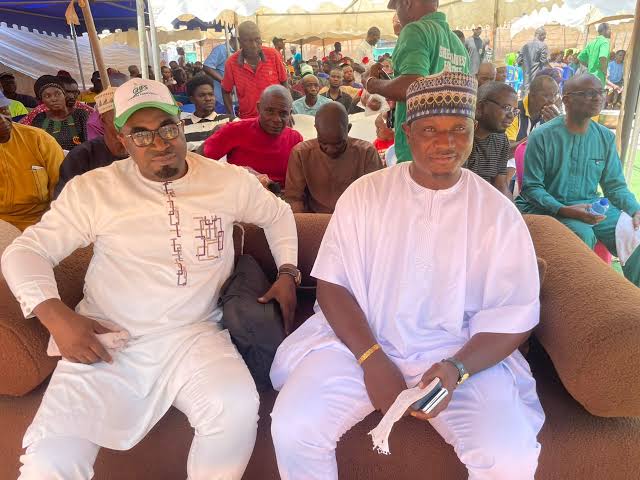
MD Prince Joshua Unveils 30-Year Agri-Industrial Vision as Farmers Hail End to Post-Harvest Losses
By Felix Umande
The CEO and Managing Director of Green Harvest Foodstuffs, Otukpo, Prince Joshua Esho Apeh, has declared that cassava holds the same transformative power for Benue and Idoma land as crude oil did for Nigeria, calling on citizens to industrialize agriculture and take charge of their economic destiny.
Speaking at the company’s launch ceremony in Otukpo, Prince Joshua said the company was birthed to build “a ray of hope” for farmers and young people, and to position Benue at the forefront of national food security.
“Seeing all of you here today gives me great joy, because I believe that when we join hands together, we will transform our land into greatness,” he said.
“This is the land that God has naturally blessed. The land that produces cassava in abundance. A land whose soil has potential to feed Nigeria. Not just West Africa, but the entire world.”
The Green Harvest MD described cassava as more than food, noting its potential for bioethanol and renewable energy.
“Our cassava is our crude oil. Just as crude oil transformed every nation, cassava can transform our people, if we are willing to invest in it, process it, add value to it, to take us to the global market.”
He urged a shift from selling raw tubers to full value-chain development:
“We must farm. We must process. We must add value. We must build industries. We must create jobs. We must export. And we must make our people prosperous.”
Prince Joshua said Green Harvest was starting a movement “for food security, for renewable energy, for farmer empowerment, for industrialization, for youth empowerment, and ultimately, a movement that will restore pride to Idoma land.”
He called on government to support the model for replication across Nigeria’s six geopolitical zones.
Farmers and community members who spoke to journalists at the event described the company’s arrival as timely, citing years of post-harvest losses and price crashes.
Mrs Comfort Okubi, a cassava and soybeans farmer from Ogulewu, Ogbadibo LGA, said access to market had been her biggest challenge.
“Ah, with this company, I really appreciate the man that brought this company to this land because at times, especially during rainy season, at times you find selling of cassava difficult due to the places where we do the farm. But with this company that just came here, we are very happy because it’s a welcome development. It will be easy for us to do our selling of cassava and other farm produce.”
Okwesi Dominic Ogbe from Otobi-Akpa, Otukpo LGA, said Green Harvest factory had eased farmers’ burdens by processing raw produce locally.
“Before Green Harvest Cooperative Society, most of us just harvest our crops, sell them raw to the market, then ship elsewhere for processing. But Green Harvest now, I think it eases our burden because they come to our place, buy or ask us to bring the raw materials, they process for us, and it adds value to what we do. The difference is far, far better, it’s incomparable. Ordinarily, I would say it’s like a 500% increase from the way it used to be, as it is now.”
Engineer Okpachu Odeh, a retired mechanical engineer and lecturer from Federal Polytechnic, Idah, now farming in Ihimini, Otukpo, described the launch as “a godsend” amid falling cassava prices.
“Since the advent of Tinubu’s administration, with cassava, we were all proud. But unfortunately, overnight, two years back, the cassava prices and garri crashed from over ₦35,000 per basin to now ₦5,000 in my community, people borrowed money to plant this cassava massively. And you can imagine the disappointment, I know of friends who are dying from payment of the loans that they took. So, this is actually a hope awakened.”
He urged the Federal Government’s Renewed Hope Agenda to protect local farmers from further price shocks.
Prince Joshua assured that with God, farmers and youth on board, Green Harvest Company was determined to succeed and make cassava a premium product for Nigeria.

By Felix Umande
The National Economic Council, NEC, has endorsed a 90-day economic action plan proposed by the Federal Ministry of Finance to consolidate gains from President Bola Ahmed Tinubu’s economic reforms.
The plan focuses on reducing the cost of living, improving food affordability, attracting investment and accelerating delivery of projects with direct benefits to Nigerians.
The endorsement on Thursday followed a presentation by Minister of Finance and Coordinating Minister of the Economy, Mr. Taiwo Oyedele, during the Council’s 161st meeting held virtually and chaired by Vice President Kashim Shettima.
The action plan identifies five priority areas: food affordability, tax harmonisation, completion of high-impact projects, resolution of investment bottlenecks and regulated household support.
NEC also approved establishment of a national dashboard to track ongoing projects across the federation, with emphasis on transparency, accountability and accurate reporting of how proceeds from fuel subsidy removal are being utilised.
Presenting the economic outlook, Oyedele expressed optimism about progress under the reform programme and identified reduction of headline inflation and interest rates to single digits by 2027 as key policy objectives, noting that the next phase would require coordinated implementation across federal and state institutions.
Addressing members, Vice President Shettima said while the President’s reform programme was designed to achieve broader prosperity, governments at all levels must translate its objectives into improved living conditions. In his words:
“The first dividend of prosperity should be the confidence to plan a life. Our task is to make such confidence less dependent on fortune.
“Our separate jurisdictions must serve a common public interest. Our separate mandates must not become competing excuses. Each Governor carries knowledge that no federal document can supply.”
Shettima further charged governors to ensure gains translate into affordable transportation, improved healthcare, employment and financial security.
On the National Compressed Natural Gas, CNG, Bus Initiative, he stressed that success should be measured by affordability and accessibility rather than fleet size.
“The cost of reaching
a livelihood should never consume the livelihood itself,” he said.
In other resolutions, NEC reviewed the reported Ebola outbreak in the FCT. Minister of Health and Social Welfare, Prof. Muhammad Ali Pate, assured the Council that Nigeria has capacity to contain it, while acknowledging 21 states that updated their response plans and urging the remaining 15 to expedite preparedness.
The Council also directed states to strengthen polio eradication efforts through post-campaign reviews, timely release of counterpart funds and improved coordination in insecure areas.
On livestock development, Council, after receiving report of its Ad Hoc Committee chaired by Kebbi Governor Nasir Idris, resolved to strengthen federal-state collaboration to unlock the sector’s economic potential.
Council further resolved to establish a joint financing framework between federal and state governments to accelerate deployment of CNG and electric vehicles, directing that savings from the programme be passed to commuters through lower fares and that transport unions be engaged.
A committee will be constituted to coordinate the financing arrangement and ensure benefits translate into affordable and sustainable transportation.
By Felix Umande
The Federal Government has set up a technical committee to immediately accelerate livestock development and staple crop production nationwide.
The committee is to expedite action on strategic interventions in the agricultural sector, targeting wheat and other staple crops as well as livestock development.
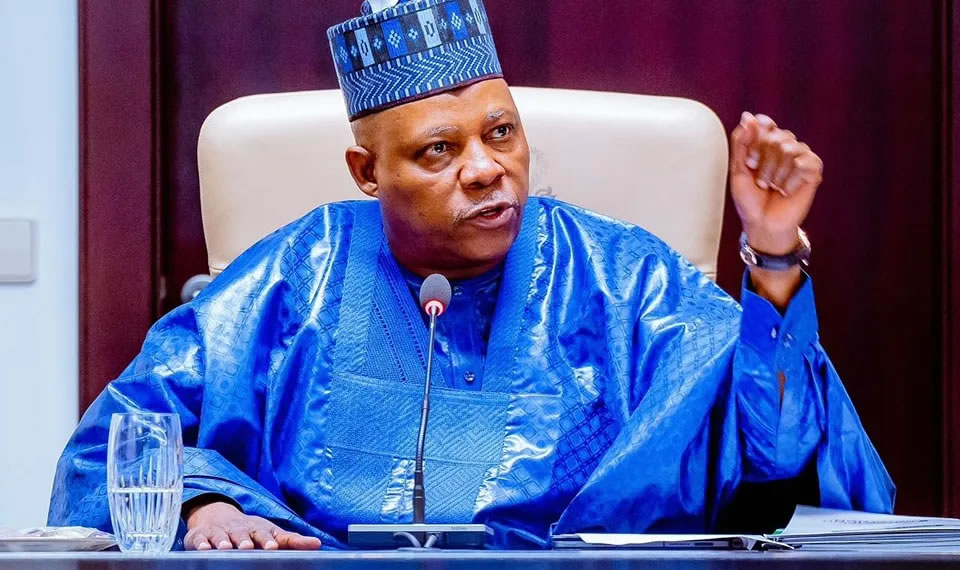
Vice President Kashim Shettima constituted the committee on Tuesday during a high-level meeting on agricultural sector performance and strategic interventions at the Presidential Villa, Abuja.
Shettima charged members to cross-pollinate ideas and come up with a blueprint for implementing strategic interventions in the sector.
The meeting was sequel to a larger meeting with President Bola Ahmed Tinubu last week, which had agricultural and other multi-sector stakeholders in attendance.
The committee comprises representatives of the Federal Ministries of Agriculture and Food Security; Water Resources and Sanitation; Livestock Development; Finance Incorporated (MOFI); Special Adviser and Coordinator, Presidential Livestock Reform; Senior Special Assistant to the President on Agribusiness and Productivity Enhancement; Senior Special Assistant to the President on Food Security, and Senior Special Assistant to the President on Livestock Development.
Other members include Chief Executive Officers of the Bank of Industry; Bank of Agriculture; National Agricultural Land Development Authority; National Agricultural Seeds Council; National Agricultural Development Fund; National Centre for Agricultural Mechanization; National Sugar Council of Nigeria; Nigeria Commodities Exchange, and National Agency for Science and Engineering Infrastructure.
The committee will be coordinated by the Technical Adviser to the Vice President on Agriculture and Head of the Presidential Food Systems Coordinating Unit, Ms. Marion Moon.
Minister of Agriculture and Food Security, Senator Abubakar Kyari, said in addition to setting up the technical committee, the meeting deliberated on addressing critical challenges confronting farmers and leveraging available resources to scale up wheat production and dry-season farming.
He said during the meeting with the President, the Vice President was asked to further identify existing challenges in the agricultural sector and address them.
“Mr. President had always encouraged all-year-round farming, and we’re looking at coordination between all sectors and also including sub-nationals, states and local governments,” Kyari said.
On the committee, he added: “It is a technical committee with members from the various MDAs to sit and coordinate on behalf of all, and come up with its resolutions in execution. The report of the technical committee will have to be subjected to another committee before presenting to His Excellency, the Vice President and then subsequently to Mr. President.”
By Seyi Balogun, Lagos
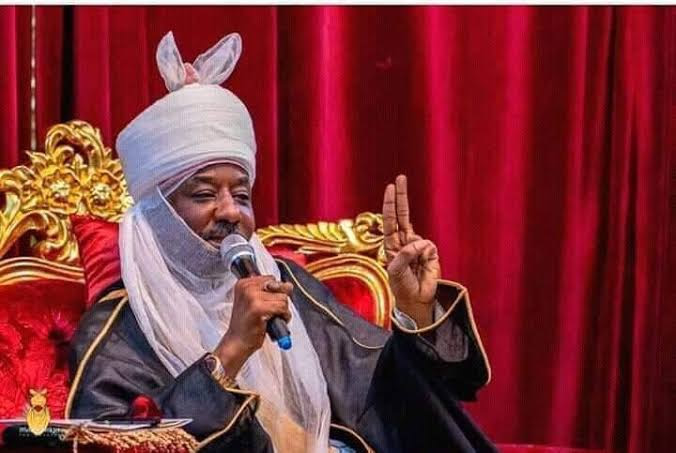
The Emir of Kano, Muhammadu Sanusi, has called for an alternative approach to food affordability, warning that policies aimed at reducing food prices through imports could undermine domestic agricultural production and threaten long-term food security.
Emir Sanusi who spoke at the Sustainable Table Series under the theme: “Leading the Sustainable Development Agenda: People, Planet and Development,” held at the Federal Palace Hotel, Victoria Island, Lagos on Thursday, stressed that governments should prioritise nutrition, education, infrastructure and productive investment to improve economic development.
He said that Nigeria’s decision to open its market to food imports, including rice from Thailand, was a disservice to local rice mills leading to banks grappling with bad loans from investments in the agricultural value chain. In his words:
“All the rice mills that people built were wiped out. All the loans that the banks gave people in the agriculture chain, became bad loans.”
He stated further that even though the policy helped lower food prices occasioned by the removal of the petrol subsidy, it undermined domestic production and threatened long-term food security.:
“There’s nothing wrong with making food cheap for the poor, but there are ways of making food cheap or subsidising the poor on food without opening up the market to this floodgate of imports.”
Consequently, he stressed, the government should support poor households without exposing local farmers and businesses to overwhelming competition from imports.
He added that Nigeria must develop its capacity to produce food rather than depend on imports, warning that short-term interventions could discourage investment in agriculture and weaken the country’s ability to achieve sustainable food security.
The Emir also questioned Nigeria’s infrastructure priorities, arguing that governments often concentrated on visible projects such as flyovers and underpasses while rural communities lacked basic bridges connecting them to markets, schools and healthcare facilities.
Sanusi said a greater proportion of public funds spent on urban infrastructure could be directed towards connecting rural communities to essential services and economic opportunities.
In his view, “roads should connect farmers to markets and workers to jobs, while investments in electricity and other infrastructure should be planned around the needs of businesses and communities.”
The Emir also raised concerns about Nigeria’s debt-servicing burden, claiming that the country spent about 100 per cent of its revenue on debt servicing.
He said fiscal reforms were necessary but emphasised that they should be accompanied by transparency, accountability and measures to protect vulnerable households.
He further argued that citizens would be more willing to accept difficult economic reforms when they could see that the burden was fairly shared and that public savings translated into better services and opportunities.
The former CBN governor said Africa’s development challenge was not merely the availability of resources, policies or capital, but the ability to convert them into productive capacity, capable institutions and broadly shared prosperity.
“The next decade must be judged by delivery, not by declarations,” he said.
The emir also raised the alarm over child malnutrition in Kano State, saying more than 50 per cent of children under five are malnourished, while about 40 per cent of women of childbearing age are anaemic.
He warned that malnutrition threatened Nigeria’s human capital development, stressing that the country could not build a productive workforce without addressing nutritional deficiencies among children from pregnancy through their early years.
He said, “In my state, Kano, over 50 per cent of under-fives are malnourished. About 40 per cent of women of childbearing age are anaemic. With malnutrition, the brain is not properly formed; that is not the human capital that you want for development.”
Sanusi expressed concern that interventions often focused on identifying malnourished children after the damage had occurred rather than preventing nutritional deficiencies during pregnancy and early childhood.
He asked, “But who is looking at malnutrition? Who is getting to them in the villages? Who’s getting to the women when they get pregnant to make sure they eat what they’re supposed to eat?
“What we’re doing today is, we count them after they become malnourished, and we have these horrible statistics year after year. There’s a lot of malnutrition; there’s no food in the villages.
“And again, you cannot produce youth who have been malnourished, who don’t have the brains and expect these youth to be major contributors to human capital.”
According to him, addressing malnutrition starts during pregnancy and continuing after childbirth to ensure that children receive adequate nutrition during their formative years. He stressed:
“So it begins from conception, the moment a woman is pregnant, we have to be there until the baby is born, and then the baby comes around, and then with proper nutrition, we build the base for the youth.”
The Emir linked the challenge to Nigeria’s broader development prospects, noting that a young population would only become an economic advantage if citizens were healthy, educated, skilled and productively employed.
He said foundational education must equip children with literacy, numeracy and the ability to think, reason and solve problems, adding that education should prepare young people to participate meaningfully in a changing economy.
“Then you have foundational learning, children needing to acquire literacy, numeracy, and the ability to think, reason, and solve problems,” Sanusi said.
The monarch also called for greater attention to technical education, saying it should be respected as a pathway to skilled employment and enterprise rather than treated as an inferior alternative to conventional academic education.
Speaking, Sanwo-Olu said his administration was pursuing a development agenda that placed people, environmental protection and economic prosperity at the centre of its policies.
The governor said Lagos had to balance its rapid growth with the need to protect the environment and improve residents’ quality of life.
He said the state’s N4.4tn 2026 budget of shared prosperity allocated N2.338tn to capital projects, while the Lagos Education Access Fund was being implemented with a target of reaching more than 200,000 children within three years.
According to him, the government’s development priorities also include equipping young people with skills for emerging industries and creating opportunities for women and small business owners to participate more fully in the economy.
Sanwo-Olu urged businesses, financial institutions, universities and civil society organisations to work with the government to advance sustainable development.
He noted that the global Sustainable Development Goals had a 2030 deadline, making implementation, accountability and measurable results increasingly urgent.
Event convener, Olaniyan, called for greater investment in energy infrastructure, technology, Artificial Intelligence, and human capital towards achieving the Sustainable Development Goals. In his words:
“There are a lot of opportunities that we need to mobilise capital into. The next stage is moving from knowledge to implementation.
“We need to mobilise more capital towards implementation of the SDGs. We also need to look at how to store food, reduce post-harvest losses and reduce food inflation.”
The event also featured interventions from experts across various fields, including Dapo Otunla, Ademola Ogunbanjo, Rolake Akinkugbe-Filani, Uche Uzoebo, and Sam Faleye, on the importance of access to capital and attaining sustainable development.


FG Gives Workers N70,000 Monthly Transport Support for Six Months
Spread the loveBy Nick Ibe, Abuja To cushion the harsh impact of rising living costs, the Federal Government has approved...


Trump and the 95-year Mother: Government That Cares for All Citizens
Spread the love“Trump… Please bring my son back to me. I am begging you for mercy.” And what Trump did...


Probe Panel Says Heat, Dehydration Killed 33 Detained Niger Miners
Spread the love–Calls for NSCDC reforms, compensation for victims By Son Tertsea, Abuja Dehydration was cause of the death of...

Tinubu Seeks Law To Bring Back Nigerians Jailed Abroad
Spread the loveBy Felix Umande President Bola Ahmed Tinubu has transmitted a bill to the Senate seeking to empower the...

Senate Says: Travel Agencies, Short-let Apartments Need Closer Scrutiny in Human Trafficking Probe
Spread the loveBy Isa Abdul, Abuja As part of efforts to dismantle trafficking networks and protect Nigerians from exploitation abroad,...


El Niño: Its Meaning, Effects and How Nigerians Should Prepare for It
Spread the loveBy Son Tertsea, Abuja Nigerians have been alerted that El Niño event would raise concerns that potentially affect...


Accusations of Data Theft: MTN Explains How Nigerians Consume Data Fast
Spread the loveBy Nick Ibe, Abuja: Engaging in high-resolution video streaming, automatic downloads, background applications, cloud backups and increased internet...


Kogi Authorities Probe Why Police Corporal Killed female Colleague, Self
Spread the loveBy Michael Lim The Kogi State Police Command has begun to probe why a police corporal, Amos Yusuf,...

WHO Declares Nigeria Ebola-Free After Evacuation of Patient to Switzerland
Spread the loveBy Nick Ibe, Abuja Dr Mohamed Janabi, the World Health Organisation’s (WHO) Regional Director for Africa, says Nigeria...


Fake Letter Lands Atiku Supporter in Court
Spread the loveBy Isa Abdul, Abuja For circulating a fake document purportedly written by President Bola Ahmed Tinubu to the...