
Sports
Torres Strikes in Extra-Time As Spain Down Argentina To Claim Second World Cup

By Felix Umande
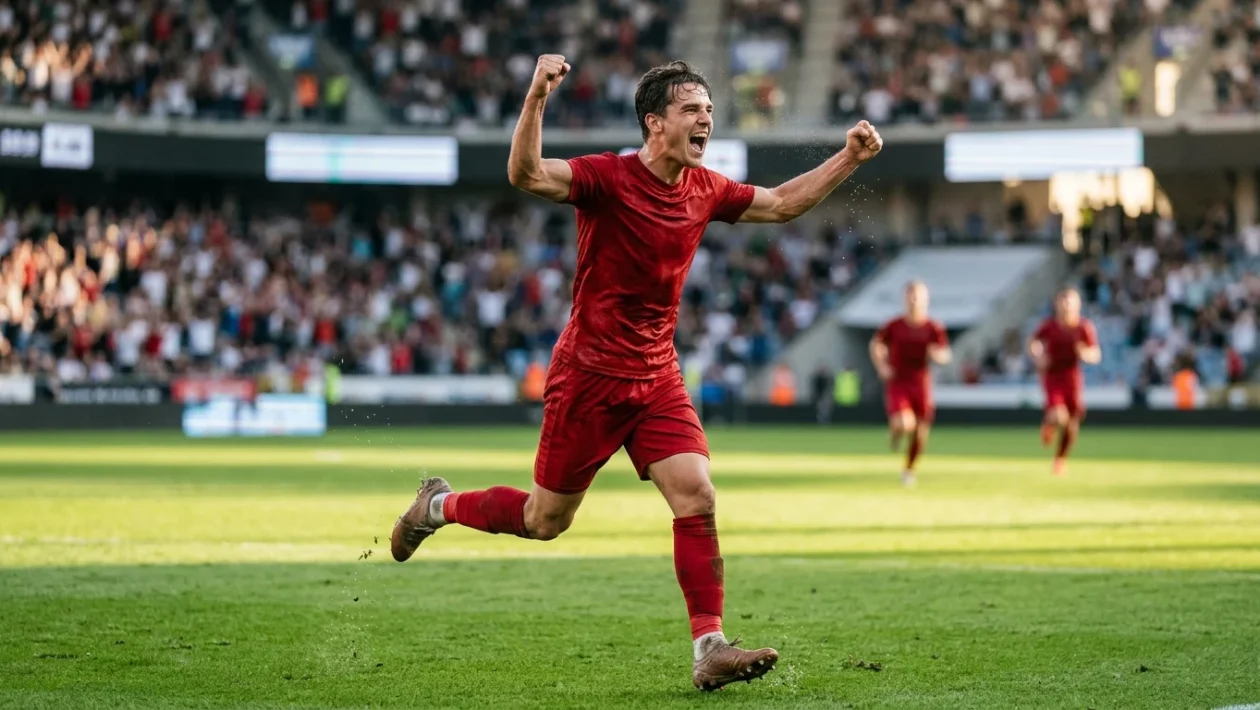
A 106th-minute strike from Ferran Torres secured Spain a second FIFA World Cup title on Sunday, as the European champions edged Argentina 1-0 in a tense final at MetLife Stadium, New Jersey.
Torres proved the difference in extra-time, latching onto a knock-down from substitute Nico Williams and rifling a powerful shot past Emiliano Martinez to break Argentine resistance and spark wild celebrations among the Spanish side.
The win gives Spain a sixth major tournament triumph in seven attempts, adding to their 2010 South Africa title and cementing their status as the dominant force in modern international football.
It was a final of fine margins. Argentina, the 2022 champions, came with a spoiling game plan and spent much of the night absorbing pressure. Martinez kept them alive with a string of saves, including a superb stop to deny Lamine Yamal’s free-kick in the dying seconds of normal time, and another crucial block from Williams’ header in extra-time.
Williams thought he had done enough when his header found the net, only for the goal to be ruled out for a foul by substitute Mikel Merino on Nicolas Otamendi.
The breakthrough finally came in the 106th minute. Williams rose to meet a cross and headed it back across goal, where Torres was waiting inside the six-yard box. The Barcelona forward made no mistake, smashing his effort into the roof of the net to send Spain ahead.
Argentina’s task was made harder just before extra-time when Enzo Fernandez was shown a second yellow card for a reckless challenge on Pau Cubarsi. The midfielder, already booked, left La Albiceleste to play the entire extra period with 10 men.
It proved costly. With Argentina unable to mount sustained pressure, Spain dominated possession and eventually found the winner.
For Lionel Messi, it was a night of frustration. The 2022 World Cup winner was unable to inspire Argentina to become the first nation in 64 years to defend the trophy, and the final may have marked his last appearance in the competition.
The final was as much spectacle off the pitch as on it. President Donald Trump arrived by helicopter ahead of kick-off, while the first-ever World Cup half-time show featured performances from Madonna, Shakira, Burna Boy and Justin Bieber, stretching the break to 27 minutes.
Earlier, Spain had created the clearer chances. Yamal and Mikel Oyarzabal both forced Martinez into saves in a first half short on clear-cut opportunities.
Spain’s victory, 16 years after their first World Cup triumph, leaves Argentina to rue missed chances and what might have been. For La Roja, it is confirmation that a new golden generation has arrived and this time, with Torres as the extra-time hero.



Sports
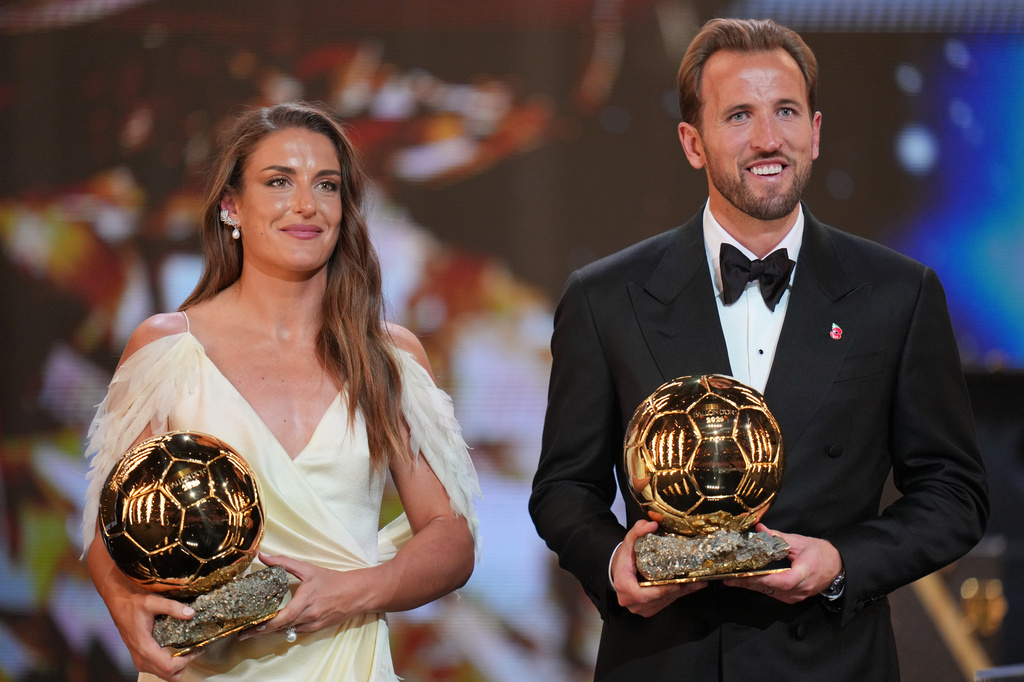
Harry Kane Ends England’s 25-Year Wait As Alexia Putellas Clinches Third Ballon d’Or In Historic London Ceremony
By Felix Umande
England captain Harry Kane and Spain midfielder Alexia Putellas have been crowned winners of the Men’s and Women’s Ballon d’Or at the 70th Ballon d’Or ceremony held at the London Palladium on Monday, October 26, 2026.
It was a historic night as the gala was staged outside France for the first time since its inception in 1956, moving to London to honour Stanley Matthews, the inaugural winner, on the award’s 70th anniversary. The event was co-organised by France Football and UEFA and hosted by Thierry Henry and Kate Scott.
Kane won the Men’s Ballon d’Or after a phenomenal 2025-26 season, scoring 73 goals in 65 competitive matches for Bayern Munich and England. He led Bayern to a league and cup double and England to a third-place finish at the 2026 World Cup.
The 33-year-old becomes the first Englishman to win football’s most prestigious individual prize since Michael Owen in 2001, joining an elite list that includes Sir Stanley Matthews, Bobby Charlton and Kevin Keegan.
“It being here in London as well has made it extra special. Thank you to everyone who voted for me. I can imagine it was really tough this year,” an emotional Kane said as the Palladium erupted with chants of “Harry, Harry”.
Kane also claimed the Gerd Müller Trophy for Men’s Best Striker. He beat Real Madrid’s Kylian Mbappé, who finished second, and Barcelona’s Lamine Yamal, who finished third.
Putellas won the Women’s Ballon d’Or for a third time, after her previous wins in 2021 and 2022, joining compatriot Aitana Bonmati on three titles.
The 32-year-old captained Barcelona Femení to a quadruple — Liga F, Copa de la Reina, Spanish Super Cup and Women’s Champions League — scoring 26 goals and registering 15 assists in 53 matches, before completing a summer move to Women’s Super League side London City Lionesses.
“I don’t know what to say. This prize is for Barcelona. That so many Barça players were nominated says a lot about the season we had. It was my honour to be your captain,” she said.
She finished ahead of Poland striker Ewa Pajor and Jamaica’s Khadija Shaw.
Spain dominated the night, claiming eight of 13 awards.
Full list of winners at Ballon d’Or 2026:
- Men’s Ballon d’Or: Harry Kane (Bayern Munich / England)
- Women’s Ballon d’Or: Alexia Putellas (Barcelona / Spain)
- Kopa Trophy – Men’s Young Talent: Lamine Yamal (Barcelona / Spain) — for a record third consecutive year
- Women’s Young Talent: Vicky López (Barcelona / Spain)
- Men’s Coach of the Year – Johan Cruyff Trophy: Luis de la Fuente (Spain) — after leading Spain to World Cup glory
- Women’s Coach of the Year: Pere Romeu (Barcelona)
- Men’s Goalkeeper of the Year – Yashin Trophy: Unai Simón (Athletic Club / Spain)
- Women’s Goalkeeper of the Year: Cata Coll (Barcelona / Spain)
- Men’s Best Striker – Gerd Müller Trophy: Harry Kane (Bayern Munich / England)
- Women’s Best Striker – Gerd Müller Trophy: Charlyn Corral (Pachuca / Mexico)
- Men’s Club of the Year: Paris Saint-Germain
- Women’s Club of the Year: Barcelona Femení
- Socrates Award – Humanitarian: Bukayo Saka (Arsenal / England)
The assessment period for the 2026 awards ran from August 3, 2025 to July 19, 2026, including international competitions, with winners decided by specialist journalists voting for their top 10 players.
Kane succeeds Ousmane Dembélé, who won the 2025 edition in Paris.
By Son Tertsea, Abuja
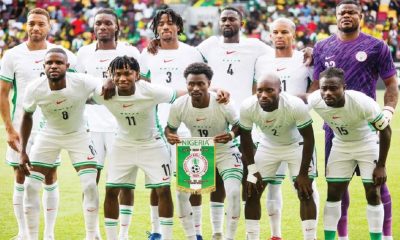
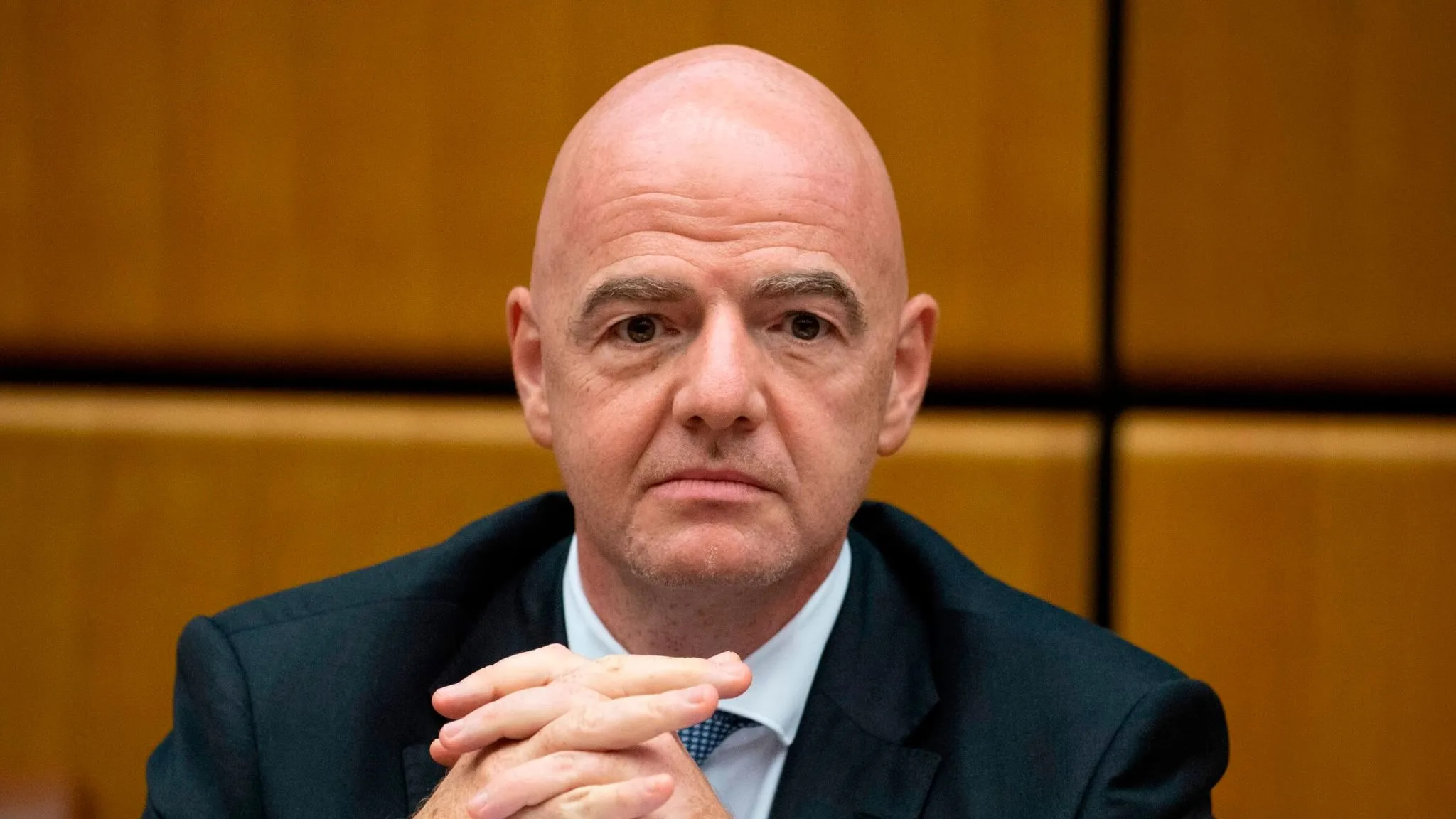
The Nigeria Football Federation (NFF) has received FIFA’s endorsement of the Normalisation Committee to run Nigeria’s football administration pending fresh elections into the federation’s Executive Committee.
The approval was conveyed on Thursday by the Bureau of the FIFA Council, putting to rest months of uncertainty over the leadership model for the Nigerian football following the departure of former NFF president Ibrahim Gusau and other board members.
FIFA through its Secretary-General, Mattias Grafström, wrote a letter addressed to Dr Emmanuel Ikpeme, saying FIFA in conjunction with the Confederation of African Football (CAF) would fill the committee with a suitable number of members.
“The normalisation committee shall consist of a suitable number of members, who will be appointed jointly by FIFA and CAF as soon as possible,” the letter stated.
FIFA said the committee’s mandate would end once it had completed its assigned responsibilities, but set 31 May 2027 as the final deadline for the conclusion of its work.
The letter further stressed that members of the committee would not be eligible to contest any of the positions to be filled during the forthcoming NFF elections. The letter stated:
“None of the members of the normalisation committee will be eligible for the positions to be filled during the upcoming NFF elections under any circumstances.”
The appointment is expected to pave the way for an interim administrative arrangement and fresh elections to restore an elected leadership to the NFF.
Until the committee is appointed, the NFF Secretariat will continue to handle the federation’s day-to-day administration and the running of football in the country.
The development follows consultations between FIFA and CAF officials and Nigerian football stakeholders over the way forward for the country’s embattled football administration.
The composition of the committee and the details of its specific responsibilities are expected to be announced by FIFA and CAF in due course.
Sports
How FG’s Docility and FIFA’s Compromise on Mpasi Conspired Against Nigeria’s 2026 W’Cup Qualifier– Report
The apex world soccer’s governing body, FIFA, knew that the Democratic Republic of Congo fielded an ineligible player in the 2026 World Cup qualifier game played against the Super Eagles of Nigeria, The New York Times has learnt.
The match, which was held in November 2025 in Rabat, Morocco, was the final of the CAF play-offs for a spot in the intercontinental tournament.
DR Congo won 4-3 on penalties after the match ended 1-1.
According to the report published on Tuesday, FIFA’s own legal officials had privately determined that Congo had breached player eligibility rules after goalkeeper Lionel Mpasi failed to complete the required documentation to switch his international affiliation from France, where he had represented youth teams.
Despite the finding, FIFA allowed Mpasi to continue playing, and Congo went on to defeat Jamaica in March to secure its first World Cup appearance in 52 years.
The development has raised fresh questions over FIFA’s handling of Nigeria’s complaint against Congo, which came after the Central African side defeated the Super Eagles on penalties in the African play-off final in November 2025.
The defeat condemned Nigeria to a second consecutive World Cup miss, after also missing out on the 2022 edition in Qatar.
In December 2025, the Nigeria Football Federation lodged a complaint with FIFA alleging that Congo had fielded players who were not properly eligible to represent the country.
The NFF’s complaint questioned the clearance of several foreign-born players, including Mpasi, and alleged that the Congolese federation had misled FIFA in securing their eligibility.
Documents and correspondence reviewed by The New York Times, alongside information from a senior official directly involved in the case, showed that FIFA officials had considered several possible sanctions against Congo, including awarding the match to Nigeria, imposing fines, replacing Congo with Nigeria in the play-off against Jamaica or taking no action on the grounds that Nigeria had filed its complaint late.
Under FIFA rules, fielding an ineligible player can result in a team forfeiting the match in which the player featured, as FIFA had previously taken a more decisive position in similar cases.
In 2016, FIFA sanctioned Greece after it fielded an ineligible player who had previously represented Australia at youth level, awarding a 3-0 defeat in its match against Turkey. Two years later, the governing body changed the results of two Bolivia World Cup qualifying matches after determining that Bolivia had fielded a player who had previously represented Paraguay.
At the time FIFA was reviewing the Congo eligibility case, Véron Mosengo-Omba, an ally of Infantino, was preparing to contest for the presidency of the Congolese football federation.
Two months later, following Congo’s qualification for the World Cup, Mosengo-Omba emerged as the sole candidate and was elected president after eight other contenders had either withdrawn or been disqualified following changes to eligibility rules.
Cameroonian former FIFA official Prince Zelkifli Rahman Ngoufonja, popularly known as Prince Zul, said the relationship between Infantino and Mosengo-Omba raised questions over the potential consequences of FIFA removing Congo from the World Cup.
“If FIFA removed Congo from the World Cup,” he said, Infantino’s ally’s prospects “could have been damaged.”
Mosengo-Omba, however, said he was unaware of FIFA’s findings regarding Mpasi’s eligibility.
The Punch


FG Gives Workers N70,000 Monthly Transport Support for Six Months
Spread the loveBy Nick Ibe, Abuja To cushion the harsh impact of rising living costs, the Federal Government has approved...

Trump and the 95-year Mother: Government That Cares for All Citizens
Spread the love“Trump… Please bring my son back to me. I am begging you for mercy.” And what Trump did...

Probe Panel Says Heat, Dehydration Killed 33 Detained Niger Miners
Spread the love–Calls for NSCDC reforms, compensation for victims By Son Tertsea, Abuja Dehydration was cause of the death of...

Tinubu Seeks Law To Bring Back Nigerians Jailed Abroad
Spread the loveBy Felix Umande President Bola Ahmed Tinubu has transmitted a bill to the Senate seeking to empower the...

Senate Says: Travel Agencies, Short-let Apartments Need Closer Scrutiny in Human Trafficking Probe
Spread the loveBy Isa Abdul, Abuja As part of efforts to dismantle trafficking networks and protect Nigerians from exploitation abroad,...


El Niño: Its Meaning, Effects and How Nigerians Should Prepare for It
Spread the loveBy Son Tertsea, Abuja Nigerians have been alerted that El Niño event would raise concerns that potentially affect...


Accusations of Data Theft: MTN Explains How Nigerians Consume Data Fast
Spread the loveBy Nick Ibe, Abuja: Engaging in high-resolution video streaming, automatic downloads, background applications, cloud backups and increased internet...


Kogi Authorities Probe Why Police Corporal Killed female Colleague, Self
Spread the loveBy Michael Lim The Kogi State Police Command has begun to probe why a police corporal, Amos Yusuf,...

WHO Declares Nigeria Ebola-Free After Evacuation of Patient to Switzerland
Spread the loveBy Nick Ibe, Abuja Dr Mohamed Janabi, the World Health Organisation’s (WHO) Regional Director for Africa, says Nigeria...


Fake Letter Lands Atiku Supporter in Court
Spread the loveBy Isa Abdul, Abuja For circulating a fake document purportedly written by President Bola Ahmed Tinubu to the...