
General News
Collaborative Journalism and Building Community Resilience Against Crimr


Distinguished colleagues,
We are gathered at a time when the meaning of safety in Nigeria especially in the North Central region here, has become deeply uncertain. In our communities across Benue State, insecurity is no longer discussed as a possibility; it is a lived daily reality. It is experienced on farms that can no longer be accessed, on roads that can no longer be trusted and in homes that no longer guarantee protection.
In recent years, Benue State has witnessed repeated violent attacks on rural communities, especially in Guma, Kwande, Agatu, Ukum, Logo and Gwer West Local Government Areas (Reuters, 2026; Premium Times, 2024). These attacks have resulted in loss of lives, destruction of property and mass displacement of residents into internally displaced persons (IDP) camps. The pattern remains consistent as armed groups enter communities, often at night, carry out coordinated assaults and withdraw with little immediate resistance. Survivors recount not just the violence itself, but the absence of timely intervention.
The insecurity is not confined to rural settlements. Major roads have become increasingly dangerous. The Makurdi–Otukpo road has been the site of repeated incidents of abduction (Daily Trust, 2024). In April 2024, reports confirmed that passengers traveling along this axis were attacked by gunmen, with several passengers taken away. Similar incidents have continued to occur on that route up to April this year with the abduction of a Benue Links bus passengers by gunmen on the 15th April 2026. Such incidents are not isolated, they form part of a recurring pattern that has altered how people move, trade and even seek education.
Beyond Benue, similar realities unfold across the North Central zone. In Plateau State, particularly in Bokkos and Mangu Local Government Areas, attacks on communities have led to significant casualties and displacement (Al Jazeera, 2024; Premium Times, 2024). These incidents have drawn national attention, not only because of their scale, but because of their persistence. Each episode is reported, condemned and then followed by another.
Across these spaces, one thing is clear, that insecurity has become organized, repetitive and deeply embedded within the social fabric. Yet, the responses to it especially in the information space remain largely fragmented.
Journalism, by its very nature, is expected to serve as the conscience of society. It documents, it questions and it informs. In Nigeria, journalists have consistently reported these barbaric incidents naming places, counting losses and relaying official responses. But the dominant pattern of reporting has remained largely reactive. An attack occurs, it is reported and attention shifts until the next incident. What is missing is not effort, it is structure. It is coordination. It is the deliberate pooling of journalistic capacity to move from isolated reporting to collective impact.
The scale and complexity of insecurity today cannot be effectively addressed by individual journalists or single newsrooms working in isolation. The networks behind these crimes are organized. The responses to them must be equally organized. This is where the idea of collaborative journalism becomes critical. Not as a theory, but as a practical necessity. This paper explores how collaborative journalism can be strengthened as a tool for building community resilience against crime.
Patterns of Journalism Practice in Security Reporting in Nigeria
For decades, journalism in Nigeria has stood at the frontline of national crises, including conflict, insurgency and communal violence. In the face of insecurity across Benue State and the wider North Central region, journalists have not been absent. Reports have been filed, headlines have been written and voices have been amplified. Yet, despite this visible presence, the structure and impact of security reporting reveal clear limitations that must be confronted honestly.
The dominant tradition has been incident-driven reporting. When attacks occur, whether in Guma, Kwande, Agatu, Ukum, Logo, or Gwer West, journalists arrive, gather accounts and publish details of casualties, destruction and official reactions.
These reports serve an important purpose as they inform the public and preserve records of events. However, they often exist in isolation. One attack is reported, then another, with little sustained effort to connect these events into a broader, investigative narrative. As a result, patterns of violence remain underexplored and systemic issues are rarely exposed with the depth they require.
There is fragmentation of media efforts. News organizations operate largely within their own institutional boundaries, competing for exclusives and breaking news. While competition can drive speed and visibility, it has also limited cooperation. In practical terms, multiple journalists may cover the same attack in Makurdi, yet no structured collaboration exists to jointly investigate recurring incidents along the Makurdi–Otukpo axis, despite the frequency of reported abductions along that route. The absence of shared databases, coordinated fieldwork, or pooled investigative resources has meant that journalism often mirrors the fragmentation seen in the broader national response to insecurity.
Another defining feature has been the heavy reliance on official sources. Security agencies such as the police, military and government spokespersons remain primary sources of information, especially in the immediate aftermath of attacks. While these sources are necessary, over-dependence on them has shaped the tone and depth of reporting. Journalists frequently relay official statements that may confirm incidents but offer limited insight into underlying causes, operational failures, or long-term implications. In many cases, there is little follow-up questioning and even less sustained investigation into discrepancies between official accounts and community testimonies.
There is also the challenge of limited field penetration. In high-risk areas, including remote communities in Benue State, access is often restricted by insecurity itself. Journalists face real dangers such as ambushes, kidnappings and lack of protective infrastructure. As a result, many reports are built from second-hand accounts rather than prolonged, on-the-ground engagement. This affects not only the depth of reporting but also the ability to capture the lived realities of affected populations in a consistent and human-centered manner.
Journalism in this space has largely remained reactive rather than preventive. Coverage begins after violence has occurred.
There are few structured mechanisms for early warning reporting, risk mapping, or proactive engagement with communities to identify emerging threats. This reactive posture limits the ability of journalism to contribute meaningfully to prevention or resilience-building and these patterns reveal a system that is active but not fully effective. Nigerian journalism has documented insecurity extensively, but it has not yet maximized its collective strength. The challenge, therefore, is not the absence of journalism, but the absence of coordination, continuity and collaboration.
Notable Emerging Forms of Collaboration and Their Limitations.
Despite the structural limitations already identified, it would be inaccurate to suggest that collaboration is entirely absent within journalism in the landscape of Nigeria. In reality, forms of collaboration do exist, but they are often informal, inconsistent and insufficiently institutionalized to match the scale of insecurity confronting communities in Benue State and across the North Central region.
One of the most visible forms of collaboration is found in informal information-sharing networks among journalists. In most cases, reporters frequently rely on WhatsApp groups and professional contacts to exchange leads, confirm incidents and circulate breaking developments. When attacks occur, whether in rural parts of Gwer West or along major routes, information often spreads first through these peer networks before formal publication. This has improved the speed of reporting and, in some cases, helped to verify basic facts in fast-moving situations.
However, this form of collaboration remains limited to immediacy, not depth. It facilitates reporting, but it does not extend into joint investigation, shared analysis, or coordinated follow-up. Once stories are published, the collaboration typically ends.
There are also instances of engagement between journalists and security agencies, particularly through press briefings and official updates. Police commands, military spokespersons and state authorities periodically provide information on attacks, arrests, or rescue operations. In Benue State, for example, security agencies have, at different times, issued statements following attacks in local communities, outlining their responses and ongoing operations.
While these interactions are important, they are largely one-directional. Information flows from security agencies to journalists, with limited opportunity for deeper collaboration.
Journalists are informed, but not integrated into any structured system of intelligence sharing, early warning, or joint problem-solving. As a result, reporting remains reactive to official disclosures rather than contributing to proactive security awareness.
Another emerging area is collaborative investigative journalism at the national level, particularly among major media organizations and independent investigative platforms. There have been notable instances where journalists have worked together across institutions to expose corruption, financial crimes and governance failures. These efforts demonstrate that collaboration is possible and effective when properly structured.
Yet, this model has not been fully extended to security reporting at the subnational level, especially in states like Benue. Investigations into recurring attacks, patterns of displacement, or the operational structures of armed groups remain largely fragmented and underdeveloped. The absence of sustained, multi-newsroom investigations into insecurity leaves critical gaps in public understanding.
Engagement between journalists and communities also exists, though often in unstructured forms. Reporters depend on local sources such as community leaders, residents and eyewitnesses to gather information from affected areas. In many cases, these relationships are built on trust and are essential for accessing locations that are otherwise difficult to reach. However, these interactions are typically transactional rather than strategic. Information is gathered for immediate reporting, but there is little effort to develop long-term community–journalist partnerships that could support early warning systems, continuous monitoring, or collaborative storytelling.
Communities remain sources of information, but not active participants in shaping the narrative or response.
In terms of safety, journalists operating in high-risk environments often rely on personal experience and informal support systems. There is some level of peer guidance, advice on which routes to avoid, which areas are volatile and how to navigate certain situations. But there is no widely adopted, structured framework for shared safety resources, coordinated field coverage, or emergency response mechanisms for journalists working in dangerous zones.
These realities put together, point to the presence of foundations of collaborative journalism, but they are weakly developed and largely informal. There is communication, but not coordination. There is interaction, but not integration. There is effort, but not structure.
The implication is that, what exists today cannot adequately respond to a security crisis that is itself organized, persistent and evolving. To move forward, collaboration must shift from being incidental to being intentional, structured and sustained.
Reimagining Collaborative Journalism for Security and Resilience.
If the current moment has exposed anything with clarity, then, it is that insecurity in Nigeria has evolved, but journalism has not equally evolved at the same pace. The threats are coordinated. The responses must be coordinated. Anything less will continue to produce the same cycle of attack, report, forget and repeat.
What is required now is not a minor adjustment in practice, but a deliberate rethinking of how journalism operates in times of crisis.
First, collaboration must move from the margins to the center of journalistic practice. It must no longer depend on personal relationships or informal communication channels. There is a need for structured collaboration across newsrooms, where journalists deliberately work together to investigate recurring patterns of violence. When attacks continue along corridors such as recurring abduction of travelers on the Makurdi–Otukpo road, the story should not end with individual reports of each incident. It should trigger joint investigations that ask deeper questions: Why does this keep happening here? Who benefits from the persistence of these attacks? What gaps in response remain unaddressed?
Second, the relationship between journalists and security agencies must be redefined, not abandoned. Independence must be preserved, but isolation must end. There is room for structured engagement that allows journalists access to timely and relevant information, while still maintaining the critical distance required for accountability. Security cannot be treated as a closed system and journalism cannot operate effectively in the dark.
Third, communities must no longer be treated simply as sources of information. They must become partners in the process of reporting and resilience-building. The people who live in Guma, Logo and Gwer West understand the patterns of these attacks better than anyone else. Their knowledge is not incidental, it is essential. Building sustained relationships with such communities can transform journalism from a tool of documentation into a tool of early warning and prevention.
Fourth, journalism must embrace shared responsibility for safety. The risks faced by reporters in conflict-prone areas are real and increasing. No journalist should be left to navigate these dangers alone. There is a clear need for pooled safety resources, coordinated field strategies and collective support systems that protect those who bring these stories to light.
Finally and most importantly, there is a need for a coordinated national response within the journalism profession itself. The Nigerian Union of Journalists is uniquely positioned to lead this shift. What is required is a framework that brings journalists together during moments of crisis not as competing voices, but as a unified force for truth, accountability and public interest. When the nation faces insecurity, the media must not sound fragmented. It must speak with clarity, consistency and purpose.
Conclusion
The realities confronting Benue State and the wider North Central region are not abstract. They are lived daily in interrupted journeys, in abandoned homes and in communities that continue to endure repeated violence. Journalism has documented these realities, but documentation alone is no longer enough.
This is a call to journalists, editors, media owners and the Nigerian Union of Journalists as we are seated here today, to move beyond routine reporting, to build structures that outlive individual efforts, and to commit to a model of journalism that is as organized as the challenges it seeks to confront. If insecurity has become systemic, then journalism must become strategic. And the time to begin is now.
Presented by Dr. Hangeior Degarr,
Department of Journalism and Media Studies,
Moses Orshio Adasu University, Makurdi on Thursday, 30th April, 2026 during the Benue NUJ’s Dinner, Awards and Lecture Ceremony at NUJ House, Makurdi.









General News
Death of 37 Miners in Custody: Ajia Calls for Independent Investigation, Accountability
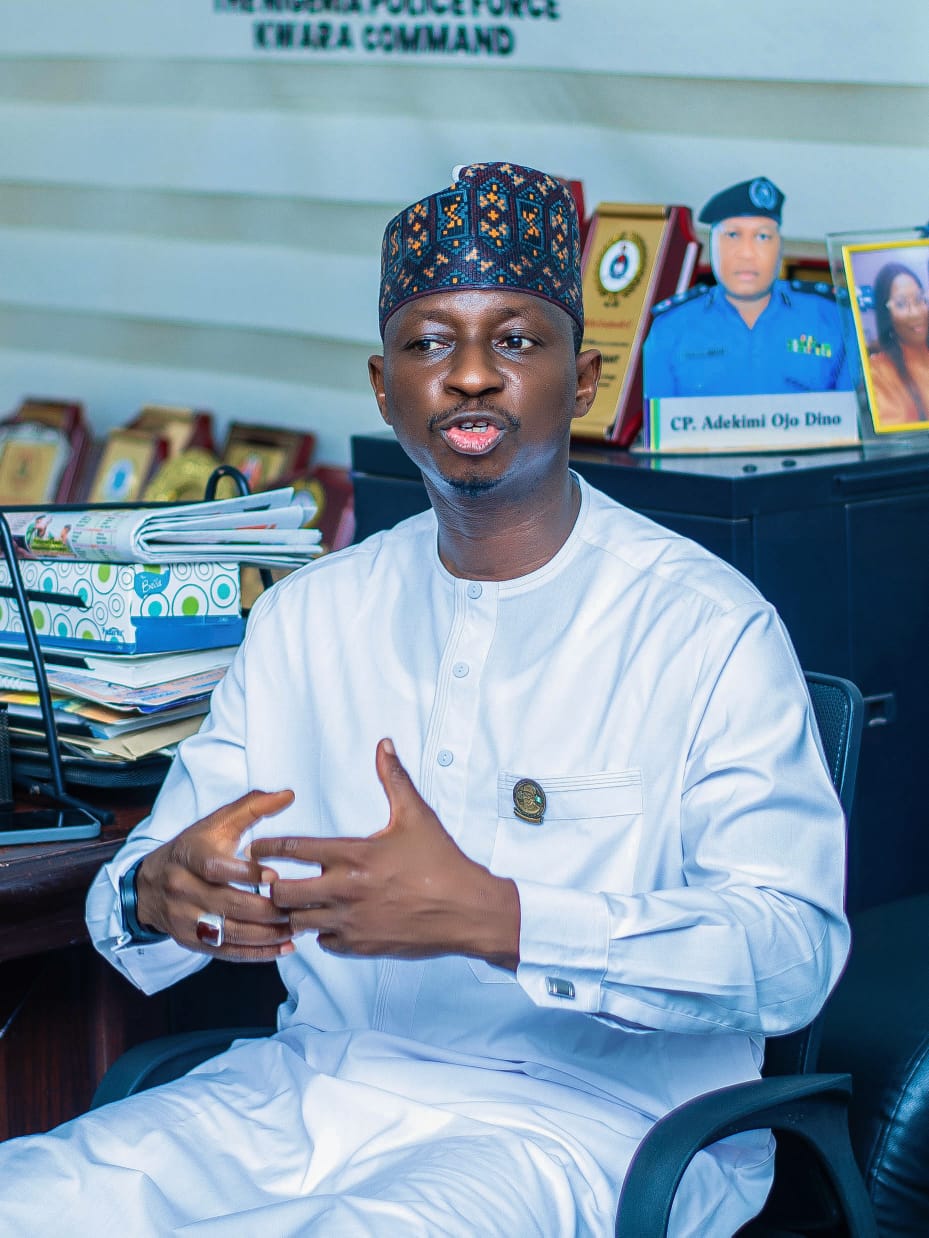
A chieftain of the All Progressives Congress (APC) and the Dan Amanan Fune Emirate of Yobe State. Alhaji Ibrahim Mohammed Ajia, Ph.D., has expressed concern over the death of 37 suspected illegal miners while in the custody of the Nigeria Security and Civil Defence Corps (NSCDC) in Minna, Niger State, describing the incident as a grave tragedy that demands a transparent and credible investigation.
In a statement issued by his Director of Communications, Mallam AbdulRahaman Aliagan, on Monday, Dr. Ajia commiserates with the Federal Government, the Government and people of Niger State and, in particular, the families of the deceased. He stated that the circumstances surrounding the deaths demand urgent and honest answers from the relevant authorities.
The victims were reportedly among scores of suspects arrested during anti-illegal mining operations in the M.I. Wushishi and Lukoto areas of the state on September 15 and 16.
Dr. Ajia noted that the death of individuals while in state custody raises serious questions regarding compliance with established detention procedures. He stressed that persons arrested for alleged offences are entitled to lawful investigation and due process, and must not be exposed to conditions capable of endangering their lives or wellbeing.
He further observed that the incident underscores the need for security agencies to uphold rigorous standards in the management of detention facilities, including adequate supervision, appropriate holding conditions, access to basic necessities, and effective safeguards for the welfare of all persons in custody.
The APC chieftain also called for stronger coordination among security and law enforcement agencies, insisting that suspected illegal miners be properly profiled, investigated, and prosecuted strictly through established legal channels. He emphasized that the enforcement of laws against illegal mining must be pursued in a manner that upholds human rights and the dignity of persons in custody, without exception.
Dr. Ajia commended the Federal and Niger State Governments for their prompt intervention, as well as the police and administrative investigations already underway. He noted that the Federal Government has constituted a ten-member independent committee to investigate the arrests, detention, and circumstances surrounding the deaths, and that officers connected with the incident have been suspended pending the outcome of that investigation.
He appealed to residents, particularly the youths of Niger State, to remain calm and allow the investigative process to proceed unhindered, cautioning that public anger over this tragedy must not translate into further loss of life or destruction of property. He urged the relevant authorities to maintain open and regular communication with the affected families and the general public as the investigation progresses.
Dr. Ajia called for an independent, thorough, and transparent determination of the circumstances that led to the deaths, insisting that any individual found culpable be held accountable under the law, irrespective of rank or position.
He affirmed that accountability, respect for human rights, and professionalism in security operations remain essential pillars for strengthening public confidence in Nigeria’s security institutions. He concluded by praying that Almighty Allah grants the departed eternal rest and grants their families the fortitude to bear this profound loss.
By Nick Ibe
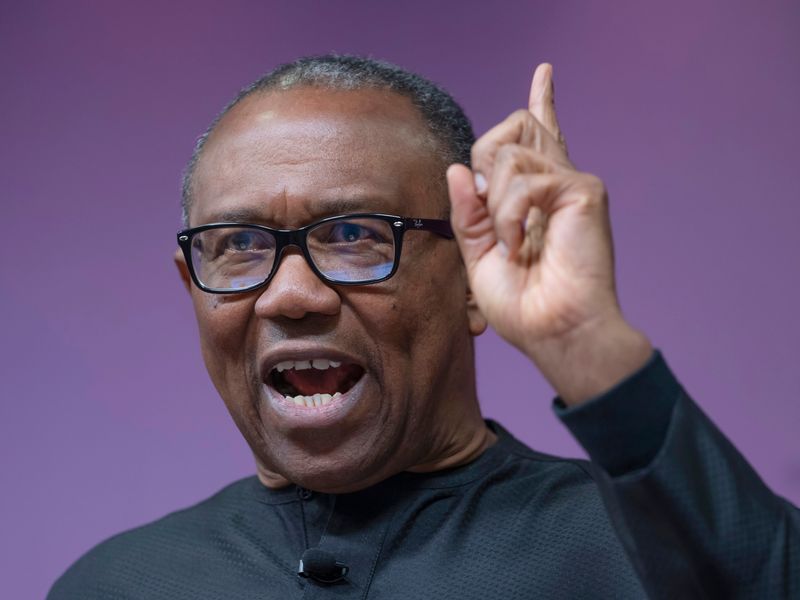
A letter purportedly written by him to the Obi of Onitsha, Igwe Nnaemeka Achebe, against the Governor of Anambra State, Professor Charles Soludo has been disowned by Peter Obi, the Presidential Candidate of the Nigeria Democratic Congress, NDC. He emphasises that he wrote no such letter.
The purported letter appealed to Achebe over political and financial issues he, Obi, is having with Governor Chukwuma Soludo of Anambra state.
But, Obi, in a statement posted on his X account on weekend, dismissed the letter as “entirely false” and malicious. He also disclosed that the signature attached to the purported letter was forged.
Obi appealed to members of the public and the media to treat the letter with the contempt it deserves, adding that it was designed to mislead the public. The resd:
“My attention has been drawn to a fake letter circulating on social media, purportedly written by me to His Majesty, Igwe Nnaemeka Alfred Ugochukwu Achebe, the Obi of Onitsha, concerning political and financial matters in Anambra State.
“This document is entirely false, malicious, and a fabrication by mischievous elements aimed at misleading the public.
Furthermore, the signature appended to the letter is completely forged,” Obi said.
He added that his attention remained focused on national development and accountability rather than what he described as fabricated publications.
“My focus remains steadfastly on issues of national development, accountability, and building a better future for our people – never on cheap fabrications.”
The rebuttal follows the disagreement between Obi and the Anambra State Government administration over the financial position of the State at the end of Obi’s tenure in 2014.
The fake letter, dated September 19, 2026, and addressed to the Obi of Onitsha was titled, “The Future of Ndigbo is Bleak.”
Furthermore, the purported letter called for transparency over the financial records and liabilities of Anambra State, and urged traditional rulers, political leaders and elders to prevent political disagreements from coming between the people.
The letter also called for the state’s financial records to be examined and for questions surrounding the administrations of Obi and Soludo to be resolved through evidence and transparency.
The letter surfaced days after the Anambra State Government released details of loan facilities it attributed to Obi’s administration and insisted that the state was still carrying repayment obligations from that period.

By Felix Umande
President Bola Ahmed Tinubu has charged the Nigeria Police Force to maintain the highest standards of professionalism and impartiality ahead of the 2027 general elections, stressing that the police must never be seen as an instrument of any political interest.
The President gave the charge at the 2026 Conference and Retreat for Senior Police Officers in Owerri, Imo State, in an address delivered on his behalf by the Secretary to the Government of the Federation, Senator George Akume.
President Tinubu said every Nigerian, irrespective of political affiliation, ethnicity, religion, social status or geographical location, must feel protected by the police, noting that neutrality and professionalism are fundamental to public confidence and the credibility of the nation’s democracy.
“The police must be seen not as an instrument of any political interest, but as a national institution serving the Nigerian people and protecting the constitutional order. This is fundamental to public trust and to the credibility of our democracy,” the President said.
Speaking on the theme “Developing a Nigeria Police Roadmap for Effective Management of Security During Elections,” Tinubu said the 2027 elections would require careful preparation, professionalism, impartiality, intelligence-led operations and close coordination among security and electoral stakeholders.
He assured that the Federal Government would provide the necessary support to enable the Force effectively discharge its responsibilities.
The President explained that securing the electoral process goes beyond protecting ballot papers and polling stations, as it also entails protecting citizens, electoral officials and materials, ensuring peaceful campaigns, preventing violence and intimidation, and guaranteeing that Nigerians can participate in the democratic process without fear.
He reaffirmed the Federal Government’s commitment to ongoing police reforms, stressing that meaningful reform requires sustained investment in personnel, training, technology, intelligence infrastructure, operational logistics, welfare and institutional systems.
Tinubu urged the Force to strengthen intelligence gathering, improve response times, deepen community engagement, embrace technology and enhance inter-agency cooperation to meet increasingly sophisticated security threats.
He commended the Inspector-General of Police, IGP Olatunji Rilwan Disu, and the Police Management Team for efforts to reposition the Force and respond to emerging security challenges, while acknowledging the sacrifices of officers confronting kidnapping, terrorism, banditry, armed robbery, cultism and other violent crimes across the country, including those who have paid the ultimate price.
The President, however, reminded the Force that security expectations of Nigerians remain high, urging officers to build public confidence through discipline, accountability, professionalism and respect for the rights and dignity of citizens.
He tasked senior officers at the retreat to produce a practical and implementable roadmap that would strengthen election security, improve operational preparedness and deepen public confidence, while looking beyond 2027 towards building a modern, professional, technology-enabled, intelligence-driven and citizen-centred police force.
Tinubu assured officers and men of the Force that the Federal Government values their sacrifices and remains committed to supporting them.



Death of 37 Miners in Custody: Ajia Calls for Independent Investigation, Accountability
Spread the loveA chieftain of the All Progressives Congress (APC) and the Dan Amanan Fune Emirate of Yobe State. Alhaji...


Body Operating With Name National PTA, Unknowed to Edu Ministry
Spread the loveBy Son Tertsea, Abuja The body operating under the name National Parent-Teacher Association (PTA) of the Federal Unity...


Peter Obi Distances Self From Purported Letter to Obi of Onitsha
Spread the loveBy Nick Ibe A letter purportedly written by him to the Obi of Onitsha, Igwe Nnaemeka Achebe, against...


2027 Elections: Police Must Never Be Seen As Political Tool, Tinubu Warns
Spread the loveBy Felix Umande President Bola Ahmed Tinubu has charged the Nigeria Police Force to maintain the highest standards...

Tinubu To Return At Weekend After Extended Working Vacation In London, Paris – Presidency
Spread the loveBy Felix Umande President Bola Ahmed Tinubu will return to Nigeria at the weekend following the extension of...


Benue Govt Suspends Muslim Pilgrims Board Chairman, Secretary Over Alleged Mismanagement
Spread the loveBy Felix Umande The Benue State Executive Council has approved the suspension of the Chairman and Executive Secretary...


BUILDING A BUSINESS: He Started an eBay Side Hustle at 14 – Then Grew It Into a $92 Million
Spread the loveKey TakeawaysLior Pozin started dropshipping on eBay at 14.By age 21, he was making $6,000 per month dropshipping,...


Plateau Imposes Curfew on 3 LGAs, Bans Use Of Motorcycles
Spread the loveBy Michael Lim, Jos A dusk-to-dawn curfew on Barkin Ladi, Bokkos and Mangu Local Government Areas of Plateau...


Tinubu Praises Kaduna Gov Uba Sani’s Free CNG Mass Transit … As Benue Increases Fares for Commuters
Spread the loveBy Son Tertsea President Bola Ahmed Tinubu has praised Kaduna state government for deploying Compressed Natural Gas, CNG,...


Foreign Medical Tourism to Drop as Nigeria Records First Tele-robotic Surgery Success in West Africa
Spread the loveBy Son Tertsea Nigeria’s first tele-robotic surgery on September 20, 2026 at the Redeemer’s Health Village (RHV), in...