
Foreign
EU gives €235 m in humanitarian aid for West, Central Africa…As Nigeria gets €33m

By Wumi Tewogbade ,Abuja
The European Commission on Wednesday, announced €235 million in humanitarian assistance to support the most vulnerable people in West and Central Africa.
In a statement issued by EU, in Abuja, the organisation said the fund will support those affected by current conflicts and food crises, forcibly displaced people, host communities, and hard-to-reach populations.
Out of the money, Nigeria is expected to get €33 million.
The statement reads, “Out of the €235 million, €75 million will be directed to the Central Sahel, over €16.6 million to Cameroon, €22 million to the Central African Republic, over €72 million to Chad, €4.8 million to Mauritania, €33 million to Nigeria, and over €6 million to coastal countries.
“An additional €6.4 million will support projects with a regional scope.
“West and Central Africa is facing a storm of humanitarian crises, driven by conflict, poverty, hunger, instability, and climate shocks.” said Hadja Lahbib, Commissioner for Equality, Preparedness and Crisis Management.”
Lahbib said in the statement, “Last year in Chad, I saw the human cost with my own eyes: families who had fled with nothing but the clothes on their backs, their homes lost, their livelihoods destroyed. For millions of people, humanitarian aid is not a choice. It is food on the table, clean water, medicine, shelter, and a chance for their children to learn again.
“The European Union will always stand with people in crisis, as a reliable and principled humanitarian partner, to save lives, ease suffering, and bring hope where it is needed most.”
It would be recalled that the West and Central Africa region is plagued by various humanitarian crises, with significant needs for humanitarian assistance.
The primary driver of these crises is conflict, further intensified by the adverse effects of climate change and a multitude of local factors related to governance, demography and access to land and resources.
The epicentre of these crises is in the Central Sahel and Lake Chad regions, with the Central Sahel conflict spilling over in the coastal countries, fuelling large-scale displacement both internally and across borders. The ongoing Sudan crisis is also severely impacting the resilience of Eastern Chad. In addition to these intertwined dynamics, standalone crises persist in North-West Nigeria, North-West and South-West (NWSW) Cameroon, and the Central African Republic (CAR).






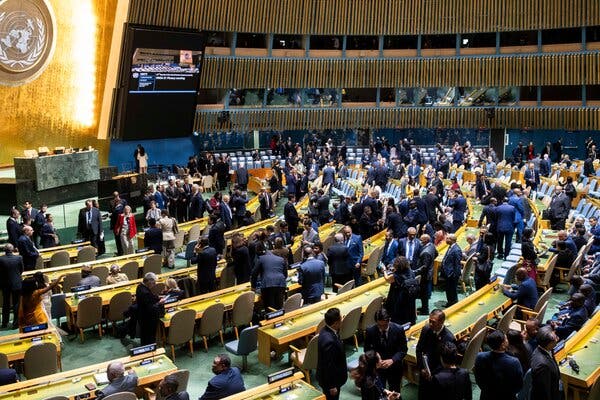
United States President Donald Trump threatened on Tuesday to “annihilate” Iran if Tehran fails to reach a deal with Washington, while declaring at the United Nations General Assembly further that Cuba’s communist government was failing and “will fall”.
After the combative speech, Iran’s delegation of mid-level officials and walked out of the United Nations General Assembly in protest.
Trump delivered a combative address to the 81st session of the UN General Assembly in New York, where he defended the United States’ months-long military campaign against Iran and warned that he could escalate the conflict rather than accept a settlement that allows Tehran to recover.
“I have a big decision to make,” Trump told world leaders gathered at the UN headquarters.
“Will a deal be made with Iran that lets them rebuild and create a far greater country than it ever was before, maybe one of the greatest in the Middle East or even the world?
“Or do I annihilate the Islamic Republic and do it quickly, never giving them a chance to kill and destroy people and countries again? Do I drive them into hell with no chance of survival and no hope of future greatness or generations?”
Trump nevertheless said he believed a deal with Iran would eventually be reached, but tied his expectation to the US midterm elections.
“I believe we’ll make a deal right after the election,” he said.
Trump also sought to distance himself from the electoral consequences of the November midterms, saying he was not personally on the ballot.
“I’m not running. I did that already and won in a landslide. The Republican Party is running, and I’ll be helping them, but I am not running,” he said.
The Iranian delegation walked out of the General Assembly Hall as Trump addressed the conflict, with most of the delegation leaving about 10 minutes into his speech.
Iran’s President Masoud Pezeshkian and Foreign Minister Abbas Araghchi were in New York for the UN gathering but were not in the hall during Trump’s address.
Trump devoted much of his roughly 40-minute address to defending his administration’s foreign policy and military actions, portraying the campaign against Iran as necessary to prevent Tehran from acquiring nuclear weapons and claiming that American military power had altered the balance of power in the region.
He also turned his attention to Cuba, saying his administration was seeking “a fundamental change in the situation in Cuba”.
“It’s an absolutely failed state — it’s failing like never before, and it will fall,” Trump said.
The Cuban delegation subsequently walked out of the General Assembly Hall.
Reuters reported that Trump said the Cuban government was under the greatest pressure it had ever faced and that his administration expected its political system to fall.
Trump’s remarks contrasted sharply with the emphasis on diplomacy from Brazilian President Luiz Inácio Lula da Silva, who addressed the assembly shortly before him.
Lula said the wars and escalating tensions confronting the international community could not be resolved through military force alone.
“We all know there will be no winners on the battlefield,” Lula said in Portuguese. “Diplomacy is the only option.”
UN Secretary-General António Guterres also urged world leaders to strengthen international cooperation rather than retreat into confrontation.
“Military power alone cannot secure peace,” Guterres said in his opening address to the gathering.
Trump’s address ranged beyond Iran and Cuba to other foreign-policy disputes, including Venezuela, Gaza, Ukraine and the International Criminal Court.
He claimed credit for ending the war in Gaza and presented the United States as a central force in resolving international conflicts, even as negotiations over the next phase of the Gaza conflict remained unresolved.
Turkish President Recep Tayyip Erdogan, in his own address, sharply criticised Israel, describing it as having a “genocidal mind-set.”
Israeli delegates subsequently left the General Assembly Hall as Erdogan spoke.
Qatar’s Emir Sheikh Tamim bin Hamad Al Thani also addressed the Gaza conflict, describing the situation there as “a genocide in every sense of the word.”
Trump’s UN appearance came against the backdrop of the continuing war with Iran and heightened international concern over the economic consequences of the conflict, including disruptions around the Strait of Hormuz and elevated energy prices.
Immediately after his address, Trump signed an agreement with Denmark concerning increased US military presence in Greenland, while maintaining Danish control of the territory.
Trump said the agreement would give the United States “permanent control over security and all other needs on that territory.”
“We will have the complete ability to do what is necessary to defend the American continent and also Europe and other places,” he said.
The US President has repeatedly expressed interest in acquiring Greenland, but when asked whether the agreement meant Washington had abandoned that objective, he did not rule it out.
The UN General Assembly, the organisation’s main deliberative and representative body, brings together leaders and delegations from its member states each year to address international conflicts, development, security and other global issues.
But the body is fast becoming a toothless bull dog as nations that once united in words and actions are falling apart. Many European States today disagree with the USA and the Arab states too are sharply divided with the cleavages having a devastating hold on the UN’s once overwhelming legitimacy and power.
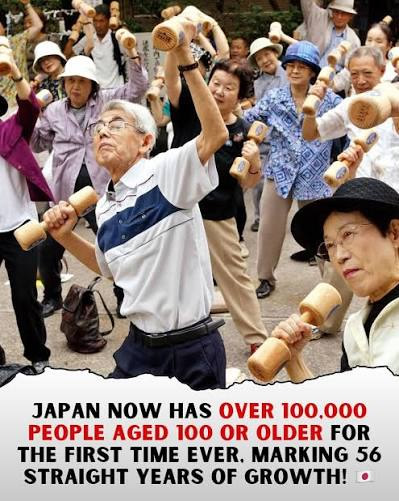
Japan is the first country to have more than 100,000 centenarians and has one of the longest life expectancies in the world.
Humans are living longer and longer. Now Japan has broken a new record for longevity: more than 100,000 people in the country are centenarians—some 107,677 of them are at least 100 years old.
Japan has one of the highest life expectancies in the world. Researchers believe this national longevity is likely linked to low rates of obesity, healthy diets, widespread health screenings and affordable health care, which lead to lower mortality rates from heart disease and cancer.
“I am very happy that so many people have been able to stay active for so long,” said Japan’s health minister Kenichiro Ueno at a news conference announcing the milestone in Tokyo on Tuesday.
Japan is “exactly where you would expect to see this first,” says Jay Olshansky, an epidemiologist at the University of Illinois Chicago. But he expects more countries to follow as large birth cohorts hit the 100-year mark and medical advances continue.
“Most people at older ages now are living on manufactured time—time that was created for us by our physicians and by the public health community,” he says.
But more people living long lives isn’t all good news. Japan also has one of the lower birth rates in the world. And its lower fertility rates and smaller working-age population are squeezing public resources and making caring for its older populations more difficult.
Additionally, a long life can be “a potentially dangerous scenario unless it’s accompanied by good health,” Olshansky says.
Japan’s oldest known person, Fuyo Kumamato, is 114 years old. (The oldest living person in the world, Ethel Caterham in the U.K., is 117 years old.) Researchers around the world are studying supercentenarians, people older than age 110, in hopes of keeping more people healthy for longer.
“What’s really critical about this is quality of life,” Olshansky adds. “Just living longer should not be the primary goal of medicine and public health anymore. It should be health extension or health span.”
Scientific American
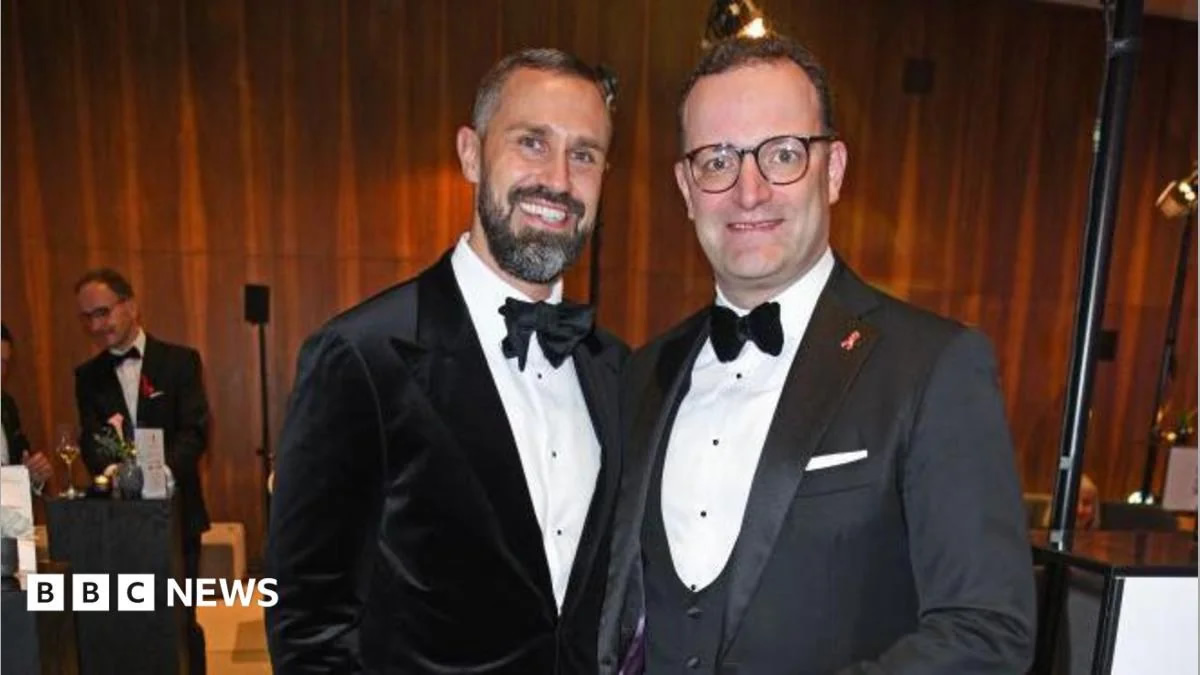
46-year-old Jens Spahn announced he and his husband had become parents earlier this week
German centre-right politician Jens Spahn has resigned as parliamentary group leader of the country’s governing coalition after being accused of hypocrisy over his use of a surrogate mother in the US to have a child.
Surrogacy is prohibited in Germany – a policy backed by his Christian Democrat party (CDU) and, several years ago, by Spahn himself – although raising a child born to a surrogate mother abroad is not.
He wrote in a statement on Saturday: “I have realised that my personal happiness – founding a family together with my husband and becoming a father – is not compatible with my political office.”
Chancellor Friedrich Merz, who leads the CDU, called his decision “right” and “inevitable”.
“Credibility is the highest asset in politics,” he wrote on social media, and said he would begin the process of appointing Spahn’s replacement.
The 46-year-old former health minister revealed earlier this week that he and his husband Daniel Funke had become parents, with their use of a surrogate abroad prompting criticism from politicians from several parties, including his own.
Announcing his resignation on Saturday, Spahn wrote: “The balancing act between my private decision to have a child through surrogacy and the understandable expectations placed on me as Chairman of our parliamentary group has become greater than I anticipated,” he added.
He also said the “increasing relentlessness in public discourse” had given him “deep pause for thought”.
“Despite all clarity and decisiveness regarding the issues, let us always remain human in our tone,” he wrote.
German media reported Alexander Hoffmann, head of the Christian Social Union parliamentary group, would take over Spahn’s duties until a successor was chosen.
Hoffmann said: “Jens Spahn’s decision deserves the utmost respect.”
The CDU signed a resolution reaffirming its support for a ban on surrogacy in February. As health minister in 2020, Spahn had rejected calls by the liberal FDP for the ban to be relaxed.
In 2015, he wrote that “as a gay man and a Christian I find it personally very hard to warm to the idea of a rented womb”.
Surrogacy in Germany is punishable with three years imprisonment or a fine, rendering surrogacy abroad an important option for many couples.
Italy bans couples from travelling abroad for surrogacy
Spahn is one of the most powerful figures in the CDU and has survived other political scandals – but this proved one too many for his party.
It came at a difficult time for the CDU, with Merz struggling in the opinion polls, the controversy risked hurting him further ahead of key regional elections this autumn.
In Saxony-Anhalt, the far-right AfD party could win an outright majority, marking the first time a far-right party has held power in a German state since World War Two.
Writing for Bavarian public broadcaster BR24, journalist Christian Wölfel remarked: “One of the most powerful elected representatives is flouting the very rights denied to childless couples in Germany.
“In doing so, Jens Spahn is, shortly before the state elections in the east, confirming precisely the narrative that fringe political groups are using to win votes.”
Others believe Merz may welcome Spahn’s departure from the political arena.
He has “made no secret of his ambitions to become chancellor”, journalist Eva Fischer reported in the newspaper Taz, and is an increasingly dangerous threat to Merz.
She wrote: “In politics, the rule is: if someone could pose a threat to you, it’s best to get rid of them. Now Merz still has the power to do that.”
Other EU countries including France, Spain and Italy also ban surrogacy, which involves a woman carrying a baby and giving birth on behalf of parents unable to have children themselves.
France’s top court, the Court of Cassation, ruled this month that babies born to a surrogate mother abroad should be legally recognised as their intended parents’ children.
Meanwhile, Italy made it illegal in 2024 for Italians to have a baby abroad through surrogacy, in a policy driven by Giorgia Meloni’s right-wing government.
BBC


Iran Walks Out of UNGA in Protest Over Trump’s Combative ‘Annihilation’ Speech
Spread the loveUnited States President Donald Trump threatened on Tuesday to “annihilate” Iran if Tehran fails to reach a deal...

Osun State Assembly First to Approve State Police as N’Assembly Clarifies Transmission
Spread the loveBy Seyi Balogun The National Assembly clarified Tuesday that the constitutional amendment seeking to create the State Police...

Benue 2027: Aondoakaa Pledges Free Healthcare, Geriatric Units For Elderly, If Elected
Spread the loveBy Felix Umande The governorship candidate of the Peoples Democratic Party (PDP) in Benue State, Chief Michael Aondoakaa,...

Dangote IPO Not a Magic Wand to wealth
Spread the loveBy Son Tertsea, Abuja The high expectation for immediate profit as being expressed especially by new investors who...

INEC: AI manipulation Real Threat to 2027 Elections,
Spread the loveBy Nick Ibe, Abuja The misuse of artificial intelligence in creating and spreading manipulated content is “no longer...


Daddy Showkey To P-Square: No matter what, you guys are brothers, resolve things, you have children.
Spread the loveBy Seyi Balogun Daddy Showkey, one of the veteran Nigerian singers, has expressed disappointment over the prolonged rift...

NSCDC Discovers Illegal Juice Factory in Lagos, arrests two women
Spread the loveBy Seyi Balogun, Lagos For operating an illegal juice factory in Aradagun, in the Badagry area of Lagos...

Workers’ Tell Tinubu: Sell Fuel ‘N500/litre or Pay N500,000 minimum wage’ –
Spread the loveBy Nick Ibe The painful reality of living costs and the uncertain general economic situation in Nigeria, workers...

Death of 37 Miners in Custody: Ajia Calls for Independent Investigation, Accountability
Spread the loveA chieftain of the All Progressives Congress (APC) and the Dan Amanan Fune Emirate of Yobe State. Alhaji...

Body Operating With Name National PTA, Unknowed to Edu Ministry
Spread the loveBy Son Tertsea, Abuja The body operating under the name National Parent-Teacher Association (PTA) of the Federal Unity...