
Energy and Power
Power privatisation in Nigeria is Grand Deception–Ajaero, NLC President

By Our Correspondent
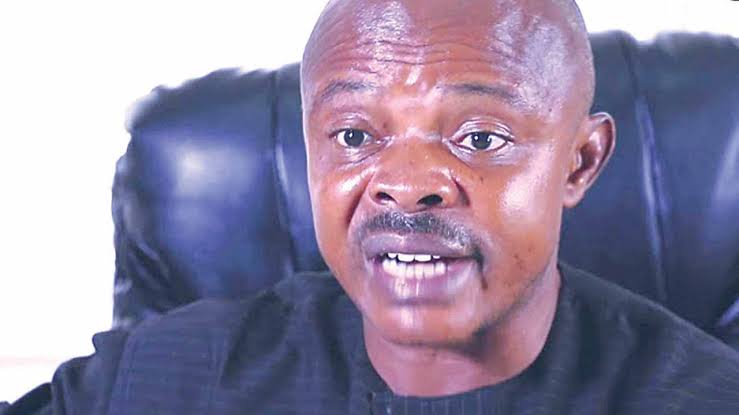
The privatisation of power in Nigeria has been described as grand deception of Nigerian people by government according to the Nigeria Labour Congress (NLC), president, Comrade Joe Ajaero.
Speaking at National Union of Electricity Employees’ (NUEE) 2026 annual conference of women and youth in Abuja, the NLC leader accused the government of creating slush funds ahead of the 2027 elections, using the proposed N2tn to N3tn bailout for power generation companies as a ‘ruse’.
Comrade Ajaero, averred that over a decade after the unbundling of the power sector, electricity generation had remained stagnant at between 4,000 and 5,000 megawatts, “the same level as before privatisation.
“A decade after the much-celebrated privatisation, what do we have? Instead of progress, we witness regression. Instead of light, we have darkness.
“The national grid collapses with the frequency of a faulty generator, sometimes plunging the entire nation into blackout. This is not the turnaround we were promised; this is a well-orchestrated robbery of the Nigerian people.”
Ajaero accused distribution companies of persistently rejecting allocated loads from the Transmission Company while Nigerians grappled with frequent grid collapses and soaring tariffs.
The labour leader criticised the privatisation
of the Power Holding Company of Nigeria (PHCN) successor firms as a fraudulent transfer of public wealth to investors who entirely lacked both the technical capacity and financial strength to manage the power assets.
“The so-called investors did not bring fresh capital into this country. They borrowed heavily from Nigerian banks, draining domestic credit and worsening pressure on the naira.
“They acquired DISCOs and GENCOs on a shoestring budget and now expect Nigerian workers to pay for their loans through outrageous electricity tariffs.”
Ajaero further frowned at the band classification system, which categorises consumers into Bands A, B and C based on hours of supply, saying it had become a backdoor mechanism for tariff hikes.
“Band A consumers pay through their noses but still receive epileptic power supply. This government is asking Nigerians to pay for darkness. Banding is the institutionalisation of extortion.
“Electricity is a right, not a commodity to be auctioned to the highest bidder while the poor are left in the dark.”
On the Federal Government’s plan to pay between N2tn and N3tn to generation companies as subsidy arrears, the NLC said there was no justification for “such a massive bailout to private firms that have failed to deliver.”
“The electricity subsidy claim remains a phantom. That N3tn is another ruse and goes nowhere. We see this as a clandestine move to settle the boys as the 2027 elections approach. Every kobo of the treasury belongs to the workers and people of Nigeria.”
The NLC insisted that electricity must be restored as a social service, arguing that no country had successfully run its power sector purely as a profit-driven enterprise without imposing hardship on citizens.
“It is only the State that can bear the huge capital investment required and the long gestation period for returns. The private sector has failed. It is time to take back the power for the people,” he stated.
While acknowledging the provisions of the new Electricity Act that devolved power generation and distribution to states, warned that decentralisation alone would not solve the structural challenges plaguing the sector.
The labour body called for a national stakeholders’ summit comprising workers’ unions, manufacturers and experts to develop what it termed a “People’s Power Roadmap” focused on affordable and stable electricity, public investment in generation and transmission infrastructure, service-reflective tariffs and a reversal of the privatisation model.
“The Nigerian people cannot continue to pay for darkness. When power is not available, it cannot be affordable. Power must be returned to the people,” Ajaero added.




Energy and Power
Nigeria’s $6b Mambilla Power Contract Suit Win: Tinubu Hails EFCC, other Patriotic Nigerians
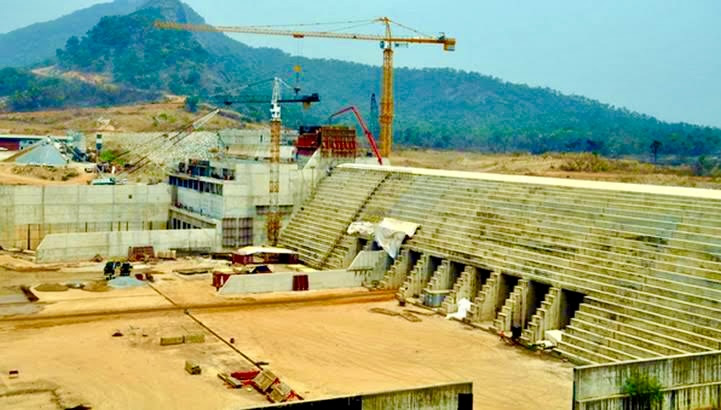
President Bola Ahmed Tinubu has expressed appreciation to the Economic and Financial Crimes Commission, EFCC, for its investigation of the alleged fraudulent contract award of $6 billion for the construction of 3,960mw Mambilla Hydroelectric Power Station to Sunrise Power and Transmission Company Limited, SPTCL.
The president noted, that the Commission’s investigations were pivotal to the September 17, 2026 victory of the federal government over the contractor company at the International Arbitration Tribunal.
The President in celebration of the federal government’s victory over SPTCL hailed the Commission for its findings in the irregular contract award.
“On behalf of the Government and People of the Federal Republic of Nigeria, I strongly commend the tremendous efforts of the Attorney-General of the Federation and Minister of Justice, Prince Lateef Fagbemi and the entire team at the Federal Ministry of Justice for their efforts in this matter.
“I also commend the FRN defence team, led by Ms Elizabeth Oger-Gross and Mr Tolu Obamuroh, both of Paul Hastings LLP, for their professional and excellent defence of the country.
“I commend the patriotism and support of former President Olusegun Obasanjo, and late President Muhammadu Buhari, who testified in the case, which dated back to an illegal 2003 contract to build a 3,050-megawatt hydroelectric plant in Taraba State under a build-operate-transfer model. The Federal Executive Council never authorised the contract.
“I thank the other witnesses in this case, including former Ministers Babatunde Raji Fashola, SAN, and Suleiman Adamu, and the experts, for their active participation in defending Nigeria’s interest in the arbitration.
“I commend the National Security Adviser for his support and the Economic and Financial Crimes Commission for its investigation into the case.
“I want to assure you that while our country remains committed to partnering with genuine investors and honouring its legal obligations, it will continue to defend all opportunistic claims instituted against our commonwealth, strongly.” President Tinuvi added:
“Today’s ICC ruling clears the single biggest legal hurdle that has paralysed the Mambilla hydro power project for years” he said.
The International Arbitration Tribunal under the auspices of the International Chamber of Commerce, ICC, Paris, while ruling in favour of the country, rejected the damages of $680 million demanded by SPTCL as a settlement sum and interest in respect of another arbitration in which it is claiming over $2.7 billion in compensation and interest, relating to disputes associated with the construction of the 3960mw Mambila Hydroelectric Power Project in the arbitration instituted by the company against the federal government.
The former minister of power, Olu Agunloye had on May 22, 2003 awarded the project on a Build, Operate and Transfer Basis” to Sunrise Power and Transmission Company Limited, SPTCL.
Investigations by the EFCC established that the former minister awarded the contract without the approval of the National Executive Council, then chaired by former President Olusegun Obasanjo, making such award inconsistent with federal government’s procedure on award of contracts.
Investigations showed that the award was suffused with favouritism as the owner of the company, Leno Adesanya and the former minister are old time pals, who also in August, 2019 caused SPTCL to transfer the sum of N3,600,000.00 (Three Million Six Hundred Thousand Naira) to the former minister’s Guaranty Trust Bank account no.0022530926.
By Nick Ibe, Abuja
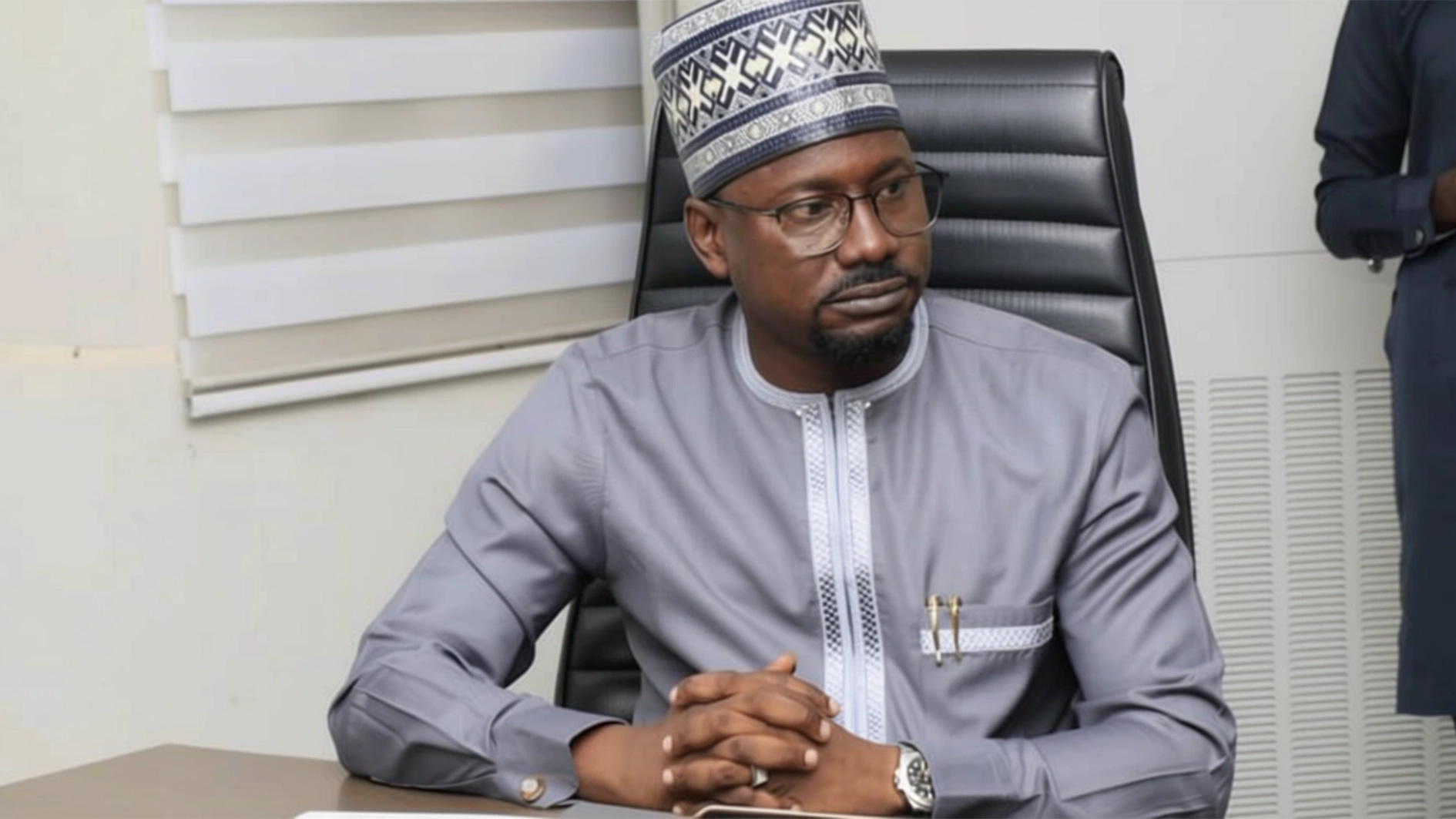
The Managing Director of the Rural Electrification Agency, REA, Abba Aliyu, has warned that Nigeria’s electricity challenge could deepen as population growth, artificial intelligence, digitalisation and the increasing electrification of transportation, agriculture and other sectors drive an unprecedented rise in demand.
The MD gave the warning on Friday in Abuja during the signing of a collaboration agreement between the agency and Alpha Morgan Bank, which committed up to N50bn in financing for renewable energy developers.
Aliyu said the agreement was part of efforts to close the huge financing gap confronting Nigeria’s electricity sector, particularly in rural and underserved communities where millions of households and businesses remain without reliable access to power.
Under the arrangement, eligible developers participating in REA programmes, including the Distributed Access through Renewable Energy Scale-up project, will be able to access revolving loans of up to N10bn each, subject to the bank’s credit assessment and approval.
Alpha Morgan Bank will provide up to 70 per cent counterpart funding for eligible projects, with proposed loan tenures ranging from 12 to 24 months.
However, Aliyu said the N50bn facility represented only a fraction of the financing required to address Nigeria’s electricity deficit, disclosing that the country required about $23bn in additional investment to improve electricity access and supply reliability.
He said, “Currently, this era is being termed as the era of electricity. Electricity is going to drive almost every single thing that we are going to do. Electricity will drive transportation, electricity will drive agriculture, electricity will drive health, education and everything we do.
“So, when you look at the future, three factors are going to be the main drivers of increasing electricity demand. Population growth is one. Beyond that, there are the two other factors: electrification of everything, digitisation, AI and data centres. And this is profound.
“This is one of the things that will make the need for electricity continue to grow drastically, beyond any level that we have seen.”
The REA boss said Nigeria’s population was growing faster than the rate at which electricity infrastructure was being expanded, worsening the country’s electricity access challenge.
He said the growing deployment of artificial intelligence and data centres would further increase pressure on electricity systems, arguing that reliable and affordable power would increasingly become a strategic economic advantage.
According to him, the global shift towards electricity was also accelerating investment in renewable energy as the cost of solar generation and battery storage continued to decline.
Aliyu said, “One of the things that keeps making renewable energy continue to grow and remain the fastest-growing source of electricity generation is that the cost of using solar to generate electricity has kept going down.
“This is going to continue because technology keeps improving, particularly in photovoltaic manufacturing and battery storage. Solar will continue to be a dominant source of electricity generation.”
He said several countries had already begun making massive investments in electricity infrastructure to support artificial intelligence, manufacturing and data centres.
According to him, Nigeria must also treat electricity as a strategic component of its infrastructure and economic development plans.
Aliyu said President Bola Tinubu had approved a $750m renewable energy intervention aimed at deploying 1,350 mini-grids and expanding electricity access to about 2.5 million Nigerians.
He said the programme was already in its second year of implementation.
However, the REA boss stressed that the available financing remained inadequate.
“But still, what is required to address the electricity challenge in Nigeria and to enhance reliability of supply is about $23bn. What we currently have is less than $2.5bn,” he stated.
He added that the agency was expecting an additional $119m in financing from the Japan International Cooperation Agency to support the deployment of interconnected and isolated mini-grids.
Aliyu said the REA had designed many of its interventions around a performance-based framework, under which private developers must meet agreed project milestones before accessing catalytic grants.
He explained that this created opportunities for Nigerian financial institutions to provide bridge financing that would enable developers to execute projects and unlock grant funding.
“We have seen how Nigerian local financing has moved from not knowing or not seeing renewable energy as an infrastructure project to now becoming active members of the financing ecosystem,” he said.
Aliyu also disclosed that the REA planned to launch the Renewable Energy Asset Management Company next week, describing it as a platform expected to become Africa’s largest renewable energy asset holder.
According to him, the proposed company will support the sustainability, operation and maintenance of renewable energy projects while helping to recycle capital and leverage existing assets to attract fresh private-sector financing.
“We currently have assets worth over $300m in various universities. We want to leverage those assets to raise more financing,” he said.
Aliyu further disclosed that Nigeria had developed a pipeline of about 3.7 gigawatts of local renewable energy manufacturing capacity, supported by investments estimated at $225m.
He said the expansion of renewable energy was also creating opportunities for equipment leasing companies, energy service firms, fintech operators and other businesses involved in revenue collection and project maintenance.
The REA boss added that the agency was close to completing 288MW of interconnected mini-grid projects, with commissioning expected to begin in November.
Speaking at the event, the Executive Director of Alpha Morgan Bank, Doyin Anyaehie, said the partnership was designed to address the financing gap that had prevented many viable renewable energy projects from progressing.
She said the bank’s decision to commit N50bn was driven by the need to translate discussions about Nigeria’s power deficit into practical interventions.
“We all know that Nigeria has electricity challenges, power challenges, and we thought to ourselves, what can we do? What part can we play, even if it seems to chip away at the monolithic problem of power?” Anyaehie said.
She added, “One of the major challenges is that the right financing structures are oftentimes absent, and nowhere is it more evident than in the power sector.
“When we talk about Nigeria’s power challenges, oftentimes we talk about them in numbers, in gigawatts and all of that. But oftentimes, we don’t drill it down to the human challenge, which is what it really is.”
According to her, unreliable electricity affects rural businesses, health facilities and schools and limits the ability of communities to improve their livelihoods.
“We thought that while we recognise that there is a financing gap, we cannot just stay on the sidelines and acknowledge that gap. We asked ourselves, what can we do?
“Our success is going to go beyond signing this MOU. The real success will be what we can look at one or two years from now and say: because we provided this financing, developers were able to build renewable energy projects and this is the impact that we can point to,” she said.
She added that the bank was willing to work with developers with viable projects and appropriate fundamentals, saying the partnership was ultimately aimed at unlocking businesses, improving healthcare and education, and expanding economic opportunities in underserved communities.
The agreement is expected to strengthen the link between public-sector interventions and private-sector finance as Nigeria seeks fresh capital to close its electricity access gap at a time when rising population, digitalisation and new technologies are expected to push power demand to new levels.
By Nick Ibe, Abuja
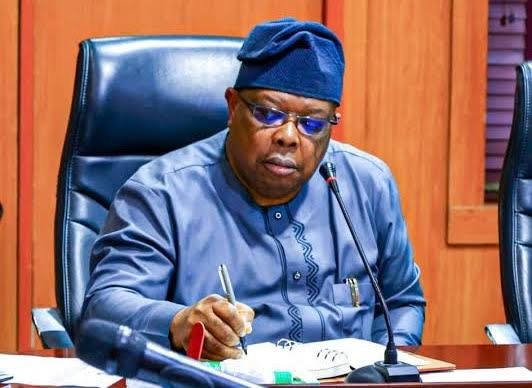
Minister of Power Joseph Tegbe has disclosed the Federal government’s plan to stop electricity subsidy payment from 2027.
Tegbe revealed this during a media interactive session on Friday, saying the subsidy would be removed gradually and consumers would not lose access to electricity services.
“We have the mandate of Mr President to clear the legacy debt and come up with sustainable structures to make sure this doesn’t pile up any more,” he said, adding that:
“I promise you, next year, by God’s grace, we will put a stop to this so-called subsidy in the power sector. Mr President, will not deprive Nigeria of anything. We’ll make sure Nigerian consumers continue to have power and improved power services.”
The minister also said there is no immediate plan to increase electricity tariffs.
The removal of subsidy aligns with recommendations by the International Monetary Fund for Nigeria to gradually remove electricity subsidies.
The government had previously put the subsidy burden at about N3 trillion as of February 2024, while the Association of Power Generation Companies says GenCos are owed roughly N6.5 trillion.
Tegbe’s comments come amid ongoing efforts to clear legacy debts in the sector.
Meanwhile, President Bola Tinubu recently approved a N4 trillion bond programme for debt settlement.
In January, the government issued a N501 billion inaugural bond under the Presidential Power Sector Debt Reduction Programme. On July 20, it announced a second tranche worth about N729 billion to settle verified debts owed to power generation companies.
Earlier this year, Tinubu also directed ministries, departments and agencies to use existing electricity laws to determine how
subsidy costs should be shared among the federal, state and local governments in the 2026 budget


How FG’s Docility and FIFA’s Compromise on Mpasi Conspired Against Nigeria’s 2026 W’Cup Qualifier– Report
Spread the loveThe apex world soccer’s governing body, FIFA, knew that the Democratic Republic of Congo fielded an ineligible player...


Kogi Community Protests Building of Mortuary in Residential Area.
Spread the loveBy Isa Abdul The construction of an alleged mortuary close to public school and residential buildings has been...


100 Days To 2027 Polls: INEC Vows Neutrality, Says BVAS, Ballots Ready
Spread the loveBy Felix Umande The Independent National Electoral Commission, INEC, has assured Nigerians and the international community of its...


THE LAST TANGO: Tears, Tributes and A Final Goal As Messi Bows Out After 21 Years
Spread the loveBy Felix Umande Emotions ran high at the Estadio Monumental on Tuesday night as Lionel Messi signed off...


Church’s Duty to Empower Individuals, Create Opportunities and Improve Family’s Economic Well-being
Spread the loveBy Seyi Balogun, Lagos The need for the Church’s commitment to empowering its members through employment opportunities, entrepreneurship...
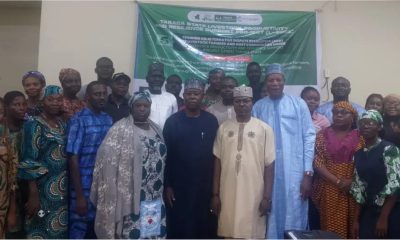

Taraba Explores ADR for Sustainable Peace Between Crop, Livestock Farmers
Spread the loveBy Michael Lim Conflict prevention between livestock farmers and host communities in Taraba State through the promotion of...
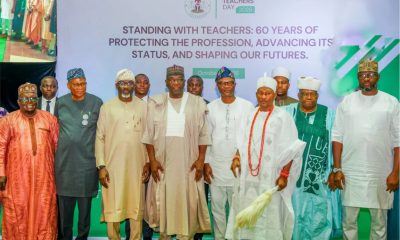

Financial Inclusion: Kwara Buys Dangote Refinery Shares For Female Teachers
Spread the loveBy Michael Lim Kwara State Government has announced plans to buy shares in the Dangote Refinery Initial Public...

Benue Govt Gives 2-Week Ultimatum To Owners Of Illegal Billboards, Threatens Mass Removal
Spread the loveBy Felix Umande The Benue State Government has decried the arbitrary erection of billboards across the state by...


INEC Tracking Illegal Campaign Spending
Spread the love–Tells Editors: “remain primary filter against information disorder.” By Son Tertsea, Abuja The Independent National Electoral Commission (INEC)...


Importers, Petroleum Marketers Kick Against Dangote’s Restriction of Petrol Sales
Spread the loveBy Seyi Balogun Major marketers have kicked against Dangote Petroleum Refinery’s non sale of Premium Motor Spirit (petrol)...