
Business and Economy
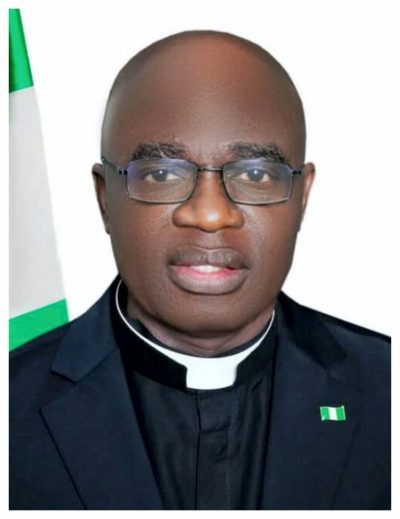
Gov. Alia Signs N695.01 Billion Budget into Law to Address Rural Neglect In Benue

BY SON TERTSEA, ABUJA
Benue State Governor, Fr. Hyacinth Alia, on Wednesday assented to the adjusted 2026 Appropriation Bill of N695.01 billion formally setting the stage for the state’s fiscal plan for 2026 to take off.
According to the Chief Press Secretary to the Governor, Tersoo Kula, the 2026 budget, initially presented by the executive at N605.51 billion, was reviewed by the Benue State House of Assembly to N695.01 billion.
Speaking shortly after assenting to the bill christened Budget of Rural Development, Livelihood Support and Sustained Growth, Governor Alia said:
“This budget is rooted in the realities of our present and is guided by the aspirations that bind us to a greater tomorrow. At the heart of Benue lies a strong rural foundation that feeds the nation, preserves our culture, and anchors our path to inclusive growth.
The Governor regretted that, “For decades, these rural communities carried the weight of neglect. With this budget, we make a bold declaration: the era of rural neglect is over.”
He further pledged that the administration would prioritise the construction of feeder roads and bridges, water supply, rural electrification, climate-smart infrastructure, farming value chains, and agro-industrial development, noting that such interventions would unlock wealth, improve dignity, and create jobs for citizens.
Beyond government action, the governor called for collective responsibility, urging the private sector, civil society organisations, traditional institutions, development partners, and the media to see the budget as an invitation for collaboration in delivering development at the grassroots.
In his submission. Speaker of the Benue State House of Assembly, Hon. Alfred Berger, stated that lawmakers were diligent in handling the proposal, and were compelled to adjust the figures up with the prevailing economic realities and to support the Alia administration’s government to achieve its rural development goal. He justified the legislators’ input in line with their constitutional requirements.
The issue of rural neglect is one that is deeply rooted in wrong policy frame works, poor budgetary executions and the total exclusion of the rural populace from government programmes and projects supposedly meant to benefit them.
But rural people have never been excluded from well-written budgets for them but what they hardly see are sustainable water supply projects, electricity projects and good roads that link them with markets, non- availability of opportunities and support for them from government and absence of many other necessities to make life worth living in rural set ups. Budgets for them have only been rituals.
With the 2026 fiscal act in place, we look forward to a well-articulated policy to bring development to the rural majority by government. It is only the confluence of a good policy design and proper implementation of same that can propel and achieve true rural growth.






–Services include electric vehicle charging, liquefied petroleum gas, CNG, others
By Nick Ibe, Abuja
The Nigerian National Petroleum Company Limited has introduced the self-service fuel pumps at selected NNPC Retail stations, allowing motorists to dispense petrol themselves using a mobile application.
This, partly, is NNPC’s new policy to deploy between 50 and 70 smart, self-service stations across the country in the next six months.
This model is different from the old fashion pattern where attendants dispensed fuel to customers. The self-service model allows customers to select the amount of fuel they want, make payment through an app and use a code to activate the pump.
NNPC Retail shared the guide on its X handle on Friday giving motorists details of how to use the system.
The step-by-step guide on how to buy and dispense fuel yourself at participating NNPC stations:
Step 1: Motorists who want to use the self-service facility should first download the NRL Fuel App. Get the download link from the NNPC X handle.
Step 2: Open the app, tap Fuel Purchase, and select your fuel type.
Step 3: Browse the station list and choose an NNPC Retail station offering the self-service option.
Look for the green Self-Serve badge next to the station name. Tap it to select.
Step 3: After selecting the station, enter the amount you wish to spend on fuel. Review the quantity and price, then tap Pay from Wallet. The system will process the transaction based on the amount entered.
Step 4: Once the payment is successful, the app will generate a digital receipt. It contains your Order ID, your Self-Service Code, and a QR Code.
Step 5: At the pump, enter your 8-digit self-service code on the terminal and press the hash key. Once validated, pick up the nozzle and fuel up—exactly the amount you paid for.
NNPC Executive Vice President, Downstream, Mumuni Dagazau, said the new model was part of the company’s plan to transform conventional filling stations into broader energy and mobility hubs.
At the newly commissioned smart station on Bill Clinton Drive, Airport Road, Abuja, NNPC Retail Executive Director, Retail Operations and Mobility, Shettima Baba-Kukawa, said customers could complete transactions on their phones and dispense the exact amount of fuel purchased.
NNPC said the smart stations would combine conventional petrol sales with services such as electric vehicle charging, liquefied petroleum gas, compressed natural gas and other mobility services.

Maria Davidson: Building a Business
At Age 26
She Was a Construction Industry Outsider. Within 5 Years, Her Business Was Bringing In $5 Billion In Orders.
Maria Davidson got the idea for Kojo by showing up on construction job sites with pizza and donuts.
Kojo is the largest construction materials procurement platform in the U.S.
Its founder, Maria Davidson, was an outsider to construction when she decided to create the company.
Davidson relied on conversations she had with “thousands” of construction workers about pain points in the industry to create Kojo.
Eleven years ago, Maria Davidson was 23 years-old, living in London and working in an entry-level job as an investment banking analyst at Goldman Sachs when she went on vacation in California. While there, she had a chance encounter with Joe Lonsdale, co-founder of Palantir and founder of the venture firm 8VC. This meeting changed the trajectory of her life; in a single hour, he convinced her to quit her job, move to San Francisco and become his chief of staff at 8VC. Lonsdale saw potential in Davidson, and the 8VC team at the time was small.
“He gave me this pitch that Goldman is an incredible place, but you are a cog in a giant wheel,” Davidson tells Entrepreneur in a new interview. “There were so many industries that no one was paying attention to on the tech side in the U.S. He got me really passionate about doing something to help improve how those industries work.”
So, in 2015, at the age of 23, Davidson decided to move to the U.S. She knew precisely three people in California at the start, and lived on her friend’s couch for a while as she searched for a place to live longer term.
Maria Davidson. Credit: Kojo
Maria Davidson. Credit: Kojo
Working with Lonsdale at 8VC exposed her to “big, traditionally unsexy industries” full of broken workflows that affected millions of people but had seen little modern software. So at age 26, in 2018, she left 8VC to start Kojo, committing to spend the next eight years tackling one of the most complex of those industries: construction.
In a handful of years, Kojo was processing more than $5 billion in annual orders and became the largest construction materials procurement platform in the country.
How she got started
Davidson’s path to founding Kojo began far from Silicon Valley. “I got here in a very roundabout way, as many immigrants do,” she says.
She was born in the Soviet Union, then moved to Israel after the Soviet Union collapsed, without knowing a word of Hebrew. She then moved to London when she was 13 without speaking a word of English, completed school there and went on to study politics, philosophy and economics at Oxford. Her first taste of entrepreneurship was running the Oxford Union.
After college, she worked at Goldman Sachs for a couple of years. “I thought I needed to do the traditional route and follow the traditional wisdom,” she says.
Seeing a broken system
Davidson built Kojo around a simple question: why does it take so long, and cost so much, to build the physical world around us? She points out that the Empire State Building took only about 400 days to construct in the early 1930s, yet something as simple as a San Francisco bus lane took 27 years to complete. Projects, from hospitals to schools, are routinely late and over budget, slowing down city development.
Digging deeper, Davidson realized that for those in the trades, from electricians to plumbers to roofers, roughly 60% of costs are for labor and 40% are for materials. These tradespeople order more than $400 billion worth of commercial materials annually across the U.S. — yet the supply chain for those materials runs on phone calls, emails and text messages. There is little transparency about price, availability or inventory. Mistakes are common: wrong items arriving, double orders, materials lost in warehouses and field teams constantly chasing information.
As a complete industry outsider, Davidson started the process of identifying the problem by showing up on construction job sites with pizza and donuts to get workers to talk. She asked what slowed workers down, what caused delays and what they most hated doing.
“As I had thousands of conversations, I heard time and time again that materials were incredibly frustrating,” Davidson says. “That includes how people dealt with and tracked them. There was very little visibility into when materials were actually arriving and what materials had already been ordered.”
That feedback pushed her to focus on a real-world problem that construction workers felt every day.
Launching the product
The early years were spent simply figuring out what to build. Davidson founded Kojo in 2018, but didn’t bring a product to market until 2020. Kojo’s core product is a procurement platform that unifies field teams, office staff, and distributors in one place. It automates price and inventory comparisons, purchase order creation and communication.
Kojo officially launched the product in the summer of 2020, even though COVID hit and the team briefly feared the company was over. Instead, remote work and illness exposed just how risky it was to have purchasing data trapped in email inboxes and binders. Kojo’s sales took off as contractors sought centralized, digital visibility into materials.
Kojo grew astonishingly fast once it launched. In mid-2020, it was processing $0 in materials orders. Within five years, it was handling over $5 billion annually across more than 75,000 job sites, Davidson discloses.
She adds that the company saved over two million labor hours for construction workers last year alone, by cutting field workers’ time on phones and emails and eliminating about 75% of office teams’ manual data entry.
On the materials side, Kojo helps contractors save roughly 3% to 5% per order, according to Davidson.
The company raised a $7 million Series A in the fall of 2020, a $33 million Series B in the fall of 2021 and a $39 million Series C in the fall of 2022. In the fall of 2025, Kojo raised a $10 million Series C extension from Wesco, the largest electrical distributor in the U.S.
Early on, many investors told Davidson that construction firms didn’t want software. She relied on a handful of believers and small early checks to build a prototype. Only from the Series A funding round onward did strong metrics and customer enthusiasm start to flip investor sentiment.
Tactics for growth
Davidson says that the most important strategy for growth is building close relationships with customers from the very beginning. She understood from the start that construction is a word-of-mouth industry. The most important thing to do in the early days, she says, was to build an “extremely loyal” group of evangelists who loved the product and told everyone around them about it.
From that point, Davidson started hiring a sales team that was constantly on the phone with contractors, asking about their biggest pain points. The team tried to figure out the issues and send feedback to the product division, so that the product was constantly improving over time.
Through the process of scaling from zero to $5 billion, Davidson also realized that there are a lot of things that traditional investor wisdom tells you to do that you should actually not do.
She gave the example of investors urging her to hire seasoned executives with fancy titles after a fresh funding round. Instead of following that wisdom, she relied on internal promotions to make Kojo grow.
“What we found is being able to promote people from within allowed us to scale our teams much more effectively because those people knew how to do the work,” Davidson says. “They actually knew the product, they knew the customer.”
Davidson adds that it was important for her to approach a field like construction with a true beginner’s mindset. She didn’t have any preconceived notions about the way things worked and was able to assess the industry with a fresh pair of eyes.
She also emphasizes deep curiosity — when a process looks broken, there is usually a reason it evolved that way.
“If you want to solve it, you need to solve from a place of empathy and understanding why things are the way they are today,” Davidson says.
This article is part of Young Entrepreneur series highlighting the stories, challenges and triumphs of being a young business owner.
By Aondoakaa Tersugh Daniel
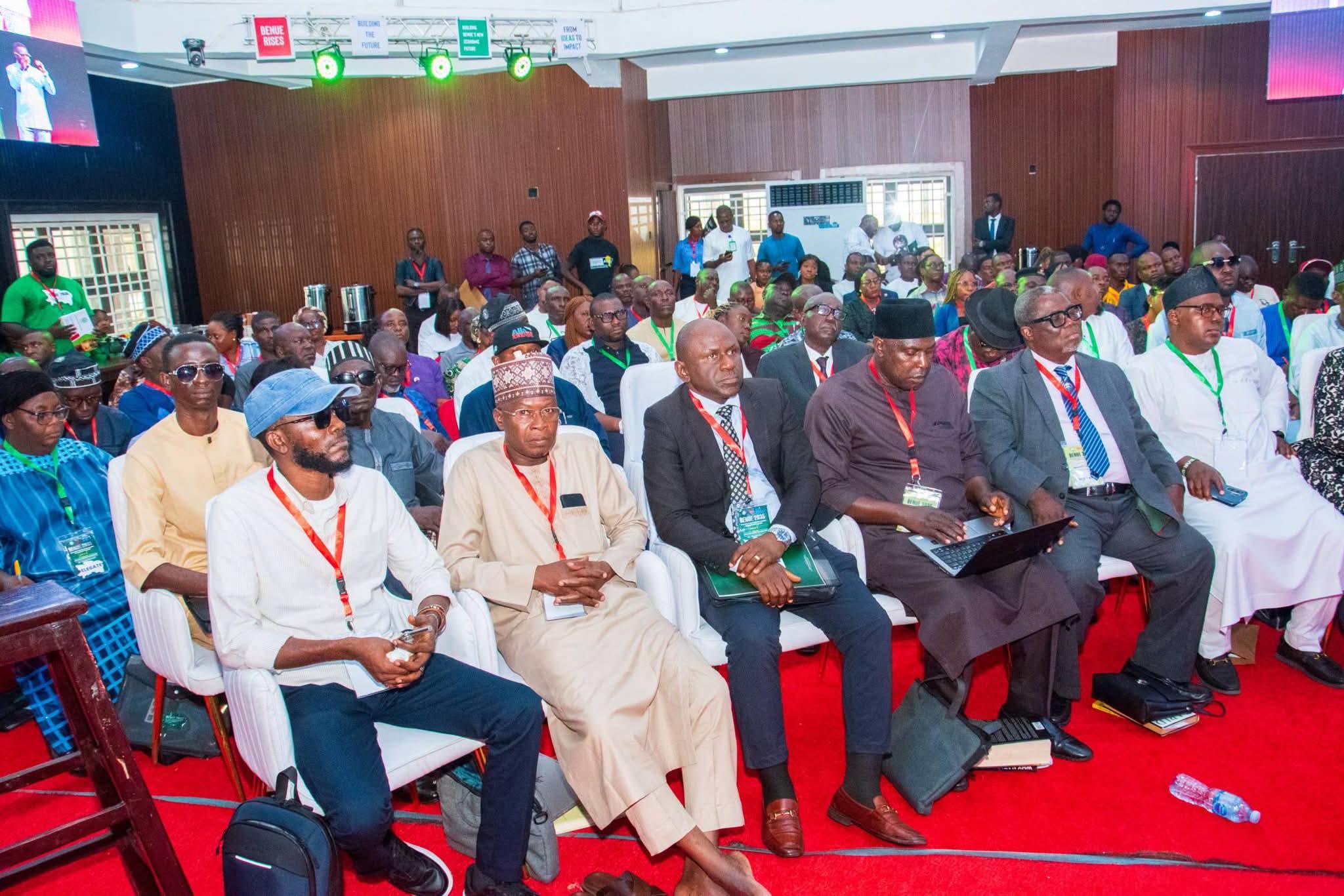
The Benue 2035 Economic Transformation, Capital Formation and Prosperity Summit has come and gone, but beyond the grand language of “potential,” “prosperity,” “investment” and “actionable roadmap,” one uncomfortable question deserves to be asked: where were the investors, governors, business leaders and national figures who should ordinarily give an economic summit of this magnitude the weight it deserves?
According to the official statement issued on the summit, Governor Hyacinth Alia spoke extensively about transforming Benue from “potential to prosperity,” attracting private capital, creating jobs and building investor confidence. These are commendable objectives. But an economic summit is ultimately judged not by the vocabulary of its opening speech, but by the quality of people it attracts, the capital it mobilises, the partnerships it creates and the commitments that follow.
And this is where the Benue summit appears painfully underwhelming. The official account released by the Governor’s office does not identify any investor of national or international repute as a participant. There is no mention of a major international investment institution, a globally recognised investor, a leading multinational corporation, or a prominent captain of industry being physically present to explore opportunities in Benue. For a state whose governor says it possesses enormous human and natural resources, this should raise serious questions.
Even more striking is the absence of Governor Alia’s colleagues. The official account does not mention the presence of any serving governor, not even from the North Central geopolitical zone. No governor from Nasarawa, Plateau, Kogi, Niger or Kwara is identified as having found the time to attend. This is particularly curious because economic development is increasingly being pursued through inter state cooperation, peer learning and collective investment promotion.
The contrast becomes difficult to ignore when Benue is placed beside Imo. At the Imo Economic Summit 2025, the organisers deliberately assembled an impressive combination of political authority, international stature and private sector leadership. President Bola Ahmed Tinubu was listed as Chief Host. Former United Nations Secretary General Ban Ki moon was among the headline speakers, while former Afreximbank President Benedict Oramah, Zenith Bank GMD Adaora Umeoji and Fidelity Bank MD Nneka Onyeali Ikpe were among the prominent speakers. The summit was explicitly designed to bring government leaders, corporate executives, entrepreneurs, development partners and international investors together.
Then consider Lagos. At the June 2026 Invest Lagos 3.0 Summit, the economic conversation was not confined to Lagos alone. Governors of Imo, Abia, Plateau and Nasarawa joined the Lagos governor in presenting investment opportunities, while representatives of the Presidency, investors, development finance institutions and business leaders participated. Minister of State for Finance Taiwo Oyedele was also present. The very idea was to use Lagos as a gateway through which states could court domestic and foreign capital.
Nasarawa provides an even more uncomfortable comparison. At its 2026 Investment Summit, Vice President Kashim Shettima attended alongside global investors and captains of industry. The programme featured names such as Aliko Dangote, Access Bank CEO Roosevelt Ogbonna, Saro Africa’s Rasheed Sarumi, TGI Vice Chairman Farouk Gumel and Industry, Trade and Investment Minister Jumoke Oduwole. Former Vice President Yemi Osinbajo and Dangote have also featured prominently in the summit’s wider engagement. The state reported more than $2 billion in investment inflows since the inaugural summit in 2022.
That comparison leaves Benue with a question it cannot escape: why is Benue different? Why does an economic summit in Imo attract an international statesman of Ban Ki moon’s stature, major financial institutions and the President of Nigeria, while Nasarawa can bring together the Vice President, ministers, Dangote and other major investors, yet Benue’s own summit appears, from its official account, largely confined to local stakeholders and government participants?
This is not merely about protocol. It is about political relationships and economic credibility. Governor Alia cannot successfully market Benue to serious investors if the state’s political leadership appears unable to mobilise even its immediate network of fellow governors for a flagship economic gathering. If governors from the North Central region could attend investment platforms elsewhere, what prevented them from finding it convenient to stand with their colleague in Makurdi? Is the problem simply scheduling, or does it point to a deeper political disconnect?
The irony is that Governor Alia himself acknowledged that Benue’s development cannot be reduced to one administration or one election cycle. Precisely. If that is the philosophy, then Benue needs an economic diplomacy that transcends the Governor’s immediate political circle. It needs relationships with governors, ministers, development finance institutions, multinational corporations, international investors and influential private sector leaders. It needs people who can pick up the telephone and say to investors, “Come to Benue.” A summit that does not visibly demonstrate those relationships risks becoming another conference where speeches are delivered, photographs are taken and reports are eventually placed on shelves.
There is nothing wrong with telling Benue that it has potential. Benue has always had potential. The real tragedy is that after decades of talking about potential, the state is still being asked to celebrate potential instead of measurable investment. The Benue 2035 summit therefore needs to answer a more fundamental question than what its participants discussed: who came, what did they commit, how much capital was attracted, and what concrete investment agreements emerged? Until those questions are answered, “from potential to prosperity” remains a slogan rather than an economic transformation.
And perhaps the most troubling question of all is political. If Governor Alia’s colleagues do not consider a summit personally important enough to attend, what does that say about his political relationships outside Benue? Economic diplomacy begins with political diplomacy. Investors follow networks, confidence and credible relationships. If other governors can assemble one another, attract the Presidency, ministers, international personalities and corporate Nigeria around their economic ambitions, Benue must ask why its own governor appears to be standing largely alone.
Benue does not need another summit merely to remind its people that the state is blessed with fertile land, solid minerals, human capital and enormous potential. Benue needs a summit that makes the rest of Nigeria and the world sit up, come to Makurdi, sign agreements, commit capital and compete for opportunities in the state. That is the standard set by Imo, Lagos and Nasarawa. Anything substantially below that standard should not be disguised by impressive speeches. It should provoke serious introspection in Government House, Makurdi.
Interestingly, the 2027 governorship election presents Benue with a candidate whose profile is fundamentally different from the usual political career. Chief Michael Kaase Aondoakaa, SAN, is an industrialist and investor who has earned recognition beyond Nigeria. Perhaps, in a state desperately seeking to convert its economic potential into productive investment, few candidates can speak to investors from the standpoint of having actually invested themselves. Aondoakaa does not merely understand the language of investment as a political talking point; he has operated within the business environment and understands what capital requires before it enters a new territory. Perhaps this is precisely the kind of leadership Benue needs: a governor who can summon investors not merely because he occupies Government House, but because he possesses the networks, credibility, experience and business understanding to bring them to the table.



Mother Subjects Daughter to Abuse, Admits: “I made $300 from my 8-yr-old daughter’s pornographic video’
Spread the loveBy Nick Ibe The viral video on the social media involving an 8-year old girl whose ordeal was...


Lawyer Assaulted by Police: NBA Gboko Branch Secures N500 Million General and Exemplary Damages in Makurdi Court
Spread the loveBy Our Reporter In the pursuit of justice for a colleague, B. B. Iliamkondo, Esq., who was recently...


Alia Denounces Ayilamo Attack, Commiserated With Victims as DSS Arrests 3 Suspects
Spread the loveBy Felix Umande Governor Hyacinth Alia of Benue State has strongly condemned the deadly attack on Ayilamo Community...

Alia Condemns Ayilamo Attack, Commiserates With Victims, As DSS Arrests 3 Suspects
Spread the loveBy Felix Umande Governor Hyacinth Alia of Benue State has strongly condemned the deadly attack on Ayilamo Community...


FG, States, Be warned We Will Strike, Without Warning –ASUU
Spread the loveBy Nick Ibe, Abuja Without urgently resolving all the pending salary and welfare issues, by the Federal Government...

Protest Against Xenophobia: NASS Orders Boycott of South African Organised, Hosted Legislative activities
Spread the love–Calls on State Assemblies to join By Isa Abdul, Abuja In a bold move against South Africa’s xenophobic...

Why Education is Dear to Me – By Peter Obi
Spread the loveAfter returning to Abuja on 8th September 2026, following our visits to Benue and Plateau States, I travelled...


After Two Decades: FG Pays 2,700 ex-Nigeria Airways Staff N18bn
Spread the loveBy Son Tertsegha, Abuja Over two decades after the national carrier, Nigeria Airways, was liquidated, the Federal Government...

To Boost Sch Enrollment: Nasarawa Plans Mobile Courts To Arrest, Prosecute Parents Of Out Of School Children
Spread the loveBy Michael Lim, Jos As part of measures to tackle the growing number of out-of-school children in Nasarawa...


Akume to Religioud Leaders Make Peacebuilding Part OF National Security Ahead of 2027
Spread the loveBy Felix Umande The Secretary to the Government of the Federation, Senator Dr. George Akume, CON, on Wednesday...