
General News
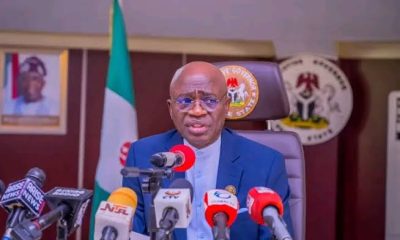
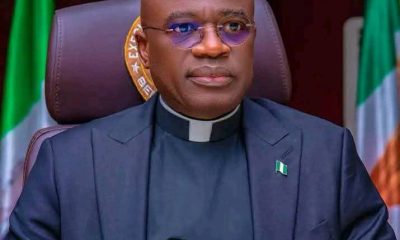
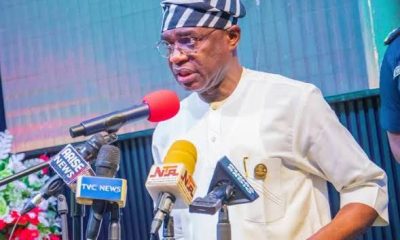
Speech By His Excellency, Rev. Fr. Dr. Hyacinth Iormem Alia, The Eexecutive Governor of Benue State, On the Occasion of Benue @ 50, on Wednesday, 3rd February, 2026, at Government House, Makurdi


My dear people of Benue State,
Today marks a very significant milestone, 50 years of Benue state’s existence. 50 years of persistence. 50 years of resilience.
But today is more than a celebration.
Today is a moment of reflection, renewal, and resolve.
Fifty years ago, Benue State was born with hope in its heart and promise in its soil. Our founding fathers envisioned a land that would feed the nation, nurture unity, and raise generations of resilient, proud, and progressive people. That dream is what we celebrate today.
Benue at 50 is not just about how far we have come it is about where we are going and how determined we are to get there.
I stand before you with humility, with gratitude, and with an unshakable belief in the strength of the Benue spirit, especially grateful that God gave me this opportunity to be your governor at this time of our state’s history. it’s a privilege I don’t take likely.
Recognising Our Past leaders
Let me at this juncture appreciate everyone who worked hard for the creation of this state. I salute in a special way the late J S Tarkar, and the United Middle Belt Congress (UMBC)/Action Group (AC) Alliance led by Obafemi Awolowo. I won’t leave behind the likes of Wantaregh Paul Unongu, Hon. Ugba Uye, Chief Isaac Shaahu and a host of others who worked tirelessly to see to this feat.
I must say a huge thank you to the General Murtala Muhammed led administration that carved out our state, from the then Benue-Plateau, and named it after our river which is the second largest in the country. This marked a historic point in our existence presenting us an amazing opportunity to bring governance closer to the people.
Let me therefore use this opportunity to salute in a special way every past Governor of Benue- Military or Civilian,living or dead, for their various roles in contributing to the development of our dear state.
- Maj. General Abdullahi Shelleng(March 1976-July 1978)
2.Group Captain Adebayo Lawal (July 1978-Oct 1979)
3.HE, Gov. Aper Aku (Oct 1979-Dec. 1983)
4.Brigadier General John Atom Kpera (Jan. 1984-Aug. 1985)
5.Air Commodore Jonah David Jang (Aug. 1985-Aug. 1986)
6.Col. Yohanna Madaki (Aug. 1986-Sept. 1986)
7.Col. Ishaya Bakut (Sept. 1986- Nov. 1987) - Col. Idris Garba (Nov 1987- Dec.1987)
- Lt. Col. Fidelis Makka (Dec. 1987-Jan. 1992)
- HE, Rev. Fr. Moses Adasu Orshio (Jan 1992-Nov. 1993)
- Group Catain Joshua O. Obademi 9Dec. 1993-Aug. 1996)
- Col. Aminu Isa Kontagora (Aug. 1996- Aug. 1998)
- Col. Domnic Oneya (Aug. 1998-May 1999)
- HE, Sen George Akume (May 1999-May 2007)
15.HE, Sen. Gabriel Suswam (May 2007-May 2015) - HE, Gov. Samuel Ortorm (May 2015-May 2023)
I cannot forget the contributions of; Chief Ason Bur, Prince Dr Ogiri Ajene, Chief Steven Lawani and Engineer Benson Abounu, who stood solidly behind these leaders to bring development to Benue.
May I also specially appreciate all past and present illustrious sons and daughters of Benue origin, whom at any point in the past 50years, held or are still holding various leadership positions, for their unflinching service to the Benue cause.
I also cannot thank enough, all our unsung heroes, whether alive or not, both in the hinterlands and our urban centres, for their silent sacrifices that have culminated into the Benue we have today. it is my sincere prayer that God’s blessings will not depart from your households.
Reflecting on Our Journey
Our journey has not been without trials. We have faced economic pressures, insecurity, natural and man-made challenges, and moments that tested our unity and patience. There were times when our people felt unheard, when confidence wavered, and when the future seemed uncertain.
But through all of this, if Benue has taught Nigeria anything, it is that, WE BEND, BUT WE DONOT BREAK.
Through hardship, our farmers worked their fields.
Through pain, our workers stayed committed.
Through uncertainty, our youths continued to dream.
And through it all, Benue endured.
A Promise of Responsible Leadership
Leadership is not about perfection. Leadership is about responsibility, courage, and action.
From the very first day I took the oath of office, I made a solemn commitment to serve Benue with sincerity, discipline, and a clear sense of direction. I promised to place people over politics, progress over excuses, and the future over the comfort of the present.
Today, I reaffirm that commitment.
Rebuilding the Economy
We recognized early that no state can thrive without a productive economy.
That is why our administration prioritized:
- Revitalizing agriculture as a business, not just a tradition
- Supporting farmers with access to inputs, extension services, and market linkages
- Encouraging agro-processing and value addition to reduce waste and increase income
- Strengthening internally generated revenue through reforms, not hardship on citizens
Gradually but steadily, Benue is reclaiming its place as Nigeria’s food and agro-industrial hub, while laying the foundation for a diversified economy that can withstand future shocks.
Strengthening Healthcare
A healthy people are a productive people.
In the health sector, our focus has been clear:
- Rehabilitating and equipping primary healthcare centres across our local governments
- Improving maternal and child healthcare services
- Expanding access to essential drugs
- Supporting health workers through training and better working conditions
We chose to invest in healthcare not as an expense, but as a moral duty to protect life and dignity. This can be seen clearly in the repositioning of our teaching hospital with modern day facilities and the capacity to provide essential services to one and all. This also applies to the Cancer centre and the Pharmacy, when completed.
Investing in Education
Education remains the strongest weapon against poverty and insecurity.
Our administration has taken deliberate steps to:
- Build and Rehabilitate our basic schools with modern day structures and learning facilities
- Improve teacher welfare including their numerical strength and capacity development with the engagement of over 9,700 teachers.
- Promote access to basic and secondary education
- Support technical and vocational training for our youths and future generations which gave rise to our new university at Ihugh.
We are raising a generation not just to seek jobs, but to create solutions.
Workers’ Welfare and Human Dignity
No government can succeed if its workers are neglected.
Despite economic constraints, we have worked to:
- Improve regularity and transparency in salary payments
- Address outstanding entitlements within available resources
- Restore dignity and trust in public service
Our workers are partners in progress, and their welfare remains a priority.
Security and Peace
Security is the foundation of development; bearing in mind, We have strengthened collaboration with:
- Federal security agencies; I will continue to partner with service chiefs and other security apparatuses for further collaborations to make our state safer.
- Community leaders and traditional institutions
- Local security and peace-building initiatives
While challenges remain, we are committed to ensuring that:
- Farmers return safely to their farms and ancestral homes.
- Communities live without fear
- Benue remains a land of peace, justice, and coexistence
Peace is not optional. It is essential.
Infrastructure and Connectivity
Development must be seen, felt, and used.
Across the state, we have continued to invest in:
- Road construction and rehabilitation of over 400 KMs across the state
- Rural access roads to open up farming communities
- Public buildings and essential infrastructure
- Urban renewal to improve the quality of life.
Infrastructure is how government touches the daily lives of the people and we remain focused on delivering value that lasts.
Digital Infrastructure and Digital Governance
As we prepare Benue for the future, we understand that development in the 21st century must be digital-driven.
That is why our administration has made strategic investments in:
- Expanding digital infrastructure and ICT capacity across government institutions
- Introducing digital tools to improve efficiency, transparency, and service delivery
- Strengthening e-governance systems to reduce bureaucracy and enhance accountability
- Promoting digital literacy and cyber connectivity to open our youths to global opportunities
This shift toward digital governance is not just about technology it is about modernizing governance, fighting inefficiency, and bringing government closer to the people.
Benue is steadily positioning itself to participate competitively in the digital economy.
To the youths of Benue:
You are not a footnote in our history you are the headline of our future.
We are expanding opportunities, supporting innovation, and opening doors for participation in governance and the economy. Your energy, creativity, and courage will drive the next 50 years of Benue’s greatness.
As we celebrate 50 years today, we must also look forward with clarity and determination.
The next chapter of Benue will be defined by:
- Stronger institutions
- A resilient economy
- Peaceful and secure communities
- Educated and empowered citizens
- Leadership that listens, learns, and acts
I ask for your trust not blind trust, but earned trust.
Trust built on transparency, accountability, and shared responsibility, as I lay the solid foundation for the next 50 years and justifying this opportunity God has given me at this time of our state’s history.
I pledge our government’s continued relentlessness in ensuring that we do not only create the atmosphere for growth and development, but to continue to be the engineers of peace, stability, accountability and transparency that will ensure a guaranteed better future for our state in the next 50 years.
My dear Benue people,
Benue at 50 is not an end it is a new beginning.
As I stated earlier, this day only marks the beginning of the celebration. it is our plan and intent to celebrate this golden jubilee in a big and special way, throughout the year, involving all the leaders and citizens of the state across partisan divides. There are lots of
activities that have been ear marked for this all important celebration, which will be unveiled as time progresses.
Together, we will reposition Benue.
Together, we will rebuild confidence.
Together, we will secure a future our children will be proud of.
May the labour of our heroes past continue to guide us.
May unity remain our strength.
And may God bless Benue State and the Federal Republic of Nigeria.
Long live our strides and aspirations. Long live our vision as a people. Long live Benue state.
Thank you, and happy 50th anniversary, Benue State.





General News
Mother Subjects Daughter to Abuse, Admits: “I made $300 from my 8-yr-old daughter’s pornographic video’

By Nick Ibe
The viral video on the social media involving an 8-year old girl whose ordeal was caused by her money loving mother has been arrested.
The arrest was facilitated by vigilante police operatives in the area, as well as bloggers and residents who provided information that assisted the investigation leading to the arrest of her 36-year-old mother, Anulika Onyeanusia, Onitsha, Anambra state.
According to the police, the Anambra State Police Command arrested her over alleged child pornography in Onitsha, by uploading a video involving her eight-year-old daughter on a pornographic platform to make money.
Onyeanusia, after the arrest, reportedly, told investigators that the highest amount she had made from uploading such content was $300.
The suspect also disclosed that the eight-year-old girl seen in the video is her second child, while preliminary investigation by the police allegedly revealed that she had also subjected her first daughter to similar acts and uploaded the content on a pornographic platform.
During interrogation, the suspect reportedly blamed the act on the devil, telling police: “It is the devil, please forgive me” while adding that her husband was unaware of what she had allegedly been doing to their two daughters.
The arrest followed the circulation of a video showing the woman allegedly using sex toys on the eight-year-old girl. The video prompted police operatives to act on what the command described as open-source intelligence and traced the suspect.
In the disturbing footage, the girl could be heard crying and pleading with her mother to stop as the alleged abuse continued. The police said the video showed the suspect allegedly engaging in the act while apparently producing the content for an online audience.
During the operation, which was carried out on Thursday evening, the command said four children, aged two, three, six and nine years, were rescued.
The Police also disclosed that sex toys and other items believed to be relevant to the investigation were recovered from the suspect.
The command said investigation was ongoing to establish the full circumstances surrounding the alleged abuse and determine whether other persons were involved.
Spokesman for the command, SP Tochukwu Ikenga, who confirmed the arrest of the suspect and rescue of the children, said, ” The suspect is currently in police custody as the Command intensifies its investigation into the circumstances surrounding the alleged offence and the possible involvement of other persons. The husband of the suspect is also undergoing interrogation to determine whether he has any connection with the alleged offence.
“The Commissioner of Police, Anambra State Command, CP Nnanna Oji, who is deeply disturbed by the alleged act, described it as unacceptable, particularly because it involves the exploitation and abuse of children who are incapable of protecting themselves. He has therefore directed a thorough and professional investigation while ensuring that the rescued children receive appropriate care and protection.
“To this end, the Command notes that beyond the investigation and prosecution, its priority is the safety, dignity and wellbeing of the rescued children.
“The Command will work with the appropriate child-protection and relevant support agencies to ensure that the victims receive the necessary care, protection, counselling and other support required for their recovery. Their identities and privacy will be protected throughout the process, and they will be treated with compassion and sensitivity.
“The Command also commends the vigilante operatives in the area, as well as bloggers and residents who provided information that assisted the investigation and led to the arrest of the suspect”, he stated.
General News
Lawyer Assaulted by Police: NBA Gboko Branch Secures N500 Million General and Exemplary Damages in Makurdi Court
By Our Reporter
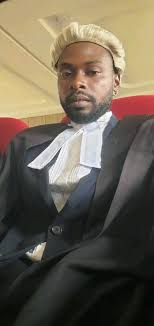
In the pursuit of justice for a colleague, B. B. Iliamkondo, Esq., who was recently assaulted and battered by personnel of the Nigeria Police Force in Kwande Local Government Area of Benue State, the Nigerian Bar Association (NBA), Gboko Branch, under the leadership of Felix Uwar, Esq., on Friday, 11th September, 2026 obtained judgement in favour of its member.
The facts which impregnated the suit that delivered the sweet victory are that, sometime in May, 2026, a client retained the legal services of B. B. Iliamkondo, Esq. to secure his bail at Koti-Mbaduku, Shangev-Ya, Kwande Local Government Area of Benue State.
On arrival at the police outpost, the officer in-charge, one Inspector Terngu Ikyuur, demanded for money as a condition for the bail of the said client. Confused, the learned Iliamkondo, Esq. requested to know why he had to pay for bail when it was statutorily free of charge whereupon the police officer got infuriated and ordered him to vacate the police outpost immediately or face being implicated in his client’s cause. Mr. Iliamkondo then made to deliver his written application for the bail of his client but the officer instead seized him by the shirt, stalked him to the ground and cramped him into detention alongside his client and other inmates.
The following day, Inspector Terngu Ikyuur brought Mr. Iliamkondo out of the detention facility and forced him to carry on his head a bucket of faeces and urine passed over night by inmates. The officer compelled him to sing that he was a-charge- and-bail lawyer as he marched Mr. Iliamkondo around the community with a loaded gun pointed at his head all the while, threatening to kill him if he stopped marching.
Upon the intervention of his learned friends, Iliamkondo was later released after being brutalized and stripped half-naked by the police Inspector. Aggrieved, the NBA Gboko Chairman, Uwar, Esq., quickly empanelled a team of lawyers to secure the enforcement of fundamental rights of their learned friend. The team had: I. S. Gese, Esq. ; F. M. Z. Uwar, Esq.; Bem-Ephraim Orlunan Ayati, Esq. ; T. I. Tur, Esq.; S.L.Puusu, Esq. ; B. I. Aker,Esq.; G. M. Jimin, Esq. ; S. S. Gbileve, Esq. ; C. M. T. Uwar, Esq. ; F. Tyoyima, Esq. ; B. E. Atser, Esq. ; and M. I. Tagher, Esq.
The team instituted SUIT NO: MHC/4110M / 2026 before the Benue State High Court of Justice, sitting at Makurdi with B. B. Iliamkondo, Esq. as the Applicant against Inspector Terngu Ikyuur; CSP Banfa U. Nanzing; Commissioner of Police, Benue State; Inspector General of Police; Police Service Commission; and Nigeria Police Force as the 1st, 2nd, 3rd, 4th, 5th and 6th Respondents, respectively.
In his judgement delivered on September 11, 2026, Hon. Justice M. M. Ikwulono, upheld the application and entered judgement in favour of the Applicant, Agugu Iliamkondo Benson Bemsen, Esq.
The Court awarded general and exemplary damages in his favour and against the Respondents in the sum of Five Hundred Million Naira (₦500, 000,000.00) only for the violation of his fundamental rights by the police.
The Court also Ordered the police to author and publish an apology to the Applicant in national newspapers with nation-wide circulation, a copy of which shall be furnished to the Applicant.
But besides the court ruling, the NBA has reportedly caused a formal petition to be written against Inspector Terngu Ikyuur and his DPO, CSP Banfa U. Nanzing, for discreet disciplinary action against them.
In their response to the outcome of the matter, the legal team said: “On our part as the legal team, we salute this judgement as sound in law, compensatory to our learned friend and deterrent against the police.
“We equally thank the Chairman of the Gboko Branch of the NBA, Uwar, Esq., under whose watch he ensured that our learned colleague’s humiliation got the justice that he deserves.”
At the time of filing this report, the NPF had yet to react to the judgment.
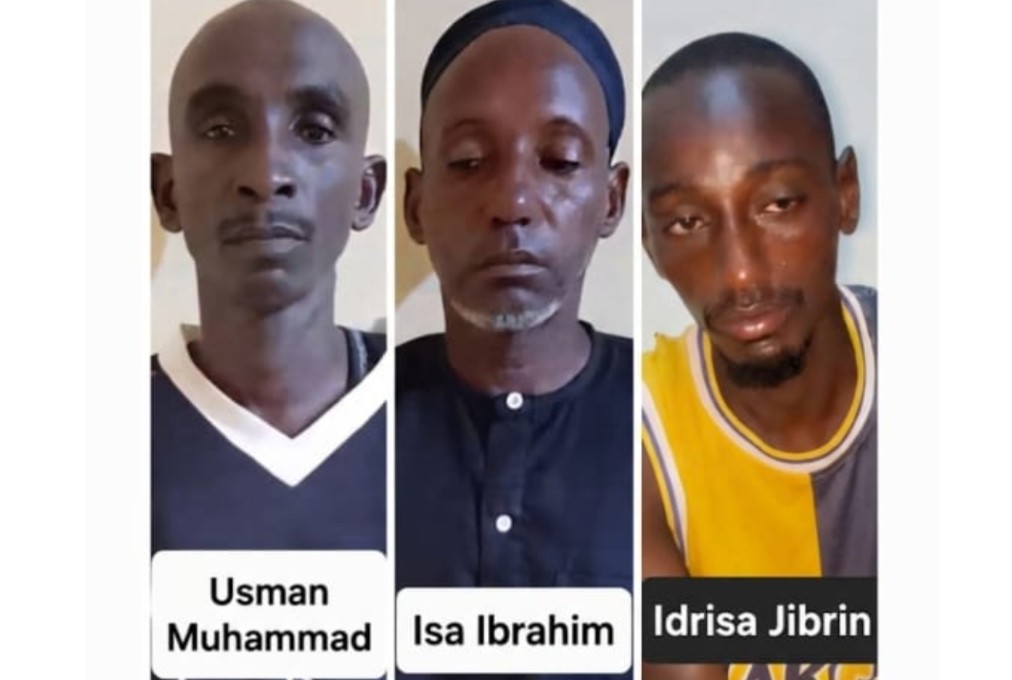
By Felix Umande
Governor Hyacinth Alia of Benue State has strongly condemned the deadly attack on Ayilamo Community in Logo Local Government Area, describing it as a “despicable act” and a grave threat to peace and security in the state.
The attack, which occurred on Wednesday night, claimed the lives of four police officers and seven civilians, while thousands were displaced.
In a statement on Thursday signed by his Chief Press Secretary, Sir Tersoo Kula, the Governor said the killing of law enforcement officers “is particularly painful and underscores the enormous sacrifices being made by security personnel in the line of duty.”
“This despicable act is an attack on the peace-loving people of Ayilamo and a grave threat to the security and stability of Benue State,” Governor Alia stated.
He described the incident as “a disturbing reminder of the persistent insecurity and repeated attacks on vulnerable communities and law-enforcement officers in the area.”
Governor Alia extended heartfelt condolences to the people of Ayilamo, the families of all victims, and the entire Logo LGA community.
He also commiserated with the Inspector-General of Police and the Benue State Commissioner of Police over the loss of the four officers.
“We honour their courage and sacrifice and pray that God grants their families, colleagues, and loved ones the strength to bear this irreparable loss,” the Governor added.
The Governor commended the Department of State Services for the “prompt and professional operation” that led to the arrest of three suspects allegedly connected to the Ayilamo attack in Benue and Nasarawa States.
He described the arrests as “a significant step towards uncovering the full circumstances of the incident and bringing those responsible to justice.”
“We urge the DSS to intensify its investigation and make the best use of the information obtained from the suspects in its custody,” Governor Alia said.
Governor Alia assured that his administration will continue to collaborate with security agencies to strengthen security in Ayilamo, Logo, and other vulnerable communities across the state.
He appealed to residents of Ayilamo and surrounding areas to “remain calm, vigilant, and law-abiding,” and to provide credible information to security agencies.
“We remain resolute in our determination to protect lives and property, uphold justice, and restore lasting peace across Benue State,” the Governor assured.



Mother Subjects Daughter to Abuse, Admits: “I made $300 from my 8-yr-old daughter’s pornographic video’
Spread the loveBy Nick Ibe The viral video on the social media involving an 8-year old girl whose ordeal was...

Lawyer Assaulted by Police: NBA Gboko Branch Secures N500 Million General and Exemplary Damages in Makurdi Court
Spread the loveBy Our Reporter In the pursuit of justice for a colleague, B. B. Iliamkondo, Esq., who was recently...

Alia Denounces Ayilamo Attack, Commiserated With Victims as DSS Arrests 3 Suspects
Spread the loveBy Felix Umande Governor Hyacinth Alia of Benue State has strongly condemned the deadly attack on Ayilamo Community...

Alia Condemns Ayilamo Attack, Commiserates With Victims, As DSS Arrests 3 Suspects
Spread the loveBy Felix Umande Governor Hyacinth Alia of Benue State has strongly condemned the deadly attack on Ayilamo Community...


FG, States, Be warned We Will Strike, Without Warning –ASUU
Spread the loveBy Nick Ibe, Abuja Without urgently resolving all the pending salary and welfare issues, by the Federal Government...
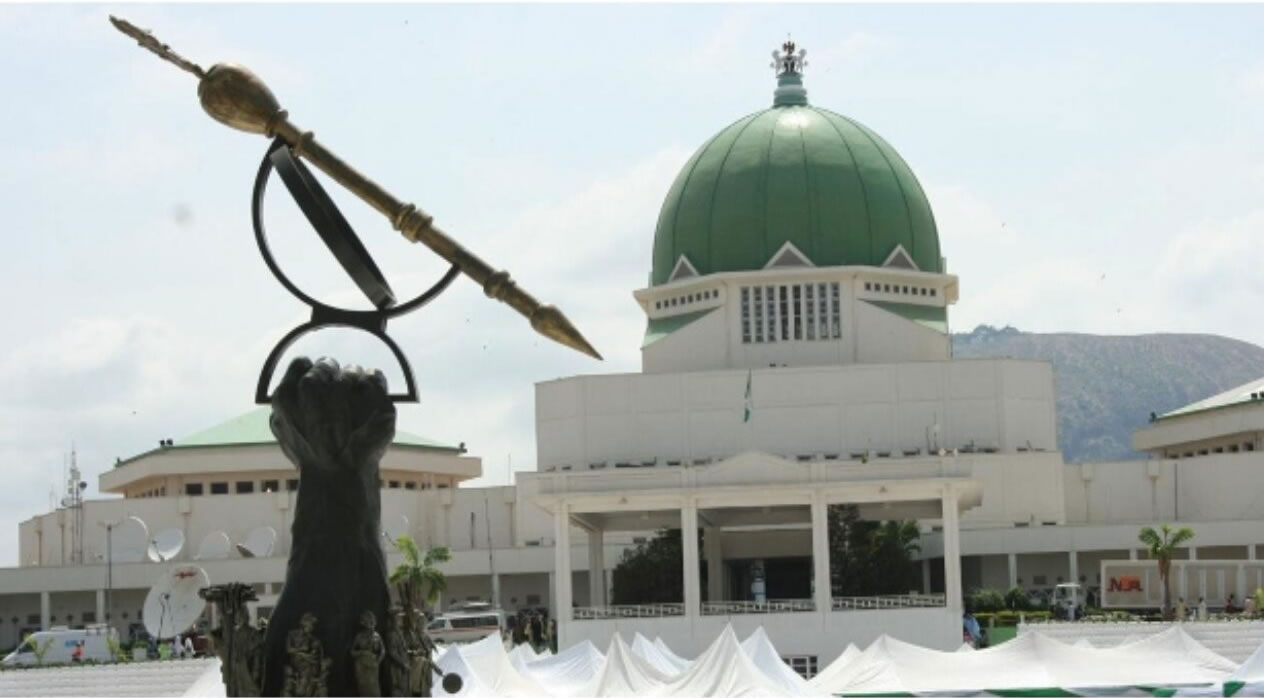
Protest Against Xenophobia: NASS Orders Boycott of South African Organised, Hosted Legislative activities
Spread the love–Calls on State Assemblies to join By Isa Abdul, Abuja In a bold move against South Africa’s xenophobic...

Why Education is Dear to Me – By Peter Obi
Spread the loveAfter returning to Abuja on 8th September 2026, following our visits to Benue and Plateau States, I travelled...
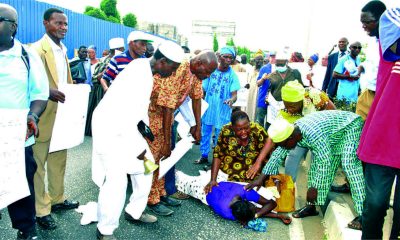

After Two Decades: FG Pays 2,700 ex-Nigeria Airways Staff N18bn
Spread the loveBy Son Tertsegha, Abuja Over two decades after the national carrier, Nigeria Airways, was liquidated, the Federal Government...

To Boost Sch Enrollment: Nasarawa Plans Mobile Courts To Arrest, Prosecute Parents Of Out Of School Children
Spread the loveBy Michael Lim, Jos As part of measures to tackle the growing number of out-of-school children in Nasarawa...
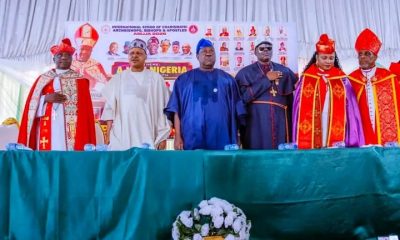

Akume to Religioud Leaders Make Peacebuilding Part OF National Security Ahead of 2027
Spread the loveBy Felix Umande The Secretary to the Government of the Federation, Senator Dr. George Akume, CON, on Wednesday...