
Health
Reps Begin Probe of $4.6bn Health Grants from Global Fund, USAID

By Saint Mugaga
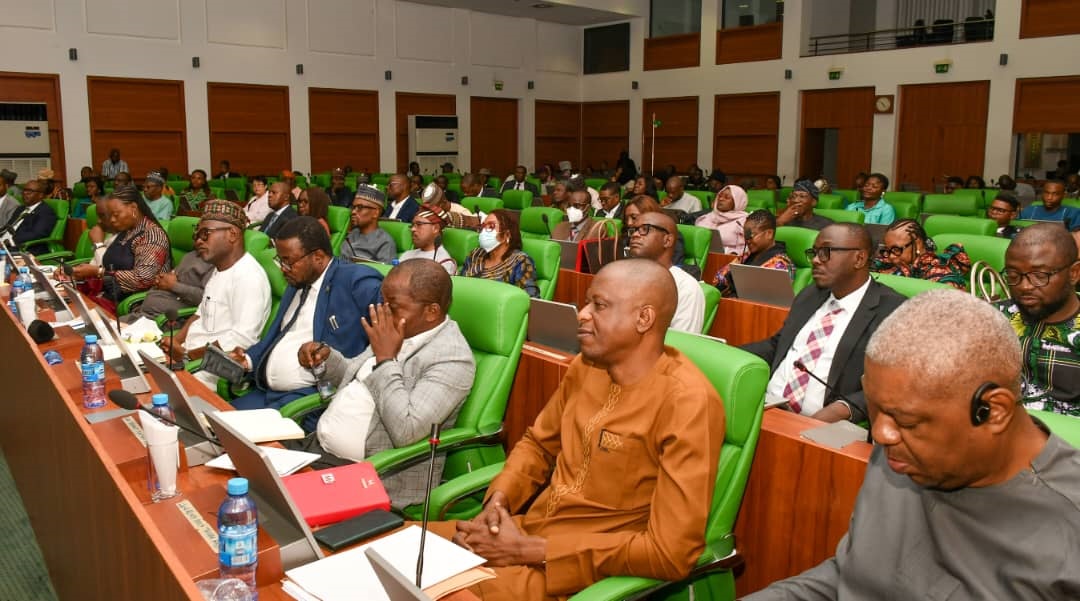
The House of Representatives on Monday began an investigation into the over $1.8 billion and $2.8 billion grants received by Nigeria from the Global Fund and the United States Agency for International Development (USAID) between 2021 and 2025 for the fight against HIV/AIDS, Tuberculosis, and Malaria, as well as for strengthening health systems.
Declaring the session open in Abuja, Chairman of the House Committee on Infectious Diseases, Rt. Hon. Amobi Godwin Ogah, said the probe was essential to determine how the huge grants had been utilized and to ensure accountability in the management of funds aimed at tackling infectious diseases ravaging Nigerians.
Ogah recalled that the House had, during plenary on October 21, 2025, mandated the then Committee on HIV/AIDS, Tuberculosis, and Malaria Control (ATM) to investigate the matter.
He commended Speaker Tajudeen Abbas and the leadership of the House for renaming and expanding the committee’s mandate to the House Committee on Infectious Diseases, reflecting a broader focus on public health threats.
“Nigeria continues to be battered by the ill effects of a greater burden of HIV, Tuberculosis, Malaria and other numerous infectious diseasee.
“It appears that while budgetary allocations and donor funds are mobilized for the response against these health challenges, there is no reprieve in sight as Nigerians are ravaged daily,” Ogah said.
He said the hearing became necessary to ascertain what had been done with the huge grants received, stressing that 90 percent of the country’s intervention funds for these diseases came from international partners.
Ogah warned that Nigeria would no longer accept being a “mere spectator” in the management of grants given to it, insisting that donor funds must henceforth be managed in line with Nigeria’s priorities.
“Any grant or assistance being given to us without us managing such grant is unacceptable. If they would not give us such grants and assistance on our terms, then let them keep their grants,” he declared. “We must assert our capacity to take charge of our affairs, particularly in the response against HIV/AIDS, Tuberculosis and Malaria.”
He directed the Ministry of Health and Social Welfare and the Country Coordinating Mechanism (CCM) to ensure that all principal recipients and implementing partners submit their implementation plans for approval by the National Assembly before funds are released.
“The era of spending Nigeria’s money without approval and accountability is over,” he warned.
Ogah also disclosed that the House was amending the NACA Establishment Bill to transform the agency into a multi-sectoral body with an expanded mandate. When passed, the agency will be renamed the National Agency for the Control of AIDS, Tuberculosis and Malaria (NACATAM).
The hearing, he said, would help determine the level of transparency and accountability in the use of donor funds since 2021. “Anyone, whether state or non-state actors, must indeed account for every Nigerian kobo spent for the response against public health threats,” he stressed.
With the 8th replenishment of the Global Fund expected this month, Ogah said Nigeria must move away from dependency and inefficiency in managing donor resources.
“We must maximize and efficiently utilize the resources at our disposal by cutting out all forms of duplication and wastage, while allocating domestic resources to areas that will present greater value for Nigerians,” he said.
He revealed that the committee would work closely with the EFCC and ICPC to ensure that principal recipients and implementing partners of all grants account to Nigerians.
“This is even more critical when you consider that some funding for terrorist activities has been traced to grants and donor funds,” Ogah added.
He urged implementing partners to prepare for robust parliamentary oversight, noting that some lacked proper or verifiable office addresses. The committee, he said, would hold the Ministry of Health and the Country Coordinating Mechanism responsible for ensuring accountability from all entities receiving donor grants.
Ogah emphasized that the exercise was not a witch-hunt but a democratic measure to ensure transparency and value for public health spending.
“This exercise is an essential ingredient of democracy and should not be seen as a vendetta or warfare,” he said. “We are very clear in our vision to ensure that no Nigerian child dies before age five from HIV, Tuberculosis, or Malaria. We want to ensure that the advocacy and commitment that will lead to the elimination of infectious diseases in our country by 2030 are championed and owned by all relevant stakeholders.”
Minister of Health and Social Welfare, Dr. Muhammad Ali Pate, called for a gradual end to Nigeria’s dependence on foreign aid in funding its response to HIV/AIDS, tuberculosis and malaria.
Pate said the country must take greater responsibility for financing its health priorities as donor funding declines after two decades of support.
He described the probe as a welcome step toward transparency, accountability and domestic ownership of health programmes.
He noted that while donor assistance has saved millions of lives through HIV, TB and malaria interventions, Nigeria’s health spending remains below 15% of the Abuja Declaration target, warning that underfunding threatens sustainability.
Declaring the session open, Speaker Hon Abbas Tajudeen represented by Hon. Ibrahim Isiaka, said the investigation reflects the parliament’s resolve to ensure transparency in health funding.
He said it would produce an evidence-based report on how the grants were received, utilized and their impact on public health, while strengthening accountability and governance in the sector.







Health
Foreign Medical Tourism to Drop as Nigeria Records First Tele-robotic Surgery Success in West Africa
By Son Tertsea
Nigeria’s first tele-robotic surgery on September 20, 2026 at the Redeemer’s Health Village (RHV), in collaboration with RoboMed Global and Nisa Premier Hospital, performed could be the opening of a new chapter in Nigeria’s medical tourism.
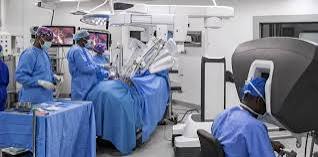
The News Agency of Nigeria (NAN) reports that the surgery was performed in real time on Saturday from a Toumai console at RHV on a patient at Nisa Premier Hospital, Abuja.
The procedure was a telesurgery-assisted, robot-assisted right radical nephrectomy performed to remove a kidney affected by a cancerous tumour.
According to specialists, Tele-robotic surgery, also known as remote surgery, is a technique that enables a surgeon to perform an operation on a patient from a completely different physical location.
Speaking after the surgery at RHV, Prof. Obi Ekwenna-Davis, Professor of Urology and Transplantation, who led the surgery, explained the medical condition of the patient.
He said the procedure demonstrated that telesurgery could be safely performed on patients in different parts of Nigeria and the world.
Ekwenna-Davis, Co-Founder of RoboMed Global, said the development was a significant achievement for RHV and its partners.
“Distance should never decide who receives safe surgery; this is what safe and trusted surgery looks like,” he said.
The U.S.-based surgeon said the patient was in good condition and expected to be discharged within 24 hours.
He said the procedure lasted about three hours, with brief stoppages to ensure that the equipment and systems functioned properly.
Ekwenna-Davis said the collaboration was significant as it marked the first time two hospitals in different parts of Nigeria successfully collaborated to provide surgical care to a patient.
He maintained that sustainability of the initiative would depend on continuous training, adding that a robotic academy would soon be established to train surgeons and other medical professionals.
According to him, the academy aims to train at least 150 surgeons within the next two years.
Ekwenna-Davis said the programme had the support of the Minister of Health and other government institutions, while calling for additional support from private and non-governmental organisations.
Dr Adedamola Dada, Chief Executive Officer, RHV, added that the development marked the first telesurgery in West Africa.
Dada said RHV was established to promote innovation and provide world-class healthcare services at affordable costs.
“What has happened today is a demonstration that Nigerians can access modern healthcare without travelling abroad,” he said.
He said the initiative was not primarily profit-driven but aimed at demonstrating what modern healthcare could offer Nigerians, in line with the vision of the General Overseer of the Redeemed Christian Church of God.
Dada said the achievement had positioned the hospital as a gateway through which specialist skills could be applied on patients across Nigeria.
He said the introduction of robotic surgery and telesurgery at RHV was aimed at reducing medical tourism and improving access to complex surgical procedures within the country.
The CEO said measures had been put in place to address possible connectivity challenges through the use of reliable networks.
He explained that weather conditions could sometimes affect connectivity, while the quality of equipment and availability of skilled personnel were also critical to the success of telesurgery.
Dada said the hospital was establishing a robotic academy in collaboration with RoboMed Global to train doctors, surgeons, nurses, biomedical engineers and product specialists.
He urged the government to support and sponsor medical professionals interested in acquiring robotic surgery skills.
“My message to government is to support and sponsor Nigerians, the surgeons, the nurses, the biomedical engineers who would want to come and do this training here.
“They can award scholarships to them so that within two to three years, Nigeria will have a lot of professionals who are capable of performing robotic surgery,” he said.
Dr Ibrahim Wada, Chief Executive Officer and Founder, Nisa Premier Hospital, said the facility had been a centre for robotic surgery in West Africa since November 2025.
“Today, our patient received specialist surgical expertise from across the country without leaving Abuja. This is what becomes possible when Nigerian institutions decide to build together,” Wada said.
Also, Dr Kunle Onakoya, Chairman, Board of RHV, described the development as historic and urged participants to recognise their roles in creating a milestone for Nigeria.
NAN reports that RHV, a faith-based 300-bed multispecialty hospital established by the Redeemed Christian Church of God, played a key role in attaining the medical feat.
Health
Pig kidneys Successfully Transplanted into Humans:Trial in US offers hope for solving organ shortage
Organs grown in animals for use in humans are beginning to build up a record of clinical success after decades of unfulfilled promise, offering hope for the future of transplants.
Five patients at Massachusetts General Hospital in the US have undergone successful transplants with animal organs — a process known as xenotransplantation — since March 2024 after the pig kidneys they received were genetically engineered to avoid rejection, US biotech company eGenesis said. In three of them, the porcine organs worked for more than eight months without rejection or the need for dialysis.
“The organ shortage is the greatest crisis we have right now in transplantation,” said Leonardo Riella, director of kidney transplantation at Mass General, who led the eGenesis clinical trials.
“It’s amazing to see the progress,” said Mike Curtis, chief executive of eGenesis. “Our goal is to make transplantation available to patients when they need it, without being constrained by the limited supply of human donor organs.”
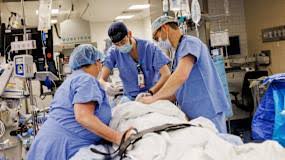
Surgeon Alban Longchamp prepares a pig kidney with the surgical team before transplantation at Massachusetts General Hospital © Kate Flock/Massachusetts General Hospital
The animal organs would initially be used “as a bridge to get patients off dialysis while they wait for a human donor kidney,” said Riella, adding that it could eventually be used “as a destination therapy in its own right” if the trials “establish long-term safety and durability”.
The kidneys were grown in Yucatan miniature pigs whose organs are similar in size to their human counterparts. They were genetically engineered to remove three pig proteins that are most likely to lead to immune rejection and add seven human genes to improve compatibility with the patient. In addition, the porcine DNA was manipulated to inactivate viruses that might infect the recipient.
One patient, Tim Andrews, whose case was described in The Lancet journal on Thursday, lived with a pig kidney, which he received aged 66, for almost nine months without needing dialysis until the transplanted organ began to fail, though there were no signs of immune rejection. He then received a kidney from a deceased human donor.
Subsequent tests showed that living with the pig kidney had not made it harder for the human transplant to work successfully.
Tim Andrews leaves Massachusetts General Hospital a week after his xenotransplant operation © Kate Flock/Massachusetts General Hospital.
Curtis said the US Food and Drug Administration had authorised an expanded clinical trial of eGenesis pig kidneys in 33 patients with renal failure to start early next year in up to 10 US transplant centres, with the aim of achieving marketing approval by the end of 2029. The company is also collaborating with a Japanese partner, PorMedTec, to start kidney xenografts in Japan in 2028, he added.
David Crosby, chief research officer at the renal charity Kidney Research UK, said the breakthrough was “an exciting prospect” but he warned that further research was needed to determine whether the approach was “safer and better” for patients than spending years on dialysis while they waited for a transplant.
Xenotransplantation has been through cycles of hope and disappointment since serious research on the area started in the 1980s. But recent progress in animal cloning, genetic manipulation and immunology now promises to transform the field.
Public squeamishness and ethical objections to breeding animals for organ transplants had also diminished, said Curtis, who argued that the moral arguments against xenotransplants were “hard to sustain . . . when you look at the outcomes for our patients”.
For a long time, xeno research focused on heart transplants, but now kidneys are leading the way to clinical approval. “A big advantage of the kidney is that if the transplant fails we can safely return the patient to dialysis,” said Curtis. “If the transplanted heart fails, there’s not much you can do.”
However, eGenesis and another leading US xenotransplant company, United Therapeutics, are working with hearts as well as kidneys. The FDA has approved a small xenoheart trial led by United Therapeutics.
The Financial Times Limited 2026.
By Michael Lim, Jos
All public and private primary and secondary schools across Plateau state have been ordered closed, by the Plateau State governor as a precautionary measure against the spread of diphtheria in the state.
The government gave the order on Saturday in a statement issued by the Commissioner for Information, Joyce Ramnap.
According to the statement, the closure takes effect from Monday, September 7, 2026, and will remain in force “until further notice.”
The directive ordered by Governor Caleb Manasseh Mutfwang is part of efforts to curb the spread of the infection.
The directive is a preventive measure against the Diphtheria Infection as suspected cases are reported in some parts of the State, notably Jos North, Wase, Jos South & Bassa Local Government Areas.
The government said the closure applies to all schools, including those that have already resumed for the new term.
“Accordingly, schools that have already resumed academic activities are also directed to close from Monday, September 7, 2026, and remain closed until further notice,” it added.
Parents, teachers and school owners have been urged to comply fully with the directive.
“Furthermore, school proprietors, administrators, teachers, parents and guardians are to comply fully with the directive and ensure that students and pupils remain safely at home throughout the period as part of measures to ensure the safety and wellbeing of pupils, students, teaching and non-teaching staff during the period under review,” the statement stressed.
Health authorities in Plateau confirmed that suspected cases have been reported in Jos North, Wase, Jos South and Bassa Local Government Areas in recent weeks, prompting the Ministry of Health to activate surveillance and response teams in the affected communities.
Diphtheria spreads through direct contact or respiratory droplets and is common in crowded settings such as schools. The Nigeria Centre for Disease Control has, in the past, advised states to intensify vaccination, public sensitisation and early case detection to prevent wider transmission.
In response, the Mutfwang administration said the school closure was intended to limit exposure among children while health workers conduct contact tracing, vaccination mop-up and decontamination in the identified areas.
“The Government appreciates the understanding and full cooperation of all stakeholders as it continues to take appropriate measures in the best interest of the people of Plateau State,” the statement said.
The commissioner added that updates would follow.
“Further information on the resumption of academic activities will be communicated to the public in due course,” it concluded.
Meanwhile, health officials are urging parents in plateau state to ensure that children complete their routine immunisations, practise hand hygiene and report symptoms such as fever, sore throat and difficulty breathing to the nearest health facility immediately.



Death of 37 Miners in Custody: Ajia Calls for Independent Investigation, Accountability
Spread the loveA chieftain of the All Progressives Congress (APC) and the Dan Amanan Fune Emirate of Yobe State. Alhaji...

Body Operating With Name National PTA, Unknowed to Edu Ministry
Spread the loveBy Son Tertsea, Abuja The body operating under the name National Parent-Teacher Association (PTA) of the Federal Unity...


Peter Obi Distances Self From Purported Letter to Obi of Onitsha
Spread the loveBy Nick Ibe A letter purportedly written by him to the Obi of Onitsha, Igwe Nnaemeka Achebe, against...


2027 Elections: Police Must Never Be Seen As Political Tool, Tinubu Warns
Spread the loveBy Felix Umande President Bola Ahmed Tinubu has charged the Nigeria Police Force to maintain the highest standards...

Tinubu To Return At Weekend After Extended Working Vacation In London, Paris – Presidency
Spread the loveBy Felix Umande President Bola Ahmed Tinubu will return to Nigeria at the weekend following the extension of...

Benue Govt Suspends Muslim Pilgrims Board Chairman, Secretary Over Alleged Mismanagement
Spread the loveBy Felix Umande The Benue State Executive Council has approved the suspension of the Chairman and Executive Secretary...


BUILDING A BUSINESS: He Started an eBay Side Hustle at 14 – Then Grew It Into a $92 Million
Spread the loveKey TakeawaysLior Pozin started dropshipping on eBay at 14.By age 21, he was making $6,000 per month dropshipping,...

Plateau Imposes Curfew on 3 LGAs, Bans Use Of Motorcycles
Spread the loveBy Michael Lim, Jos A dusk-to-dawn curfew on Barkin Ladi, Bokkos and Mangu Local Government Areas of Plateau...


Tinubu Praises Kaduna Gov Uba Sani’s Free CNG Mass Transit … As Benue Increases Fares for Commuters
Spread the loveBy Son Tertsea President Bola Ahmed Tinubu has praised Kaduna state government for deploying Compressed Natural Gas, CNG,...

Foreign Medical Tourism to Drop as Nigeria Records First Tele-robotic Surgery Success in West Africa
Spread the loveBy Son Tertsea Nigeria’s first tele-robotic surgery on September 20, 2026 at the Redeemer’s Health Village (RHV), in...