
General News
Nigerian Priest Commits Suicide Over Order to Return Home


By Nick Ibe
A Nigerian Catholic priest in Massachusetts has died by suicide, days after being ordered to leave the United States and return to Nigeria, where he had repeatedly said he feared for his life.
54-year old, Rev Fr Benjamin Okwy Madu, died on July 2 at his residence in Lynnfield, Massachusetts, according to the Archdiocese of Boston, where he had served as a hospital chaplain and parish priest on Cape Ann since 2021.
According to a source, his religious worker visa was due to expire on July 29.
Boston Globe reports that, his home Diocese of Abakaliki had gone further, instructing him to return to Nigeria even sooner than that deadline, ahead of a new assignment scheduled to begin on August 4.
Madu had reportedly made clear he did not want to return.
In his previous discussions with parishioners, and in a farewell message posted to his parish’s website days before his death, he said returning home was not his wish, “but circumstances beyond my control have warranted that my time in the United States come to an end.”
The Sunday before he died, Madu suffered a panic attack while driving to Mass and was treated at a hospital emergency room, a parishioner told the Boston Globe.
Boston Archbishop Richard Henning told fellow priests in an internal email that Madu “tragically took his own life,” according to a copy of the message seen by the National Catholic Register and reported on Monday.
However, the Archdiocese’s public statement on his death did not describe it as a suicide.
Essex County District Attorney Paul Tucker’s office confirmed Madu’s death was under investigation by the Massachusetts State Police, though a spokesperson said foul play was not suspected.
The US-Nigeria Civil Society Coalition, in a statement sent to Nigerian newsrooms this week, said Madu “suffered acute emotional distress and panic over the prospect of returning to a region where Catholic clergy are actively targeted for kidnapping and assassination,” pointing to the frozen visa renewal process under current US immigration restrictions as a factor in his death.
“The terrifying reality of these rigid restrictions was made plain on July 2, 2026, when Father Benjamin Okwy Madu, a beloved 54-year-old Nigerian Catholic priest serving the North Shore of Massachusetts, tragically took his own life,” the coalition said.
Madu, who was born in Nigeria on May 15, 1972, and ordained at St Theresa Cathedral, Abakaliki, in Ebonyi State, would have marked his 25th anniversary in the priesthood on July 7, five days after his death.
He had worked in the Archdiocese of Boston for nearly six years under consecutive R-1 religious worker visas, with his most recent visa due to expire on July 29.
Boston Globe reports that Archdiocese spokesperson Terrence Donilon said there was no path to extending Madu’s visa again, citing current US immigration policy affecting Nigeria.
Madu had spoken publicly about his fear of returning to Nigeria, where priests have faced kidnappings and killings in recent years.
Reports indicate that Arlene Lesch, a parishioner at Holy Family Church, told Boston Globe she was among those who contacted political leaders pleading for a way for Madu to remain in the US.



By Nick Ibe, Abuja
A farmer, Ibrahim Kadafa, popularly known as Ibro has been killed after kidnappers collected a N56 million ransom from his family for his release.
Kadafa was reportedly abducted alongside his friend, Mustapha Shelpidi while harvesting soybeans on his farm around kilometer 30, along the Kaduna-Abuja highway on October 28, 2026.
Silverbird Television reported he was based in Abuja, but had travelled to supervise activities on his farm when the armed men attacked taking him and his friend away.
Family sources said the kidnappers initially demanded N100 million ransom but later reduced the amount to N80 million following negotiations.
The family reportedly paid N56 million, in addition to three brand-new mobile phones and a recharge card worth N20,000 in an effort to secure his release.
But instead of receiving him alive, his corpse was delivered to the family on Wednesday, November 11 after weeks of negotiations and payment of the ransom.
The family source further disclosed that Kadafa had sustained a gunshot injury to his leg while attempting to escape during the abduction but allegedly did not receive medical attention throughout his two weeks in captivity.
It is suspected that complications arising from the untreated injury might have contributed to his death.
A neighbour of the family, Micah Jaja, who spoke to the press said the incident has left the family devastated.
“Honestly, the family is in shock. In fact, they don’t even want to talk about it at the moment because they are mourning. It is really a sad incident. Just pray for them please,” he said.
Jaja said the deceased was an indigene of Adamawa State, and confirmed that the incident happened along the Kaduna-Abuja highway.
He added that the deceased was yet to be buried, as at the time of filing this report.
A senior security official familiar with the incident also confirmed that the corpse was recovered from the forest and taken to the Barau Dikko Teaching Hospital, Kaduna.
Describing the incident as unfortunate, the official condemned the abductors for allegedly collecting the ransom and other items, only to return the victim’s corpse to his family.
Efforts to get the Kaduna State police command’s reaction were unsuccessful as the command’s public relations officer, DSP Mansur Hassan, could not be reached for comments.
By Vincent Yusuf
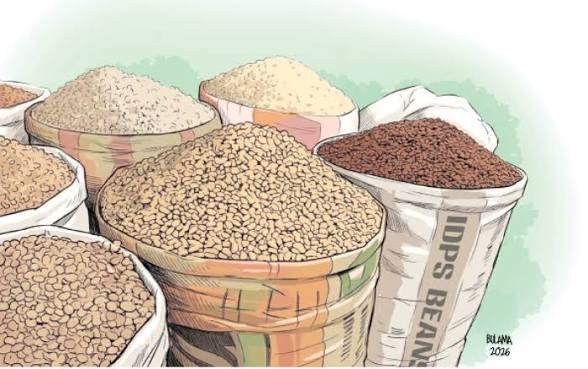
Ibrahim Philemon was compelled to abandon everything he had built in his youth and flee his native Gwoza for Karu in Nasarawa State because of Boko Haram’s relentless attacks on his community.
Philemon is among thousands of other farmers who fled their towns because of intensified security risks posed by Boko Haram militants.
But these farmers, despite facing adversity, remained undeterred. As internally displaced persons (IDPs), they were determined to rebuild their lives after the devastation caused by Boko Haram.
Today, Philemon produces over 100 bags of beans and over 50 bags of maize annually since coming to Karu in 2013 as an internally displaced person.
Amidst campaigns, Borno, Niger children remain in captivity
Tinubu booed at Abuja mosque after Friday prayers
When Boko Haram captured Gwoza town, which had an estimated population of around 388,600 in August 2014, thousands fled immediately to many states in the country and the neighbouring towns in Cameroon.
Gwoza, which is located on the fringes of Sanbisa forest, is about 135 kilometres southeast of Maiduguri, the capital of Borno State. It is marked by a hilly terrain.
As farmers, the displaced persons established approximately 13 camps in Karu Local Government Area of Nasarawa State, where they commenced agricultural activities.
With an estimated population of over 20,000, according to the International Organisation for Migration in Nasarawa, the IDPs spread across farming communities in Karu and Keffi, seeking farmlands and clearing bushes and forests that were hitherto uncultivated to plant beans and maize. Some of them harvested over 200 bags of beans (cowpea) and maize.
Within three years of their arrival, these displaced farmers rose from the ashes to establish one of the most vibrant grain markets on the outskirts of Abuja, the country’s capital, which today attracts buyers across the country.
Setting up a beans market
As they continued to record good harvests, selling their produce in good value immediately became a huge challenge that devastated many of them who were trying to find life after the colossal losses inflicted on them back home in Gwoza. That challenge gave birth to the establishment of what is today known as the foremost beans market in 2016, located in Auta Balefi, along the Abuja-Keffi expressway, about 25 kilometres from the Aso Rock Villa, before the National Agricultural Showground.
They told our reporter, who spent a day with them, that farming and trading provided opportunities for them to rebuild their lives after displacement.
David Yakubu, the secretary of the beans market, told Weekend Trust how the idea came about. He said the market was established after they encountered difficulties selling their agricultural produce at profitable prices in Ibadan, Oyo State.
Yakubu explained that before the establishment of the market, they were taking their produce to Ibadan and other places, but poor prices were offered and they were losing because nobody could help them out, a situation that prompted them to consider establishing their own market.
According to him, the chairman of the market, Mr Philemon Ayuba, convened a meeting with some members of the community to discuss how they could sell their agricultural produce without travelling to distant locations.
He said the traders subsequently held several meetings before agreeing to establish a market where farmers and traders could bring their produce for sale.
“One day, Mr Philemon Ayuba, the chairman of the market, called some of us to discuss how we could sell without travelling to Ibadan. We had several meetings and finally reached a conclusion to establish our own market,” he said.
Yakubu said the market, which initially occupied a bushy area, had developed into a trading centre covering approximately three hectares.
He explained that the traders initially rented the land before eventually purchasing it and making it their permanent market location.
According to him, it was achieved through the collective efforts of members of the IDPs farming community who contributed resources to establish the market and construct shops for their businesses.
Kabala Yakubu Garba, another displaced person, who is now the Sarkin Noma (a traditional Hausa title bestowed upon a highly skilled, productive or lead farmer who achieved massive crop yields or served as a farmers’ leader in a community) of the farmers at the beans market, recounted their journey so far.
Garba, who also doubles as the chairman of the National Union of Road Transport Workers (NURTW) at the market, said the market started with 23 displaced farmers who decided to pull their little resources from the proceeds of their farms together to rent a space big enough to operate as a market, where they can sell their farm produce, mostly beans, maize and soybeans.
He said that when they first arrived, they were welcomed by the traditional rulers of Karu, Ankoma and the state government, who assisted them to settle. He added that some of the traditional rulers gave them lands to cultivate before many rented farmlands across villages.
“Majority of those who opened the market contributed capital. By God’s grace, when we arrived here, we started small. With the help of God, the traditional rulers of this town, and the state government welcomed us with open arms and allowed us to settle,” Garba said.
He described most of their produce as “honey beans,” popularly called Adamawa beans.
Ibrahim Philimon with his produce
Capacity of the market
With the market attracting buyers from major commercial centres, particularly Ibadan and Lagos, a large number of trucks take supplies regularly.
Although the farmers do not have the exact statistics of what comes into the market on a daily basis, Garba said that at least over 10 trailers leave the market with beans alone every month.
“People from Ibadan also come down. They buy regularly. Every week they take 6 to 7 trailers, sometimes 5 to 6 trailers. They pay and we load and send their goods to them without any issue. We deal extensively with people from Ibadan and other places,” he said.
The market secretary, David Yakubu, however, told Weekend Trust that approximately 15 truckloads of beans arrived at the market weekly from various villages across Nasarawa State, where the IDPs rent lands to farm.
“Truly, this market is recognised everywhere in Nigeria. It is a registered business with the government. The government knows that it exists because it has an official documentation. And it is registered with the Corporate Affairs Commission (CAC). So it is not a small place,” he said.
Yakubu further explained that the zinc ops currently in the market were built by individual members of the association, not provided by the government. And the land on which they were constructed belongs to the association. He added that the market expanded beyond beans trading as traders now bring other agricultural commodities, including maize and soya beans to sell.
He said the expansion attracted more traders and buyers from different parts of the country, making the market an important commercial centre for agricultural produce, adding that Mondays are usually the busiest trading days.
He said the increasing volume of agricultural produce coming into the market created opportunities for farmers and traders who previously struggled to sell their produce.
The secretary further disclosed that 13 IDP camps in Karu currently supplied agricultural produce to the market, adding that the association had put in place arrangements to coordinate the activities of traders from different communities.
He said the market was organised in such a way that traders could ensure orderliness and prevent misunderstanding during commercial activities.
“We have leaders among them to control their activities so that they will not misbehave.
We (Gwoza people) know ourselves. We also accommodate others who come to buy beans and store here until they are ready to take them away,” he said.
Yakubu said the growth of the market encouraged some members of the displaced community who had moved to Cameroon during the crisis to start returning to Nasarawa after learning that members of their community were making progress through farming and trading.
He said the association hoped to transform the market into an international trading centre but lacked the resources to provide the necessary infrastructure.
“We want it to become an international market. Before, we didn’t see maize here, but now, we do. People come from different places with their produce to sell,” he noted.
Ibrahim Philemon, a young man in his 30s producing maize, beans and other grains, told Weekend Trust that farming was among the major activities through which displaced people from Gwoza began rebuilding their livelihoods.
He said the quantity of produce harvested depended largely on the size of the farmland, quality of inputs used and the amount invested in cultivation.
Giving an example, Philemon said a farmer cultivating 10 hectares could harvest between 150 and 200 bags of maize, depending on the farming condition.
He said the initial experience was relatively favourable because members of the host communities were not extensively involved in farming when the displaced farmers arrived.
According to him, the newcomers were initially given access to farmlands without paying rent because the host communities did not have much experience in some of the agricultural practices they introduced.
Renting farmlands gets tougher
Philemon said access to farmlands had become increasingly competitive, with farmers now required to pay substantial amounts to secure land.
He said farmers who previously cultivated land without paying rent now paid between N50,000 and N60,000 to rent a hectare.
“When we first arrived, they used to give us free lands because they did not know much about farming at that time. We cleared the bushes and started farming, but now, they no longer give us free land. We are paying between N50,000 and N60,000 to rent a hectare,” he said.
Philemon recalled that between 2016 and 2018, some agricultural chemicals were sold at approximately N700, but the price increased to N5,000 and above. He said the increase significantly affected farmers’ production expenses, particularly those cultivating large hectares of farmland.
“During 2016, 2017 and 2018, the chemicals we used to buy were around N700, but now, the price has risen to N5,000 and above. This has increased the money we spend on farming,” he said.
The young farmer added that the cost of hiring labourers had also increased, further raising the amount farmers need to invest before harvesting their crops. He said the situation was particularly challenging for farmers who rented farmlands because they had to first pay for access to the land before purchasing other agricultural inputs.
Grace Paul, a 32-year-old mother of three from Gwoza, said farming and trading had become important sources of livelihood for her family since they were displaced from their former community.
Grace, who got married in 2016, explained that she and her husband were both involved in farming while also engaging in the sale of food commodities.
Grace said one of the major challenges confronting her and other farmers was the difficulty of securing farmlands on a long-term basis.
She explained that they usually rented farmlands across many villages, such as Laminga and Uke, where some farmers paid N50,000 per hectare.
However, the current challenge is that landowners sometimes allocate previously cultivated lands to other farmers who are willing to pay higher rental fees. She said the situation was particularly discouraging because farmers often invested considerable resources in clearing bushes and preparing the land before cultivation.
Grace explained that after spending money and labour to clear a piece of land, a farmer could be denied access to it the following year, with the land given to another person.
“The disadvantage is that you can farm in Laminga this year, but the following year they may not give you the land again. You have already suffered to clear the land before farming, but they can give it to another person, especially when the money you paid is less than what the other person is offering,” she said.
She also noted that the situation made it difficult for farmers to plan their activities because they could not be certain of retaining access to land they had previously cultivated.
The farmer said she and her husband combined cultivation with trading because relying on farming alone could be difficult, particularly with the increasing cost of agricultural inputs.
She identified chemicals and fertilisers as some of the most expensive items required for farming, adding that their rising prices had affected the amount farmers could invest in production.
The Sarkin Noma, however, noted that in the past two years, harvest dropped, but added that things returned to normal.
He said, “In the last two years, it was very tough for people, but recently, there is an improvement. The past two years brought many challenges for farmers because the price of fertiliser skyrocketed. Pesticides and other agricultural inputs also became expensive, while crop prices didn’t match the cost of production.
“For two years, we kept recording losses; no good farm yield, no money. We really struggled with those challenges.”
The seed question
The farmers get their seed supply from the system they are used to. Garba explained how they get their seed thus: “When this year’s harvest comes, we select the best seeds, package them and keep them to plant the next year. We use our own selected seeds because we know how to keep them. We don’t buy because the cost of seed could also push expenses beyond the reach of many farmers.”
While the establishment of the beans market has provided an avenue for traders to sell their produce without travelling long distances, farming continues to support households through the cultivation of food crops.
The market has also created opportunities for farmers and traders from different communities to participate in commercial activities, with supplies arriving from other parts of Nasarawa State and 13 camps in Karu.
For the market association, access to solar electricity, borehole facilities and additional structures would improve commercial activities and support its ambition to become an international trading centre.
Home away from home
The economic progress made by the IDP community has offered them hope for a better future and given them hope away from home.
“We don’t regret being here because we are making a living. We also have houses around this place. Some people who did not have houses before now have their own houses. But again, it is not our home. It is not our land. Do you understand?
We are making progress here, but it is not where we originally came from,” David Yakubu said.
He said some families who initially arrived without permanent accommodation had gradually built houses through proceeds from their economic activities.
Yakubu said they had enjoyed a relatively peaceful relationship with their host community and had not encountered major problems concerning their settlement.
Yakubu said the community had established businesses and houses in its host location, while some people who previously left had started returning after hearing about the progress being recorded.
For Ibrahim Philemon, the opportunity to continue farming had helped him rebuild his livelihood and improve his financial condition.
“Comparing my life now and before, I see that I am progressing. I am doing better than before,” he said.
Despite the challenges, Paul expressed gratitude for the progress her family had made since relocating from Gwoza.
Sharing the same experience, Mrs Grace Paul said farming had provided an important source of livelihood and helped her family improve its economic circumstances compared with their previous situation.
“Comparing my life when I was in Gwoza and now, I thank God that he is blessing us through this farming. We need help with chemicals and fertilisers because the prices are too high compared to how they were before now,” she said.
She said the opportunity to continue farming and trading had helped her and her husband provide for their family despite the difficulties associated with displacement.
The farmers, however, maintained that more government’s support was needed to protect the gains already produced and enable them expand their economic activities.
They said addressing the cost of agricultural inputs and improving market infrastructure would not only strengthen their individual businesses but also contribute to food production, trade and economic development in their host community.
The IDPs said that despite the progress made, the rising cost of agrochemicals, fertilisers, labour and land rental was affecting their ability to expand their businesses and increase profits.
They, however, thanked the state government and their host communities for the opportunity to find home away from home.
“The state government welcomed us, protected us and ensured our security. Wherever we farm, we bring our produce home safely without anyone treating us like outsiders. The local government chairman and the traditional rulers have been wonderful. What else does a poor person need when you have peace to go out and work? This market exists because the government permitted it and didn’t stop us. So we truly thank God and the government,” she said.
Facilities needed
Speaking on the market infrastructure, the traders also called for government’s assistance to develop their market through the provision of essential infrastructure. They identified solar electricity and borehole facilities as some of the major needs of the market, noting that the association also planned to construct additional structures to improve trading activities.
According to them, access to electricity would improve the market’s operations, while a borehole would provide water for traders and other people using the facility.
The market leaders said the association had plans to expand the existing structures but yet to formally approach the government for assistance.
The market leaders advised those coming to do business in the market to interact with the officials for proper guidance to avoid situations where they would be cheated by touts.
“If you are a newcomer bringing goods, you should report to the office first so that you can be briefed on the market rules. If you leave your goods somewhere and they get missing, you won’t be able to trace who took them and you will turn around and claim that the market cheated you when you simply didn’t follow the proper rules. So, every new person entering the market should report to the leadership,” Garba advised.

Youths Boo Tinubu at Abuja Mosque after Friday Prayers
By Isa Abdul, Abuja
.
Angry youths booed President Bola Ahmed Tinubu at the Shehu Shagari Central Mosque in Abuja on Friday shortly after observing his Juma’at prayers.
Viral video clips showed the youths chanting slogans against the president as his convoy left the mosque.
A witness who attended the prayers told the press that the protest may have been triggered by the restrictions imposed on worshippers because of the president’s visit.
The witness, who preferred anonymity, said President Tinubu arrived at the mosque at about 1:49 p.m., by which time access to the premises had been restricted.
According to the source, security operatives prevented people from entering the mosque after the president arrived. Roads leading to the mosque were also blocked, while some security personnel mounted the mosque’s perimeter fences as part of the security arrangements.
The restrictions continued after the prayers, with worshippers prevented from leaving until the president departed, the witness said.
The source said some people expressed their frustration by chanting “Ba mayi, ba ma so,” a Hausa expression loosely translated as “We are not supporting you.”
Others chanted “Tinubu Must Go,” a slogan associated with opposition to the president’s re-election bid.
Another source at the mosque also attributed the booing partly to the security arrangements, which the source described as excessive.
“People were stopped from entering the mosque after the president had entered. Several people were stuck outside,” the source said.
The source added that worshippers were also prevented from leaving until Mr Tinubu departed, and that the booing started from the area where people had been barricaded.
The incident occurred as the president faces growing political contestation ahead of the next presidential election.
Presidential spokesperson Bayo Onanuga didn’t respond to calls as of the time of filing this report.
During the service, the Chief Imam of the Shehu Shagari Central Mosque, Area 1, Garki, Rabiu Suleiman, delivered a sermon based on lessons from Surah Al-Fatihah, the first chapter of the Quran.
The imam urged Muslims to uphold the oneness of Allah and seek steadfastness through Him.
He also prayed for peace and the president’s good health, asking Allah to grant Mr Tinubu greater wisdom and guide him towards leading Nigeria to prosperity.
Suleiman acknowledged the president’s contribution to the renovation of the mosque.
The president was accompanied by the National Security Adviser, Nuhu Ribadu; his Special Adviser on Political Affairs, Ibrahim Masari; Chief of Staff, Femi Gbajabiamila; and former Kano State Governor, Abdullahi Ganduje.
The presidential election is scheduled for January.
Mr Tinubu is expected to face major challenges from opposition figures, including Atiku Abubakar of the African Democratic Congress (ADC) and Peter Obi of the Nigeria Democratic Congress (NDC).



PERSPECTIVE: The North, politics of power without development: Towards creating a paradigm shift
Spread the loveBy Umar Ardo There is a paradox Northern Nigeria can no longer avoid. After six decades of producing...

Abducted Abuja Farmer Dies in Captivity After Paying N56m Ransom
Spread the loveBy Nick Ibe, Abuja A farmer, Ibrahim Kadafa, popularly known as Ibro has been killed after kidnappers collected...

How Resilience and Necessity Forced IDPs to Build Abuja’s Largest Beans Market
Spread the loveBy Vincent Yusuf Ibrahim Philemon was compelled to abandon everything he had built in his youth and flee...


Youths Boo Tinubu at Abuja Mosque after Friday Prayers
Spread the loveYouths Boo Tinubu at Abuja Mosque after Friday Prayers By Isa Abdul, Abuja.Angry youths booed President Bola Ahmed...


2026 Abuja Half Marathon: Ethiopia’s Daba Winner ss Nigeria’s Gang James Comes Second
Spread the loveBy Isa Abdul, Abuja Ethiopia’s Gemechu Tolosa Daba is winner of the men’s elite race at the third...


2027: Trust Us, We Have Solved Core Problems of Result Management, Declaration– INEC Chair
Spread the loveBy Son Tertsea, Abuja The core problems of election result management and announcement are said to be solved...

2027, Prof Piwuna Tells Officials: Leave ASUU Out of Your Political Choices
Spread the loveBy Son Tertsea, Abuja The Academic Staff Union of Universities (ASUU) has come out strong to warn its...


Tel Aviv University Faculty Members: Let World Know Professor Convicted of Sexual Harassment
Spread the loveFaculty members at Tel Aviv University called on Tuesday for university management to reconsider the decision to withhold...


Benue Assembly Extends Kwande LG Chairman’s Suspension by Six Months
Spread the loveBy Vincent Tyosuugh The suspension of Mr Vitalis Neji, Chairman of Kwande Local Government Area,has been extended by...


2027: More Hurdles for Atiku from Abuja Court Judgment
Spread the loveBy Isa Abdul, Abuja The hurdles for the African Democratic Congress leadership and its presidential candidate, Atiku Abubakar,...