
General News
Nigeria, Chad Dialogue for Abidjan-Lagos Highway Project

–Why the high way matters
By Son Tertsegha, Abuja
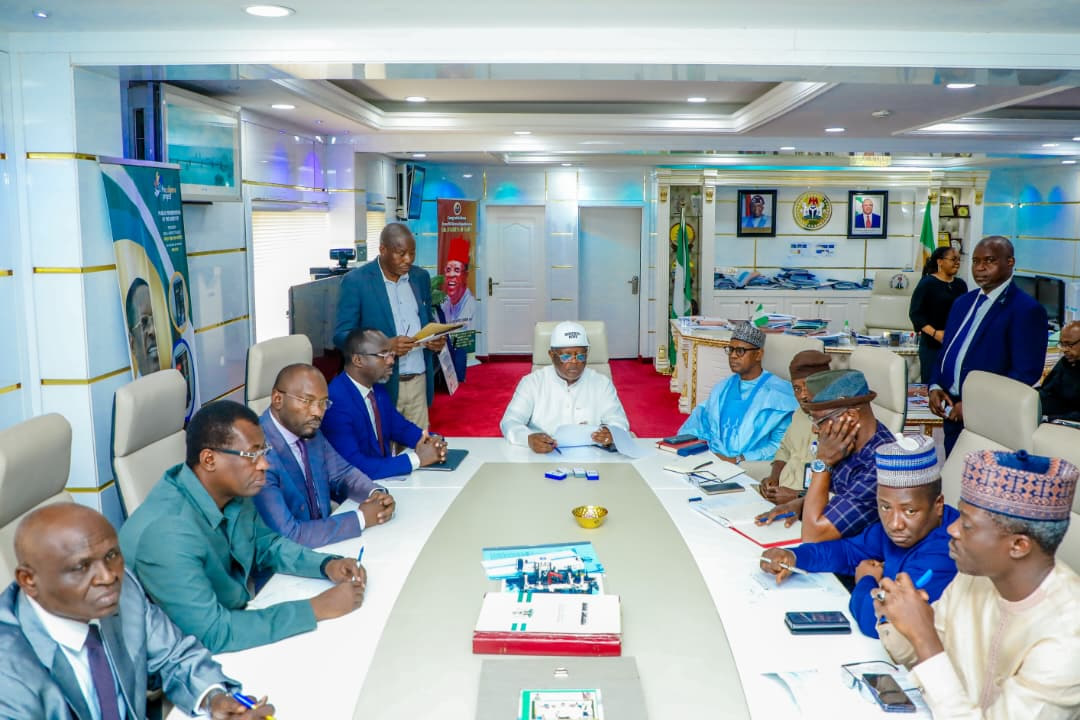
Nigeria’s Minister of Works, David Umahi recently dialogued, on behalf of the Federal Government, with a high-level delegation from the Republic of Chad, led by the Chadian Minister of Infrastructure and Road Maintenance, Mr. Amir Idriss Kourda, on the implementation of the Abidjan-Lagos highway project.
The dialogue centred on the Fluvio Lacustrine Connectivity Programme and a proposal for direct transportation link between Nigeria and Chad.
The minister assured the Chadian delegation Nigeria’s: “activating partnerships and fostering collaborations to address common challenges and to aggregate, harness and project the shared strength of the Sahel region towards realising the full economic potential of the continent of Africa.
“I am happy that you mentioned that your President is in touch with our President on this project. The two countries have a broad and brotherly relationship. We welcome you with open arms. The co-operation between the two countries has been there, especially on security and economy, and Chad is a very important partner to Nigeria. We assure you that the project is key to the development of Nigeria and Chad. As a Ministry of Works, we are capable and ready to do our part as soon as we are given a nod by Mr. President.” He urged the delegation to make official communication on the nitty gritty of collaborations needed from the Nigerian government.”
The leader of the Chadian delegation and Chadian minister of infrastructure said they were in the country to discuss the establishment of a direct transportation link between Chad and Nigeria, which majorly is the construction of a bridge over the Lake Chad, a total of 65km.
He highlighted the potential of the transportation corridor which, he said, would enhance regional connectivity and accessibility, economic development, social cohesion, and political and diplomatic cooperation.
He requested for a meeting between the two countries at technical and administrative levels in order to finetune modalities and mechanisms for realising the programme.
He said the initiative could include port, transport, and fluvial infrastructure projects, as well as joint actions for the preservation of the Lake Chad ecosystem.
The meeting had in attendance the Minister of State for Works, Rt. Hon. Bello Muhammad Goronyo Esq, the Permanent Secretary of the Federal Ministry of Works, Mr. Rafiu Adeladan, the Director Highways Construction and Rehabilitation, Engr Clement Ogbuagu, the Director, Highways Bridge and Design, Engr. Musa Saidu, the Director, Legal Services, Chinelo Igboko Esq, among others.
The Director, African Affairs, Ministry of Foreign Affairs, H.EX Amb. Mistura Abudulahem also came to witness the bilateral event.
In the company of the Chadian Minister were: The Ambassador of Chad to Nigeria, H.E Mr. Brah Mahamat; the Chadian Adviser on Infrastructure, H.E Mr. Baharadine Mahamat Zakaria; the Director General of Special Fund for the Preparation of Infrastructural Projects, Mr. Issa Doubragne; the Chadian General Affairs Officer, Mr. Oumar Adam Saleh; the Permanent Secretary, Mr. Mbounadye Antoine, among others.
The project scope and timeline.
The Length is 1,028 km to 1,081 km six-lane expressway along the West African coast that passes through: Côte d’Ivoire 144km, Ghana 520km, Togo 90km, Benin 127km, Nigeria 82km, with Ghana having the longest segment.
The estimated Cost is $15bn – $16bn
The target time to begin construction is 2026, completion projected for 2030.
Financing and next steps
ECOWAS and African Development Bank AFDB are leading mobilization. AfDB has already committed $25m for technical studies and is discussing an additional $500m.
In April 2026, ECOWAS and AfDB ran a joint investment mission and consolidated 200+ proposals into 26 priority projects along the corridor
- ALCoMA board also formed subcommittees including a finance committee, and called on EU, World Bank and other partners to support.
4. Why it matters
Officials say it’s designed to cut logistics costs, boost cross-border trade efficiency, and strengthen regional integration.
- Projected to generate ∼$16bn in combined trade value and ∼$1.3bn in toll revenues
- Will also include plans for a parallel high-speed rail line
- The corridor covers over 60% of West Africa’s commercial activity.
5. Nigeria angle
Minister of Works David Umahi reaffirmed President Tinubu’s backing, saying the corridor will match the ambition of Nigeria’s Sokoto-Badagry Superhighway. Nigeria also raised concerns about design standards and distribution of length.
Bottom line: The highway is no longer just an MoU. With ALCoMA now running and financing talks intensifying, 2026 is being treated as the year construction kicks off.
By Nick Ibe, Abuja
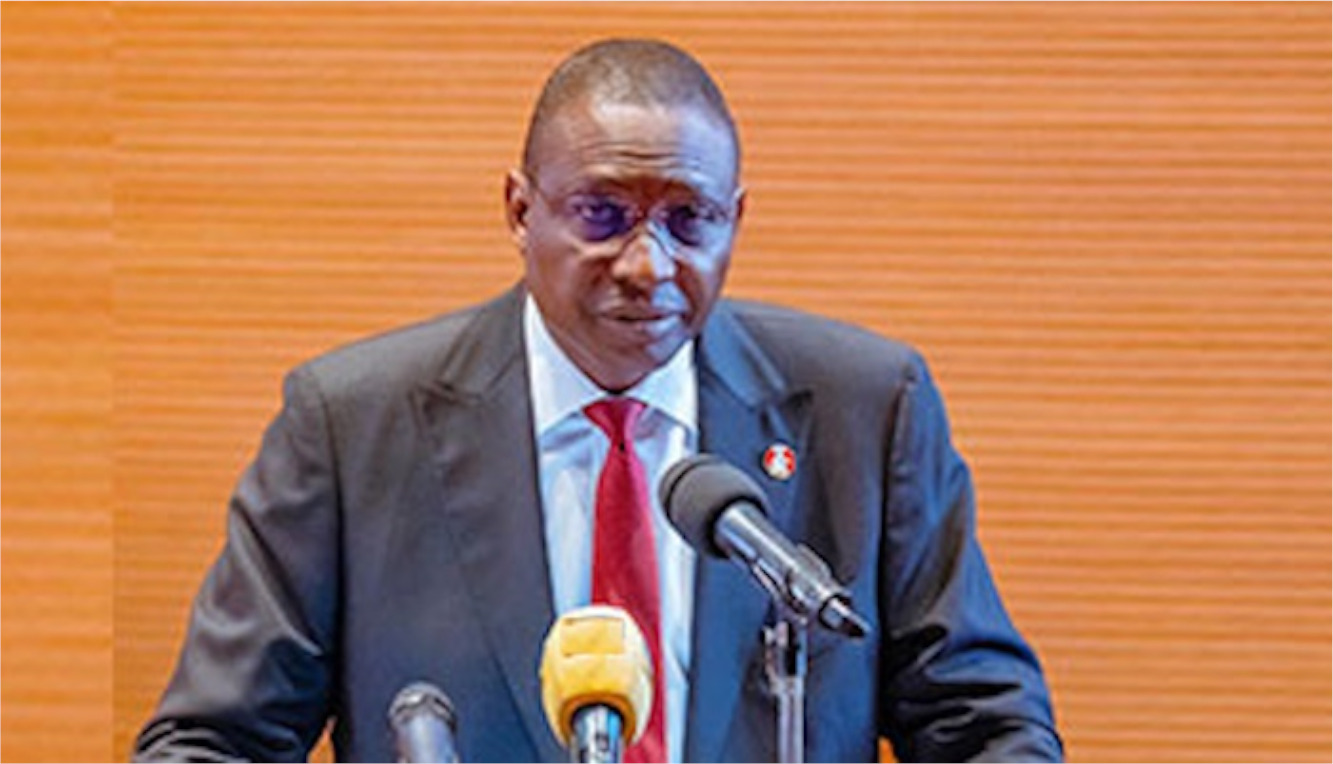
About 75 per cent of funds released by the Federal Government for Christian and Muslim pilgrimages were stolen by leaders of the agencies responsible for the programmes, the Chairman of the Economic and Financial Crimes Commission, Ola Olukoyede, has alleged.
Addressing the Nigeria Inter-Religious Council meeting and the public presentation of the EFCC’s Anti-Corruption Interfaith Manual for religious bodies, Olukoyede made the disclosure in Abuja.
The EFCC chairman added the alleged diversion was uncovered during investigations conducted by the commission into the activities of the Christian and Muslim pilgrimage bodies.
He described some of the discoveries as “mind-boggling”, alleging that officials entrusted with managing public funds for pilgrimage programmes diverted a substantial portion of the money.
According to him, some officials allegedly went as far as registering private companies in countries where Nigerian pilgrims travelled, creating what he described as serious conflicts of interest.
Olukoyede said the issue underscored the need for religious leaders and institutions to demonstrate integrity before demanding the same from their followers.
He warned religious leaders against mixing funds belonging to churches, mosques and other faith-based organisations with their personal resources or businesses. In his words:
“Whatever they give you, offerings, zakat and all of that, you keep it in that religious organisation. You are not supposed to mingle it.”
The EFCC boss added, religious leaders were free to engage in legitimate businesses but must keep such businesses separate from funds entrusted to them by their religious organisations.
He warned that diverting money belonging to a religious organisation into a personal business amounted to a criminal act.
Olukoyede also challenged pastors and imams to question the sources of unusually large donations, particularly when such money comes from public officials whose legitimate earnings could not reasonably explain their wealth.
He gave an example of a public servant giving a huge donation at a place of worship and urged religious leaders not to simply accept such funds without asking questions about their source.
He said accepting unexplained wealth and publicly blessing its donor could amount to giving moral cover to proceeds of crime.
The EFCC chairman urged religious leaders to develop internal compliance mechanisms that would clearly define the boundaries between institutional and personal finances.
He said money held by religious leaders on behalf of their organisations was held in trust for members and for the propagation of the faith.
The meeting was attended by the Sultan of Sokoto, Muhammad Sa’ad Abubakar; President of the Christian Association of Nigeria, Rev. Daniel Okoh; Secretary to the Government of the Federation, Sen. George Akume; and other religious and traditional leaders.
Akume urged religious leaders to use their platforms to condemn kidnapping, banditry, communal clashes and terrorism, describing violence as contrary to the values of faith.
By Michael Lim, Jos
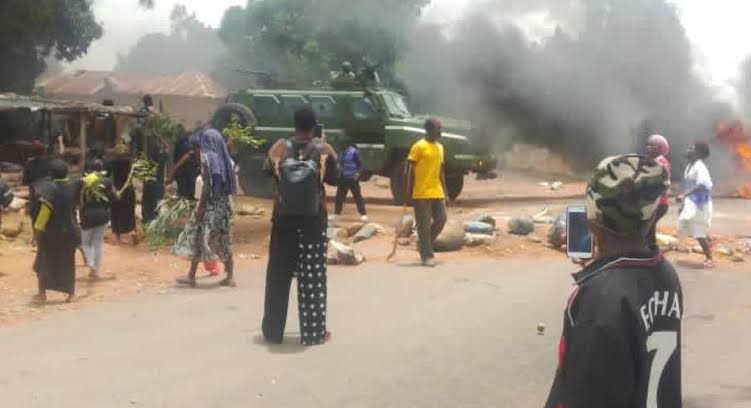
The killing Friday of three vigilantes, including the community youth leader, during a night patrol has raised tension, gripping Kassa community in the Barkin Ladi Local Government Area of Plateau State.
The killings triggered a protest by women and youths, who barricaded the Jos-Barkin Ladi-Mangu highway, demanding improved security and an end to recurring attacks in the area.
The attackers were said to have stormed the community around 1 am on Friday and opened fire on the vigilantes.
A resident, John Dung, told the press that the victims were members of the local vigilante group who had been helping to secure the community. In his words:
“The three vigilantes were on duty protecting the community when the gunmen came and shot them dead. They have been the ones helping us to keep watch at night.”
The killings prompted women and youths to block the highway for several hours, disrupting vehicular movement and leaving travellers stranded.
One of the protesters, Esther Pam, said residents were frustrated by the continued attacks despite the presence of security personnel.
She said, “We are tired of our people being killed while security operatives just sit and do nothing. We want them to go after the attackers. If they cannot protect us, they should leave our community.”
Confirming the incident, the National Publicity Secretary of the Berom Youth Moulders-Association, Rwang Tengwong, described the killings as disturbing.
Tengwong said the victims were killed while defending their community and that their deaths had heightened fear among residents.
He called on security agencies to intensify efforts to identify and arrest the perpetrators, while urging the government to strengthen security in Barkin Ladi and other vulnerable communities across the state.
Security personnel were later deployed to the area to restore order and prevent further escalation.
The incident has trailed renewed attacks on communities in parts of Plateau State, including Barkin Ladi, Bassa, Mangu, Bokkos and Riyom local government areas.
On March 29, gunmen attacked communities in Bassa and Barkin Ladi during the Palm Sunday period, killing several residents and displacing others.
The attacks prompted a condolence visit by the former Archbishop of Canterbury, Justin Welby, to affected communities.
Also, repeated attacks in Gashish and neighbouring communities in Barkin Ladi have displaced residents and heightened concerns over the security of the area.
The Plateau State House of Assembly had, during the week, called for emergency security intervention and the full occupation of the Mobile Police barracks in Gashish.
Meanwhile, the Plateau State Government condemned the Kassa attack, describing it as “deeply regrettable and unacceptable.”
In a statement issued on Friday by the .
Plateau women block highway over killing of three vigilantes
Tension gripped Kassa community in the Barkin Ladi Local Government Area of Plateau State on Friday after gunmen killed three vigilantes, including the community youth leader, during a night patrol.
The killings triggered a protest by women and youths, who barricaded the Jos-Barkin Ladi-Mangu highway, demanding improved security and an end to recurring attacks in the area.
The attackers were said to have stormed the community around 1 am on Friday and opened fire on the vigilantes.
A resident, John Dung, told our correspondent that the victims were members of the local vigilante group who had been helping to secure the community.
So This Happened (EP 429) reviews: Nigeria spent ₦1.928tn on electricity subsidy in 20250:05 / 1:01
He said, “The three vigilantes were on duty protecting the community when the gunmen came and shot them dead. They have been the ones helping us to keep watch at night.”
The killings prompted women and youths to block the highway for several hours, disrupting vehicular movement and leaving travellers stranded.
One of the protesters, Esther Pam, said residents were frustrated by the continued attacks despite the presence of security personnel.
She said, “We are tired of our people being killed while security operatives just sit and do nothing. We want them to go after the attackers. If they cannot protect us, they should leave our community.”
Tengwong said the victims were killed while defending their community and that their deaths had heightened fear among residents.
He called on security agencies to intensify efforts to identify and arrest the perpetrators, while urging the government to strengthen security in Barkin Ladi and other vulnerable communities across the state.
The incident came amid renewed attacks on communities in parts of Plateau State, including Barkin Ladi, Bassa, Mangu, Bokkos and Riyom local government areas.
On March 29, gunmen attacked communities in Bassa and Barkin Ladi during the Palm Sunday period, killing several residents and displacing others.
The attacks prompted a condolence visit by the former Archbishop of Canterbury, Justin Welby, to affected communities.
Also, repeated attacks in Gashish and neighbouring communities in Barkin Ladi have displaced residents and heightened concerns over the security of the area.
The Plateau State House of Assembly had, during the week, called for emergency security intervention and the full occupation of the Mobile Police barracks in Gashish.
In a statement issued on Friday by the Commissioner for Information and Communication, Joyce Ramnap, the government commiserated with the families of the victims and said security agencies were taking steps to apprehend the perpetrators.
The statement urged residents to maintain peace and desist from blocking the highway, saying such action could put travellers at risk.
The government also assured motorists and other road users that the road was clear and open, urging residents to remain vigilant and cooperate with security agencies.
It added that the administration of Governor Caleb Mutfwang remained committed to strengthening collaboration with security agencies and communities to improve security and sustain peace across the state.
–He is paying price for misgovernance, irresponsibility
By Isa Abdul, Abuja
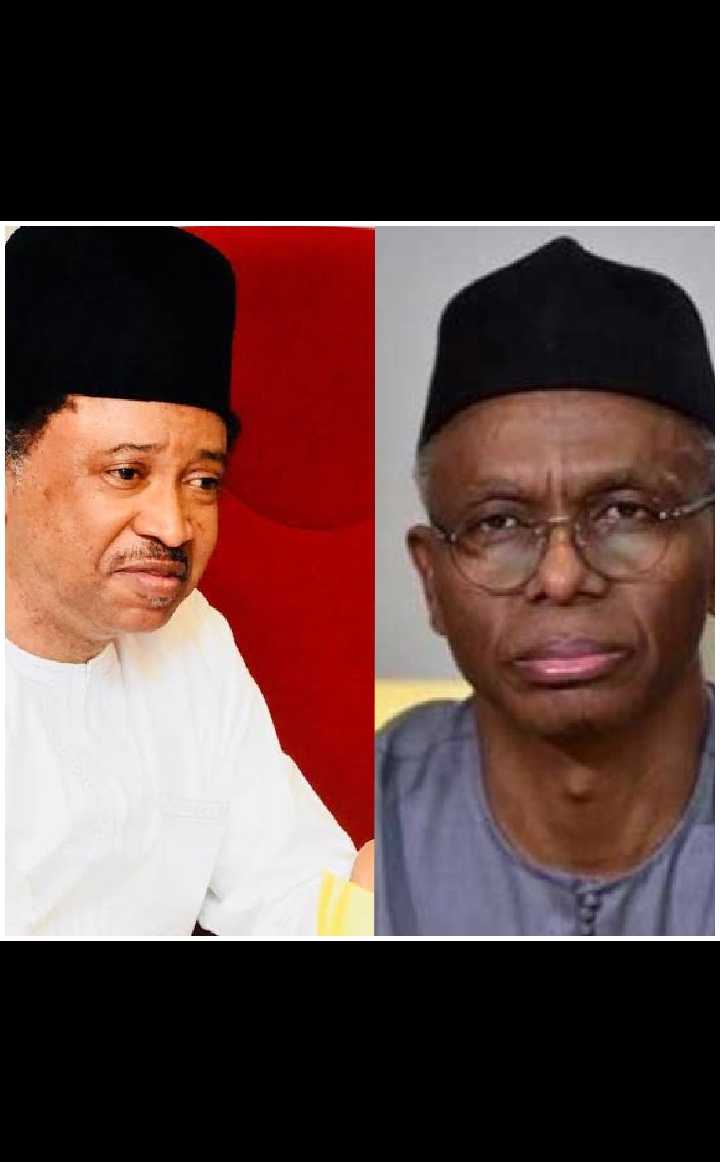
El-Rufai had no real commitment to stopping the violence that went on during his administration.
According to Sani, many Nigerians commenting on the Kaduna controversy had little direct knowledge of the affected communities.
Sani made the remarks on Channels Television’s Politics Today on Friday pointing out that places including Sanga, Kauru, Kachia, Kagarko and other parts of Southern Kaduna had experienced prolonged insecurity. In his view:
“It is a fact that terrorists and bandits have been killing people in Southern Kaduna for over a decade without any intervention from the state government, Kaduna state government.”
The former senator also rejected suggestions that El-Rufai’s record on security in Kaduna State was being unfairly criticised.
He said insecurity had affected Southern Kaduna and other parts of the state for years, alleging that the former administration failed to do enough to protect residents.
When asked whether it was fair to claim that El-Rufai did nothing about insecurity, given that his administration had appointed a commissioner responsible for internal security and other measures.
Responding, he maintained that with the scale of violence demonstrated, the measures taken by the administration were inadequate.
“If he has done anything, the bloodshed would not have been worse as they were.”
Sani also responded to recent comments by Defence Minister Christopher Musa concerning El-Rufai’s handling of insecurity and the situation in Southern Kaduna. Musa had accused the former governor of actions that, in his view, contributed to division and insecurity in the area.
Sani further alleged that the former administration failed to provide adequate support to security agencies operating in the affected areas.
“There was never a time where the government that was led by Nasir El-Rufai provided support for the police, for the army, for the civil defence, or took any serious measure to end that violence or to stop that bloodshed.”
He also revisited the controversy over the former governor’s reported comments on negotiating with bandits.
Sani alleged that El-Rufai had at different times made contradictory statements about dealing with banditry, describing him as a “man of double speak.” speak.”
He reacted to concerns in some opposition circles that El-Rufai had become a “prisoner of conscience” amid his ongoing detention and legal battles, since February 2026 in connection with separate cases involving alleged financial misconduct while serving as governor and the alleged unlawful interception of telephone communications involving National Security Adviser, Nuhu Ribadu.
According to him, El-Rufai’s current situation should also be viewed against the backdrop of his conduct while serving as governor between 2015 and 2023.
On September 22, a Federal High Court in Abuja reserved ruling on his no-case submission in the wiretapping case and adjourned the matter until October 26.
Sani, who said he had personally spent more than four years in prison as a pro-democracy activist, said he was therefore familiar with the pains of detention.
“I think he is in detention for, like they say, 200 days or something like that. For someone like me, who has been in prison for four years, I don’t think anyone can lecture me on detention, on the pains of imprisonment, and staying in the Gulag for such a very long time.”
In Sani’s opinion, the former governor had little regard for the rule of law, as his administration disregarded court orders and used state institutions against critics and opponents. In his words:
“El-Rufai is paying the price of his misgovernance and his irresponsibility when he was in public office.
“When you are in office, always remind yourself that it is an opportunity and it is a very temporary opportunity for you.”
The former lawmaker counted several individuals who were arrested and detained during El-Rufai’s administration over their criticism of the government.
He cited the case of Luka Binyat, a journalist with Vanguard, whom he said was arrested and jailed after writing about the Kaduna State Government.
Sani also mentioned Christian leaders from Kajuru Local Government Area who were arrested after protesting the killing of their leader and spent months in detention.
He further cited another case of some Islamic clerics from Zaria who were arrested after protesting the retrenchment of workers from the Kaduna State civil service.
Another case cited by Sani was that of John Danfulani, a lecturer at Kaduna State University, whom he said was arrested and jailed for criticising the former governor.
He also mentioned Maida Joseph, a LEADERSHIP newspaper reporter, whom he alleged was arrested over a report published by the newspaper.
Sani said members of the Islamic Movement in Nigeria also spent several years in detention during the period, alleging that efforts to secure their release were frustrated.
“When people are in power, they forget that a day will come when they will be out of power,” he further remarked.


75% of Pilgrimage Funds Stolen, EFCC Boss Alleges
Spread the loveBy Nick Ibe, Abuja About 75 per cent of funds released by the Federal Government for Christian and...
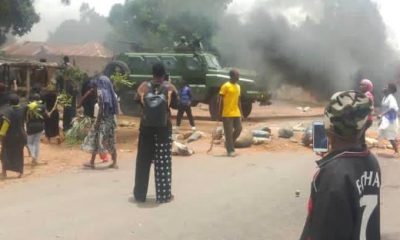

Plateau Women Protest, Block Highway over Killing of Three Vigilantes
Spread the loveBy Michael Lim, Jos The killing Friday of three vigilantes, including the community youth leader, during a night...

NNPC Ltd Welcomes $800m Ima Gas Final Investment Decision
Spread the loveBy Philip Nyam The Nigerian National Petroleum Company Limited (NNPC Ltd) has welcomed the $800 million Final Investment...

The UN Hypocritic, Irresponsible Walkout Of Shame: And Nigeria’s Terrorism at Home
Spread the loveBy H. E. Mejeh Yesterday in New York, Nigerian delegates staged a well-rehearsed walkout from the United Nations...
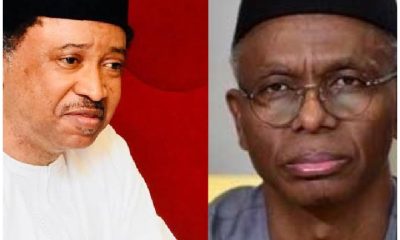

Shehu Sani: El-Rufai Never Did Enough to Stop Southern Kaduna Killings
Spread the love–He is paying price for misgovernance, irresponsibility By Isa Abdul, Abuja El-Rufai had no real commitment to stopping...


October AGLOFEST: To Converge Investors, Businesses, Cultural institutions, Creative Industry
Spread the loveBy Nick Ibe, Abuja October 2026 has been chosen by the Federal Government to launch the African Global...

US Sells ex-Gambian Dictator Jammeh’s $3.5m Mansion, Shares $2.5m to Victims
Spread the loveBy Son Tertsea The United States has returned about $2.5 million to The Gambia from the sale of...


Nasarawa Police Foil Murder Attempt, Net 4 Kidnappers, 2 Cultists
Spread the loveMichael Lim Four suspected kidnappers who allegedly plotted to kill their victim after collecting ransom have been arrested...

Bill Gates Warns AI Is ‘Powerful’ Enough To Destroy Humanity
Spread the love–There “absolutely” needs to be legislation regulating AI and law enforcement By Son Tertsea, Abuja Billionaire Bill Gates...
EFCC Chair: “I receive over 20,000 Corruption Petitions Yearly in Respect to Public Corruption
Spread the loveBy Son Tertsea, Abuja Fresh concerns have been raised over the scale of corruption in the public sector...