
General News
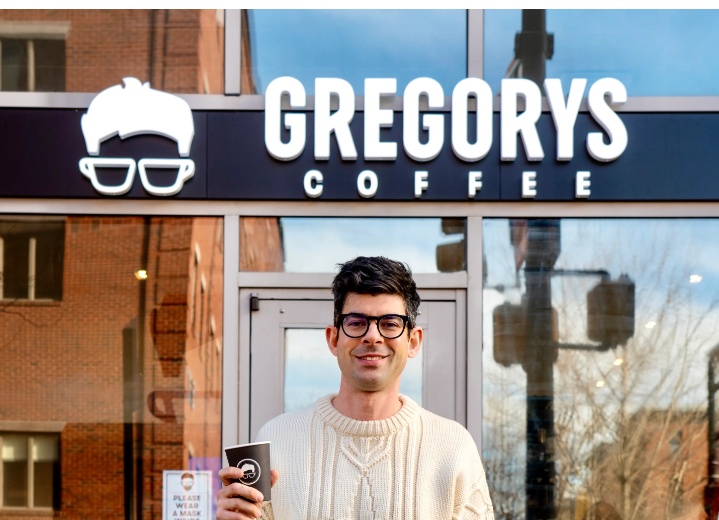
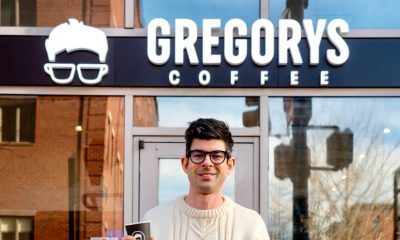
Gregory Zamfotis: At Age 24 Ditched Becoming a Lawyer, Opened a Coffee Shop.

By Sherin Shibu
Key Takeaways
Gregorys Coffee has grown from one small Park Avenue bar in 2006 to 53 locations nationwide, with typical stores now doing over $1 million in annual sales.
Revenue reached about $40 million last year and is projected to hit roughly $45 million this year.
Gregorys Coffee founder and CEO Gregory Zamfotis attributes the growth to quality coffee, roasted in-house.
Two decades ago, Gregory Zamfotis was at a crossroads. He was a second-year law student at Brooklyn Law School and had just been offered a full-time position at a real estate law firm. The only problem was that Zamfotis wanted to open his own business.
“I grew up in the food business,” he explains in a new interview with Entrepreneur. “My father operated a number of concepts in New York City, so I grew up working with him.”
Zamfotis worked at his father’s sandwich shop during his time in law school. By the end of his education, he was effectively running the place. He wound up “really enjoying” the work and considering it as a potential career. He knew he wanted to start a business of his own one day, separate from his father’s endeavors. So after graduating from law school, he took his interest and passion for coffee and his experience working in food service, and decided to open his own coffee shop. He was 24 years old.
“If you were in the Midtown Financial District, the areas where the majority of New Yorkers are spending their time working, the only options for coffee really were Starbucks or Dunkin,” Zamfotis says. “I thought that was a huge opportunity because I grew up working there. I wanted to take what I had learned, apply it to the coffee industry, and do it in a part of the city that was extremely underserved at the time.”
Zamfotis started by opening one coffee bar on Park Avenue and decided it would simply be better than anything around it. The plan was to obsess over the drinks, the ingredients and the feel of the place until it earned a permanent slot in New Yorkers’ daily routines.
Day after day, cup after cup, that little shop turned into a magnet for regulars who didn’t just like the coffee; they were loyal to the brand. The identity sharpened around bold, playful branding and a menu that refused to cut corners.
“We wanted to do a quality specialty coffee operation in a volume setting,” Zamfotis says, describing early days when he put in “70 to 80 hours a week” at the store to make sure it ran exactly as he envisioned.
What surprised him
What Zamfotis didn’t fully understand at the time was how hard it would be to do coffee exceptionally well at scale. “I guess I was surprised at just how complex doing coffee really well was,” he says. “The only way we were gonna win is if we could differentiate ourselves from the national players or the other people doing coffee around the block.”
That realization pushed him into a kind of self-imposed coffee bootcamp. He visited shops, attended conferences and immersed himself in the craft. “I had to spend a lot of time and energy not only visiting other coffee shops, traveling, going to conferences, listening to speakers, and just pouring myself literally into all things coffee, to make myself an expert,” he says.
That work changed the culture and the product. “There’s a difference between doing things well and doing things great,” he explains. As he elevated the coffee program and training standards, customers began noticing the difference — and kept their daily habit. “Customers, maybe in the beginning, were coming because of all the other things…great service, fast, good-looking store…then once I started to elevate the coffee program higher and higher, while also keeping all those other elements so strong, that’s when we really started to make things better,” he says.
Today, Gregorys roasts its own beans in Long Island City, bakes fresh pastries and emphasizes personalization — from milk choices to syrup levels — while still moving fast. The goal, Zamfotis says, is that customers should feel like they’re sacrificing nothing: not time, not quality, not options.
Scaling from one store to 53 — and to $45 million
Zamfotis estimates the first shop took 12 to 18 months to find consistency; the company hit the $1 million annual sales mark around year two or three. That traction gave him the confidence to open a second location roughly two and a half years after the first — and it was an instant hit.
“When the first location may have taken 12 to 18 months to stabilize, the second location was stable from the get-go…very busy from the day we opened,” he says.
From there, growth became a function of systems and people. “I’ve always said you can only grow as fast as the people [you have] to help execute,” Zamfotis says. For about 12 years, every single person in a position of authority at Gregorys was promoted from within, often starting as baristas.
That philosophy helped the company expand from two stores to 53 across New York, New Jersey, Washington, D.C., Florida, California, Arizona and Tennessee. The financials now reflect that footprint. “Last year we did just around $40 million,” Zamfotis says. “This year, I believe the projection is closer to like $45 million.”
Exploring franchising
At some point, Gregorys hit a crossroads: keep grinding out corporate stores one by one, or admit that the “incredible box” they’d built was strong enough to share with other operators and scale faster than a single team ever could. That’s when Craveworthy Brands and its CEO Gregg Majewski stepped in as managing partner and corporate operator in August 2025, bringing a platform built for franchising, from training to shared services that could support a national push.
“We knew that if we wanted to continue to grow the brand at the speed that was necessary, the only way was to attach to franchising,” Majewski tells Entrepreneur in a new interview.
Now, with a 20-year track record and a typical store pulling in roughly $1 million in annual revenue (with high performers around $1.6 million and drive-thru models at about $1.4 million), Gregorys is no longer just the underdog Park Avenue café. It’s a New York–forged coffee brand stepping into the franchise spotlight, aiming to sell 50 to 75 locations in its first year of franchising this year and inviting operators to go toe-to-toe with the biggest coffee players in America.
“Any brand that’s been around the industry as long as that and has been successful in as many markets as it has over the 20-year timeframe is perfect for franchising — especially when you built your reputation in one of the hardest cities in the world to operate in, New York,” Majewski says. Gregorys has “a group of regulars that absolutely live and die [for] this brand,” Majewski explains.
Craveworthy Brands brings scale muscle to franchising ambition. The firm has 21 brands in its portfolio, eight of which are already franchising, and it provides the infrastructure that early franchisees often lack: training, shared services, construction support and operational systems built to replicate performance across stores. Craveworthy’s portfolio includes brands like Big Chicken, Taffer’s Tavern and Genghis Grill.
For would-be franchisees, Gregorys is now pitching itself as a way into a coveted segment that can otherwise be hard to access. Majewski notes that “some of the bigger players are sold out or aren’t accepting.” Gregorys offers a build-out cost “anywhere from $200,000 to $700,000,” he says.
Why franchising works
Majewski is clear about why he believes franchising works, not just for Gregorys but across Craveworthy’s portfolio. On the franchisor side, the hurdle is ensuring systems and procedures are in place so the company can train effectively and execute the product consistently.
On the franchisee side, the challenge is more psychological: “following the systems and procedures and reminding yourself that you bought into a system,” he says. The promise is that if the system is well designed and properly followed, it exists “for a reason so you can be successful.”
Majewski insists that culture is the differentiator in a successful franchise. He says success comes from “establishing an incredible culture in the system” and making sure operations are simple enough to replicate. “If any concept is ever too complicated, you can’t have the consistency,” he explains.
The goal is that “when you walk into a store in Indiana or a store in California, you get the same experience,” he says. For Gregorys, that means protecting not only the coffee quality and menu but also the feel of a brand born on Park Avenue and refined in New York City’s daily grind.
Entrepreneur.com.




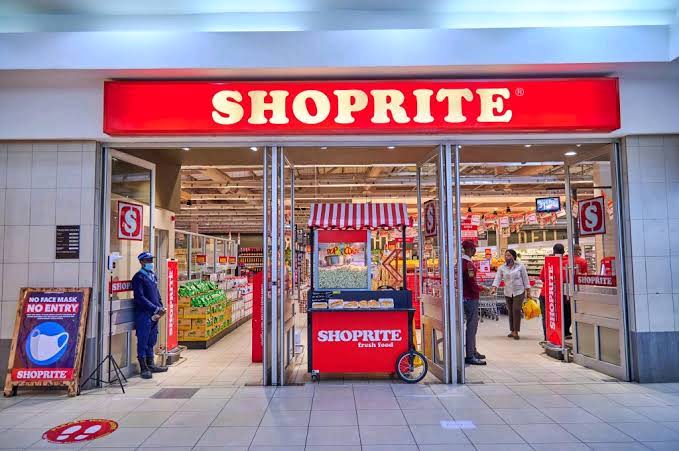
By Seyi Balogun, Lagos
Having learned some hard lessons, Shoprite Nigeria has rejigged its strategies, as it plans to return to business in Nigeria.
The new model under consideration is the standalone neighbourhood stores as part of efforts to revive its operations, following financial difficulties that forced the closure of its doors to customers.
This was disclosed by Adekunle Adebiyi, the Executive Director, Investments at MBO Capital Management Limited, an investor in Shoprite Nigeria, in an interview on Nairametrics’ Drinks and Mics on Friday, where he discussed the supermarket chain’s financial challenges and recovery plans.
He added that three Shoprite outlets had since reopened after the company temporarily shut its operations to negotiate with suppliers and address outstanding financial obligations. In his words:
“We took a very, very drastic decision to just shut everything down whilst we negotiated with suppliers. Now three stores are back open.”
He explained that the company planned to expand through smaller standalone outlets in residential neighbourhoods rather than relying primarily on large shopping malls.
“We’re going to be opening standalone neighbourhood stores, which was always the plan,” Adebiyi said.
The approach is expected to allow the retailer to concentrate its resources on supermarket operations rather than committing substantial capital to property development.
Adebiyi said supermarkets typically operate from leased premises, with investments focused on equipment such as shelves and refrigeration systems.
However, he noted that this business model could create financing difficulties in Nigeria, where banks often require tangible assets as collateral for loans.
He disclosed that MBO Capital encountered challenges securing bank financing during the acquisition of Shoprite Nigeria because lenders struggled to identify sufficient physical assets to support the transaction.
Despite the retailer generating billions of naira in revenue, the structure of its business made it difficult to obtain conventional asset-backed financing, prompting the investors to explore alternative funding arrangements.
Adebiyi also identified foreign exchange volatility as a major factor behind Shoprite Nigeria’s financial difficulties.
According to him, about 17 of the retailer’s 28 stores had rental agreements denominated in dollars when the acquisition took place.
The depreciation of the naira subsequently increased the cost of those leases, putting additional pressure on the company’s operating expenses.
He said rent should ordinarily account for between eight and 10 per cent of a supermarket’s revenue, but some Shoprite locations faced substantially higher rental costs.
The executive also cited operational challenges, including weaknesses in inventory management and the loss of access to the enterprise resource planning system used by the former parent company.
He said replacing the system required billions of naira in additional investment, diverting funds that could otherwise have been used to support the business.
Shoprite’s current recovery efforts follow a series of operational challenges and changes in ownership.
In June 2021, a consortium led by Persianas Investment Limited completed the acquisition of Shoprite Nigeria after South African retailer Shoprite Holdings decided to exit direct ownership of its Nigerian operations.
The business subsequently continued under Retail Supermarkets Nigeria Limited through a franchise arrangement.
The retailer later faced further pressure from rising operating costs and difficult trading conditions. In June 2024, Nairametrics reported the closure of its outlet at Novare Wuse Central Mall in Abuja.
In March 2026, Shoprite told Nairametrics that it was not leaving Nigeria but implementing a phased restructuring programme that began in August 2025.
The Chief Strategy Officer at Retail Supermarkets Nigeria Limited, Bunmi Adeleye, had also disclosed plans to reopen outlets at The Palms Shopping Mall and Circle Mall in Lagos while exploring smaller neighbourhood store formats to reduce expenses on rent, electricity and diesel.
However, the company has yet to disclose the number of new neighbourhood outlets it intends to open, their proposed locations or a timeline for the expansion.
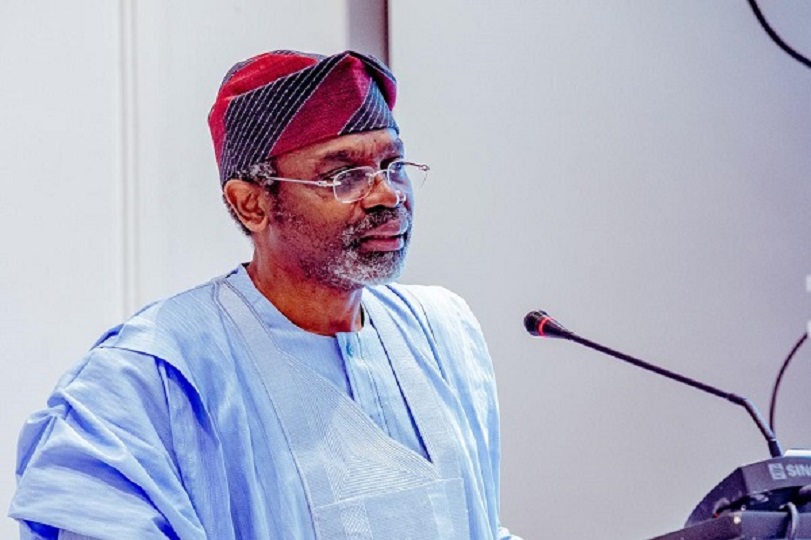
–Lagos, others yet to convene, take position
By Our Reporters
THE gravitation towards the federal and state police system in the country got a boost, yesterday, as the wave of approvals that started on Wednesday by Friday got to 13 states thus bringing the number of states supporting the legislation so far to 24.
Thus, the constitutionally required 24-state endorsement benchmark needed for the state police bill to become law has already been met. Reports indicate that more states will likely conclude deliberations next week.
14 of the 17 southern states have backed the bill and 10 of the 19 northern states have endorsed it.
Ebonyi, Lagos and Ondo states are yet to decide from the south, while from the North, 9 have yet to decide. They are Kogi, Niger, Borno, Gombe, Bauchi, Jigawa, Katsina, Kano, and Sokoto. Five of the 10 states are in the North-West zone. The North-Central has two and North-East three states.
The 1999 Constitution (Sixth Alteration) Bill, 2026, was transmitted by the national assembly to the 36 state Houses of Assembly on September 16, for concurrence.
The state legislatures are expected to turn in their inputs on October 29, which is exactly six days away. This is an administrative step constitutionally backed.
Under Section 9 of the 1999 Constitution, alteration of the Constitution requires approval by at least two-thirds of the 36 state Houses of Assembly, which is 24 legislative houses, before the amendment can proceed to the next stage.
24 states that have approved the bill:
1.Adamawa State 2.Delta State
3.Edo State
4.Kwara State 5.Nasarawa State
6.Ogun State 7. Osun State 8. Oyo State 9. Plateau State 10. Rivers State 11. Taraba State 12. Zamfara State, 13. Enugu, 14. Anambra,15. Imo,16. Ekiti 17. Kebbi, 18. Akwa Ibom, 19. Bayelsa, 20. Benue, 21. Cross River,
22. Abia, 23. Yobe,
24. Kaduna
States being awaited:
1 Lagos, 2. Ondo, 3. Ebonyi, 4. Kogi, 5. Niger, 6. Borno, 7. Gombe, 8. Bauchi, 9. Jigawa, 10.Katsina, 11. Kano and
12. Sokoto
General News
The Past Administration’s Unaccounted Trillions And The Irony Of Sudden Quest for Accountability
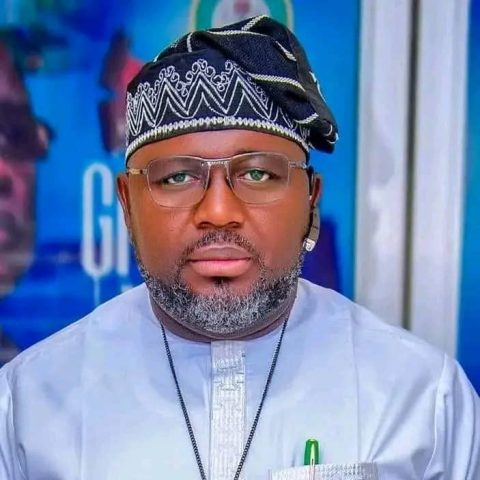
By Solomon Iorpev,
In the theatre of politics, irony often takes center stage. Today, the People’s Democratic Party (PDP) and its partners in the so-called Rainbow Coalition have suddenly discovered their voice, demanding accountability and evidence of work done with monthly “₦30 billion” allocations. But one cannot help but recall the biblical proverb of a man with a log in his eye trying to remove a speck from his neighbor’s eye.
For eight long years, the last administration sat comfortably in power, receiving regular monthly federal allocations without interruption. They collected several tranches of the Abacha loot, Paris Club refunds, bailout funds, and loans running into billions. Add to this the internally generated revenues (IGRs), and the cumulative figure swells to well over ₦3 trillion. Yet, when the dust settles, what tangible legacy can they point to? A roughly patched 20km road that is the solitary achievement paraded before the people.
Even more astonishing is the former governor’s recent claim that the collapse of Taraku Mills, which became a conduit pipe for siphoning resources, was merely due to electricity supply. Really? For eight years, as a sitting governor, you knew this and did nothing? That is not just poor leadership; it is a fundamental failure of responsibility.
Now, in a twist of irony, these same figures attempt to paint the Alia-led administration black, hoping that by appearing “off-white,” they might regain relevance. But the people are not so easily deceived. Before asking for a new mandate, the PDP and its allies must first give a proper stewardship of their last mandate. What happened to the trillions in allocations, refunds, bailouts, loans, and IGRs? Where did the money go? All we saw was unpaid salaries and pensions, unpaved roads and failed buildings plus debts of hundreds of millions of naira.
I must admit that the call for accountability is noble, but it must begin at home. Leadership is not about selective memory or convenient morality. It is about transparency, responsibility, and service. Until the past is accounted for, the present cries for accountability will remain nothing more than political theatre.
Hon. Chief Solomon Iorpev,
Honourable Commissioner,
Information and Orientation,
Benue State.
Friday, 23rd October 2026


As Shoprite Plans Return: Standalone Shopping Model Considered
Spread the loveBy Seyi Balogun, Lagos Having learned some hard lessons, Shoprite Nigeria has rejigged its strategies, as it plans...

Gregory Zamfotis: At Age 24 Ditched Becoming a Lawyer, Opened a Coffee Shop.
Spread the loveBy Sherin Shibu Key TakeawaysGregorys Coffee has grown from one small Park Avenue bar in 2006 to 53...

NEC Backs 90-Day Plan To Ease Cost Of Living, Cut Food Prices
Spread the loveBy Felix Umande The National Economic Council, NEC, has endorsed a 90-day economic action plan proposed by the...

FIFA Endorses Nigeria’s Normalisation Committee: To Nominate Members with CAF
Spread the loveBy Son Tertsea, Abuja The Nigeria Football Federation (NFF) has received FIFA’s endorsement of the Normalisation Committee to...

State Police: Constitutional Two-thirds Met as 24 States Support Bill
Spread the love–Lagos, others yet to convene, take position By Our Reporters THE gravitation towards the federal and state police...

The Past Administration’s Unaccounted Trillions And The Irony Of Sudden Quest for Accountability
Spread the loveBy Solomon Iorpev, In the theatre of politics, irony often takes center stage. Today, the People’s Democratic Party...

Reps Tell Airtel, MTN, Glo CEOs: Come and Explain Why Your Poor Network Quality Persists
Spread the loveBy Isa Abdul, Abuja The House of Representatives ad hoc committee probing into poor telecom services has summoned...

Shettima Tells States: Develop, regulate, Use Your Power For Devt Needs
Spread the loveBy Nick Ibe, Abuja States have been told to look for their power solutions locally by setting up...


Why Investors Shun Nigeria : contract breaches, court delays, ex-parte orders
Spread the loveBy Nick Ibe, Abuja Legal and business leaders have revealed situations that discourage long term investments in Nigeria....

FARIDA ISIAK: Who Will Protect The Young Journalist?
Spread the loveBy Shu’aibu Leman Last Wednesday, October 21,2026, I wrote about Dele Giwa, the legendary Nigerian journalist murdered by...