
General News
Fresh Account of How Abacha Died: “I did not kill him, he died on top of me.’”


–Abacha’s girl friend in DSS @40: My Journey Behind the Shield,
By Our Reporter
A new book DSS @ 40: My Journey Behind the Shield, written by a retired Assistant Director of the Department of State Services (DSS), Dennis Amachree, has brought a fresh version of how former military Head of State, General Sani Abacha, died during an intimate encounter with a woman in the early hours of June 8, 1998.
This account counters long-standing theories surrounding the late military head of state’s death.
In Amachree’s 348-page memoir, the writer has recounted his role in the investigation that followed Abacha’s sudden death.
According to him, Abacha suffered a coitus-induced cardiac arrest at about 4:05 a.m. inside the Aso Rock Presidential Villa Guest House in Abuja.
He said the woman, whom he identified only as a pharmacist, was later tracked to Lagos and interrogated by him after the DSS received intelligence that she had fled Abuja shortly after the incident.
He claimed that while the two were together, the pharmacist realised Abacha had become unresponsive. According to his account, she checked his pulse, found none, informed a soldier on duty that the Head of State had requested transport back to her hotel, and later boarded an early morning flight to Lagos.
Amachree, in the book, said the DSS subsequently traced her to an address in Ogudu, Lagos, where she was arrested and questioned.
“The first thing she said to me was, ‘I did not kill him, he died on top of me,’” Amachree wrote, adding that after obtaining her account, he contacted the DSS Director of Operations in Abuja, who ordered that she be flown back to the Federal Capital Territory.
Amachree, who was Assistant Director of Operations and Intelligence at the Lagos State SSS Command at the time, said his account represents the true version of events and should lay to rest years of layers of speculations over Abacha’s death.
Clearly, in his view, the several popular narratives—including claims that the former military ruler was poisoned with an apple, assassinated through a poisoned handshake or killed in a foreign intelligence operation—were fake , unsupported by evidence.
Furthermore, according to the book, Abacha’s girlfriend had arrived at the Aso Rock Guest House in the company of her younger sister, a pharmacist who was in Abuja for a conference. Amachree account shows that after the girlfriend had returned to her hotel, the pharmacist remained alone with the Head of State.
The account explains what he described as the “missing window” in the timeline presented by Abacha’s former Chief Security Officer, Major Hamza Al-Mustapha.
Over the years, Al-Mustapha has consistently maintained that Abacha’s health deteriorated after shaking hands with a member of Palestinian leader, Yasser Arafat’s entourage during an official visit, a claim widely interpreted as suggesting poisoning.
Amachree, however, said Al-Mustapha’s account left unexplained the period between the departure of senior military officers from the Villa and the discovery of Abacha’s condition.
The retired DSS officer has also challenged other accounts advanced over the years by former Minister of the Federal Capital Territory, Gen. Jeremiah Useni; military physician Brig.-Gen. Oviemo Ovadje; former Minister of Aviation Femi Fani-Kayode; former United States National Security Adviser Susan Rice; and reports published by foreign media, arguing that none was based on verifiable evidence.
He said some accounts attributed Abacha’s death to long-standing health complications, while others alleged foreign involvement or the use of poison, but insisted that the testimony he obtained from the pharmacist remained the most accurate explanation.
According to him, the controversy surrounding Abacha’s death reflected a broader culture of misinformation and lack of accountability in Nigeria’s leadership history.
He argues that deliberate suppression of facts had fuelled conspiracy theories for decades and stressed that historical records should be based on verifiable evidence rather than speculation.
Abacha led Nigeria from November 17, 1993, until his death on June 8, 1998, after taking power from the Interim National Government headed by Chief Ernest Shonekan.
His administration was marked by widespread allegations of human rights abuses, detention of political opponents and suppression of pro-democracy movements.
His death came barely a month before the death in custody of the presumed winner of the annulled June 12, 1993 presidential election, Chief Moshood Kashimawo Olawale (M.K.O.) Abiola, on July 7, 1998.
Before his death, Abacha was widely believed to have been preparing to transform from military ruler to civilian president under a transition programme in which all five registered political parties endorsed him as their sole presidential candidate.
The development prompted the late former Governor of Oyo State, Chief Bola Ige, to famously describe the parties as “the five fingers of a leprous hand.”
One of the book’s edifying points is that political power is ephemeral: no amount of security or authority can shield any leader from mortality.

By Nick Ibe, Abuja
To cushion the harsh impact of rising living costs, the Federal Government has approved a N70,000 monthly transport intervention for public service workers across all levels for six months, beginning in November 2026, .
This was one of the outcomes of the conciliation meeting between the Federal Government and the leadership of the Nigeria Labour Congress, NLC, in Abuja on Tuesday, following renewed pressure from organised labour over the rising cost of living, workers’ welfare and outstanding agreements.
The government also approved the payment of peculiar allowance arrears, effective from May 1, 2026, in three equal monthly instalments beginning in November.
The parties did not agree on the effective date for implementing the national minimum wage, but agreed that the Minimum Wage Negotiation Committee would be constituted and commence meetings immediately.
The resolutions were contained in a memorandum of understanding signed at the end of the meeting by the Director-General of Budget, Timi Yakubu; NLC President, Joe Ajaero; the Permanent Secretary, Service Welfare Office, Office of the Head of the Civil Service of the Federation, Dr Garba Abdul S.U.; and the Minister of Labour and Employment, Dr Muhammad Maigari Dingyadi.
The document made public after the meeting was tagged: ‘Resolutions Reached at a Conciliation Meeting Held at Federal Ministry of Labour and Employment Between the Federal Government and the Leadership of Nigeria Labour Congress on Tuesday, 27th October, 2026’, outlined agreements on minimum wage negotiations, transport support, outstanding allowances, health workers’ remuneration, tax relief and hazard allowances for agricultural officers.
The meeting followed an earlier conciliation session held on October 22, 2026, convened by the Federal Ministry of Labour and Employment to address disagreements between the government and organised labour.
On the transport intervention, the document stated, “That transport intervention of Seventy Thousand Naira (N70,000) commencing from November 2026 would be paid across all levels for a period of six months.”
The agreement trails high transportation costs and the prices of other essential goods following the removal of the petrol subsidy in May 2023, by President Bola Ahmed Tinubu.
Organised labour has repeatedly demanded measures to ease the economic pressure on workers, including reductions in petrol prices, improved wages and the implementation of outstanding welfare agreements.
The memorandum also noted the NLC leadership’s concerns about the government’s handling of its demands.
Addressing the disagreement, it stated that the NLC leadership “expressed concern over the Federal Government’s attitude towards the above issues.”
It added that the Federal Government, in response, “stated that it fully respects the right of the Congress to advocate for improved working conditions for Nigerian workers, and is genuinely trying to address every aspect of it through a structured intervention.”
On the national minimum wage, the parties agreed that the Minimum Wage Negotiation Committee would be constituted and commence meetings immediately.
However, the effective date of implementation remained unresolved.
The document stated, “It was agreed that the Minimum Wage Negotiation Committee would be constituted and commence meeting immediately. It should however be noted that there is a disagreement on the effective date of implementation.”
The disagreement leaves a key issue outstanding despite the commitment to begin negotiations without delay.
The national minimum wage became a major issue in 2024 when the Federal Government and organised labour negotiated an increase in the statutory minimum monthly wage from N30,000 to N70,000. The new rate was subsequently enacted into law through the National Minimum Wage Act.
The latest agreement refers to further discussions and the implementation date of the national minimum wage but does not provide details of the specific proposal under consideration or when the parties expect to conclude the negotiations.
The agreement indicates that while the government has approved some financial interventions, other workers’ demands remain subject to further negotiations, administrative verification or decisions by relevant government bodies.
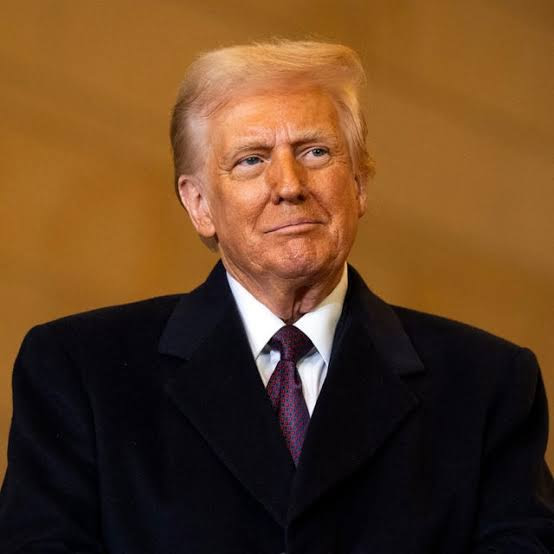
“Trump… Please bring my son back to me. I am begging you for mercy.” And what Trump did when he heard those words… may bring tears to your eyes.
Her name was Malphine. She was 95 years old. A mother who had spent years waiting. Hoping. Praying. And one day… she finally got the chance to meet Trump. And stood before him. With all the strength she had left. And spoke the only words in her heart. Please. Bring my son home.
And Trump looked at this 95-year-old mother. Held her hands. And gave her a promise. I will bring your son home.
And Malphine held on to that promise. The way only a mother of 95 can hold on to something. When hope is all she has left.
Days went by. Weeks went by. And then one morning… the news finally arrived. Her son Marc was coming home. After years away. After years inside a foreign prison. After years of a mother waking up every single day, wondering whether she would ever get to hold her child again.
He stepped off that plane. And returned home. And when Marc’s feet finally touched American soil… Trump was there. In person. To welcome him. To embrace him. To look him in the eyes and say… welcome home. America has not forgotten you.
And in that single embrace…
Trump showed the world something that no speech and no rally could ever truly express: That America cares about its people. Wholeheartedly. Unconditionally. And never gives up fighting for them.
And today… I sat thinking about that story. And remembered every harsh word I had ever spoken about this man. Every judgment. Every doubt. Every moment I chose to look away. And I felt something I can hardly describe. Deep shame.
Because Malphine trusted Trump at 95 years old. With all the hope she had left. And he helped bring her son home.
Today… this is the side of Trump that so many people may never take the time to see.
Not the Trump in the headlines. Not the Trump on the rally stage. Just a man. Who listened to a 95-year-old mother pleading for her son. Worked to help answer her prayers. And personally showed up to welcome him home.
If this story touched your heart today… let God and every American reading this feel your .
And tell me honestly, in your own words — after reading this… can you still speak badly about President Trump? Because I truly find it difficult to do so. Not anymore. Not after hearing this story.
Sons of Liberty. Maga Movement

–Calls for NSCDC reforms, compensation for victims
By Son Tertsea, Abuja
Dehydration was cause of the death of the detained miners, the panel constituted to investigate the deaths of alleged illegal miners in the custody of the Nigeria Security and Civil Defence Corps (NSCDC), Niger State Command, has stated.
The chairman of the committee, Jonathan Kure, while presenting the report to the Minister of Interior, Olubunmi Tunji-Ojo, in Abuja on Tuesday, , said the miners suffered acute respiratory failure.
He also corrected the earlier reports that 37 miners died in custódy, saying 33 miners were confirmed dead.
He said the miners collapsed after calling for water and were ignored by the personnel of the NSCDC.
He added that the detention room was overcrowded and poorly ventilated.
He said the miners were illegally arrested and detained, stressing that they were all detained beyond the legally allowed period.
Part of the panel’s report called for a total reform of the NSCDC as well as solicited compensation for the victims.


FG Gives Workers N70,000 Monthly Transport Support for Six Months
Spread the loveBy Nick Ibe, Abuja To cushion the harsh impact of rising living costs, the Federal Government has approved...

Trump and the 95-year Mother: Government That Cares for All Citizens
Spread the love“Trump… Please bring my son back to me. I am begging you for mercy.” And what Trump did...


Probe Panel Says Heat, Dehydration Killed 33 Detained Niger Miners
Spread the love–Calls for NSCDC reforms, compensation for victims By Son Tertsea, Abuja Dehydration was cause of the death of...

Tinubu Seeks Law To Bring Back Nigerians Jailed Abroad
Spread the loveBy Felix Umande President Bola Ahmed Tinubu has transmitted a bill to the Senate seeking to empower the...

Senate Says: Travel Agencies, Short-let Apartments Need Closer Scrutiny in Human Trafficking Probe
Spread the loveBy Isa Abdul, Abuja As part of efforts to dismantle trafficking networks and protect Nigerians from exploitation abroad,...
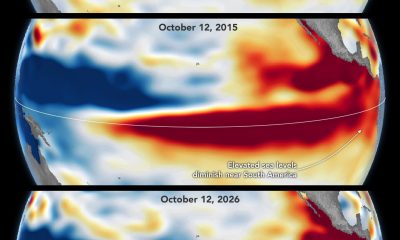

El Niño: Its Meaning, Effects and How Nigerians Should Prepare for It
Spread the loveBy Son Tertsea, Abuja Nigerians have been alerted that El Niño event would raise concerns that potentially affect...


Accusations of Data Theft: MTN Explains How Nigerians Consume Data Fast
Spread the loveBy Nick Ibe, Abuja: Engaging in high-resolution video streaming, automatic downloads, background applications, cloud backups and increased internet...


Kogi Authorities Probe Why Police Corporal Killed female Colleague, Self
Spread the loveBy Michael Lim The Kogi State Police Command has begun to probe why a police corporal, Amos Yusuf,...

WHO Declares Nigeria Ebola-Free After Evacuation of Patient to Switzerland
Spread the loveBy Nick Ibe, Abuja Dr Mohamed Janabi, the World Health Organisation’s (WHO) Regional Director for Africa, says Nigeria...

Fake Letter Lands Atiku Supporter in Court
Spread the loveBy Isa Abdul, Abuja For circulating a fake document purportedly written by President Bola Ahmed Tinubu to the...