
General News
FG Approves Varsity Workers’ Hazard and Earned Allowances Increase Retroactively to January

By Son Tertsegha
The review of hazard allowances and other earned benefits for members of the Non-Academic Staff Union of Educational and Associated Institutions in federal universities has been approved by the Federal Government.
The reviewed package shows laboratory hazard allowance for senior employees will increase by as much as N126,000 annually.
The package takes effect retrospectively from January 1, 2026.
The National Salaries, Incomes and Wages Commission released this via a circular dated July 20, 2026, following the agreement reached between the Federal Government and NASU on June 29, 2026 in Abuja.
The circular, carrying the signature of the Acting Secretary of the commission, Adighiogu A. Chiadi, was addressed to the Chief of Staff to the President, Secretary to the Government of the Federation, Head of the Civil Service of the Federation, ministers, permanent secretaries, heads of government agencies and other senior public officials.
It conveyed the Federal Government’s approval of the payment of the Consolidated Non-Teaching Tools Allowance and reviewed Earned Allowances for eligible non-teaching staff in federal universities.
The circular read: “Following the agreement between the Federal Government of Nigeria and the Non-Academic Staff Union of Educational and Associated Institutions dated 29th June 2026, the Federal Government has approved the payment of the following allowances to non-teaching staff members of NASU in Federal Universities.”
It further stated: “The reviewed remuneration package takes effect from 1st January 2026.”
The significant adjustments show the review of the laboratory, workshop, studio, clinical and occupational hazard allowance.
For employees on CONTISS 1-5, the annual hazard allowance was increased from N180,000 under the 2009 agreement to N243,000, representing an increase of N63,000.
NASU had demanded N360,000 annually.
For workers on CONTISS 6-15, the allowance rose from N360,000 annually to N486,000 annually, an increase of N126,000, although lower than the union’s demand of N720,000 annually.
The circular retained call duty, shift duty and clinical hazard allowances in accordance with existing National Salaries, Incomes and Wages Commission circulars.
For high-risk allowance, the commission stated that payments would continue to be implemented through the Employee Compensation framework in line with the Employees’ Compensation Act 2010 and the NSIWC Circular Ref. No. CM/15/IV/13 dated September 22, 2023, instead of a fixed annual payment.
NASU had requested N300,000 annually for all affected staff.
The government also approved higher responsibility allowances for senior non-teaching officials.
For registrars and bursars, the annual allowance increased from N750,000 (N62,500 monthly) to N840,000 (N70,000 monthly), while NASU had sought N1.5 million annually (N125,000 monthly).
Directors, who previously had no responsibility allowance, will now receive N600,000 annually (N50,000 monthly), matching the union’s demand.
For deputy registrars, deputy bursars and deputy directors, a new allowance of N480,000 annually (N40,000 monthly) was approved against NASU’s demand of N600,000 annually (N50,000 monthly).
For heads of department and units, the allowance increased from N300,000 annually (N25,000 monthly) to N360,000 annually (N30,000 monthly). The union had requested N600,000 annually (N50,000 monthly).
Similarly, heads of sections, who previously had no approved responsibility allowance, will now receive N150,000 annually (N12,500 monthly) compared to NASU’s demand of N900,000 annually (N75,000 monthly).
Allowances for field trips, teaching practice and industrial supervision were
also reviewed by the circular.
For staff on CONTISS 1-5, the allowance increased from N60,000 to N81,000 annually, while NASU had proposed N120,000.
For CONTISS 6-12, it rose from N80,000 to N108,000 annually, against the union’s demand of N160,000.
For CONTISS 13-15, the allowance increased from N100,000 to N135,000 annually, compared to NASU’s request of N200,000.
Student work experience allowance increased
The Students Work Experience Programme allowance was also revised upward.
For CONTISS 1-5, the allowance increased from N60,000 to N81,000 annually, while NASU had demanded N120,000.
For CONTISS 6-12, the rate increased from N80,000 to N108,000 annually, against the requested N160,000.
For CONTISS 13-15, the previous rate of N60,000-N100,000 annually was harmonised to N135,000 annually, while the union had sought N200,000 annually.
Uniform allowance introduced
The government also approved annual uniform and protective wear allowances for laboratory, workshop and studio personnel.
Workers on CONTISS 1-5, CONTISS 6-12 and CONTISS 13-15, who previously had no such allowance, will each receive N80,000 annually.
NASU had requested N240,000, N300,000 and N360,000 annually respectively for the three salary categories.
Other provisions
The circular stated that Provision Tools Allowance has been absorbed into the Consolidated Non-Teaching Tools Allowance.
It added that Project Supervision Allowance would not apply because project supervision is already considered part of relevant non-teaching staff responsibilities.
Similarly, Laboratory Students/Laboratory Staff Ratio Supplementation will be covered under Excess Workload arrangements.
The commission further directed that Excess Workload Allowance should be phased out without delay.
Under the existing arrangement, officers on CONTISS 09-15 receive N3,500 per hour, subject to a maximum of 52 hours annually.
NASU had proposed an increase to N10,000 per hour, but the government retained the previous rate pending its eventual phase-out.
The latest review implements the agreement reached between the Federal Government and NASU after months of negotiations over the welfare of non-teaching workers in federal universities. The union had argued that most of the earned allowances being paid were based on the 2009 agreement and had become grossly inadequate due to inflation, the depreciation of the naira and the rising cost of living.
The approval is part of the Federal Government’s efforts to maintain industrial harmony in public universities following the implementation of the new national minimum wage and ongoing engagements with university-based unions over salaries, allowances and conditions of service. In recent years, NASU and the Senior Staff Association of Nigerian Universities have repeatedly embarked on industrial actions to press for improved remuneration, payment of earned allowances and the implementation of agreements reached with the government, arguing that non-teaching staff remain critical to the effective administration and functioning of Nigeria’s tertiary institutions.


General News
PERSPECTIVE: Tiv Leaders Must Hear This: While Akwa Ibom Asked For A Future, Tiv Leaders Fight Over A Man

By Edward Tion
I watched the presidential campaign in Akwa Ibom today with a bleeding heart.
Not because I envy Akwa Ibomites. I admire them so very much. I watched a people who understand what politics is for.
Akwa Ibom people came out unanimously. Governor, Senate President, elders, youths, market women, traditional rulers — one voice, one demand: “Give us Ibom Deep Sea Port.”
And the President heard them. On the spot, in Uyo, he approved it. Approved international status for their airport. Because they asked as one people.
That is what unity buys. That is what leadership looks like. That is what politics is supposed to deliver: a port that will open jobs, trade, industries, and a future for millions of unborn children.
Then I looked back home to my own people, the Tiv, and my heart broke.
What do we have to show for all our noise, all our education, all our numbers, all our pride?
Retrogression. Division. Character assassination.
Our educated youths, the very ones who should be building the future, are divided and deployed as foot soldiers in a war over one person’s interest. Not over a project. Not over a port. Not over security. Not over industries. Not over schools. Over one man.
We have reduced the great Tiv nation, a nation of farmers, scholars, warriors, and builders, to a battlefield of who hates who, who insults who, who controls the party structure, who gets the ticket.
What a shame!
Akwa Ibom asked for a Deep Sea Port. What are we asking for?
We are not asking for the revival of our industries. We are not asking for the return of our displaced people. We are not asking for roads that connect our farms to markets. We are not asking for water, for security, for the dualization of federal roads in the state, for anything that will outlive this election cycle.
We are asking: who is loyal to who?
This is not politics. This is psycophancy self-destruction.
Akwa Ibom has taught us a lesson today. Politics is negotiation. Unity is bargaining power. When you speak as one people, even a president listens.
Tiv people, when shall we learn?
When will our leaders sit down, drop their egos, and agree on one single demand for Benue? One project that will change our story for the next 50 years?
When will our youths refuse to be used for character assassinations and instead demand for development, vision, and results?
We cannot continue to fight ourselves while others are building for the future generations.
It is time for Tiv leadership to wake up. It is time for Tiv youths to wake up.
History will not remember who insulted who on Facebook or X. History will remember who built something.
Let us stop fighting over one person, and start fighting for one future.
Tiv Nation Deserves Better. Benue Deserves Better. Nigeria Deserves Better.
General News
Pursue Unity, Peace, Play Active Role in Nigerian Politics, Deputy Speaker, Kalu Urges Igbo Elites, Leaders
By Saint Mugaga
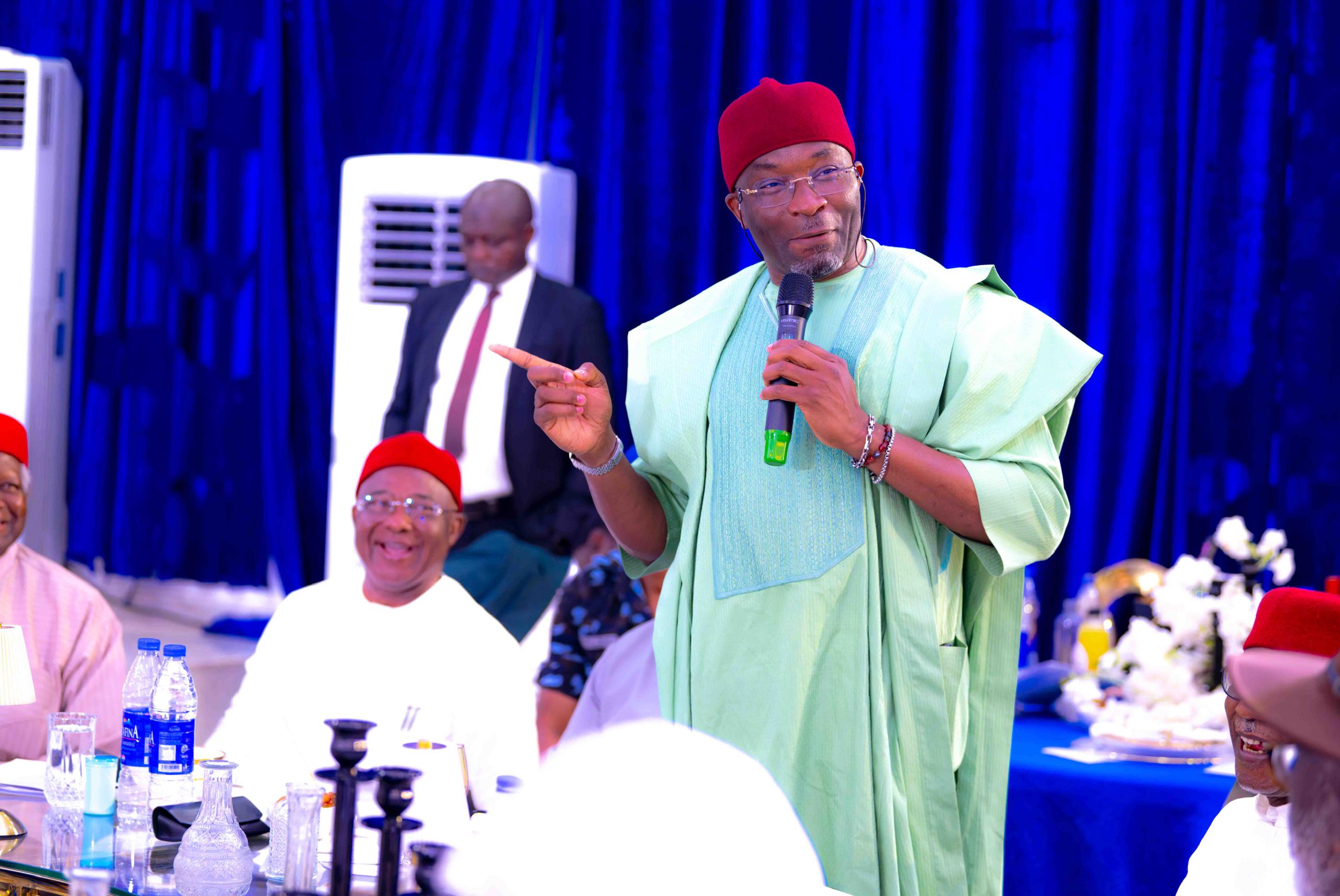
Deputy Speaker of the House of Representatives, Rt. Hon. Benjamin Kalu has called on Igbo elders, leaders and stakeholders to close ranks and speak with one voice in politics, cautioning that disunity has continued to weaken the political strength and heritage of Ndi Igbo of the South East region.
He also urged them to pay more than passive attention to socio-economic issues and get deeply involved into the national politics of Nigeria.
Kalu made the call at the South East Stakeholders’ Convergence (SESC), also described as the South East Elders and Stakeholders Meeting, convened in Owerri, the Imo State capital on Friday to discuss unity, progress and peace in Igbo land.
Addressing the gathering chaired by the former Military Governor of Imo State and Minister of Foreign Affairs, Senator (Gen) Ike Nwachukwu (Rtd), the Deputy Speaker said unity remains the foundation for development, stressing that peace in Igbo communities would only come when leaders reason together in harmony.
He said: “Unity is strength. We will achieve more when we are united. The need for unity cannot be overemphasized. Peace leads to the development of communities”.
Kalu who represents Bende Federal Constituency of Abia State at the National Assembly commended the elders for setting aside their personal engagements to attend the meeting, describing their action as patriotism and genuine love for Igbo land.
“I salute you all, my elders and stakeholders for this thoughtfulness, this great idea to come together and discuss the unity, progress and peace of Igbo land. This is patriotism. You all have what you are doing but for you to leave it and come here to discuss the development of our place, it means you love Igbo land. It shall be well with you all,” he said.
The Deputy Speaker said the upcoming and the contemporary younger generation are encouraged by the elders’ example, likening leadership to a relay race in which one generation hands the baton to the next.
“Some of us who are coming up are encouraged by this unity and patriotism you display. We are glad to see our elders sit together to discuss the future of Igbo land. This is like a relay race, where you run and later hand over the baton to the next person and the next generation. We are coming behind you so that whenever you hand us the baton, we collect it from you and continue with the race of progress and development,” he said.
Kalu however said that without unity, Ndi Igbo risk losing their direction and heritage.
“But if we are not in unity, we will miss our bearing and lose our heritage. But when we reason together in unity and harmony, we achieve greatness,” he said.
Speaking about Nigeria’s political structure, the Deputy Speaker noted that Igbo as one of the major tribes in Nigeria is not standing strong in the national politics.
He further argued that the political numbers of Ndi Igbo are not fully reflected across the five South East states because the people are scattered across the country.
To encourage active political participation, the Deputy Speaker urged a change of mindset, saying the post-war decision by many Igbo people to focus only on personal development and stay away from national politics had not served the region well.
“And it will not be good we shake and be left out in the scheme of things. Please, let’s come together. Let’s unite. When we unite, we gain more respect as a people. But when we work in isolation and silos, we lose our heritage.
“The number of votes of Ndi Igbo is not what we are getting across the five states because we are scattered around the country. If we take a position now and say, Igbo this is our agenda, this is what we want to do, I can assure you, the whole of Nigeria will feel our impact.
“But if we work in silos, every man to himself, to your tent O Israel, it is not encouraging at all. It yields no positive result. It reduces our number.
“After the war, we had believed we will work it out on our own and develop our place. We say we are not interested in politics. It is not our business. We have tried to develop on our own. It is about time we changed that mindset. The politics and governance of Nigeria should be our concern. We should get involved and play an active role because if we are not in the room, we can’t be part of the decision. We need to be part of the decision making process,” he said.
Kalu therefore called for a common position to help Ndi Igbo to deliver with one mind.
“There is no wisdom in saying we are not interested in the politics of Nigeria. It should be our business. Let us say one thing and stick to it with one mind, then, we will see the result of our togetherness. God bless you,” he said.
The stakeholders meeting held in Imo State Government House attracted the presence of Governor Hope Uzodinma as the chief host, some traditional rulers, representatives of religous leaders, women and youth groups from the five eastern States, other prominent Igbo sons and daughters in politics and governance, business, academia amongst whom are former Senate President/Secretary to the Government of the Federation (SGF), Senator Anyim Pius Anyim; immediate past Vice Chancellor of Federal University of Technology, Owerri (FUTO); Prof. Nnenna Oti; former chairman, Police Service Commission, Chief Simeon Okeke; former President-General, Ohaneze Ndigbo, Nze Ozichukwu Chukwu; Chief Tony Chukwu; Amb. Greg Mbadiwe; Prof. Osita Ogbu; Mazi Sam Ohuabunwa and Amb. Okey Emuche.
General News
2027: Amupitan Seeks Royal Support, Partnership to Discharge Mandate Peacefully, Effectively
By Isa Abdul
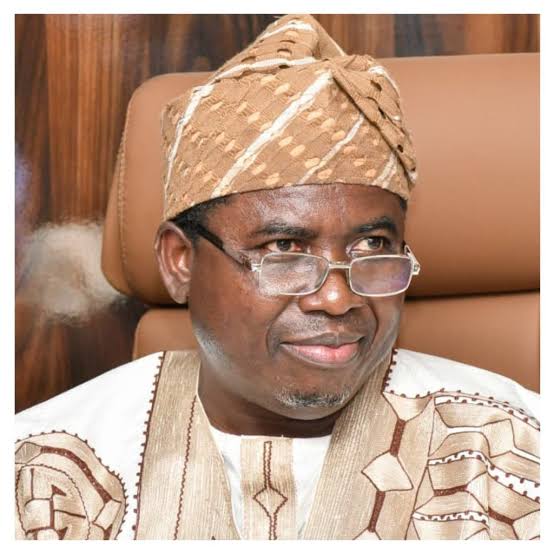
The National Chairman of the Independent National Electoral Commission (INEC), Professor Joash Amupitan, has said there is no way a successful election can be conducted without the support of traditional institutions, especially in an era bedeviled by voter apathy and thuggery.
Professor Amupitan disclosed this in Lokoja on Thursday while addressing members of the Kogi State Council of Chiefs as part of his activities to assess preparations for the 2027 elections in the North-Central geopolitical zone.
He promised that the commission would strive to organise and supervise a visible, verifiable, credible, free, and fair election in line with its mandate under Section 153 of the 1999 Constitution (as amended).
Amupitan added that the commission has embarked on an assessment tour to evaluate logistics, infrastructure, and personnel across the six geopolitical zones.
to reduce administrative bottlenecks.
The working visit to Lokoja in the North-Central zone, which comprises Benue, Kogi, Kwara, Nasarawa, Niger, Plateau and the Federal Capital Territory, Abuja, has marked the end of the evaluation tour.
He also urged the youth not to be used as instruments of violence during the election:
“I send an unequivocal message to our youth that no political aspiration is worth shedding human blood.”
The INEC chairman, further called on the royal fathers to assist in mobilising the electorate to collect their PVCs, prevail on the youth to shun thuggery and any form of violence, and support efforts to reduce misinformation and disinformation before, during, and after the election.
“The general elections will hold as scheduled in 2027. I have come to seek your support and partnership for us to discharge our mandate peacefully and effectively. INEC has no candidate; the commission is out to discharge its constitutional mandate fully,” Professor Amupitan told the traditional chiefs.
He said the commission under his watch had successfully conducted elections in Anambra, Ekiti, and Osun states and the Federal Capital Territory, Abuja, including 16 by-elections within a year, stressing his resolve to re-enact that feat in the upcoming general election.
At the event, the Kogi State Resident Electoral Commissioner (REC), Dr. Shehu Wahab, said the gathering of traditional rulers and INEC was to foster a unity of purpose that would ensure a peaceful election in 2027.
He added that an interface with custodians of culture and tradition at this crucial period in the electioneering process is essential for a free and fair election.
The Ohinoyi of Ebiraland, HRM Tijani Mohammed Anaje, while speaking on behalf of the traditional rulers, commended the INEC boss for his efforts to ensure a credible, free, and fair election in 2027.
The Ohinoyi of Ebiraland, who is the Vice Chairman of the Kogi State Council of Chiefs, expressed their readiness to support Professor Amupitan in all aspects of the electoral process for a peaceful election.


PERSPECTIVE: Tiv Leaders Must Hear This: While Akwa Ibom Asked For A Future, Tiv Leaders Fight Over A Man
Spread the loveBy Edward Tion I watched the presidential campaign in Akwa Ibom today with a bleeding heart. Not because...

Pursue Unity, Peace, Play Active Role in Nigerian Politics, Deputy Speaker, Kalu Urges Igbo Elites, Leaders
Spread the loveBy Saint Mugaga Deputy Speaker of the House of Representatives, Rt. Hon. Benjamin Kalu has called on Igbo...

2027: Amupitan Seeks Royal Support, Partnership to Discharge Mandate Peacefully, Effectively
Spread the loveBy Isa Abdul The National Chairman of the Independent National Electoral Commission (INEC), Professor Joash Amupitan, has said...


Place 7-Year Ban On Establishment Of New Tertiary Institutions– Edu Minister Begs NASS
Spread the loveBy Son Tertsea, Abuja The Federal government has appealed to the National Assembly to halt the passage of...

Gov Sule to Security Agencies: Fish Out Sponsors of VP Shettima’s Attackers in Lafia
Spread the loveSDP: attackers APC members against Wadada’s candidacy By Isa Abdul, Abuja Prominent personalities in the state planned and...


Wike’s Entry, Allocation of UniAbuja Land a Breach of Court Order– ASUU
Spread the loveBy Nick Ibe, Abuja The Federal Capital Territory Administration’s (FCTA) allocation of some hectares of land belonging to...


Alleged 4 Herbal Concoction Consumers Die in Benue
Spread the loveBy Vincent Tyosuugh After consuming a suspected poisonous herbal concoction allegedly sold to residents of Oju Local Government...

BENUE APC Split Deepens As SGF, Stakeholders Shun Alia Campaign Flag-off, Disown Campaign List
Spread the loveBy Felix Umande The crisis rocking the Benue State chapter of the All Progressives Congress (APC) deepened on...

Defence Minister Invites Cybersecurity, Drone, DefenceTech Experts for Collaboration with DICN
Spread the loveBy Nick Ibe, Abuja Minister of Defence, General Christopher Musa (rtd) has called on Nigerians with expertise in...


Wike’s Rainbow Coalition Faces Storm Over Alleged Split Voting: VP Shettima, SDP, Ondo APC Reject Coalition
Spread the loveBy Son Tertsea, Abuja Nyesom Wike’s Rainbow Coalition has been identified as a split voting device according to...