
Oil and Gas
Deep Offshore Incentive Order Will Accelerate Investment, Production Growth – Ojulari


By Aliyu Musa
The Nigerian National Petroleum Company Limited (NNPC Ltd.) has welcomed the Federal Government’s signing of the Deep Offshore Oil and Gas Projects Incentives (Tax Remission) Order, 2026, describing it as a landmark reform that significantly enhances Nigeria’s competitiveness for deep offshore investment and strengthens the nation’s pathway towards achieving its 3 million barrels of oil per day (MMbopd) production ambition by 2030.
The new Order establishes a transparent, predictable and globally competitive fiscal framework for qualifying greenfield deep offshore developments. It provides the certainty required to unlock long-term capital, accelerate Final Investment Decisions (FIDs), and maximise value from Nigeria’s offshore resources.
The framework, which reinforces Nigeria’s position as one of the world’s attractive destinations for deep offshore oil and gas development, is expected to unlock over US$50 billion in new investments, including major projects starting with Bonga South-West which was approved in March 2026, and the Zabazaba and Owowo Deep Offshore projects. Bonga South West is expected to be the first FID on a Nigeria deepwater Production Sharing Contract asset since 2008.
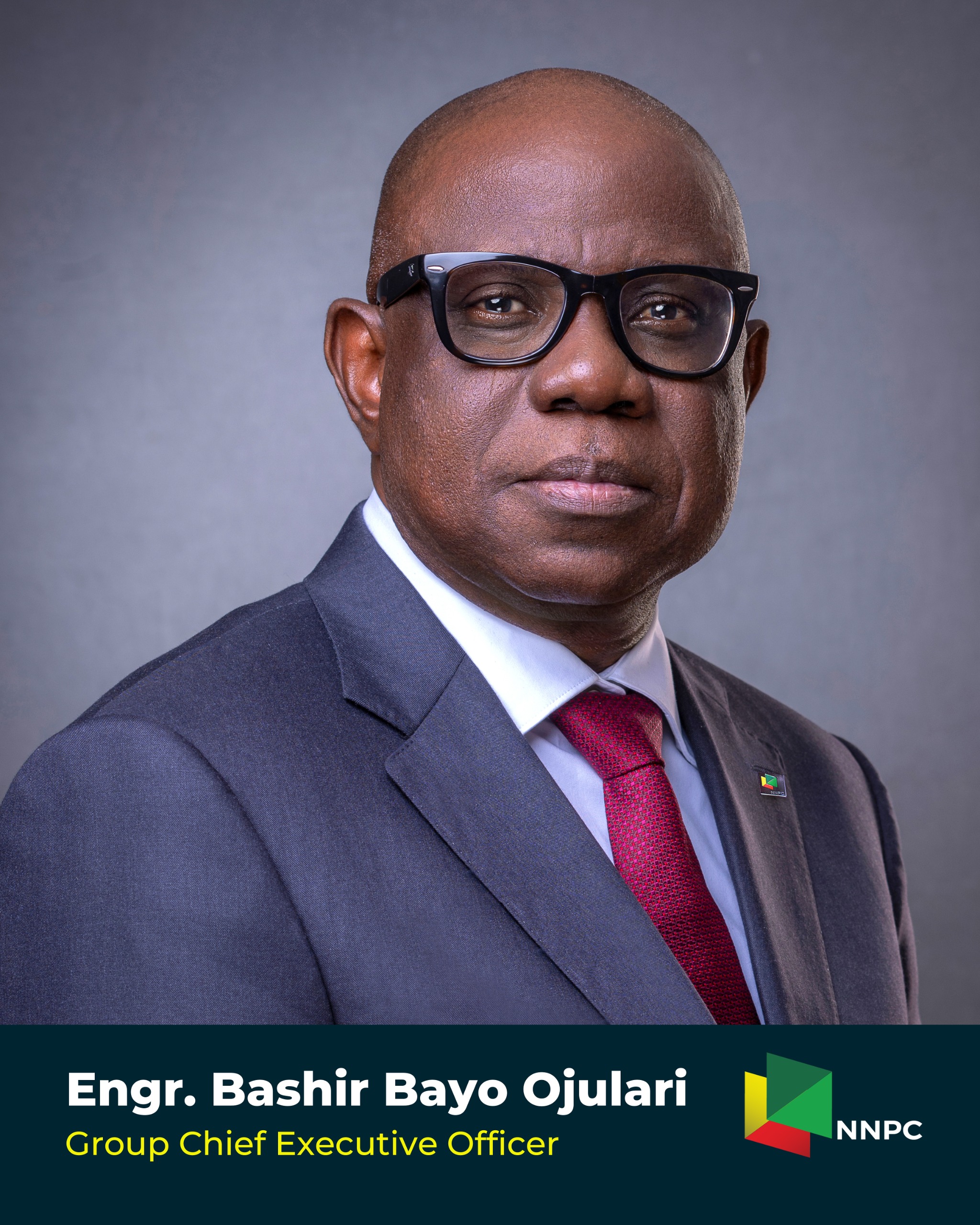
Speaking on the development, the Group Chief Executive Officer of NNPC Ltd., Engr. Bashir Bayo Ojulari, described the Order as one of the most significant policy interventions for the upstream sector in recent years.
“This is a transformative reform that sends a strong signal to global investors that Nigeria is committed to providing a stable, competitive and investment-friendly environment for deep offshore development. Fiscal certainty is a critical driver of investment decisions, and this framework provides the additional clarity the industry has long sought.”
He added: “For NNPC Ltd., the Order aligns directly with our strategy of protecting our existing production base, accelerating near-term growth, and attracting new investment into high-value assets. It strengthens our confidence in achieving our strategic production ambition of 3 MMbopd while creating greater value for our shareholders and the Nigerian economy.”
The GCEO noted that recent reforms across the petroleum sector have already stimulated more than US$34 billion in new investment commitments. The Deep Offshore Incentives Order is expected to build on that momentum by enabling timely FIDs on strategic offshore developments.
The GCEO thanked President Bola Ahmed Tinubu, GCFR, for his relentless leadership and unwavering commitment to creating an enabling environment for investment and sustainable growth in Nigeria’s energy sector through several Presidential Executive Orders which have strengthened the nation’s oil and gas sector.
This milestone reinforces NNPC Limited’s commitment to driving sustainable production growth, attracting responsible investment, strengthening Nigeria’s energy security and delivering long-term value to the Federation.








By Philip Nyam
The Nigerian National Petroleum Company Limited (NNPC Ltd) has welcomed the $800 million Final Investment Decision (FID) on the Ima Gas Project, describing it as a landmark development that affirms the growing viability of Nigeria’s upstream gas sector.
The project, located offshore in OMLs 112 and 117 and developed by AMNI International in partnership with TotalEnergies, will produce about 300 million standard cubic feet of gas per day at peak.
According to Andy Odeh, Chief Corporate Communications Officer NNPCL, the output will supply critical feed gas to Nigeria LNG Limited in support of its Train 7 expansion, which will increase capacity at the Bonny Island plant from 22 million tons per annum to 30 Mtpa.
The FID was enabled by the Presidential Directives of 2024, which provided fiscal incentives for non-associated gas, streamlined contracting and lowered development costs.
Ima is the fourth major gas project to reach FID under President Bola Ahmed Tinubu, after Iseni, Ubeta and HI.
Group Chief Executive Officer, NNPC Ltd., Engr. Bashir Bayo Ojulari described it as “a decisive vote of confidence in Nigeria’s gas sector and in the bold reforms” that have created competitive terms and a predictable investment environment.
NNPC Ltd. also commends the collaboration between AMNI, TotalEnergies and the Nigerian financial sector, saying the model of indigenous operator, international partner and domestic capital is a template for future developments.
NNPC Ltd. reaffirms its commitment to work with government, regulators and industry partners to sustain investment momentum and deploy Nigeria’s gas resources for industrialisation, job creation and long-term prosperity.
–Services include electric vehicle charging, liquefied petroleum gas, CNG, others
By Nick Ibe, Abuja
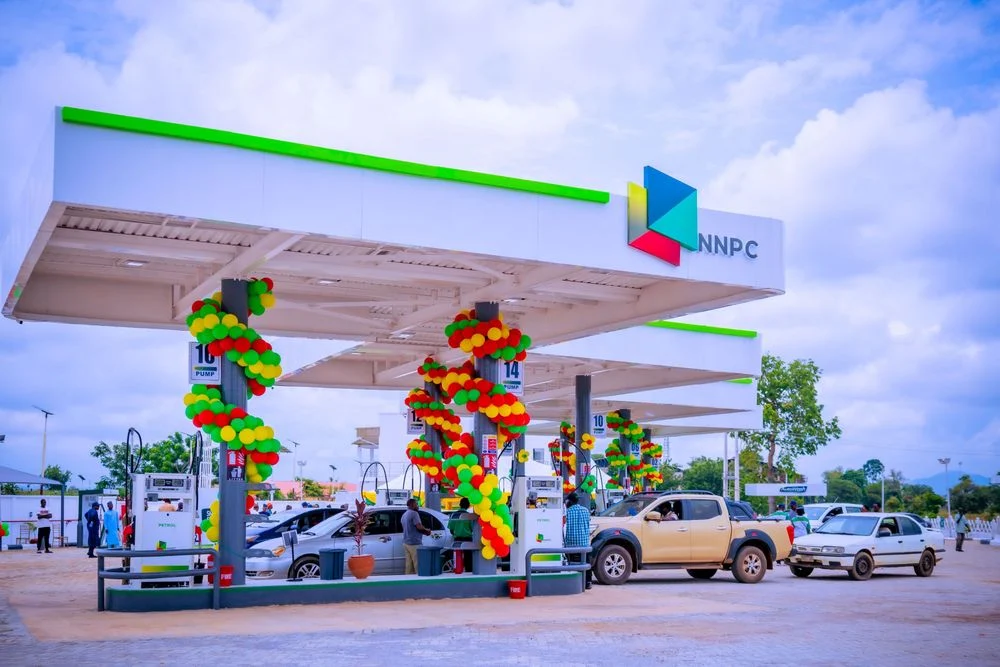
The Nigerian National Petroleum Company Limited has introduced the self-service fuel pumps at selected NNPC Retail stations, allowing motorists to dispense petrol themselves using a mobile application.
This, partly, is NNPC’s new policy to deploy between 50 and 70 smart, self-service stations across the country in the next six months.
This model is different from the old fashion pattern where attendants dispensed fuel to customers. The self-service model allows customers to select the amount of fuel they want, make payment through an app and use a code to activate the pump.
NNPC Retail shared the guide on its X handle on Friday giving motorists details of how to use the system.
The step-by-step guide on how to buy and dispense fuel yourself at participating NNPC stations:
Step 1: Motorists who want to use the self-service facility should first download the NRL Fuel App. Get the download link from the NNPC X handle.
Step 2: Open the app, tap Fuel Purchase, and select your fuel type.
Step 3: Browse the station list and choose an NNPC Retail station offering the self-service option.
Look for the green Self-Serve badge next to the station name. Tap it to select.
Step 3: After selecting the station, enter the amount you wish to spend on fuel. Review the quantity and price, then tap Pay from Wallet. The system will process the transaction based on the amount entered.
Step 4: Once the payment is successful, the app will generate a digital receipt. It contains your Order ID, your Self-Service Code, and a QR Code.
Step 5: At the pump, enter your 8-digit self-service code on the terminal and press the hash key. Once validated, pick up the nozzle and fuel up—exactly the amount you paid for.
NNPC Executive Vice President, Downstream, Mumuni Dagazau, said the new model was part of the company’s plan to transform conventional filling stations into broader energy and mobility hubs.
At the newly commissioned smart station on Bill Clinton Drive, Airport Road, Abuja, NNPC Retail Executive Director, Retail Operations and Mobility, Shettima Baba-Kukawa, said customers could complete transactions on their phones and dispense the exact amount of fuel purchased.
NNPC said the smart stations would combine conventional petrol sales with services such as electric vehicle charging, liquefied petroleum gas, compressed natural gas and other mobility services.
–Condemns Issuance of More Licences Despite Ample Local Capacity.
By Son Tertsegha
Local regulators in the oil industry have been blamed by the Aliko Dangote refinery for issuing import licences, which alleged, caused the supply of about 43% petrol in the Nigerian market in July alone. The refinery further criticised regulators for continuing to license imports, arguing that surplus fuel it cannot sell at home is being forced offshore.
The complaint, issued Wednesday by the management of Dangote Petroleum Refinery and Petrochemicals, is based on a figure the company drew from its own market data.
This is coming weeks before an initial public offering for the refinery, which has been valued at about $40 billion.
With the import volumes difficult to forecast, the company said, it is holding inventory against a market it cannot size. It has carried reserved volumes since commissioning to guarantee supply, at a cost in storage, logistics and working capital, and said that in a market absorbing large licensed imports with no visibility on what follows, “it becomes commercially unsustainable to continue holding excess inventory indefinitely.”
Fuel the domestic market leaves unsold is being shipped out. Export volumes have risen in recent months to clear surplus and avoid storage and financing charges, the refinery said, describing the shipments as an operational response rather than any retreat from Nigeria.
The company also pre-empted blame for any shortage, saying disruptions caused by excessive importation and the resulting forecasting difficulties should not be laid at its door.
That account cuts against the reading given to export data the US Energy Information Administration published this week, which showed Nigerian seaborne petroleum product shipments averaging 561,000 barrels a day in the second quarter, against 79,000 a day in 2023. Exports accounted for 350,000 barrels a day of the total. Nigeria was importing close to 400,000 barrels a day of refined products before the plant opened.
The EIA offered no explanation for the growth, and the refinery cited none of the figures, but its statement describes a producer evacuating stock rather than one advancing into Europe and Africa from strength.
Timing gives the argument commercial weight. Dangote Petroleum Refinery has applied to Nigeria’s Securities and Exchange Commission for an offering of as much as $5 billion on the Nigerian Exchange in October, after a July private placement led by Africa Finance Corporation was oversubscribed 3.7 times. Investors weighing that offer are being told the domestic market is not fully available to the asset they are buying into.
The Lekki Free Zone plant, which began operating in 2024, lifted crude distillation capacity to 700,000 barrels a day from 650,000 after completing maintenance and expansion work in February.
Dangote asked regulators for transparency on import volumes, better market coordination and policies favouring local refining, foreign exchange conservation and greater domestic capture of the returns on Nigeria’s refining investment.
The development is creating complexities capable of throwing Nigeria into the fuel uncertainties of the past when local demand depended mostly on import.
Accusations and counter accusations intensify the rift. Dangote alleges continued giving of licences for oil import is harming its refinery by creating market uncertainty. Dangote argues, it is forced to ship excess petrol to other countries because storage tanks cost the company extra money in logistics and financing.
Consequently, the refinery has challenged the regulatory authority (NMDPRA) in court, arguing that the law says imports should only happen if local supply fails.
The Regulator and Marketers’ claim their action is to break monopoly. NNPC and fuel marketers argue that stopping all imports and relying on only one refinery is risky.
They believe open import licences protect the country from price spikes and sudden fuel shortages if the Dangote plant faces issues.


75% of Pilgrimage Funds Stolen, EFCC Boss Alleges
Spread the loveBy Nick Ibe, Abuja About 75 per cent of funds released by the Federal Government for Christian and...


Plateau Women Protest, Block Highway over Killing of Three Vigilantes
Spread the loveBy Michael Lim, Jos The killing Friday of three vigilantes, including the community youth leader, during a night...


NNPC Ltd Welcomes $800m Ima Gas Final Investment Decision
Spread the loveBy Philip Nyam The Nigerian National Petroleum Company Limited (NNPC Ltd) has welcomed the $800 million Final Investment...


The UN Hypocritic, Irresponsible Walkout Of Shame: And Nigeria’s Terrorism at Home
Spread the loveBy H. E. Mejeh Yesterday in New York, Nigerian delegates staged a well-rehearsed walkout from the United Nations...


Shehu Sani: El-Rufai Never Did Enough to Stop Southern Kaduna Killings
Spread the love–He is paying price for misgovernance, irresponsibility By Isa Abdul, Abuja El-Rufai had no real commitment to stopping...


October AGLOFEST: To Converge Investors, Businesses, Cultural institutions, Creative Industry
Spread the loveBy Nick Ibe, Abuja October 2026 has been chosen by the Federal Government to launch the African Global...


US Sells ex-Gambian Dictator Jammeh’s $3.5m Mansion, Shares $2.5m to Victims
Spread the loveBy Son Tertsea The United States has returned about $2.5 million to The Gambia from the sale of...


Nasarawa Police Foil Murder Attempt, Net 4 Kidnappers, 2 Cultists
Spread the loveMichael Lim Four suspected kidnappers who allegedly plotted to kill their victim after collecting ransom have been arrested...


Bill Gates Warns AI Is ‘Powerful’ Enough To Destroy Humanity
Spread the love–There “absolutely” needs to be legislation regulating AI and law enforcement By Son Tertsea, Abuja Billionaire Bill Gates...
EFCC Chair: “I receive over 20,000 Corruption Petitions Yearly in Respect to Public Corruption
Spread the loveBy Son Tertsea, Abuja Fresh concerns have been raised over the scale of corruption in the public sector...