
Health
Boosting Frontline Service: NNPC Limited Unveils Health Insurance Coverage for 7,000 Service Attendants Nationwide


NNPC Retail Limited in partnership with NNPC Health Maintenance Organization (HMO), has launched the Attendants’ Health Insurance Scheme, aimed at providing over 7,000 Service Attendants across the country with access to quality healthcare services.
The initiative, unveiled at the NNPC Mega Station in Abuja, Nigeria, reflects NNPC Limited’s strong commitment to staff welfare, productivity, and service excellence.
By prioritising the health and well-being of its frontline personnel, the company reinforces its belief that empowered and healthy attendants are key to delivering superior customer experiences.
The scheme, managed under the NNPC HMO platform, connects beneficiaries to an extensive network of hospitals nationwide, ensuring prompt and reliable medical attention wherever they are stationed.
This milestone demonstrates NNPC Limited’s resolve to go beyond the pump, building a motivated, efficient, and customer-focused workforce dedicated to upholding the highest standards of professionalism and service delivery.








By Felix Umande, Makurdi
The Benue State Ministry of Health and Human Services has officially declared the outbreak of Lassa Fever following a noticeable rise in confirmed cases and recorded deaths across the state.
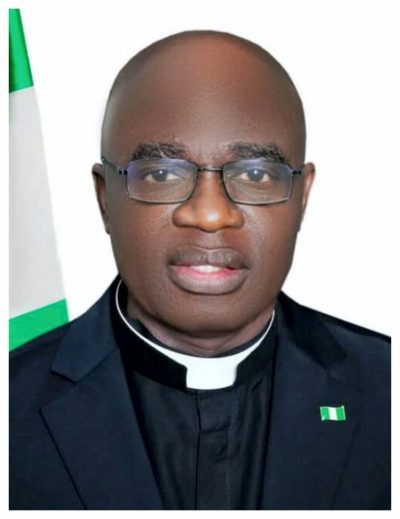
The declaration was made by the Honourable Commissioner for Health and Human Services, Dr. Paul Ejeh Ogwuche, in a press statement issued on Tuesday, February 3, 2026, in Makurdi. He disclosed that the current situation has necessitated urgent public health action to prevent further spread of the disease.
According to epidemiological data released by the Ministry, Benue State has recorded a total of 56 suspected cases of Lassa Fever. Eight of these cases have been confirmed by laboratory tests, with three deaths recorded among confirmed patients. and one additional probable death under investigation.
Dr. Ogwuche expressed particular worry over the impact of the outbreak on frontline health workers, noting that four healthcare professionals—three nurses and one community health worker—are among those affected. He also paid tribute to a Benue-born medical doctor who recently died of Lassa Fever while serving in Jos, Plateau State, describing the loss as a painful reminder of the risks faced daily by healthcare workers.
The Commissioner stressed the need for strict compliance with Infection Prevention and Control measures in all health facilities to protect both patients and medical personnel.
He explained that the state government’s response is driven by Governor Hyacinth Iormem Alia’s deep concern for the health and wellbeing of the people of Benue State. He added that in line with this commitment, the government has activated the Public Health Emergency Operations Centre to coordinate surveillance, case management, contact tracing, and public sensitization efforts across all the 23 local government areas.
Members of the public have been urged to remain calm but vigilant. Health officials explained that Lassa Fever is mainly transmitted through contact with infected rodents or their urine and droppings, and can also spread from person to person, particularly in healthcare settings where infection control measures are inadequate.
Common symptoms of the disease include persistent high fever, severe headache, muscle pain, sore throat, vomiting, diarrhoea, and in severe cases, unexplained bleeding.
The Ministry of Health advised residents to maintain good environmental hygiene, properly store food to prevent rodent infestation, avoid self-medication, and seek immediate medical attention at the nearest health facility if symptoms develop, noting that early detection and treatment significantly improve survival.
Suspected cases are to be reported promptly through the Benue State Lassa Fever emergency hotline on 0803-929-4999 or to the nearest Disease Surveillance and Notification Officer.
Health
Selfcare advocacy: 25 states disseminated, only 3 states domesticated…..as experts calls for collaboration

By Wumi Tewwogbade, Abuja
Expert in Self-Care Advocacy Network (N-SAN), on Wednesday, revealed that welfare advocacy have been disseminated in 25 states but only 3 states (Lagos, Kaduna and Borno states) have domesticated it.
Joy Anugwa, self care desk, Federal Ministry of Health and Social Welfare, (FMoH&SW) stated this at the hybrid meeting of N-SAN, organized by White Ribbon Alliance in collaboration with FMoH&SW in Abuja.
Among stakeholders at the event included media practitioners, health sector experts, key government officials, development partners, and civil society organisations.
They renewed their call for stronger collaboration to scale up self-care interventions in Nigeria
The Director of Health Promotion, Federal Ministry of Health and Social Welfare, Mr. John Uruakpa, described the meeting as a critical step towards institutionalising self-care across all levels of governance, with particular focus on states and grassroots communities.
He said self-care had become indispensable to safeguarding the health and well-being of Nigerians, especially vulnerable populations.
“Self-care interventions are crucial for the health and well-being of any nation. This network is not optional; it is essential to Nigeria’s health system,” he said, while welcoming participants and wishing them a Happy New Year.
He explained that N-SAN was established to harmonise advocacy messages, clarify roles, identify priority actions and strengthen collaboration among stakeholders in line with the National Self-Care Guidelines and the Demand Generation Strategy for Self-Care.
Uruakpa stressed that self-care must move beyond policy discussions at the national level to practical implementation in communities.
“Self-care is about communities, and communities are at the grassroots. We must build a formidable structure, especially with the media, to take this message to the people,” he said, commending partners such as the White Ribbon Alliance for their continued support.
The major partner , Executive Director of the White Ribbon Alliance Nigeria (WRAN), Chief Tonte Ibraye, said the meeting was aimed at generating innovative ideas to drive impactful advocacy and ensure self-care is prioritised within Nigeria’s healthcare system.
“As civil society, we are partnering with government, especially the Federal Ministry of Health, to ensure our advocacy is evidence-based,” Ibraye said. “Beyond strengthening the health system, we must empower women, girls and communities to take charge of their health.”
He urged participants to remain engaged throughout the meeting and contribute ideas that would translate advocacy into demand generation, noting that self-care reduces the burden on health facilities and cuts costs for both government and citizens, particularly amid security challenges.
Mr. Lawrence Anyanwu, Coordinator at the Technical Support Unit, said self-care education empowers citizens to take responsibility for their well-being while complementing the formal health system.
He noted that the integration of self-care into national health programming, in collaboration with the Federal Ministry of Health, is strengthening preventive healthcare and improving access to essential services.
“I am happy that more people are identifying with the advocacy effort and the promotion of awareness,” Anyanwu said, calling for the revival and active use of advocacy tools developed in previous years.
He appealed for regular engagement and sustained outreach to states and communities, stressing that meaningful impact can only be achieved by reaching people where they live.
Also speaking, the Programmes, Advocacy and Communication Manager of WRAN, Miss Omolade Ogunlela, said the organisation had remained committed to self-care advocacy since the development of Nigeria’s National Self-Care Guidelines.
“For self-care to achieve its full impact, it must go beyond the Ministry of Health and implementing partners,” she said. “We need all hands on deck media, civil society, women’s groups and professional associations. This meeting is a family dialogue to push self-care forward.”
She recalled lessons from the COVID-19 pandemic, noting that the importance of self-care becomes even more evident during health emergencies.
Representing the United Nations Population Fund (UNFPA), Dr. Ummulkhulthum Bajoga conveyed the agency’s commitment to advancing self-care as a pathway to improved reproductive and maternal health.
“One way to achieve a world where every pregnancy is wanted and every young person fulfils their potential is through self-care,” she said, adding that the meeting was timely amid shrinking donor funding and the need for increased domestic resource mobilisation.
The Society for Family Health (SFH), through Ms. Jennifer Adebanjo, described N-SAN as a major milestone in Nigeria’s health journey.
“Self-care has come a long way in Nigeria despite early resistance. Standing together as a network makes us stronger and ensures sustainability across generations,” she said.
From the digital rights perspective, Mr. Maxwell Ahunanyah of the Digicivic Initiative highlighted the growing reliance on online health information and the dangers of misinformation.
“We are supporting self-care by promoting digital literacy and protecting people’s rights online and offline, especially when they seek health information,” he said, disclosing a recent MoU with the National Data Protection Commission.
The media, represented by the Treasurer of the Association of Nigeria Health Journalists (ANHEJ) Ms Yesenu Sasetu, pledged to deploy solution-focused reporting to advance self-care awareness nationwide.
“Journalists have a responsibility not just to report facts, but to advocate for public health solutions,” she said. “We are here to learn how to tell compelling stories that promote self-care and healthier communities.”
Participants agreed that sustained collaboration and grassroots engagement remain key to embedding self-care as a cornerstone of Nigeria’s healthcare system.
Health
FG commences Final Interviews for Health Fellows Programme, 150,000 Applicants Battle for 774 Slots

By wumi Tewogbade, Abuja
The Federal Government will on Monday, January 12, 2026, commence the final interview stage of the National Health Fellows Programme (NHF) 2.0, following a nationwide selection process that attracted over 150,000 applicants.
The programme, coordinated by the Sector-Wide Approach (SWAp) Coordination Office under the Federal Ministry of Health and Social Welfare, is designed to produce one health fellow from each of Nigeria’s 774 local government areas to support ongoing health sector reforms.
Officials said the fellowship, which targets young Nigerians, aims to build a new cadre of health system leaders who will drive innovation, accountability and community-based interventions at the grassroots.
According to the ministry, the selection process has been transparent and merit-driven, starting with digital screening and multiple stages of shortlisting before the final in-person interviews scheduled to hold across the states.
Each interview panel will include representatives of the World Health Organisation, State Ministries of Health, State Primary Health Care Development Agencies, academia, the Association of Local Governments of Nigeria, traditional institutions and the SWAp Desk Office.
The Coordinating Minister of Health and Social Welfare, Prof. Muhammad Ali Pate, said the programme reflects the Federal Government’s commitment to fairness and excellence in public service recruitment.
“We commend the massive interest shown by young Nigerians. This process is about nation-building and empowering outstanding candidates from every LGA to transform our health system,” Pate said.
Minister of State for Health, Dr. Iziaq Salako, described the fellowship as a new model for talent discovery in the health sector, noting that the integrity of the process would ensure only committed candidates are selected.
Also speaking, the Permanent Secretary of the ministry, Kachollom S. Daju, mni, said the programme was institutionalising transparency and excellence in public sector recruitment, adding that the selected fellows would represent the future of Nigeria’s health system.
Successful candidates will undergo a residential national training programme in Abuja before deployment to their respective local government areas.



MACBAN denies links to criminality, expresses shock over proposed US sanctions
Spread the loveThe Miyetti Allah Cattle Breeders Association of Nigeria has expressed surprise over the proposed sanctions against the association...


Must Nigerians Be Made to Suffee For Everything?
Spread the loveProf P. I. Ukase Once again, our children aspiring to gain admission into universities for the 2026/2027 academic...
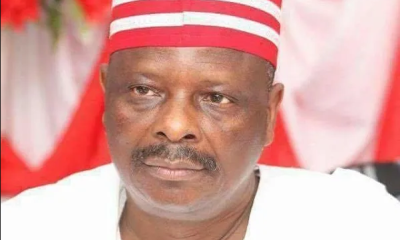

Why Kwankwaso was singled out in proposed US Religious Freedom Bill. –Farooq Kperogi
Spread the loveA proposed United States legislation seeking to sanction alleged violators of religious freedom in Nigeria has triggered debate...
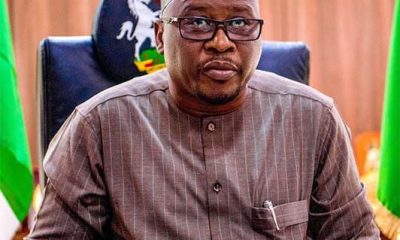

Why We Must Welcome Governor Fintiri to APC…Hon. Namdas
Spread the loveBy Saint Mugaga, Abuja Former chairman of the House of Representatives Committee on Army and representative of the...


Fubara Dissolves State Executive Council after meeting Tinubu
Spread the loveBy Saint Mugaga Governor of Rivers State, Sir Siminalayi Fubara, has dissolved the State Executive Council, a move...


Atiku urges Nigerians to kick out APC beginning with FCT elections
Spread the loveBy Saint Mugaga Former Vice President Alhaji Atiku Abubakar has called on Nigerians to begin the process of...


All 183 abducted Kurmin Wali worshippers rescued – Kaduna Govt
Spread the loveBy Our Reporter After initial denials and foot dragging over the abduction of Christian worshippers, the Kaduna State...


Shettima leaves for Ethiopia to represent Tinubu at the 2026 African Union summit
Spread the loveBy Saint Mugaga Vice President, Senator Kashim Shettima has departed Abuja for Addis Ababa, Ethiopia, to represent President...


Tinubu appoints Yusuf new Chairman/CEO of NAHCON
Spread the loveBy Saint Mugaga President Bola Tinubu has nominated Amb. Ismail Abba Yusuf as the new Chairman/CEO of the...
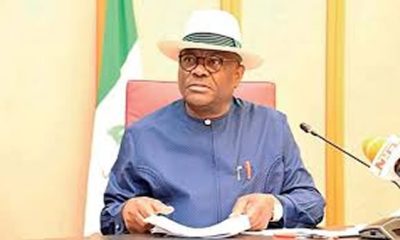

Kuje/Airport and kuje/Gwagalada roads, would be commissioned by June ending Wike, assured
Spread the loveBy Wumi Tewogbade, Abuja Minister of the Federal Capital Territory, (FCT), Nyesom Wike, on Tuesday, has assured Anima...