
General News
Blue economy: Marine engineers honour its chairman, Eferebo, Wadada, Gbenga Daniels, others


By Philip Nyam
Abuja
The National Chairman of the Nigerian Institution of Marine Engineers and Naval Architects (NIMENA), Engr. Sylvanus Eferebo has been honoured for his human capital development and contribution to engineering and national development.
Also honoured alongside the NIMENA chairman were the All Progressives Congress (APC) governorship candidate in Nasarawa state, Senator Ahmed Wadada, former Ogun state governor, Senator Gbenga Daniels and media personality, Dr. Reuben Abati of Arise Television.
Eferebo, who is the chairman of COREN’s Sector Committee on Engineering Regulation, Monitoring and Enforcement for the maritime sector and also the Board Chairman, Centre for Marine and Offshore Technology Development (CMOTD) received the awards presented by Mage Start Magazine in Abuja.
According to the organisers, his recognition reflects his leadership and contributions across engineering, human capital development and philanthropy. Somatrix Marine Limited was also described as one of Nigeria’s leading engineering companies.
Speaking at the event, Dr. Eferebo highlighted the vast opportunities available in Nigeria’s blue economy, noting that the sector could become a major driver of economic growth if properly developed and managed.
He called for an appropriate policy framework to support the effective operation of the blue economy, stressing the importance of creating an enabling environment for maritime businesses and related industries to thrive.
‘The blue economy encompasses economic activities associated with oceans, seas, inland waterways and other aquatic resources. In Nigeria, the sector offers opportunities in shipping, fisheries, marine transport, shipbuilding, coastal tourism and other maritime-related industries’, he stated.
Explaining the criteria for the awards, the Executive Producer of the Megastar Man of the Decade Awards, Dr. Adeniyi Ifetayo, said the selection process focused on sustained impact over a ten-year-period rather than achievements recorded in a single year.
“We don’t just consider what they have done in the last one year, but we put into consideration what they have done in a decade — 10 years,” Ifetayo said.
He explained that the organizers assessed the contributions of the nominees to their communities and the wider society, including the impact of their work in both the public and private sectors.
According to him, the awards seek to recognize individuals whose activities have produced a positive social impact over the years, adding that only a limited number of deserving personalities that could be reached and celebrated during the event.
In a goodwill message, Senator Gbenga Daniel, who represents Ogun East Senatorial District in the 10th National Assembly, said the theme of the 2026 awards was particularly relevant as Nigeria approaches the 2027 general elections.
Daniel emphasised the need for leaders to place citizens at the centre of their decisions, urging public officeholders and other stakeholders to prioritise the interests and welfare of the people.
The 2026 edition of the awards was held under the theme, “The Road to 2027: Citizens, Stakeholders, and the Democracy We Choose.” The theme focused attention on citizens’ participation, stakeholder responsibility and the future of democratic governance as the country prepares for another electoral cycle.
As the Managing Director and Chief Executive Officer of Somatrix Marine Limited, Dr. Eferebo leads a multidisciplinary marine engineering company specializing in marine consultancy, ship design, marine surveys, construction management, research and development, and other maritime-related services. The company also has operations extending to South Africa.
Under his leadership, Somatrix Marine Limited has expanded its activities across marine technology, manufacturing, distribution, outsourcing and consultancy, positioning itself as an integrated provider of marine solutions in Nigeria.


By Seyi Balogun, Lagos .
Counterfeit and unwholesome products worth more than N5.3bn have been destroyed in a week by the National Agency for Food and Drug Administration and Control, NAFDAC.
This was revealed to the PUNCH recently, detailing operations involving suspected counterfeit alcoholic beverages, repackaged products, pharmaceuticals, chemicals, tomato paste and biscuits by the agency’s Deputy Director of Public Relations, Christiana Obiazikwor.
According to her, NAFDAC seized suspected counterfeit alcoholic drinks and illegally brewed or repackaged products valued at N2bn at the Lagos International Trade Fair Complex on October 13.
The agency also seized suspected fake drinks and packaging materials worth more than N700m in Aba, Abia State, while goods valued at N2.6bn were destroyed in Port Harcourt, Rivers State, on Friday.
Obiazikwor added operatives uncovered more than 20 illegal stores at Zamfara Plaza, within the Trade Fair Complex, where they discovered activities involving the counterfeiting of popular alcoholic beverage brands, the revalidation of expired drinks and the stockpiling of banned imported products.
She added that two suspects were arrested during the operation and the seized products were evacuated from the premises.
Fake drinks, packaging materials uncovered in Aba
In Aba, NAFDAC operatives raided five shops at Old Court Road Market over suspected counterfeit alcoholic beverages and packaging materials.
Obiazikwor said the products seized during the operation were valued at more than N700m.
In addition, the materials included fake labels, corks, packs and outer packaging bearing the names of established brands.
NAFDAC said its officers encountered resistance from traders during the operation, affecting the evacuation of the materials.
The agency added that the shop owners were absent and the premises were placed on hold to prevent interference with the items left behind.
Speaking on another discovery, Obiazikwor said NAFDAC officials uncovered a suspected alcoholic beverage counterfeiting operation at No. 25 Omenazu Street, Aba, on October 15.
She said the facility was allegedly used to produce spirits and herbal liqueurs under unhygienic conditions.
According to her, the operator fled after officials arrived at the facility following a tip-off, abandoning his car.
She said a vehicle there contained labels and products bearing the names Sir Edwards Scotch Whisky and Scottish Hills Whisky, as well as empty bottles in the boot.
“A drum containing about 200 litres of liquid and a product branded Café Rum Whisky were also found,” Obiazikwor added.
She said operatives also discovered 200-litre drums containing ethanol, plastic buckets, pieces of tree bark, packaging materials, corks, tanks containing liquid mixtures, dirty sieves, sealing machines, bottles bearing popular brand names and cartons.
Obiazikwor said the materials and facility were valued at more than N500m.
In a separate exercise in Port Harcourt, NAFDAC destroyed products valued at N2.6bn, according to Obiazikwor.
The goods included pharmaceutical products, chemicals, tomato paste, biscuits and other items the agency described as unwholesome. They were intercepted and seized by the Nigeria Customs Service at Onne Port between 2025 and 2026.
The Chairman of the Federal Task Force on Counterfeit, Fake Drugs and Unwholesome Processed Foods in Nigeria, Dr Martins Iluyomade, who represented NAFDAC’s Director-General, Prof Mojisola Adeyeye, spoke at the destruction site on Friday.
Iluyomade, who is also NAFDAC’s Director of Investigation and Enforcement, said the exercise demonstrated cooperation between the agency and the Nigeria Customs Service in disposing of seized goods.
He said the process began in 2025 and that both agencies had signed memoranda of understanding to facilitate the destruction of the products.
“This gesture corroborates the existing good relationship we have between NAFDAC and the Nigeria Customs Service. We have MoUs signed, but we have people who have to work behind the scenes to make sure that the MoUs work.
“The willingness of the officers of the two agencies to make the MoU work is what has led to what we are doing today,” he said.
Iluyomade said the exercise was the first phase, adding that more seized goods were expected to be brought from the port for destruction.
“What you see here right now, this is the flag-up; others are still coming out of the port, and I want to urge the Nigeria Customs Service to quickly facilitate the remaining containers to be here on time for destruction,” he added.
He called for cooperation among government agencies involved in the fight against counterfeit products and illicit activities, warning against inter-agency rivalry.
Representing the Enforcement Unit of the Nigeria Customs Service, Area II Command, Superintendent of Customs Elizabeth Abosede commended NAFDAC for the exercise.
The South-South Zonal Director of NAFDAC, Chukwuma Oligbu, represented by his deputy, Rita Chukwuma, said the exercise was part of the agency’s regulatory functions.
She added that the objective was to rid communities of fake and substandard products.
Public health risks
A public health expert, Olusoji Aramide, said adulterated alcoholic beverages could expose consumers to harm.
He added that counterfeit or substandard medicines might contain incorrect ingredients, inadequate quantities of active ingredients or contaminants, potentially undermining treatment and putting patients at risk.
Aramide said counterfeit packaging could also make products appear genuine and conceal their origins, expiry dates or contents.
NAFDAC has urged Nigerians to remain vigilant about suspicious products and report illegal manufacturing, repackaging and sales activities to the agency.
General News
Benue Govt Blows N160m On Snakebites For IDPs While Victims Rot In Camps, Residents Fume

By Felix Umande
The Benue State Emergency Management Agency, SEMA, says it has spent more than N160 million on treatment of snakebite victims between March and September as part of healthcare services for Internally Displaced Persons, IDPs, and vulnerable persons in the state.
Executive Secretary of SEMA, James Iorpuu, disclosed this while outlining the agency’s interventions in healthcare, food distribution, protection, education, resettlement and livelihood support for displaced persons.
He said 248 community reporters had been trained to monitor and report incidents in IDP camps and host communities, while 163 displaced children had enrolled in a federal government exchange programme.
He said the agency was working with partners including the United Nations High Commissioner for Refugees, UNHCR, to facilitate resettlement and help displaced families rebuild livelihoods.
“We have been spending money on healthcare for our displaced persons. Between March and September, we spent more than N160 million on snakebites alone,” Iorpuu said.
He said the agency had made arrangements for IDPs requiring medical attention to receive treatment at the Benue State University Teaching Hospital, BSUTH, with medical personnel including two nurses coordinating assessment, stabilisation and referrals to specialists.
“One of our major challenges is transportation. We do not have sufficient mobility resources to convey patients to medical facilities promptly, but we continue to make arrangements to ensure that those who need medical attention receive assistance,” he said.
According to him, food distribution is only one aspect of its mandate and the agency has continued distribution despite reduction in supplies, while also covering healthcare, education, protection, resettlement and livelihood support.
“On protection, we have trained 248 community reporters who provide real-time information about incidents in IDP camps and surrounding communities. Where cases of sexual and gender-based violence are reported, we refer them to the police for appropriate action,” he said.
“On education, 163 displaced children have enrolled in the secondary school exchange programme. We want to ensure that displacement does not permanently deprive these children of schooling.”
“Regarding resettlement, we have moved displaced persons out of school buildings in Naka to a designated location. We are also working with partners, including UNHCR, on resettlement interventions involving shelters, healthcare facilities and other basic infrastructure,” Iorpuu added.
He said at Akile in Makurdi Local Government Area, about 110 displaced persons had been moved to an area where they can begin rebuilding lives through farming.
However, the disclosure has sparked widespread reactions among residents who argue that government’s priority should be returning IDPs to their ancestral homes rather than abandoning them in camps to suffer hunger and poor living conditions.
“These challenges cannot be addressed by SEMA alone. We need coordinated efforts involving state and federal governments, local authorities, humanitarian organisations and affected communities,” Iorpuu said.
General News
DNA of Jonathan, 194, World’s Oldest Animal Reveals Aging Surprise–Scientists Studying Aging
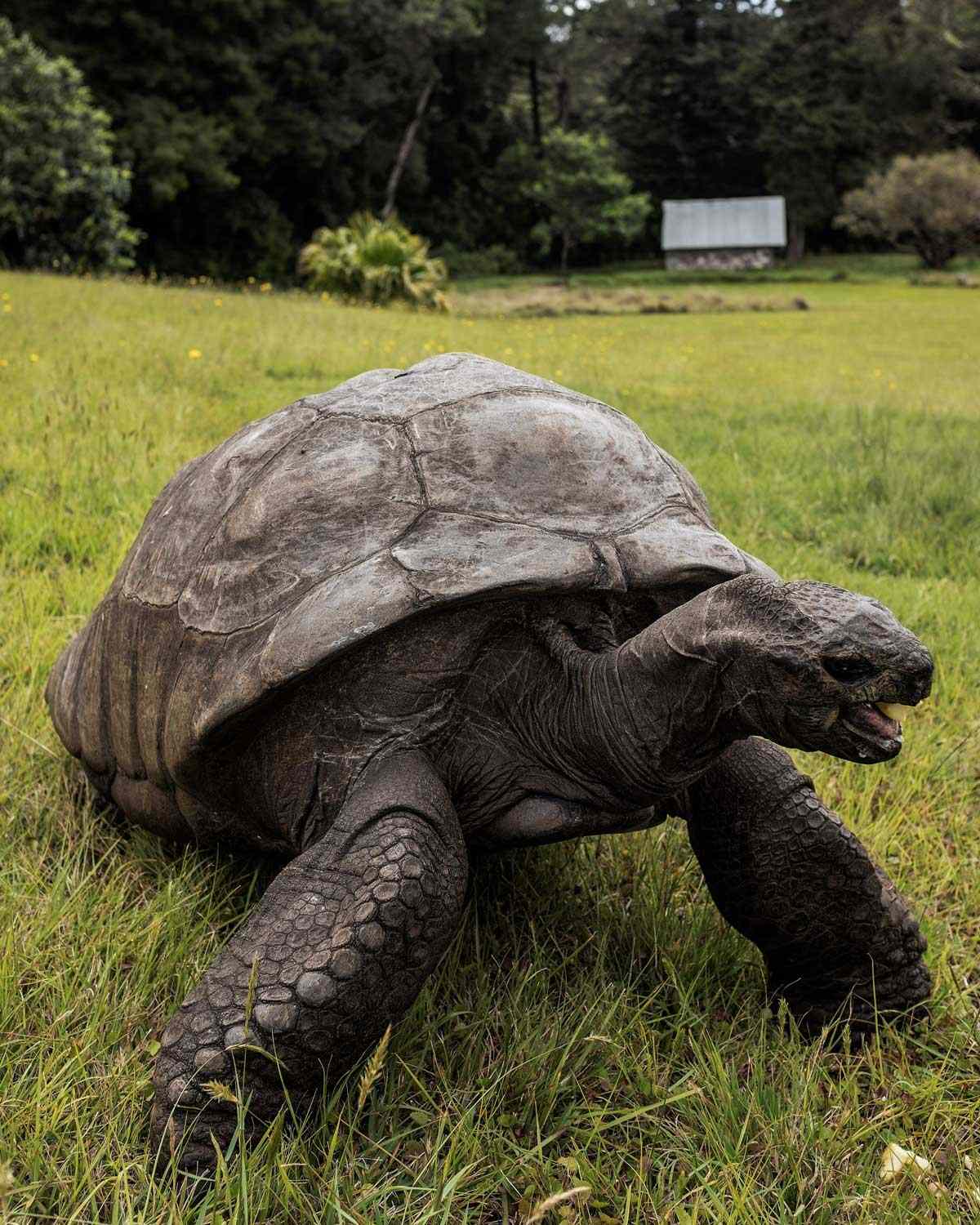
A new look at the genes of Jonathan, who is considered to be the world’s oldest known land animal, reveals interesting insights about longevity
Bailey Richards
At 194, Jonathan the tortoise is considered the world’s oldest tortoise, as well as the oldest known land animal
Scientists found parts of his DNA resemble those of a tortoise more than a century younger, according to new research
Researchers hope his genetic patterns could offer new insights into longevity in animals and humans
Scientists studying aging have uncovered an interesting tidbit from the DNA of the world’s oldest tortoise.
Despite a death hoax that garnered international attention before it was disproven earlier this year, the tortoise, named Jonathan, estimated to be 194 years old, is still standing. He struggles with age-related health problems like sight loss due to cataracts, but remains largely healthy, according to ZME Science. On Friday, Oct. 9, the outlet reported that scientists have learned something new by studying the reptile’s DNA.
A recent genetic analysis of Jonathan, who is also considered the world’s oldest known land animal, has revealed potential clues, “molecular signs of aging,” suggesting a potential clue into human longevity. The record-holding reptile — who lives on Saint Helena, a remote island off the coast of Africa — is an Aldabra giant tortoise. Though this breed of tortoise can typically live up to 150 years old, per the Smithsonian, Jonathan is still an extreme example of the subspecies’ estimated lifespan.
“There are few creatures that could tell us more about aging than the giant tortoises of the Galapagos and Seychelles islands,” Justin Gerlach, a biology fellow at the University of Cambridge who co-authored the new research, told ZME Science.
In other words, Jonathan was the perfect subject for a team of researchers studying longevity from the University of Cambridge, Vanderbilt University Medical Center and other institutions. Through DNA analysis of the reptile, the researchers, according to ZME Science, discovered that while some regions of the elderly animal’s DNA showed signs of aging, others are as similar to those found in tortoises over a century younger than him.
Researchers collected DNA from Jonathan — scraping samples from the cheek rather than drawing blood, which could have endangered him — and compared the findings with those of four other Aldabra giant tortoises of varying ages, the youngest being 5 years old.
DNA methylation patterns, which encode critical biological information, often become less consistent with age, and scientists measure the irregularity and loss of organization through methylation entropy.
Through the new research, the scientists found that certain regions of Jonathan’s DNA retained exceptionally low methylation entropy, according to ZME Science. In certain instances, Jonathan’s DNA in these regions even showed patterns mirroring those observed in the study’s 5-year-old tortoise, the outlet reported.


Elon Musk Says He Experienced AI Psychosis 6 Times — Now Silicon Valley Is Making It a Trend
Spread the loveIn Silicon Valley, a strange new trend is raising questions about how far the tech world is willing...


Dangote: Refinery IPO attracts investors from 51 African countries
Spread the loveBy Nick Ibe, Abuja Investors from 51 of Africa’s 54 countries and more than 90 countries worldwide have...

N5.3bn Fake products Destroyed in one Week: Result of NAFDAC, Customs Corroboration
Spread the loveBy Seyi Balogun, Lagos . Counterfeit and unwholesome products worth more than N5.3bn have been destroyed in a...


Crucifix Kills Priest During Mass in Ecuador
Spread the loveBy Son Tertsea, Abuja A Catholic priest was crushed to death by a wooden crucifix that pressed him...


Israeli, 61, Wanted for $16.7 million Dubai Fraud, Arrested in Colombia
Spread the loveColombian police say the arrested Israeli suspect is wanted by authorities in the United Arab Emirates for fraud,...


Benue Govt Blows N160m On Snakebites For IDPs While Victims Rot In Camps, Residents Fume
Spread the loveBy Felix Umande The Benue State Emergency Management Agency, SEMA, says it has spent more than N160 million...


Blue economy: Marine engineers honour its chairman, Eferebo, Wadada, Gbenga Daniels, others
Spread the loveBy Philip Nyam Abuja The National Chairman of the Nigerian Institution of Marine Engineers and Naval Architects (NIMENA),...


VP Shettima: APC’s internal contradictions more worrying than Atiku, Obi
Spread the loveBy Isa Abdul, Abuja The deeply embedded contradictions within the ruling All Progressives Congress APC, are more worrying...


Justice Cries Out : Corruption is Turning Nigerian courts into ‘market stalls’
Spread the love—Blames govt for ignoring court rulings By Son Tertsea, Abuja A retired justice of the supreme court, Amina...

DNA of Jonathan, 194, World’s Oldest Animal Reveals Aging Surprise–Scientists Studying Aging
Spread the loveA new look at the genes of Jonathan, who is considered to be the world’s oldest known land...