
Politics
Benue South APC Aspirant’s ‘10,000-Goat’ Empowerment Plan Draws Praise, Backlash

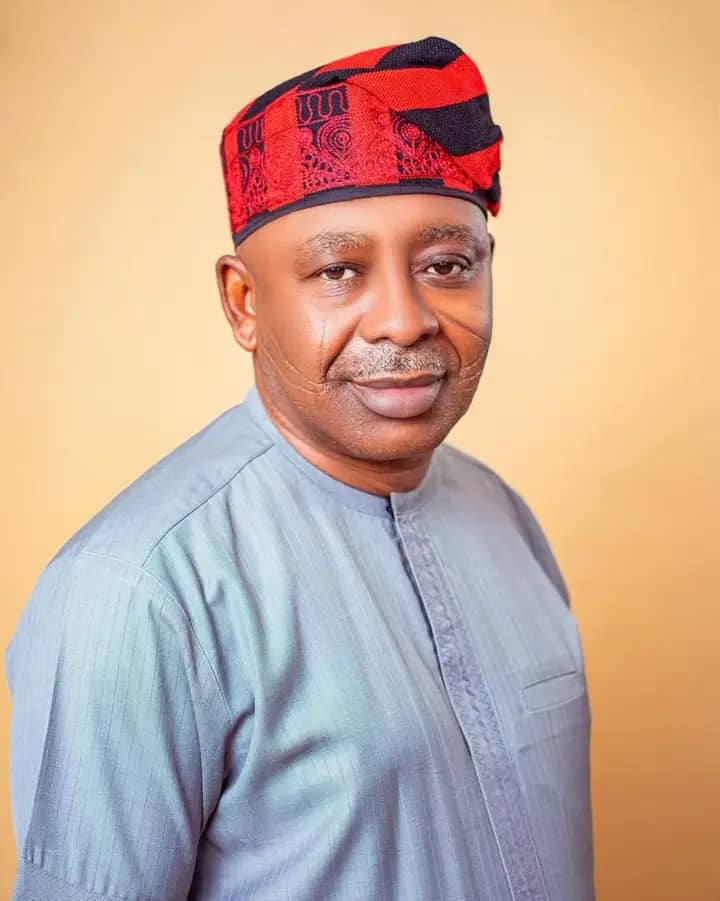
_Idoko kicks off senate bid with ranching proposal, promises grassroots politics as critics call idea ‘outdated’
By Felix Umande, Makurdi
Benue South Senatorial aspirant Hon. Patrick Ojechema Idoko has come under mixed reactions after unveiling a goat-rearing empowerment scheme as a flagship constituency project at the launch of his campaign for the All Progressives Congress (APC) ticket.
Idoko, who began a grassroots tour of Ogbadibo Local Government Area, told supporters he would establish a cooperative ranching system to tackle youth unemployment and steer young people away from social vices.
“I will buy plots of land, about the size of this secretariat. We will fence it round and set up a cooperative for the youths,” Idoko said. “We will then buy about 60 to 80 goats. They will divide themselves into ten groups and take turns caring for the goats on a weekly basis.”
He projected rapid growth, adding, “Before the end of the year, they can have up to 10,000 goats. One goat currently costs about ₦100,000. Goats primarily eat grasses. They will have a ranch and a cooperative that will monitor the goats.”
The proposal has sparked debate across Benue South. While some residents acknowledged agriculture’s economic potential, critics dismissed the plan as “outdated and insufficient” given the scale of socio-economic challenges in the district.
“The idea of ranching is not bad, but we need projects that match the realities of 2027. Our youths need tech skills, industries, and access to capital, not just goats,” a resident in Ogbadibo said.
Supporters, however, defended the scheme as practical and sustainable. “Goat farming is big business. If properly managed, it can lift families out of poverty,” another constituent noted.
Idoko formally commenced his bid in Agbafu, his hometown, where he received parental blessings before moving to Aono Ward 3 and later the Ogbadibo Local Government Secretariat. The two-stage declaration at ward and LGA levels was framed as a show of commitment to grassroots-driven politics.
At Aono Ward 3, the ward chairman described Idoko as the sole aspirant from the area and urged party members to rally behind him. “We have a son who understands our needs and has the capacity to deliver,” he said.
Ogbadibo LGA Chairman, Hon. Sunday Ajunwa, also pledged support at the council secretariat. “We are with you all the way. Ogbadibo is ready for representation that works,” Ajunwa stated.
Addressing supporters, Idoko listed infrastructure development, improved healthcare, economic empowerment, and revenue-generating initiatives as his priorities. He promised a campaign “rooted in grassroots engagement and results-driven representation.”
The declaration drew a large turnout, with notable attendees including Chief Daniel Onda, Comrade Iliya Hassan, Hon. Fab Agada, Chief Adoyi, and Mrs. Enayi Ogbe, among others. Supporters said the crowd reflects “growing acceptance” of his ambition in Zone C.










By Felix Umande
The All Progressives Congress Presidential Campaign Council has described African Democratic Congress (ADC) candidate Atiku Abubakar as unfit to be President of Nigeria, alleging that fresh revelations at an international arbitration in Paris have linked him to corruption in the stalled Mambilla Hydroelectric Power Project.
In a statement issued on September 18, 2026, by its spokesman, Dele Alake, the APC Campaign said hearings at the International Arbitration Tribunal under the auspices of the International Chamber of Commerce (ICC) in a case filed by Sunrise Power and Transmission Company Ltd and Leno Adesanya over the 3,960MW Mambilla project in Taraba State revealed that Atiku and former Power Minister Olu Agunloye worked together to sign an illegal power contract.
The Council alleged that the contract was signed through the backdoor in the dying days of former President Olusegun Obasanjo’s first term, when Atiku wielded enormous power, despite Obasanjo’s objection at the Federal Executive Council meeting.
According to the statement, months after the alleged signing, Leno Adesanya, through an offshore account, China Castle Investment, wired $500,000 to the US Citibank account of Atiku’s now-divorced wife, Jennifer Douglas. The APC said the wired money and other suspicious transfers totalling $40 million surfaced in a US Senate investigation titled “Keeping Foreign Corruption out of the United States: Four Case Histories.”
The Campaign quoted the ICC Paris Tribunal as concluding: “There is a close connection in time between the moment the USD 500,000 payment was made to the wife of Vice-President Abubakar on 30 January 2003 and the alleged award of the BOT contract to Sunrise on 22 May 2003.”
It said the alleged action led Sunrise and Adesanya to file claims against Nigeria demanding $680 million as settlement and interest in another arbitration claiming over $2.7 billion in compensation relating to the Mambilla project.
“By collecting a $500,000 bribe from Leno Adesanya to approve a Build-Operate-Transfer contract to a company with no scintilla of experience in hydro power generation, Atiku has proven he is one of the enablers of local and international predatory and exploitative entities out to defraud our country,” the statement said.
The APC Campaign further alleged that Atiku stayed away from the Paris hearing to avoid embarrassment and that while Adesanya shielded him, former Presidents Olusegun Obasanjo and Muhammadu Buhari went to Paris to defend Nigeria.
The statement referenced former President Obasanjo’s remarks on Atiku in his book, My Watch, and called on the ADC candidate to bow out of the presidential race, saying the $500,000 bribe is “just the tip of the iceberg.”
The APC also said the people of Taraba State should note that Atiku is one of those responsible for the stalled kick-off of what would have been the biggest hydropower project in Nigeria.
Atiku Abubakar and Sunrise Power have previously denied wrongdoing in the Mambilla contract dispute, which has been the subject of prolonged litigation and arbitration.

The Adamawa State Youth Christian Movement for Change (ADSYCMC) has endorsed Abdulrahman Bashir Haske, the governorship candidate of the Allied Peoples Movement (APM), for the 2027 Adamawa State governorship election.
The group announced its endorsement during a press conference in Adamawa State, saying its decision followed consultations, prayers and assessment of aspirants seeking to govern the state in 2027.
The development came days after Haske formally resigned from the All Progressives Congress (APC) and joined the APM, where he emerged as the party’s governorship candidate for the 2027 election.
Addressing journalists, Chairman of ADSYCMC, Comrade Yakuba Maigari, said the movement comprised Christian youths drawn from churches and Christian communities across the 21 local government areas of the state.
Maigari said the group’s decision to support Haske was based on what it described as his record in business, youth empowerment, philanthropy and humanitarian services.
“Our decision was not based on sentiment, but rather on track records, capacity and character,” he said.
According to him, the group had followed Haske’s political activities and contributions to society, particularly his involvement in grassroots mobilisation and initiatives aimed at supporting young people and vulnerable members of society.
The group also described Haske as a leader who, in its view, promotes inclusion irrespective of ethnic or religious background.
“Adamawa needs a healer, not a divider. We have found in Haske a lover of humanity, a compassionate leader with a heart of gold and willing to sacrifice all in the interest of humanity,” Maigari said.
The movement said it believed the state needed leadership focused on development, job creation, security and empowerment of young people and women.
It further pledged to mobilise support for Haske across the state, including through Christian communities and worship centres in the 226 wards.
“We will canvas votes for Abdulrahman Bashir Haske in all nooks and crannies of Adamawa State,” the group said.
The group also called on Christian youths, women, men and other residents who support its stated development agenda to join the movement ahead of the 2027 election.
Haske, who previously sought the APC governorship ticket, joined the APM in September and was presented as the party’s candidate. He has said his political agenda would focus on areas including agriculture, infrastructure, education, healthcare, economic empowerment, security and accountable governance.
The endorsement by ADSYCMC adds to a series of public declarations of support that have emerged around Haske since he began his 2027 governorship campaign.
Politics
Benue Police Host Peace Accord Signing, Warn Against Using Cultists, Thugs in Political Activities

By Felix Umande
The Benue State Police Command has hosted the state chairmen of political parties, candidates, and representatives of sister security agencies to a Peace Accord signing ceremony aimed at promoting peaceful political activities and sustaining security across the state.
The engagement, held on Monday, September 15, 2026, in Makurdi, brought together political party leaders, candidates, heads and representatives of security and law enforcement agencies. All key stakeholders present reaffirmed their commitment to peaceful campaigns, respect for the rule of law, and the protection of lives and property throughout the electoral period.
Addressing the gathering, the Commissioner of Police, Benue State Command, Cletus C. N. Nwadiogbu, urged political leaders and candidates to ensure that their supporters conduct themselves peacefully and responsibly.
He particularly warned against the recruitment or use of political thugs, cult groups, and other criminal elements to intimidate opponents or disrupt lawful political activities.
The Peace Accord was subsequently signed by participating political parties and candidates, signifying their collective commitment to reject political violence, respect the rights of other political actors, and cooperate with security agencies in maintaining peace throughout the electoral process.
The Commissioner assured all political parties and candidates that the Police Command would remain professional, impartial, and committed to providing adequate security for all lawful political activities.
He further urged stakeholders to maintain effective communication with the Police and other security agencies, especially regarding planned rallies, campaigns, and other major political activities.
The Command therefore called on all political leaders, candidates, supporters, and the general public to uphold the spirit of the Peace Accord and work collectively towards peaceful and credible political activities in Benue State.



Death of 37 Miners in Custody: Ajia Calls for Independent Investigation, Accountability
Spread the loveA chieftain of the All Progressives Congress (APC) and the Dan Amanan Fune Emirate of Yobe State. Alhaji...


Body Operating With Name National PTA, Unknowed to Edu Ministry
Spread the loveBy Son Tertsea, Abuja The body operating under the name National Parent-Teacher Association (PTA) of the Federal Unity...

Peter Obi Distances Self From Purported Letter to Obi of Onitsha
Spread the loveBy Nick Ibe A letter purportedly written by him to the Obi of Onitsha, Igwe Nnaemeka Achebe, against...


2027 Elections: Police Must Never Be Seen As Political Tool, Tinubu Warns
Spread the loveBy Felix Umande President Bola Ahmed Tinubu has charged the Nigeria Police Force to maintain the highest standards...

Tinubu To Return At Weekend After Extended Working Vacation In London, Paris – Presidency
Spread the loveBy Felix Umande President Bola Ahmed Tinubu will return to Nigeria at the weekend following the extension of...

Benue Govt Suspends Muslim Pilgrims Board Chairman, Secretary Over Alleged Mismanagement
Spread the loveBy Felix Umande The Benue State Executive Council has approved the suspension of the Chairman and Executive Secretary...


BUILDING A BUSINESS: He Started an eBay Side Hustle at 14 – Then Grew It Into a $92 Million
Spread the loveKey TakeawaysLior Pozin started dropshipping on eBay at 14.By age 21, he was making $6,000 per month dropshipping,...

Plateau Imposes Curfew on 3 LGAs, Bans Use Of Motorcycles
Spread the loveBy Michael Lim, Jos A dusk-to-dawn curfew on Barkin Ladi, Bokkos and Mangu Local Government Areas of Plateau...


Tinubu Praises Kaduna Gov Uba Sani’s Free CNG Mass Transit … As Benue Increases Fares for Commuters
Spread the loveBy Son Tertsea President Bola Ahmed Tinubu has praised Kaduna state government for deploying Compressed Natural Gas, CNG,...


Foreign Medical Tourism to Drop as Nigeria Records First Tele-robotic Surgery Success in West Africa
Spread the loveBy Son Tertsea Nigeria’s first tele-robotic surgery on September 20, 2026 at the Redeemer’s Health Village (RHV), in...