
Uncategorized
Alia Seeks Deeper UN Partnership To Turn Benue’s Vulnerabilities into Resilience

By Felix Umande, from Makurdi
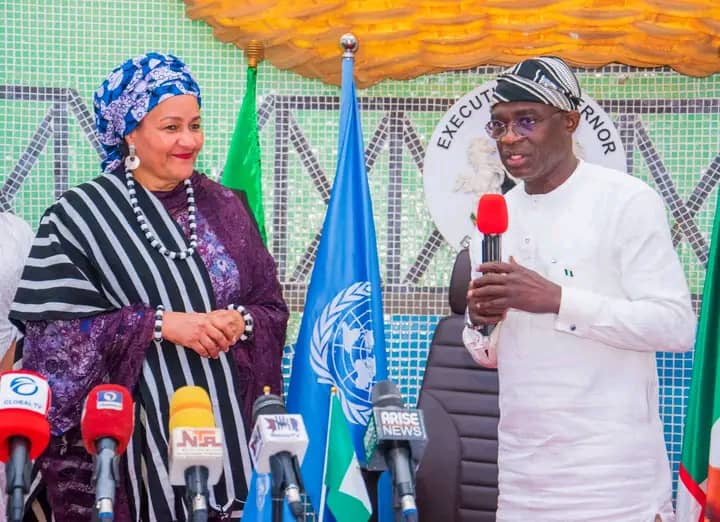
Benue State Governor, Rev. Fr. Hyacinth Alia, has called for a deeper strategic partnership with the United Nations to tackle the state’s humanitarian, agricultural and climate challenges, insisting that Benue is prepared to convert its vulnerabilities into long-term resilience.
The governor made the appeal on Thursday at Government House, Makurdi, while hosting the United Nations Deputy Secretary-General, Amina Mohammed, on her official visit to the state.
Framing his administration’s request around food security, climate resilience and human dignity, Alia said Benue’s future hinges on collaborative global action rather than short-term interventions.
“What we seek is not charity, but collaboration. Not isolated projects, but integrated systems. Not temporary relief, but lasting transformation,” the governor told the UN delegation.
Describing Benue as Nigeria’s “Food Basket of the Nation,” Alia noted that the state occupies a critical position in Nigeria and West Africa’s food systems but remains under severe strain from farmer-herder conflicts, climate-related shocks and a humanitarian caseload of more than 500,000 internally displaced persons.
Since assuming office in 2023, he said, his government has pursued an integrated development agenda aimed at rebuilding institutions, restoring dignity and unlocking economic opportunities across key sectors. “We are not waiting for change, but building structures that enable change,” he added.
On education, the governor disclosed that his administration has rehabilitated more than 375 public schools, recruited 9,700 teachers at the basic education level, rolled out free education policies and established new technical and higher institutions.
In the health sector, he listed the rehabilitation of 104 rural health centres, revitalisation of the Benue State University Teaching Hospital, and expansion of maternal and child healthcare services as key milestones.
Alia said strategic road and transport projects are being deployed to link rural and urban economies and unlock agricultural productivity, while over 10,000 youths have already been trained in digital skills under the state’s ICT empowerment programmes.
He stressed that humanitarian response remains central to his administration’s priorities, particularly in conflict-affected communities. “These are not just interventions; they are pathways from displacement to dignity,” he said, referencing shelter provision, farmland allocation, livelihood restoration and post-crisis rebuilding efforts in Yelewata for internally displaced persons.
To consolidate gains, the governor formally sought UN collaboration in five strategic areas: climate resilience and restoration of the River Benue; agro-industrial mechanisation; human capital development in education and health; community stabilisation and security; and the creation of a Benue SDG Transition and Resilience Financing Facility.
Reaffirming the state’s ambition to become a model of sub-national transformation, Gov. Alia declared: “Benue is ready to lead, to partner and to deliver results that matter — not just for the Benue people, but as a model for Nigeria and the global community.”
Uncategorized
Alago Be Prepared: The Fulani You Use Against Tiv Today, Surely, Will Soon Be Your Albatross

By Engr Fabian Aboh Ortindi
I have come across certain comments in the ongoing discussion bothering on the tenacity and lordship over the entity called Kadarko. These comments are disturbing and seem to be a total deviation from the subject of discussion.
When you engage some of my Alago neighbors intellectually, you get nothing from them but hatred, revenge, and bitterness.
They hate the Tiv people of Nasarawa State because they are desperate for vengeance. Sometimes, out of bitterness, they speak as though they are speaking for the Idoma people of Benue State. You hear statements like:
“If you want to be treated fairly, ask your brothers in Benue State to make the Idoma people governor of the state.”
This does not sound logical. The Idoma people of Benue are there fighting their own cause. They are more than capable of doing so. Why would anyone want to take revenge on their behalf in another state?
You also hear statements like:
“Your people have driven all the Alago people out of Amele, in Benue state, so you cannot enjoy anything in Nasarawa State.”
If you are not cowards, and Amele truly belongs to you, as you claim, there would be no need to run away. You would stay and defend it. The way the Tiv are refusing to leave Nasarawa state.
The Tiv people of Nasarawa
state belong here and God has a reason for keeping them in a state different from where their kins dominate in Benue. There is nowhere they can run to. So you will be wasting your time expecting them to return to Benue simply because you ran away from your fight in Amele. They will stay and fight back.
The hatred and bitterness in them has pushed them into employing their last and only source of strength, which seems to be the employment of the services of Fulani bandits to terrorise the Tiv people and send them out of their homes and farms. But you know that the fulanis do not fight for free.
The question is: How many of the lands they have helped you grab have actually been given to you? They are also interested in the land. Very soon, they will be interested in the leadership position of the chiefdom. And you know what? The Tiv will not be there to fight on your side. War is expensive and expansive. You may not continue to have the finances and energy to prosecute this evil agenda.
Bitterness and jealousy only become a heavy burden to those who carry them. The truth is : Tiv will not leave Nasarawa state or Kadarko, and violence cannot solve this. So if you like, keep being bitter and jealous. Keep hating. It is your cross to carry.
There is no possibility of the Tiv leaving Nasarawa State for you. And it is impossible to kill all the Tiv people. So you can see that your dream will never come to fruition.
Let us choose a better path: peace, justice, and fairness for all. All these are priceless as compared to hatred, bitterness, violence and vengeance.
By Seyi Balogun
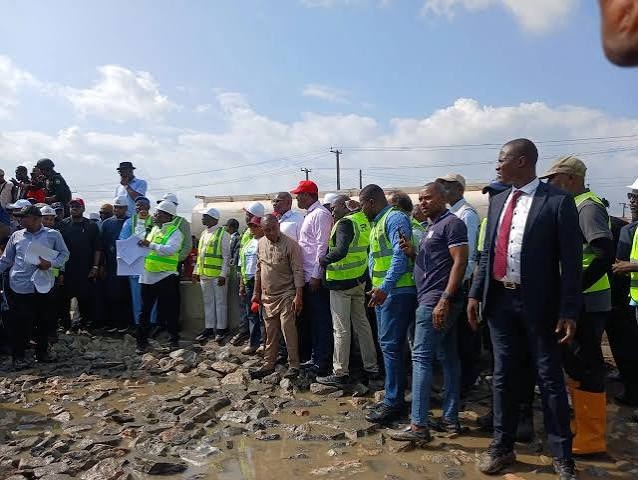
For not adding any value to the Benin-Asaba road, the Minister of Works, David Umahi, has advised the concessionaire handling it to immediately write to the Federal Government through the Ministry of Works to enable it to terminate the contract.
The minister also ordered the concessionaire to urgently remove all the blockages on the road to allow free flow of traffic.
Umahi made the appeal and the directive on Wednesday in Benin at a stakeholders’ engagement in Government House, Benin. In his words:
“We are therefore pleading with you to give us written approval to proceed in this manner, we believe this is the way forward.
“Therefore, our directive going forward is that you should be removed from the site of this project, within the limits of our rights. You have added no value to the project,” he said.
He stressed that the Federal Ministry of Works should write to the independent engineer to request measurements of all the works that have been carried out, excluding what we describe as negative work.
“When you remove asphalt contrary to the contract and contrary to the specifications, that is negative work.
“It will not be recognised as part of the value of work done. In fact, the cost of rectifying the damage must also be established.
“Now, we want to plead with you, as the clients acting in the interest of the public, we do not believe that you currently have the capacity to reinstate the road.
“We have not stopped you from working, but if you continue doing what you are currently doing, we are not convinced that you will be able to avert the potential for public disorder in that area,” he added.
The minister, while suggesting ways to remedy the current hardship caused by the concessionaire, directed that the affected sections should then be reconstructed under the supervision of the independent engineer.
He also directed that the concessionaire to provide a technical design for proper stormwater canalisation, adding that this is very important.
He further warned that it should restore all the asphalt, redirect any water that has been channelled onto the carriageway, and restore free flow of traffic along the carriageway.
Responding, Head of Legal and Compliance of the Benin Asaba Expressway Concession Company (BAECC), Mr Peterson Fabian, appealed to all parties involved to allow more time to enable suitable options.
“I believe that everything that is being discussed here is not conclusive in itself. We will have a more robust collaborative way of handling things going forward.
“Every stakeholder here, do allow us to have more time to engage. I believe that we will have more pathways forward to further collaborate,” he said.
On his part, the Senator on Works Committee, Allwell Onyesoh, said that he felt commuters and all other road users plying the Benin-Asaba road described the situation as terrible.
“The concessionaires and whoever pushed for this concession did not mean well for Nigeria, and this is a big lesson about concessionaires in Nigeria. We can see that it is not everybody that has the capacity to handle such a big project,” he said.
Also speaking, the Edo State governor, Monday Okpebholo of Edo, said a lot had been discussed and there was so much to be taken away from the engagement meeting, saying that he was totally disappointed with the way things are on the section of the Benin-Asaba road.
“Looking at the project at hand, looking at the road itself, looking at the suffering of the people and looking at how that road was before now, I felt sorry for those plying the road, especially Edo people.
“What we are seeing now is not what I should be seeing at this point after 16 months. Nothing has been done. To me, it is a total waste of resources. Whatever amount that has been put there, for me, is a total waste.
“You can’t give what you don’t have. If they are competent, by now we should have seen some part of this road completed. You don’t need to tell a layman that something is wrong on that road. These people are not serious about completing this job.
“Minister, I advise that you do the needful. Edo people are watching. Whatever happens here goes round the entire country. Let’s proffer solutions to this issue. There must be a way out. This is a major road,” he said.
Uncategorized
Tackling Nigeria’s Security Challenges Between Farmers And Herdsmen: Need For Federal Government’s Neutrality
By Dan Mou
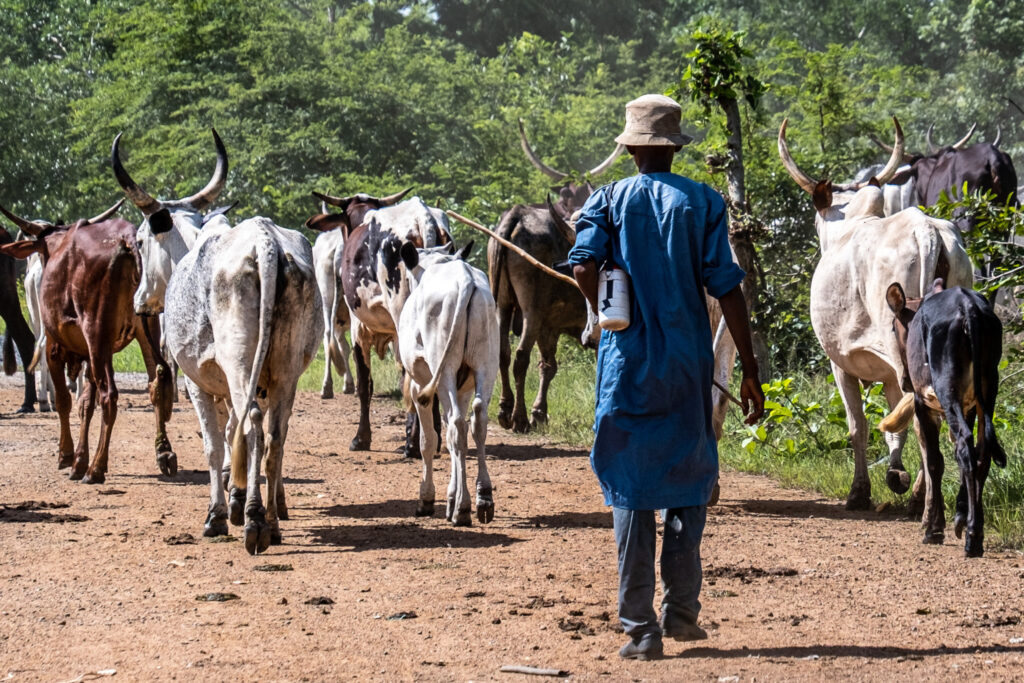
Tackling the persistent security challenges concerning the farmers and herders in Nigeria has become a very complex matter. It needs to be approached carefully, objectively, and dispassionately. So far, political considerations, rather than pure technical issues of policy making and implementation, seemed to have become the main determinant factor in this process of attempting to resolve these issues.
In his inaugural address to his fellow Nigerians at his swearing in ceremony, late President Muhammadu Buhari announced that, to paraphrase, his administration was not for anybody or group. It was for everybody and every group. However, late President Buhari is known to have completely abandoned this his initial philosophy of neutrality and objectivity in policy making and implementation when he assumed power. It was very clear to all keen observers, local and international, that most of the late President Buhari’s policies and programmes, became totally captured and hostaged by the Fulani Ethnic Group throughout the eight years of his administration.
To focus on the issue before us, all the policy initiatives that late President Buhari attempted to implement, supposedly to address the Killings and displacement of farmers by the Fulani Herdsmen Terrorists and Bandits, were all designed to favour the aggressors, the Fulanis.
They were couched in the political language of “peace, harmonious co-existence and security ” between farmers and herders. Yet, this was mere political language meant for deception of the public. This is because his intended policies and programmes had nothing in them for the farmers, who have always been victims in this unfolding insecurity drama in Nigeria. It was not surprising to anyone, therefore , that all his proposals, from RUGA to Fulani Cattle Colonies, were wantonly and openely rejected by Nigerians because of their hidden dangerous agenda.
Even though Buhari is late now, it appears that the capture of contemporary public policies and programmes to serve mainly the interests of the Fulani Ethnic Group, while pretending to be for the general public interests, has continued unadulterated at the Federal Ministry of Livestock Development under the leadership of Alhaji Idi Mukhtar Maiha, the Honourable Minister incharge of that Ministry. No where is this unjust philosophy clearly demonstrated than in his recent announcement regarding the Policy and Programmes for the Development of “Pilot Ranching Reserves” exclusively in the Middle Belt States of Nigeria
The question that comes to mind is clearly telling of his ill motives: Why will he choose to locate the proposed pilot schemes for the development of ranching reserves exclusively in the Middle Belt States of Nigeria? These are: Benue, Plateau, Nasarawa, Kaduna, and Adamawa States, alongside the Federal Capital Territory, Abuja (FCT).
These are the same States that the Fulani Herdsmen Militia and their Associations, such as MACBAN, have vowed to capture them and take over the Native Lands by force, if need be, for the grazing of their cattles!
Even more shockingly, these states are not the ones known for cattle rearing and milk production. They are States occupied primarily by farmers who engage mainly in root crops and cash crops farming. These Middle Belt States would rather have Mechanised Farming Parks, Tractor Highering Centres, Ago – Processing Factories, and the likes, than Ranching Reserves.
The ONLY reason why the Hon. Minister Alhaji Idi Mukhtar Maiha has chosen them is because these were and are the very same States in the country where late President Buhari also wanted to commence his Policies of RUGA and the establishment of Fulani Colonies.
Thus, to Hon. Minister Maiha, the primary goals are not the modernisation of Livestock Development and Production for local consumption and exports to earn foreign exchange. It is mainly to establish RUGA and the Fulani Settlement Colonies as had been proposed by late President Buhari, under the new name of “Ranching Reserves” within the Middle Belt States of Nigeria.
It is a known fact that objective policy thinking would have dictated that States in Nigeria where this policy and programmes of Pilot Ranching Reserves should have commenced were the far northern states. These are States where the rearing and milking of cattle is their primary business .
These states are: Sokoto, Katsina, Jigawa, Yobe, Bornu, Kebbi, Zamfara, Kano, Bauchi, and Gombe States. It is these States that should have formed the major focus for the development of Ranching Reserves and Modernisation of Livestock Development, Production, Distribution, and Sale in Nigeria. It is when this policy and programmes succeed fully in these far Northern States that one would have thought of scaling them up to the Middle Belt States and even to Southern Nigeria, if necessary. It is clearly a misnomer that the Hon. Minister of Livestock Development had instead chosen to commence his “Pilot Ranching Reserves” in the Middle Belt States, where cattle rearing is almost completely absent!
What the Hon. Minister of Livestock Development, Alhji Maiha, has done, if not immediately, stopped by the Presidency and carefully managed, it will present the President Bola Ahmed Tinubu Administration also in a very bad light as it was the case under the late President Muhammadu Buhari Administration’s attempts, supposedly, to deal with the herdsmen Massacre and destruction of farmers homes and farms. Thus, instead of the Hon. Minister of Livestock Development, Alhaji Maiha, talking about “Ranching Reserves ” in the Middle Belt States, including Benue State, the first thing the Federal Government should be thinking about is the setting up of a huge REHABILITATION AND RESTORATION FUND ( RRF) to restore the displaced victims of Fulani Terrorism and Baditry, most of whom have been in Intellally Displaced Persons Camps (IDPs) up to twenty (20) years, back to their home lands, particularly again, in all the Middle Belt States .This RRF could be used to build homes and other amenities for them (similar to those being proposed under the “Ranching Reserves “, such as schools, electricity, police stations, and hospitals. The RRF would also be used to give the returning farmers sufficient grants ( not loans) to reestablish their farms and other businesses they lost during their massacre and displacement by the Fulani Herdsmen Terrorists and Bandits.
While this is going on, the proposed “Ranching Reserves ” in the Middle Belt States should be completely cancelled. Instead, New Sites for the Pilot Ranching Reserves should be selected in the far Northern States of Sokoto, Jigawa, Kebbi, Kano, Zamfara, Bauchi and so forth, as I have already enumerated above.
The construction of these Pilot Ranching Reserves in these far Northern States where cattle rearing is their main business, will enable all the Fulani Herdsmen roaming all over the Middle Belt States and beyond, to go back to these Ranching Reserves in the far Northern States to occupy them and settle down there to continue with their cattle rearing businesses in peace and comfort.
Consequently, therefore, they will be no need for the Fulani Herders to be moving down to the Middle Belt and other Zones in the Southern Parts of the country destroying farms, killing people , and displacing the Native Inhabitants in these communities. Certainly, this will be a better and more permanent way of bringing about peace between farmers and the herders in Nigeria.
The current policy by the Federal Ministry of Livestock Development under the leadership of Alhaji Idi Mukhtar Maiha of buying or even consificating the lands of the killed and displaced farmers in the Middle Belt States to commence Pilot Ranching Reserves for the Fulani Herdsmen who have done the killings and displacement of these farmers is totally unjust, inhuman, insensitive and presents the President Bola Ahmed Tinubu Administration as being in support of the inhumanity and injustice being done to the farmers over these several years, simply to please their killers and destroyers, namely the Fulani Herdsmen Terrorists and Bandits.
This unfortunate impression should be totally avoided by the Tinubu Government.
Hence , there is the need to first or at least simultaneously, deal with the plight of the victims of these Fulani Militia and Herdsmen Terrorists. These are the indigenous settler farmers. Preferably, therefore, these proposed “Ranching Reserves” should immediately be relocated and constructed in the far northern States, as I have suggested here above.
The Tinubu Administration can not and should not, afford to adopt a one- sided approach in trying to solve the security challenges in Nigeria arising between the farmers and the herders, as the late President Muhammadu Buhari was always trying to do, with totally failure of such bias , unjust and inhuman policies and programmes, please.



Mother Subjects Daughter to Abuse, Admits: “I made $300 from my 8-yr-old daughter’s pornographic video’
Spread the loveBy Nick Ibe The viral video on the social media involving an 8-year old girl whose ordeal was...


Lawyer Assaulted by Police: NBA Gboko Branch Secures N500 Million General and Exemplary Damages in Makurdi Court
Spread the loveBy Our Reporter In the pursuit of justice for a colleague, B. B. Iliamkondo, Esq., who was recently...


Alia Denounces Ayilamo Attack, Commiserated With Victims as DSS Arrests 3 Suspects
Spread the loveBy Felix Umande Governor Hyacinth Alia of Benue State has strongly condemned the deadly attack on Ayilamo Community...

Alia Condemns Ayilamo Attack, Commiserates With Victims, As DSS Arrests 3 Suspects
Spread the loveBy Felix Umande Governor Hyacinth Alia of Benue State has strongly condemned the deadly attack on Ayilamo Community...


FG, States, Be warned We Will Strike, Without Warning –ASUU
Spread the loveBy Nick Ibe, Abuja Without urgently resolving all the pending salary and welfare issues, by the Federal Government...
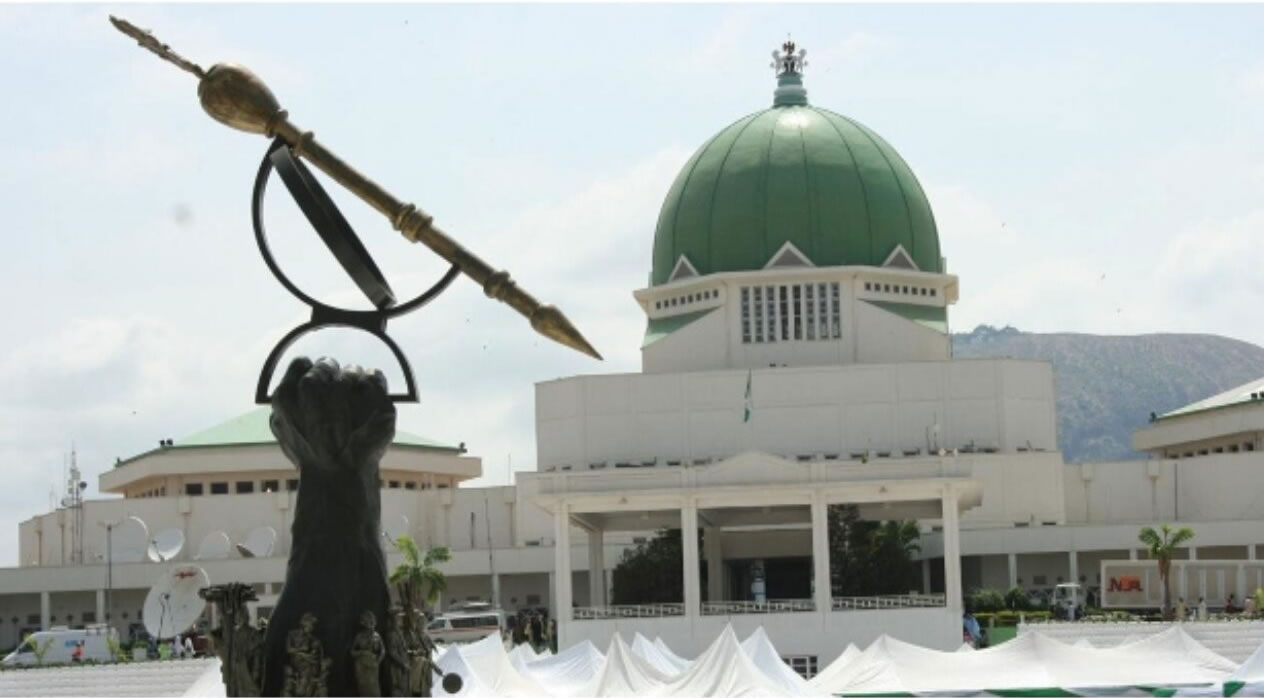
Protest Against Xenophobia: NASS Orders Boycott of South African Organised, Hosted Legislative activities
Spread the love–Calls on State Assemblies to join By Isa Abdul, Abuja In a bold move against South Africa’s xenophobic...

Why Education is Dear to Me – By Peter Obi
Spread the loveAfter returning to Abuja on 8th September 2026, following our visits to Benue and Plateau States, I travelled...

After Two Decades: FG Pays 2,700 ex-Nigeria Airways Staff N18bn
Spread the loveBy Son Tertsegha, Abuja Over two decades after the national carrier, Nigeria Airways, was liquidated, the Federal Government...

To Boost Sch Enrollment: Nasarawa Plans Mobile Courts To Arrest, Prosecute Parents Of Out Of School Children
Spread the loveBy Michael Lim, Jos As part of measures to tackle the growing number of out-of-school children in Nasarawa...
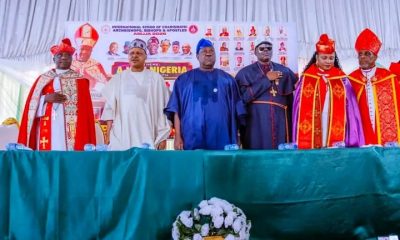

Akume to Religioud Leaders Make Peacebuilding Part OF National Security Ahead of 2027
Spread the loveBy Felix Umande The Secretary to the Government of the Federation, Senator Dr. George Akume, CON, on Wednesday...