
Health
Admit 50,000: FG Tells Nursing Schools


—To boost manpower in Health sector
By Son Tertsegha, Abuja
As part of efforts to address Nigeria’s inadequate healthcare professionals and improve the country’s health sector workforce, the Federal Government has increased annual admissions into nursing schools from about 20,000 to 50,000 students.The Minister of Education, Dr Tunji Alausa, has said.
Alausa disclosed this during an interview with journalists on Sunday, saying the expansion of nursing admissions formed part of broader education reforms aimed at producing the skilled workforce required to drive President Bola Tinubu’s vision of building a $1tn economy by 2030.
The minister said the government was deliberately investing in human capital development by expanding access to professional education in critical sectors.
“We want to be the manpower supplier of the world. We need to produce competent, skilled and educated young Nigerians who will drive our economy, contribute to Africa’s growth and compete successfully across the world,” Alausa said.
He explained that the Federal Government had aggressively expanded admissions into health-related programmes to bridge long-standing shortages of healthcare workers.
According to him, annual enrolment into nursing schools has risen from about 20,000 students before the current administration assumed office now taking it to approximately 50,000 students. He added that admissions into medicine, pharmacy and dentistry have also been significantly increased.
The minister expressed confidence that the reforms would substantially reduce the shortage of healthcare professionals within the next few years as thousands of newly trained graduates join the workforce.
“As the President advances his vision of building a one trillion-dollar economy, education will remain at the centre of that transformation,” he said.
Alausa attributed the expansion to President Tinubu’s commitment to education and human capital development, describing education as the foundation for sustainable economic growth.
The minister also reiterated that the Nigerian Education Loan Fund was designed to remain financially sustainable beyond the current administration.
“There is no value in introducing policies that cannot stand the test of time. Sustainability is central to this administration’s philosophy, and that principle guided the design of NELFUND,” he said.
He further said the administration had restored industrial harmony in tertiary institutions through dialogue with academic and non-academic staff unions, noting that improved stability was contributing to better outcomes in the higher education sector.
Nigeria has faced a persistent shortage of nurses and other healthcare professionals, due largely to years of underinvestment in training and the increasing migration of health workers to countries offering better remuneration and working conditions. The trend has placed additional pressure on the country’s healthcare system, particularly at the primary and secondary healthcare levels.
To reverse the shortage is why the Federal Government has expanded admissions into nursing and other health-related programmes while also investing in Technical and Vocational Education and Training and other human capital development initiatives
By Isa Abdul, Abuja
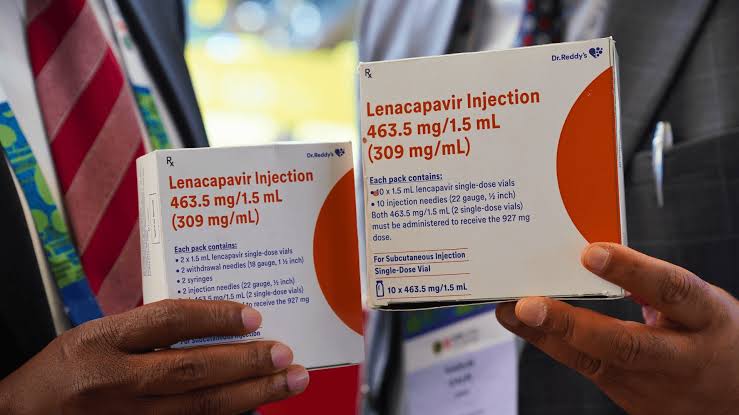
The first generic version of lenacapavir, a twice-yearly injection used to prevent HIV infection, has been given tentative approval by the U.S. Food and Drug Administration (FDA), in a major development for global HIV prevention.
The generic drug which has been developed by India’s Dr Reddy’s Laboratories, and is expected to cost about $40 per person annually, will be made available across 120 low- and middle-income countries, including Nigeria.
The injection has demonstrated near-total effectiveness in clinical trials, offering an alternative to daily HIV prevention pills. The approval is expected to accelerate access to affordable prevention options, although local regulatory processes, funding and distribution remain key to its rollout.
By Michael Lim
The Nigeria Centre for Disease Control (NCDC) has disclosed that the two suspected Ebola cases reported in Yola, Adamawa State, have tested negative following two rounds of laboratory testing.
The Agency noted in a statement that it is working with the Adamawa State Government to investigate the cases, which were isolated and tested.
The NCDC clarified that the index case previously confirmed in the Federal Capital Territory remains the only confirmed Ebola case reported in Nigeria.
It urged Nigerians to remain calm and rely on official government and public health channels for accurate information.
The Agency further advised anyone experiencing symptoms such as fever, severe weakness, headache, muscle pain, vomiting, diarrhoea or unexplained bleeding, particularly after possible exposure, to seek immediate medical attention and provide healthcare workers with relevant travel and contact history.
By Michael Lim
Two individuals have been isolated by health authorities following suspicion that they may be infected by Ebola disease in Nigeria’s North-East region as they are being subjected to investigations and lab tests.
An update on the disease situation by the Nigeria Centre for Disease Control and Prevention (NCDC), said contact identification and listing were ongoing, while samples from the suspected cases were being subjected to laboratory testing.
It clarified that the classification of the individuals as suspected cases did not mean they had tested positive for Ebola, noting that confirmation would depend on laboratory results.
The public was advised to maintain proper hand hygiene, practise enhanced sanitation and follow preventive guidance issued by public health authorities.
The update added that further information would be provided as verified details become available.


PERSPECTIVE: Tiv Leaders Must Hear This: While Akwa Ibom Asked For A Future, Tiv Leaders Fight Over A Man
Spread the loveBy Edward Tion I watched the presidential campaign in Akwa Ibom today with a bleeding heart. Not because...


Pursue Unity, Peace, Play Active Role in Nigerian Politics, Deputy Speaker, Kalu Urges Igbo Elites, Leaders
Spread the loveBy Saint Mugaga Deputy Speaker of the House of Representatives, Rt. Hon. Benjamin Kalu has called on Igbo...


2027: Amupitan Seeks Royal Support, Partnership to Discharge Mandate Peacefully, Effectively
Spread the loveBy Isa Abdul The National Chairman of the Independent National Electoral Commission (INEC), Professor Joash Amupitan, has said...


Place 7-Year Ban On Establishment Of New Tertiary Institutions– Edu Minister Begs NASS
Spread the loveBy Son Tertsea, Abuja The Federal government has appealed to the National Assembly to halt the passage of...


Gov Sule to Security Agencies: Fish Out Sponsors of VP Shettima’s Attackers in Lafia
Spread the loveSDP: attackers APC members against Wadada’s candidacy By Isa Abdul, Abuja Prominent personalities in the state planned and...


Wike’s Entry, Allocation of UniAbuja Land a Breach of Court Order– ASUU
Spread the loveBy Nick Ibe, Abuja The Federal Capital Territory Administration’s (FCTA) allocation of some hectares of land belonging to...


Alleged 4 Herbal Concoction Consumers Die in Benue
Spread the loveBy Vincent Tyosuugh After consuming a suspected poisonous herbal concoction allegedly sold to residents of Oju Local Government...


BENUE APC Split Deepens As SGF, Stakeholders Shun Alia Campaign Flag-off, Disown Campaign List
Spread the loveBy Felix Umande The crisis rocking the Benue State chapter of the All Progressives Congress (APC) deepened on...


Defence Minister Invites Cybersecurity, Drone, DefenceTech Experts for Collaboration with DICN
Spread the loveBy Nick Ibe, Abuja Minister of Defence, General Christopher Musa (rtd) has called on Nigerians with expertise in...


Wike’s Rainbow Coalition Faces Storm Over Alleged Split Voting: VP Shettima, SDP, Ondo APC Reject Coalition
Spread the loveBy Son Tertsea, Abuja Nyesom Wike’s Rainbow Coalition has been identified as a split voting device according to...