
General News
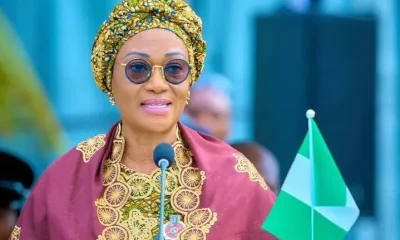
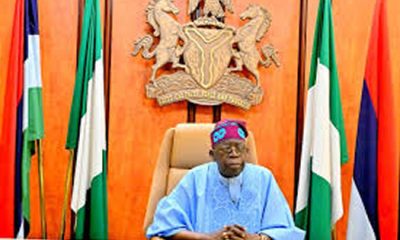
A Speech By His Majesty, Britain’s King, Charles III, during President Bola Tinubu and First Lady, Senator Oluremi Tinubu’s State Visit to the United Kingdom, on Wednesday, March 18, 2026.


Your Excellency, Mr President, and Distinguished First Lady,
Ekabo. Se Daaa Daa Ni. (Greetings! I hope you are well.)
My wife and I are delighted to welcome you to Windsor Castle here on this occasion. We are most grateful to you for travelling during this holy month, which, I acknowledge, is no small sacrifice, and so it is my particular pleasure to wish you, Mr President, peace, blessings, and an abundance of joy.
During my most recent visit to Nigeria in 2018, when I was fortunate enough to be able to spend some time with your highly respected traditional leaders, the Sultan of Sokoto, the Ooni of Ife, Onitsha, Warri, and The Emir of Kano, it was self-evident that while the warmth of the Nigerian welcome remains constant, the country itself is transforming at a remarkable pace. Nigeria hasn’t merely changed. It has arrived. Yours is now a nation of over two hundred and thirty million people, half of whom are under eighteen, with the energy, ingenuity, ambition, and resolve to address the great challenges of our age.
We in the United Kingdom are blessed that so many people of Nigerian heritage, having chosen Britain as their home, are now at the heart of British life through excelling at the highest levels of business, technology, academia, law, science, sport, literature, and the arts, and public service.
I have met so many of these quiet heroes in our schools, businesses, National Health Service, and universities, including countless young people who have flourished through the work of my King’s Trust over the last fifty years. Only last week, I was delighted to host a rather lively group of them for a ‘Jollof and Tea’ Party at St. James’s Palace. I was firmly assured that the Jollof was only the best: Nigerian, of course… or perhaps Ghanaian or Senegalese. Diplomatically, I cannot remember!
But who could have imagined that, when I first visited Nigeria thirty-six years ago today, so many of those I might have met would have gone on to have such an impact in the United Kingdom. From Afrobeats filling our concert halls and Nollywood captivating our screens, to stars competing in our Premier League and adjudicating our highest courts, so much of Britain’s culture is, in truth, profoundly enriched by Nigeria. Whether they are Nigerians who have chosen Britain as their adopted place to invest, trade or study, or Britons who cherish their personal connection to Nigeria, they all represent a living bridge of over half a million people who connect our nations, Mr President, and help make our cultures richer, our shared security stronger, and our economies more prosperous.
We are proud that so many great examples of this living bridge join us this evening.
As the connections between our nations deepen every day, so too do the economic ties. Your visit has provided the opportunity to celebrate the fact that Nigeria is investing in Britain’s future as much as Britain is investing in Nigeria’s – leading Nigerian banks have chosen the City of London as a global base, examples of the best Nigerian companies have listed on London’s Stock Exchange, and UK Export Finance is supporting investment in Nigeria’s ports. In education, British schools and universities are opening their doors in Nigeria, and British and Nigerian technology companies are forming ever closer partnerships. I was pleased to see that visitors from Nigeria spent £178 million in Britain in 2024, and 251,000 people from Britain travelled to Nigeria and spent just as much, in return. In January of this year, Nigeria became the United Kingdom’s biggest export market in Africa and whilst I hear that in Nigeria the phrase ‘Made in UK.’ has always symbolised the highest quality, it evidently now has a distinctively Nigerian flavour…
The friendship between our two countries, Mr President, is a partnership of equals that has brought us both enormous benefits. It has been described to me as a deeply spiritual connection – beyond churches and mosques – a deep bond through which we have strengthened our shared security, ensured our economies are more prosperous, and empowered each other to believe in a more hopeful future.
The many dynamic connections between our two nations have deep roots and yet I do not pretend that those roots are without a shadow. There are chapters in our shared history that I know have left some painful marks. I do not seek to offer words that dissolve the past, for no words can. But I do believe, as I know you believe, Mr President, that history is not merely a record of what was done to us – it is a lesson in how we go forward together to continue building a future rooted in hope and growth for all, and worthy of those who bore the pains of the past.
This afternoon, in another part of the Castle, Mr President, you and I witnessed one such example of how we are learning from one another when we met leaders of the British Christian and Muslim communities. The gathering was a deeply meaningful symbol of what Nigeria has long shown: that people of different faiths can, do, and must live alongside one another, in peace, in harmony and in shared purpose. It was also a timely reminder of the importance of standing with you – and in us strengthening your Quick Reaction Forces, or in providing food, nutrition and protection services in Northern Nigeria – when challenges disturb the age-old balance between these communities.
Your nation, Mr President, is an economic powerhouse, a cultural force and an influential diplomatic voice from a continent that is playing an increasingly important role in the world. In a vastly interconnected global environment, one that is changing at unimaginable speed, that leadership brings responsibility – and opportunity. I heed the Yoruba wisdom – and forgive me if I say it in English… that “rain does not fall on one roof alone”. As you observed so astutely before the Commonwealth Heads of Government Meeting in Samoa in 2024, “if we didn’t have this global alliance… of fifty-six member states, 2.7 billion people and a combined G.D.P. forecast soon to surpass twenty trillion U.S. dollars… there would be a need to create one”. I believe firmly that, when rain clouds gather, we can tighten the grip of friendship between us and, in so doing, reinforce the central role of the Commonwealth in our shared future.
As the world changes, these are lessons we must heed now more than ever. As the Hausa saying goes, “When the music changes, so does the dance”. We can learn from Nigeria, and the best of the UK and Nigeria’s partnership, and harness the advantage that comes from our common languages, our similar legal systems, and the web of cultural ties and spiritual connections that provide such deep trust between us, and look to the future and learn new dance steps, together.
Mr President, you have spoken, in particular, of the importance of expanding intra- Commonwealth trade by creating shared standards, regulatory and digital alignment, and removing barriers that deter investment – as the U.K. and Nigeria’s Enhanced Trade and Investment Partnership is just such an example – so that our economies can grow, in harmony with Nature, and create the millions of jobs our citizens need. So as we look towards C.H.O.G.M this year, I hope far from being past its time we can demonstrate that the Commonwealth’s time has come, as you so rightly said. In achieving that, my wife and I will gain strength from seeing Nigeria take her rightful place at the heart of the Commonwealth and to standing alongside you as a friend, who believes the future is best when built together. As the Igbo say, “Knowledge is never complete two heads are better than one”.
So as I close, Mr President, in anticipation of Eid El-Fitr in Nigeria and across the world, I can only wish you and the millions of Muslims in our countries, Eid Mubarak.
And, in doing so, let me propose a toast,
To the President and people of Nigeria –
“Naija No Dey Carry Last!” (Nigerians Never Come Last)






By Isa Abdul
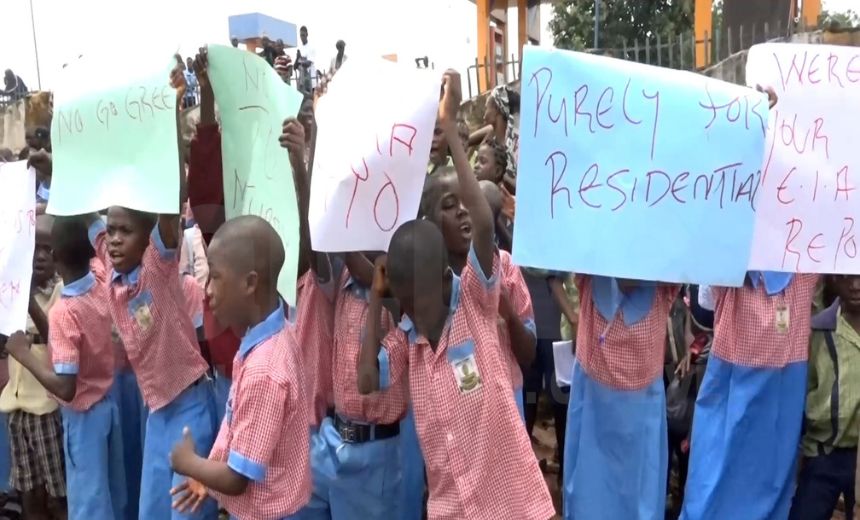
The construction of an alleged mortuary close to public school and residential buildings has been protested against by the residents of Agbeji Community in Dekina Local Government Area of Kogi State.
The protesters who carried placards on Tuesday cite health and environmental concerns, even as the landowner insists he has the right to develop the property.
One of the protesters, who spoke on camera said they are not against someone’s business but their worry is the location of the mortuary near residential buildings and a public school.
But the landowner who identified himself as Alh. Rilwan Okobomude, disagrees, insisting the property is his and that he has the right to develop it, while pledging to comply with relevant regulations.
In an interview with News Central, monitored in Abuja, the land owner talked about building the mortuary for the hospital.
But it is not clear why he’s building a mortuary before the hospital.
General News
Benue Govt Gives 2-Week Ultimatum To Owners Of Illegal Billboards, Threatens Mass Removal
By Felix Umande
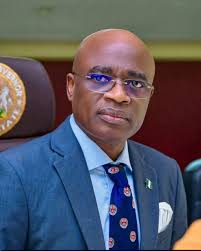
The Benue State Government has decried the arbitrary erection of billboards across the state by individuals, groups and political parties without approval, warning that all unauthorised structures will be pulled down after a two-week grace period.
In a joint statement issued on Tuesday, October 6, 2026, by the Benue State Signage and Advertisement Agency, the Benue State Internal Revenue Service, BIRS, and the Urban Development Board, the government said the billboards were erected without permit, without clearance and without payment of prescribed fees.
The agencies said the practice breaches the law, deprives the state of legitimate revenue, endangers public safety and undermines orderly urban development.
The statement, signed by the Commissioner for Information and Orientation, Hon. Chief Solomon Iorpev, however, said government was prepared to assume that many offenders acted out of ignorance rather than deliberate defiance.
Consequently, owners and operators of unauthorised billboards have been given two weeks, beginning Tuesday, October 6, 2026, to regularise their structures.
Within the window, they are required to approach the Benue State Signage and Advertisement Agency to begin the permit process, obtain clearance from the Urban Development Board, and pay all required fees.
The government warned that enforcement will commence on Tuesday, October 20, 2026, with no further notice.
“Enforcement teams are expected to begin the removal of every billboard that has not been regularised from the set date. Billboards taken down will be at the owners’ cost. Anyone who ignores this window should expect no sympathy and no exception, regardless of status, affiliation or political party,” the statement said.
It described the grace period as a sign of government’s goodwill and preference for compliance over confrontation, urging all concerned to use the window.
For further clarification, the government advised the public to contact 09034345007.
–Tells Editors: “remain primary filter against information disorder.”
By Son Tertsea, Abuja
The Independent National Electoral Commission (INEC) has set in motion a financial monitoring mechanism, in conjunction with anti-graft and financial intelligence agencies, to fish out those embarking on illegal campaign spending.
This was one of the INEC Chairman, Prof. Joash Amupitan’s, disclosures on Monday in Abuja while delivering a keynote at a strategic workshop with media executives organised by the Nigerian Guild of Editors (NGE) in collaboration with the commission.
INEC chairman also disclosed that the number of registered voters has risen to more than 103 million.
In addition, INEC said, it has acquired 57,000 new Bimodal Voter Accreditation System (BVAS) machines as part of measures to strengthen the technological infrastructure for the 2027 elections.
Its target, according to the body, was to commence voting simultaneously across all polling units nationwide during the 2027 elections.
INEC’s collaboration with the Economic and Financial Crimes Commission (EFCC), Independent Corrupt Practices and Other Related Offences Commission (ICPC) and the Nigerian Financial Intelligence Unit (NFIU), he said, was to monitor campaign financing and identify suspicious expenditure with s view to preventing money from undermining the credibility of the elections.
In Amupitan’s view, the teams will track illegal campaign spending, strengthen surveillance around polling units to detect attempts to influence voters through financial inducements.
He warned political actors that violators of the Electoral Act would attract arrest and prosecution, adding that elections must be decided by the conviction of the voter, not the depth of a candidate’s pocket.
The chairman disclosed that the three-phase National Register of Voters had produced 10,772,421 new voters, with 2,611,266 in the first phase, 4,121,835 in the second phase and 3,867,997 in the third phase, respectively. But the fugure is subject to final verification, completing eight of the 14 major statutory activities contained in its timetable for the 2027 elections.
The electoral umpire added that the final Automated Biometric Identification System (ABIS) cleanup was complete, and the preliminary register was displayed for claims and objections. In his words:
“In line with Section 10 of the Electoral Act 2026, the first phase of the CVR commenced on August 25, 2025 and ended on December 10, 2025, registering 2,611,266 voters; Phase II commenced on January 5, 2026, and ended on April 17, 2026, registering 4,121 ,835 voters; and Phase Ill commenced on May 11, 2026 and ended on July 26, 2026, registering 3,867,997 voters. The total new registration stands at 10,772,421, subject to the ABIS verification being concluded.”
Amupitan revealed that the commission had drawn lessons from recent off-cycle elections and would improve its logistics, personnel and technology ahead of the 2027 polls.
The commission further warned political parties, candidates and campaign managers against violence, intimidation and hate speech and other vices ahead of the 2027 general elections.
The commission, through the Inter-Agency Consultative Committee on Election Security (ICCES), he said, had activated an early-warning framework to monitor political violence, thuggery and dangerous campaign rhetoric.
Amupitan called editors, the “bridge in an era of information chaos”, to work with INEC to build a public space of verified information, civic responsibility and institutional trust. In his words:
“When newsrooms prioritise factual accuracy over sensational headlines, when reports contextualise field logistics rather than default to inflammatory speculation, and when information is verified before publication, you perform a sacred public service. You act as the primary filter protecting our democracy against information disorder.”
In his submission at the event, President of the Nigerian Guild of Editors (NGE), Eze Anaba, canvassed for a credible and transparent electoral process that would give voters, rather than the courts, the outcome of elections.
He said: “Elections were not merely about casting ballots but about building citizens’ confidence that their votes would count and that institutions responsible for conducting elections would act fairly and professionally.”
To Akingbulu, verification was a two-way process, arguing that newsrooms could not properly verify information that institutions failed to disclose.
Warning against deepfakes, fabricated campaign materials and other forms of manipulated content, saying such developments could undermine public confidence in the electoral process.
The Executive Director of the International Press Centre (IPI), Lanre Arogundade, stressed the importance of timely and transparent communication from INEC.


How FG’s Docility and FIFA’s Compromise on Mpasi Conspired Against Nigeria’s 2026 W’Cup Qualifier– Report
Spread the loveThe apex world soccer’s governing body, FIFA, knew that the Democratic Republic of Congo fielded an ineligible player...

Kogi Community Protests Building of Mortuary in Residential Area.
Spread the loveBy Isa Abdul The construction of an alleged mortuary close to public school and residential buildings has been...

100 Days To 2027 Polls: INEC Vows Neutrality, Says BVAS, Ballots Ready
Spread the loveBy Felix Umande The Independent National Electoral Commission, INEC, has assured Nigerians and the international community of its...

THE LAST TANGO: Tears, Tributes and A Final Goal As Messi Bows Out After 21 Years
Spread the loveBy Felix Umande Emotions ran high at the Estadio Monumental on Tuesday night as Lionel Messi signed off...

Church’s Duty to Empower Individuals, Create Opportunities and Improve Family’s Economic Well-being
Spread the loveBy Seyi Balogun, Lagos The need for the Church’s commitment to empowering its members through employment opportunities, entrepreneurship...
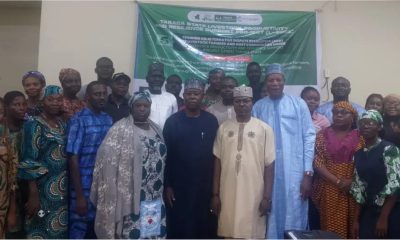

Taraba Explores ADR for Sustainable Peace Between Crop, Livestock Farmers
Spread the loveBy Michael Lim Conflict prevention between livestock farmers and host communities in Taraba State through the promotion of...
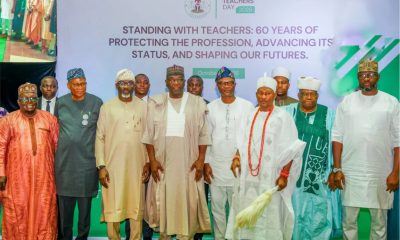

Financial Inclusion: Kwara Buys Dangote Refinery Shares For Female Teachers
Spread the loveBy Michael Lim Kwara State Government has announced plans to buy shares in the Dangote Refinery Initial Public...

Benue Govt Gives 2-Week Ultimatum To Owners Of Illegal Billboards, Threatens Mass Removal
Spread the loveBy Felix Umande The Benue State Government has decried the arbitrary erection of billboards across the state by...


INEC Tracking Illegal Campaign Spending
Spread the love–Tells Editors: “remain primary filter against information disorder.” By Son Tertsea, Abuja The Independent National Electoral Commission (INEC)...
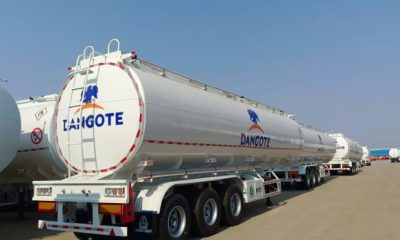

Importers, Petroleum Marketers Kick Against Dangote’s Restriction of Petrol Sales
Spread the loveBy Seyi Balogun Major marketers have kicked against Dangote Petroleum Refinery’s non sale of Premium Motor Spirit (petrol)...