
General News
All 36 States Aporove State Police, Senate Transmits Bill to Tinubu For Assent

By Felix Umande
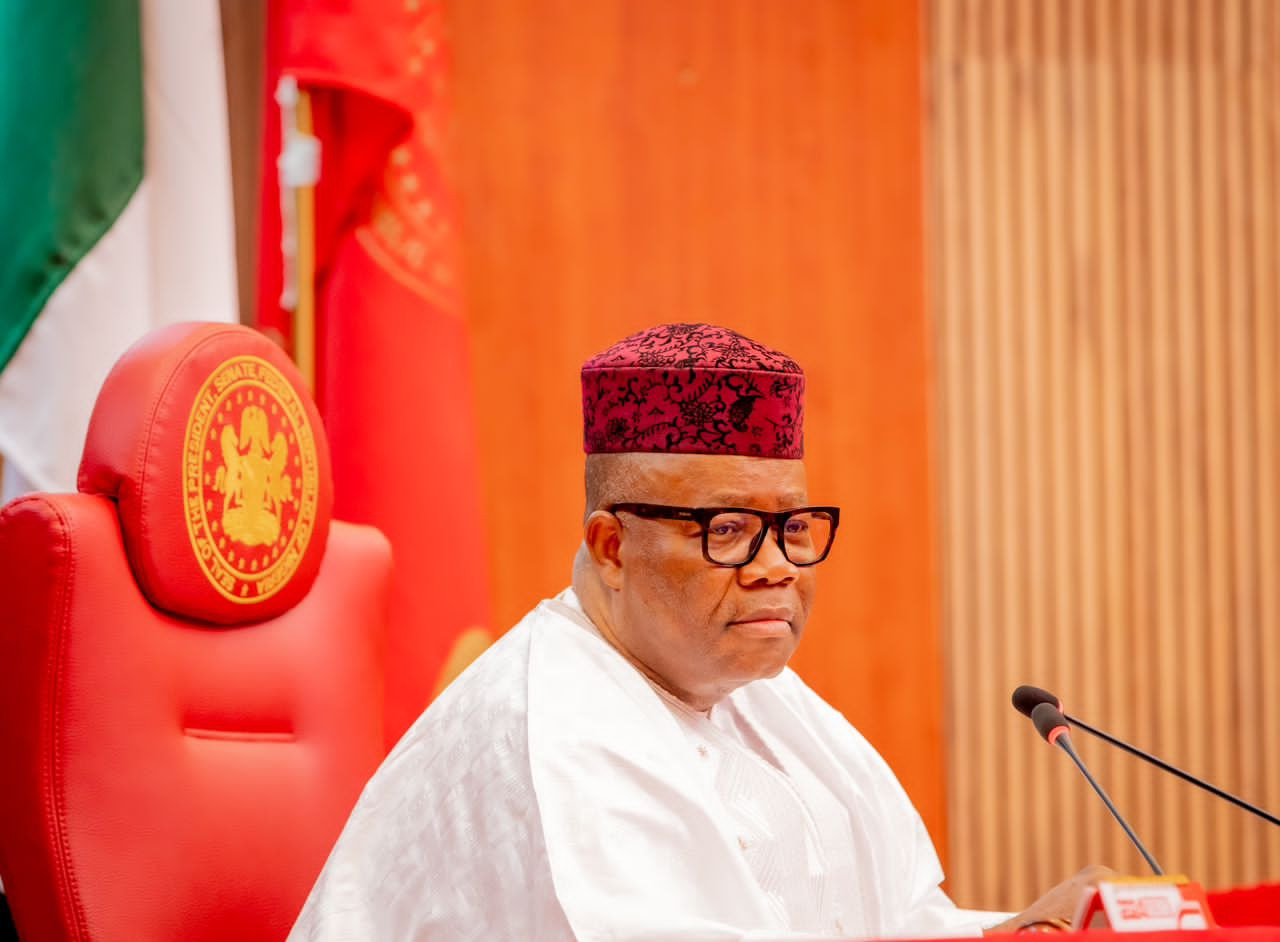
The Senate has resolved to transmit the Constitution of the Federal Republic of Nigeria (Sixth Alteration) Bill, 2026, seeking the establishment of state police, to President Bola Tinubu for assent following approval by all 36 State Houses of Assembly.
The resolution followed a motion sponsored by Senate Leader, Opeyemi Bamidele, representing Ekiti Central, who urged the upper chamber to complete the constitutional amendment process.
Bamidele recalled that the National Assembly had passed the executive bill seeking to amend the 1999 Constitution to establish state police as part of Nigeria’s national policing structure.
He said the Senate and the House of Representatives approved the bill on June 24 and July 23, 2026, respectively, with more than two-thirds majority votes, thereby meeting the constitutional requirement for its passage by the National Assembly.
The bill was subsequently transmitted to the 36 State Houses of Assembly for approval in accordance with Section 9(2) of the Constitution, which requires the endorsement of not less than two-thirds of the state legislatures before a constitutional amendment can be passed.
According to him, all 36 state legislatures have now approved the proposed amendment and transmitted their resolutions to the National Assembly.
The states are Abia, Adamawa, Anambra, Akwa Ibom, Bauchi, Bayelsa, Benue, Borno, Cross River, Delta, Ebonyi, Edo, Ekiti, Enugu, Gombe, Imo, Jigawa, Kaduna, Kano, Katsina, Kebbi, Kogi, Kwara, Lagos, Nasarawa, Niger, Ogun, Ondo, Osun, Oyo, Plateau, Rivers, Sokoto, Taraba, Yobe and Zamfara.
Bamidele argued that the bill had fulfilled the constitutional requirements under Sections 9(1) and 9(2) for an amendment of its nature to be passed.
Consequently, the Senate resolved to mandate its Clerk to transmit the Constitution alteration bill to Tinubu for assent in line with the Acts Authentication Act, 2004.
The red chamber also commended the President for taking ownership of the proposed reform and supporting the bill throughout the legislative process. It however urged Tinubu to forward the National Policing Bill to the National Assembly for consideration, saying the proposed legislation would provide the framework for the operation of subnational policing.



By Lazarus Oko
The University of Nigeria, Nsukka (UNN), following the tragic death of four students during a recent sign-out party, has disclosed plans to introduce routine drug testing for students, in addition to stricter monitoring of their activities both on and off campus, .
The Vice-Chancellor, Prof Simon Ortuanya, said this in Nsukka Tuesday when he received a condolence delegation led by the Chairman of the Enugu State Traditional Rulers Council, HRM Igwe Samuel Ikechukwu Asadu, who paid a condolence visit to the university over the incident.
Ortuanya expressed the university’s resolve to strengthen its safety and regulatory measures to prevent a recurrence of the tragedy.
He revealed the university’s desire of engaging the National Drug Law Enforcement Agency (NDLEA) to introduce routine and periodic drug testing for students, irrespective of whether they reside on or off campus.
The Vice-Chancellor also announced plans to strengthen collaboration with host communities and landlords through the newly established Directorate of Community Relations to ensure safer and proper monitoring of residential environments for students.
The university would furthermore, deepen its partnership with security agencies to enhance surveillance, address security concerns and prevent similar incidents.
According to him, the university was also cooperating with relevant agencies investigating the tragedy and awaiting the outcome of their investigations.
Ortuanya, who urged students to learn important lessons from the incident, recalled that the university had, since 2025, prohibited formal sign-out celebrations and similar activities on its campuses in Nsukka, Enugu and Ituku-Ozalla.
“It is our collective responsibility to protect the lives and welfare of our students and preserve the sanity, sanctity and integrity of the university as a centre of learning.”
Igwe Asadu led other traditional rulers, including HRM Igwe Dr. Herbert Ukuta of Igga Ancient Kingdom; HRM Igwe Dr. H. I. Eze of Ibagwa-Aka; HRH Igwe Christopher Ager of Owerre-Ede Oballa; and HRH Igwe Tony Ezinma of Eziani Obimo, expressed deep sorrow over the incident, describing the loss as monumental to the university, the bereaved families and the wider society.
He said the royal fathers considered it necessary to identify with the university community in its moment of grief, notwithstanding the initial public statements on the incident. In his words:
“On behalf of the Traditional Rulers Council in Enugu State, we express our deep sympathy to the university management, the bereaved families and the entire university community over this painful loss.
“The loss of young lives, particularly at a time when their parents had invested so much in their upbringing and education, is heartbreaking.”
He equally expressed concern for the survivors still receiving medical attention and prayed for their speedy and complete recovery.
He commended the Vice-Chancellor for his prompt response to the incident, particularly his public briefings, visits to the hospital to see the survivors and visits to the families of the deceased.
Asadu described these gestures as evidence of compassion, responsible leadership and concern for the university community.
He also commended the Federal Government, under President Bola Ahmed Tinubu, and the Enugu State Government, under Governor Peter Ndubuisi Mbah, for their responses to the tragedy.
The traditional rulers pledged their continued support for the university management through prayers, consultations and useful advice, while urging the bereaved families to find strength and courage in God during the difficult period.
Ortuanya, on behalf of the university community, thanked the royal fathers for their solidarity and concern for the deceased and surviving students.
He said their visit was deeply consoling, noting that although the incident occurred outside the university premises, the institution regarded the victims as its own children, brothers and sisters.
The Vice-Chancellor said the university had taken responsibility for supporting the survivors, who, according to him, were responding positively to treatment.
We recall that four UNN students lost their lives, while six others were hospitalised after reportedly taking ill during an off-campus sign-out party at Hilltop Hotel, Nsukka, on November 11, 2026.
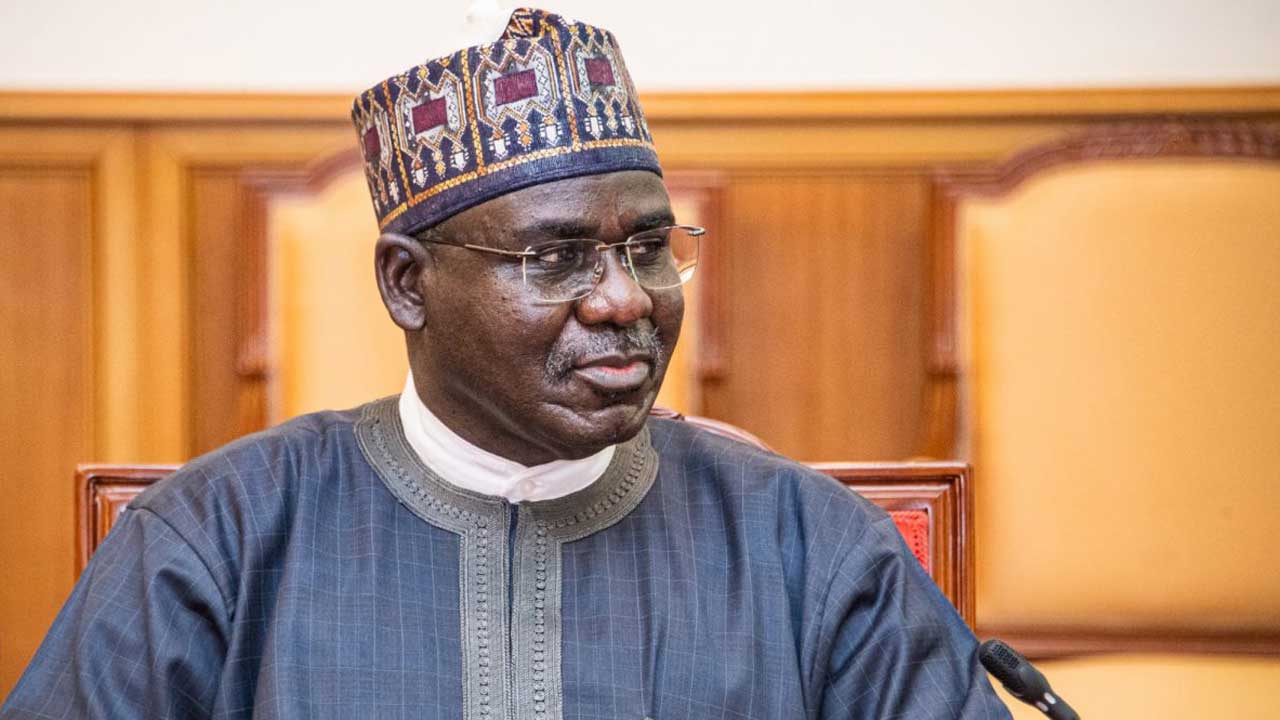
The former Chief of Army Staff, retired Lt.-Gen. Tukur Buratai has called for inclusive education and wider access to learning opportunities, saying they are critical to addressing the conditions that sustain terrorism and violent extremism in Nigeria.
Buratai made the call at the 2026 Young Adult Literature Prize Award and unveiling of the 2025 anthology of the T.Y. Buratai Literary Initiative (TYBLI), on Wednesday in Nasarawa State.
The former Nigerian Ambassador to Benin Republic said military force alone could not defeat terrorism without deliberate investment in education, intellectual development and the minds of young Nigerians.
“Gun can kill a terrorist, but only education can kill terrorism,” he declared.
Buratai said national development must go beyond infrastructure, military strength and economic resources to include the intellectual capacity, creative imagination and moral consciousness of citizens.
He stressed that young Nigerians, irrespective of their backgrounds, needed equal opportunities, platforms and encouragement to develop their talents and contribute meaningfully to society.
The former COAS said the initiative was established on the conviction that great nations were built not only by strong armies and economies but also by ideas, literature and educated citizens.
He urged universities to promote young adult literature through research, teaching and programmes that encouraged creativity, critical thinking and intellectual development.
“A school that produces excellent academic results but neglects imagination and critical thinking has not fully prepared its students for the future,” he said.
Buratai said the initiative had, since 2023, provided a platform for young Nigerians from diverse backgrounds to demonstrate their creativity and move from passive consumption to active production of literature.
He described the unveiling of the 2025 anthology as another milestone, providing a permanent record of the imagination, creativity and achievements of young authors.
He also announced plans to introduce full scholarships for deserving winners within the next three to five years, to enable them to complete their education.
In a goodwill message, the Vice-Chancellor of Nasarawa State University, Keffi, Prof. Sa’adatu Liman, described young adult literature as an important bridge between childhood and adulthood.
Liman said literature helped young people confront questions of identity, courage, faith, justice and leadership through stories that reflected their experiences.
She described the initiative as an investment in human development and nation-building, pledging the university’s readiness to strengthen its partnership with TYBLI.
Also, the Vice-Chancellor of the University of Ibadan, Prof. Peter Olamakinde Olapegba, commended the initiative for recognising the importance of academic leadership, scholarship and research mentorship.
Olapegba, who received an award for excellence in academic leadership and research mentorship, said the recognition affirmed the importance of building capacity and nurturing future generations.
He dedicated the award to his colleagues, mentors, students and mentees, particularly five PhD students who graduated from the university on the eve of the event.
“The true reward of mentorship is not simply what we accomplish as individuals, but the lives we influence, the capacity we build and the legacy we leave behind,” he said.
Olapegba said the award had renewed his commitment to scholarship, service and the development of future generations.
The event featured the presentation of awards to outstanding young writers and the unveiling of the 2025 anthology.
(NAN)

By Felix Umande
President Bola Ahmed Tinubu has formally approved the establishment of the University of Public Relations and Leadership (UPRL), describing it as a forward-looking investment in human capital and the future of the communication profession.
The President, represented by Vice President Kashim Shettima, announced the approval on Wednesday in Abuja while declaring open the 13th World Public Relations Forum (WPRF) and the 51st Africa Public Relations Association (APRA) Conference.
He said the university, currently under construction in Nasarawa State, would be a first-of-its-kind institution for specialised education, research, professional development and leadership training in public relations, strategic communication and related disciplines.
“I am pleased to formally approve and support the establishment of the University of Public Relations and Leadership (UPRL),” Tinubu said, adding that it would equip a new generation of communication leaders to meet the demands of the contemporary global environment.
He commended the Nigerian Institute of Public Relations, the Federal Ministry of Information and National Orientation, and the Nasarawa State Government, especially Governor Abdullahi Sule, for their collaboration in turning the vision into reality.
The Minister of Information and National Orientation, Alhaji Mohammed Idris, disclosed that the Nasarawa State Government had committed over ₦10 billion to the proposed university.
President Tinubu charged practitioners to uphold truth, accuracy, transparency and professional integrity, warning that their role goes beyond managing images and reputations.
“Public relations and communication professionals must promote truth, accountability, transparency, mutual understanding and constructive engagement between governments, institutions and citizens,” he said.
He urged participants to use the forum as a turning point for responsible communication, professional excellence and global cooperation, and to explore Nigeria’s investment potential, creative industries and cultural heritage.
Other speakers, including Kenya’s Cabinet Secretary for Information, Hon. William Kabogo Gitau, NIPR President Dr Ike Neliaku, APRA President Mr Arik Karani, and Global Alliance President Prof. Justin Green, hailed Nigeria’s hosting of the forum as a defining moment for Africa’s growing influence in global public relations.


All 36 States Aporove State Police, Senate Transmits Bill to Tinubu For Assent
Spread the loveBy Felix Umande The Senate has resolved to transmit the Constitution of the Federal Republic of Nigeria (Sixth...


Death of Four Students: UNN to Introduce Routine Drug Tests
Spread the loveBy Lazarus Oko The University of Nigeria, Nsukka (UNN), following the tragic death of four students during a...


FAAC: FG, States, LGs Share N2.4trn in October
Spread the loveBy Son Tertsea, Abuja The three tiers of government, federal, states and local governments, have shared the Federation...

Gun can Kill Terrorists, only Education can Kill Terrorism – Buratai
Spread the loveThe former Chief of Army Staff, retired Lt.-Gen. Tukur Buratai has called for inclusive education and wider access...


Tinubu Approves University Of Public Relations And Leadership In Nasarawa
Spread the loveBy Felix Umande President Bola Ahmed Tinubu has formally approved the establishment of the University of Public Relations...


Strange as Twin Singers: Peter and Paul Okoye Choose Different Birthdays
Spread the loveBy Nick Ibe, Abuja The estranged relationship between Nigerian top singers, Peter and Paul Okoye, has regenerated to...

Ex Labour Leaders’ Intervention: NLC, TUC End Rift
Spread the loveBy Isa Abdul, Abuja A Resolution to end the differences between Nigeria’s two major labour centres, the Nigeria...


Benue North East: Court declares Suswam as APC valid senatorial candidate
Spread the loveThe Federal High Court in Abuja on Wednesday declared former Governor of Benue, Gabriel Suswam, as the valid...

No 25% Votes For Opposition in FCT, Wike Charges Rainbow Coalition
Spread the loveBy Isa Abdul, Abuja Members of the Rainbow Coalition have been charged by Minister of the Federal Capital...


N4.4 Billion Illegal Gold Export: EFCC Secures Conviction of Alli Baffa
Spread the loveThe EFCC, Kano Zonal Directorate has secured the conviction of one Ali Baffa for attempting to illegally export...