
General News
182 Special Legislative Seats For Women Welcomed: But Numbers Not Enough

By Our Reporters
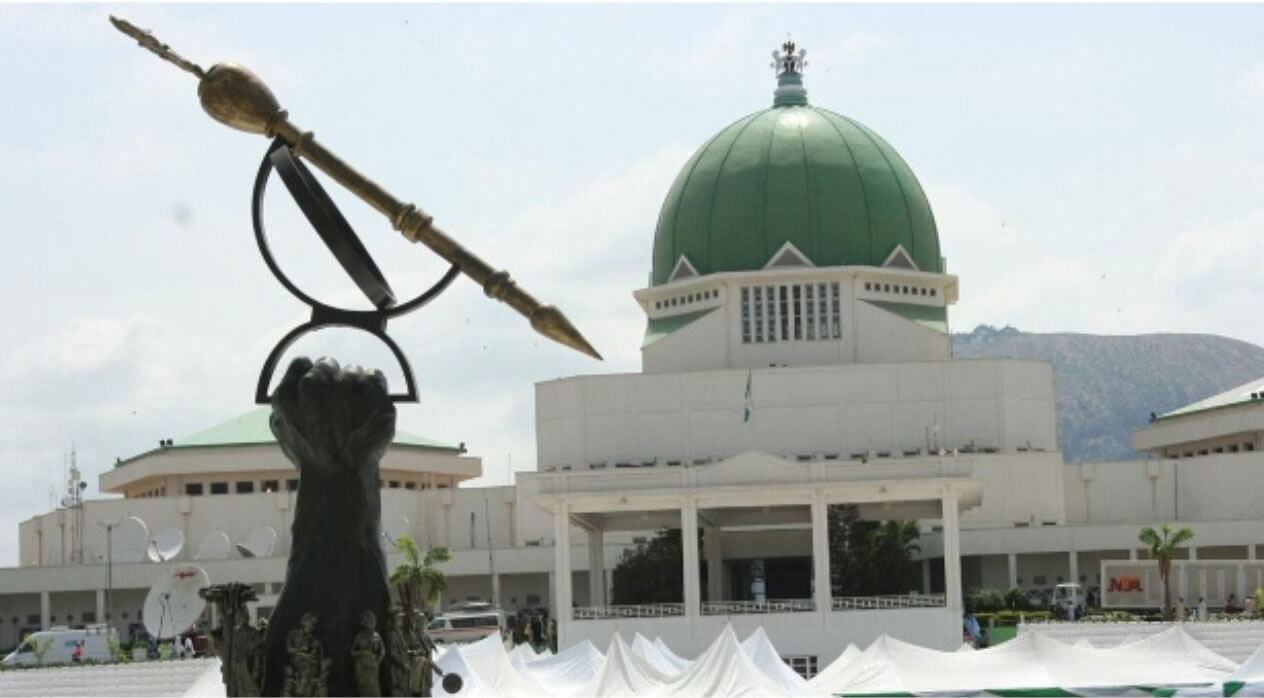
Nigerians across professional and gender lines hold divergent views on the National Assembly’s proposed 182 additional legislative seats exclusively for women.
While supporters see the initiative as a necessary intervention to address decades of political exclusion, critics argue that the allocation is inadequate and may not dismantle the structural barriers preventing women from securing elective positions.
The agenda has generated heated debate among civil society organisations (CSOs), women’s rights advocates, lawyers, serving and former lawmakers, and political activists. While many welcome it as an opportunity to improve women’s participation in governance, others demand more seats, transparent selection procedures and safeguards against political manipulation.
The Reserved Seats for Women Bill seeks to amend the 1999 Constitution by creating 37 additional seats each in the Senate and House of Representatives, with one seat for women in every state and the Federal Capital Territory. It also proposes three additional seats in each of the 36 state Houses of Assembly, distributed across the senatorial districts.
The arrangement would create 182 seats: 74 at the federal level and 108 across state legislatures. The seats would be additional to existing ones, take effect after the expiration of current legislative tenures and be reviewed every 16 years.
The bill is among 44 prioritised constitutional amendment proposals before the 10th National Assembly. Although lawmakers planned to vote on the proposals in December 2025, the process remained largely inconclusive, with only the modified State Police Bill passed and transmitted to state assemblies for concurrence.
The proposed intervention comes against the backdrop of women’s poor representation in elective positions. Women occupy only four of the Senate’s 109 seats and 14 of the 360 seats in the House of Representatives.
Following the 2023 general election, only 48 women secured seats in the 988-member state Houses of Assembly, representing approximately 4.85 per cent.
Supporters Say Representation Is Necessary
The lawmaker representing Kosofe Federal Constituency, Lagos State, Kafilat Ogbara, urged the National Assembly to pass the bill, arguing that women’s inclusion in governance is essential to national development and should not be viewed merely as an attempt to improve representation statistics.
She said years of conferences, workshops and commitments had yielded little progress because the political system remained exclusionary.
“Women are still underrepresented in our political spaces, not because we lack capacity, not because we lack interest, not because we lack the vision, but because the system has not been designed to include us,” she said.
Former National Chairman of the Youth Democratic Party, Georgina Dakpokpo, described the proposal as transformative, although insufficient to achieve proportional representation. She said increased female participation would strengthen legislation on maternal health, education, gender-based violence and economic inclusion.
“Though not yet proportional, these seats would amplify women’s voices on issues that directly affect them, like maternal health, education and gender-based violence,” she said.
A member of the International Federation of Women Lawyers (FIDA), Rahila Dauda, described Nigeria’s poor record of female representation as embarrassing and urged lawmakers to pass the bill.
“Nigerian women want this bill now,” she said, calling on the National Assembly to make history.
The Executive Director of the Women’s Inclusion, Empowerment and Leadership Development Initiative (WIELD-I) also described the proposal as a starting point for correcting longstanding inequalities.
She identified high nomination fees, inadequate campaign financing, discriminatory party structures, political intimidation and exclusion from decision-making as major obstacles facing female aspirants.
“Reserved seats offer an opportunity to address some of these inequalities through deliberate institutional intervention. It is not about granting women undue advantage; it is about correcting an imbalance that has persisted for decades and making our democracy more inclusive,” she said.
However, she warned that political interests could hijack the initiative without transparent implementation that accommodates young women, women with disabilities and those from different socioeconomic backgrounds.
She also insisted that the proposed 74 federal seats must not become a ceiling on women’s participation.
States Welcome Bill But Demand More
Across the states, women’s groups and lawmakers have largely welcomed the proposal but questioned whether three additional seats per state assembly would be sufficient.
In Imo State, where the House of Assembly currently has no female lawmaker, activist Peace Dike of Virgin Heart described the proposal as affirmative action capable of correcting longstanding inequalities.
“It’s just seeking additional seats for women to occupy and show their leadership qualities. As civil society, Nigeria should embrace the opportunity,” she said.
However, she warned against politicians using the positions to install their wives or associates, insisting that credible women must emerge through transparent processes.
The lawmaker representing Okigwe North Federal Constituency, Miriam Onuoha, also backed the bill, citing her legislative performance as evidence of women’s capacity.
“I sponsored 23 bills in my first year, the highest among Imo lawmakers, yet I am the only woman. If one woman can do that, imagine what five more Imo women can do.
“The reserved seats are not charity. They are correction. Men have had 27 years to open the door; they locked it. This bill creates a new door,” she said.
In Bayelsa, lawmaker Ebizi Ndiomu-Brown said the reserved seats would provide women with a stepping stone to greater political participation but insisted that they must have a decisive role in selecting their representatives.
In Benue, where the state has two female lawmakers and two female members of the House of Representatives but no female senator, the House of Assembly expressed support for the initiative. Its spokesperson, Zape Michael Upaa, however, urged political parties to produce credible female candidates.
Women’s groups in Oyo also welcomed the bill but considered three seats inadequate. Mrs Adewunmi Olaide of Cedar for Human Welfare attributed women’s exclusion to patriarchal structures, cultural expectations, financial constraints and discrimination within political parties.
In Akwa Ibom, activists lamented the absence of female representatives from the state’s three senatorial districts and 10 federal constituencies in the National Assembly, describing the situation as political injustice.
Plateau FIDA Chairperson, Naankus Fyaktu, described the proposal as commendable but insufficient. The state currently has no female member in its House of Assembly following court decisions affecting two female lawmakers.
Similarly, Taraba FIDA Chairperson, Maijankai Shallom Donald, said the proposed seats would represent approximately 15.7 per cent of the National Assembly’s 469 positions, leaving women significantly underrepresented.
She urged lawmakers to pass the bill before the 2027 general elections and insisted that the reserved positions must be filled through direct elections rather than appointments by governors.
“We are not asking for seats as a favour; we are asking to be allowed to serve. Nigeria cannot develop with one hand tied behind its back by excluding 50 per cent of its population,” she said.
In Ondo State, lawmaker Atinuke Morenikeji Witherspoon rejected the proposed allocation.
“No, it’s not good enough, it’s not acceptable. We won’t accept that. I’m not in support at all. Women should be given more seats,” she said.
Kogi lawmaker Comfort Egwaba Nwuchola, however, described the proposed increase to three female lawmakers in the state assembly as an improvement, while lawyer Lilian Okolo advocated 12 women in the 36-member legislature.
In Kaduna, the state’s only female lawmaker, Munira Suleiman Tanimu, called for additional seats across all 23 local government areas. She said the absence of more women in the assembly had made it difficult to secure support for legislation promoting women’s representation.
Kwara, which currently has five female lawmakers in its state assembly, welcomed the proposal as an opportunity to strengthen women’s participation.
In Enugu, where only two women occupy the 24-member assembly, activist Ifeoma Ogbodo supported the amendment but warned against political hijacking. Osun stakeholders, however, rejected the proposed allocation, arguing that removing violence and financial barriers would create a more conducive environment for women to contest elections.
Cross River FIDA Chairperson, Affiong Onung, and former lawmaker Itam Abang considered the proposed seats insufficient but urged women to accept them as a starting point.
“It’s better than nothing. We are not satisfied, but we are like, if we can get more, that would be better for us,” Onung said.
Abang linked women’s participation in leadership to peace and effective conflict management, citing her eight years in office as evidence of her experience.
In Borno, former federal lawmaker Asabe Vilita said women were not seeking to compete with men but wanted adequate representation in governance.
“We are not competing with men. All we are soliciting and demanding is adequate representation for women in leadership,” she said.
Former Ogun State Speaker, Titi Oseni, also welcomed the initiative, arguing that reserved seats would encourage women facing financial and domestic pressures to seek elective positions.
Gombe and Kebbi, which currently have no female representation in their respective state assemblies or National Assembly delegations, were also identified as states where the proposal could address persistent exclusion.
In Ekiti, lawmaker Mariam Ogunlade and NAWOJ Chairperson Adewumi Ademiju urged the National Assembly to pass the bill without delay. Ademiju, however, demanded at least 35 per cent representation in line with the National Gender Policy.
Rivers stakeholders also welcomed the proposal, with former lawmaker Victoria Nyeche describing it as a development that would advance women’s political participation.
In Kano, women’s rights advocate Gambo Ahmed Mustafa welcomed the initiative, lamenting that none of the 40 members of the state assembly was female.
Nasarawa stakeholders similarly supported the bill but argued that three seats were inadequate. Esther Andrew advocated 14 female lawmakers in the state’s 24-member assembly, while former Minority Leader Mary Enwongulu urged women not to abandon the struggle for elective positions.
Former presidential candidate Funmilayo Adesanya-Davies described the proposed 182 seats as historic but insisted that they should constitute a minimum allocation rather than the ultimate target.
“This is historic. For over 20 years, Nigerian women have demanded special seats and affirmative action, and this is the first time we are seeing such concrete numbers. Is it enough? No, but it is a very good starting point,” she said.
She argued that the 74 federal seats would represent only about 15.7 per cent of the National Assembly, far below the 35 per cent affirmative action target and women’s share of the population.
“We are satisfied with the principle, but we want more in number and security. Seventy-four seats at the National Assembly out of 469 is still only about 15.7 per cent. With our population being 49.5 per cent of Nigeria, we should be pushing for at least 35 per cent affirmative action.
“We want this 74 to be the floor, not the ceiling,” she said.
Adesanya-Davies also called for safeguards against governors, political godfathers and party leaders turning the seats into rewards for political loyalists and relatives.
The debate has consequently extended beyond the number of seats to the procedures for selecting representatives, their legislative powers and the duration of the arrangement.
While some stakeholders favour direct elections, others want transparent nomination procedures that give women a decisive role in choosing candidates. Advocates also insist that women elected through the arrangement must enjoy the same rights, committee opportunities and leadership prospects as other lawmakers.
Despite their differences, many stakeholders agree that reserved seats alone cannot resolve the challenges confronting women in politics. Electoral reforms, affordable nomination forms, access to campaign financing, stronger party structures and protection against political violence remain essential.
The central demand is that women should not be treated as beneficiaries of political goodwill but as equal participants in democratic governance.
Whether the proposed 182 seats will mark a turning point or become another unfulfilled promise depends on the National Assembly, state legislatures and the safeguards established to ensure meaningful representation.
Leadership



By Seyi Balogun, Lagos
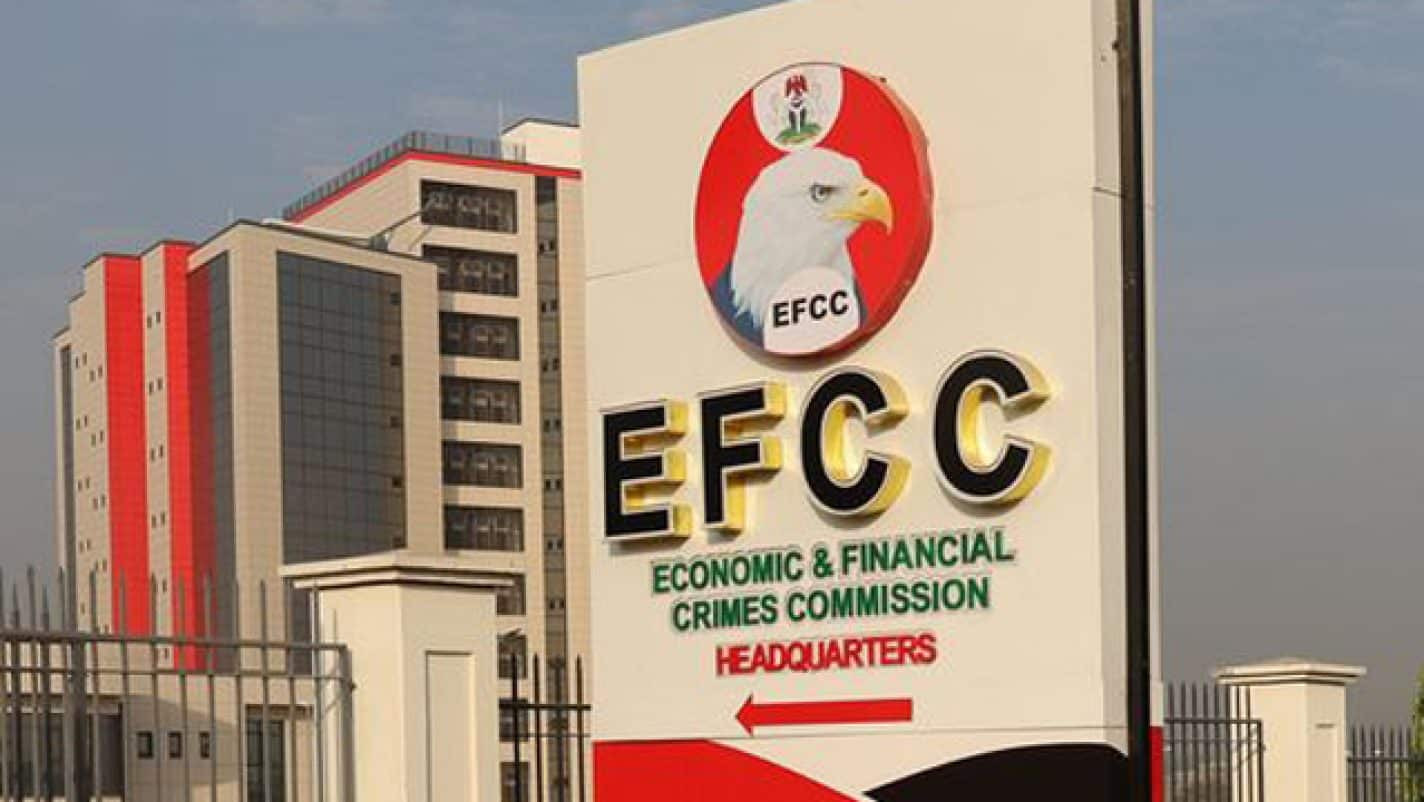
The Economic and Financial Crimes Commission, EFCC, Lagos Zonal Directorate 2, has recovered from Aiteo Exploration and Production Limited and Newcross Exploration & Production Limited the sums of $3,000,000.00 (Three Million United States Dollars) and N1,303,128,000.00 (One Billion, Three Hundred and Three Million, One Hundred and Twenty-eight Thousand Naira) and handed over to the Revenue Mobilisation Allocation and Fiscal Commission, RMAFC on Monday, November 10, 2026.
The recovered funds, which form part of the liabilities established against the two companies for unremitted statutory payments to the Federation, were handed over by the Acting Zonal Director of the EFCC’s Lagos Zonal Directorate 2, ACE I Bawa Usman Kaltungo.
The recovery followed an investigation by the EFCC after it received a petition from a consulting firm engaged by RMAFC, alleging conspiracy, tax evasion and economic sabotage resulting in revenue losses to the Federation.
The petitioner alleged that revenues accruable to the Federation in respect of stamp duty and pipeline transportation fees were not remitted into the designated accounts of the Federation.
The affected facilities included Escravos, Pennington, Trans-Forcados, Odudu, Amenam and Nembe Creek Trunkline.
The alleged non-remittance of the revenues reportedly resulted in substantial losses to the Federation between 2010 and 2019.
In response to the development, RMAFC obtained a presidential fiat dated December 20, 2021, authorising it to recover all outstanding revenues due to the Federation from the affected public and private entities.
Following the commencement of investigation by the EFCC, Aiteo Exploration and Production Limited and Newcross Exploration & Production Limited submitted relevant documents detailing their remittances in respect of their respective operations.
However, a review and analysis of the documents established that Aiteo failed to remit the sum of $38,430,000.00 (Thirty-Eight Million, Four Hundred and Thirty Thousand United States Dollars), being 1.5 per cent stamp duty arising from its acquisition of Oil Mining Lease (OML 29) and Nembe Creek Trunkline (NCTL).
Investigations further revealed that Newcross Exploration & Production Limited failed to remit $22,841,662.03 (Twenty-Two Million, Eight Hundred and Forty-one Thousand, Six Hundred and Sixty-two United States Dollars, Three Cents) as crude oil transportation fees for the use of Nembe Creek Trunkline, which is operated as a joint venture between the Federal Government and Aiteo Exploration and Production Limited.
The two companies subsequently accepted their respective liabilities and commenced payments towards the settlement of the outstanding obligations through the EFCC’s recovery accounts domiciled with the Central Bank of Nigeria (CBN).
More investigation and recovery efforts resulted in additional payments between January 28, 2026, and August 24, 2026.
During the period, Aiteo Exploration and Production Limited paid $1,500,000.00 (One Million, Five Hundred Thousand United States Dollars) and N750,000,000.00 (Seven Hundred and Fifty Million Naira) into the EFCC recovery account in respect of unremitted stamp duty.
Newcross Exploration & Production Limited paid $1,500,000.00 (One Million, Five Hundred Thousand United States Dollars) and N553,128,000.00 (Five Hundred and Fifty-Three Million, One Hundred and Twenty-Eight Thousand Naira) as outstanding pipeline and terminal fees.
Consequently, the total recovery from the two companies stood at $3,000,000.00 and ₦1,303,128,000.00, which were handed over to RMAFC during the brief ceremony.
By Felix Umande
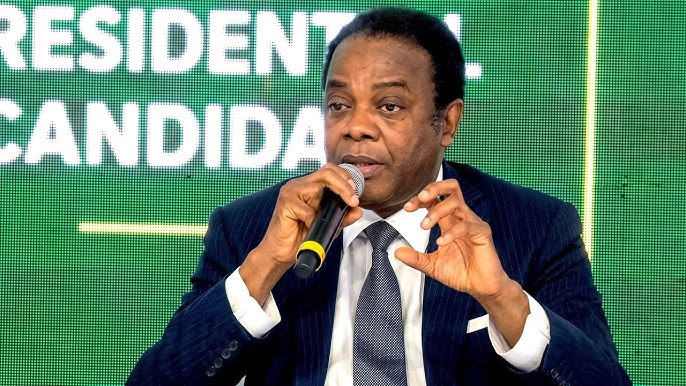
The presidential candidate of the Peoples Redemption Party (PRP), Donald Duke, has declared his readiness to step down for a formidable opposition candidate in the 2027 election if a consensus one emerges within the opposition coalition to challenge President Bola Tinubu.
Duke said he would respect a democratic decision by opposition parties to settle for another presidential candidate, including former Vice President Atiku Abubakar or former Labour Party candidate Peter Obi, provided such an agreement was reached through a collective process.
The former Cross River State governor spoke on Tuesday in Abuja at the unveiling of his vice presidential candidate, Malam Sule Mohammed, and the PRP manifesto.
Asked whether he would step down for a stronger candidate if the PRP and the opposition coalition agreed to support one person against Tinubu, Duke said the purpose of a coalition should go beyond sharing political positions and selecting a presidential candidate.
He said opposition parties must first agree on a common vision for Nigeria before deciding who should lead the alliance.
“A coalition is not just about picking a presidential candidate. That’s the mistake we are all making. It’s about us coming together to agree on where we would like to take our nation to,” Duke said.
“You’ve called names of two eminent politicians, but that may not be enough. So, I don’t want to presuppose anything. But at the end of the day, I’ll be sportsmanlike about it.”
He added: “If the group, and so far there are quite a number of us, comes up with an agreement that this is the best person to lead the coalition, you can’t say you’re a Democrat and not be subject to the rules of democracy. Of course, if it’s me, I hope they would do the same. And if it’s any other person, I would do the same. I would respect it.”
Duke stressed that the more important thing was not even the picking of a candidate, but the commonality and the direction the coalition wants to take Nigeria.
“We don’t want to replace the APC or the present administration with someone who would take us back again. So, if the candidates and the party agree that this is a person we should back, of course, that’s what is expected of me,” he said.
Duke also accused the ruling All Progressives Congress of enjoying an overwhelming advantage in campaign visibility, alleging that opposition parties were facing difficulties securing venues and advertising spaces ahead of the 2027 elections.
He said the situation was making it increasingly difficult for opposition candidates to reach voters across the country.
“You can see what is happening to other opposition parties who have been on the campaign train. If you go throughout the country, you hardly find their billboards and posters on the streets of the various cities across Nigeria,” he said.
“You only find one party, the APC. In some states, I’m told that you need to spend as much as N1bn for you to even begin to advertise.”
By Lazarus Oko
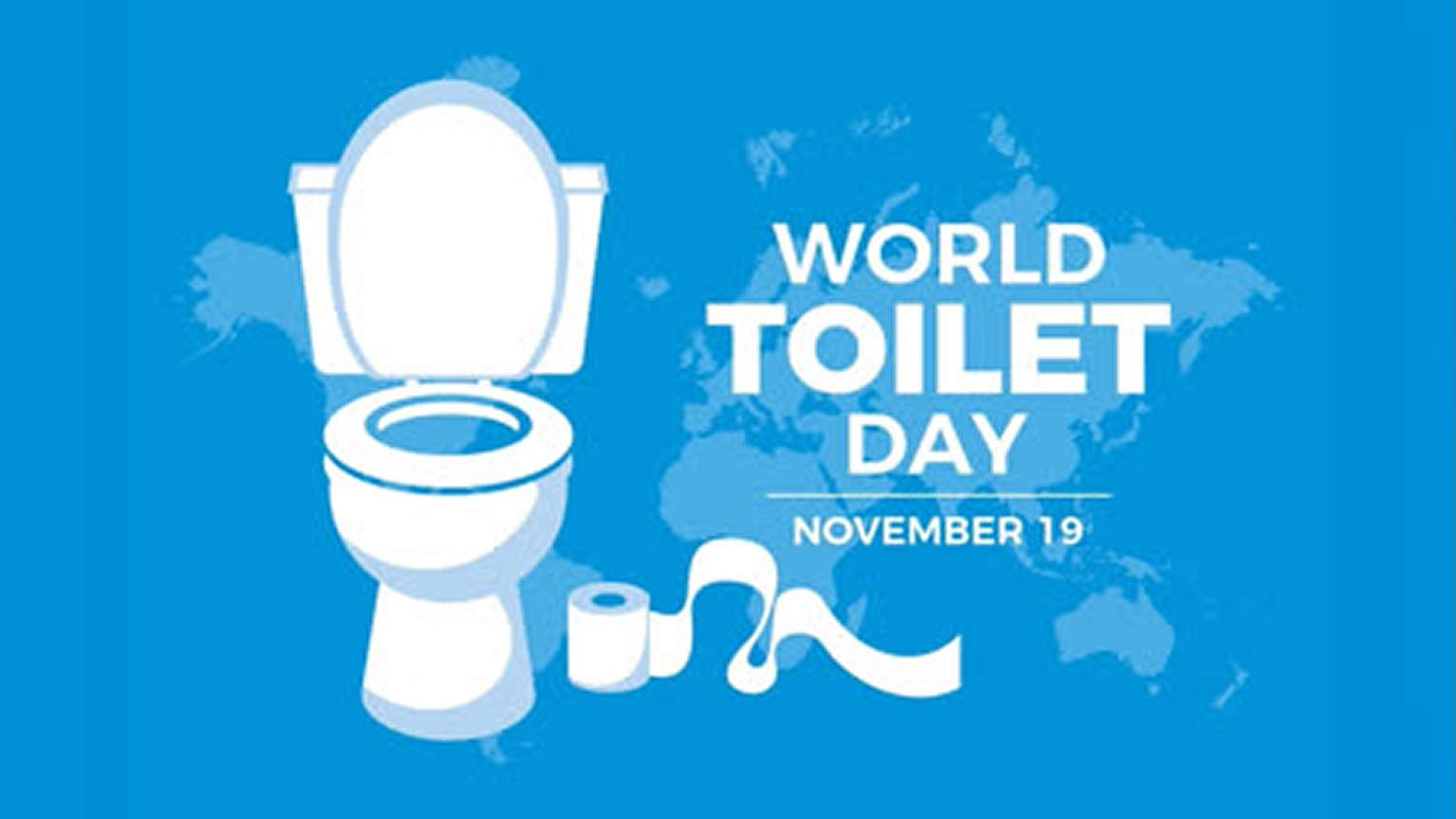
Less than 36 per cent of Nigerians have access to improved toilet facilities, raising concerns over persistent sanitation challenges and the associated public health risks, according to the Federal government.
This was disclosed on Tuesday during a press briefing in Abuja to commemorate the 2026 World Toilet Day, by the Minister of Environment, Balarabe Abbas Lawal.
The Director of Pollution Control and Environmental Health, Mrs Omotunde Adeola, who represented Lawal at the event regretted that public places, such as markets, motor parks, schools and communities, still have inadequate and functional toilet facilities.
He warned that the situation led to open defecation, contamination of food and water sources, and the spread of sanitation-related diseases such as cholera and typhoid.
Apart from threats to public health, it is a threat to environmental safety and human dignity, he stressed.
The minister pointed out that women, girls, children, older persons and persons living with disabilities were worse affected by the shortage of appropriate sanitation facilities.
He stressed that no child should miss school because of inadequate toilet facilities, while no woman or girl should be forced to compromise her safety and dignity because of the absence of suitable toilets.
From a global perspective, Lawal said about 4.5 billion people worldwide still lacked safely managed sanitation, while 892 million continued to practise open defecation.
He said the figures underscored the need to accelerate efforts towards achieving the Sustainable Development Goals, particularly those relating to clean water and sanitation, gender equality, good health and sustainable communities by 2030.
Government interventions
On efforts to address the challenge, the minister said the Federal Ministry of Environment, in collaboration with relevant ministries, state governments and development partners, was implementing programmes to improve sanitation and promote safe excreta disposal nationwide.
He listed the initiatives to include capacity building for Environmental Health Officers on faecal sludge management and toilet design, the Clean and Green Programme, and the Community-Based Waste Management and Open Defecation Control Programme.
Other interventions, he said, included integrating sanitation into climate adaptation and circular economy initiatives, as well as partnering with private sector operators to provide environmentally friendly sanitation facilities.
Lawal announced that the ministry would convene a National Dialogue on Faecal Sludge Management on November 23, 2026, involving seven selected states across the six geopolitical zones and the Federal Capital Territory.
He said the dialogue would enable participating states to assess their experiences, share challenges and develop practical recommendations for improving faecal sludge management.
As part of activities marking the World Toilet Day, the ministry will also organise a community sensitisation campaign at Kpadna Community, Utako, Abuja, on November 19.
The campaign is expected to engage residents, traders and food vendors on proper sanitation, hand hygiene and safe waste disposal through health talks, interactive discussions and practical demonstrations by Environmental Health Officers.
He added that the commemoration would take place simultaneously across the 36 states and the FCT through community sensitisation, advocacy campaigns and sanitary inspections of public places.
The minister called on state and local governments to strengthen faecal sludge and wastewater management systems, while urging households to embrace proper toilet use, handwashing and environmental cleanliness.
He also urged the private sector to invest in affordable sanitation technologies and climate-resilient infrastructure, while calling on development partners and civil society organisations to sustain their support for sanitation advocacy and infrastructure development.
Lawal further stressed the need for women and girls to participate actively in designing, implementing and monitoring sanitation interventions, rather than being treated merely as beneficiaries.
The 2026 World Toilet Day is under the theme, “Sanitation and Gender Equality,” with the campaign tagline, “Safe Toilets. Equal Futures.”


From 2 Tax Evading Firms: EFCC Recovers, Hands Over $3m, N1.3bn Revenue to RMAFC
Spread the loveBy Seyi Balogun, Lagos The Economic and Financial Crimes Commission, EFCC, Lagos Zonal Directorate 2, has recovered from Aiteo...

2027: I Will Step Down For Atiku, Obi Or Any Consensus Candidate, Duke Declares
Spread the loveBy Felix Umande The presidential candidate of the Peoples Redemption Party (PRP), Donald Duke, has declared his readiness...


NFF Suspends 2 Refs: Regular Ref Edu, Improved Match Assessment, Accountability, Stressed
Spread the loveBy Nick Ibe, Abuja For cancelling a ‘validly scored goal’, the NFF Refereeing Development Committee has sanctioned the...

On World Toilet Day: FG Says Less than 36% of Nigerians Have Access to Toilets
Spread the loveBy Lazarus Oko Less than 36 per cent of Nigerians have access to improved toilet facilities, raising concerns...

‘Christian persecution in Nigeria’ Takes Front Burner in US Congressional Hearing November 12
Spread the loveBy Son Tertsea, Abuja With the view to ascertaining Nigeria’s efforts to protect Christians and tackle insecurity in...

In Defiance to Shettima’s Call: Benue APC forms ‘Strategic Alliance’ With other Political Parties
Spread the loveBy Felix Umande The Benue APC has formed the Strategic Alliance for Tinubu/Shettima 2027 with other political parties...
182 Special Legislative Seats For Women Welcomed: But Numbers Not Enough
Spread the loveBy Our Reporters Nigerians across professional and gender lines hold divergent views on the National Assembly’s proposed 182...

Massive Voter Registration Fraud: INEC Deletes 1.6m Records, To Prosecute Staff
Spread the loveBy Isa Abdul, Abuja The Independent National Electoral Commission (INEC) has, during its records assessment discovered widespread irregularities...

Nigeria and France: Only 2 Countries to Have Won both Men’s, Women’s U-17 World Cups
Spread the loveNigeria and France have emerged as the only two countries to have won both the men’s and women’s...

“I told Tinubu I’m too Old to be a Minister, but I Will Help in the Background” – Tunde Bakare
Spread the loveBy Seyi Balogun, Lagos The Leader of Citadel Global Community Church, Pastor Tunde Bakare, has advanced reasons why...