
General News
State Police: Constitutional Two-thirds Met as 24 States Support Bill

–Lagos, others yet to convene, take position
By Our Reporters
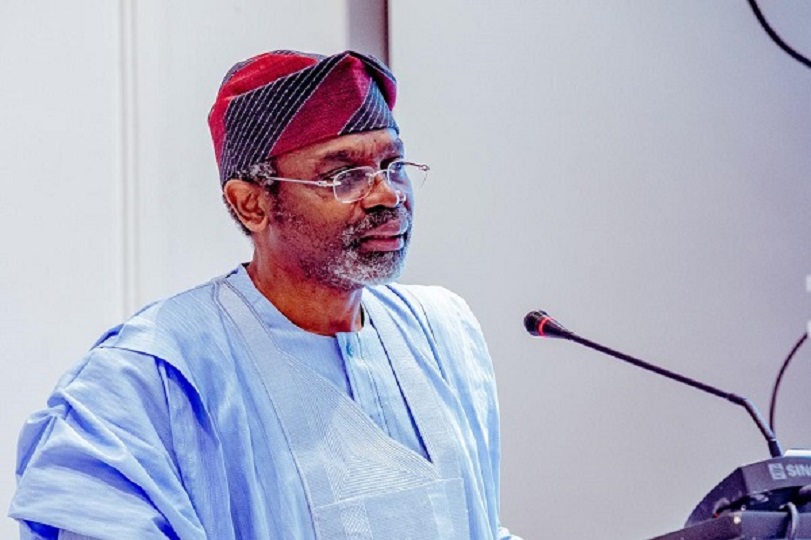
THE gravitation towards the federal and state police system in the country got a boost, yesterday, as the wave of approvals that started on Wednesday by Friday got to 13 states thus bringing the number of states supporting the legislation so far to 24.
Thus, the constitutionally required 24-state endorsement benchmark needed for the state police bill to become law has already been met. Reports indicate that more states will likely conclude deliberations next week.
14 of the 17 southern states have backed the bill and 10 of the 19 northern states have endorsed it.
Ebonyi, Lagos and Ondo states are yet to decide from the south, while from the North, 9 have yet to decide. They are Kogi, Niger, Borno, Gombe, Bauchi, Jigawa, Katsina, Kano, and Sokoto. Five of the 10 states are in the North-West zone. The North-Central has two and North-East three states.
The 1999 Constitution (Sixth Alteration) Bill, 2026, was transmitted by the national assembly to the 36 state Houses of Assembly on September 16, for concurrence.
The state legislatures are expected to turn in their inputs on October 29, which is exactly six days away. This is an administrative step constitutionally backed.
Under Section 9 of the 1999 Constitution, alteration of the Constitution requires approval by at least two-thirds of the 36 state Houses of Assembly, which is 24 legislative houses, before the amendment can proceed to the next stage.
24 states that have approved the bill:
1.Adamawa State 2.Delta State
3.Edo State
4.Kwara State 5.Nasarawa State
6.Ogun State 7. Osun State 8. Oyo State 9. Plateau State 10. Rivers State 11. Taraba State 12. Zamfara State, 13. Enugu, 14. Anambra,15. Imo,16. Ekiti 17. Kebbi, 18. Akwa Ibom, 19. Bayelsa, 20. Benue, 21. Cross River,
22. Abia, 23. Yobe,
24. Kaduna
States being awaited:
1 Lagos, 2. Ondo, 3. Ebonyi, 4. Kogi, 5. Niger, 6. Borno, 7. Gombe, 8. Bauchi, 9. Jigawa, 10.Katsina, 11. Kano and
12. Sokoto





Trump sued the BBC for $10 BILLION — a shakedown lawsuit meant to bully the press over a documentary about his January 6 speech. Then came the part he never planned for: HIS turn to answer questions. Under oath. He canceled his October 16 deposition, hid behind ‘presidential duties,’ and offered to maybe show up in January.
Recently, a federal judge in Miami said NO. Judge Enjoliqué Lett ordered Trump to sit for a SEVEN-HOUR deposition, on VIDEO, by December 11 — and warned him that if he keeps stalling, she can throw his own $10 billion lawsuit in the trash. She said his document production ‘strains credulity’ — his team has handed over essentially NOTHING. And she cleared the BBC to subpoena his Mar-a-Lago membership records.
Her words should be carved in marble: ‘Engaging in discovery is burdensome, but is a burden we undertake — especially if we file a lawsuit.’
That’s the whole scam in one story. Trump loves lawsuits as a WEAPON — sue the press, sue his critics, sue anybody who reports the truth — right up until the moment the rules apply to HIM. Under oath means the one thing he can’t survive: questions he doesn’t control, with perjury attached.
And understand what this really is: Trump and Musk’s corruption is the biggest PONZI SCAM this world has ever seen — a two-man operation where the richest man on Earth bankrolls the president, the president hands him the government, and the American taxpayer funds both ends of the deal. They wrap it in a flag, but men who loved America wouldn’t sell it off piece by piece and sue anyone who says so out loud. They don’t hate the flag. They hate the country that comes with it — the courts, the press, the voters, the rules. America keeps getting in their way.
By Son Tertsea, Abuja
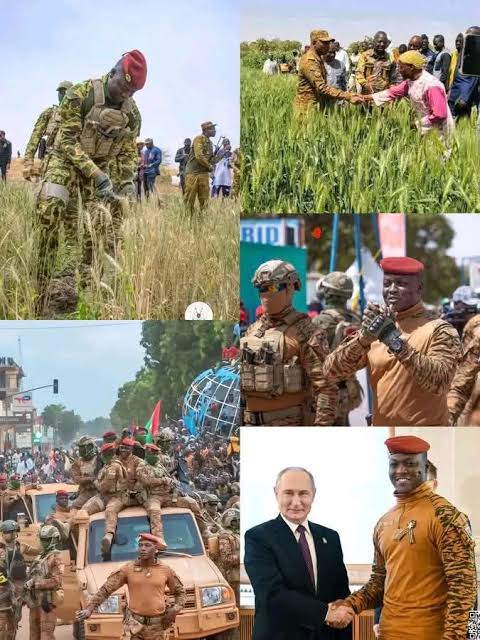
To achieve the strategic food security quest for citizens, Burkina Faso inaugurated its first government-owned rice mill on Tuesday, October 20, 2026, in Bagré according to reports.
The Mill processes 100 tonnes of paddy rice per day. The entire facility was funded from the state’s own resources. No World Bank loan. No IMF conditionality. No foreign partner involved.
The mill is managed by Faso Agropôles (SOFA), a state-owned company. It runs a complete processing line—cleaning, husking, whitening, polishing, optical sorting, and automatic bagging.
The factory is designed to turn the paddy rice stocks the state has been buying directly from farmers into finished white rice for the market.
The timing is deliberate. Burkina Faso suspended all rice imports in April 2026. Domestic paddy production has crossed one million tonnes, driven by the Presidential Initiative for agricultural mechanisation.
The missing link was processing. The Bagré mill closes it.
Prime Minister Rimtalba Jean Emmanuel Ouédraogo framed it in terms that go beyond economics. “The fight against imperialism also involves conquering food self-sufficiency,” he said. “Producing and transforming our agricultural resources locally is an essential condition of national sovereignty.” He called on Burkinabè to “produce and consume Burkinabè” and urged citizens to protect the facility.
This is the 2026–2028 Agro-Pastoral, Water and Fisheries Offensive in practice. Not a speech. A factory. A state that feeds itself is a state that cannot be starved into submission.
General News
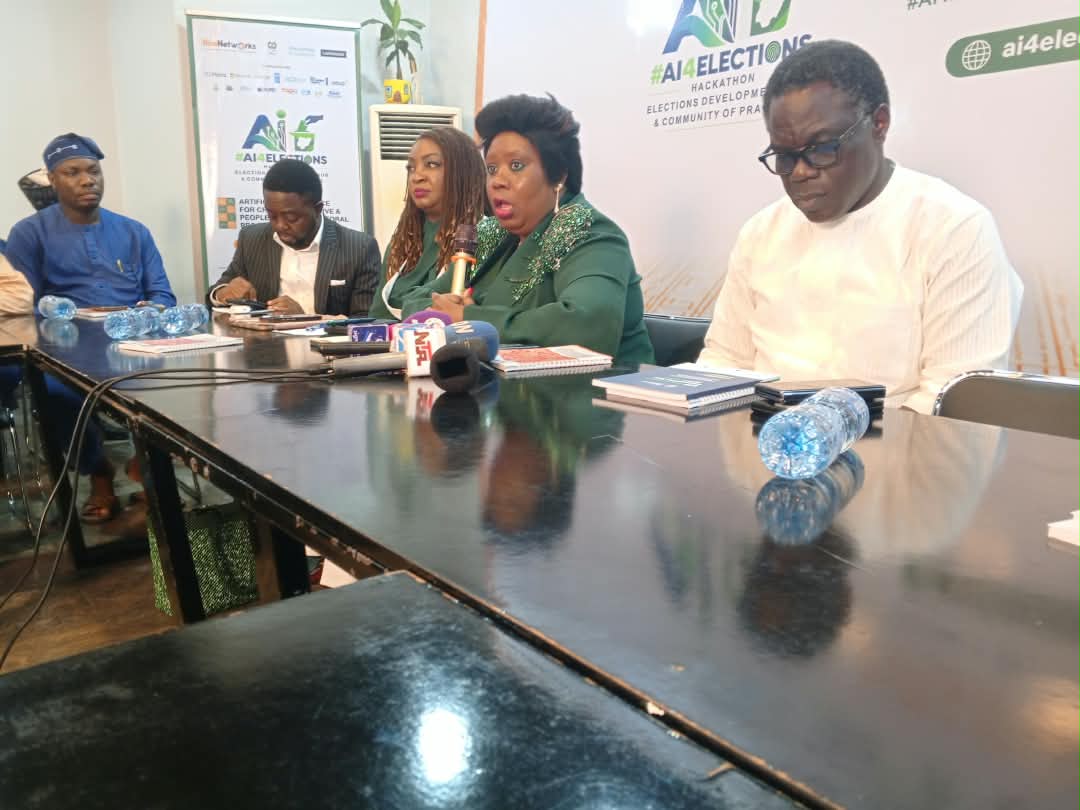
2027:RiseNetworks, Meta, Google, Microsoft launch #AI4Elections Hackathon…As INEC hails innovationBy Philip Nyam
Abuja
Following the success of Run-Am, an AI-powered misinformation detection and fact-checking mobile app it developed for the 2023 Nigerian elections, Rise Networks, in collaboration with the Independent National Electoral Commission (INEC), Google, Microsoft, Meta and other partners have launched the #AI4Elections Hackathon to support the 2027 electoral process.
Other partners include NITHUB at the University of Lagos, the Centre for Information Technology and Development (CITAD), CLEEN Foundation, Tap Initiative for Citizens’ Development, International Press Centre (IPC), Legal Naija, Ahmadu Bello University and Federal University of Akure (FUTA), with support from the MacArthur Foundation and Luminate.
In her welcome remarks at the launch of the #AI4Elections Hackathon, Elections Development Hub and Elections Community of Practice in Abuja, the founder of RiseNetworks, Dr. Toyosi Akerele-Ogunsiji said the #AI4Elections Hackathon is not intended to develop partisan campaign technology, influence voter preferences, or interfere with electoral administration.
“The programme operates on principles of non-partisanship, equal treatment, respect for electoral law, protection of personal information and human oversight. Unauthorised testing of live electoral systems or access to institutional infrastructure is strictly prohibited and winning the competitiondoes not constitute approval for operational deployment. Any future institutional pilot or deployment remains subject to relevant legal, institutional, technical and security approvals”, she noted.
According to her, the programme, which will connect innovators, researchers, civil society and electoral stakeholders, is structured around three interconnected pillars: the #AI4Elections Hackathon, where participants design, develop and demonstrate solutions to electoral challenges; #AI4Elections Development Hub, which will support the further testing, refinement and development of promising solutions; and the #AI4Elections Community of Practice, which will connect participants, researchers, mentors, institutions and other stakeholders for continued learning, collaboration and knowledge-sharing beyond the Hackathon.
She said the competition will focus on five principal tracks, including AI and Trustworthy Electoral Information, Electoral Data Analysis, Operational Insights & Decision Support, Inclusive and Multilingual Electoral/Civic Technology, Electoral Cybersecurity and Resilience, Election Observation and Citizen Accountability and an optional Crosscutting Area in Climate Resilience and Environmental Innovation.
Participants may develop applications, software prototypes, AI-enabled tools and models, data-analysis pipelines, accessible civic technology, multilingual interfaces, open-source components and other technically credible solutions appropriate to their selected challenge area.
The #AI4Elections Hackathon, which opens on October 22nd and closes on November 12th, features a total ₦10 million cash prize pool across overall and special innovation awards, with the 1st Place Overall Champion to win ₦4,000,000, 2nd Place winner to receive ₦2,500,000 and the 3rd Place winner to receive ₦1,500,000. Four additional ₦500,000 Special Innovation Awards will recognize outstanding solutions in Research and Policy Innovation, Electoral and Civic Inclusion, Responsible AI and Safety and Cybersecurity and Resilience.
In her remarks at the occasion, the Head of Public Policy, Anglophone West Africa and Connectivity and Innovation Policy Manager, Africa at META, Dr. Sade Dada, said Nigeria was very important to META because if the country gets it right in elections, it will have a positive impact on the entire continent of Africa.
“Specifically, Nigeria matters so much, enormously to META. The 2027 elections matters far beyond Nigeria’s borders. If Nigeria gets it right on trustworthy information, the continent will learn from and, indeed, the world”, she stated.
She noted that “Elections are decided by voters and they decide based on what they believe. And what they believe depends on what they trust. I’m especially excited about the innovators that are going to be applying for this programme. META is here as a key innovative partner. Elections are one of the single most important civic moments – people come to WhatsApp, Instagram, Facebook, etc., to debate about their future”.
Mrs Dada disclosed that over the past decade, META has invested over $30bn dollars in safety and security. We have global elections in several operations; we have around 40 people who are working on security- removing content that is harmful, that interferes with people’s ability to vote; we remove viruses so that they don’t go viral.
Presenting a keynote address, the chairman of INEC, Prof. Joash Amupitan hailed the initiative by RiseNetworks and her partners, saying it presents an opportunity for young Nigerians to harness their potential and contribute to electoral process.
Represented by the Director of ICT, Dr. Lawrence Bayode said “The #AI4Elections hackathon presents an opportunity to harness the creativity of young Nigerians in addressing real electoral challenges. We welcome the innovation that can improve voter education to enhance accessibility for PWDs, bridge language barriers, strengthen information integrity and make information more accessible to citizens”.



Donald Trump Learns New Lesson about Fighting The Press: Drags Self Into His Own Trap.
Spread the loveTrump sued the BBC for $10 BILLION — a shakedown lawsuit meant to bully the press over a...


Burkina Faso Seals Food Self-sufficiency Gap with Bagré Mill
Spread the loveBy Son Tertsea, Abuja To achieve the strategic food security quest for citizens, Burkina Faso inaugurated its first...

JPMorgan Alters Banking in Nigeria, Gets CBN Approval, As Esther Alade Joins Merchant Bank
Spread the loveBy Seyi Balogun, Lagos The Central Bank of Nigeria (CBN) has approved plans by global financial services giant...

2027:RiseNetworks, Meta, Google, Microsoft launch #AI4Elections Hackathon…As INEC hails innovationBy Philip Nyam
Spread the loveAbuja Following the success of Run-Am, an AI-powered misinformation detection and fact-checking mobile app it developed for the...

Akume Tells Northerners In Kaduna: Vote Tinubu Not Pretenders, Our Time is 2031
Spread the love–Askes Benue Indigenes to Support Gov Sani By Felix Umande The Secretary to the Government of the Federation,...


As Shoprite Plans Return: Standalone Shopping Model Considered
Spread the loveBy Seyi Balogun, Lagos Having learned some hard lessons, Shoprite Nigeria has rejigged its strategies, as it plans...


Gregory Zamfotis: At Age 24 Ditched Becoming a Lawyer, Opened a Coffee Shop.
Spread the loveBy Sherin Shibu Key TakeawaysGregorys Coffee has grown from one small Park Avenue bar in 2006 to 53...

NEC Backs 90-Day Plan To Ease Cost Of Living, Cut Food Prices
Spread the loveBy Felix Umande The National Economic Council, NEC, has endorsed a 90-day economic action plan proposed by the...

FIFA Endorses Nigeria’s Normalisation Committee: To Nominate Members with CAF
Spread the loveBy Son Tertsea, Abuja The Nigeria Football Federation (NFF) has received FIFA’s endorsement of the Normalisation Committee to...

State Police: Constitutional Two-thirds Met as 24 States Support Bill
Spread the love–Lagos, others yet to convene, take position By Our Reporters THE gravitation towards the federal and state police...