
General News
Nasarawa Tiv Chieftaincy: Alago Says No, What Says Gov Sule?

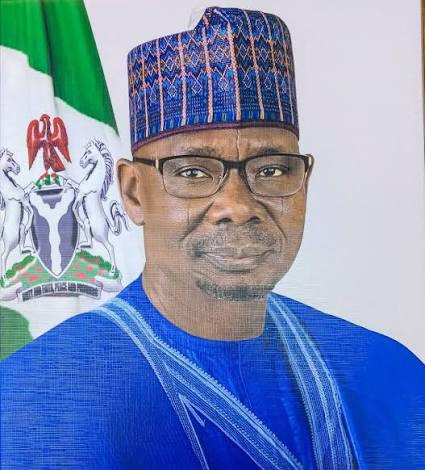
By DOOIOR PETER
Governor Abdullahi Sule has finally told the Tiv people why, after years of promises, a Tiv chiefdom in Nasarawa State remains a dream.
His explanation is stunning.
It is not because the Tiv are unqualified.
It is not because the law prohibits it.
It is not because the government has concluded that the Tiv do not deserve one.
According to the Governor, the problem is resistance from their Alago neighbours in areas where Tiv people reside.
This revelation deserves the question:
WHO IS GOVERNING NASARAWA STATE?
Is it the elected government of Nasarawa State with Engr Suke as the governor or an ethnic group?
If a government has the authority to create traditional institutions, how can the objection of another ethnic nationality become sufficient reason to repeatedly put the aspirations of an entire people on hold?
And if the government cannot overcome that resistance, what exactly is the Governor’s position?
Governor Sule reportedly advised Tiv people to use their closeness to traditional rulers in Keana, Doma and Obi to lobby for a chiefdom, suggesting that the traditional rulers may listen to them more than they would listen to him.
That statement deserves serious reflection.
The governor is the chief executive of the state. He has not only access but control over the machinery of government, security agencies, advisers, top civil servants and traditional institutions.
With all the powers, is the governor true to himself in telling Tiv people to go and lobby traditional rulers for what is their legitimate right to have as a people?
Also, if our request is lawful and just, why do we need to beg?
There is another part of Governor Sule’s message that Tiv people should not ignore.
He thanked the Tiv for supporting Senator Ahmed Aliyu Wadada, the APC governorship candidate, assuring that he (Wadada) would do even more for us.
But the question is:
More of what?
More promises?
More appeals for patience?
More political support without corresponding political results?
But now is time for Tiv people to demand for evidence or concrete agreements before deciding who to give their political support.
Politics is not about empty promises. It is about who meets or satisfies your interest. We have dwelled enough in the past on assumptions, now is the time for a different approach.
This is not a campaign against any particular people. Far from it.
Generally, nothing should be done to undermine peaceful coexistence between our communities, but our interests too ought to be respected and protected.
Furthermore, peaceful coexistence cannot mean that one ethnic group’s legitimate aspirations must permanently depend on another group’s approval.
The Tiv therefore must extract from every candidate seeking our votes in 2027:
Where do you stand on the Tiv chiefdom question?
Will you give it to us with courage, or not?
What exactly will you do differently?
And to Governor Sule and the APC:
If the Tiv are qualified, the law permits it, and the people genuinely desire it—and your government has refused to deliver it. Do you deserve our trust again?
Now is time to make our votes count.
Nobody should expect us to vote them merely because we have done it before.
Finally, it’s worth stressing that 2027 is about our interest and accountability. No more, no less.





General News
Court Sacks Francis Agbo, Declares Nelson Alapa APC Senatorial Candidate For Benue South

By Felix Umande
The Federal High Court in Abuja on Tuesday nullified the emergence of Francis Agbo as the candidate of the All Progressives Congress (APC) for the 2027 Benue South Senatorial District election.
Justice Salim Ibrahim, in his judgment, ordered the APC to immediately recognise and forward the name of Mr Nelson Alapa, a former lawmaker, to the Independent National Electoral Commission (INEC) as its validly elected candidate, having scored the highest lawful votes cast in the poll.
Justice Ibrahim held that the suit filed by Alapa succeeded on merit.
Alapa had filed the writ of summons, marked FHC/ABJ/CS/1092/2026, through his lawyer, Adetunji Oso, SAN, on May 30, naming APC, Agbo and INEC as 1st to 3rd defendants respectively.
He prayed the court to declare that having scored a total of 24,788 votes, being the highest number of lawful votes cast, he is the lawful winner of the APC Benue South Senatorial District Primary Election held on May 18.
He therefore sought an order setting aside the purported senatorial result collation form recording a total of 82,402 votes cast, and setting aside the purported declaration and return of Agbo as winner of the primary.
He also sought an order compelling the party to recognise him as winner and to forward his name to INEC as its candidate for Benue South.
Alapa equally sought perpetual injunctions restraining APC from submitting, forwarding, recognising or substituting Agbo’s name or any person other than him to INEC, and restraining INEC from accepting, recognising, publishing or acting upon the name of Agbo or any other person other than him as the party’s candidate.
Delivering judgment, Justice Ibrahim dismissed the preliminary objection filed by Agbo and held that the court had jurisdiction to entertain the suit.
He disagreed with Agbo’s submission that there was no substantial dispute of facts to warrant oral evidence, and that the case did not fall within the limited exception of pre-election matters that could be commenced by writ of summons.
The judge also disagreed with other objections, including the argument that Alapa failed to exhaust the party’s internal dispute resolution mechanism before filing the suit.
He held that the plaintiff had established the reliefs sought, hence all the issues ought to be resolved in his favour.
Justice Ibrahim ordered APC to immediately forward Alapa’s name as its candidate and directed INEC to publish Alapa’s name as the APC candidate for the 2027 Benue South Senatorial District election.
The judge, however, made no order as to cost.
Agbo represented the Ado/Ogbadibo/Okpokwu Federal Constituency of Benue between 2019 and 2023, while Alapa represented the Otukpo/Ohimini Federal Constituency between 2007 and 2011.
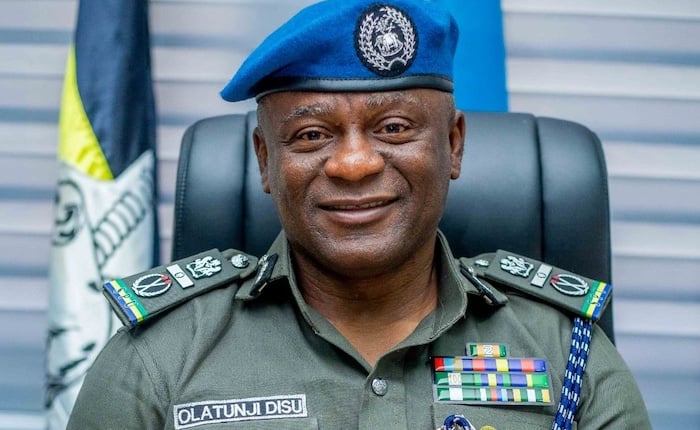
By Isa Abdul, Abuja
Nigeria should not directly adopt the state policing models of other countries, Inspector-General of Police (IGP), Olatunji Disu, has said.
Disu spoke against direct adoption of the state policing models of countries such as the United States (U.S.), India and Pakistan, arguing that the country must develop a system that reflects its distinct security and administrative realities.
Disu made the remarks Tuesday at the ongoing Media and Development Conference 2026 in Abuja, while contributing to the debate on the proposed establishment of state police in Nigeria.
The police boss said state policing was a futuristic development that requires careful consideration by the Nigeria Police Force (NPF), the National Assembly and other stakeholders to ensure it strengthens security across the country.
He said the police had carried out comparative assessments of countries operating decentralised policing systems but discovered that their circumstances differed from Nigeria’s. In his words:
“On the issue of state police, just like the issue of cybercrime, actually, it is a new thing. It’s futuristic.
“It’s something that the police, the National Assembly, and even the nation in general are still working on to get involved in the kind of state police that will improve our nation.”
In his view, the police examined the state policing arrangements in India, Pakistan and the U.S. with the conclusion that Nigeria needed a different framework to fit its own peculiarities.
In Plateau State, the government has proposed the recruitment of between 5,000 and 7,000 personnel for the proposed Plateau State Police Service as part of efforts to strengthen security and tackle rising insecurity across the state.
The proposal from Plateau was disclosed by the Chairman of the 14-member Plateau State Advisory Committee on State Police, Deputy Inspector-General of Police, Habila Joshak (rtd) during the presentation of the committee’s interim report to the state government in Jos.
“We propose an implementation roadmap for recruiting between 5,000 and 7,000 personnel, with pilot deployments in flashpoint areas before statewide coverage.
“The proposed recruitment and phased deployment are part of measures to ensure that the service is properly structured and positioned to respond to security challenges across the state,” Joshak said.
According to him, consultations with stakeholders in the Northern and Central zones recorded overwhelming support for the establishment of state police, provided adequate safeguards are put in place against political intimidation, ethnic and religious bias, and human rights abuses.
He said the committee recommended seven major pillars, including a legal framework, zonal and divisional command structures, 24-hour operations, an independent Police Service Commission with a civilian majority, inter-agency collaboration and phased implementation.
Earlier, Secretary of the committee, Julie Sanda, had said, “The committee has spent seven months undertaking research, reviewing security structures and consulting stakeholders across the three senatorial districts and the 17 local government areas of the state.
“We established seven subcommittees to examine different aspects of the proposed state police service and engaged the Plateau State House of Assembly, the Association of Local Governments of Nigeria (ALGON), traditional and religious leaders, women and youth groups, civil society organisations, professional associations and transport unions.”
In another development, the Minister of Information and National Orientation, Mohammed Idris, while declaring open the Defence Headquarters Strategic Communication Workshop 2026 in Abuja, emphasised the importance of responsible journalism, effective communication and the protection of sensitive military information.
The workshop had the theme: ‘Enhancing Strategic Collaboration Between Spokespersons of Security Agencies and Media Stakeholders for Accurate and Responsible Reportage Towards Improved National Security’.
Represented by the Director-General of Voice of Nigeria, Jibrin Baba-Ndace, the minister said national security was determined not only by operational capacity but also by the quality, accuracy and effectiveness of information communicated to the public.
He noted that although the military and the media had different professional responsibilities, their roles were not incompatible, stressing the need for mutual respect, professionalism and regular communication.
According to him, while the military is responsible for protecting the country and conducting security operations, the media has a duty to inform the public, express diverse perspectives and report matters of public interest.
He urged security agencies to provide timely and credible information, while highlighting that journalists should ensure accurate reporting, provide context and avoid publishing information capable of endangering lives or compromising ongoing military operations.
The minister further called for stronger collaboration between the media and security agencies to address the country’s security challenges and safeguard national security.
By Nick Ibe, Abuja
For the N135.5 billion paid into some bank accounts allegedly linked to the Nigerian Governors’ Forum (NGF) for Paris Club refunds over issues pertaining to consultancy and legal fees, a High Court of the Federal Capital Territory (FCT) has ordered the freezing of the affected bank accounts.
The interim order was granted by Justice Charles Agbaza due to an ex parte application filed by Ted Iseghohi-Edwards, a lawyer, against the Incorporated Trustees of the NGF, the first respondent in the case.
The order restrained the Incorporated Trustees of the NGF from withdrawing, transferring, dissipating or otherwise dealing with the funds.
The order further restrained 29 commercial banks from releasing, transferring, converting or otherwise dealing with funds belonging to the NGF in their custody.
The judge, in addition, directed the banks to disclose, within 48 hours of the service of the court order on them, whether the NGF maintains accounts containing the said funds.
According to the judge, the banks are required to identify such accounts, their currencies, available balances and amounts preserved under the court’s order.
The amount represents 100 million dollars, equivalent to N135.55 billion, calculated at the exchange rate of N1,355.80 to the dollar.
Justice Agbaza made the orders on Nov. 19, following the ex parte application and submissions by the claimant’s counsel, Emonye Adekwu, SAN, alongside Damilola Odesola, of the law firm of Ade Okeaya-Inneh & Co.
A Certified True Copy of the enrolled order by the court was obtained by the press on Tuesday in Abuja.
Iseghohi-Edwards, who carries on business under the name and style of Edwards and Partners, is seeking the recovery of the money pursuant to an indemnity issued by the NGF.
The claimant’s case is that the money belongs to him under an indemnity dated Dec. 20, 2018, issued by the NGF.
The indemnity reportedly arose from an arrangement under which the Federal Government paid 100 million dollars to the NGF as stakeholder.
The money was to be held pending the determination of the Federal Government’s liability to Iseghohi-Edwards over legal and consultancy fees.
The fees arose from legal and consultancy services Iseghohi-Edwards claimed to have rendered in connection with the London and Paris Club loan transaction.
Iseghohi-Edwards claimed he was retained by the Incorporated Trustees of the Association of Local Governments of Nigeria (ALGON) to represent the 774 local government councils in the London and Paris Clubs refunds matters.
He had instituted suit No. FHC/ABJ/CS/856/2016 against the Federal Government over the outstanding professional fees.
According to his court filings, the Federal High Court, on Feb. 16, 2018, delivered judgment establishing the government’s indebtedness of 318 million dollar.
The claimant said the government subsequently made a part-payment of 159 million dollars through Promissory Notes.
He contended that the judgment fulfilled the condition contained in the NGF’s indemnity, thereby making the 100 million dollar payable directly to him.
Under the indemnity, the NGF had undertaken to pay the claimant the money if the Federal Government was found liable.
Iseghohi-Edwards said he formally demanded payment from the NGF through a letter dated Oct. 8, 2026, but the forum allegedly failed to honour the undertaking.
Consequently, he approached the FCT High Court, seeking to preserve the money pending the determination of his substantive claim.
Justice Agbaza adjourned the matter until Dec.1, for hearing of the Motion on Notice and directed the claimant to serve the order on all respondents.



The Best Vegetables for Heart Health, According to Cardiologists
Spread the loveBy Lynn Andriani When cardiologists talk about heart-healthy eating, vegetables are almost always at the center of the...


Court Sacks Francis Agbo, Declares Nelson Alapa APC Senatorial Candidate For Benue South
Spread the loveBy Felix Umande The Federal High Court in Abuja on Tuesday nullified the emergence of Francis Agbo as...


Alia Sets Up 17-member Panel To Review 2023 Manifesto For 2027 Re-election Bid
Spread the loveBy Felix Umande Benue State Governor and All Progressives Congress (APC) governorship candidate for 2027, Rev. Fr. Hyacinth...

IGP: Nigeria Should Create Distinct State Police Model, Not Copy Others
Spread the loveBy Isa Abdul, Abuja Nigeria should not directly adopt the state policing models of other countries, Inspector-General of...
Nigerian Governors Forum’s 29 Bank Accounts Frozen –Court Orders
Spread the loveBy Nick Ibe, Abuja For the N135.5 billion paid into some bank accounts allegedly linked to the Nigerian...


Police: Nduka Obaigbena, 8 others wanted
Spread the loveThe police have declared Prince Nduka Obaigbena, Chairman of Arise News Television, and eight other persons wanted over...


STAY AWAY FROM VIOLENCE OR FACE THE LAW: BENUE POLICE WARN POLITICAL THUGS AFTER PISTOL SEIZURE AT GBOKO RALLY
Spread the loveBy Felix Umande The Benue State Police Command has reaffirmed its commitment to maintaining peace and security throughout...
Avoid Violence Or Face The Law: Benue Police Warn Political Thugs After Pistol Seizure At Gboko Rally
Spread the loveBy Felix Umande The Benue State Police Command has reaffirmed its commitment to maintaining peace and security throughout...

Veteran actor Pete Edochie Joins Ancestors at 79
Spread the loveBy Lazarus Oko Veteran Nigerian actor and broadcaster, Chief Pete Edochie, has passed on at the age of...


Tinubu Seeks Fresh Approval For Slimmer ₦65.17trn 2026 Budget, Sends Revised Fiscal Plan To Reps
Spread the loveBy Felix Umande President Bola Tinubu has asked the House of Representatives to repeal and re-enact the 2026...