
Business and Economy
Experts Warn Against “informalization of formal employment”


By Isa Abdul
Economic crunch is gradually reshaping the Nigerian economic landscape, particularly the formal employment system.
According to the Punch, businesses are abandoning traditional fixed salary structures as employers are moving their workers, entirely or partially, to commission-based remuneration models. This is shifting the burden of low sales directly onto their staff.
From retail outlets to tech startups and manufacturing firms, the narrative is uniform: if you do not bring in revenue, you do not get paid.
This is a new survival switch
Years back, monthly pay was the golden standard of employment security in Nigeria.
But with business patronage slowing to a crawl, companies say maintaining a high wage bill is no longer sustainable.
“We had no choice,” says Mr. David Amaechi , the Managing Director of a mid-sized consumer electronics retail chain. He continued that:
“Our foot traffic has dropped by more than 40 percent compared to last year.
“People are prioritizing food and fuel over gadgets.
“We were faced with two options: either shut down operations entirely and lay off all 25 employees, or transition them to a performance-based system.
“We chose to keep them on, but now, a base salary only covers basic transport, while 70 percent of their take-home pay relies purely on the volume of goods they sell.”
He explained that while the decision was painful, it has kept his business afloat.
“It forces the team to be aggressive, but more importantly, it aligns our expenses directly with our actual revenue.
“If the business doesn’t make money, we cannot afford to pay out millions in fixed wages.”
While business owners view the move as an innovative emergency cushion, employees describe it as a fast track to financial insecurity.
With the cost of transportation, housing, and utilities skyrocketing, an unpredictable paycheck is pushing many urban workers to the brink.
Chioma Nnaji, a sales representative at a drycleaning service company, shared her recent struggles under the new payment structure.
“Two months ago, management announced that our basic salary was being cut by 60 percent, and the rest would be made up via a five percent commission on a number of clothes washed.
“But the customers are simply not coming. Some days, we don’t make a single sale.
“Those that come leave their clothes for months before coming to collect them.
“Last month, I went home with less than half of what I used to earn. My rent is due, food prices are rising daily, and I cannot even predict what I will earn next week.”
Labor experts warn that this trend could trigger widespread job dissatisfaction and a mental health crisis among the workforce.
The pressure to convert window-shoppers into paying clients in a depressed economy is turning workplaces into high-stress environments.
Economic analysts note that while commission structures are standard practice in sectors like real estate and insurance, their sudden adoption in conventional retail, hospitality, and corporate services reflects a deeper structural crisis.
“What we are seeing is the informalization of formal employment,” Dr. Abiodun Shonubi, a labor economist, said.
“Employers are effectively outsourcing their market risks to their employees. When consumer patronage slows because disposable income has been wiped out by inflation, it is unfair to penalise the floor worker who has no control over macroeconomic policies.
“While it helps businesses survive short-term cash flow crunches, it ultimately dampens aggregate demand because workers have less money to spend, creating a vicious cycle for the economy.”
However, given the scarcity of alternative job openings, many employees feel powerless to challenge the changes.
As the business landscape remains volatile, the commission-based salary model appears poised to stay.
For Nigerian employers, it is a necessary life support machine. For the average worker, it is another heavy layer of uncertainty in an already challenging economic climate.






Business and Economy
NBTI Receives, Presents Nigeria’s 7 Shining Stars in Lahore, Pakistan to Science and Tech Minister

By Seyi Balogun
Seven Nigerian entrepreneurs who proudly represented the nation and distinguished themselves at the SEE Pakistan 2026 World Startup Championship in Lahore, Pakistan have been received by the Management of the National Board for Technology Incubation (NBTI), led by the Director-General/Chief Executive Officer, Dr. Kazeem Kolawole Raji.
The remarkable international performance of the Nigerian entrepreneurs represents another compelling demonstration of the depth of talent, creativity, enterprise and technological ingenuity embedded within Nigeria’s emerging innovation ecosystem. SEE Pakistan 2026 brought together startups, entrepreneurs, investors, mentors and innovation stakeholders through a major international platform designed to promote entrepreneurship, innovation, visibility and global collaboration.
Following their reception at NBTI, the seven champions were presented to the Honourable Minister of Innovation, Science and Technology, Dr. Kingsley Tochukwu Udeh, SAN, where their outstanding international achievement was formally showcased as part of the Federal Government’s continuing efforts to strengthen Nigeria’s technology, innovation and entrepreneurship ecosystem.
The achievement is particularly significant against the backdrop of the transformative economic direction of the administration of President Bola Ahmed Tinubu whose bold economic and institutional reforms are designed to reposition Nigeria for sustainable growth, productivity, investment and prosperity.
President Tinubu’s administration has articulated the ambition of building a $1 trillion Nigerian economy by 2030, with technology, innovation, productivity, enterprise development and a skilled youthful workforce forming important components of that transformation agenda. The Federal Government’s Nigeria First Policy, in particular, places emphasis on strengthening Nigerian businesses, promoting domestic products and services, creating employment and enhancing the competitiveness and innovative capacity of Nigerian enterprises.
The NBTI Management commends President Bola Ahmed Tinubu, GCFR, for providing a policy environment in which Nigerian entrepreneurs, innovators and technology-driven enterprises can increasingly aspire to compete beyond the shores of Nigeria.
The Board recognises that the transformation of Nigeria into a globally competitive, innovation-driven economy requires more than policies alone. It requires deliberate investment in people, institutions, technology, entrepreneurship, research, product development, incubation, commercialisation and access to international markets.
It is within this broader national vision that NBTI continues to strengthen its Technology Incubation Centres and support mechanisms for entrepreneurs across the country.
Speaking at the reception, the Director-General/CEO of NBTI, Dr. Kazeem Kolawole Raji, congratulated the entrepreneurs for their resilience, professionalism, determination and exceptional representation of Nigeria on the international stage.
Dr. Raji described their achievement as a powerful reflection of the enormous creative and entrepreneurial capacity of Nigerian youths and innovators.
He stated that the success of the entrepreneurs was not merely an individual accomplishment but also a demonstration of what can be achieved when innovation, incubation, mentorship, institutional support and entrepreneurial determination are brought together.

By Nick Ibe
A call to reduce food waste and adopt sustainable practices to protect the environment has been made by the First Lady, Senator Oluremi Tinubu in a message marking the 2026 World Cleanup Day.
The day was observed on Sunday with the theme, “From Clean Plates to Clean Cities.”
She said the focus on food waste was particularly apt as climate change, conflicts and other global challenges continue to disrupt food production and supply. In her words:
“This year’s focus on food waste is particularly important at a time when climate change, conflicts, and other global challenges continue to disrupt food production and supply.”
She urged Nigerians to become more responsible in how they purchase, prepare, consume, and preserve food.
“I encourage households, businesses, and communities to reduce food waste, dispose of refuse properly, and adopt more sustainable practices that protect our environment,” she added.
Tinubu said collective efforts were needed to build cleaner and healthier communities for present and future generations.
“Through our collective efforts, we can build cleaner, healthier communities for present and future generations,” she said.
Business and Economy
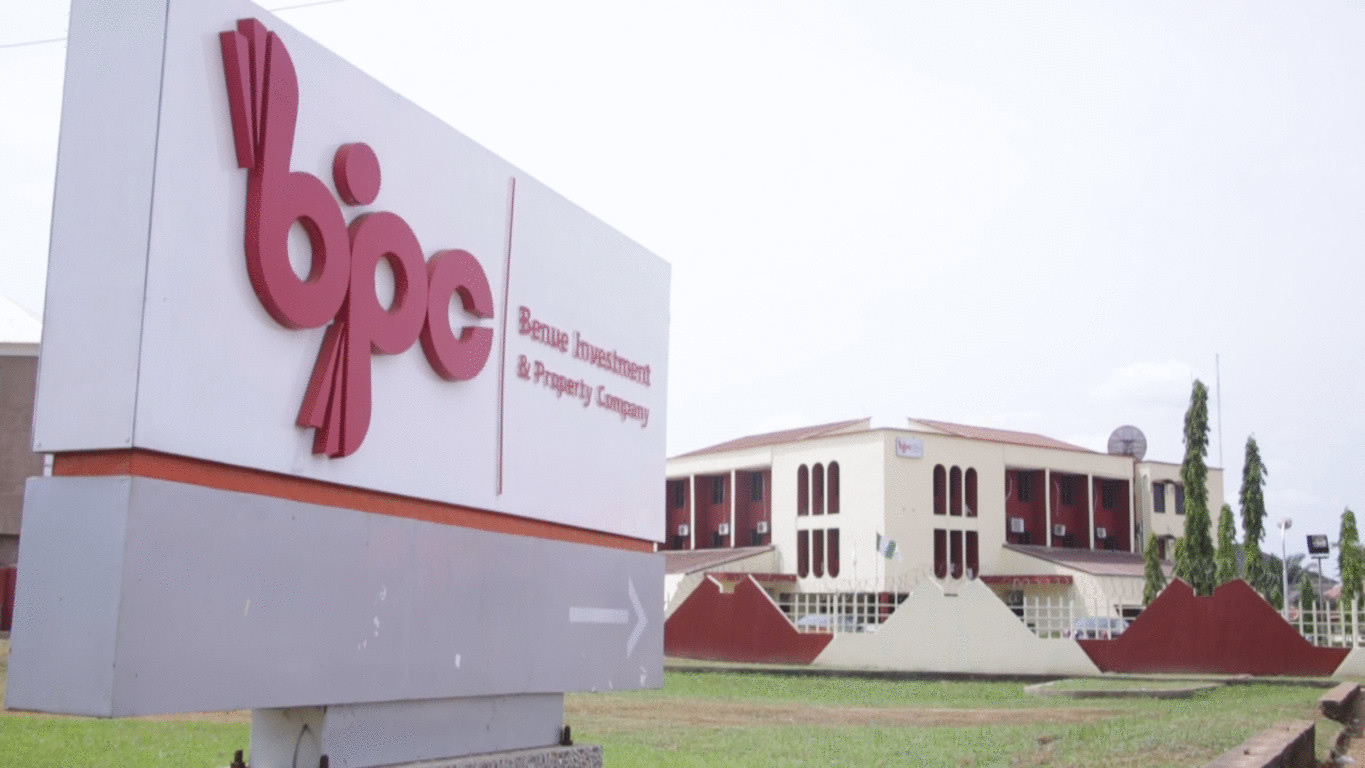
BIPC Moves To Stop NEXIM Bank Sale Of Benue Hotels, Alleges Fraud In Lease Deal
By Felix Umande
The Management of the Benue Investment and Property Company Limited (BIPC) has held discussions with the Nigerian Export-Import Bank (NEXIM Bank) on moves to recover and prevent the sale of Benue Hotels Limited.
Benue Hotels Limited was leased to Luxurium Leisure Services in 2012, following which the company obtained a N488 million facility at first instance and another N630 million, all from NEXIM Bank, for the remodelling and development of the hotel.
The Group Managing Director of BIPC, Dr. Raymond Asemakaha, CFA, expressed concern over the circumstances surrounding the lease agreement and subsequent release of a Certificate of Occupancy to Luxurium Leisure Services, describing the process as administrative fraud.
The GMD said no Executive Council approval nor board resolution were given even though Benue State Government holds a 75 percent majority share via BIPC while Nigerian Hotels Limited holds a 25 percent minority share.
Dr. Asemakaha also disclosed that during the loan process, NEXIM Bank failed to obtain the owner’s signature, approvals, owner’s board resolution and search report on the collateral, thereby failing to carry out due diligence obtainable in financial dealings.
He stressed that the state government would not allow the property to be sold, emphasizing the importance of protecting government assets for the benefit of the people of Benue.
The Group Managing Director presented four proposals on behalf of the state government to NEXIM Bank for consideration, including the expiration of the lease by next year, payment of 48 percent of the loan to NEXIM Bank to recover the hotel for not doing due diligence, and sharing the risk associated with the outstanding facility on a 50:50 basis as both parties must bear losses on the transaction.
Asemakaha also raised concerns over the utilisation of the funds earlier obtained by Luxurium Leisure Services, promising that BIPC would investigate how the loan facilities were expended.
According to him, information presented by the manager of Luxurium Leisure Services indicated that only one facility and a swimming pool were added to the hotel, while most of the other works carried out amounted to minor renovations.
He reiterated the vision of His Excellency, Rev. Fr. Dr. Hyacinth Iormem Alia, the Executive Governor of Benue State, to recover all properties of the state, warning all persons with government assets to return them for the benefit of the state.
Responding, the Chief Risk and Compliance Officer of NEXIM Bank, Umoru Gubio, said the bank would carefully consider the proposals presented by the Benue State Government and communicate its position.



Foreign Medical Tourism to Drop as Nigeria Records First Tele-robotic Surgery Success in West Africa
Spread the loveBy Son Tertsea Nigeria’s first tele-robotic surgery on September 20, 2026 at the Redeemer’s Health Village (RHV), in...


Experts Warn Against “informalization of formal employment”
Spread the loveBy Isa Abdul Economic crunch is gradually reshaping the Nigerian economic landscape, particularly the formal employment system. According...


NBTI Receives, Presents Nigeria’s 7 Shining Stars in Lahore, Pakistan to Science and Tech Minister
Spread the loveBy Seyi Balogun Seven Nigerian entrepreneurs who proudly represented the nation and distinguished themselves at the SEE Pakistan...


Reduce Food Waste, Mrs Tinubu urges Nigerian Households, Communities
Spread the loveBy Nick Ibe A call to reduce food waste and adopt sustainable practices to protect the environment has...


The Civil Service for Federal and State is the Same, the Salary Structure Should also be Same –Jonathan
Spread the loveBy Seyi Balogun The harmonisation of structures and salary scales across Nigeria’s federal and state civil services has...


Miva University Appoints Cross River-Born EFCC Officer Professor of Practice
Spread the loveDr David Olom Nkpe, Assistant Commander of the Economic and Financial Crimes Commission (EFCC), has been appointed as...


NDLEA intercepts N3.4bn Loud, opioids, arrests fake police officer, mechanic-drug dealer
Spread the loveBy Nick Ibe Operatives of the National Drug Law Enforcement Agency (NDLEA) have intercepted over 1.3 million pills...

As Howard Buffett Takes over from his Billionaire Father Warren: What’s the Future of Berkshire Buy-and-Hold Policy?.
Spread the loveWhen Warren Buffett stepped down as chairman of Berkshire Hathaway on Friday, the job passed to his 71-year-old...


Sacrificial Courage: Driver Moves Burning Truck From Fuel Station, Saves Lives, Property in Osun State
Spread the loveBy Felix Umande Courage has a new name in Osun State — Alagbe Hezekiah, a38-year-old tanker driver and...


APC Campaign Says Atiku Unfit For Presidency Over Alleged $500,000 Mambilla Bribe
Spread the loveBy Felix Umande The All Progressives Congress Presidential Campaign Council has described African Democratic Congress (ADC) candidate Atiku...