
Education
Strike Looms As ASUU Authorises 20 Universities To Issue 14-day Ultimatum Over Unimplemented 2025 Agreement

By Felix Umande
The Academic Staff Union of Universities, ASUU, has authorised 20 universities nationwide to commence processes for industrial action over the alleged failure of the Federal and State Governments to implement the 2025 FGN-ASUU Agreement.
The decision was taken at the union’s National Executive Council, NEC, meeting held at the University of Abuja on August 8 and 9, 2026.
In a statement signed by ASUU President, Prof. Christopher Piwuna, on Monday night, NEC directed affected branches to first issue a 14-day ultimatum before proceeding on strike. Branches in the Sokoto Zone have already issued a two-week ultimatum.
An emergency NEC meeting will be convened at the end of August or early September 2026 to take further decisions, “without prejudice to the decisions taken so far,” the statement said.
The universities authorised to move are: Nasarawa State University, Keffi; Ibrahim Badamasi Babangida University, Lapai; University of Medical Sciences, Ondo; Gombe State University; Plateau State University, Bokkos; Adekunle Ajasin University, Akungba; Ambrose Alli University, Ekpoma; Olusegun Agagu University of Science and Technology, Okitipupa; Abia State University, Uturu; University of Education and Entrepreneurship, Akamkpa.
Also listed are: Emmanuel Alayande University of Education, Oyo; Kaduna State University; Kano State University of Science and Technology, Wudil; Northwest University Kano; Enugu State University of Science and Technology; Imo State University; Niger Delta University; University of Africa, Toru-Orua; Bayelsa Medical University; and Taraba State University, Jalingo.
ASUU said the affected branches would proceed on strike after the expiration of the ultimatum.
The union blamed the move on the “haphazard implementation” of the 2025 FGN-ASUU Agreement and the “lackadaisical attitude” of the Federal Government in releasing the subvention required for full implementation.
“NEC discussed the state of the struggle and noted that a significant milestone had been reached signing the 2025 FGN-ASUU Agreement, but frowned at the haphazard implementation and lackadaisical attitude of the Federal Government in the release of subvention to fully actualise the implementation of the said 2025 Agreement,” Prof. Piwuna stated.
ASUU also expressed concern over the failure of visitors to several state-owned universities to implement the agreement, warning that the development was threatening the gains recorded after the deal was signed.
The agreement, signed in December 2025 after more than 16 years of negotiations, was meant to end the cycle of disputes over lecturers’ welfare and the chronic underfunding of public universities.
Its major provisions include a 40 per cent upward review of academic staff remuneration, effective January 1, 2026. The Federal Government announced in February that implementation of the increase had commenced.
At the heart of the accord is the Consolidated Academic Tools Allowance, CATA, covering journal publications, membership of learned societies, conferences, internet access and books.
The pact also introduced a new Professorial Cadre Allowance: N1.74 million annually, or N145,000 monthly, for professors, and N840,000 annually, or N70,000 monthly, for readers.
It further reviewed Earned Academic Allowances, including payments for postgraduate supervision, and provided for improved welfare, research, infrastructure and institutional development.
Despite the February announcement, ASUU says implementation remains the major sticking point. In May, the union alleged that some universities were only partially implementing the salary component, while others had not implemented it at all.
The union also decried delays in constituting the Implementation Monitoring Committee, which it said is critical to prevent bureaucratic bottlenecks and ensure compliance.
The meeting also addressed controversial promotions and appointments. NEC commended the withdrawal of two professorial appointments at Federal University Lokoja following branch resistance and investigation, and raised concerns over the promotion of a former registrar to professor at Federal University Wukari.
NEC mandated ASUU branches to resist the promotion of bursars and registrars who do not meet the professorial promotion criteria of their universities.
The union further raised alarm over worsening insecurity on campuses, including incidents that led to the killing of members. It directed affected branches to petition the police and other security agencies and to compile cases for submission to national leadership.
With the 14-day ultimatum now ticking, the development raises the prospect of another major disruption to Nigeria’s public university system if government fails to act before the deadline.




Paul Little received his diploma from Dallas Center High School in Grimes, Iowa, more than 80 years after leaving school to help support his family.
Little later spent years farming and, with his late wife, became a longtime supporter of local students and schools, including donating $50,000 to his former school district.
School officials surprised Little at his nursing home on Sept. 17 and awarded him the diploma he never got the chance to receive.
A 98-year-old Iowa man just received his high school diploma over 80 years after having to leave school to help support his family.
Paul Little attended Dallas Center High School in Grimes, a suburb of Des Moines, and was set to graduate in 1946 — but he dropped out during his junior year in order to work, according to CBS 19.
Paul went on to farm for years in nearby Guthrie County, and despite never getting the chance to finish his education, he — alongside his late wife Eleanor — always made a point to support local students and education initiatives.
“For the last 15 to 18 years he’s given money out to help our kids get jump-started to the next stage in life,” Kasey Huebner, superintendent of the Panorama School District in Guthrie County, said while speaking to CBS 19.
Paul eventually moved into a nursing home in his hometown and donated $50,000 to Dallas Center High School — the place that would have been his alma mater.
The school district recently decided to honor Paul and his years of generosity with a surprise visit to his nursing home on Sept. 17, where he was awarded his high school diploma.
“We’re excited to play just a little role in recognizing the awesomeness that is a guy like Paul in our community,” Scott Blum, superintendent of the Dallas Center-Grimes Community School District, told CBS 19.
In a statement to PEOPLE, the district added, “We were alerted to Paul’s story by the DCG Education Foundation. After moving back to Dallas Center, Paul connected with this group and offered financial support to our graduating seniors. Paul gave $50,000 to the DCG Education Foundation, and scholarships are now given out annually to our seniors.”
“Paul’s connection to our community spans nearly eight decades,” the Dallas Center-Grimes Community School District continued. “He’s made a lasting impact on our students and their futures. Honoring Paul with an honorary diploma was our way of saying thank you. His legacy will be felt for generations at Dallas Center-Grimes.”
Paul — whose funding has helped over 150 students graduate — said contributing to his community was never a hard decision.
“I think it’s very important. We need to support the kids in schools,” he told CBS 19.

By Nick Ibe, Abuja
QR-based ranking codes have been introduced by the Federal ministry of Education to strengthen accountability; second phase to cover four additional class levels
Similarly, the Ministry has released the final list of Ranked and Approved Textbooks for use in Nigerian schools for the 2026–2028 period, following the completion of the first phase of the national textbook ranking exercise.
A release by Boriowo Folasade,
Director, Press and Public Relations, on Monday, 28th September, 2026 said:
“The approved list covers textbooks for Primary 1, Primary 4, Junior Secondary School 1 (JSS 1) and Senior Secondary School 1 (SS 1). Each approved title carries a unique Ranking/QR Tracking Code, alongside key details including the title, author(s), publisher and year of publication, to facilitate identification, monitoring and accountability.”
The statement added, the exercise was conducted under the guidance and leadership of the Honourable Minister of Education, Dr. Maruf Tunji Alausa, and the Honourable Minister of State for Education, Prof. Suwaiba Sa’id Ahmad.
Furthermore, it justified the introduction of the Ranking QR tracking saying:
“The introduction of the Ranking/QR Tracking Code represents an important step towards strengthening the monitoring and control of approved instructional materials and ensuring greater transparency in their selection, procurement and utilisation.”
The Ministry noted that the additional process of generating and assigning unique codes to each ranked textbook contributed to the time required to complete and validate the final lists.
The ranking exercise is being implemented in phases. Following the completion and approval of the first phase, preparations will commence for the second round, covering textbooks for Primary 2, Primary 5, JSS 2 and SS 2. The same identification and tracking measures will apply to the subsequent phase.
The Federal Ministry of Education urges publishers, schools, education authorities, procurement agencies and other relevant stakeholders to consult the official approved list when selecting and procuring textbooks for the affected classes.
The exercise forms part of the Federal Government’s commitment to ensuring that learners and teachers have access to quality, relevant and curriculum-aligned instructional materials, while strengthening transparency and accountability in textbook provision across Nigerian schools.
The complete 2026–2028 Ranked and Approved Textbooks, including the Ranking/QR Tracking Code for each approved title, is available through the link below:
drive.google.com/file/d/1lOX8iW…
The Federal Ministry of Education encourages all stakeholders to adhere to the approved list in the provision and use of textbooks for the specified classes.
By Son Tertsea
The results of the 2026 Senior School Certificate Examination conducted by the National Examinations Council, have placed Kano State as the overall best.
Kano emerged as the leading state with 74,413 candidates obtaining at least five credits, including English Language and Mathematics.
The result places Lagos, which recorded 72,496 candidates, and Oyo with 55,543 candidates, as coming second and third respectively according to figures released by the Kano State Government.
The development marks the second consecutive year Kano has recorded the highest number of candidates meeting the five-credit benchmark, following its performance in the 2025 NECO examination.
Reacting to the result, Governor Abba Yusuf, in a statement issued on Saturday by his spokesperson, Sunusi Bature Dawakin Tofa, congratulated the students, teachers, parents and other stakeholders.
According to the statement, Yusuf described the performance as an indication that the state’s investment in education was yielding measurable results. In his words:
“This back-to-back performance is an indication that our sustained investment in education is producing measurable results.”
The governor assured residents that his administration would continue to prioritise education through increased funding, improved learning facilities, teacher recruitment and training, scholarships and support for indigent students.
“Our government spent more than N4.4bn in 2026 to sponsor candidates for the Senior School Certificate Examination, particularly indigent students, to remove financial barriers to participation,” the governor said.
Yusuf said the investment extended beyond examination sponsorship to classroom renovation, recruitment and training of teachers, provision of learning materials, uniforms and scholarships.
“We will continue to invest in education because our objective is to build a system that equips our young people with the knowledge and skills required for higher education, employment, innovation and leadership,” the governor said.
The statement said education had consistently received one of the largest allocations in Kano’s budgets under the Yusuf administration, with the sector allocated N168.35bn, representing 31 per cent of the 2025 budget.
For 2026, the state allocated N405.35bn to education, representing about 30 per cent of its N1.48tn budget, according to the government.
Yusuf dedicated the latest NECO performance to students, teachers, parents and residents of the state, while pledging to sustain interventions aimed at improving learning outcomes.
“This achievement belongs to our students, teachers, parents and the good people of Kano State,” the governor said.
The governor’s spokesman said the state had recorded more than five million school children in the latest annual school census, underscoring the scale of the government’s education responsibilities.


School Surprises Man, 98, With Diploma 80 Years after Dropping Out
Spread the lovePaul Little received his diploma from Dallas Center High School in Grimes, Iowa, more than 80 years after...


Education Ministry Introduces QR-Ranking, Approves 2026–2028 Textbooks
Spread the loveBy Nick Ibe, Abuja QR-based ranking codes have been introduced by the Federal ministry of Education to strengthen...


Press Iccon Independence Day celebrations
Spread the loveAll of us at Press Icon Media Ltd wish you, esteemed advertisers, friends, associates, well-wishers, readers and the...

Independence Day: Tinubu Declares End Of Emergency Reforms, Says Nigeria Now Entering Age Of Prosperity
Spread the loveBy Felix Umande President Bola Ahmed Tinubu has declared that Nigeria has passed the phase of emergency economic...
FROM REFORM TO PROSPERITY: INDEPENDENCE DAY ADDRESS TO THE NATION BY HIS EXCELLENCY, PRESIDENT BOLA AHMED TINUBU, GCFR, 1ST OCTOBER 2026
Spread the loveMy fellow Nigerians, Sixty-six years ago today, our flag was raised, for the first time, over a free...


Nigeria @66: Akpabio celebrates Nigerians’ resilience; urges love, unity, belief in the country’s futureBy Saint Mugaga
Spread the lovePresident of the Senate and Chairman of the National Assembly, Senator Godswill Obot Akpabio, GCON has congratulated Nigerians...


Nyesom Wike’s Son, Jordan, Dragged to Court for $2.1m Alleged Land Fraud
Spread the love–Court Orders Jordan To Produce American Passport By Nick Ibe, Abuja Jordan Ezenwo Nyesom-Wike, son of the FCT...


Nigerian Economy at Risk: 22 Firms Threatened by N3.9trn Debt
Spread the love–Job losses loom A wide disparity in the ability of companies listed on the Nigerian Exchange Limited, NGX,...
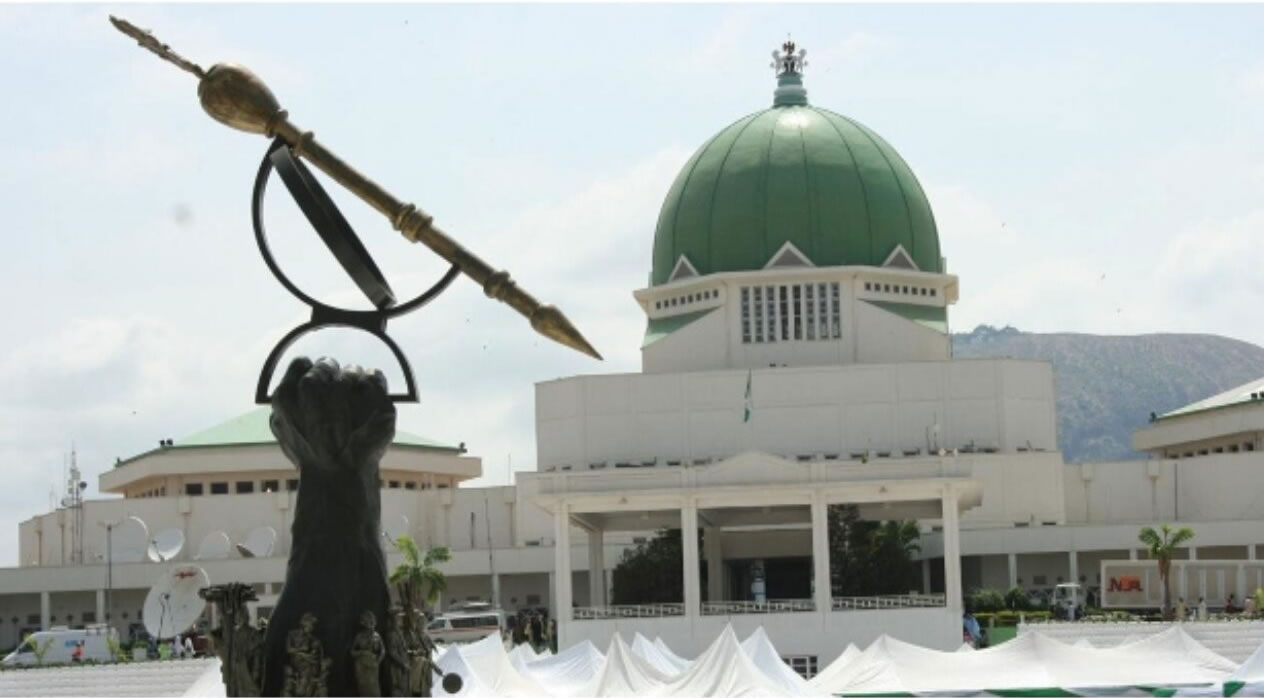
National Assembly to translate laws into Igbo, Yoruba, Hausa, others
Spread the loveThe National Assembly will soon deepen the digitisation of parliamentary records by translating Nigerian laws into Igbo, Hausa,...


Court Convicts 21 Companies in Absentia for Operating Illegal Investment Schemes
Spread the loveBy Michael Lim 21 companies have been convicted and sentenced for operating without licenses from Security and Exchange...