
Judiciary
Gov Alia Swears in 14th Benue Female Judge, Christine Ende


By Felix Umande, Makurdi
Benue State Governor Rev. Fr. Hyacinth Alia on Wednesday swore in Hon. Justice Christine Terlumun Clement Ende as a Judge of the Benue State High Court during a ceremony at the Old Banquet Hall of Government House, Makurdi.
The governor described the appointment as a significant milestone for justice delivery in the state, citing Justice Ende’s distinguished career spanning over three decades in legal practice, judicial administration, human rights advocacy, and public service.
According to the governor, Justice Ende’s wealth of experience, including service at African Bank Plc, the National Human Rights Commission, and as Deputy Chief Registrar and Admiralty Marshal of the Federal High Court, attests to her competence and preparedness for the Bench.
The appointment increases the number of judges in Benue State from 32 to 33. It also raises the number of female judges from 13 to 14, a development the governor said reflects his administration’s commitment to inclusivity, equal opportunity, and women’s advancement in leadership.
Reaffirming his administration’s “HE for SHE” philosophy, Alia stressed that sustainable development requires giving women equal opportunities to contribute their talents to nation-building.
The governor urged Justice Ende to uphold the Constitution and discharge her duties with integrity, independence, courage, and fairness, noting that the judiciary remains “the last hope of the common man.”
He commended the National Judicial Council, the Judicial Service Commission, and the leadership of the Benue State Judiciary for their roles in the appointment, and assured continued government support to strengthen justice delivery and the rule of law.









By Nick Ibe, Abuja
The claimants who have taken Jordan Wike, FCT minister Nyeson Wike’s son, to court over land fraud case have petitioned the Chief Judge to remove Justice Oriji from the matter, citing his alleged relationship with the family of the FCT Minister.
The case was adjourned by Justice Sylvanus Oriji for continuation of hearing on December 1.
The two firms have also petitioned the Economic and Financial Crimes Commission (EFCC) over the alleged role of Jordan Nyesom-Wike, son of the Minister of the Federal Capital Territory (FCT), in the disputed $2.1 million land transaction.
The petitioners, Safwan Garba GY and GY Global Oil & Gas Nigeria Limited, through their lawyers, raised allegations of fraud, obtaining by false pretences, criminal misappropriation and conversion.
The claimants’ counsel, Mr. Ibrahim Waru, told journalists at the Federal High Court in Abuja on Monday, that although the anti-graft agency had acknowledged receipt of the petition, it had yet to act on it.
Waru said the civil aspect of the matter is already pending before the High Court of the FCT, with the other petition filed to enable the EFCC investigate the alleged criminal elements.
He said his clients had attached to the petition a proof of evidence, including correspondence and WhatsApp exchanges, as proof that the money was allegedly handed over to Wike’s son at a house in Gwarinpa on September 26, 2025, in the presence of two witnesses.
A copy of the petition availed to the press read: “We have our client’s firm instructions to submit this petition against Jordan Nyesom-Wike for the alleged offences of fraud, obtaining by false pretence, criminal misappropriation and conversion to the tune of USD2,100,000 (Two Million, One Hundred Thousand United States Dollars) perpetrated against our client.
“Our client met Jordan Nyesom-Wike in London, following which the two developed a rapport.
“Upon returning to Nigeria about three months ago, Jordan met with our client. He promised to facilitate the acquisition of land within the Federal Capital Territory (FCT), based on his prior representations that he routinely provided such facilitation and that he had his father’s knowledge and approval, as the Honourable Minister of the FCT.
“To strengthen these representations, Jordan placed a telephone call to his father in the presence of our client, ostensibly informing him of the intended transaction.
“Jordan thereafter assured our client that he could secure 30 hectares of land in Katampe and 30 hectares in Guzape.
“Jordan demanded and received the sum of USD2,000,000 (Two Million United States Dollars) as the fee he would deliver to his father, the Honourable Minister, to facilitate the land allocation.
“Additionally, our client paid USD100,000 (One Hundred Thousand United States Dollars) to Jordan as his personal facilitation fee.
“These amounts were paid in cash, at the insistence of Jordan Nyesom-Wike, in the presence of the following witnesses: Adamu Sani and Aliyu Sarki. Jordan was accompanied by one Onor Sandy, whom he introduced as his friend and associate.
“Jordan promised to deliver the land allocations within one month. After receiving the funds, he failed to deliver on the agreement and became incommunicado.
“The UK phone number he provided is no longer reachable, and all attempts by our client, including through individuals known to the Honourable Minister, to establish contact with him have failed.
“Based on the foregoing, our client reasonably believes that Jordan Nyesom-Wike has committed offences, including but not limited to: Obtaining by False Pretence contrary to Section 1(1) of the Advance Fee Fraud and Other Related Offences Act; Fraud; Criminal Misappropriation; and Criminal Conversion of the sum of USD2,100,000 entrusted to him.
“Our client hereby requests that the Commission: commence an immediate investigation into the actions of Jordan Nyesom-Wike; arrest and interrogate Jordan Nyesom-Wike; and initiate prosecution where the investigation establishes criminal liability.
“Our client is prepared to provide all necessary help, including the witnesses and any further information that may assist the Commission.
“We trust in the professionalism and diligence of the EFCC and kindly request prompt action on this matter. Attached is the Acknowledgment of Payment signed by Jordan Wike.”
Justice Silvanus Oriji of the FCT High Court has fixed December 1 for continuation of a civil suit, marked CV/008/2026, which the claimants filed against Jordan, who has since denied the allegation.
The defendant, who insisted that he was not in the country on the date the litigants claimed they handed money to him to facilitate the allocation of land, tendered his international passport before the court to support his position.
Wike’s son told the court that he travelled out of the country with his American passport within the period the claimants said they met with him in Abuja.

—Blames govt for ignoring court rulings
By Son Tertsea, Abuja
A retired justice of the supreme court, Amina Adamu Augie, has sounded worry that corruption among judges, lawyers and court officials is undermining the administration of justice in Nigeria, turning the courts into “market stalls” rather than temples of justice.
While calling for the sanctioning of erring practitioners, irrespective of their roles or seniority, Augie said corruption within the legal profession had also damaged public confidence in the judiciary, .
She bared her mind on this, Saturday in Abuja, at the 40th anniversary of the Nigerian Law School Class of 1986, also known as the Centennial Class, while delivering a public lecture titled: “The Rule of Law and Justice Delivery — The Last 40 Years, Today and Tomorrow: Wither Nigeria?”
The retired supreme court justice, also a former lecturer at the Nigerian Law School before her judicial career, fingered corruption, political interference, inadequate funding and delays in the dispensation of justice, as some of the major ills against the judiciary. In her words:
“The third, which I will not dress up, is corruption. Where it exists on the Bench, at the Bar, or in the Registry, it poisons everything by turning the one place that a citizen should find impartiality into one more market stall.”
She nevertheless warned against a sweeping generalisation of the entire judiciary as corrupt, as most judges and lawyers were honest, hardworking and underpaid.
In her opinion, the judicial system must be structured to protect the integrity of its officers rather than expose them to temptation.
The retired Justice took a cautious analysis of the unethical conduct of some senior members of the legal profession that has grossly eroded public trust in the administration of justice. She therefore added:
“Have we kept faith with them? In part, YES, in part, NO. Public trust has paid the price. The public today is quick to believe the worst of lawyers, and sorry to say, not always without cause.
“When a few senior members of the profession have been found to traffic in the corruption of justice, the damage is not to them alone; it stains the gown we all wear.”
She went further to counsel that restoring public confidence would require more than image management, pointing out that the legal profession must demonstrate the courage to discipline its erring members without regard to their influence.
“Restoring that trust is not a matter of better public relations. It is a matter of conduct and a profession willing to discipline its own, without fear or favor, no matter how senior the offender may be in the legal profession.”
Augie insisted that lawyers’ primary responsibility was to the court and the administration of justice rather than to their clients, stressing that the profession has its ethics deeply rooted in honesty, candour and respect for the rule of law.
She said lawyers must shun the temptation to manipulate judicial processes, fabricate evidence or procure favourable judgments through improper means.
Beyond corruption, Augie identified inadequate funding as a major threat to judicial independence, arguing that a judiciary dependent on the executive for its basic operational needs could not be considered fully autonomous.
“A Judiciary that must beg the executive for a Courtroom roof, vehicles, or even the Judges’ entitlements is not fully free; financial autonomy for the Courts is not a perk for Justices and Judges, but a guarantee for litigants,” she said.
She also lamented the delays and high costs associated with litigation, describing delay as the chronic disease of Nigeria’s justice system.
Drawing from her experience on the Supreme Court, she said the apex court was overwhelmed by appeals, including cases that should ordinarily not reach the highest judicial authority.
She recalled an appeal involving the burning of 12 goats, which had reached the Supreme Court despite its enormous workload.
According to her, constitutional amendments are necessary to restrict the categories of appeals that can reach the apex court and allow its justices to concentrate on matters of greater legal and national significance.
Augie also criticised the persistent disobedience of court orders by government authorities, citing the prolonged detentions of former National Security Adviser Sambo Dasuki and Islamic Movement leader Ibrahim El-Zakzaky despite judicial orders for their release.
She said such conduct weakened the authority of the courts and encouraged citizens to regard the law as optional.
Reflecting on the state of the judiciary over the past 40 years, she acknowledged the progress made since Nigeria’s return to democratic rule in 1999 but expressed disappointment that justice remained slow, expensive and inaccessible to many citizens.
She noted that Nigeria ranked 120th out of 143 countries in the 2025 World Justice Project Rule of Law Index, describing the ranking as an uncomfortable reflection of the country’s institutional weaknesses.
Augie called for reforms that would strengthen judicial independence, expand access to justice, improve case management and restore ethical standards within the legal profession.
She urged members of the Class of 1986, many of whom now occupy senior positions in the judiciary and legal profession, to use their influence to defend the rule of law and restore public confidence.
“If Governments obey the Courts, if its Judgments are enforced, if justice comes within a reasonable time and within reach of the poor, if the profession upholds its integrity and disciplines its own,” she said, Nigeria would be better positioned to secure its future.
She concluded that the survival and progress of Nigeria would ultimately depend on the willingness of its leaders and legal professionals to uphold the rule of law.
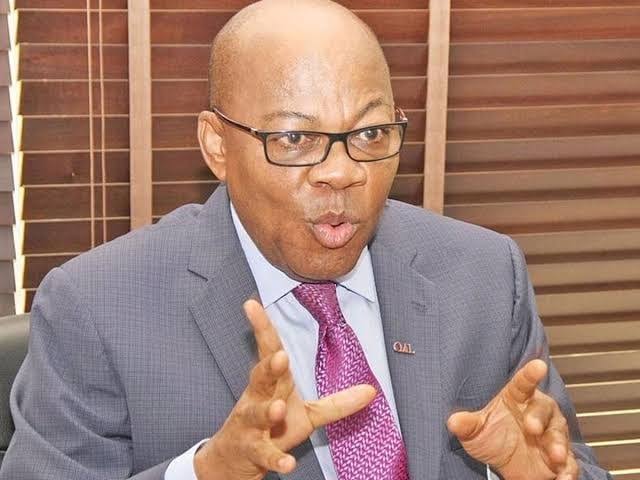
In this interview, former Nigerian Bar Association, NBA, President, Dr Olisa Agbakoba, SAN, examines the state of Nigeria’s judiciary, 66 years after independence. He discusses public confidence in the courts, conflicting judgments, judicial appointments, funding, executive influence and the reforms needed to strengthen justice delivery. He also calls for greater autonomy for the NBA and a constitutional approach to the relationship between religion and the state.
Disgraceful conflicting judgements that taint courts reputation
66 years after independence, how would you assess the Nigerian judiciary, today, particularly when compared with the past?
Generally speaking, I am not giving my personal view. I am giving the view of what I see the public saying. It seems to me that the perception of the public is that there is low performance on the part of the judiciary. They judge that from what they see as too much interference and uncertainty in the decisions of the courts, particularly in election petition cases.
The public perception is that it is not the place of the judiciary to determine political office holders, such as the President, governors and senators. It is the duty of the people who elect them. But it seems now that the judiciary has taken over that function, and everybody turns to the judiciary to ask, “Who will they elect?” That is not their function.
The judiciary should resist the invitation to be lured into becoming an electoral umpire. That is not its function. There are cases I have seen where a judge would take a case and you would ordinarily wonder: “Why is this case here? I am sitting in Jigawa, and this matter concerns a party dispute in Onitsha. Why is it here?”
Those are the issues. I think there is a lot that needs to be done to restore public confidence in the judiciary because there are so many fine judges on the bench. There are so many brilliant and distinguished judges serving today. But whether we like it or not, there is a very strong perception by the public that something is wrong.
What, in your view, are the major factors responsible for this perception, particularly the conflicting judgments that have become a concern?
There are two reasons for that. One is the public perception that judges are no longer following their oath and are influenced by considerations other than judicial considerations. Whether that is so or not, I don’t know.
But I have seen evidence of cases that look alike and should be decided alike, yet they receive different decisions.
The second problem has to do with competence. To be a judge is not an easy thing. You have to demonstrate competence. In the old days, when my father was around, there were competent people who did not apply for the job.
In fact, I know that the first Northern lawyer, Alhaji AbdulRazaq, the father of the current governor of Kwara State, declined to become a judge in 1969. They asked him and he said, “I just can’t afford to be a judge. How much are you going to pay?”
That was the quality of the time. It wasn’t a matter of being forced into it. People who wanted to be judges had already made successful careers as lawyers. They didn’t have the temptation to go there to make money. I don’t know if you can speak of that criterion today.
Appointment of judges
In the appointment of judges, it is very important that we talk about competence. If you do not have criteria for competence, then anybody can become a judge.
I have appeared before judges whom I am shocked by how they became judges. If a judge doesn’t understand the rudimentary rules of the law of evidence, how to decide cases or the substantive issues involved, then he will give poor-quality decisions. All these factors have brought into the public mind a very low perception of judges, and that needs to be turned around.
How, then, should judges and justices be appointed to ensure competence and integrity?
The appointment process should be transparent. I sat on the National Judicial Council, NJC, and we set up criteria for appointment. Unfortunately, those criteria are not being followed. I don’t know whether you are familiar with the objection process in churches when a couple wants to get married.
That is the way we should appoint judges. Put it in the newspaper: “The following 10 people have applied to be judges in the Anambra State High Court. Anyone who has any complaint or anything against them, please say so.” Put them through public scrutiny so that anything we have against them will be put on the table. I think that is a very important filter.
If the NJC criteria for the appointment of High Court judges, Court of Appeal justices and Supreme Court justices are followed, I think it will go a long way towards dealing with the problem we have. But they are not being followed. That is the problem.
Beyond the appointment process, what role should the NJC play in addressing conflicting judgments and other problems affecting the judiciary?
The problem with the NJC goes back a long way. The composition of the NJC makes the Chief Justice of Nigeria the almighty power. When I sat on the NJC, nobody could challenge the CJN. Nobody. Because he appoints virtually everybody.
The only CJN I can say tried to deal with the structural issues of the NJC was the late Dahiru Musdapher. When he became CJN, he constituted a high-powered 29-man panel to look at all these issues. The main thing we said was that if the NJC structure continued to be what it was, then we cannot have a great judicial policy.
Unfortunately, the late Dahiru Musdapher was only six months in office. He was the shortest-serving CJN in Nigerian history. Immediately he retired, all the reforms died. He appointed me to create model rules for the speedy administration of justice, but till today, not one person has remembered what the late Justice Musdapher put in place.
The NJC continues to be a body that doesn’t have any staff. It is unbelievable. We are all ex-officio members. The law says there are five NBA members and judges from the six geopolitical zones, and they are all appointed by the CJN. But what about the quality of people who work in the NJC?
There is nobody. So, they don’t deal with high judicial policy. There is no thinking about the concept of how to speed up justice. The only CJN I recall who was worried about that was Justice Dahiru Musdapher.
Is the lack of a clear response to conflicting judgments also responsible for the public’s concerns about the judiciary?
The only issue where speed of justice has relevance is politics. If it is the National Assembly where politicians have an interest, they have created a very fast timeline. Six months and it must be finished.
What about commercial cases? What about people on trial for murder who sit on death row for 30 years? When I was a political prisoner in Enugu under Abacha, I met two or three people on death row. One was an 80-year-old man who had been on death row for about 45 years.
Nobody cares. The only interest we see in speed is political cases because politicians have an interest. But the NJC ought to have an interest in saying: “If cases don’t go fast, nobody will be interested in going to the courts.”
All these rule-of-law things you see are just hype. We need to see a very active NJC. You mentioned conflicting decisions. Has the NJC ever made a statement on it? Has it ever said to judges, “why do you keep giving conflicting decisions?”
Nobody can tell what exactly constitutes a pre-election matter. Even me, at 50 years at the Bar, I am not sure that if a client comes to me and asks, “what exactly is a pre-election matter,” that I know.
There are too many conflicting decisions. In what cases can the courts determine to remove the chairman of a political party? I don’t know.These very basic issues heat up the polity.
You have mentioned the need for speedy justice. What specific changes would you like to see in the way courts operate?
The NJC and the constitutionally mandated organ to deal with judicial policy ought to do more about the speed of justice. You have to look at the rules of court and how the courts work.
Why are judges still handwriting and taking things down in longhand in today’s technological, digital age?
If Mr Justice Jones, who sat in the High Court of Lagos in 1830, were to come back to life today, he would recognise the system and say there has been no change. The entire architecture that underlies the way the legal profession works needs a complete overhaul.
Another issue is the relationship between Sharia law and Nigeria’s general legal system. What are the constitutional implications of the continued operation of Sharia alongside the general legal system?
The problem is the failure to observe Section 10 of the Constitution. When Sharia law first started in Zamfara, I led a strong team. We lost the case. We argued that the state could not declare that Zamfara was a Sharia state because it conflicted with the doctrine of separation of religion from the state.
Nigeria is a secular state. Nigeria is not a secular state for nothing. It does not mean Nigeria ceases to be a religious country. It means that religion is a private matter. It is in the Constitution.
But the Constitution is not obeyed. That is the problem. If the Constitution were obeyed, a lot of these conflicts around religion would have been dealt with. That is why I raised the issue that government should not sponsor pilgrimages to Mecca or Jerusalem. There should be nothing like Christian pilgrimage.
People criticised me for saying that, but that is what the Constitution says. The problem is that the Constitution is not being obeyed. There is no compliance with the Constitution.
How can the judiciary be insulated from executive influence, particularly through funding and infrastructure?
It goes back to the NJC. I sat on the NJC and raised this point: the Constitution confers on the NJC a funding structure. But the problem is that the funding structure set out in the Constitution is not being obeyed, and the NJC has not really pushed to have it obeyed.
I went to court. I went to three courts and I won all three cases. I raised the issue in the NJC that it has the power to determine its budget. Why doesn’t it take that power? At that time, it was Justice Aloma, the first female CJN.
I thought, since nobody would do it, I would do it. I won the cases establishing that the judiciary does not depend on the executive to be funded. Unfortunately, the effort I made and the decisions of the courts have not been implemented.
The NJC itself has not helped matters. Neither has the Supreme Court helped matters. There was a case before the Supreme Court on the funding mechanism of the Parliament, the executive and the judiciary. By Section 162(9) of the Constitution, the makers of the Constitution set out parameters for funding. The justices of the Supreme Court said that provision was unconstitutional.
That was shocking to me. Judges said that the way they should get money was unconstitutional. My predecessor, Alegeh, after he had been NBA president, went back to the Supreme Court and we again raised the issue that the Supreme Court does not have the power to declare the Constitution unconstitutional. It cannot, unless the National Assembly amends it.
The NJC sends an estimate to all branches of the judiciary across Nigeria. They gather together what is called an estimate and it is sent to the National Assembly for appropriation, not to the executive.
But what is going on now is that the NJC sends it to the executive, and somebody in the Ministry of Finance may then decide that the judiciary’s budget will be, for example, N100 billion. That is not their job. It is the job of the NJC to determine its budgetary allocation. That is the problem. And that is why Wike is building houses for them and they are gratefully accepting them. Is that his job?
It is the job of the judiciary to create a budget where it takes care of itself—its salaries, housing and courts. If a judge has collected a house from the executive, the public perception becomes: “Can this man really do justice in my case?”
You have raised concerns about judicial autonomy. What reforms would you prioritise to address these problems?
I would focus on the competence of a judge being properly weighed and subjected to public scrutiny. That is the area I would focus on, so that the person who becomes a judge is entitled, not only in law but by public confidence, to be called a judge.
Once the quality of a judge goes up, the judge is not interested in who you are. He does his job without fear or favour, then we are good. But if the judge is influenced by what he is going to get or fear of executive condemnation, then we don’t have a judiciary.
That is the most important thing: the quality of the individual judge sitting on the bench. You know what it was to be a judge in the old days? A judge was seen as a god. My father was Chief Justice, and you couldn’t just come to our house. Who were you to approach our house?
Even the Commissioner of Police in Enugu at that time couldn’t just come and see my father. He would come to the gate and sign the visitors’ book, saying, “My Lord, I am here to ensure that your safety and security are secured,” and he would go away.
My father never went to any social function. There was total seclusion. Today, it is strange. So, we need to go back to the period when a judge was found worthy in character and learning to occupy the bench.That would be my priority.
Apart from the quality of judges, what other reforms would you like Nigerians to see?
Funding. Judges must be free from executive control of their funding. They must be totally free. The constitutional provision that provides the framework for funding the judiciary should be a top priority. I should not need Wike to build me a house, nor should I need the executive to assign a budget for me to build courts. Once the judiciary controls its budget, that is the second important thing.
With quality judges and proper funding, I think you will see that judges will not be afraid. The words “without fear or favour” are very heavy words. The reason judges of old could dispense justice without fear or favour was because they were protected. They didn’t have anything to lose, either in terms of their emoluments or whatever.
There was a judge in a case in Benin who gave a decision adverse to the interest of the government. He was transferred from Benin to Maiduguri as punishment. Other judges would see what happened to him and become afraid. So, judges must be able to do their work without fear or favour. The Constitution needs to guarantee their tenure of office.
Look at how Justice Onnoghen, the CJN of Nigeria, was removed and nothing happened. Yet, the Constitution gives him protection. I was the one who defended him at the NJC trial against the way he was removed.
Finally, as a former NBA President, you have also called for greater autonomy for the legal profession. What changes would you like to see in the NBA?
I don’t even sit on the body that disciplines lawyers, yet I am their president. It is ridiculous. So, please don’t assume that the NBA is what you think it is. It has a powerful voice, but I think two things should happen.
Either the system should free the NBA and allow it to operate like ICAN. ICAN controls its own examination. There is no law school for ICAN; it has its own examination process and nobody controls it.
For us, everybody goes to law school. The NBA is too constrained by government bureaucracy and, as a result, it is not anywhere near as influential as people think. That is why, for me, the NBA cannot do much unless to play an advocacy role. But I want the NBA to have the sort of power that its equivalent in London has.
If a lawyer misbehaves in the United Kingdom, you complain to the professional body. If it finds that your complaint is justified, it can impose the relevant punishment, including striking the lawyer’s name off the roll.
But in Nigeria, by the time you go through the hierarchy and get to the Legal Practitioners Disciplinary Committee and all of that, the whole process is muddled in statutory bureaucracy.
We should regulate ourselves. Everything about the law profession should be done by us, not the government.We should determine the curriculum that lawyers require. We should determine the discipline that is required. We should determine the excellence that we will bestow on those found worthy of it. That is when you will have a strong NBA.
When there is misconduct, the decision should be taken at the local bar. If a lawyer in Lagos misbehaves, the Nigerian Bar Association, Lagos Branch, should be able to deal with it.
Source:Vanguard


FG Gives Workers N70,000 Monthly Transport Support for Six Months
Spread the loveBy Nick Ibe, Abuja To cushion the harsh impact of rising living costs, the Federal Government has approved...


Trump and the 95-year Mother: Government That Cares for All Citizens
Spread the love“Trump… Please bring my son back to me. I am begging you for mercy.” And what Trump did...


Probe Panel Says Heat, Dehydration Killed 33 Detained Niger Miners
Spread the love–Calls for NSCDC reforms, compensation for victims By Son Tertsea, Abuja Dehydration was cause of the death of...

Tinubu Seeks Law To Bring Back Nigerians Jailed Abroad
Spread the loveBy Felix Umande President Bola Ahmed Tinubu has transmitted a bill to the Senate seeking to empower the...

Senate Says: Travel Agencies, Short-let Apartments Need Closer Scrutiny in Human Trafficking Probe
Spread the loveBy Isa Abdul, Abuja As part of efforts to dismantle trafficking networks and protect Nigerians from exploitation abroad,...


El Niño: Its Meaning, Effects and How Nigerians Should Prepare for It
Spread the loveBy Son Tertsea, Abuja Nigerians have been alerted that El Niño event would raise concerns that potentially affect...


Accusations of Data Theft: MTN Explains How Nigerians Consume Data Fast
Spread the loveBy Nick Ibe, Abuja: Engaging in high-resolution video streaming, automatic downloads, background applications, cloud backups and increased internet...


Kogi Authorities Probe Why Police Corporal Killed female Colleague, Self
Spread the loveBy Michael Lim The Kogi State Police Command has begun to probe why a police corporal, Amos Yusuf,...


WHO Declares Nigeria Ebola-Free After Evacuation of Patient to Switzerland
Spread the loveBy Nick Ibe, Abuja Dr Mohamed Janabi, the World Health Organisation’s (WHO) Regional Director for Africa, says Nigeria...


Fake Letter Lands Atiku Supporter in Court
Spread the loveBy Isa Abdul, Abuja For circulating a fake document purportedly written by President Bola Ahmed Tinubu to the...