
Politics
Rtd ACG Aber Emerges ‘Evening Threat’ In Benue Zone B Senate APC Race

_Gains traction, unsettling Zam, other aspirants
By Felix Umande from Makurdi
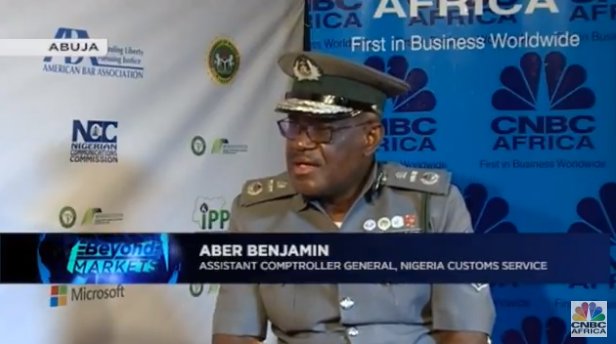
The race for the Benue North West, Zone B, Senatorial seat has taken a dramatic turn with the emergence of retired Assistant Comptroller General of Customs, Benjamin Terseer Aber, as a late but formidable contender, with insiders describing him as the preferred candidate within Governor Hyacinth Alia’s political camp.
Aber’s entry into the contest has unsettled the field, sending what sources call “suppressed fear” within the camps of other aspirants, including Senator Titus Zam, former Reps member Hon. Emmanuel Jime, Hon. Dave Awunah, Hon. Raymond Anger, and other party chieftains yet to pick their interest forms.
The development is reshaping the dynamics ahead of the All Progressives Congress (APC) primaries, with Aber now positioned as the likely main challenger to the sitting senator, Titus Zam.
Aber, who hails from Shough Council Ward in Mbaivur, Gwer East Local Government Area, only recently stepped up his political visibility. He has already picked the senatorial Nomination and Expression of Interest Forms and is currently conducting consultations across the seven local government areas that make up Zone B.
His sudden momentum is largely attributed to his growing closeness with Governor Alia. The relationship has bolstered his standing within the governor’s camp and signaled a possible shift in the party’s internal calculations for the senatorial ticket.
Political observers say the timing of his emergence has caught many off guard. “Those who had felt they had secured wide acceptance and were coasting toward the primaries are now recalculating,” a party stakeholder in Makurdi noted.
Aber’s political profile is further strengthened by his family connection to the state’s power structure. He is the husband of the current Secretary to the Benue State Government, Dcns Serumun Deborah Aber, Esq., a position that places him at the centre of the administration’s inner circle.
The visibility of that alliance has amplified perceptions that Aber enjoys the governor’s backing, even as the Alia administration maintains a public posture of neutrality in party contests.
Senator Titus Zam, who currently represents Zone B, has been consolidating his base since the last election. However, Aber’s entry introduces a new variable into the race, with the retired customs officer leveraging both his administrative background and his administrative ties to the state government.
For many within the APC, Aber represents a fresh option that blends technocratic experience with direct access to the executive that would enhance more democracy gains for Zone B. For others, his late entry is seen as an attempt to upend an already crowded and contentious primary field.
But his entry no doubt has triggered mixed reactions among political commentators and party faithful. While some view Aber’s rise as a corrective move to introduce a stronger, more coordinated candidate against the incumbent, others see him as a disruptive force that could deepen factional lines within the party.
“His coming has created a political shift,” a commentator in Gboko said. “He now appears to be the main force to battle Senator Zam in the field at the primaries.”
With consultations ongoing and the primary timetable approaching, the latest candidate is no doubt dominating political conversations in Zone B now. But whether his late entry translates into the APC ticket will be seen in a matter of weeks.







By Felix Umande
The Independent National Electoral Commission, INEC, has assured Nigerians and the international community of its neutrality and commitment to the integrity of the ballot as the country begins the final 100-day countdown to the 2027 general elections.
Chairman of the Commission, Prof. Joash Amupitan, SAN, gave the assurance on Tuesday at a World Press Conference and National Stakeholders’ Meeting at the Bola Ahmed Tinubu International Conference Centre, Abuja.
“We have moved decisively from planning into execution. Our materials are in production, our technology is undergoing rigorous quality assurance, our register is finalised and our workforce is being systematically trained,” he said, describing the 100-day mark as a call to action.
Prof. Amupitan said since assuming office on October 23, 2025, the Commission had conducted off-cycle governorship elections in Anambra, Ekiti and Osun, FCT Area Council polls and several bye-elections, which passed integrity benchmarks and tested early deployment of materials and intelligence-led security.
He said of the 14 statutory milestones in the revised timetable released on February 26, nine had been executed, synchronised across 23 headquarters departments, 36 state offices, the FCT and 774 LGAs.
On the voter roll, he disclosed that 10.7 million new voters were registered in three phases of CVR, bringing the national register to 103 million. The register will be displayed for claims and objections from October 9 to 15, while distribution of Phase 1 PVCs begins October 9.
Eighteen of 22 parties submitted 36 presidential tickets, while the final list for National Assembly candidates was published September 12. Governorship and State Assembly lists will be out October 10.
On logistics, Amupitan said production of 57,000 new BVAS devices is advanced, procurement of ballots and result sheets is near completion, and MoUs have been renewed with NURTW, RTEAN and MWUN for over 100,000 vehicles and 4,000 boats. Sensitive materials will move from CBN vaults 72 hours before polls to 8,838 RACs by 4pm on election eve to enable 7:30am opening.
On technology, a six-day BVAS stress test is scheduled for October 23-28, with nationwide mock accreditation in November. He announced a new Artificial Intelligence Division within ICT operating under human oversight.
On security, he said INEC working through ICCES will train thousands of electoral security personnel and deploy joint undercover teams with EFCC, ICPC and NFIU to track vote-buying. Violators will face arrest under the Electoral Act 2026.
INEC requires 707,384 ad-hoc staff per election day — January 16 and February 6, 2027 — totalling 1.4 million engagements across 176,846 polling units. Recruitment via INECPRES opened September 18 and closes November 18.
He warned against AI-driven disinformation, urging media to fact-check and avoid premature results declaration. “In national elections, it is far more important to be right than to be first,” he said, adding that the Media Accreditation Portal will go live before end of October.
Representing the IGP, AIG Alyonu Idu said police are conducting clearance operations in Kogi, Niger, Benue and Taraba to stabilise flashpoints and will review pre-election work in November.
EU Ambassador Gautier Mingot described INEC’s task as “Herculean” and said the EU will deploy an expert mission for the polls.
— Others insist 2027 time for Kogi west
By Michael Lim
Stakeholders from Kogi State’s three senatorial districts have, at a maiden Kogi State Power Rotation Summit, thrown their weight behind the commencement of a rotational governing arrangement from 2032.
The two-day summit held on September 30 and October 1, 2026, at the Kay Galaxy Event Centre in Lokoja, under the theme, “Retooling Kogi for Unity, Equity and Shared Prosperity,” formed part of the resolutions reached at the event.
Convened by the Kogi Unity Accord, the summit brought together traditional rulers, religious leaders, political stakeholders, community and socio-cultural organisations, professionals, organised labour, youths, students and civil society representatives.
In a communique issued at the end, the organisers said most of the views expressed by participants favoured an eight-year rotational arrangement, with implementation proposed to begin in 2032.
The communiqué said the proposed timeline would allow for further legislation, consultations and development of an appropriate legal framework, while any transition would remain subject to constitutional, electoral and democratic processes.
The summit recognised power rotation as a possible mechanism for promoting fairness, unity, peaceful coexistence and a stronger sense of belonging among residents of the state.
It also stressed that considerations of competence, integrity, capacity, accountability and leadership ability should remain relevant in any political arrangement. Part of the communique read:
“The Summit recognised that power rotation could serve as a mechanism for promoting fairness, unity, peaceful coexistence and a stronger sense of belonging among the people of Kogi State.”
The summit further recommended the development of a broad-based framework for political inclusion and equitable participation involving the three senatorial districts and other stakeholders.
It called for the proposed framework to be subjected to further consultations across Kogi East, Kogi Central and Kogi West before a final position is adopted.
While most of the views reported in the communiqué favoured commencement of rotation in 2032, some delegates and organisations advocated an earlier transfer of political power to Kogi West.
President of the Okun Development Association, Amb. Rotimi Akenson, argued in favour of an Okun candidate succeeding the incumbent governor at the expiration of the governor’s tenure.
Akenson said Kogi West had not produced a governor since the creation of the state and maintained that the senatorial district should be considered in the next phase of political succession.
Similarly, a representative of the Christian Association of Nigeria (CAN) at the summit supported a rotational arrangement that would see political power move to Kogi West after the expiration of the incumbent governor’s tenure.
The CAN representative also advocated consideration of a Christian candidate, citing what the representative described as ethnic and religious considerations.
The positions formed part of several views presented during the summit, with participants differing on the timing and structure of any power-rotation arrangement.
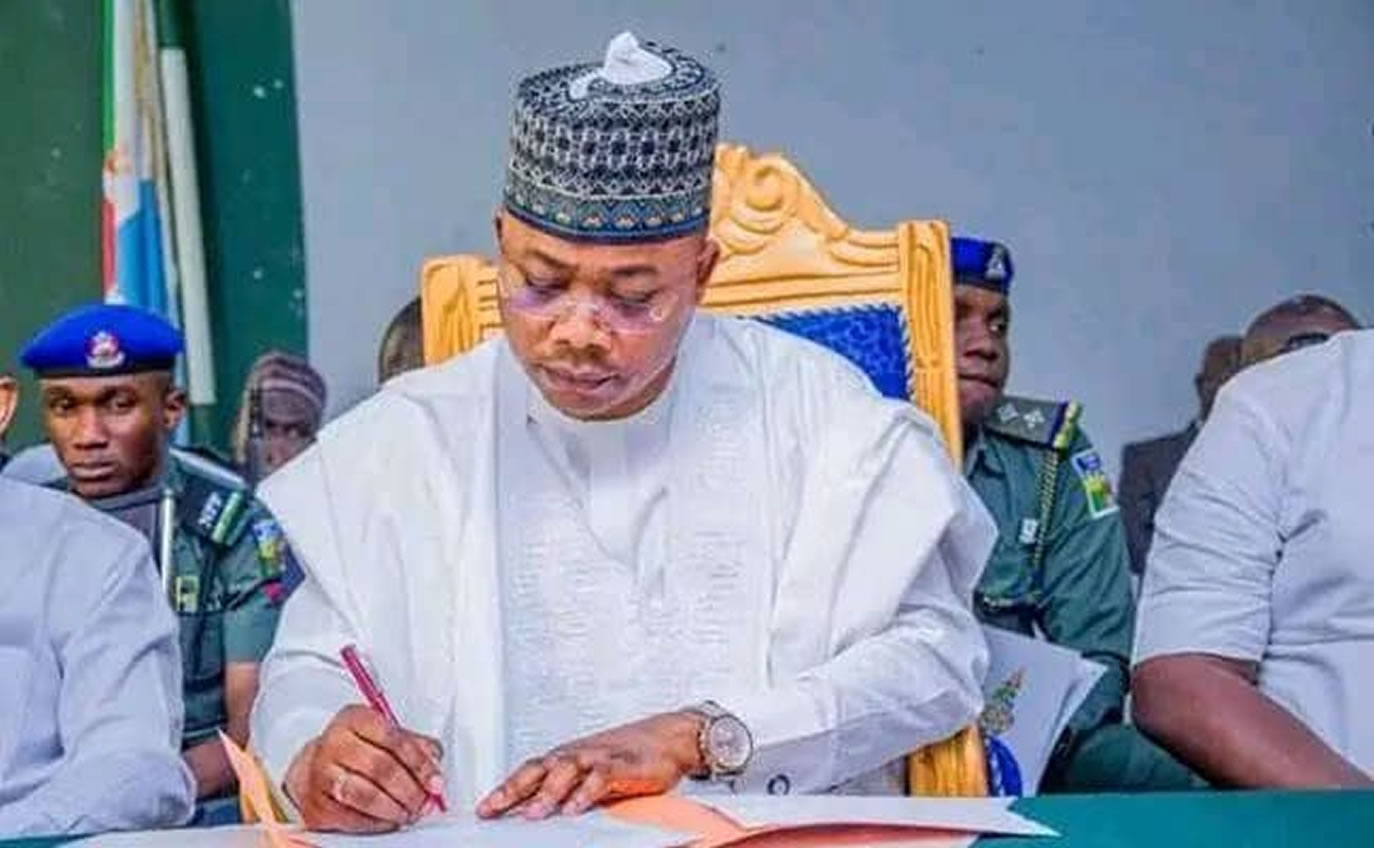
A major development at the summit came from the Kogi State House of Assembly, with the Speaker, Rt. Hon. Aliyu Umar Yusuf, saying the legislature was prepared to consider legislation providing a framework for power rotation.
Yusuf said the issue would require careful deliberation, adding that the views of stakeholders would be considered in the legislative process.
Any such legislation, if introduced and enacted, would provide an institutional framework for a debate that has so far largely centred on political advocacy and convention.
The communiqué also acknowledged that the 1999 Constitution, as amended, does not expressly prescribe rotation of the governorship among senatorial districts. It therefore recommended that any eventual arrangement should operate through lawful political, democratic and institutional processes.
Governor Ahmed Usman Ododo, represented at the summit by Commodore Jerry Omodara (Rtd.), urged stakeholders to pursue political dialogue without compromising peace in the state.
The governor said Kogi’s diversity should be treated as a source of strength and called on stakeholders to build trust, promote peace and encourage inclusive dialogue as the state approaches another electoral cycle.
Ododo also urged young people to reject political violence and encouraged stakeholders to pursue peaceful engagement and constructive dialogue.
The summit chairman, Vice Admiral Joseph Ajayi (Rtd.), described the dialogue as important to Kogi’s political development and called for a structured framework to promote inclusion and reduce political tensions and ethnic divisions.
Former Deputy Comptroller-General of the Nigeria Customs Service, Sir Kehinde Ejibunu, who participated in the summit, also urged stakeholders to consider the political aspirations of minority groups in discussions on power-sharing arrangements.
“We want the state to be together; we don’t want it to be set ablaze,” he said.
Among other resolutions, the summit proposed the development of a Kogi Charter of Equity and Inclusion to guide political participation, peaceful engagement and representation across the state.
It also recommended the establishment of a follow-up mechanism, expansion of the Kogi Unity Accord, creation of zonal structures and further consultations across the three senatorial districts.
Traditional rulers, religious leaders, women, youths, professional groups, political actors and community organisations were urged to remain involved in the process.
The communiqué further called for measures to ensure that minority tribes and communities are represented in political participation and appointments, in line with the principle of equitable representation and the spirit of federal character.
The summit stressed that its resolutions should serve as the beginning of a sustained process rather than the conclusion of discussions on power rotation.
The proposed 2032 commencement date, alongside calls from some participants for an earlier shift of political power to Kogi West, leaves the timing and structure of any rotational arrangement subject to further consultation and political processes.

As campaigns for the January 2027 presidential election gather momentum, the PBAT Door-to-Door Movement has launched its grassroots mobilisation campaign in Taraba State, calling on residents to support the re-election of President Bola Tinubu.
The movement, led by its Grand Patron, High Chief Government Ekpemupolo, popularly known as Tompolo, said the president’s reforms require more time to consolidate and deliver greater benefits to Nigerians.
Represented at the launch in Jalingo by High Chief Kestin Pondi, Tompolo said Taraba was benefiting from the policies of the Tinubu administration, stressing that continuity was necessary to sustain the gains recorded so far.
He said, “Taraba is thriving because President Tinubu has good reformation policies that are moving the state forward. If we want those policies to continue and be more solid, to consolidate on them, we need to give the president another four years.”
According to him, another term would ensure that civil servants continue to receive their salaries as at when due, while Governor Agbu Kefas would have more time to develop the state.
Tompolo said some challenges previously experienced by Nigerians, including fuel queues and disruptions in university education have reduced, attributing the changes to policies of the Tinubu administration.
He acknowledged that reforms come with challenges but said they require time to produce their full benefits.
“Every policy needs time to consolidate; every policy needs time to show dividends. Every policy reformation will always come with its own challenges, but once we bear a little and they pass, we will go to the smooth road we are to ride on,” he said.
He urged supporters of the movement to take the campaign to every level of the society, including homes, religious centres, wards, local government areas and polling units.
Speaking at the event, Governor Agbu Kefas said the people of Taraba were already witnessing the impact of the Tinubu administration through projects being implemented in the state.
“Taraba is ready. You don’t need to tell the people of Taraba State what the President is doing; they are seeing what the President is doing through me,” Kefas said.
The Governor said his administration remains committed to the Renewed Hope Agenda of the President, adding that the state would continue to work with the Federal Government on development projects.
“We are moving forward with the mandate of the Renewed Hope Agenda of Mr. President and by the grace of God we are going to go to all the units, the wards and be flagging off projects and commissioning projects, not telling empty stories,” he said.
Kefas also pledged massive support for Tinubu in the 2027 presidential election.
“I want to assure you that we are going to turn out en masse and give the President 100 percent votes. We are ready for Mr. President,” he said.
Earlier, the National Coordinator of the PBAT Door-to-Door Movement, Sunday Asuku, said the group was in Taraba to extend its message of support for the President and the state governor.
Asuku said Nigerians should maintain the current political direction, arguing that abandoning the reforms of the Tinubu administration would be counterproductive.
“The surest way for us today is the APC. We are on the right trajectory and that is why we should remain where we are,” he said.
He commended Kefas for what he described as achievements recorded in Taraba over the past three years, saying the turnout at the event reflected grassroots support for the governor.
Highpoint of the event was the donation of 25 campaign vehicles, generators and electronic speakers for grassroots mobilisation.


How FG’s Docility and FIFA’s Compromise on Mpasi Conspired Against Nigeria’s 2026 W’Cup Qualifier– Report
Spread the loveThe apex world soccer’s governing body, FIFA, knew that the Democratic Republic of Congo fielded an ineligible player...


Kogi Community Protests Building of Mortuary in Residential Area.
Spread the loveBy Isa Abdul The construction of an alleged mortuary close to public school and residential buildings has been...


100 Days To 2027 Polls: INEC Vows Neutrality, Says BVAS, Ballots Ready
Spread the loveBy Felix Umande The Independent National Electoral Commission, INEC, has assured Nigerians and the international community of its...


THE LAST TANGO: Tears, Tributes and A Final Goal As Messi Bows Out After 21 Years
Spread the loveBy Felix Umande Emotions ran high at the Estadio Monumental on Tuesday night as Lionel Messi signed off...


Church’s Duty to Empower Individuals, Create Opportunities and Improve Family’s Economic Well-being
Spread the loveBy Seyi Balogun, Lagos The need for the Church’s commitment to empowering its members through employment opportunities, entrepreneurship...

Taraba Explores ADR for Sustainable Peace Between Crop, Livestock Farmers
Spread the loveBy Michael Lim Conflict prevention between livestock farmers and host communities in Taraba State through the promotion of...


Financial Inclusion: Kwara Buys Dangote Refinery Shares For Female Teachers
Spread the loveBy Michael Lim Kwara State Government has announced plans to buy shares in the Dangote Refinery Initial Public...

Benue Govt Gives 2-Week Ultimatum To Owners Of Illegal Billboards, Threatens Mass Removal
Spread the loveBy Felix Umande The Benue State Government has decried the arbitrary erection of billboards across the state by...


INEC Tracking Illegal Campaign Spending
Spread the love–Tells Editors: “remain primary filter against information disorder.” By Son Tertsea, Abuja The Independent National Electoral Commission (INEC)...

Importers, Petroleum Marketers Kick Against Dangote’s Restriction of Petrol Sales
Spread the loveBy Seyi Balogun Major marketers have kicked against Dangote Petroleum Refinery’s non sale of Premium Motor Spirit (petrol)...